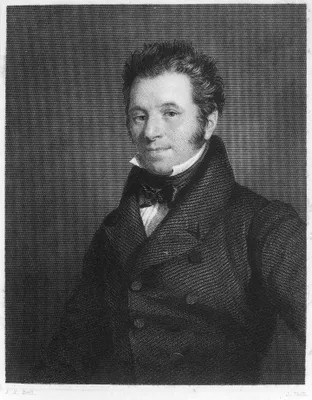
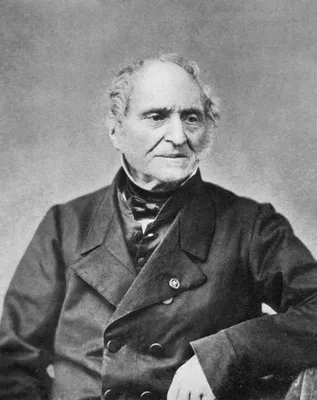
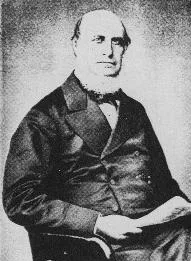
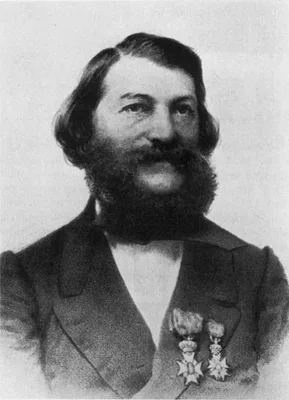
1850 ARAN, François-Amilcar (1817 – 1861)
Recherches sur une maladie non encore décrite du système musculaire. (Atrophie musculaire progressive).
“Aran–Duchenne disease” (see No. 4732)
GMN 4733 · https://historyofmedicine.com/id/1281
1851 HALL, Marshall (1790 – 1857)
Synopsis of cerebral and spinal seizures of inorganic origin and of paroxysmal form as a class; and of their pathology as involved in the structures and actions of the neck.
Hall was the first to suggest that the paroxysmal nervous discharges in epilepsy were produced by the spinal nervous system, first to notice the connection of anemia with epilepsy, and first to deduce that epilepsy wa…
GMN 4812 · https://historyofmedicine.com/id/1589
1851 BROWN-SÉQUARD, Charles Édouard (1817 – 1894)
De la transmission croisée des impressions sensitives par la moëlle épinière.
“Brown-Séquard’s paralysis”. Lesion of one lateral half of the spinal cord causes paralysis of motion on one side and of sensation on the other. See also the writer’s later paper on pp. 70-73 of the same volume.
GMN 4530 · https://historyofmedicine.com/id/8892
1852 –1853 CRUVEILHIER, Jean (1791 – 1874)
Sur la paralysie musculaire, progressive, atrophique.
“Cruveilhier’s palsy”, the progressive muscular atrophy already described by Duchenne and Aran. The slimness of the anterior roots was first noticed by Cruveilhier and was thought to be the essential lesion until Luys…
GMN 4734 · https://historyofmedicine.com/id/1286
1852 MERYON, Edward (1809 – 1880)
On granular and fatty degeneration of the voluntary muscles.
“Duchenne’s muscular dystrophy” (No. 4739) described.
GMN 4734.1 · https://historyofmedicine.com/id/1288
1852 CORVISART, François Remy Lucien (1824 – 1882)
De la contracture des extrémités ou tétanie. Thèse pour le doctorat en médecine. No. 223
In his graduation thesis, Lucien Corvisart, nephew of the more famous Baron Corvisart (No. 2737), introduced the term “tétanie”. Digital facsimile from BnF Gallica at this link.
GMN 4829 · https://historyofmedicine.com/id/1658
1853 LITTLE, William John (1810 – 1894)
On the nature and treatment of the deformities of the human frame.
Little was the first eminent orthopedic surgeon in the British Isles. He studied under Stromeyer and, in 1838, he founded the Orthopaedic Institution, now the (Royal) National Orthopaedic Hospital, London. The above w…
GMN 4329 · https://historyofmedicine.com/id/1293
1853 TÜRCK, Ludwig (1810 – 1868)
Ein Fall von Hamorrhagie der Netzhaut beider Augen.
Türck was the first to note the correlation of retinal hemorrhage with tumors of the brain.
GMN 5870 · https://historyofmedicine.com/id/7261
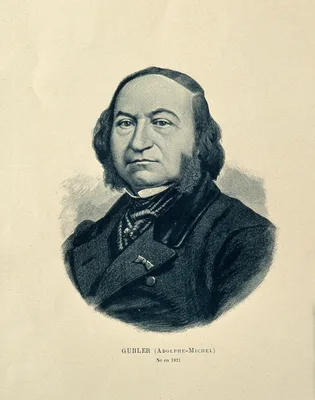
1856 GUBLER, Adolphe-Marie (1821 – 1897)
De l’hémiplégie alterne envisagée comme signe de lésion de la protrubérance annulaire et comme preuve de la décussation des nerfs faciaux.
“Gubler’s paralysis” – crossed hemiplegia. English translation in Wolf, The classical brain stem syndromes, Springfield: Charles C Thomas, 1971.
GMN 4531 · https://historyofmedicine.com/id/393
1856 LEBERT, Hermann (1813 – 1878)
Ueber Gehirnabscesse.
First systematic account of brain abscess.
GMN 4638 · https://historyofmedicine.com/id/706
1856 BROWN-SÉQUARD, Charles Édouard (1817 – 1894)
Recherches expérimentales sur la production d’une affection convulsive épileptiforme, à la suite de lésions de la moëlle épiniére.
Experimental epilepsy (section of sciatic nerve). See also Arch. Physiol. norm. path., 1869, 2, 211-20, 422-38, 496-503; 1870, 3, 153-60.
GMN 4813 · https://historyofmedicine.com/id/1590
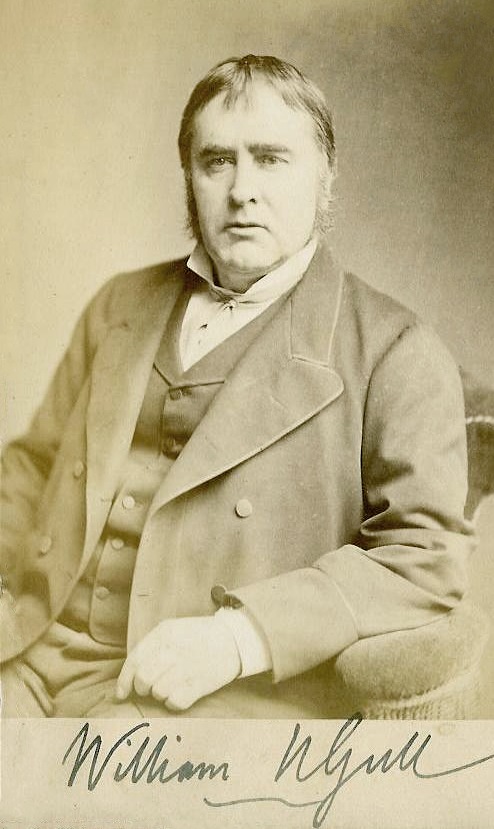
1856 GULL, Sir William Withey (1816 – 1890)
Cases of paraplegia [with autopsies of ataxic cases, showing lesions in the posterior columns of the spinal cord].
Gull showed the lesions of tabes dorsalis to be located in the posterior columns of the spinal cord.
GMN 4532 · https://historyofmedicine.com/id/8895
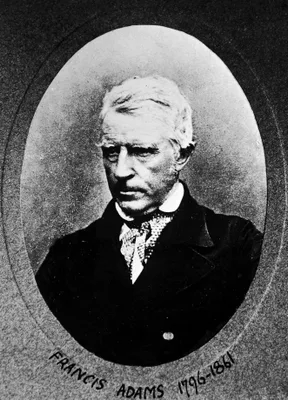
1856 ARETAEUS OF CAPPADOCIA, (Ἀρεταῖος Καππάδοκος) (80 – 140); ADAMS, Francis (1796 – 1861)
Тα ∑ωζομενα. The extant works of Aretaeus, the Cappadocian. Edited and translated by Francis Adams.
Aretaeus left many fine descriptions of disease; in fact Garrison ranks him second only to Hippocrates in this respect. In the printed editions of this bibliography, before the present online version, the Adams editio…
GMN 22 · https://historyofmedicine.com/id/8934
1857 LOCOCK, Sir Charles (1799 – 1875)
[Contribution to discussion on paper by E.H. Sieveking.]
Locock, physician accoucheur to Queen Victoria, recommended bromide of potassium in the treatment of epilepsy.
GMN 4813.1 · https://historyofmedicine.com/id/1595
1857 O’CONNOR, William ( – 1880)
Cases of epilepsy, associated with amenorrhoea and vicarious menstruation, successfully treated with the iodide of potassium.
O’Connor was apparently the first to use potassium bromide for the treatment of epilepsy.
GMN 4814 · https://historyofmedicine.com/id/1599
1858 FOVILLE, Achille Louis François (1799 – 1878)
Note sur une paralysie peu connue de certains muscles de l’oeil, et sa liaison avec quelques points de l’anatomie et la physiologie de la protubérance annulaire.
“Foville’s syndrome”– crossed paralysis of the limbs on one side of the body and of the face on the other side, together with loss of ability to rotate the eyes to that side. English translation in Wolf, The classical…
GMN 4533 · https://historyofmedicine.com/id/394
1858 –1859 DUCHENNE DE BOULOGNE, Guillaume Benjamin Armand (1806 – 1875)
De l’ataxie locomotrice progressive.
Although far from being the first to describe tabes dorsalis, Duchenne gave a classic account of the condition, earning the eponym “Duchenne’s disease”.
GMN 4774 · https://historyofmedicine.com/id/1467
1858 CARNOCHAN, John Murray (1817 – 1887)
Exsection of the trunk of the second branch of the fifth pair of nerves, beyond the ganglion of Meckel, for severe neuralgia of the face; with three cases.
First excision of the superior maxillary nerve for the treatment of trigeminal neuralgia.
GMN 4854 · https://historyofmedicine.com/id/5612
1859 SCHROEDER VAN DER KOLK, Jacob Ludwig Conrad (1797 – 1862)
Bau und Functionen der Medulla spinalis und oblongata, und nächste Ursache und rationelle Behandlung der Epilepsie.
The work of Schroeder van der Kolk brought histological examination to the forefront in connection with theories on the localization of function. His careful microscopical studies confirmed the medulla as being the ul…
GMN 4815 · https://historyofmedicine.com/id/1603
1859 LANDRY, Jean Baptiste Octave (1826 – 1865)
Note sur la paralysie ascendante aiguë
“Landry’s paralysis” – acute infective polyneuritis, more commonly known as Guillain-Barré syndrome. It is difficult to assess the claim of Landry as first to record this condition, since Adolf Kussmaul reported two c…
GMN 4639 · https://historyofmedicine.com/id/8863
1860 BOUCHUT, Eugène (1818 – 1891)
De l’état nerveue aigu et chronique ou nervosisme.
First adequate description of neurasthenia.
GMN 4535 · https://historyofmedicine.com/id/397
1860 DUCHENNE DE BOULOGNE, Guillaume Benjamin Armand (1806 – 1875)
Paralysie musculaire progressive de la langue, du voile du palais et des lévres; affection non encore décrite comme espèce morbide distincte.
First description of chronic progressive bulbar paralysis (“Duchenne’s paralysis”).
GMN 4736 · https://historyofmedicine.com/id/1301
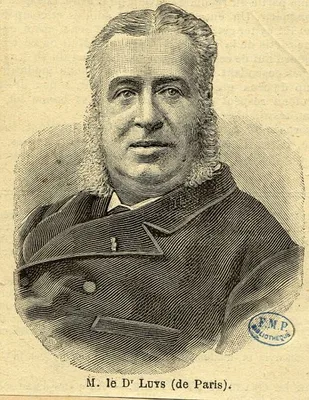
1860 LUYS, Jules Bernard (1828 – 1897)
Atrophie musculaire progressive. Lésions histologiques de la substance grise de la moëlle épinière.
Luys was the first to note the degeneration of the anterior horn cells in progressive muscular atrophy.
GMN 4737 · https://historyofmedicine.com/id/1306
1860 GRAEFE, Friedrich Wilhelm Ernst Albrecht von (1828 – 1870)
Ueber Complication von Sehnervenentzündung mit Gehimkrankheiten
Graefe showed that most cases of blindness and impaired vision connected with cerebral disorders can be traced to optic neuritis rather than paralysis of the optic nerve.
GMN 4536 · https://historyofmedicine.com/id/8901
1861 BROCA, Pierre Paul (1824 – 1880)
Perte de la parole; ramollissement chronique et destruction partielle du lobe antérieur gauche du cerveau.
Broca localized the speech center in the left frontal lobe. He asserted that aphasia was associated with a lesion on the left third frontal convolution of the brain – “Broca’s center”. He was preceded in this discover…
GMN 4619 · https://historyofmedicine.com/id/653
1861 FRERICHS, Friedrich Theodor von (1819 – 1885)
Klinik der Leberkrankheiten. Bd. 2.
Pp. 62-64: First description of progressive familial hepatolenticular degeneration (“Kinnier Wilson’s disease”; see No. 4717).
GMN 4693 · https://historyofmedicine.com/id/978
1861 BROCA, Pierre Paul (1824 – 1880)
Remarques sur le siège de la faculté du langage articulé, suivie d’une observation d’aphémie (perte de la parole).
Broca claimed the third left frontal convolution of the brain as the center of articulate speech – a point now disputed. He was first to trephine for a cerebral abscess diagnosed by this theory of localization of func…
GMN 1400 · https://historyofmedicine.com/id/2005
1861 TROUSSEAU, Armand (1801 – 1867)
Clinique médicale de l’Hôtel Dieu de Paris. 2 vols.
Trousseau, clinician of the Hôtel-Dieu, made important advances in the treatment of diphtheria, typhoid, scarlet fever and other conditions. In his book he emphasized the value of bedside observation. He supported the…
GMN 2221 · https://historyofmedicine.com/id/3760
1861 –1862 BÄRENSPRUNG, Friedrich Wilhelm Felix von (1822 – 1864)
Die Gürtelkrankheit.
Herpes zoster first ascribed to a lesion of the spinal ganglia.
GMN 4640 · https://historyofmedicine.com/id/8866
1862 GULL, Sir William Withey (1816 – 1890)
Case of progressive atrophy of the muscles of the hands: enlargement of the ventricle of the cord in the cervical region, with atrophy of the gray matter.
First description of syringomyelia.
GMN 4695 · https://historyofmedicine.com/id/979
1863 WEBER, Sir Hermann David (1823 – 1918)
A contribution to the pathology of the crura cerebri.
“Weber’s syndrome”or “Weber–Gubler syndrome” – hemiplegia associated with disease of the crura cerebri; first described by Gubler (No. 4531).
GMN 4538 · https://historyofmedicine.com/id/398
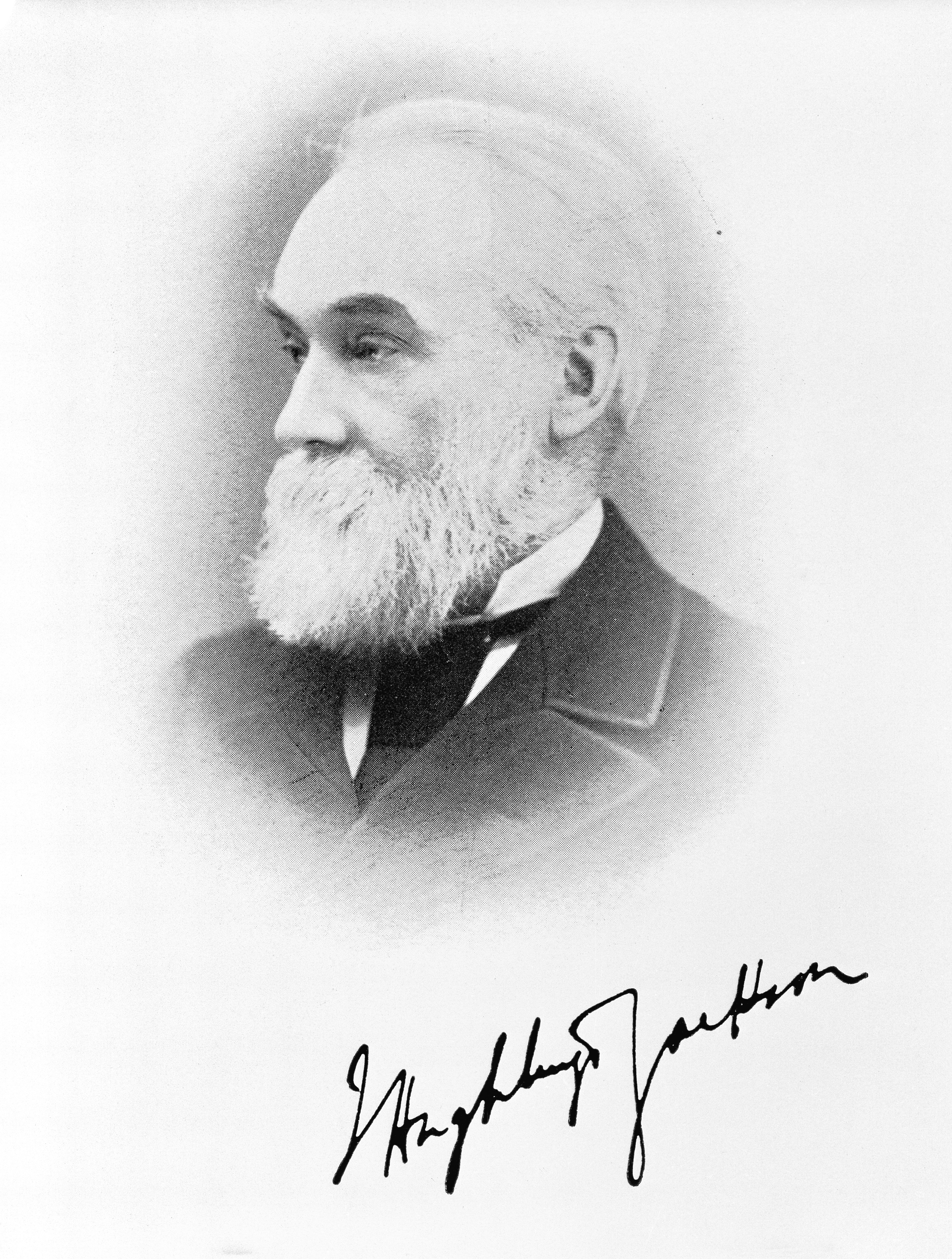
1863 JACKSON, John Hughlings (1835 – 1911)
Unilateral epileptiform seizures, attended by temporary defect of sight.
“Jacksonian epilepsy” is so called from the excellent account of unilateral epilepsy with spasm given by Jackson. Actually, Bravais (No. 4810) was first to note the condition.
GMN 4816 · https://historyofmedicine.com/id/1611
1863 FRIEDREICH, Nikolaus (1825 – 1882)
Ueber degenerative Atrophie der spinalen Hinterstränge.
Friedreich was the first to describe a form of ataxia (“Friedreich’s ataxia”), hereditary, attended with impairment of speech, lateral curvature of the spine, and with paralysis of the muscles of the lower limbs. The …
GMN 4696 · https://historyofmedicine.com/id/8889
1863 –1865 JACKSON, John Hughlings (1835 – 1911)
Observations on defects of sight in brain disease.
In this work Jackson showed the importance of the ophthalmoscope in the investigation of diseases of the nervous system. Reprinted in Med. Classics, 1939, 3, 918-26.
GMN 4537 · https://historyofmedicine.com/id/8899
1864 JACKSON, John Hughlings (1835 – 1911)
Loss of speech: its association with valvular disease of the heart, and with hemiplegia on the right side. Defects of smell. Defects of speech in chorea. Arterial regions in epilepsy.
Jackson studied aphasia for 30 years. He emphasized its psychological aspects and laid the foundation for present knowledge of the condition, but he was ahead of his time and the value of his work was not recognized f…
GMN 4620 · https://historyofmedicine.com/id/658
1864 MITCHELL, Silas Weir (1829 – 1914); KEEN, William Williams (1837 – 1932); MOREHOUSE, George Read (1829 – 1905)
Gunshot wounds and other injuries of nerves.
Mitchell, Morehouse, and Keen were army surgeons during the American Civil War; their book was the first exhaustive study of the traumatic neuroses. Includes the first description of ascending neuritis, and also of th…
GMN 2167 · https://historyofmedicine.com/id/1110
1865 GRIESINGER, Wilhelm (1817 – 1868)
Ueber Muskelhypertrophie.
Progressive muscular dystrophy with pseudo-hypertrophy. From the description given later by Duchenne (No. 4739) the condition has been named “Duchenne-Griesinger disease”.
GMN 4738 · https://historyofmedicine.com/id/1315
1866 ERICHSEN, Sir John Eric (1818 – 1896)
On railway and other injuries of the nervous system.
The first book to discuss the injuries now widely known as whiplash, which first appeared as the by-product of the increased speed of railway travel. Digital facsimile from the Internet Archive at this link.
GMN 4538.1 · https://historyofmedicine.com/id/399
1866 JACKSON, John Hughlings (1835 – 1911)
Notes on the physiology and pathology of language.
GMN 4621 · https://historyofmedicine.com/id/661
1866 CHARCOT, Jean Martin (1825 – 1893); BOUCHARD, Abel (1833 – 1899)
Douleurs fulgurantes de l’ataxie sans incoordination des mouvements; sclérose commençante des cordons postérieurs de la moëlle épinière.
First clinical description of the electric pains in tabes.
GMN 4775 · https://historyofmedicine.com/id/1474
1866 DELAMARRE, Georges
Des troubles gastriques dans l’ataxie locomotrice progressive. Thèse pour le doctorat en médecine. No. 250.
Tabetic gastric crises first described. Digital facsimile from the Internet Archive at this link.
GMN 4776 · https://historyofmedicine.com/id/1480
1866 FALRET, Jules (1824 – 1902)
Aphasie, aphémie, alalie.
Includes a history of aphasia.
GMN 4621.1 · https://historyofmedicine.com/id/8861
1866 MEYNERT, Theodor Hermann (1833 – 1892)
Ein Fall von Sprachstörung, anatomisch begründet.
"Carl Wernicke (1848-1905) is traditionally considered the first to have described the features of, and the brain pathology underlying, impaired auditory comprehension and related symptoms. Although Wernicke (1874) cl…
GMN 13278 · https://historyofmedicine.com/id/15544
1867 DUCHENNE DE BOULOGNE, Guillaume Benjamin Armand (1806 – 1875)
Physiologie des mouvements demontrée à l’aide de l’expérimentation électrique et de l’observation clinique, et applicable à l’étude des paralysies et des déformations.
A monumental work, the result of twenty years’ study of electro-muscular stimulation “to determine the proper action which the muscles possess in life”. The book contains an excellent record of the kinesiology of the …
GMN 624 · https://historyofmedicine.com/id/507
1867 JACKSON, John Hughlings (1835 – 1911); CLARKE, Jacob Augustus Lockhart (1817 – 1880)
On a case of muscular atrophy, with disease of the spinal cord and medulla oblongata.
First important account of syringomyelia.
GMN 4697 · https://historyofmedicine.com/id/982
1867 NOTHNAGEL, Carl Wilhelm Hermann (1841 – 1905)
Zur Lehre von den vasomotorischen Neurosen.
Nothnagel described the vasomotor type of acroparaesthesia, sometimes called after him.
GMN 2705 · https://historyofmedicine.com/id/4420
1868 WILKS, Sir Samuel (1824 – 1911)
Drunkard’s or alcoholic paraplegia.
Classic account of alcoholic paraplegia.
GMN 4539 · https://historyofmedicine.com/id/400
1868 CHARCOT, Jean Martin (1825 – 1893)
Histologie de la sclérose en plaques.
An important description of multiple sclerosis. Digital facsimile from BnF Gallica at this link.
GMN 4698 · https://historyofmedicine.com/id/983
1868 DUCHENNE DE BOULOGNE, Guillaume Benjamin Armand (1806 – 1875)
Recherches sur la paralysie musculaire pseudo-hypertrophique, ou paralysie myo-sclérosique.
“Duchenne muscular dystrophy”. English translation of first portion in Bick, Classics of orthopaedics, 72-75.
GMN 4739 · https://historyofmedicine.com/id/1317
1868 CHARCOT, Jean Martin (1825 – 1893)
Sur quelques arthropathies qui paraissent dépendre d’une lésion du cerveau ou de la moëlle épinière.
Charcot called attention to tabetic arthropathy, a condition which has since borne his name, while the tabetic joints he so well described are now known as “Charcot’s joints”.
GMN 4337 · https://historyofmedicine.com/id/1488