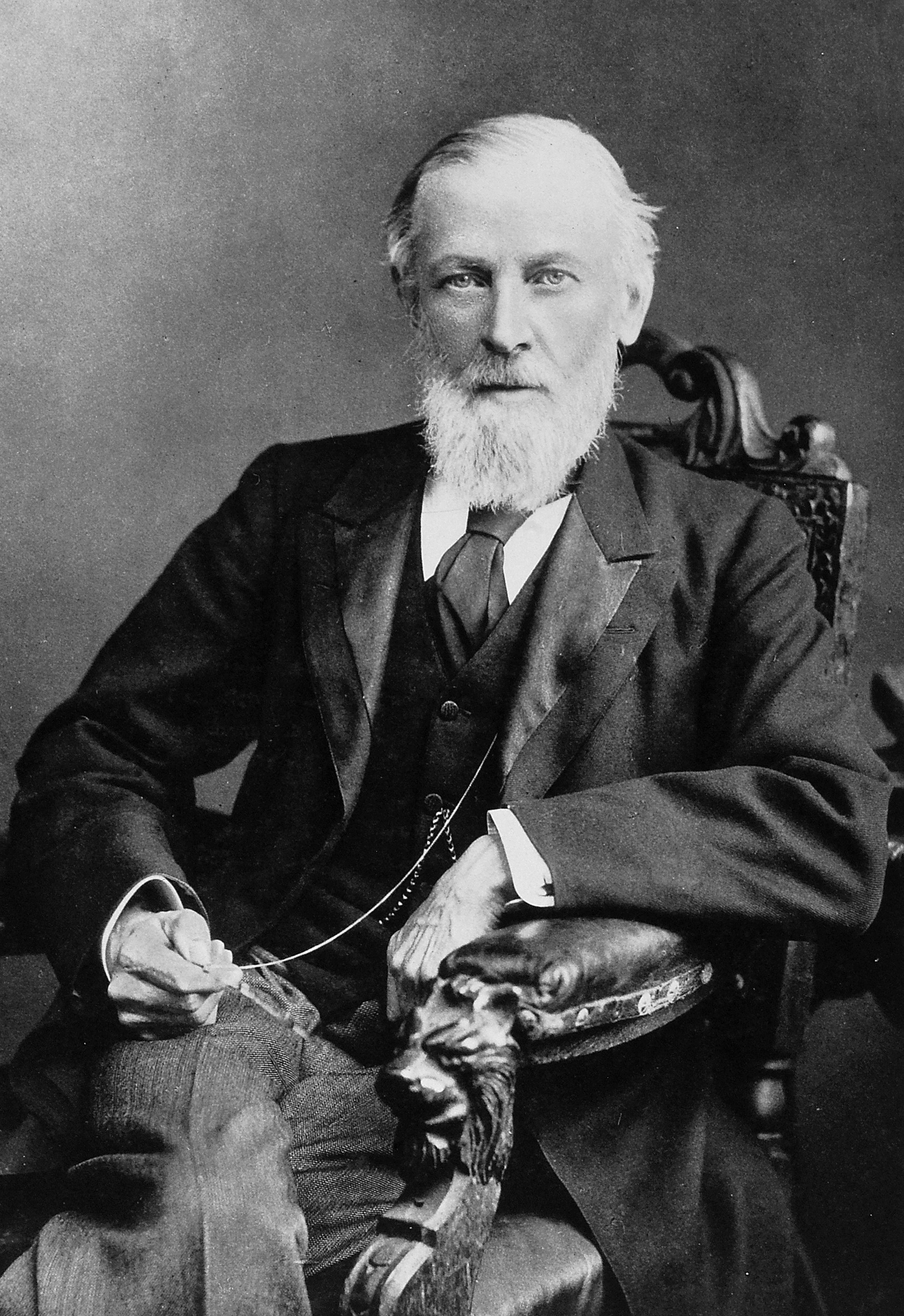
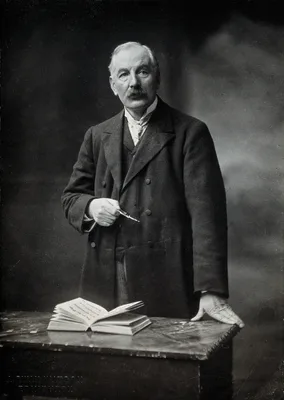
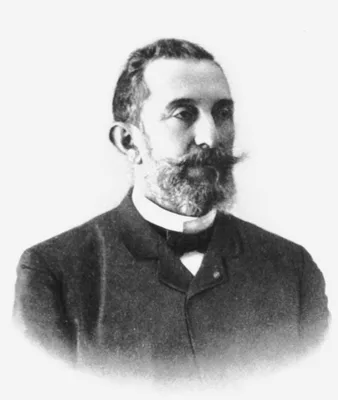
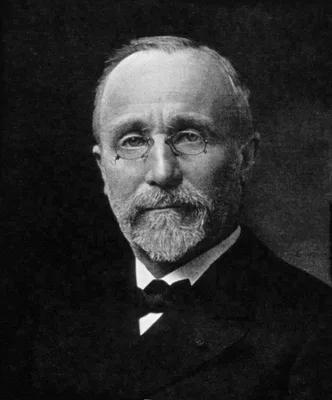
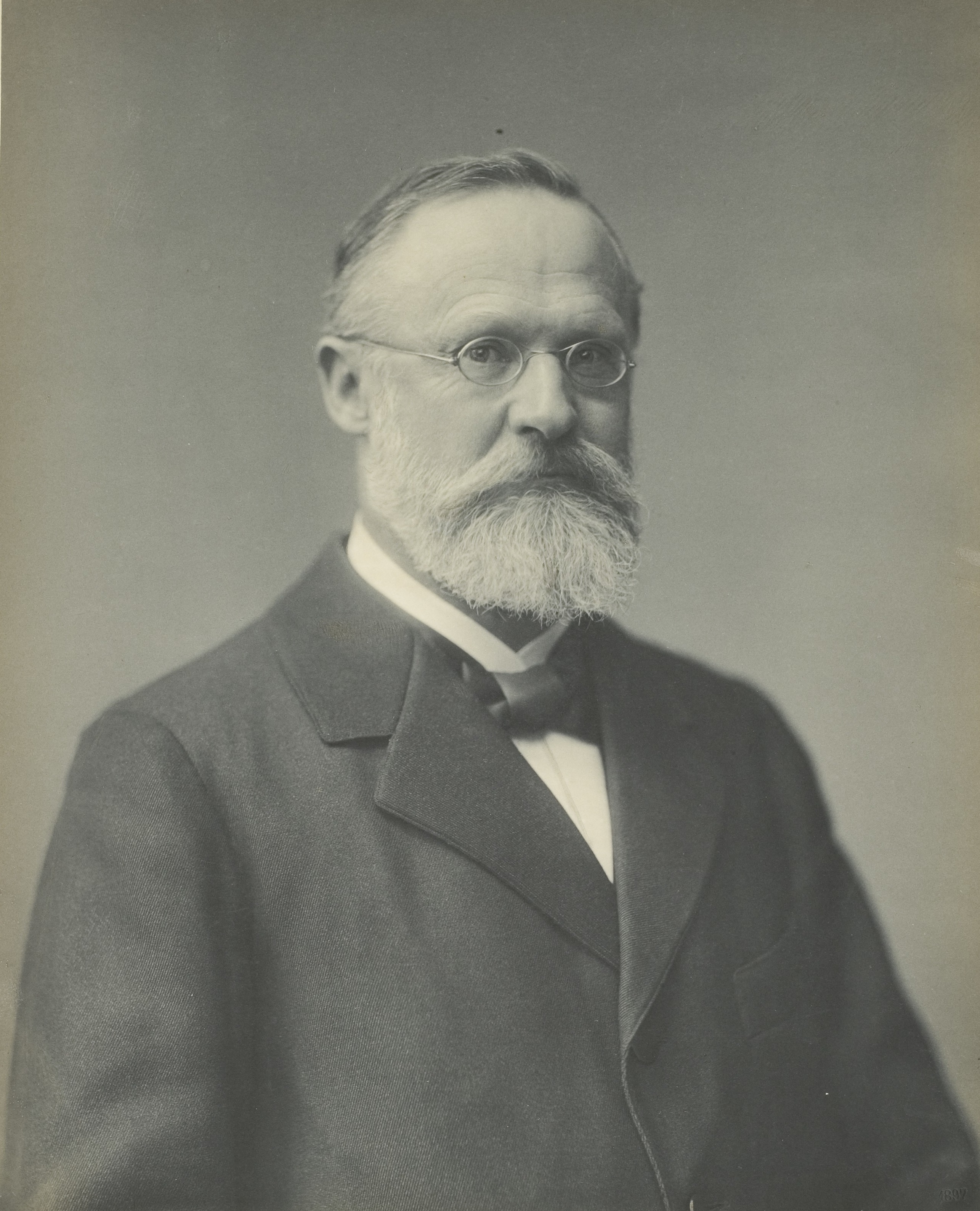
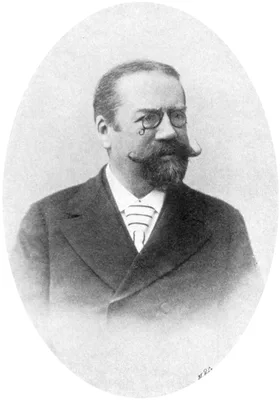
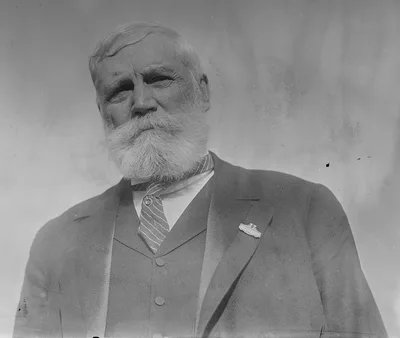
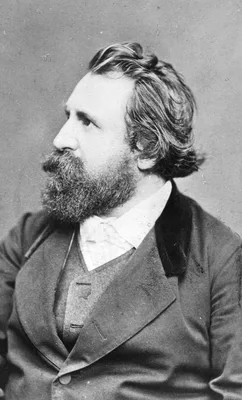
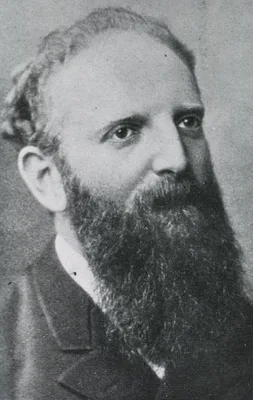
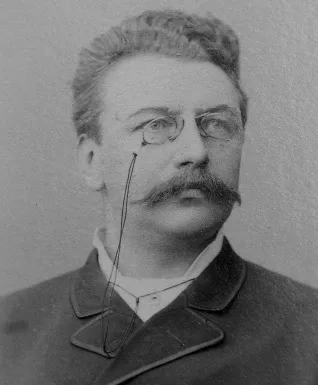
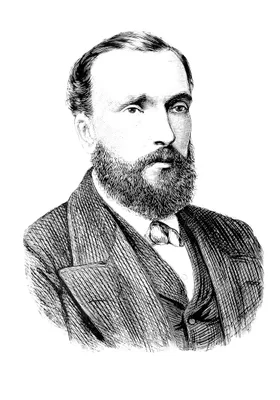
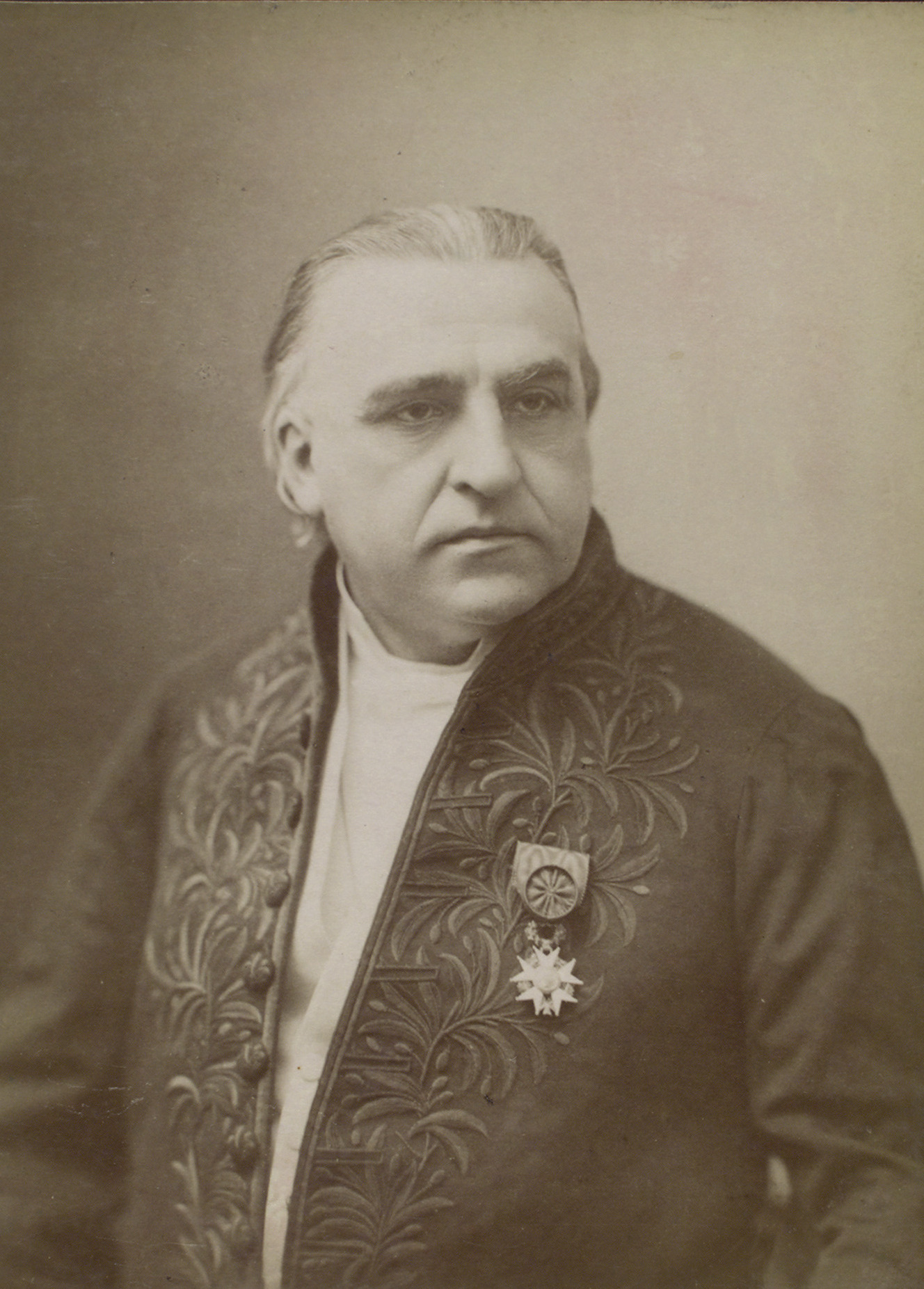
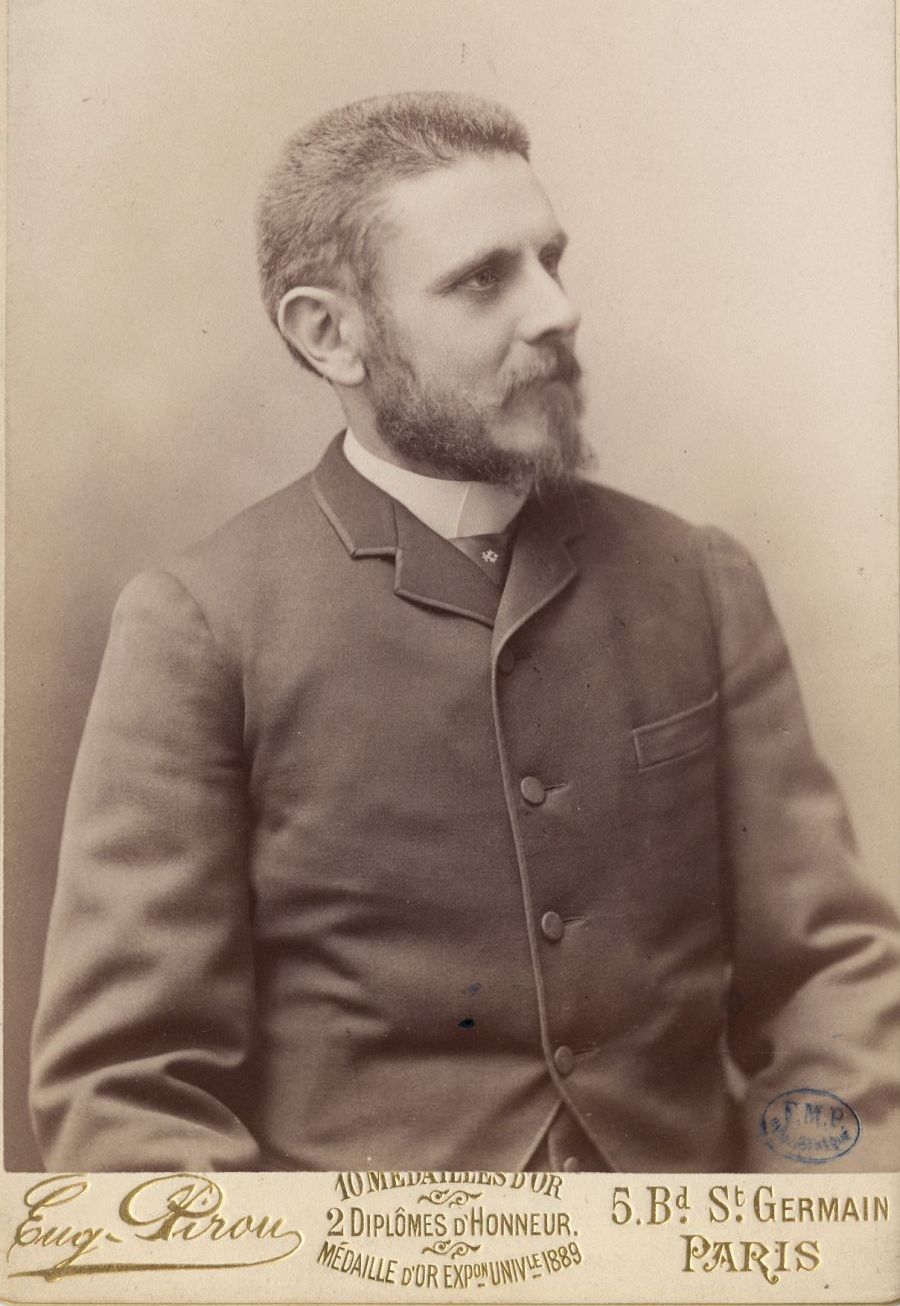
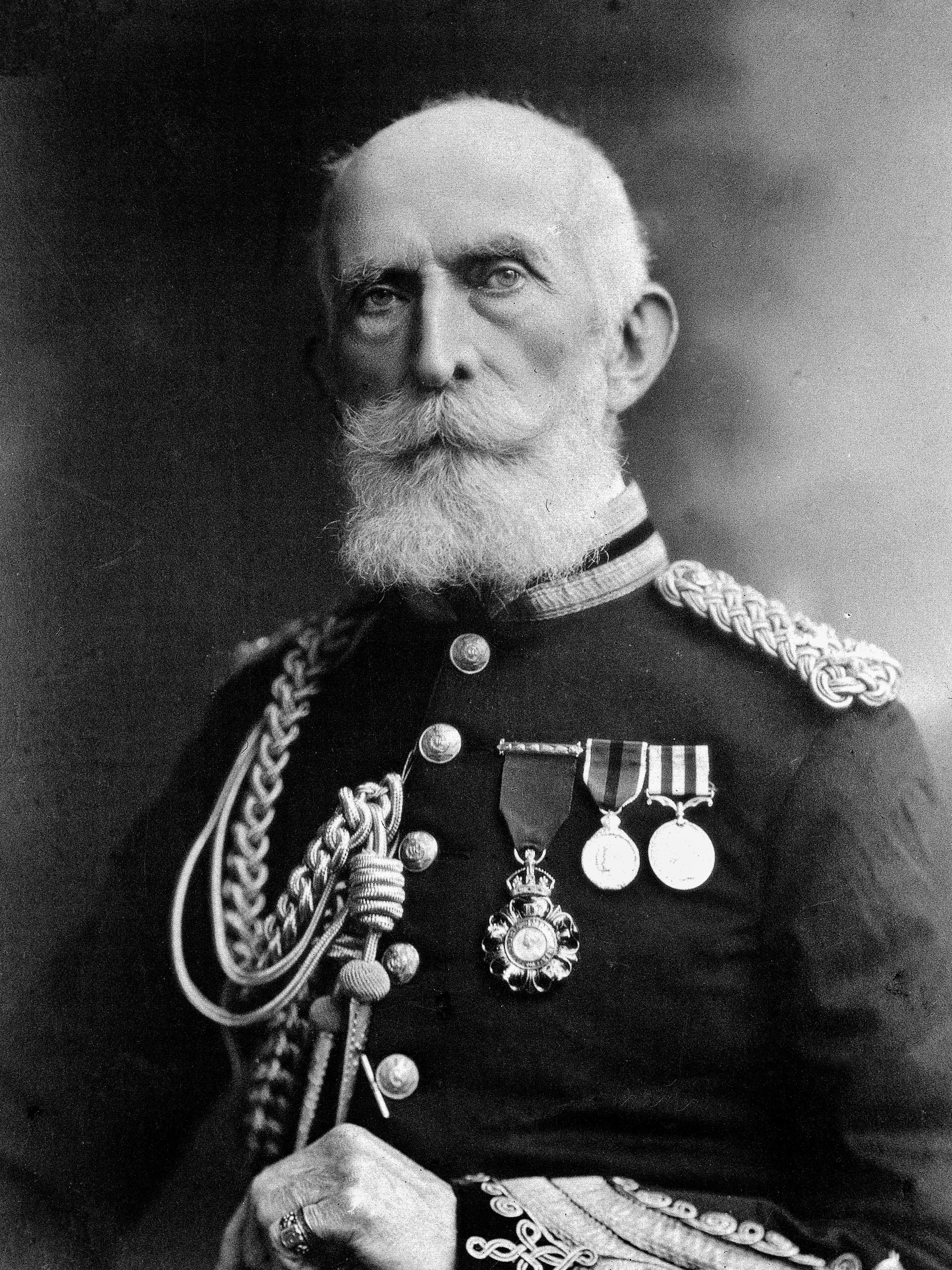
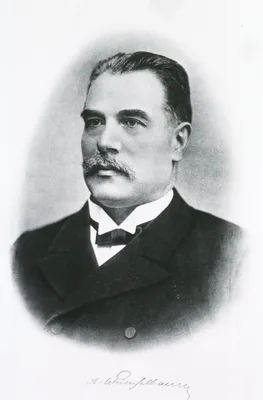
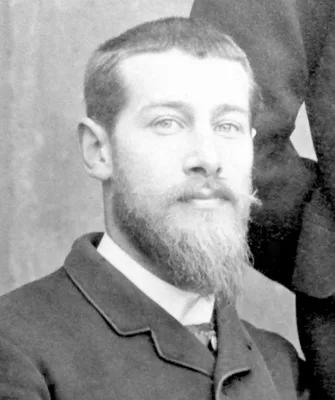
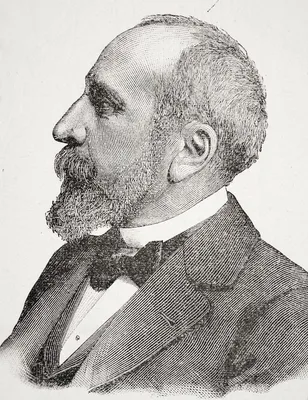
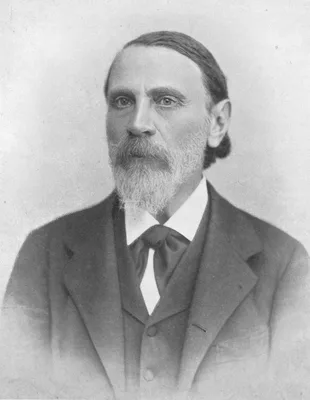
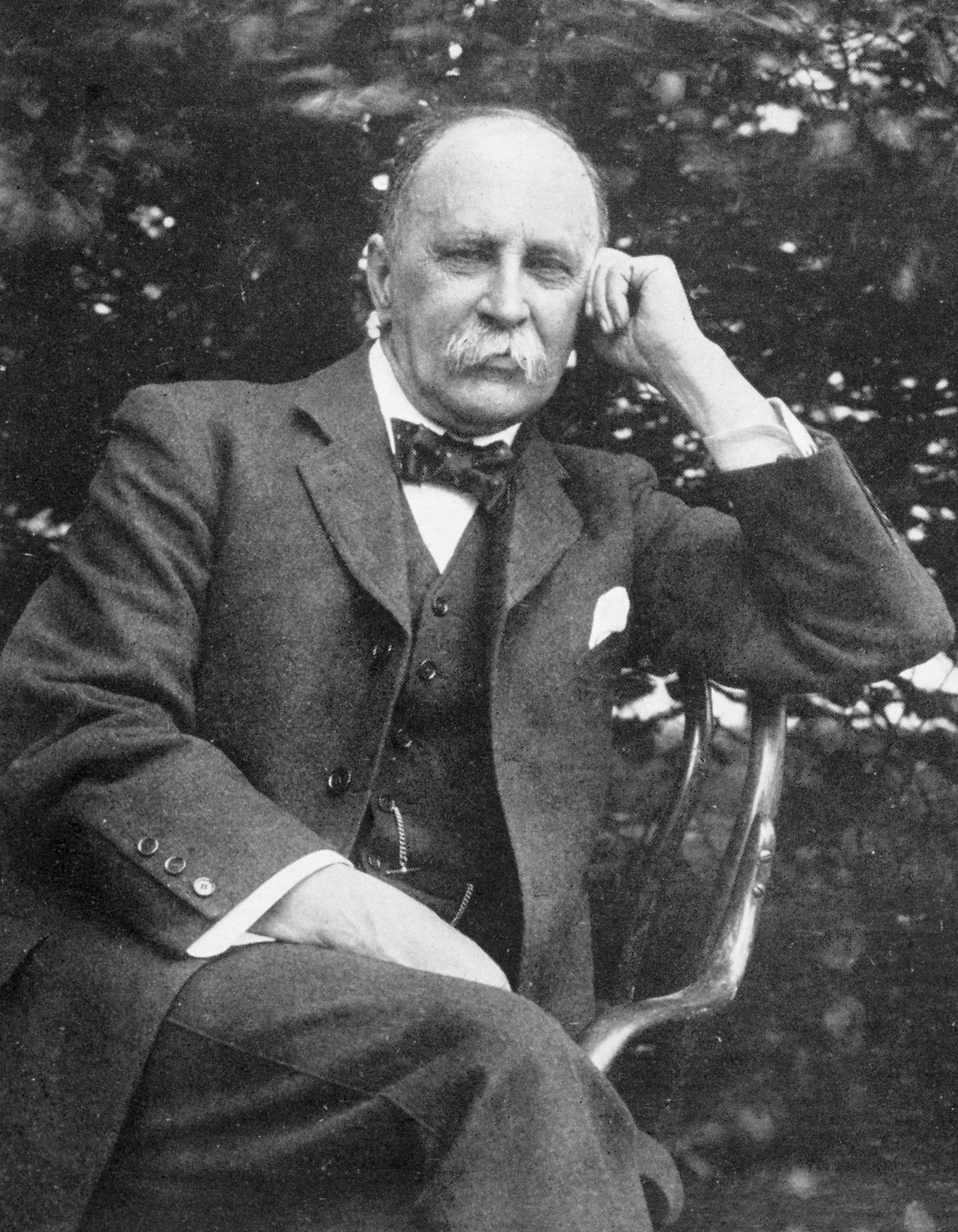
1879 THOMSON, William (1833 – 1907)
On astigmatism as a cause for persistent headache and other nervous symptoms.
Thomson was a pioneer in the study of refraction. He was much interested in color-blindness and modified Holmgren’s wool-skein test. Himself affected with hypermetropia, he made important investigations on this condit…
GMN 5917 · https://historyofmedicine.com/id/6819
1880 GOWERS, Sir William Richard (1845 – 1915)
The diagnosis of diseases of the spinal cord.
Gowers demonstrated the dorsal spinocerebellar tract, “Gowers’s tract”, and introduced the terms myotatic and knee-jerk, which he elicited with the rubber edge of his stethoscope or a percussion hammer.
GMN 4562 · https://historyofmedicine.com/id/427
1880 BOURNEVILLE, Désiré-Magloire (1840 – 1909)
Contribution à l’étude de l’idiotàie.
“Bourneville’s disease”, tuberous sclerosis, epiloia (p. 81). Digital facsimile from biuSante.parisdescartes.fr at this link. For the history of the understanding of this disease see the remarkable Wikipedia Timeline …
GMN 4700 · https://historyofmedicine.com/id/987
1880 –1881 TAY, Waren (1843 – 1927)
Symmetrical changes in the region of the yellow spot in each eye of an infant.
Tay was the first to describe amaurotic familial idiocy, his paper dealing mainly with the ocular manifestations. The condition later became known as “Tay-Sachs’s disease” (see also No. 4705).
GMN 5918 · https://historyofmedicine.com/id/6822
1880 GÉLINEAU, Jean Baptiste Édouard (1828 – 1906)
De la narcolepsie.
Narcolepsy first fully described.
GMN 4561 · https://historyofmedicine.com/id/8915
1880 MANTEGAZZA, Paolo (1831 – 1910)
Fisologia del dolore.
Mantegazza performed pioneering research into the physiology of pain at his experimental laboratory. His work marks the beginning of algometry, the scientific measurement of responses to pain stimuli. Mantegazza inven…
GMN 12884 · https://historyofmedicine.com/id/15131
1881 FRIEDREICH, Nikolaus (1825 – 1882)
Paramyoklonus multiplex.
First description of paramyoclonus multiplex, “Friedreich’s disease”.
GMN 4564 · https://historyofmedicine.com/id/429
1881 GOWERS, Sir William Richard (1845 – 1915)
Epilepsy and other chronic convulsive diseases.
Gowers left a classic account of epilepsy, a book which today is still one of the most important on the subject. He was first to note the tetanic nature of the epileptic convulsion.
GMN 4818 · https://historyofmedicine.com/id/1620
1881 FORST, J. J.
Contribution à l’étude clinique de la sciatique.
“Lasègue’s sign” in sciatica. Although discovered by E. C. Lasègue, it was first reported by his pupil Forst.
GMN 4563 · https://historyofmedicine.com/id/8916
1882 BRAMWELL, Sir Byrom (1847 – 1931)
The diseases of the spinal cord.
GMN 4565 · https://historyofmedicine.com/id/431
1882 KERNIG, Vladimir Mikhailovich (Woldemar) (1840 – 1917)
Ein Krankheitssymptom der acuten Meningitis.
Kernig drew attention to a flexor contracture of the leg on attempting to extend it on the thigh (“Kernig’s sign”), almost always present in cerebrospinal meningitis and an important diagnostic sign. A fuller descript…
GMN 4677 · https://historyofmedicine.com/id/947
1882 FOURNIER, Jean Alfred (1832 – 1915)
De l’ataxie locomotrice d’origine syphilitique.
Fournier advanced the doctrine of the syphilitic origin of tabes, a hypothesis which was opposed for a time.
GMN 4782 · https://historyofmedicine.com/id/1515
1882 RECKLINGHAUSEN, Friedrich Daniel von (1833 – 1910)
Ueber die multiplen Fibrome der Haut und ihre Beziehung zu den multiplen Neuromen
One of Virchow’s distinguished pupils, von Recklinghausen gave a classic description of neurofibromatosis, adding much to the knowledge of the condition, which later became known as “Recklinghausen’s disease”. The art…
GMN 4082 · https://historyofmedicine.com/id/8624
1883 WESTPHAL, Carl Friedrich Otto (1833 – 1890)
Ueber eine dem Bilde der cerebrospinalen grauen Degeneration ähnliche Erkrankung des centralen Nervensystems ohne anatomischen Befund, nebst einigen Bemerkungen über paradoxe Contraction.
“Westphal’s pseudosclerosis”. Later Strümpell’s description of this condition (No. 4709) led to the eponym “Westphal–Strumpell disease”.
GMN 4702 · https://historyofmedicine.com/id/988
1883 MORVAN, Augustin Marie (1819 – 1897)
De la parésie analgésique à panaris des extrémités supérieures ou paréso-analgésie des extrémités supérieures.
First description of “Morvan’s disease” – a form of syringomyelia.
GMN 4701 · https://historyofmedicine.com/id/1115
1883 CLELAND, John (1835 – 1925)
Contribution to the study of spina bifida, encephalocele, and anencephalus.
Early description of the Arnold–Chiari malformation (see Nos. 4577.1, 4581.1).
GMN 4566.1 · https://historyofmedicine.com/id/8917
1884 MÖBIUS, Paul Julius (1853 – 1907)
Ueber periodisch wiederkehrende Oculomotoriuslähmung.
“Möbius’s disease” – ophthalmoplegic migraine.
GMN 4567 · https://historyofmedicine.com/id/435
1884 PITRES, Albert (1848 – 1928)
Considérations sur l’agraphie à propos d’une observation nouvelle d’agraphie motrice pure.
Classic account of agraphia.
GMN 4625 · https://historyofmedicine.com/id/673
1884 LANDOUZY, Louis Théophile Joseph (1845 – 1917)
Fièvre zoster etexanthèmes zosteriformes.
Landouzy first suggested the infective nature of herpes.
GMN 4642 · https://historyofmedicine.com/id/717
1884 ERB, Wilhelm Heinrich (1840 – 1921)
Ueber die juvenile Form der progressiven Muskelatrophie und ihre Beziehungen zur sogenannten Pseudohypertrophie der Muskeln.
Progressive muscular dystrophy (“Erb’s muscular atrophy”). Erb did much to establish the modern conception of the muscular dystrophies.
GMN 4747 · https://historyofmedicine.com/id/1344
1884 LEICHTENSTERN, Otto Michael Ludwig (1845 – 1900)
Ueber progressive perniciöse Anämie bei Tabeskranken
First description of subacute combined degeneration of the spinal cord, which Leichtenstern termed progressive pernicious anemia in tabetics.
GMN 3128 · https://historyofmedicine.com/id/3922
1884 MEARS, James Ewing (1838 – 1919)
Study of the pathological changes occurring in trifacial neuralgia, with the report of a case in which three inches of the inferior dental nerve were excised.
Mears first suggested Gasserian ganglionectomy for trigeminal neuralgia.
GMN 4857 · https://historyofmedicine.com/id/5626
1884 MEYNERT, Theodor Hermann (1833 – 1892)
Psychiatrie. Klinik der Erkrankungen der Vorderhirns.
Meynert, Professor of Neurology at Vienna, made many contributions to the study of the cellular architecture of the brain, and is often considered the founder of cerebral cortex cytoarchitectonics. English translation…
GMN 4942 · https://historyofmedicine.com/id/6221
1884 GILLES DE LA TOURETTE, Georges Albert Édouard Brutus (1857 – 1904)
Jumping, latah, myriachit.
Latah, motor incoordination associated with echolalia and coprolalia, is named “Gilles de la Tourette’s disease” after his classic description of it.
GMN 4848 · https://historyofmedicine.com/id/8908
1885 GOWERS, Sir William Richard (1845 – 1915)
Lectures on the diagnosis of diseases of the brain.
GMN 4568 · https://historyofmedicine.com/id/436
1885 LICHTHEIM, Ludwig (1845 – 1928)
Ueber Aphasie.
“Lichtheim’s disease”– subcortical sensory aphasia. Lichtheim noted that although the patient could not speak, he was able to indicate with his fingers the number of syllables in the word of which he was thinking (“Li…
GMN 4626 · https://historyofmedicine.com/id/677
1885 STRÜMPELL, Ernst Adolf Gustav Gottfried (1853 – 1925)
Ueber die akute Encephalitis der Kinder (Polioencephalitis acuta, cerebrale Kinderlähmung).
“Strumpell’s disease” – polioencephalomyelitis.
GMN 4643 · https://historyofmedicine.com/id/721
1885 PELIZAEUS, Friedrich Christoph (1851 – 1942)
Über eine eigentümliche Form spastischer Lähmung mit Cerebralerscheinungen auf hereditärer Grundlage. (Multiple Sklerose.)
“Pelizaeus–Merzbacher disease” (see No. 4715).
GMN 4703 · https://historyofmedicine.com/id/1077
1885 DEJERINE-KLUMPKE, Augusta (1859 – 1927)
Contribution à l’étude des paralysies radiculaires du plexus brachial.
First description of atrophic paralysis of the muscles of the hand following lesion of the brachial plexus and eighth cervical and first dorsal nerves (“Klumpke’s paralysis”).
GMN 4748 · https://historyofmedicine.com/id/1347
1886 –1888 GOWERS, Sir William Richard (1845 – 1915)
A manual of diseases of the nervous system. 2 vols.
Gowers was physician and Professor of Clinical Medicine at University College, London. He especially distinguished himself in the field of neurology, and the above set is his greatest work.Page 365 of vol. 1 includes …
GMN 4569 · https://historyofmedicine.com/id/437
1886 BASTIAN, Henry Charlton (1837 – 1915)
Paralyses, cerebral, bulbar and spinal.
Bastian was one of the founders of English neurology. He is remembered for “Bastian’s law” (see No. 4577).
GMN 4570 · https://historyofmedicine.com/id/439
1886 MACKENZIE, Sir Stephen (1844 – 1909)
Two cases of associated paralysis of the tongue, soft palate, and vocal cord on the same side.
“Mackenzie’s syndrome”.
GMN 4571 · https://historyofmedicine.com/id/440
1886 STRÜMPELL, Ernst Adolf Gustav Gottfried (1853 – 1925)
Ueber eine bestimmte Form der primären combinirten Systemerkrankungen des Rückenmarks.
“Strümpell’s disease” – hereditary spastic spinal paralysis, previously described by Erb and by Charcot.
GMN 4704 · https://historyofmedicine.com/id/1128
1886 CHARCOT, Jean Martin (1825 – 1893); MARIE, Pierre (1853 – 1940)
Sur une forme particuliére d’atrophie musculaire progressive souvent familiale débutant par les pieds et les jambes et atteignant plus tard les mains.
First description of the peroneal form of muscular atrophy, the so-called Charcot–Marie–Tooth type.
GMN 4749 · https://historyofmedicine.com/id/1349
1886 TOOTH, Howard Henry (1856 – 1925)
The peroneal type of progressive muscular atrophy. Thesis for the degree of M.D. in the University of Cambridge.
Tooth described peroneal muscular atrophym a hereditary motor and sensory neuropathy of the peripheral nervous system, independently of, and in the same year as, Charcot and Marie. Known as Charcot-Marie-Tooth (CMT) d…
GMN 4750 · https://historyofmedicine.com/id/1353
1886 DEJERINE, Joseph Jules (1849 – 1917); LANDOUZY, Louis Théophile Joseph (1845 – 1917)
Contribution à l’étude de la myopathie atrophique progressive (myopathie atrophique progressive, à type scapulo-huméral).
“Landouzy–Dejerine type” of progressive muscular dystrophy.
GMN 4752 · https://historyofmedicine.com/id/1388
1886 –1891 CHARCOT, Jean Martin (1825 – 1893); BOURNEVILLE, Désiré-Magloire (1840 – 1909)
Œuvres complètes ed J.-M. Charcot. Recueillies et publiées par D. M. Bourneville [and others]. 9 vols.
Charcot, famous teacher at La Salpêtrière, created there the greatest neurological clinic of his time. He was a pioneer of psychotherapy and left many memorable descriptions of nervous disorders. Pierre Marie, who die…
GMN 84 · https://historyofmedicine.com/id/1404
1887 WEICHSELBAUM, Anton (1845 – 1920)
Ueber die Aetiologie der akuten Meningitis cerebro-spinalis.
Weichselbaum discovered the meningococcus, Neisseria meningitidis, causative agent of cerebrospinal meningitis.
GMN 4678 · https://historyofmedicine.com/id/949
1887 SACHS, Bernard (1858 – 1944)
On arrested cerebral development, with special reference to its cortical pathology.
Sachs described the cerebral changes in amaurotic familial idiocy. Earlier, Tay (No. 5918) had recorded the ocular manifestations of this condition, which became known as “Tay-Sachs’s disease”. Two further papers on t…
GMN 4705 · https://historyofmedicine.com/id/1129
1887 DEJERINE, Joseph Jules (1849 – 1917)
Sur un cas de paraplégie par névrites périphériques, chez un ataxique morphiomane.
First description of peripheral neuritis, “Dejerine’s neurotabes”.
GMN 4784 · https://historyofmedicine.com/id/1517
1888 BRAMWELL, Sir Byrom (1847 – 1931)
Intracranial tumours.
GMN 4574 · https://historyofmedicine.com/id/444
1888 KAHLER, Otto (1849 – 1893)
Ueber die Diagnose der Syringomyelie.
First complete description of syringomyelia.
GMN 4706 · https://historyofmedicine.com/id/1131
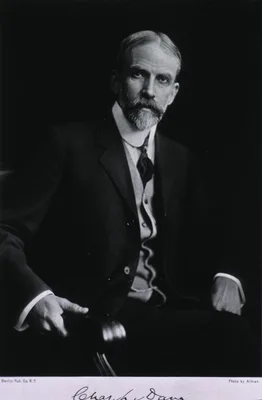
1888 DANA, Charles Loomis (1852 – 1935)
An atypical case of Thomsen’s disease (myotonia congenita).
Dana described a combination of myotonia and muscular atrophy.
GMN 4753 · https://historyofmedicine.com/id/1391
1888 BLOCQ, Paul Oscar (1860 – 1896)
Sur une affection caractérisée par de l’astasie et de l’abasie.
“Blocq’s disease” – astasia–abasia.
GMN 4573 · https://historyofmedicine.com/id/8920
1888 –1918 CHARCOT, Jean Martin (1825 – 1893); RICHER, Paul Marie Louis Pierre (1849 – 1933); GILLES DE LA TOURETTE, Georges Albert Édouard Brutus (1857 – 1904); LONDE, Albert (1858 – 1917)
NOUVELLE Iconographie de la Salpêtriere. 28 vols.
Henry Meige, Richer, and other pupils of Charcot published many valuable studies of the constitutional aspects of nervous diseases in the above work, a series unique in the history of medicine and of great value for t…
GMN 4575 · https://historyofmedicine.com/id/8973
1889 BENEDIKT, Moritz (1835 – 1920)
Tremblement avec paralysie croisée du moteur oculaire commun.
“Benedikt’s syndrome”–paralysis of the oculomotor nerve on one side with intensive trembling of the other side. English translation in Wolf, The classical brain stem syndromes, Springfield, Charles CThomas, 1971.
GMN 4576 · https://historyofmedicine.com/id/446
1889 DEJERINE, Joseph Jules (1849 – 1917)
Sur l’atrophie musculaire des ataxiques.
Dejerine ranks high in French neurology. He became clinical chief at the Salpêtrière. He separated peripheral from medullary tabes, wrote on the tabetic muscular atrophies, on the parietal lobe syndrome, and made many…
GMN 4785 · https://historyofmedicine.com/id/1519
1889 DEJERINE-KLUMPKE, Augusta (1859 – 1927)
Des polynévrites en général et des paralysies et atrophies saturnines en particulier.
Madame Dejerine-Klumpke, famous neurologist, contributed an important work on lead palsies.
GMN 2100 · https://historyofmedicine.com/id/2596
1889 ALEXANDER, William (1844 – 1919)
The treatment of epilepsy.
Alexander was the first to attempt the treatment of epilepsy by surgical means. He removed the superior cervical sympathetic ganglia. Digital facsimile from the Internet Archive at this link.
GMN 4861 · https://historyofmedicine.com/id/5643
1889 OSLER, Sir William (1849 – 1919)
The cerebral palsies of children.
Osler's monograph on cerebral palsy helped define this condition. "Osler emphasized the diverse causes of childhood hemiplegia. Osler classified his patients with nonprogressive upper motor neuron dysfunction accordin…
GMN 11276 · https://historyofmedicine.com/id/13473