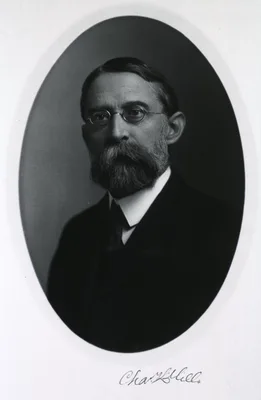
1898 MILLS, Charles Karsner (1845 – 1931)
The nervous system and its diseases.
“The foremost American neurology book of the Nineteenth Century” (McHenry), and the only text of the period to contain a section on the chemistry of the nervous system.
GMN 4586.1 · https://historyofmedicine.com/id/472
1898 BASTIAN, Henry Charlton (1837 – 1915)
A treatise on aphasia and other speech defects.
Bastian localized the auditory and visual centers, and he described word-blindness and word-deafness. (See also No. 4622.)
GMN 4629 · https://historyofmedicine.com/id/686
1898 STRÜMPELL, Ernst Adolf Gustav Gottfried (1853 – 1925)
Ueber die Westphal’sche Pseudosklerose und über diffuse Hirnsklerose, insbesondere bei Kindem.
“Westphal-Strümpell disease” – pseudosclerosis of the brain. (See also No. 4702.) Probably cases of Kinnier Wilson’s disease.
GMN 4709 · https://historyofmedicine.com/id/1164
1898 PEL, Pieter Klazes (1852 – 1919)
Augenkrisen bei Tabes dorsalis.
“Pel’s crises” – the ocular crises in tabes.
GMN 4791 · https://historyofmedicine.com/id/1530
1899 SLAWYK, Coelestin Wilhelm (1866 – )
Ein Fall von Allgemeininfection mit Influenzabacillen.
First description of influenzal meningitis.
GMN 4681 · https://historyofmedicine.com/id/954
1899 SOURY, Jules (1842 – 1915)
Le système nerveux centrale structure et fonctions. Histoire critique des théories et des doctrines. 2 vols.
Massive history of the anatomy and physiology of the nervous system from ancient Greece to the end of the 19th century, limited in its historical analysis. The second volume is a survey of end of 19th century opinions…
GMN 1574.1 · https://historyofmedicine.com/id/1323
1899 RAECKE, Julius (1872 – 1930)
Paralyse und Tabes bei Eheleuten. Ein Beitrag zur Aetiologie beider Krankheiten.
GMN 4801 · https://historyofmedicine.com/id/1563
1899 –1900 FLATAU, Edward (1869 – 1932); REMAK, Ernst Julius (1848 – 1911)
Neuritis und. Polyneuritis. 2 pts.
In Nothnagel’s Handbuch der speziellen Pathologie und Therapie, XI, Bd. 3, Abt. 3-4.
GMN 4587 · https://historyofmedicine.com/id/8922
1899 BARKER, Lewellys Franklin (1867 – 1943)
The nervous system and its constituent neurones, Designed for the use of practitioners of medicine and of students of medicine and psychology.
Considered a masterpiece of compilation of the new scientific evidence for the neuron theory. "Also contains Gertrude Stein’s first publication, which consists of a quote and further description of her developmental w…
GMN 7336 · https://historyofmedicine.com/id/9507
1899 MARINESCU, Gheorghe [Georges Marinesco] (1863 – 1938)
Les troubles de la marche dans l'hémiplégie organique étudiés à l'aide du cinématographe.
Between July 1898 and 1902 Romanian neurologist Gheorghe Marinescu (Georges Marinesco) made the world's first documentary films in his clinic in Bucharest. "Marinescu perfected the use of cinematography as a research …
GMN 11293 · https://historyofmedicine.com/id/13490
1900 LIEPMANN, Hugo Karl (1863 – 1925)
Das Krankheitsbild der Apraxie (motorischen Asymbolie) auf Grund eines Falles von einseitiger Apraxie.
First adequate description of apraxia.
GMN 4588 · https://historyofmedicine.com/id/474
1900 HEAD, Sir Henry (1861 – 1940); CAMPBELL, Alfred Walter (1868 – 1937)
The pathology of herpes zoster and its bearing on sensory localisation.
Head and Campbell showed herpes zoster to be a hemorrhagic inflammation of the posterior nerve roots and the homologous spinal ganglia.
GMN 4644 · https://historyofmedicine.com/id/724
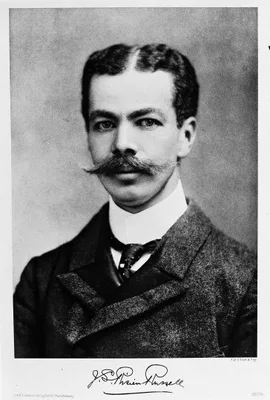
1900 RUSSELL, James Samuel Risien (1863 – 1939); BATTEN, Frederick Eustace (1865 – 1918); COLLIER, James Stansfield (1870 – 1935)
Subacute combined degeneration of the spinal cord.
First full description. Order of authorship in the original publication: Russell, Batten, Collier.
GMN 4710 · https://historyofmedicine.com/id/1167
1900 MILLS, Charles Karsner (1845 – 1931)
A case of unilateral progressive ascending paralysis, probably representing a new form of degenerative disease.
First description of unilateral progressive ascending paralysis (“Mills’s disease”).
GMN 4711 · https://historyofmedicine.com/id/1170
1900 OPPENHEIM, Hermann (1858 – 1919)
Ueber allgemeine und localisierte Atonie der Muskulatur (Myatonie) im frühen Kindesalter.
First description of “Oppenheim’s disease” – amyotonia congenita.
GMN 4760 · https://historyofmedicine.com/id/1405
1900 CUSHING, Harvey Williams (1869 – 1939)
A method of total extirpation of the Gasserian ganglion for trigeminal neuralgia, by a route through the temporal fossa and beneath the middle meningeal artery.
GMN 4875 · https://historyofmedicine.com/id/5722
1900 LAEHR, Bernhard Heinrich (1820 – 1905)
Die Literatur der Psychiatrie, Neurologie und Psychologie von 1459-1799. 3 vols.
GMN 5005 · https://historyofmedicine.com/id/6567
1901 WEIGERT, Carl (1845 – 1904)
Pathologisch-anatomischer Beitrag zur Erb’schen Krankheit (Myasthenia gravis).
Weigert noted the connection of myasthenia gravis with hypertrophy of the thymus.
GMN 4761 · https://historyofmedicine.com/id/1406
1901 STORCH, Ernst (1866 – )
Ueber einige Fälle atypischer progressiver Paralyse. Nach einem hinterlassenen Manuscript Dr. H. Lissauer’s.
“Lissauer’s atypical general paralysis” first described. Heinrich Lissauer was bom in 1861 and died in 1891.
GMN 4802 · https://historyofmedicine.com/id/1567
1901 SPILLER, William Gibson (1863 – 1940); FRAZIER, Charles Harrison (1870 – 1936)
The division of the sensory root of the trigeminus for the relief of tic douloureux; an experimental, pathological, and clinical study, with a preliminary report of one surgically successful case.
Introduction of intracranial trigeminal neurotomy, using a modification of the techniques of Horsley (No. 4865) and Krause (No. 4871). Also published in Philad. med. J., 1901, 8, 1039-49.
GMN 4876 · https://historyofmedicine.com/id/5732
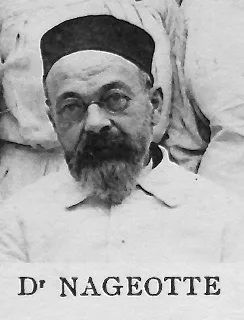
1902 BABINSKI, Joseph François Félix (1857 – 1932); NAGEOTTE, Jean (1866 – 1948)
Hémiasynergie, latéropulsion et myosis bulbaires avec hémianesthésie et hémiplégie croisées.
“Babinski-Nageotte syndrome”.
GMN 4589 · https://historyofmedicine.com/id/475
1902 DEJERINE, Joseph Jules (1849 – 1917); THOMAS, André (1867 – 1963)
Traité des maladies de la moëlle épinière.
GMN 4590 · https://historyofmedicine.com/id/476
1902 KIENBÖCK, Robert (1871 – 1953)
Kritik der sogenannten “traumatischen Syringomyelie”.
Traumatic cavity formation in the spinal cord, so well described by Kienböck, is known as “Kienböck’s disease”.
GMN 4591 · https://historyofmedicine.com/id/477
1902 GOWERS, Sir William Richard (1845 – 1915)
On myopathy and a distal form.
“Distal myopathy of Gowers”, a form of progressive muscular dystrophy.
GMN 4762 · https://historyofmedicine.com/id/1408
1902 NONNE, Max (1861 – 1959)
Syphilis und Nervensystem.
GMN 4792 · https://historyofmedicine.com/id/1533
1902 STILL, Sir George Frederic (1868 – 1941)
The Goulstonian lectures on some abnormal psychical conditions in children. Delivered before the Royal College of Physicians of London on March 4th, 6th, and 11th, 1902.
Considered by many historians to be the scientific starting point of the study of Attention Deficit Hyperactivity Disorder (ADHD). Digital facsimile of the separate offprint from the Internet Archive at this link.
GMN 7979 · https://historyofmedicine.com/id/10155
1903 CÉSTAN, Étienne Jacques Marie Raymond (1872 – 1934); CHENAIS, Louis Jean (1872 – 1950)
Du myosis dans certaines lésions bulbaires en foyer (hémiplégie du type Avellis associée au syndrome oculaire sympathique).
“Cestan–Chenais syndrome”.
GMN 4592 · https://historyofmedicine.com/id/478
1903 FROIN, Georges (1874 – 1932)
Inflammations meningées avec réactions chromatique, fibrineuse et cytologique du liquid cephalo-rachidien.
“Froin’s syndrome” – a coagulation of the cerebrospinal fluid.
GMN 4645 · https://historyofmedicine.com/id/727
1903 BATTEN, Frederick Eustace (1865 – 1918)
Cerebral degeneration with symmetrical changes in the maculae in two members of a family.
Batten disease, a fatal disease of the nervous system that typically begins in childhood. Onset of symptoms is usually between 5 and 10 years of age. Often, it is autosomal recessive. It is the common name for a group…
GMN 4712 · https://historyofmedicine.com/id/1175
1903 –1904 LEDUC, Stéphane Armand Nicolas (1853 – 1939)
L’électrisation cérébrale.
Leduc reported the effects of a galvanic current on the brain. His work led the way to electric convulsion therapy, introduced by Carletti and Bini (No. 4962).
GMN 2003.2 · https://historyofmedicine.com/id/1923
1903 ABADIE, Joseph Louis Irenée Jean (1873 – 1934)
Névralgie faciale; présentation de malade.
Alcohol injection of the Gasserian ganglion for treatment of trigeminal neuralgia. See also pp. 91-96 of the same volume. Digital facsimile from Google Books at this link.
GMN 4877 · https://historyofmedicine.com/id/5736
1903 MARCHIAFAVA, Ettore (1847 – 1935); BIGNAMI, Amico (1862 – 1929)
Sopra un’ alterazione del corpo calloso osservata in soggetti alcoolisti.
Marchiafava–Bignami disease – degeneration of the corpus callosum in alcoholism.
GMN 4955 · https://historyofmedicine.com/id/6287
1903 –1929 GOLGI, Camillo (1844 – 1926)
Opera Omnia. Volume I: Istologia normale—1870-1883 (Con 21 Tavole e ritratto); Volume II: Istologia normale—1883-1902 (Con 21 tavole); Volume III: Patologia generale e isto-patologia—1868-1894 (Con 9 Tavole). Volume IV: Scritti su argomenti varii.
Limited to 325 copies, including material not previously published.
GMN 7338 · https://historyofmedicine.com/id/9509
1904 VERGER, Henri (1873 – 1930)
Essai de classification de quelques névralgies faciales par les injections de cocaine loco dolenti.
Classification of the neuralgias.
GMN 4593 · https://historyofmedicine.com/id/480
1904 MAYOU, Marmaduke Stephen (1876 – 1934)
Cerebral degeneration, with symmetrical changes in the maculae, in three members of a family.
“Batten-Mayou disease”, juvenile amaurotic idiocy (see also No. 4712).
GMN 4713 · https://historyofmedicine.com/id/1178
1904 NISSL, Franz (1860 – 1919)
Histologische und histopathologische Arbeiten über die Grosshirnrinde. Vol. 1.
Pages 315-494 contain Nissl’s classic account of the histopathology of general paresis.
GMN 4803 · https://historyofmedicine.com/id/1571
1905 GARCÍA TAPIA, Antonio (1875 – 1950)
Un caso de parálisis del lado derecho de la laringe y de la lengua, con parálisis del esterno-cleido-mastoidea y trapecio del mismo lado; accompañado de hemiplejia total temporal del lado izquierdo del cuerpo.
“Tapia’s syndrome” – palato-pharyngo-laryngeal hemiplegia.
GMN 4594 · https://historyofmedicine.com/id/481
1905 WICKMAN, Otto Ivar (1872 – 1914)
Studien über Poliomyelitis acuta.
Wickman was the first to produce evidence confirming the infectious nature of poliomyelitis.
GMN 4668 · https://historyofmedicine.com/id/826
1905 VOGT, Heinrich (1875 – 1936)
Über familiäre amaurotische Idiotie und verwandte Krankheitsbilder.
Spielmayer-Vogt disease, or Spielmeyer-Vogt-Sjögren-Batten disease, the juvenile form of cerebromacular degeneration.
GMN 4713.1 · https://historyofmedicine.com/id/1180
1906 FRIEDMANN, Max (1858 – 1925)
Ueber die nicht epileptischen Absencen oder kurzen narkoleptischen Anfälle.
First description of pyknolepsy.
GMN 4594.1 · https://historyofmedicine.com/id/483
1906 MARIE, Pierre (1853 – 1940)
Révision de la question de l’aphasie; la troisième circonvolution frontale gauche ne joue aucun rôle spécial dans la fonction du langage.
Marie disputed Broca’s claim that the third left frontal convolution of the brain is the speech center. He classified aphasia into three groups: anarthria (defects of articulation), Broca’s (motor) aphasia, and Wernic…
GMN 4630 · https://historyofmedicine.com/id/688
1906 JOCHMANN, Georg (1874 – 1915)
Versuche zur Serodiagnostik und Serotherapie der epidemischen Genickstarre.
First attempts at the serum treatment of cerebrospinal meningitis.
GMN 4682 · https://historyofmedicine.com/id/955
1906 MILLS, Charles Karsner (1845 – 1931)
Unilateral ascending paralysis and unilateral descending paralysis.
First description of unilateral descending paralysis.
GMN 4714 · https://historyofmedicine.com/id/1183
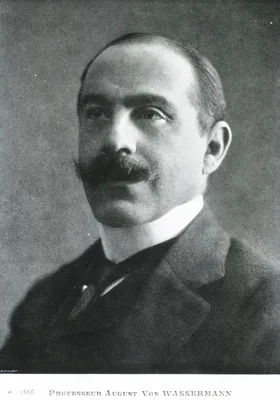
1906 WASSERMANN, August von (1866 – 1925); PLAUT, Felix (1877 – 1940)
Ueber das Vorhandensein syphilitischer Antistoffe in der Cerebrospinalflüssigkeit von Paralytikem.
Wassermann applied his test (No. 2402) to the cerebrospinal fluid and, in paretics, obtained positive results in over 90 per cent of cases. The test greatly facilitated the diagnosis of general paralysis.
GMN 4804 · https://historyofmedicine.com/id/1573
1906 CUSHING, Harvey Williams (1869 – 1939)
Sexual infantilism with optic atrophy in cases of tumor affecting the hypophysis cerebri.
GMN 3890 · https://historyofmedicine.com/id/4953
1906 SCHLOFFER, Hermann (1868 – 1937)
Zur Frage der Operationen an der Hypophyse.
Schloffer’s Operation for acromegaly. He was the first successfully to operate upon a pituitary tumor in man (See No. 3892).
GMN 3891 · https://historyofmedicine.com/id/4954
1906 BÁRÁNY, Robert (1876 – 1936)
Untersuchungen über den vom Vestibularapparat des Ohres reflektorisch ausgelösten Rhythmischen und seine Begleiterscheinungen.
Bárány’s pointing test for the localization of circumscribed cerebellar lesions. Republished in book form, Berlin, 1906. In 1914 Bárány was awarded the Nobel Prize in Physiology or Medicine "for his work on the physio…
GMN 3401 · https://historyofmedicine.com/id/5161
1907 FLEXNER, Simon (1863 – 1946)
Concerning a serum therapy for experimental infection with Diplococcus intracellularis.
Flexner prepared an antiserum for use in cerebrospinal meningitis.
GMN 4683 · https://historyofmedicine.com/id/958
1907 CRUCHET, Jean René (1875 – 1959)
Traité des torticolis spasmodiques.
In this classic monograph, 357 cases of torticollis are recorded.
GMN 4763 · https://historyofmedicine.com/id/1409
1907 GOWERS, Sir William Richard (1845 – 1915)
The border-land of epilepsy. Faints, vagal attacks, vertigo, migraine, sleep symptoms, and their treatment.
GMN 4821 · https://historyofmedicine.com/id/1628