1918 PEET, Max Minor (1885 – 1949)
Tic douloureux and its treatment, with a review of the cases operated upon at the University Hospital in 1917.
Trigeminal nerve resection with conservation of the motor root, for treatment of trigeminal neuralgia.
GMN 4889 · https://historyofmedicine.com/id/5848
1918 DANDY, Walter Edward (1886 – 1946)
Ventriculography following the injection of air into the cerebral ventricles.
Dandy was responsible for the introduction of ventriculography.
GMN 4602 · https://historyofmedicine.com/id/8927
1918 HURST, Sir Arthur Frederick (1879 – 1944)
Medical diseases of the war. Second edition
Roughly the first half of this work is on "war neuroses." The second half is on "infective and other disorders," including gas poisoning. Hurst greatly expanded the first section after experience as a neurologist in E…
GMN 8604 · https://historyofmedicine.com/id/10781
1919 DANDY, Walter Edward (1886 – 1946)
Röntgenography of the brain after the injection of air into the spinal canal.
Introduction of pneumoencephalography.
GMN 4603 · https://historyofmedicine.com/id/554
1919 PARKER, George Howard (1864 – 1955)
The elementary nervous system.
Important studies on the survival of primitive types of neuromuscular mechanism in some of the higher vertebrates.
GMN 528 · https://historyofmedicine.com/id/1682
1919 CUMMINGS, Bruce Frederick [BARBELLION] (1889 – 1919); WELLS, Herbert George (1866 – 1946)
The journal of a disappointed man. With an introduction by H. G. Wells.
Published under the pseudonym, Wilhelm Nero Pilate Barbellion. "Cummings' life changed forever when he was called to enlist in the British Army to fight in World War I in November 1915. He had consulted his doctor bef…
GMN 10741 · https://historyofmedicine.com/id/12936
1920 CREUTZFELD, Hans Gerhard (1885 – 1964)
Ueber eine eigenartige herdförmige Erkrankung des Zentralnervensystems.
Creutzfeld-Jakob disease, spatic pseudoschlerosis, independently discovered by Jakob. (see No. 4722). English translation in No. 5019.14, pp. 97-112. Creutzfeld described a single case and later reported that "his cas…
GMN 4719.1 · https://historyofmedicine.com/id/1205
1920 VOGT-MUGNIER, Cécile (1875 – 1962); VOGT, Oskar (1870 – 1959)
Zur Lehre der Erkrankungen des striären Systems.
“Vogt syndrome”, disease of the corpora striata.
GMN 4720 · https://historyofmedicine.com/id/1217
1920 FOIX, Charles (1882 – 1927)
Les lésions anatomiques de la maladie de Parkinson.
Foix and his colleagues showed that the specific lesion in Parkinson’s disease is in the substantia nigra of the mid-brain.
GMN 4721 · https://historyofmedicine.com/id/1218
1920 HULDSCHINSKY, Kurt (1883 – 1941)
Die Beeinflussung der Tetanie durch Ultraviolettlicht.
Treatment of tetany with ultraviolet light.
GMN 4836 · https://historyofmedicine.com/id/3593
1920 BIANCHI, Leonardo (1848 – 1919)
La meccanica del cervello e la funzione dei lobi frontale.
Bianchi showed that bilateral destruction of the frontal lobes caused character changes, a finding put to practical use by Egas Moniz and others. English translation, Edinburgh, 1922.
GMN 4891 · https://historyofmedicine.com/id/5866
1921 FOERSTER, Otfrid (1873 – 1941)
Zur Analyse und Pathophysiologie der striären Bewegungsstörungen.
Foerster made a most important contribution to the literature on extra pyramidal diseases.
GMN 4604 · https://historyofmedicine.com/id/555
1921 FORESTIER, Jacques (1890 – 1978); SICARD, Jean Athanase (1872 – 1929)
Méthode radiographique d’exploration de la cavité épidurale par la lipiodol.
Positive contrast myelography with iodized oil (lipiodol). This paper records the first use of lipiodol in radiology.
GMN 2693 · https://historyofmedicine.com/id/556
1921 WIDERØE, Sofus (1880 – 1937)
Über die diagnostische Bedeutung der intraspinalen Luftinjektionen bei Rückenmarksleiden, besonders bei Geschwülsten.
Myelography by air injection into spinal subarachnoid space.
GMN 4605.1 · https://historyofmedicine.com/id/558
1921 JAKOB, Afons Maria (1884 – 1931)
Ueber eigenartige Erkrankungen der Zentralnervensystems mit bemerkenswertem anatomischem Befunde. (Spastische Pseudosklerose — Encephalomyclopathie mit disseminirrten Degenerationsherden.)
“Creutzfeld-Jakob disease”, spastic pseudosclerosis. Traditionally considered to have been independently discovered by Creutzfeld, but in the 21st century recognized as a discovery by Jakob alone. See also No. 4719.1.
GMN 4722 · https://historyofmedicine.com/id/1219
1921 SOUQUES, Achille Alexandre (1860 – 1944)
Rapport sur les syndromes parkinsoniens.
Souques recognized the importance of encephalitis lethargica as a cause of Parkinsonism; more than any other neurologist he was responsible for unifying its diverse manifestations.
GMN 4723 · https://historyofmedicine.com/id/1225
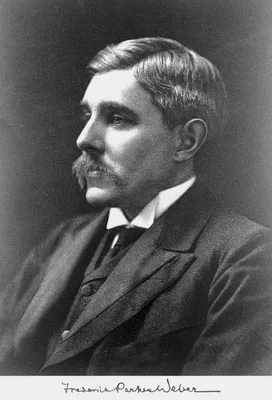
1922 WEBER, Frederick Parkes (1863 – 1962)
Right-sided hemi-hypertrophy resulting from right-sided congenital spastic hemiplegia, with a morbid condition of the left side of the brain, revealed by radiograms.
Sturge–Weber syndrome (see No. 4560.1).
GMN 4605.2 · https://historyofmedicine.com/id/564
1922 HALLERVORDEN, Julius (1882 – 1965); SPATZ, Hugo (1888 – 1969)
Eigenartige Erkrankung in extrapyramidalen System mit besonderer Beteiligung des Globus pallidus und der Substantia nigra.
The (extrapyramidal) syndrome of Hallervorden and Spatz.
GMN 4724 · https://historyofmedicine.com/id/1231
1923 JONES, William Henry Samuel (1876 – 1963); HIPPOCRATES, [Ἱπποκράτης; Hippocrates of Kos] (-460 – -370)
The sacred disease. In [Works]…edited with an English translation by W.H.S. Jones. 2, 127-83
This includes the first mention of epilepsy in children. Hippocrates grouped all convulsive attacks together as ερα νο̂σος, the sacred disease. He did not employ the word έπίληψις, (which seems first to have been used…
GMN 4807 · https://historyofmedicine.com/id/8898
1923 TREVES, Sir Frederick (1853 – 1923)
The elephant man and other reminiscences.
The story of Treves's patient, Joseph Carey Merrick (1862-1890), incorrected identified by Treves in these reminiscences as "John Merrick." The story was retold in The elephant man, Bernard Pomerance's 1977 play about…
GMN 7407 · https://historyofmedicine.com/id/9579
1923 JAKOB, Afons Maria (1884 – 1931)
Die Extrapyramidalen Erkrankungen: Mit Besonderer Berücksichtigung der pathologischen Anatomie und Histologie und der Pathophysiologie der Bewegungsstörungen.
Pages 218-245 represent Jakob's full clinical-pathologic description of the fifth patient that he first described in this work.The symptoms of this patient and the histopathopathologic illustrations correspond fully w…
GMN 12594 · https://historyofmedicine.com/id/14834
1924 GERSTMANN, Josef (1887 – 1969)
Fingeragnosie. Eine umschriebene Störung der Orientierung am eigenen Körper.
Gerstmann’s syndrome, due to cerebral lesion. Translation in Arch. Neurol. Psychiat., 1971, 24, 475-76.
GMN 4605.3 · https://historyofmedicine.com/id/565
1924 WILSON, Samuel Alexander Kinnier (1878 – 1937)
Some problems in neurology. No. 2. Pathological laughing and crying.
An important paper on the pathology of facial movements.
GMN 4606 · https://historyofmedicine.com/id/566
1924 WALLGREN, Arvid Johann (1889 – 1973)
Une nouvelle maladie infectieuse du système nerveux central?
Acute lymphocytic choriomeningitis (aseptic meningitis syndrome) first described.
GMN 4687 · https://historyofmedicine.com/id/8877
1925 KUNDRATITZ, Karl (1889 – 1975)
Experimentelle Übertragung von Herpes zoster auf den Menschen und die Beziehungen von Herpes zoster zu Varicellen.
First demonstration of the infectivity of herpes.
GMN 4652 · https://historyofmedicine.com/id/753
1925 COLLIP, James Bertram (1892 – 1965); LEITCH, Douglas Burrows (1888 – 1974)
A case of tetany treated with parathyrin.
First use of parathyroid hormone in the treatment of tetany.
GMN 3862 · https://historyofmedicine.com/id/3598
1925 DANDY, Walter Edward (1886 – 1946)
Section of the sensory root of the trigeminal nerve at the pons. Preliminary report of the operative procedure.
Intracranial section for glossopharyngeal neuralgia. For a more detailed account see his paper in Arch. Surg. (Chicago), 1929, 18, 687-734.
GMN 4896 · https://historyofmedicine.com/id/5904
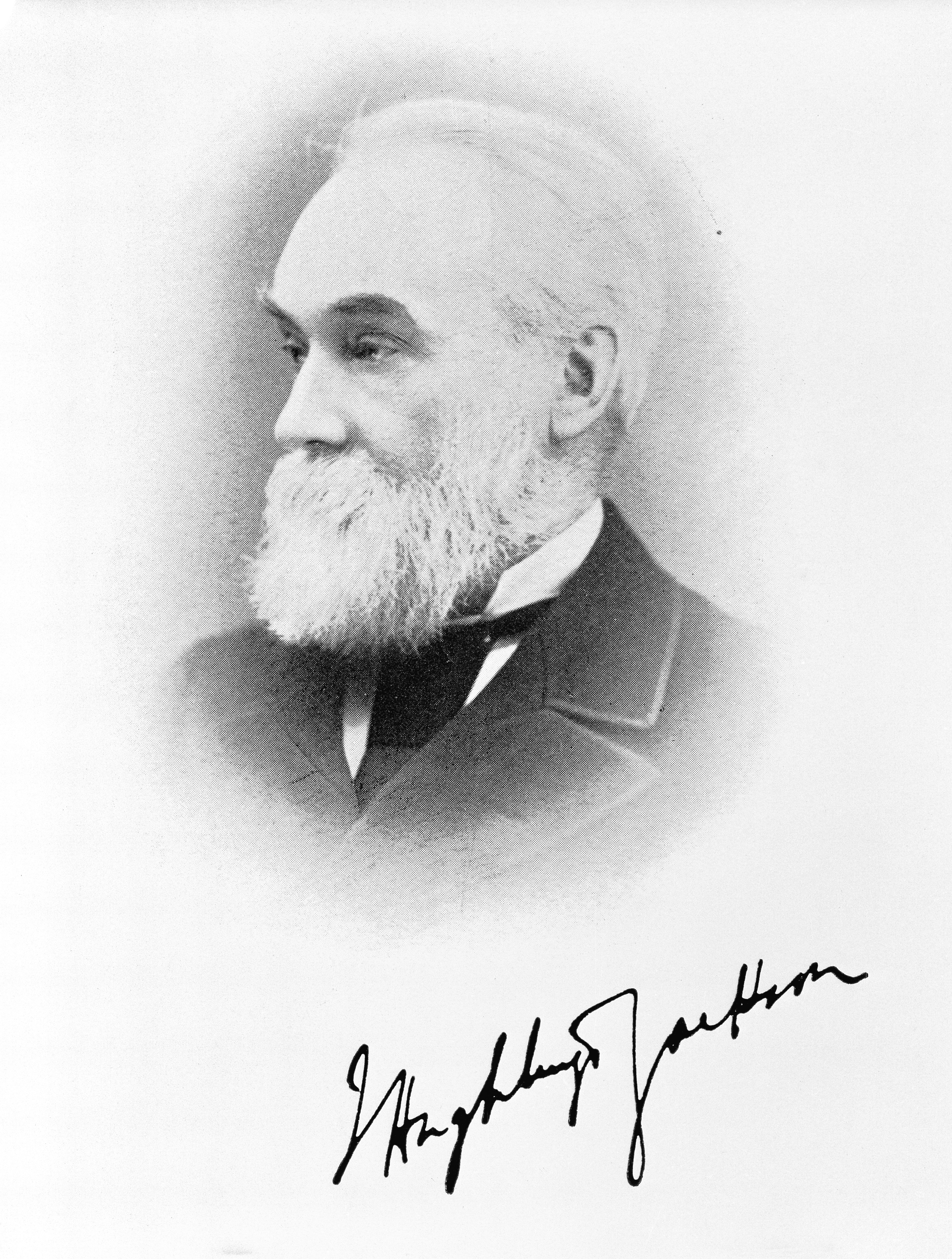
1925 JACKSON, John Hughlings (1835 – 1911); TAYLOR, James (1859 – 1946)
Neurological fragments, with ‘Biographical Memoir’ and ‘List of Dr. Hughlings Jackson's Published Writings’ by James Taylor.
GMN 10763 · https://historyofmedicine.com/id/12959
1926 CUSHING, Harvey Williams (1869 – 1939); BAILEY, Percival (1892 – 1973)
A classification of the tumors of the glioma group on a histogenetic basis with a correlated study of prognosis.
From 1922 to 1925 Bailey undertook extensive pathological and histological studies of brain tumors, and based on cellular configuration, he created a classification system of thirteen categories. In 1927 he reduced th…
GMN 4608 · https://historyofmedicine.com/id/568
1926 SCHAFFER, Károly (1864 – 1939)
Über das morphologische Wesen und die Histopathologie der hereditaersystematischen Nervenkrankheiten.
Schaffer was a pioneer Hungarian neuropathologist. He laid down a triad of criteria for judging whether or not a neurological disease is hereditary.
GMN 4609 · https://historyofmedicine.com/id/575
1926 HEAD, Sir Henry (1861 – 1940)
Aphasia and kindred disorders of speech. 2 vols.
Head’s theory of aphasia conceived the condition as being “a disorder of symbolic formulation and expression”.
GMN 4633 · https://historyofmedicine.com/id/693
1926 ADIE, William John (1886 – 1935)
Idiopathic narcolepsy: a disease sui generis; with remarks on the mechanism of sleep.
Adie’s description of narcolepsy is called “maladie d’Adie” by some French writers.
GMN 4607 · https://historyofmedicine.com/id/8928
1927 EGAS MONIZ, Antonio Caetano de Abreu Freire (1874 – 1955)
L’encéphalographie artérielle, son importance dans la localisation des tumeurs cérébrales.
Introduction of cerebral arteriography. See also Presse méd., 1928, 36, 689-93. English translation in J. Neurosurg., 1964, 21, 145-56.
GMN 4610 · https://historyofmedicine.com/id/578
1927 BALÓ, József Mátyas (1895 – 1979)
A leukoenkephalitis periaxialis concentricaról.
“Baló’s disease” – encephalitis periaxialis concentrica. Translation in Arch. Neurol. Psychiat. (Chicago), 1928, 19, 242-64.
GMN 4653 · https://historyofmedicine.com/id/755
1928 KANEKO, Renjiro (1886 – ); AOKI, Y
Ueber die Encephalitis epidemica in Japan.
Japanese encephalitis distinguished from encephalitis lethargica.
GMN 4654 · https://historyofmedicine.com/id/760
1928 TROTTER, Wilfred Batten Lewis (1872 – 1939); BIRLEY, James Leatham (1884 – 1934)
Traumatic aneurysm of the intracranial portion of the internal carotid artery. With a note by Wilfred Trotter.
In 1924 Wilfred Trotter(1872-1939) performed the first planned operation for intracranial aneurysm diagnosed pre-operatively.
GMN 3004.1 · https://historyofmedicine.com/id/5329
1929 DRINKER, Philip (1894 – 1972); MCKHANN, Charles Freemont (1930 – )
The use of a new apparatus for the prolonged administration of artificial respiration. I. A fatal case of poliomyelitis.
The Drinker respirator (“iron lung”).
GMN 1978 · https://historyofmedicine.com/id/3767
1929 EDINGER, Johanna Gabrielle Ottilie "Tilly" (1897 – 1967)
Die fossilen Gehirne.
The founding work of paleoneurology based on Edinger's discovery that mammalian brains left imprints on fossil skulls, allowing paleoneurologists to discern their anatomy.
GMN 10642 · https://historyofmedicine.com/id/12835
1930 FEARING, Franklin (1892 – 1962)
Reflex action. A study in the history of physiological psychology.
Reprinted, New York, Hafner, 1964.
GMN 1577 · https://historyofmedicine.com/id/1334
1930 EDGEWORTH, Harriet Isabel (1892 – )
A report of progress on the use of ephedrine in a case of myasthenia gravis.
Harriet Edgeworth discovered by accident the beneficial effect of ephedrine in myasthenia gravis. Digital facsimile from jamanetwork.com at this link.
GMN 4765 · https://historyofmedicine.com/id/1412
1930 SCHMIDT, Max (1898 – )
Intracranial aneurysms.
Temporal arteritis is first described in Case 24 (p. 532). Schmidt’s paper also appeared in Bibl. Laeger, 1930, 122,269 (Case 24, p. 320). Temporal arteritis was also described as a new condition by B. T. Horton, T. B…
GMN 2919 · https://historyofmedicine.com/id/4904
1931 ADIE, William John (1886 – 1935)
Pseudo-Argyll Robertson pupils with absent tendon reflexes; a benign disorder simulating tabes dorsalis.
“Adie’s syndrome”; see also his later paper in Brain, 1932, 55, 98-113. It was earlier reported by J. Strasberger, by A. Saenger and by M. Nonne in Neurol. Zbl., 1902, 21, 738, 837, and 1000. See also No. 5950.
GMN 4611 · https://historyofmedicine.com/id/584
1931 BURNET, Sir Frank Macfarlane (1899 – 1985); MACNAMARA, Annie Jean Dame (1899 – 1968)
Immunological differences between strains of poliomyelitis virus.
GMN 4670.5 · https://historyofmedicine.com/id/861
1931 LYSHOLM, Erik (1891 – 1947)
Apparatus and technique for roentgen examination of the skull.
Lysholm–Schönander skull table, allowing precise radiography of the skull.
GMN 4611.1 · https://historyofmedicine.com/id/8930
1931 –1932 JACKSON, John Hughlings (1835 – 1911); HOLMES, Sir Gordon Morgan (1876 – 1965); TAYLOR, James (1859 – 1946); WALSH, Sir Francis Martin Rouse (1885 – 1973)
Selected writings of John Hughlings Jackson, edited by James Taylor, with the advice and assistance of Gordon Holmes and F. M. R. Walshe. 2 vols.
GMN 10764 · https://historyofmedicine.com/id/12960
1932 DAVIDOFF, Leo Max (1898 – 1975); DYKE, Cornelius Gysbert (1900 – 1943)
An improved method of encephalography.
Lumbar encephalography. In 1937 the authors published a monograph on the subject entitled The normal encephalogram. After Dyke's premature death in 1943 Davidoff collaborated with radiologist Bernard S. Epstein (1908-…
GMN 4611.3 · https://historyofmedicine.com/id/585
1932 BOOTHBY, Walter Meredith (1880 – 1953)
Myasthenia gravis: a preliminary report on the effect of treatment with glycine.
Introduction of glycine (glycocoll) in the treatment of myasthenia gravis.
GMN 4766 · https://historyofmedicine.com/id/1414
1932 REMEN, Lazar (1907 – 1974)
Zur Pathogenese und Therapie der Myasthenie gravis pseudoparalytica.
Introduction of neostigmine in the treatment of myasthenia gravis.
GMN 4767 · https://historyofmedicine.com/id/1415
1932 CUSHING, Harvey Williams (1869 – 1939)
Papers relating to the pituitary body, hypothalamus, and para-sympathetic nervous system.
Cushing advanced the theory that the hypothalamus is responsible for the development of peptic ulcer (see p. 175 et seq.). This work contains his four principal contributions to pituitary-hypothalamic interrelationshi…
GMN 3552 · https://historyofmedicine.com/id/4063
1932 CUSHING, Harvey Williams (1869 – 1939)
The basophil adenomas of the pituitary body and their clinical manifestations (pituitary basophilism).
“Cushing’s syndrome”.
GMN 3904 · https://historyofmedicine.com/id/4978

![HIPPOCRATES, [Ἱπποκράτης; Hippocrates of Kos] (-460 – -370)](/media/portraits/50)