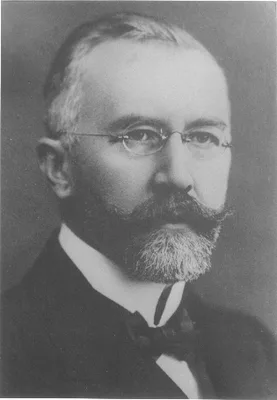
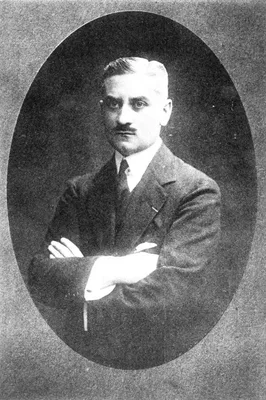
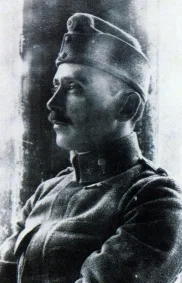
1907 SCHLOFFER, Hermann (1868 – 1937)
Erfolgreiche Operation eines hypophysen Tumors auf nasalem Wege.
Schloffer’s Operation by the nasal route.
GMN 3892 · https://historyofmedicine.com/id/4955
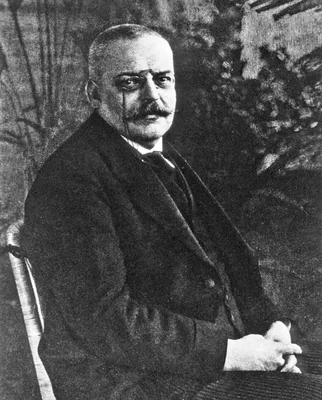
1907 ALZHEIMER, Alois (1864 – 1915)
Ueber eine eigenartige Erkrankung der Hirnrinde.
“Alzheimer’s disease” –presenile dementia. Preliminary note in Neurol. Zbl., 1906, 25, 1134. English translation in Arch. neurol., 1969, 21, 109-110, and in K. Bick (ed.) The early story of Alzheimer’s disease, New Yo…
GMN 4956 · https://historyofmedicine.com/id/6290
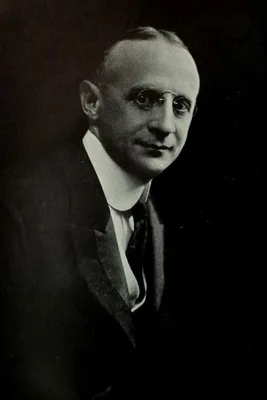
1907 SPIELMAYER, Walther (1879 – 1935)
Klinische und anatomische Untersuchungen über eine besondere Form von familiärer amaurotische Idiotie.
See No. 4713.1. Reprinted in Histologische und Histopathologische Arbeiten über die Grosshirnrinde (Nissl), 1908, 2, 193-213.
GMN 4714.1 · https://historyofmedicine.com/id/8912
1908 FLEXNER, Simon (1863 – 1946); JOBLING, James Wesley (1876 – 1961)
Serum treatment of epidemic cerebrospinal meningitis.
GMN 4684 · https://historyofmedicine.com/id/960
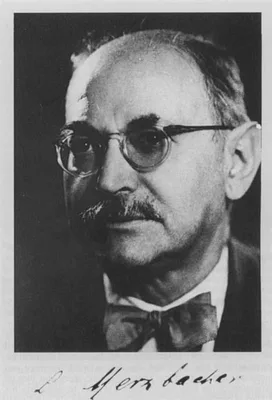
1908 MERZBACHER, Ludwig (1875 – )
Weitere Mitteilungen über eine eigenartige hereditär-familiare Erkrankung des Zentralnervensystems.
“Pelizaeus-Merzbacher disease”, familial centrolobar sclerosis (see also No. 4703).
GMN 4715 · https://historyofmedicine.com/id/1195
1908 SCHWALBE, Marcus Walter (1883 – 1926)
Eine eigentümliche tonische Krampfform mit hysterischen Symptomen.
First description of torsion-spasm, dystonia musculorum deformans; also called “Ziehen–Oppenheim disease” following reports of cases by these writers in Neurol. Zbl., 1911, 30, 109, 1090.
GMN 4716 · https://historyofmedicine.com/id/1197
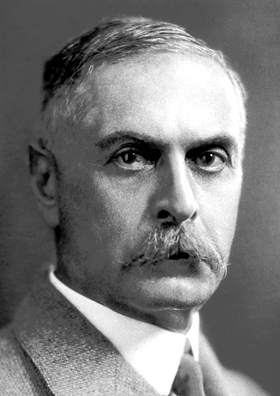
1909 LANDSTEINER, Karl (1868 – 1943); POPPER, Erwin (1879 – 1955)
Uebertragung der Poliomyelitis acuta auf Affen.
Landsteiner and Popper were the first to isolate poliovirus and to transmit poliomyelitis to monkeys.
GMN 4669 · https://historyofmedicine.com/id/830
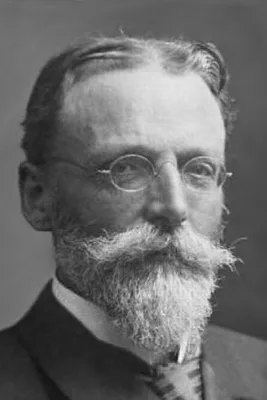
1909 ESCHERICH, Theodor (1857 – 1911)
Die Tetanie der Kinder.
GMN 4835 · https://historyofmedicine.com/id/3590
1909 HIRSCH, Oskar (1877 – 1965)
Eine neue Methode der endonasalen operation von Hypophysentumoren.
Hirsch first demonstrated the transnasal transseptal exposure of the sphenoid sinus and pituitary gland in a cadaveric specimen in front of the medical society of Vienna.
GMN 3895 · https://historyofmedicine.com/id/4959
1909 FOERSTER, Otfrid (1873 – 1941); KÜTTNER, Hermann (1870 – 1932)
Ueber operative Behandlung gastrischer Krisen durch Resektion der 7-10. hinteren Dorsalwurzel.
Foerster’s operation for tabes.
GMN 4881 · https://historyofmedicine.com/id/5772
1909 SIDIS, Boris (1867 – 1923)
An experimental study of sleep. (From the Physiological Laboratory of the Harvard Medical School and from Sidis' Laboratory).
Sidis emphasized his physiological approach in the wording of the title of this book. Digital facsimile from Google Books at this link.
GMN 12455 · https://historyofmedicine.com/id/14687
1910 SLUDER, Greenfield (1865 – 1928)
The syndrome of sphenopalatine-ganglion neurosis.
“Sluder’s neuralgia” first described.
GMN 4595 · https://historyofmedicine.com/id/485
1910 FLEXNER, Simon (1863 – 1946); LEWIS, Paul Adin (1879 – 1929)
Experimental poliomyelitis in monkeys: Active immunization and passive serum protection.
Demonstration of antibodies in convalescent serum in monkeys.
GMN 4670 · https://historyofmedicine.com/id/834
1910 GAY, Frederick Parker (1874 – 1939); LUCAS, William Palmer (1880 – 1960)
Anterior poliomyelitis. Methods of diagnosis from spinal fluid and blood in monkeys and in human beings.
Gay and Lucas were the first to make accurate cell counts of the spinal fluid in poliomyelitis.
GMN 4670.1 · https://historyofmedicine.com/id/837
1910 NETTER, Arnold (1855 – 1936); LEVADITI, Constantin (1874 – 1953)
Action microbicide exercée sur la virus de la poliomyélite aiguë dans le sérum des sujets antérieurement atteints de paralysie infantile. Sa constatation dans le sérum d’un sujet qui a présenté une forme abortive.
Antibodies discovered in human convalescentserum. See also No. 4670.3.
GMN 4670.2 · https://historyofmedicine.com/id/844
1910 LANDSTEINER, Karl (1868 – 1943); LEVADITI, Constantin (1874 – 1953)
La poliomyélite experimental.
Serum from a monkey that had recovered from experimental poliomyelitis was mixed with an emulsion containing active polio virus; it failed to produce paralytic disease when injected into fresh monkeys.
GMN 4670.3 · https://historyofmedicine.com/id/853
1911 DAVENPORT, Charles Benedict (1866 – 1944); WEEKS, David Fairchild (1874 – 1929)
A first study of inheritance of epilepsy.
Davenport and Weeks produced strong evidence in support of the hereditary origin of epilepsy.
GMN 4822 · https://historyofmedicine.com/id/1630
1911 TROTTER, Wilfred Batten Lewis (1872 – 1939)
On certain clinically obscure malignant tumours of the naso-pharyngeal wall.
“Trotter’s syndrome”; deafness, palatal paralysis, and facial neuralgia, usually due to a nasopharyngeal carcinoma.
GMN 3319.1 · https://historyofmedicine.com/id/4542
1911 BÁRÁNY, Robert (1876 – 1936)
Vestibularapparat und Zentralnervensystem.
“Bárány’s syndrome” – unilateral deafness, vertigo, and pain in the occipital region.
GMN 3402 · https://historyofmedicine.com/id/5169
1911 GOLDTHWAIT, Joel Ernest (1866 – 1961)
The lumbo-sacral articulation. An explanation of many cases of “lumbago”, “sciatica” and paraplegia.
Goldthwait suggested that lumbago and sciatica might be due to intervertebral disc injury.
GMN 4383 · https://historyofmedicine.com/id/5898
1911 TEACHER, John Hammond (1869 – 1930); MIDDLETON, George Stevenson (1854 – 1928)
Injury of the spinal cord due to rupture of an intervertebral disc during muscular effort.
Report of a case of “sciatica” due to rupture of an intervertebral disc.
GMN 4384 · https://historyofmedicine.com/id/5908
1911 WATERHOUSE, Rupert (1873 – 1958)
A case of suprarenal apoplexy.
Waterhouse–Friderichsen (WFS) syndrome (see also Nos. 4679, 4686).
GMN 4685 · https://historyofmedicine.com/id/8875
1911 MESTREZAT, William (1883 – 1928)
Le liquide céphalo-rachidien normal et pathologique, valeur clinique de l’examen chimique: Syndromes humoraux dans les diverses affections
Mestrezat gave the first exact description of the chemical constitution of the cerebrospinal fluid. Also published at Paris, Maloine, 1912. Digital facsimile of the 1912 edition from the Internet Archive at this link.
GMN 4596 · https://historyofmedicine.com/id/8924
1911 ALZHEIMER, Alois (1864 – 1915)
Ūber eigenartige Krankheitsfälle des späteren Alters.
In this record of his continuing research on what in 1910 Kraepelin called Alzheimersche Krankheit (Alzheimer's disease) Alzheimer provided detailed history, clinical signs, symptoms descriptions, pathologic and histo…
GMN 13596 · https://historyofmedicine.com/id/15875
1912 SCHILDER, Paul Ferdinand (1886 – 1940)
Zur Kenntnis der sogenannten diffusen Sklerose (über Encephalitis periaxialis diffusa).
“Schilder’s disease” – encephalitis periaxialis diffusa.
GMN 4646 · https://historyofmedicine.com/id/730
1912 KLING, Carl (1887 – 1967)
Experimental and pathological investigation. In: Investigations on epidemic infantile paralysis, report from the State Medical Institute of Sweden to the XVth International Congress on Hygiene and Demography.
Kling, A. Pettersson, and W. Wernstedt recovered the poliomyelitis virus from the intestinal wall and contents, disproving the contention of Flexner that it was exclusively neurotropic.
GMN 4670.4 · https://historyofmedicine.com/id/857
1912 DEJERINE, Joseph Jules (1849 – 1917); THOMAS, André (1867 – 1963)
L’atrophie olivo-ponto-cérébelleuse.
Olivo-ponto-cerebellar atrophy. English translation in Rottenberg & Hochberg, No. 5019.14, pp. 219-51.
GMN 4716.1 · https://historyofmedicine.com/id/1199
1912 WILSON, Samuel Alexander Kinnier (1878 – 1937)
Progressive lenticular degeneration, a familial nervous disease associated with cirrhosis of the liver.
Classic description of progressive familial hepatolenticular degeneration (“Wilson’s disease”), first described by Frerichs in 1861 (see No. 4693), now considered to be a disorder of copper and ceruloplasmin metabolism.
GMN 4717 · https://historyofmedicine.com/id/1215
1912 –1913 SAUERBRUCH, Ernst Ferdinand (1875 – 1951)
Thymektomie bei einem Fall von Morbus Basedowi mit Myasthenie.
Thymectomy for myasthenia gravis. Reported by C. H. Schumacher and – . Roth.
GMN 4764 · https://historyofmedicine.com/id/1411
1912 HAUPTMANN, Alfred (1881 – 1948)
Luminal bei Epilepsie.
Introduction of phenobarbitone in the treatment of epilepsy.
GMN 4823 · https://historyofmedicine.com/id/1634
1912 SCHÜLLER, Artur (1874 – 1958)
Röntgen-diagnostik der Erkrankungen des Kopfes.
A fundamental work on radiological examination of the skull. English translation, St. Louis, 1918.
GMN 4596.1 · https://historyofmedicine.com/id/8925
1912 GODDARD, Henry Herbert (1866 – 1957)
The Kallikak family: A study in the heredity of feeble-mindedness.
When this book was published Goddard was Director of the Research Laboratory of the Training School at Vineland, New Jersey, for Feeble-minded Girls and Boys. Though this work drew wide attention to the problems of pe…
GMN 11535 · https://historyofmedicine.com/id/13734
1912 FLATAU, Edward (1869 – 1932)
Die Migräne.
Flatau presented the full clinical picture of migraine and described the disease as an innate disposition to pathological metabolic processes in the nervous system. He described its distinguished characters - ocular, …
GMN 12888 · https://historyofmedicine.com/id/15135
1913 NOGUCHI, Hideyo (1876 – 1928); MOORE, Joseph Waldron (1879 – )
A demonstration of Treponema pallidum in the brain in cases of general paralysis.
A pure culture of Trep. pallidum was obtained from a case of dementia paralytica.
GMN 4805 · https://historyofmedicine.com/id/1575
1913 LANGE, Karl Friedrich August (1883 – )
Die Ausflockung kolloidalen Goldes durch Zerebrospinalflüssigkeit bei luetischenAffektiondesZentralnervensystems.
Lange’s colloidal gold test for the diagnosis of cerebrospinal syphilis. See also Berl. klin. Wschr., 1912, 49, 897-901.
GMN 2406 · https://historyofmedicine.com/id/3374
1913 PIÉRON, Louis Charles Henri (1881 – 1964)
Le problème physiologique du sommeil.
Digital facsimile from the Internet Archive at this link.
GMN 12447 · https://historyofmedicine.com/id/14679
1914 BABINSKI, Joseph François Félix (1857 – 1932)
Contribution à l’étude des troubles mentaux dans l’hémiplégie organique cérébrale (anosognosie).
Babinski drew attention to anosognosia, a name he gave to unconcern or denial of striking neurological disorders.
GMN 4596.2 · https://historyofmedicine.com/id/486
1914 DEJERINE, Joseph Jules (1849 – 1917)
Sémiologie des affections du système nerveux.
GMN 4598 · https://historyofmedicine.com/id/487
1914 DANDY, Walter Edward (1886 – 1946); BLACKFAN, Kenneth Daniel (1883 – 1941)
Internal hydrocephalus.
Dandy and the pediatrician Blackfan published two papers on the production, circulation, and absorption of CSF in the brain and on the causes and potential treatments of hydrocephalus. Hydrocephalus is the buildup of …
GMN 4597 · https://historyofmedicine.com/id/8926
1914 HUNT, James Ramsay (1872 – 1937)
The role of the carotid arteries in the causation of vascular lesions of the brain, with remarks on certain special features of the symptomatology.
"In 1914, J. Ramsay Hunt, in an article considered to be another historical landmark in the recognition of the causes of cerebral ischemia, emphasized that strokes could be caused by extracranial occlusion of the cere…
GMN 12252 · https://historyofmedicine.com/id/14467
1915 JELLIFFE, Smith Ely (1866 – 1945); WHITE, William Alanson (1870 – 1937)
Diseases of the nervous system.
Sixth edition, 1935.
GMN 4599 · https://historyofmedicine.com/id/489
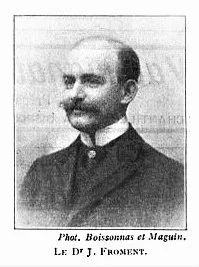
1915 FROMENT, Jules (1876 – 1946)
La préhension dans les paralysies du nerf cubital et le signe du pouce.
“Froment’s sign” of ulnar nerve paralysis.
GMN 4386.2 · https://historyofmedicine.com/id/5932
1916 QUECKENSTEDT, Hans Heinrich Georg (1876 – 1918)
Zur Diagnose der Rückenmarkskompression.
“Queckenstedt’s test” for determining patency of the spinal subarachnoid space.
GMN 4600 · https://historyofmedicine.com/id/490
1916 GUILLAIN, Georges (1876 – 1961); ET AL
Sur un syndrome de radiculo-névrite avec hyperalbuminose du liquide céphalo-rachidien sans réaction cellulaire. Remarques sur les caractères cliniques et graphiques des réflexes tendineux.
“Guillain-Barré syndrome”, acute infective polyneuritis. With J. A. Barré and A. Strohl.
GMN 4647 · https://historyofmedicine.com/id/734
1916 DAWSON, James Walker (1870 – 1927)
The histology of disseminated sclerosis.
A classic monograph on the pathology of multiple sclerosis.
GMN 4718 · https://historyofmedicine.com/id/1201
1916 VILLARET, Maurice (1877 – 1946)
Le syndrome nerveux de l’espace rétro-parotidien postérieur.
“Villaret’s syndrome”.
GMN 4719 · https://historyofmedicine.com/id/1203
1916 TINEL, Jules (1879 – 1952)
Les blessures des nerfs.
A study of the effect of gunshot wounds on nerves. English translation, London, 1917.
GMN 4887 · https://historyofmedicine.com/id/5838
1917 ECONOMO, Constantin von (1876 – 1931)
Encephalitis lethargica.
Economo’s classic description of epidemic encephalitis (“von Economo’s disease”) was published on 10 May 1917; see No. 4649.
GMN 4650 · https://historyofmedicine.com/id/8868
1918 FRIDERICHSEN, Carl (1886 – 1982)
Nebennierenapoplexie bei kleinen Kindern.
See No. 4685.
GMN 4686 · https://historyofmedicine.com/id/963
1918 –1919 WAGNER VON JAUREGG, Julius (1857 – 1940)
Ueber die Einwirkung der Malaria auf die progressive Paralyse.
In 1917 Wagner von Jauregg returned to the idea of the inoculation of paretics with malaria to induce pyrexia, first proposed by him in 1887 (Ueber die Einwirkung fieberhafter Erkrankungen auf Psychosen, Jb. Psychiat.…
GMN 4806 · https://historyofmedicine.com/id/1579