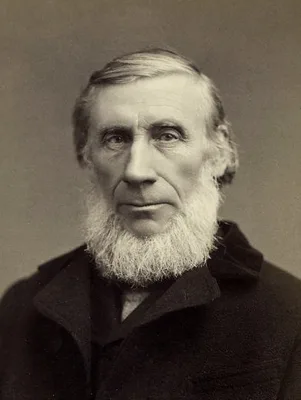
1876 TYNDALL, John (1820 – 1893)
The optical deportment of the atmosphere in relation to the phenomena of putrefaction and infection.
Tyndall observed the selective bacteria-inhibiting effect of Penicillium and the resistance of Ps. pyocyanea to it. See No. 2495.
GMN 1932 · https://historyofmedicine.com/id/2765
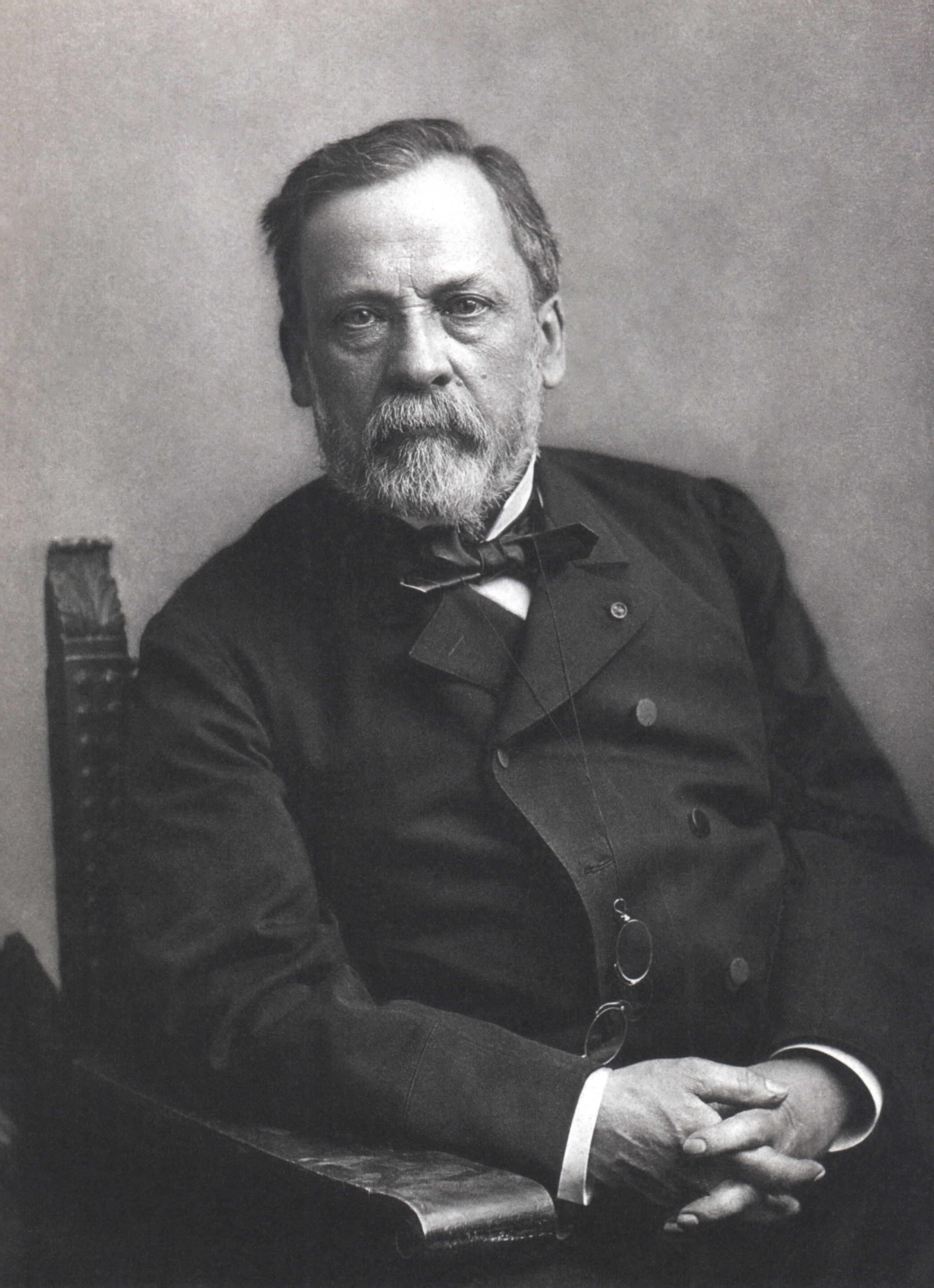
1877 PASTEUR, Louis (1822 – 1895); JOUBERT, Jules François (1834 – 1910)
Charbon et septicémie.
Discovery of Vibrion septique (Cl. septicum), the first pathogenic anerobe to be found. Pasteur and Joubert were probably the first to realize the practical implications of antibiosis. They noted the antagonism betwee…
GMN 1932.1 · https://historyofmedicine.com/id/3134
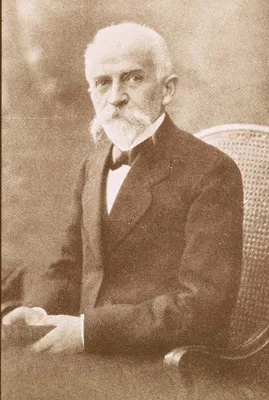
1889 EMMERICH, Rudolf (1852 – 1914); LÖW, Oscar [Loew] (1844 – 1941)
Bakteriolytische Enzyme als Ursache der erworbenen Immunität und die Heilung von Infectionskrankheiten durch dieselben.
Emmerich and Löw prepared a water-soluble antibiotic substance, pyocyanase, from Pseudomonas pyocanea. It inhibited pathogenic cocci and the organisms responsible for diphtheria, plague, cholera, and typhoid.
GMN 1932.2 · https://historyofmedicine.com/id/2768
1889 VUILLEMIN, Jean Paul (1861 – 1932)
Antibiose et symbiose.
Villemin coined the term antibiosis and advanced the term from an evolutionary viewpoint. Though he presented the concept Villemin did not apply this concept to fight disease. (Thanks to Juan Weiss for this reference.)
GMN 10786 · https://historyofmedicine.com/id/12982
1896 GOSIO, Bartolomeo (1863 – 1944)
Ricerche batteriologische e chimiche sulle alterazioni del mais; contributo all’etiologia della pellagra.
First recorded scientific observations on the action of a penicillin. Gosio produced an antibacterial crystalline substance from Penicillium glaucum.
GMN 1932.3 · https://historyofmedicine.com/id/2770
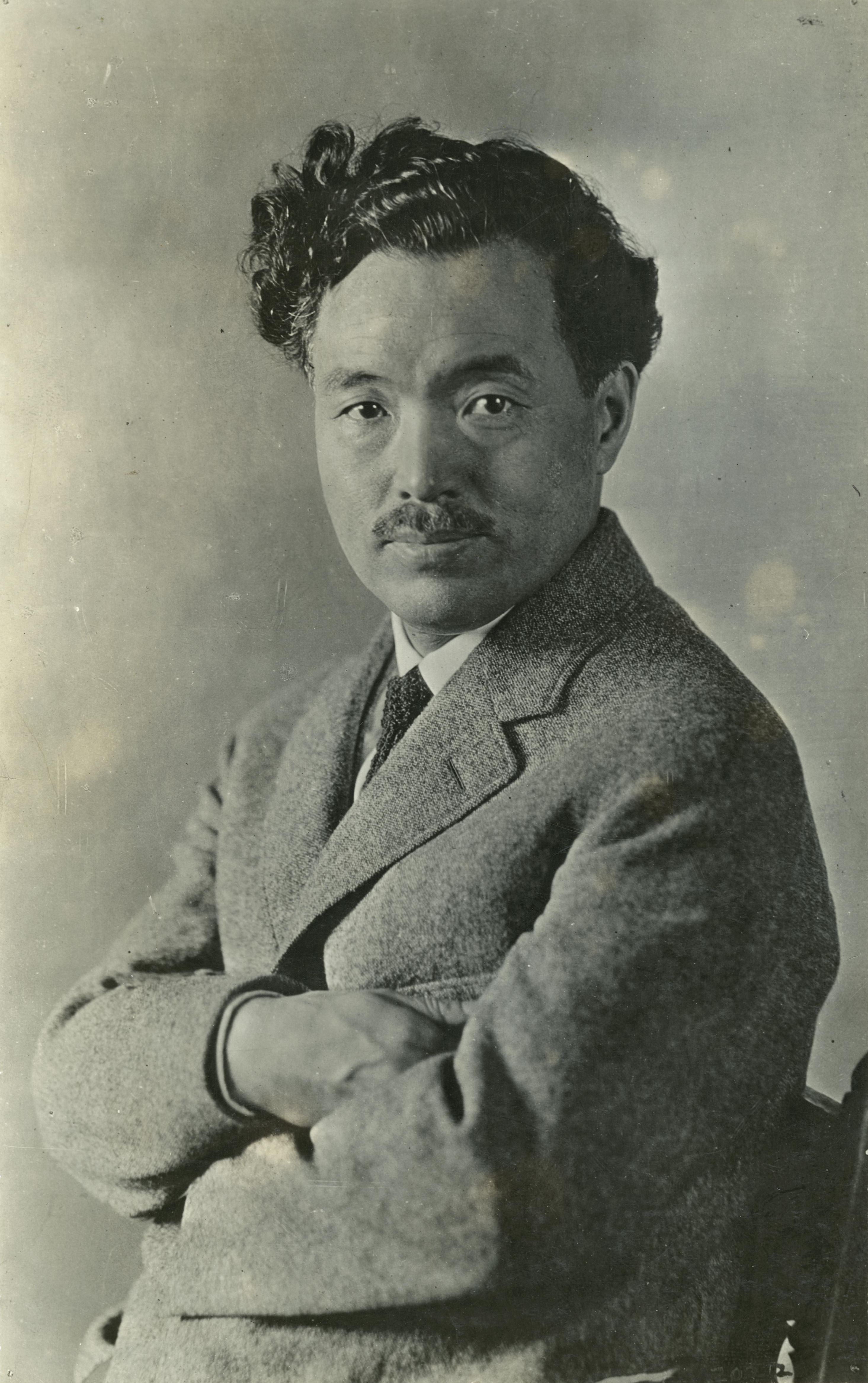
1902 FLEXNER, Simon (1863 – 1946); NOGUCHI, Hideyo (1876 – 1928)
Snake venom in relation to haemolysis, bacteriolysis, and toxicity.
GMN 2110 · https://historyofmedicine.com/id/2613
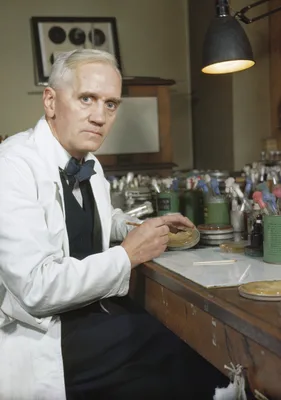
1922 FLEMING, Sir Alexander (1881 – 1955)
On a remarkable bacteriolytic element found in secretions and tissues.
Lysozyme, an antimicrobial enzyme that is a component of secretions such as tears and saliva. Digital facsimile from royalsocietypublishing.org at this link
GMN 1910.1 · https://historyofmedicine.com/id/2667
1925 CHURCHMAN, John Woolman (1877 – 1937)
Intravenous use of dyes.
Churchman demonstrated the selective bactericidal action of gentian violet against staphylococci. See also J. exp. Med., 1912, 16, 221-47; J. Urol., 1924, 11, 1-18.
GMN 1911 · https://historyofmedicine.com/id/2673
1928 PAPACOSTAS, Georges; GATÉ, Jean
Les associations microbiennes: Leurs applications thérapeutiques.
This work included a 60-page chapter on bacterial inhibition by molds and antibiosis, with several hundred historical references. It appeared one year before Fleming's landmark paper.
GMN 12622 · https://historyofmedicine.com/id/14862
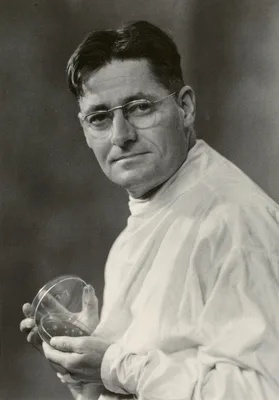
1929 FLEMING, Sir Alexander (1881 – 1955)
On the antibacterial action of cultures of a penicillium, with special reference to their use in the isolation of B. influenzae.
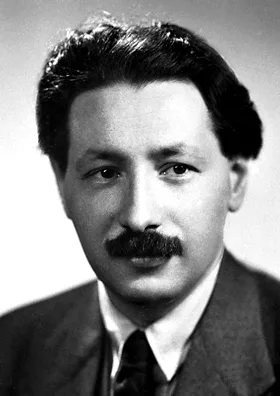
Discovery of the growth-inhibiting action of Penicillium on certain bacteria. In 1945 Fleming shared the Nobel Prize in Physiology or Medicine with Ernst Boris Chain and Sir Howard Walter Florey "for the discovery of …
GMN 1933 · https://historyofmedicine.com/id/2774
1932 FLEMING, Sir Alexander (1881 – 1955)
On the specific antibacterial properties of penicillin and potassium tellurite. Incorporating a method of demonstrating some bacterial antagonisms.
In this paper Fleming first described the use of penicillin as an antibacterial agent in man, and reported on experiments using it as a wound dressing for septic wounds. He also corrected the species name from Penicil…
GMN 10784 · https://historyofmedicine.com/id/12980
1938 BUTTLE, Gladwin Albert Hurst (1899 – 1983); ET AL
The action of substances allied to 4:4'-diaminodiphenylsulphone in streptococcal and other infections in mice.
G. A. H. Buttle, T. Dewing, G. E. Foster, W. H. Gray, S. Smith, and D. Stephenson discovered the potency of dapsone (DDS).
GMN 1926 · https://historyofmedicine.com/id/2722
1939 DUBOS, René Jules (1901 – 1982)
Bactericidal effect of an extract of a soil bacillus on gram-positive cocci.
Isolation of gramicidin.
GMN 1933.1 · https://historyofmedicine.com/id/2776
1939 OXFORD, Albert Edward; ET AL
Studies in the biochemistry of micro-organisms. LX. Griseofulvin, C17H17O6Cl, a metabolic product of Penicillium griseo-fulvum Dierckx.
Isolation of griseofulvin. With H. Raistrick and P. Simonart.
GMN 1933.2 · https://historyofmedicine.com/id/2780
1940 ABRAHAM, Sir Edward Penley (1913 – 1999); CHAIN, Sir Ernst Boris (1906 – 1979)
An enzyme from bacteria able to destroy penicillin.
Penicillinase.
GMN 1933.3 · https://historyofmedicine.com/id/2781
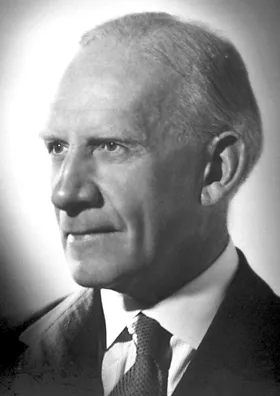
1940 CHAIN, Sir Ernst Boris (1906 – 1979); FLOREY, Howard Walter (1898 – 1968); HEATLEY, Norman George (1911 – 2004); GARDNER, Andrew Duncan (1884 – 1977); SANDERS, A. G.; JENNINGS, Margaret Augusta (1904 – 1994); ORR-EWING, J.
Penicillin as a chemotherapeutic agent.
Proof of the therapeutic action in vivo of penicillin against streptococcal and other bacterial infections. Building upon Fleming’s work (No. 1933 and 10784), the consequences of which had originally been widely unapp…
GMN 1934 · https://historyofmedicine.com/id/2783
1941 ABRAHAM, Sir Edward Penley (1913 – 1999); CHAIN, Sir Ernst Boris (1906 – 1979); FLOREY, Howard Walter (1898 – 1968); HEATLEY, Norman George (1911 – 2004); GARDNER, Andrew Duncan (1884 – 1977); JENNINGS, Margaret Augusta (1904 – 1994); FLETCHER, Charles M.
Further observations on penicillin.
First report of the chemotherapeutic action of penicillin on humans (10 cases).
GMN 1934.1 · https://historyofmedicine.com/id/2785
1942 ABRAHAM, Sir Edward Penley (1913 – 1999); CHAIN, Sir Ernst Boris (1906 – 1979)
Purification of penicillin.
Abraham and Chain first announced the purification of penicillin, a critical step before production of the drug could begin, in a two paragraph paper published on a single page of Nature on March 21, 1942. The method,…
GMN 14282 · https://historyofmedicine.com/id/16605
1943 ABRAHAM, Sir Edward Penley (1913 – 1999); CHAIN, Sir Ernst Boris (1906 – 1979); ROBINSON, Sir Robert (1886 – 1975); ET AL
Penicillamine, a characteristic degradation product of penicillin.
With W. Baker.
GMN 1934.2 · https://historyofmedicine.com/id/2786
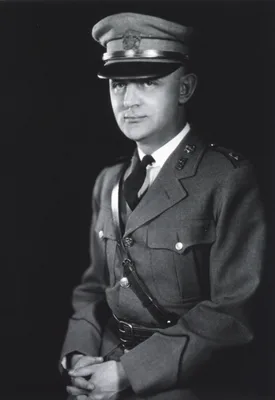
1943 MAHONEY, John Friend (1889 – 1957); ARNOLD, Richard C. (1906 – 1992); HARRIS, Ad
Penicillin treatment of early syphilis. A preliminary report.
Mahoney and colleagues introduced penicillin in treatment of syphilis. This was the report of the first four cases of patients with early stages of the disease. Digital facsimile of the version published in the the Am…
GMN 2418 · https://historyofmedicine.com/id/3422
1943 HERRELL, Wallace Edgar (1909 – 1992); ET AL
Use of penicillin in sulfonamide resistant gonorrheal infections.
With E. N. Cook and L. Thompson.
GMN 5214.1 · https://historyofmedicine.com/id/7820
1944 ROSENBERG, David Harry (1903 – ); ARLING, Philip Arthur (1908 – 1955)
Penicillin in the treatment of meningitis.
GMN 4689.1 · https://historyofmedicine.com/id/970
1944 DODD, Matthew Charles (1910 – 1981); STILLMAN, William Barlow (1904 – 1987)
The in vitro bacteriostatic action of some simple furan derivatives.
Nitrofuran (nitrofurazone).
GMN 1928.2 · https://historyofmedicine.com/id/2729
1944 SCHATZ, Albert (1920 – 2005); WAKSMAN, Selman Abraham (1888 – 1973); GREGORY, Elizabeth Bugie
Streptomycin, a substance exhibiting antibiotic activity against Grampositive and Gram-negative bacteria.
Introduction of streptomycin. Order of authorship: Schatz, Gregory, Waksman. In 1952 Waksman was awarded the Nobel Prize in Physiology or Medicine "for ingenious, systematic, and successful studies of the soil microbe…
GMN 1935 · https://historyofmedicine.com/id/2788
1944 FLEMING, Sir Alexander (1881 – 1955)
Micro-methods of estimating penicillin blood serum and other bodily fluids.
Fleming was the first to measure blood levels of penicillin after intramuscular, intradermal, inravenous and continuous drip administration in order to determine the correct dosage. He described his micro-measurement …
GMN 12598 · https://historyofmedicine.com/id/14838
1944 FLEMING, Sir Alexander (1881 – 1955); SUCHET, Jack (1908 – 2001); ET AL
Penicillin content of blood serum after various doses of penicillin by various routes.
In this paper Fleming and colleagues explained how to choose routes of administration of penicillin as well as dosage, and reproduced the graphs/figures that showed blood levels achieved with different doses and route…
GMN 12599 · https://historyofmedicine.com/id/14839
1945 JOHNSON, Balbina A. (1897 – 1970); ET AL
Bacitracin: a new antibiotic produced by a member of the B, subtilis group.
With H. Anker and F. L. Meleney.
GMN 1936 · https://historyofmedicine.com/id/2789
1945 FELDMAN, William Hugh (1892 – 1974); HINSHAW, Horton Corwin (1902 – 2001)
Streptomycin in treatment of clinical tuberculosis: a preliminary report.
GMN 2350 · https://historyofmedicine.com/id/3125
1946 FLEMING, Sir Alexander (1881 – 1955)
Penicillin: Its practical application. Edited by Sir Alexander Fleming.
This was the only book that Fleming ever published on penicillin. American issue, Philadelphia: Blakiston, 1946.
GMN 12623 · https://historyofmedicine.com/id/14863
1947 AINSWORTH, Geoffrey Clough (1905 – 1998); ET AL
“Aerosporin”, an antibiotic produced by Bacillus aerosporus Greer.
Discovery of aerosporin (polymyxin). With A. M. Brown and G. Brownlee.
GMN 1937 · https://historyofmedicine.com/id/2791
1947 EHRLICH, John (1907 – 1992); ET AL
Chloromycetin, a new antibiotic from a soil actinomycete.
Production of chloramphenicol from Streptomyces venezuelae. With Q. R. Bartz, R. M. Smith, D. A. Joslyn and P. R. Burkholder.
GMN 1938 · https://historyofmedicine.com/id/2792
1947 HERRELL, Wallace Edgar (1909 – 1992); HEILMAN, Fordyce Russell (1905 – 1960); ET AL
Procaine penicillin G (duracillin); a new salt of penicillin which prolongs the action of penicillin.
Procaine benzylpenicillin also known as penicillin G procaine was developed by Herrell and colleagues. With D.R. Nichols.
GMN 1939 · https://historyofmedicine.com/id/2793
1947 STANSLY, Philip Gerald (1912 – 1998); ET AL
Polymyxin: a new chemotherapeutic agent.
With R. G. Shepherd and H. J. White.
GMN 1941 · https://historyofmedicine.com/id/2795
1947 SMADEL, Joseph Edwin (1907 – 1963); JACKSON, Elizabeth B.
Chloromycetin, an antibiotic with chemotherapeutic activity in experimental rickettsial and viral infections.
Introduction of chloramphenicol, used in treatment of typhus.
GMN 1940 · https://historyofmedicine.com/id/8617
1948 BROTZU, Giuseppe (1895 – 1976)
Ricerche su di un nuovo antibiotico.
Brotzu showed that a Cephalosporium acremonium filtrate inhibited the growth of Gram-positive and -negative organisms.
GMN 1943 · https://historyofmedicine.com/id/2802
1948 CHRISTIE, Ronald Victor (1902 – 1986)
Penicillin in subacute bacterial endocarditis. Report to the Medical Research Council on 269 patients treated in 14 centres appointed by the Penicillin Clinical Trials Committee.
GMN 2880 · https://historyofmedicine.com/id/4224
1948 DUGGAR, Benjamin Minge (1872 – 1956)
Aureomycin; a product of the continuing search for new antibiotics.
Discovery of clortetracycline (trade name Aureomycin, Lederle) the first tetracycline antibiotic identified. Duggar,a plant physiologist, identified the antibiotic as the product of an actinomycete he cultured from a …
GMN 7863 · https://historyofmedicine.com/id/10035
1948 MASSELL, Benedict Frank (1906 – 2008); DOW, J. W.; JONES, Thomas Duckett (1899 – 1954)
Orally administered penicillin in patients with rheumatic fever.
Massell and colleagues demonstrated that rheumatic fever could be prevented by penicillin treatment of streptococcal throat infections. (Order of authorship in the original publication: Massell, Dow, Jones.) See also:…
GMN 12359 · https://historyofmedicine.com/id/14583
1949 WAKSMAN, Selman Abraham (1888 – 1973); LECHEVALIER, Hubert Arthur (1926 – 2015)
Neomycin, a new antibiotic active against streptomycin-resistant bacteria, including tuberculosis organisms.
Isolation of neomycin.
GMN 1944 · https://historyofmedicine.com/id/2804
1949 HANSON, Frederick Reuben (1921 – ); EBLE, Thomas Eugene (1923 – )
An antiphage agent isolated from Aspergillus sp.
Isolation of fumagillin, an antibiotic with amoebicidal activity. See also Science, 1951, 113, 202-3.
GMN 1945 · https://historyofmedicine.com/id/2806
1949 ABRAHAM, Sir Edward Penley (1913 – 1999); CHAIN, Sir Ernst Boris (1906 – 1979); FLOREY, Howard Walter (1898 – 1968); HEATLEY, Norman George (1911 – 2004); SANDERS, A. G.; JENNINGS, Margaret Augusta (1904 – 1994); FLOREY, Lady Mary Ethel (1900 – 1966)
Antibiotics: A survey of penicillin, streptomycin, and other antimicrobial substances from fungi, actinomycetes, bacteria, and plants. 2 vols.
Order of authorship of the original set: H. W. Florey, Chain, Heatley, Jennings, Sanders, Abraham, M. E. Florey.
GMN 12613 · https://historyofmedicine.com/id/14853
1949 ROBINSON, Sir Robert (1886 – 1975); CLARKE, Hans Thacher (1887 – 1972); JOHNSON, John Raven (1900 – 1983)
The chemistry of penicillin.
The National Academy of Sciences arranged for the preparation of this summary, with Clarke and Johnson representing the United States on the editorial board, and Robinson representing Britain. The 1120 page book was p…
GMN 12634 · https://historyofmedicine.com/id/14875
1949 HODGKIN, Dorothy Crowfoot (1910 – 1994); ROGERS-LOW, Barbara Wharton (1920 – 2019)
X-ray crystallographic investigation of the structure of penicillin. IN: Clarke, Johnson, Robinson (eds.) Chemistry of penicillin (1949) 310-67.
Hodgkin and colleagues, including biochemist Barbara Low, solved the structure of penicillin in 1945, demonstrating, contrary to scientific opinion at the time, that it contains a β-lactam ring. The discovery was orig…
GMN 12635 · https://historyofmedicine.com/id/14876
1950 FINLAY, Alexander Carpenter (1906 – ); ET AL
Terramycin, a new antibiotic.
Oxtetracycline (terramycin).
GMN 1945.1 · https://historyofmedicine.com/id/2807
1951 ABRAHAM, Sir Edward Penley (1913 – 1999); BURTON, H. S.
Isolation of antibiotics from a species of Cephalosporium. Cephalosporins P1, P2, P3, P4, and P5.
GMN 1945.2 · https://historyofmedicine.com/id/2809
1951 FINLAY, Alexander Carpenter (1906 – ); ET AL
Viomycin, a new antibiotic active against mycobacteria.
Isolation of viomycin. With 11 co-authors.
GMN 1945.3 · https://historyofmedicine.com/id/2810
1951 HAZEN, Elizabeth Lee (1885 – 1975); BROWN, Rachel Fuller (1898 – 1980)
Fungicidin, an antibiotic produced by a soil actinomycete.
Isolation of nystatin (fungicidin).
GMN 1945.4 · https://historyofmedicine.com/id/2811
1952 MCGUIRE, James Myrlin (1909 – ); ET AL
“Ilotycin”, a new antibiotic.
Discovery of erythromycin. With R. L. Bunch, R. C. Anderson, H. E. Boaz, E. H. Flynn, H. M. Powell, and J. W. Smith.
GMN 1946 · https://historyofmedicine.com/id/2812
1952 LEDERBERG, Joshua (1925 – 2008); LEDERBERG, Esther (1922 – 2006)
Replica plating and indirect selection of bacterial mutants.
Demonstration of the mutational basis of antibiotic resistance. Digital facsimile from PubMedCentral at this link.
GMN 9719 · https://historyofmedicine.com/id/11906
1952 FLOREY, Lady Mary Ethel (1900 – 1966)
The clinical application of antibiotics. Penicillin.
Printed on the title page: "This volume, although a separate publication, is a continuation of the work described in Antibiotics Volumes I and II, and may be read in conjunction with it." (Thanks to Juan Weiss for thi…
GMN 12615 · https://historyofmedicine.com/id/14855