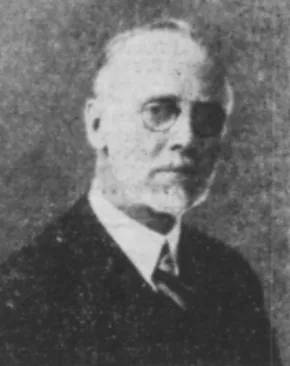
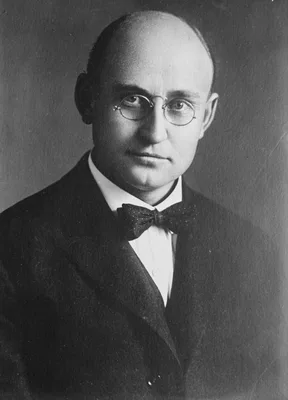
1887 NAGAYOSHI, Nagai (1844 – 1929)
Ephedrin.
Isolation of ephedrine from Ephedra distachya.
GMN 1883.1 · https://historyofmedicine.com/id/8942
1887 MILLSPAUGH, Charles Frederick (1854 – 1923)
American medicinal plants; an illustrated and descriptive guide to the American plants used as homoeopathic remedies: Their history, preparation, chemistry and physiological effects. Illustrated by the author.
Plates printed by chromolithography. Digital facsimile from the Internet Archive at this link.
GMN 8716 · https://historyofmedicine.com/id/10894
1889 EMMERICH, Rudolf (1852 – 1914); LÖW, Oscar [Loew] (1844 – 1941)
Bakteriolytische Enzyme als Ursache der erworbenen Immunität und die Heilung von Infectionskrankheiten durch dieselben.
Emmerich and Löw prepared a water-soluble antibiotic substance, pyocyanase, from Pseudomonas pyocanea. It inhibited pathogenic cocci and the organisms responsible for diphtheria, plague, cholera, and typhoid.
GMN 1932.2 · https://historyofmedicine.com/id/2768
1889 MARCELLUS EMPIRICUS, (Marcellus Burdigalensis) (375 – 425); HELMREICH, Georg (1849 – 1921)
Marcelli De medicamentis liber. Edited Georgius Helmreich.
Marcellus's compendium of pharmacological preparations drawing on the work of multiple medical and scientific writers as well as folk remedies and magic. Digital facsimile from the Internet Archive at this link.
GMN 8330 · https://historyofmedicine.com/id/10506
1889 MERCK & CO.
Merck's index of fine chemicals and drugs for the materia medica and the arts: Comprising a summary of whatever chemical products are to-day adjudged as being useful in either medicine or technology, with average values and synonyms affixed; a guide for the physician, apothecary, chemist, and dealer.
First edition of the Merck Manual. Digital facsimile from the Internet Archive at this link.
GMN 9525 · https://historyofmedicine.com/id/11711
1889 VUILLEMIN, Jean Paul (1861 – 1932)
Antibiose et symbiose.
Villemin coined the term antibiosis and advanced the term from an evolutionary viewpoint. Though he presented the concept Villemin did not apply this concept to fight disease. (Thanks to Juan Weiss for this reference.)
GMN 10786 · https://historyofmedicine.com/id/12982
1889 EDKINS, Joseph (1823 – 1905)
Opium: Historical note, or, the poppy in China. Published by order of The Inspector General of Customs.
Though relatively brief (50pp.) this may be the first historical study of opium in English. Text in English and Chinese. Digital facsimile from the Hathi Turst at this link. Reprinted without the Chinese text, Shangha…
GMN 11869 · https://historyofmedicine.com/id/14073
1890 FRASER, Sir Thomas Richard (1841 – 1919)
Strophanthus hispidus; its natural history, chemistry, and pharmacology.
Introduction of Strophanthus hispidus.
GMN 1885 · https://historyofmedicine.com/id/2491
1890 –1893 HOOPER, David (1858 – 1947); DYMOCK, William (1834 – 1892); WARDEN, Charles James Hislop (1851 – 1900)
Pharmacographia indica: A history of the principal drugs of vegetable origin, met with in British India. 3 vols.
On the title page Dymock is identified as "Brigade Surgeon, Bombay Army, Principal Medical Storekeeper to Government." Warden is identified as "Surgeon-Major, Bengal Army, Professor of Chemistry in the Calcutta Medica…
GMN 9246 · https://historyofmedicine.com/id/11428
1892 IVANOVSKI, Dmitri Iosifovich (Ivanowski; Iwanowski) (1864 – 1920)
Ueber die Mosaikkrankheit der Tabakspflanze.
The Russian botanist Ivanovski demonstrated that the agent responsible for tobacco mosaic disease could pass through the finest filter then available. This was the starting point of research into the etiology of virus…
GMN 2506.2 · https://historyofmedicine.com/id/3229
1892 GOLGI, Camillo (1844 – 1926)
Azione della chinina sui parasite malarici e sui corrispondente accessi febbrili.
French translation in Arch. ital. Biol., 1892, 17, 456-71.
GMN 5243 · https://historyofmedicine.com/id/7900
1894 –1895 PAUL, Benjamin Horatio (1828 – 1902); COWNLEY, Alfred John
The chemistry of ipecacuanha.
Emetine first obtained in pure form.
GMN 1887 · https://historyofmedicine.com/id/2500
1895 ASKANAZY, S
Klinisches über Diuretin.
In 1895 Askanazy proposed diuretin as a remedy for anginal pain.
GMN 2893 · https://historyofmedicine.com/id/4365
1895 JELLIFFE, Smith Ely (1866 – 1945); RUSBY, Henry Hurd (1855 – 1940)
Essentials of vegetable pharmacognosy: A treatise on structural botany, designed especially for pharmaceutical and medical students, pharmacists and physicians. Part 1. The gross structure of plants by Henry H. Rusby. Part 2. The minute structure of plants by Smith Ely Jelliffe.
A detailed guide to the way that botanic drugs were identified and produced in America at the end of the 19th century. Digital facsimile from the Hathi Trust at this link.
GMN 11890 · https://historyofmedicine.com/id/14095
1896 FILEHNE, Wilhelm (1844 – 1927)
Ueber das Pyramidon, ein Antipyrinderivat.
Filehne was responsible for the introduction of amindopyrine (pyramidon).
GMN 1889 · https://historyofmedicine.com/id/2506
1896 GOSIO, Bartolomeo (1863 – 1944)
Ricerche batteriologische e chimiche sulle alterazioni del mais; contributo all’etiologia della pellagra.
First recorded scientific observations on the action of a penicillin. Gosio produced an antibacterial crystalline substance from Penicillium glaucum.
GMN 1932.3 · https://historyofmedicine.com/id/2770
1896 HOLMES, Edward Morrell (1843 – 1930)
Catalogue of the medicinal plants in the Museum of the Pharmaceutical Society of Great Britain.
Digital facsimile from the Internet Archive at this link.
GMN 10382 · https://historyofmedicine.com/id/12574
1897 KRÖNIG, Claus Ludwig Theodor Bernhard (1863 – 1918); PAUL, Theodor (1862 – 1928)
Die chemischen Grundlagen der Lehre von der Giftwirkung und Desinfection.
Krönig and Paul described a new method for the quantitative study of disinfection and laid the foundation of modern knowledge of disinfectants.
GMN 1890 · https://historyofmedicine.com/id/2511
1897 WELLMANN, Max (1863 – 1933); KRATEUAS, [Kratevas, Crateuas, Cratevas; Κρατεύας ὁ Ῥιζότομος] ( – 95)
Krateuas. Von M. Wellmann.
Crateuas was the personal physician of Mithridates VI. Of Pontos. He wrote a three-part herbal book describing the medicinal properties of plants. This work, which was illustrated, is the earliest known herbal book to…
GMN 9015 · https://historyofmedicine.com/id/11194
1898 DRAGENDORFF, Georg Johann Noel (1836 – 1898)
Die Heilpflanzen der verschiedenen Volker und Zeiten.
GMN 2039 · https://historyofmedicine.com/id/2202
1899 DRESER, Heinrich (1860 – 1925)
Pharmakologisches über Aspirin (Acetylsalicylsäure).
Acetylsalicylic acid (aspirin) introduced into medicine.
GMN 1891 · https://historyofmedicine.com/id/2520
1899 HENSLOW, George (1835 – 1925)
Medical works of the fourteenth century; together with a list of plants recorded in contemporary writings, with their identification.
Digital facsimile from the Internet Archive at this link.
GMN 6519 · https://historyofmedicine.com/id/8090
1900 MORO, Ernst (1874 – 1951)
Ueber die nach Gram färbbaren Bacillen des Säuglingsstuhles.
Isolation of Lactobacillus acidophilus.
GMN 2515 · https://historyofmedicine.com/id/3263
1900 RUSBY, Henry Hurd (1855 – 1940)
The botanical origin of coca leaves.
GMN 11891 · https://historyofmedicine.com/id/14096
1901 MORTIMER, William Golden (1854 – 1933)
Peru: The history of coca, “the divine plant of the Incas”.
The most comprehensive work on the coca plant and the history of its use by the Incas and their descendants. Reprinted, San Francisco, And/Or Press, 1974.
GMN 2040.1 · https://historyofmedicine.com/id/2212
1901 PARDO DE TAVERA, Trinidad Hermenegildo José Maria Francisco (1857 – 1925); THOMAS, Jerome B. Jr.
The medicinal plants of the Philippines. Translated and revised by Jerome B. Thomas, Jr.
Digital facsimile from the Internet Archive at this link.
GMN 8540 · https://historyofmedicine.com/id/10717
1902 FLEXNER, Simon (1863 – 1946); NOGUCHI, Hideyo (1876 – 1928)
Snake venom in relation to haemolysis, bacteriolysis, and toxicity.
GMN 2110 · https://historyofmedicine.com/id/2613
1902 BERENDES, Julius (1837 – 1914)
Des Pedanios Dioskurides aus Anazarbos Arzneimittellehre in fünf Büchern. Übersetzt und mit Erklärungen Versehen.
Analysis of Dioscordes from the pharmacological standpoint, including determination of his units of measurements, critical in dosage. Digital facsimile from Google Books at this link.
GMN 8569 · https://historyofmedicine.com/id/10746
1902 FÜHNER, Hermann (1871 – 1944)
Lithotherapie: Historische Studien über die medizinische Verwendung der Edelsteine.
Digital facsimile from the Internet Archive at this link.
GMN 8961 · https://historyofmedicine.com/id/11140
1903 RIDEAL, Samuel (1863 – 1929); WALKER, J. T. Ainslie (1868 – 1930)
Standardisation of disinfectants.
Rideal–Walker method for testing disinfectants.
GMN 1893 · https://historyofmedicine.com/id/2532
1903 –1910 DOMÍNGUEZ, Juan Aníbal (1876 – 1946)
Datos par la materia médica Argentina. 2 vols. (Vol. 2: Trabajos de Instituto de Farmacología de la Facultad de Ciencias Médicas de Buenos Aires No. 25).
Digital facsimile from the Internet Archive at this link.
GMN 8543 · https://historyofmedicine.com/id/10720
1904 CLOËTTA, Max (1868 – 1940)
Ueber Digalen (Digitoxinum solubile).
Introduction of digalen.
GMN 1893.1 · https://historyofmedicine.com/id/2535
1904 POWER, Frederick Belding (1853 – 1927); GORNALL, Frank Howorth
The constituents of chaulmoogra seeds.
Hydnocarpus wightiana or Chaulmoogra is a tree in the Achariaceae family. The oil from seeds of Hydnocarpus wightiana or Chaulmoogra, a tree in the Achariaceae family, was widely used in Indian medicine and Chinese tr…
GMN 2437 · https://historyofmedicine.com/id/2907
1905 MACKENZIE, Sir James (1853 – 1925)
New methods of studying affections of the heart.
Mackenzie established the remarkable action of digitalis in auricular fibrillation.
GMN 2819 · https://historyofmedicine.com/id/3501
1905 THOMAS, Harold Wolferstan (1875 – 1931); BREINL, Anton (1880 – 1944)
Report on trypanosomes, trypanosomiasis, and sleeping sickness, being an experimental investigation into their pathology and treatment.
Thomas and Breinl discovered that arsanilic acid, was more potent in the treatment of laboratory trypanosomiasis than arsenic in inorganic form. As a crystalline powder it was introduced medically as Atoxyl. Thomas an…
GMN 5279 · https://historyofmedicine.com/id/8592
1906 –1914 DIOSCORIDES, Pedanius [Πεδάνιος Διοσκουρίδης] (40 – 90); WELLMANN, Max (1863 – 1933); KRATEUAS, [Kratevas, Crateuas, Cratevas; Κρατεύας ὁ Ῥιζότομος] ( – 95)
De materia medica. Edidit Max Wellmann. 3 vols.
Dioscorides’ work is the authoritative source on the materia medica of antiquity. He described over 600 plants and plant principles. The above edition by Wellman is the definitive Greek text. It also contains the Frag…
GMN 1786 · https://historyofmedicine.com/id/1853
1906 DALE, Sir Henry Hallett (1875 – 1968); BARGER, George (1878 – 1939); ET AL
An active alkaloid from ergot.
Isolation of ergotoxine. With F. H. Carr.
GMN 1895 · https://historyofmedicine.com/id/2543
1906 NICOLLE, Maurice (1862 – 1932); MESNIL, Félix (1868 – 1938)
Traitement des trypanosomiases par les “couleurs de benzidine”.
Introduction of trypan-blue in the treatment of trypanosomiasis. Second paper by Mesnil and Nicolle.
GMN 5280 · https://historyofmedicine.com/id/6339
1907 EHRLICH, Paul (1854 – 1915)
Chemotherapeutische Trypanosomen-Studien.
The first account of induced microbial drug resistance. Ehrlich encountered induced drug resistance in microbes while researching arsenical preparations as cures for sleeping sickness and other trypanosome-caused illn…
GMN 5281 · https://historyofmedicine.com/id/6342
1908 GELMO, Paul (1879 – 1961)
Ueber Sulfamide der p-Amidobenzolsulfonsäure.
Para-aminobenzenesulfonamide (sulphanilamide) first prepared.
GMN 1948 · https://historyofmedicine.com/id/2822
1908 PLIMMER, Henry George (1856 – 1918); THOMSON, John D.
Further results of the experimental treatment of trypanosomiasis in rats.
Trial of antimony in the treatment of trypanosomiasis.
GMN 5282 · https://historyofmedicine.com/id/6343
1909 BRITISH MEDICAL ASSOCIATION
Secret remedies, what they cost and what they contain. Based on analyses made for the British Medical Association.
This exposé of useless or dangerous drugs was followed in 1912 by More secret remedies. What they cost & what they contain. Based on analyses made for the British Medical Association. Digital facsimile of the 1909 wor…
GMN 12411 · https://historyofmedicine.com/id/14641
1910 EHRLICH, Paul (1854 – 1915); HATA, Sahachiro (1873 – 1938)
Die experimentelle Chemotherapie der Spirillosen (Syphilis, Rückfallfieber, Hühnerspirillose, Frambösie).
After many experiments on the action of synthetic drugs upon spirochetal diseases, Ehrlich and Hata in 1909 discovered Arsphenamine (Salvarsan, "the arsenic that saves", also known as “606”), an effective treatment fo…
GMN 2403 · https://historyofmedicine.com/id/3366
1911 BECKER, Georg
Die bakteriologische Blutuntersuchung beim Milzbrand des Menschen.
Salvarsan first used in the treatment of anthrax.
GMN 5172 · https://historyofmedicine.com/id/6263
1911 VEDDER, Edward Bright (1878 – 1952)
Experiments undertaken to test the efficacy of the ipecac treatment of dysentery.
Vedder demonstrated the amoebicidal action of emetine; his work led to the general adoption of emetine in the treatment of amoebic dysentery.
GMN 5189 · https://historyofmedicine.com/id/6337
1911 CHAMBERLIN, Ralph Vary (1879 – 1967)
The ethno-botany of the Gosiute Indians of Utah.
Digital facsimile from the Internet Archive at this link.
GMN 9347 · https://historyofmedicine.com/id/11529
1911 –1936 CRAMP, Arthur Joseph (1872 – 1951)
Nostrums and quackery: Articles on the nostrum evil and quackery reprinted from the Journal of the American Medical Association. 3 vols.
Cramp was director of the AMA's Propaganda for Reform Department. "In 1911, Cramp published the first of three volumes called Nostrums and Quackery,[3] which would become "a veritable encyclopedia on the nostrum evil …
GMN 12412 · https://historyofmedicine.com/id/14642
1912 EHRLICH, Paul (1854 – 1915)
Ueber Laboratoriumsversuche und klinische Erprobung von Heilstoffen.
Introduction of neoarsphenamine (neosalvarsan).
GMN 2405 · https://historyofmedicine.com/id/3371
1912 HATA, Sahachiro (1873 – 1938)
Salvarsantherapie der Rattenbisskrankheit in Japan.
Salvarsan first used in the treatment of rat-bite fever.
GMN 5324 · https://historyofmedicine.com/id/6624
1912 HOLLINGWORTH, Harry Levi (1880 – 1956)
The influence of caffeine on mental and motor efficiency. Columbia Contributions to Philosophy and Psychology, Vol. XX, No. 4.
"The Coca-Cola Company, facing a lawsuit from the federal government under the Pure Food and Drug Act, approached Hollingworth (after James McKeen Cattell and several other psychologists turned them down)[4] about inv…
GMN 13522 · https://historyofmedicine.com/id/15797

![DIOSCORIDES, Pedanius [Πεδάνιος Διοσκουρίδης] (40 – 90)](/media/portraits/2028)