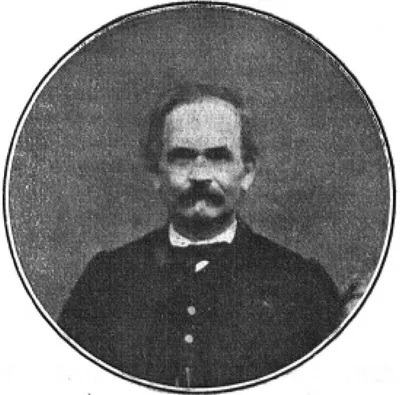
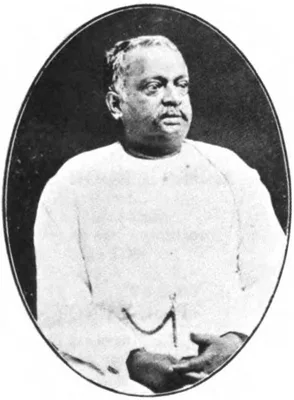
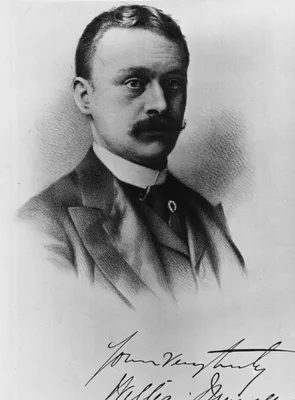
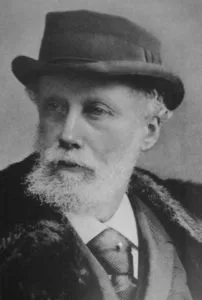
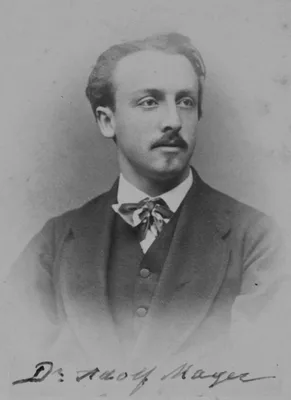
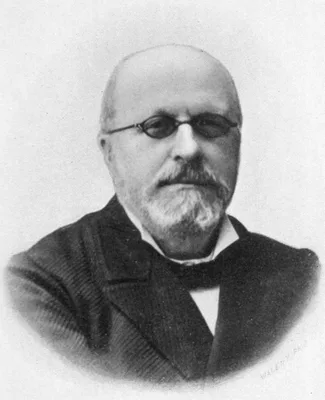
1860 LEMAIRE, François Jules (1814 – 1886)
Du coaltar saponiné, désinfectant énergique, arrètant les fermentations, de ses applications a l'hygiène, la thérapeutique, a l'histoire naturelle.
Lemaire was first to point out the antiseptic properties of carbolic acid. Digital facsimile from BnF Gallica at this link.
GMN 1864 · https://historyofmedicine.com/id/2420
1860 NIEMANN, Albert (1834 – 1861)
Ueber eine neue organische Base in den Cocablättern.
Isolation of cocaine, 1859, from the coca leaf, brought from Peru by Scherzer.
GMN 1865 · https://historyofmedicine.com/id/2423
1860 WARING, Edward John (1819 – 1891)
Remarks on the uses of some bazaar medicines, and on a few of the common indigenous plants of India, according to European practice.
At the time of publication of this work, which contained texts in both Sanskrit and English, Waring was "Physician to His Highness The Maha Rajah of Travancore." Digital facsimile of the 1860 edition from the Biodiver…
GMN 8818 · https://historyofmedicine.com/id/10996
1860 POMPA, Gerónimo
Colección de medicamentos indigenas y sus aplicaciones, estraidos de los reinos vegetal, mineral y animal, recogidos y anotados por [...], segunda edición corregida y aumentada.
Digital facsimile of the 5th edition (1875) from the National Library of Medicine, Internet Archive at this link.
GMN 8971 · https://historyofmedicine.com/id/11150
1862 HANBURY, Daniel (1825 – 1875)
Notes on Chinese materia medica. Reprinted, with some corrections, from the Pharmaceutical Journal and Transactions.
Reprinted, with continuous pagination, and index from the Pharmaceutical Journal for July and August, 1860, for November and December, 1861, and for February 1862. Digital facsimile from the Internet Archive at this l…
GMN 9678 · https://historyofmedicine.com/id/11865
1862 MUSSEY, Reuben Dimond (1780 – 1866)
Health: Its friends and foes.
This work, which promoted vegetarianism and abstinence from tobacco along with other hygiene and overall health advice, was written as the author stated in his preface, "to meet the comprehension of the general reader…
GMN 11311 · https://historyofmedicine.com/id/13509
1863 PORCHER, Francis Peyre (1825 – 1895)
Resources of the southern fields and forests, medical, economical, and agricultural: Being also a medical botany of the Confederate States; with practical information on the useful properties of the trees, plants and shrubs.
The first extensive treatise on the botany of the Southern States of the US and the only Confederate manual of materia medica. This is also a manual of “survival information”, teaching how live off the land and how to…
GMN 1865.1 · https://historyofmedicine.com/id/2429
1863 DABRY DE THIERSANT, Philibert (1826 – 1898); SOUBEIRAN, Jean-Léon (1827 – 1892)
La médecine chez les Chinois par Le capitaine P. Dabry. Ouvrage corrigé et précédé d’une préface par J. Léon Soubeiran.
The best account of Chinese medicine published in Europe during the 19th century, including translations from original Chinese medical texts. Dabry was French consul at Hang-Keou. Soubeiran, a pharmacist, edited his w…
GMN 6492.2 · https://historyofmedicine.com/id/8000
1864 –1866 COCKAYNE, Thomas Oswald (1807 – 1873)
Leechdoms, wortcunning, and starcraft of early England. Being a collection of documents, for the most part never before printed, illustrating the history of science in this country before the Norman Conquest. Collected and edited by Oswald Cockayne. 3 vols.
This set contains many texts relating to medieval English medicine and the Anglo-Saxon language. It contains the Herbal of Apuleius in Anglo-Saxon and modern English, the Leechbook of Bald, the text of Sextus Placitus…
GMN 6534 · https://historyofmedicine.com/id/8141
1867 FRASER, Sir Thomas Richard (1841 – 1919)
On the physiological action of the Calabar bean (Physostigma venenosum, Balf).
Isolation of eserine (physostigmine).
GMN 1866.1 · https://historyofmedicine.com/id/2439
1867 BRUNTON, Sir Thomas Lauder (1844 – 1916)
On the use of nitrite of amyl in angina pectoris.
Lauder Brunton was responsible for the introduction of amyl nitrite for the alleviation of angina. Reprinted in F. A. Willius & T. E. Keys: Cardiac classics, 1941, pp. 561-64.
GMN 2890 · https://historyofmedicine.com/id/4329
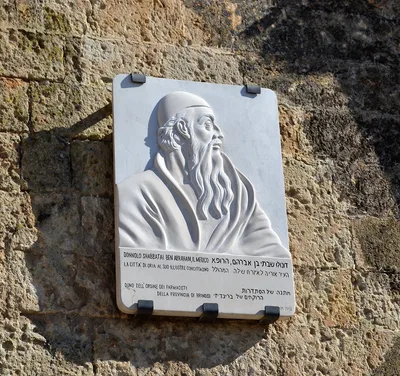
1867 STEINSCHNEIDER, Moritz (1816 – 1907); DONNOLO, Shabbethai (913 – 982)
Donnolo, Fragment des ältesten medicinischen Werkes in hebräischer Sprache.... von M. Steinschneider.
Written about 970 CE, this is the earliest surviving medical treatise written in Hebrew to which an approximate date can be assigned. Donnolo, who was at one time Byzantine court physician, is one of the earliest Jewi…
GMN 9019 · https://historyofmedicine.com/id/11198
1868 MORÉNO Y MÄIZ, Tomás
Recherches chimiques et physiologiques sur l’erythroxylum coca du Pérou et la cocaïne.
The author, formerly a surgeon in the Peruvian army, issued the first study of the pharmacological action of cocaine, containing the earliest suggestion of its use as a local anesthetic. Leclerc issued the commercial …
GMN 1868 · https://historyofmedicine.com/id/2451
1868 WHITE, James William (1826 – 1891)
Dental materia medica. Compiled by James W. White.
The first American treatise on materia medica written specifically for dentists. Digital facsimile from the Hathi Trust at this link.
GMN 12887 · https://historyofmedicine.com/id/15134
1869 LIEBREICH, Oscar (1839 – 1908)
Das Chloral, ein neues Hypnoticum.
Demonstration of the value of chloral hydrate as a hypnotic. See also his monograph Das Chloralhydrat, Berlin, 1869.
GMN 1869 · https://historyofmedicine.com/id/2453
1870 TRIANA SILVA, José Jerónimo (1828 – 1890); MUTIS, José Celestino (1732 – 1808)
Nouvelles études sur les quinquinas, d'après les matériaux présentés en 1867 à l'Exposition universelle de Paris et accompagnées de facsimilé des dessins de la quinologie de Mutis, suivis de remarques sur la culture de quinquinas.
Digital facsimile from Biodiversity Heritage Library at this link.
GMN 13675 · https://historyofmedicine.com/id/15957
1871 SMITH, Frederick Porter (1833 – 1888)
Contributions towards the materia medica & natural history of China for the use of medical missionaries & native medical students.
Digital facsimile from the Internet Archive at this link.
GMN 9655 · https://historyofmedicine.com/id/11842
1874 FLÜCKIGER, Friedrich August (1828 – 1894); HANBURY, Daniel (1825 – 1875)
Pharmacographia. A history of the principal drugs of vegetable origin met with in Great Britain and British India.
Digital facsimile from the Biodiversity Heritage Library at this link.
GMN 2032 · https://historyofmedicine.com/id/2157
1874 DABRY DE THIERSANT, Philibert (1826 – 1898); SOUBEIRAN, Jean-Léon (1827 – 1892)
La matière médicale chez les chinois.
Digital facsimile from BnFGallica at this link.
GMN 10127 · https://historyofmedicine.com/id/12316
1874 WRIGHT, Charles Romley Alder (1844 – 1894)
On the action of organic acids and their anydrides on the natural alkaloïds. Part I.
In quest of a non-addictive alternative to morphine, Wright experimented with combining morphine with various acids. He boiled anhydrous morphine alkaloid with acetic anhydride over a stove for several hours and produ…
GMN 11087 · https://historyofmedicine.com/id/13283
1875 SCHMIEDEBERG, Johann Ernst Oswald (1838 – 1921)
Untersuchungen über die pharmakologisch wirksamen Bestandtheile der Digitalis purpurea
Schmiedeberg isolated digitoxin from digitalis.
GMN 1869.1 · https://historyofmedicine.com/id/2460
1875 BUSS, Carl Emil (1849 – 1878)
Ueber die Anwendung der Salicy Isäure als Antipyreticum.
Buss introduced the clinical use of salicylic acid as an antipyretic.
GMN 1869.2 · https://historyofmedicine.com/id/2463
1875 ROSE, Valentin (1829 – 1916); MARTIALIS, Quintus Gargilius (250 – )
Plinii Secundi quae fertur una cum Gargilli Martialis medicina: Nunc primum edita a Valentino Rose.
Fragments of Martialis's work (probably called De hortis), which treated of the cultivation of trees and vegetables, and also of their medicinal properties, survived, chiefly in the body of and as an appendix to the M…
GMN 8443 · https://historyofmedicine.com/id/10620
1876 TYNDALL, John (1820 – 1893)
The optical deportment of the atmosphere in relation to the phenomena of putrefaction and infection.
Tyndall observed the selective bacteria-inhibiting effect of Penicillium and the resistance of Ps. pyocyanea to it. See No. 2495.
GMN 1932 · https://historyofmedicine.com/id/2765
1876 PIERCE, Ray Vaughn (1840 – 1914)
The people's medical advisor.
A graduate of the Eclectic Medical College in Cincinnati, Vaughn was a member of the New York State Senate (31st D.) in 1878 and 1879, and was elected as a Republican to the 46th United States Congress, holding office…
GMN 10412 · https://historyofmedicine.com/id/12605
1877 PASTEUR, Louis (1822 – 1895); JOUBERT, Jules François (1834 – 1910)
Charbon et septicémie.
Discovery of Vibrion septique (Cl. septicum), the first pathogenic anerobe to be found. Pasteur and Joubert were probably the first to realize the practical implications of antibiosis. They noted the antagonism betwee…
GMN 1932.1 · https://historyofmedicine.com/id/3134
1877 –1883 LECLERC, Lucien (1816 – 1893); IBN AL-BAYTĀR AL-MĀLAQĪ, Ḍiyāʾ Al-Dīn Abū Muḥammad ʿAbdllāh Ibn Aḥmad (Ibn al-Baytar) (1197 – 1248)
Traité des simples. 3 vols. Notices et extraits des manuscrits de la Bibliothèque nationale et autres bibliothèques, 1877, tome 23,1; tome 25,1; tome 26,1. Traduit par Lucien Leclerc.
Ibn al-Baytar systematically recorded the additions to pharmacy made by medieval Islamic physicians, who added between 300 and 400 types of medicines to the roughly one thousand known since antiquity. "Ibn al-Baitar’s…
GMN 8528 · https://historyofmedicine.com/id/10705
1877 DUTT, Uday Chand (1834 – 1884)
Materia medica of the Hindus compiled from Sanskrit medical works. With a glossary of Indian plants.
GMN 13781 · https://historyofmedicine.com/id/16068
1878 –1879 WARING, Edward John (1819 – 1891)
Bibliotheca therapeutica, or bibliography of therapeutics, chiefly in reference to articles of the materia medica, with numerous critical, historical, and therapeutical annotations, and an appendix containing the bibliography of British mineral waters. 2 vols.
References to over 10,000 items, ‘arranged under 660 separate headings or articles,’ some with comments by the compiler. Digital facsimile from the Hathi Trust at this link.
GMN 2034 · https://historyofmedicine.com/id/2173
1878 SQUIRE, Alexander John Balmanno (1836 – 1908)
On the treatment of psoriasis by an ointment of chrysophanic acid.
Introduction of chrysarobin in dermatology.
GMN 4075.1 · https://historyofmedicine.com/id/5512
1878 –1883 GEERTS, Antonius Johannes Cornelius (1843 – 1883)
Les produits de la nature japonaise et chinoise: comprenant la dénomination, l'histoire et les applications aux arts, à l'industrie, à l'économie, à la médecine, etc. des substances qui dérivent des trois règnes de la nature et qui sont employées par les Japonais et les Chinois / Partie inorganique et minéralogique, contenant la description des minéraux et des substances qui dérivent du règne minéral.
Digital facsimile from Google Books at this link.
GMN 7515 · https://historyofmedicine.com/id/9687
1879 MURRELL, William (1853 – 1912)
Nitro-glycerine as a remedy for angina pectoris.
Murrell introduced trinitrin (nitroglycerin, glyceryl trinitrate) in the treatment of angina.
GMN 2892 · https://historyofmedicine.com/id/4338
1880 ANREP, Vasili Konstantinovich (1852 – 1927)
Ueber die physiologische Wirking des Cocaïn.
Anrep studied the action of cocaine and, like Moréno y Maïz, suggested that it might be used as a local anesthetic.
GMN 1871 · https://historyofmedicine.com/id/2470
1881 LADENBURG, Albert (1842 – 1911)
Die natürlich vorkommenden mydriatisch wirkenden Alkaloïde.
Isolation of hysocine (scopolamine), an anti-nausea drug.
GMN 1873 · https://historyofmedicine.com/id/2474
1881 MURRAY, James A.
The plants an drugs of sind; being a systematic account, with descriptions, of the indigenous flora, and notices of the value and uses of their products in commerce, medicine and the arts.
GMN 13050 · https://historyofmedicine.com/id/15301
1882 KANE, Harry Hubbell (1854 – )
Opium-smoking in America and China: A study of its prevalence, and effects, immediate and remote, on the individual and the nation.
The author claims (p. 1) that "the first white man who smoked opium in America is said to have been a sporting character named Clendenyn. The second—induced to try it by the first—smoked in 1871." Digital facsimile fr…
GMN 9506 · https://historyofmedicine.com/id/11691
1884 CERVELLO, Vincenzo (1854 – 1919)
Recherches cliniques et physiologiques sur la paraldéhyde.
Introduction of paraldehyde into therapeutics as a narcotic.
GMN 1877 · https://historyofmedicine.com/id/2495
1884 FILEHNE, Wilhelm (1844 – 1927)
Ueber das Antipyrin, ein neues Antipyreticum.
Introduction of antipyrine.
GMN 1878 · https://historyofmedicine.com/id/2501
1884 UNNA, Paul Gerson (1850 – 1929)
Eine neue Form medicamentöser Einverleibung.
Unna introduced specially coated pills for local absorption in the intestine.
GMN 1879 · https://historyofmedicine.com/id/2505
1884 –1886 BINZ, Karl (1832 – 1913)
Vorlesungen über Pharmakologie.
Includes his test for quinine in urine. English translation of second edition, 1895-97. Binz was Professor of Pharmacology at Bonn. His most important work was perhaps the demonstration that quinine in low concentrati…
GMN 1880 · https://historyofmedicine.com/id/2512
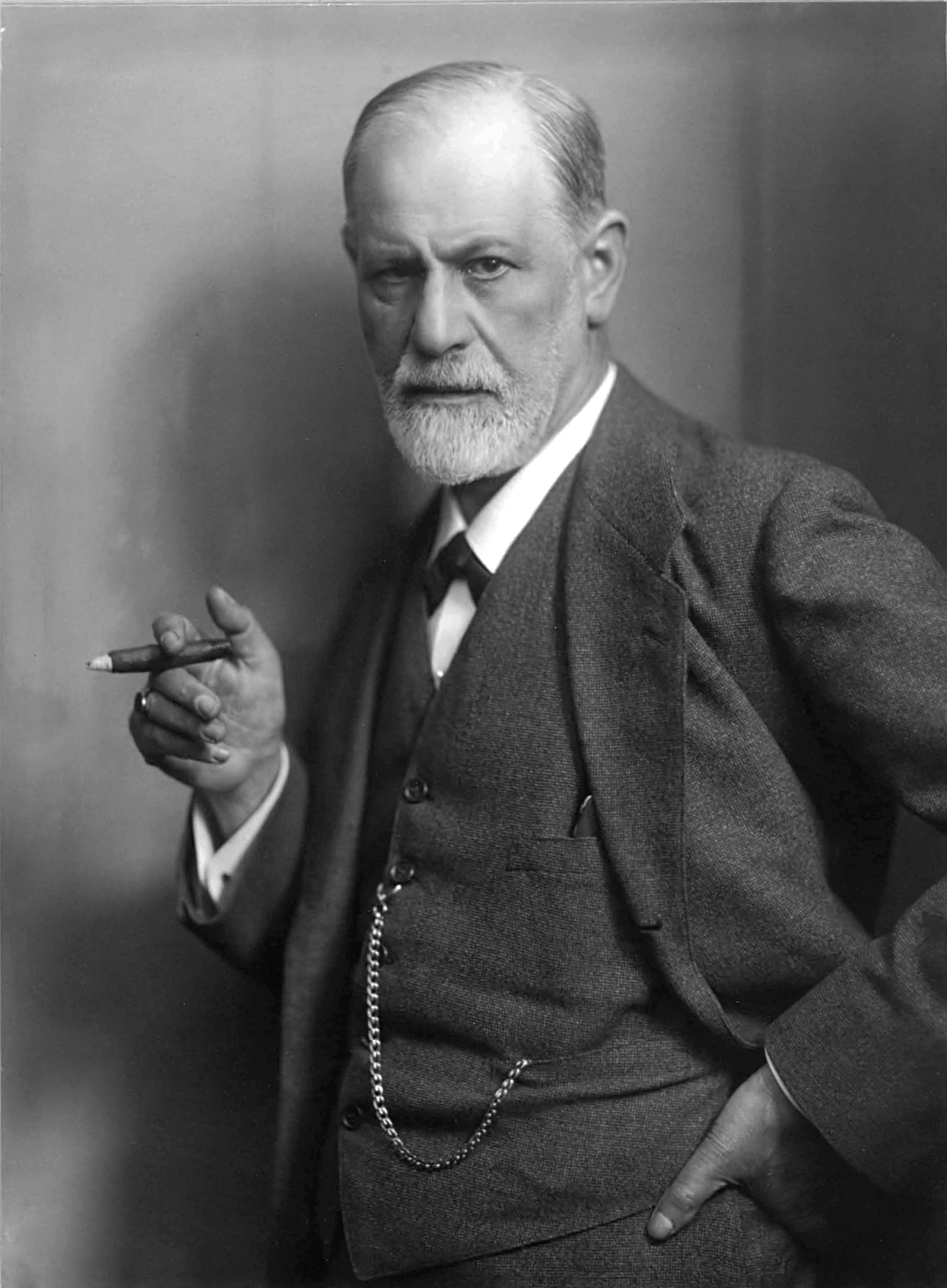
1884 FREUD, Sigmund (1856 – 1939)
Ueber coca.
Freud described his observations (with himself as subject) on the effects of cocaine, including its abolition of hunger and fatigue, the “exhilaration and lasting euphoria”. He also described its supposed non-addictiv…
GMN 1880.1 · https://historyofmedicine.com/id/2515
1884 GORDON, Sir Charles Alexander (1821 – 1899)
An epitome of the reports of the medical officers to the Chinese Imperial Maritime Customs Office from 1871 to 1882. With chapters on the history of medicine in China: Materia medica: Epidemics: Famine: Ethnology: And chronology in relation to medicine and public health.
Apart from studies of common diseases, public health issues, and epizootics, this work contains a chapter on opium smoking and a chapter on the castration of Chinese eunuchs, of which there were around a thousand work…
GMN 9422 · https://historyofmedicine.com/id/11605
1885 BRUNTON, Sir Thomas Lauder (1844 – 1916)
A text-book of pharmacology, therapeutics and materia medica.
Brunton was physician to St. Bartholomew’s Hospital and an eminent pharmacologist. He is notable for his introduction of amyl nitrite in the treatment of angina pectoris and for a vast amount of other work concerning …
GMN 1881 · https://historyofmedicine.com/id/2519
1885 SMITH, Andrew (1828 – 1898)
A contribution to South African materia medica, chiefly from plants in use among the natives.
The first edition was a pamphlet of 23 pp. Smith issued a much-expanded second edition with 163 pp., also at Lovedale in 1888, and a further expanded third edition with 262 pp. (Cape Town, 1895). Digital facsimile of …
GMN 9500 · https://historyofmedicine.com/id/11685
1886 BAUMANN, Eugen (1846 – 1896)
Ueber Disulfone.
Preparation of sulphonal.
GMN 1882 · https://historyofmedicine.com/id/2522
1886 UNNA, Paul Gerson (1850 – 1929)
Ichthyol und Resorcin als Repräsentanten der Gruppe reduzierender Heilmittel.
Unna introduced ichthyol and resorcinol into medicine. Supplement to Mh. prakt. Derm., No. 1.
GMN 1883 · https://historyofmedicine.com/id/2528
1886 MAYER, Adolf Eduard Maydolf (1843 – 1942)
Ueber die Mosaikkrankheit des Tabaks.
Mayer was first to describe and name tobacco mosaic disease and to demonstrate its infectious nature, that it could be transferred between plants, similar to bacterial infections. Translation in Phytopathological Clas…
GMN 2503.1 · https://historyofmedicine.com/id/3207
1887 CAHN, Arnold (1858 – ); HEPP, Paul
Sur l’action de l’antifébrine (acétanilide) et de quelques corps analogues.
Introduction of acetanilide (antifebrin).
GMN 1883.2 · https://historyofmedicine.com/id/2433
1887 HINSBERG, Oscar Heinrich Daniel (1857 – 1939); KAST, Alfred (1856 – 1903)
Ueber die Wirkung des Acetphenetidins.
Introduction of phenacetin.
GMN 1883.3 · https://historyofmedicine.com/id/2478
1887 HUCHARD, Henri (1844 – 1910)
L’artério-sclérose subaiguë dans ses rapports avec les spasmes vasculaires et son traitement par la trinitrine (nitroglycérine).
“Huchard’s disease” – continued hypertension causing arteriosclerosis. Huchard did much to develop the knowledge concerning arteriosclerosis and summarized his work in a classic monograph published in 1909.
GMN 2908 · https://historyofmedicine.com/id/4869