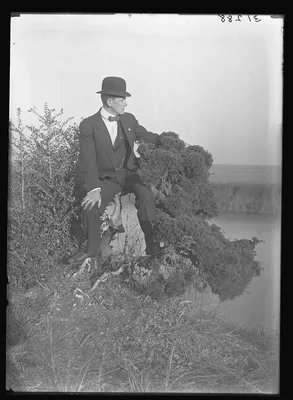
1913 ORTA, Garcia de [Garcia d'Orta] (1501 – 1568); BREYNER, Francesco Manuel de Melo, Conde de Ficalho (1837 – 1903); MARKHAM, Sir Robert Clements (1830 – 1916)
Garci da Orta: Colloquies on the simples & drugs of India. New edition (Lisbon, 1895) edited and annotated by the Conde de Ficalho. Translated with an introduction and index by Sir Clements Markham.
Digital facsimile from the Internet Archive at this link.
GMN 8974 · https://historyofmedicine.com/id/11153
1914 EWINS, Arthur James (1882 – 1957)
Acetylcholine, a new active principle of ergot.
Isolation of acetylcholine in ergot.
GMN 1341 · https://historyofmedicine.com/id/1470
1914 WENCKEBACH, Karel Frederik (1864 – 1940)
Die unregelmässige Herztätigkeit und ihre klinische Bedeutung.
Wenckebach was the first to demonstrate (pp. 173-75) the value of quinine (“Wenckebach’s pills”) in the treatment of paroxysmal fibrillation. The same work contains a number of excellent descriptions of various forms …
GMN 2844 · https://historyofmedicine.com/id/3605
1915 DAKIN, Henry Drysdale (1880 – 1952)
On the use of certain antiseptic substances in the treatment of infected wounds.
Eusol and chloramine-T. “Dakin’s solution” was employed by Carrel (No. 5642) in the Carrel–Dakin method of irrigation of wounds.
GMN 1903.2 · https://historyofmedicine.com/id/2653
1915 ARTIGAS Y CUERVA, Manuel (1866 – 1925)
Bibliografía médico-farmacéutica de Filipinas. Con biografías de los profesionales extranjeros de nota que han estado en el país, y con especialidad las de los filipinos.
GMN 13858 · https://historyofmedicine.com/id/16148
1916 STRAUB, Walter (1874 – 1944)
Digitaliswirkung am isolierten Vorhof des Frosches.
An important analysis of the action of digitalis on the isolated heart.
GMN 1904 · https://historyofmedicine.com/id/2654
1916 ROBBINS, Wilfred William (1884 – 1952); HARRINGTON, John Peabody (1884 – 1961); FREIRE-MARRECO, Barbara (1879 – 1967)
Ethnobotany of the Tewa Indians. Bureau of American Ethnology Bulletin 55.
Digital facsimile from the Internet Archive at this link.
GMN 9346 · https://historyofmedicine.com/id/11528
1917 BROWNING, Carl Hamilton (1881 – 1972); ET AL
Flavine and brilliant green, powerful antiseptics with low toxicity to the tissues: their use in the treatment of infected wounds.
Introduction of acriflavine. With R. Gulbransen, E. L. Kennaway, and L. H. D. Thomton.
GMN 1905 · https://historyofmedicine.com/id/2656
1918 FREY, Walter (1884 – 1972)
Ueber Vorhofflimmern beim Menschen und seine Beseitigung durch Chinidin.
Following Wenckebach’s discovery of the efficacy of quinine in the restoration of normal rhythm in auricular fibrillation. Frey showed that quinidine was the most effective of the cinchona alkaloids in this respect.
GMN 2848 · https://historyofmedicine.com/id/3617
1919 YOUNG, Hugh Hampton (1870 – 1945); ET AL
A new germicide for use in the genito-urinary tract; “mercurochrome-220”.
Introduction of mercurochrome. With E. C. White and E. O. Swartz.
GMN 1908 · https://historyofmedicine.com/id/2661
1920 SAXL, Paul (1880 – 1932)
Verhandlungen ärtzlicher Gesellschaften und Kongressberichte.
Saxl injected a mercurial compound (Novasurol), a powerful diuretic, for the treatment of cardiac failure.
GMN 2853 · https://historyofmedicine.com/id/3635
1920 HAENDEL, Ludwig (1869 – 1939); JOETTEN, Karl Wilhelm (1886 – 1958)
Ueber chemotherapeutische Versuche mit “205 Bayer”, einen neuen trypanoziden Mittel von besonderer Wirkung.
Introduction of “Bayer 205” (germanin, suramin, naphuride).
GMN 5286 · https://historyofmedicine.com/id/6361
1921 SPIRO, Karl (1867 – 1932); STOLL, Arthur (1887 – 1971)
Ueber die wirksamen Substanzen des Mutterkorns.
Isolation of ergotamine.
GMN 1910 · https://historyofmedicine.com/id/2664
1921 MACHT, David Israel (1882 – 1961); TING, Giu-Ching
A study of antispasmodic drugs on the bronchus.
Laboratory demonstration of the antispasmodic action of theophylline on bronchial smooth muscle.
GMN 3197.1 · https://historyofmedicine.com/id/4275
1921 PEARCE, Louise (1886 – 1959)
Studies on the treatment of human trypanosomiasis with tryparsamide (the sodium salt of N-phenylglycineamide-p-arsonic acid).
Introduction of tryparsamide in the treatment of trypanosomiasis.
GMN 5287 · https://historyofmedicine.com/id/6364
1921 LLOYD, John Uri (1849 – 1936)
Origin and history of all the pharmacopeial vegetable drugs, chemicals and preparations with bibliography... Prepared under the auspices of and published by the American Drug Manufacturers' Association, Washington, D.C. Vol. 1 Vegetable drugs
Lloyd comprehensively collected and studied the historical literature, citing it throughout the text and in the numerous bibliographies of specific drugs in this work. The book includes a bibliography of historical so…
GMN 12446 · https://historyofmedicine.com/id/14678
1922 ROHDE, Eleanour Sophy Sinclair (1881 – 1950)
The old English herbals.
Reprinted London, Minerva Press, 1972.
GMN 2048 · https://historyofmedicine.com/id/2258
1922 FLEMING, Sir Alexander (1881 – 1955)
On a remarkable bacteriolytic element found in secretions and tissues.
Lysozyme, an antimicrobial enzyme that is a component of secretions such as tears and saliva. Digital facsimile from royalsocietypublishing.org at this link
GMN 1910.1 · https://historyofmedicine.com/id/2667
1922 UKERS, William Harrison (1873 – 1945)
All about coffee.
Covers the historical, technical, scientific, commercial, social and artistic dimensions of coffee. Second edition, 1935. Digital facsimile of the 1922 edition from Google Books at this link.
GMN 11722 · https://historyofmedicine.com/id/13923
1923 FOURNEAU, Ernest (1872 – 1949)
Chimiothérapie des trypanosomiasis.
Introduction of moranyl (“Foumeau 309”).
GMN 5288 · https://historyofmedicine.com/id/6368
1924 THOMPSON, Reginald Campbell (1876 – 1941)
The Assyrian herbal: A monograph on the Assyrian vegetable drugs, the subject matter of which was communicated in a paper to the Royal Society, March 20, 1924.
A study of Assyrian material medical reproduced by cyclostyle, in the author's handwriting.
GMN 1787 · https://historyofmedicine.com/id/1841
1925 KLEBS, Arnold Carl (1870 – 1943)
Catalogue of early herbals.
GMN 2050 · https://historyofmedicine.com/id/2262
1925 CHURCHMAN, John Woolman (1877 – 1937)
Intravenous use of dyes.
Churchman demonstrated the selective bactericidal action of gentian violet against staphylococci. See also J. exp. Med., 1912, 16, 221-47; J. Urol., 1924, 11, 1-18.
GMN 1911 · https://historyofmedicine.com/id/2673
1925 CUSHNY, Arthur Robertson (1866 – 1926)
The action and uses in medicine of digitalis and its allies.
GMN 1912 · https://historyofmedicine.com/id/2675
1926 GOTTLIEB, Rudolf (1864 – 1924)
Vergleichende Messungen über die Gewöhnung des Atemzentrums an Morphin, Dicodid und Dilaudid.
Introduction of dilaudid (Hydromorphone)
GMN 1913 · https://historyofmedicine.com/id/2678
1926 HANZLIK, Paul John (1885 – 1951)
Actions and uses of the salicylates and cinchophen in medicine.
Republished in book form, Baltimore, 1927.
GMN 1914 · https://historyofmedicine.com/id/2680
1926 LEVADITI, Constantin (1874 – 1953)
Essai de prophylaxie des trypanosomiases par des dérivés phénylarsiniques administré
First attempt to induce prophylaxis by chemical means in trypanosomiasis. With S. Nicolau and I. Galloway.
GMN 5289 · https://historyofmedicine.com/id/6371
1926 –1927 ROEHL, Wilhelm ( – 1929)
Die Wirkung des Plasmochins auf die Vogelmalaria.
Introduction of plasmoquine (pamaquin) in the treatment of malaria.
GMN 5256 · https://historyofmedicine.com/id/7917
1927 BEST, Charles Herbert (1899 – 1978); ET AL
The nature of the vaso-dilator constituents of certain tissue extracts.
Proof that histamine occurs in certain organs in amounts sufficient to account for the depressant action of extracts of these organs. With H. H. Dale, H. W. Dudley, and W. V. Thorpe.
GMN 1916 · https://historyofmedicine.com/id/2684
1927 SINGER, Charles Joseph (1876 – 1960)
The herbal in antiquity and its transmission to later ages.
GMN 11383 · https://historyofmedicine.com/id/13582
1927 IBN BAKHTYASHU, Abu Sa'id Ubaid Allah ( Bukhtishu, Bukhtyashu, and Bakhtshooa) (940 – 1058); SBATH, Paul (Būlus Sbāt) (1887 – 1945)
Ar-Raoudat at-tibbiyya (Le jardin médical) par Ubaîd-Allah Ben Gibraîl Ben Bakhtichoû, Chrétien décédé en 1058: Texte arabe, publié pour la première fois d’après trois manuscrits conservées dans la Bibliothèque des Manuscrits.
GMN 12674 · https://historyofmedicine.com/id/14918
1928 SINTON, Brigadier John Alexander (1884 – 1956); BIRD, William
Studies in malaria, with special references to treatment. Part IX. Plasmoquine in the treatment of malaria.
Clinical trials of pamaquin.
GMN 5256.1 · https://historyofmedicine.com/id/7918
1928 WITHINGTON, Edward Theodore (1860 – 1947); BACON, Roger (1219 – 1292); LITTLE, A. G. (1863 – 1945)
De retardatione accidentium senectutis cum aliis opusculis de rebus medicinalibus. Nunc primum ediderunt A. G. Little [and] E. Withington.
New edition edited from the 1590 printed edition in comparison with existing medieval manuscripts.
GMN 10950 · https://historyofmedicine.com/id/13146
1928 PAPACOSTAS, Georges; GATÉ, Jean
Les associations microbiennes: Leurs applications thérapeutiques.
This work included a 60-page chapter on bacterial inhibition by molds and antibiosis, with several hundred historical references. It appeared one year before Fleming's landmark paper.
GMN 12622 · https://historyofmedicine.com/id/14862
1928 BUDGE, Sir Ernest Alfred Thompson Wallis (1857 – 1934)
The divine origin of the craft of the herbalist.
A semi-popular account useful for its surveys of the earliest herbal literature: Egyptian, Sumerian, Assyrian, Greece, Syriac, Arabic, Coptic, Ethiopian (Abyssinian). Digital facsimile from the Internet Archive at thi…
GMN 12678 · https://historyofmedicine.com/id/14923
1929 FLEMING, Sir Alexander (1881 – 1955)
On the antibacterial action of cultures of a penicillium, with special reference to their use in the isolation of B. influenzae.
Discovery of the growth-inhibiting action of Penicillium on certain bacteria. In 1945 Fleming shared the Nobel Prize in Physiology or Medicine with Ernst Boris Chain and Sir Howard Walter Florey "for the discovery of …
GMN 1933 · https://historyofmedicine.com/id/2774
1929 SULZBERGER, Marion Baldur (1895 – 1983)
Hypersensitiveness to arsphenamine in guinea pigs. I. Experiments in prevention and desensitization.
First demonstration of specific, acquired, lasting refractoriness to sensitization. This is the same or a closely related phenomenon to that demonstrated later by Burnet and Medawar under the name immune tolerance. Se…
GMN 2576.02 · https://historyofmedicine.com/id/3707
1929 HOOPER, David (1858 – 1947)
On Chinese medicine: Drugs of Chinese pharmacies in Malaya.
GMN 9247 · https://historyofmedicine.com/id/11429
1930 EDGEWORTH, Harriet Isabel (1892 – )
A report of progress on the use of ephedrine in a case of myasthenia gravis.
Harriet Edgeworth discovered by accident the beneficial effect of ephedrine in myasthenia gravis. Digital facsimile from jamanetwork.com at this link.
GMN 4765 · https://historyofmedicine.com/id/1412
1930 SCHMIDT, Carl Frederic (1893 – 1988); CHEN, Ko Kuei (1898 – 1988)
Ephedrine and related substances.
A digest of the literature, together with an excellent bibliography. By their earlier work (J. Pharmacol., 1924, 24, 339-57) Chen and Schmidt aroused worldwide interest in ephedrine.
GMN 1918 · https://historyofmedicine.com/id/2690
1930 SMITH, Sydney
Digoxin, a new digitalis glucoside.
Isolation of digoxin from Digitalis lanata.
GMN 1920 · https://historyofmedicine.com/id/2693
1930 RUIZ, Celestino L. (1904 – ); ET AL
Contribución al estudio sobre la composición quimica de la insulina. Estudio de algunos cuerpos sintéticos solfurados con acción hypoglucemiante.
Discovery of the hypoglycemic effect of certain sulphonamide derivatives. With L. L. Silva and L. Libenson.
GMN 3973 · https://historyofmedicine.com/id/5284
1931 SEN, Ganneth; BOSE, Katrick Chandra
Rauwolfia serpentina, a new Indian drug for insanity and high blood pressure.
Introduction of reserpine in the treatment of psychoses.
GMN 4959 · https://historyofmedicine.com/id/6306
1931 GRIEVE, Sophia Emma Magdalene [Maud Grieve] (1858 – 1941)
A modern herbal. The medicinal, culinary, cosmetic and economic properties, cultivation and folk-lore of herbs, grasses, fungi, shrubs & trees with their modern scientific uses. With an introduction by the editor, Mrs. C. F. Leyel. 2 vols.
Online version at Botanical.com at this link.
GMN 7062 · https://historyofmedicine.com/id/9229
1932 KIKUTH, Walter (1896 – 1968)
Zur Weiterentwicklung synthetisch dargestellter Malariamittel. I. Ueber die chemotherapeutische Wirkung des Atebrin.
Introduction of atebrin (mepacrine, quinacrine).
GMN 5257 · https://historyofmedicine.com/id/7919
1932 –1937 MEYERHOF, Max (1874 – 1945); AL-GHAFIQI, Muhammad ibn Aslam ( – 1165); BAR HEBRAEUS, Gregory (1226 – 1286)
The abridged version of "The book of simple drugs" of Aḥmad ibn Muḥammad al-Ghāfiqī by Gregorius abu l-Faraj (Bar Hebraeus). Edited from the only two known manuscripts with an English translation, commentary and indices by M. Meyerhof and G. P. Sobhy Bey. 2 pts.
Digital facsimile from the Internet Archive at this link.
GMN 7163 · https://historyofmedicine.com/id/9330
1932 FLEMING, Sir Alexander (1881 – 1955)
On the specific antibacterial properties of penicillin and potassium tellurite. Incorporating a method of demonstrating some bacterial antagonisms.
In this paper Fleming first described the use of penicillin as an antibacterial agent in man, and reported on experiments using it as a wound dressing for septic wounds. He also corrected the species name from Penicil…
GMN 10784 · https://historyofmedicine.com/id/12980
1933 CHOPRA, Ram Nath (1882 – 1973); ET AL
The pharmacological action of an alkaloid obtained from Rauwolfia serpentina Benth. A preliminary note.
R. N. Chopra, J. C. Gupta, and B. Mukherjee demonstrated the sedative and hypotensive effect of an alkaloid isolated from Rauwolfia serpentina (reserpine).
GMN 1923 · https://historyofmedicine.com/id/2706
1933 TILLETT, William Smith (1892 – 1974); GARNER, Raymond Loraine (1906 – )
The fibrinolytic activity of hemolytic streptococci.
Tillett and Garner discovered a substance elaborated by a strain of haemolytic streptococcus which promoted lysis of fibrin and is now known as streptokinase.
GMN 1924.1 · https://historyofmedicine.com/id/2711
1933 SMITH, Huron Herbert (1883 – 1933)
Ethnobotany of the Forest Potawatomi Indians.
Digital facsimile from swsbm.com at this link.
GMN 9348 · https://historyofmedicine.com/id/11530

![ORTA, Garcia de [Garcia d'Orta] (1501 – 1568)](/media/portraits/2236)
![GRIEVE, Sophia Emma Magdalene [Maud Grieve] (1858 – 1941)](/media/portraits/10066)