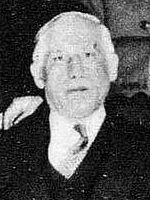
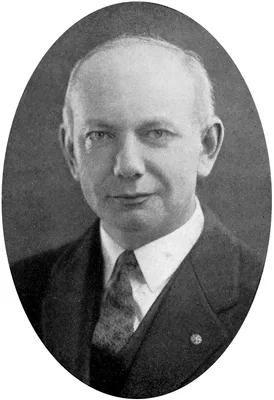
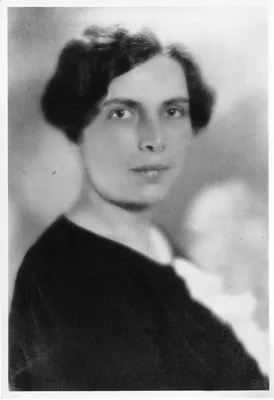
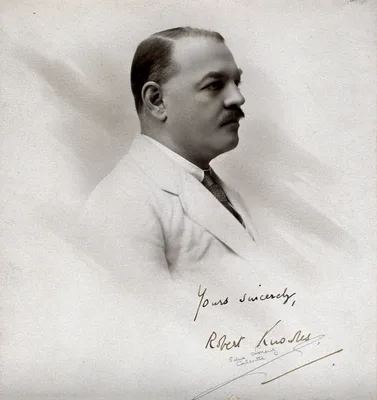
1923 FOURNEAU, Ernest (1872 – 1949)
Chimiothérapie des trypanosomiasis.
Introduction of moranyl (“Foumeau 309”).
GMN 5288 · https://historyofmedicine.com/id/6368
1923 ASHWORTH, James Hartley (1874 – 1936)
On Rhinosporidium seeberi (Wernicke, 1903), with special reference to its sporulation and affinities.
Ashworth was the first to show that Rhinosporidium was a fungus.
GMN 5538.1 · https://historyofmedicine.com/id/6716
1923 MARCHOUX, Émile (1862 – 1943)
Le stovarsol guérit rapidement la dysenterie amibienne.
Introduction of stovarsol (oxyaminophenylarsenic acid) in the treatment of amoebiasis.
GMN 5193 · https://historyofmedicine.com/id/7086
1923 JONES, William Henry Samuel (1876 – 1963); HIPPOCRATES, [Ἱπποκράτης; Hippocrates of Kos] (-460 – -370)
Epidemics I and III. In [Works] with English translation by W.H.S. Jones, 1, 139-287
Hippocrates may be regarded as the first malariologist; he clearly and fully described the intermittent fevers; he was acquainted with seasonal and topographical variations in the distribution of malaria; and he recog…
GMN 5228 · https://historyofmedicine.com/id/7854
1923 JONES, William Henry Samuel (1876 – 1963); HIPPOCRATES, [Ἱπποκράτης; Hippocrates of Kos] (-460 – -370)
Epidemics 1, case 4. In: [Works] with an English translation by W.H. Jones.
The earliest known description of puerperal fever.
GMN 6267 · https://historyofmedicine.com/id/7975
1923 JAKOB, Afons Maria (1884 – 1931)
Die Extrapyramidalen Erkrankungen: Mit Besonderer Berücksichtigung der pathologischen Anatomie und Histologie und der Pathophysiologie der Bewegungsstörungen.
Pages 218-245 represent Jakob's full clinical-pathologic description of the fifth patient that he first described in this work.The symptoms of this patient and the histopathopathologic illustrations correspond fully w…
GMN 12594 · https://historyofmedicine.com/id/14834
1924 WADE, Herber Windsor (1886 – 1968); LARA, C. B.
A plea for the early recognition of leprosy, with notes on diagnosis and methods.
The scraped-incision slit-skin method for bacterial examination in leprosy.
GMN 2440.1 · https://historyofmedicine.com/id/2917
1924 CALMETTE, Léon Charles Albert (1863 – 1933); GUÉRIN, Camille (1872 – 1961); WEILL-HALLÉ, Benjamin (1875 – 1958); ET AL
Essai d’immunisation contre l’infection tuberculeuse.
B.C.G. (Bacille Calmette–Guérin) vaccine was first produced in 1906 and subcultured for 13 years. It was first used as a prophylactic against tuberculosis in children in 1921. It remains in use. See also No. 2346.
GMN 2343 · https://historyofmedicine.com/id/3094
1924 LIBMAN, Emanuel (1872 – 1946); SACKS, Benjamin (1896 – 1939)
A hitherto undescribed form of valvular and mural endocarditis.
“Libman–Sacks disease”.
GMN 2855 · https://historyofmedicine.com/id/3645
1924 KASSOWITZ, Karl Erhard (1886 – 1978)
Ueber cutane Hautreaktion mittels Diphtherie-Toxin zum Nachweis der Diphtherie-Immunität.
The “scratch test”, a cutaneous reaction for determination of susceptibility to diphtheria.
GMN 5069 · https://historyofmedicine.com/id/5907
1924 DICK, George Frederick (1881 – 1967); DICK, Gladys Rowena Henry (1881 – 1963)
A skin test for susceptibility to scarlet fever.
The “Dick test” for the determination of individual susceptibility to scarlet fever.
GMN 5082 · https://historyofmedicine.com/id/5946
1924 DICK, George Frederick (1881 – 1967); DICK, Gladys Rowena Henry (1881 – 1963)
The etiology of scarlet fever.
Proof that streptococcus is the cause of scarlet fever.
GMN 5082.1 · https://historyofmedicine.com/id/5949
1924 DICK, George Frederick (1881 – 1967); DICK, Gladys Rowena Henry (1881 – 1963)
A scarlet fever antitoxin.
Following their successful attempts to establish individual susceptibility to scarlet fever, these workers prepared an antitoxin for immunization.
GMN 5083 · https://historyofmedicine.com/id/5951
1924 DOCHEZ, Alphonse Raymond (1882 – 1964); SHERMAN, Lillian
The significance of Streptococcus hemolyticus in scarlet fever and the preparation of a specific anti-scarlatinal serum by immunization of the horse to Streptococcus hemolyticus-scarlatinae.
Dochez and Sherman immunized a horse by repeated injections of scarlet fever toxin. A serum obtained from the horse blanched a scarlet fever rash and, when injected subcutaneously, caused marked amelioration of the ea…
GMN 5084 · https://historyofmedicine.com/id/5955
1924 KNOWLES, Robert (1883 – 1936); NAPIER, Lionel Everard (1888 – 1957); ET AL
On a Herpetomonas found in the gut of the sandfly, Phlebotomus argentipes, fed on kala-azar patients.
Demonstration that L. donovani is capable of reproduction in Phlebotomus. With R. O. Smith.
GMN 5301.1 · https://historyofmedicine.com/id/6532
1924 ROBERTSON, Andrew
Observations on the causal organism of rat-bite fever in man.
Robertson proved one of the causal organisms of rat-bite fever to be Sp. morsus muris. He re-named it Spirillum minus Carter, 1887, identifying it as the first spiral micro-organism to be described from a rodent.
GMN 5327 · https://historyofmedicine.com/id/6633
1924 WALLGREN, Arvid Johann (1889 – 1973)
Une nouvelle maladie infectieuse du système nerveux central?
Acute lymphocytic choriomeningitis (aseptic meningitis syndrome) first described.
GMN 4687 · https://historyofmedicine.com/id/8877
1925 KUNDRATITZ, Karl (1889 – 1975)
Experimentelle Übertragung von Herpes zoster auf den Menschen und die Beziehungen von Herpes zoster zu Varicellen.
First demonstration of the infectivity of herpes.
GMN 4652 · https://historyofmedicine.com/id/753
1925 SUDHOFF, Karl Friedrich Jakob (1853 – 1938); SINGER, Charles Joseph (1876 – 1960)
The earliest printed literature on syphilis. Being ten tractates from the years 1495-98
GMN 2427 · https://historyofmedicine.com/id/2886
1925 MØLLGAARD, Holger (1885 – 1973)
Ueber die experimentellen Grundlagen für die Sanocrysin-Behandlung der Tuberkulose.
Mollgaard was responsible for the introduction of sanocrysin.
GMN 2344 · https://historyofmedicine.com/id/3099
1925 FLICK, Lawrence Francis (1856 – 1938)
Development of our knowledge of tuberculosis.
GMN 2354 · https://historyofmedicine.com/id/3153
1925 LAUGHLEN, George Franklin (1888 – 1946)
Studies on pneumonia following naso-pharyngeal injections of oil.
Lipoid pneumonia first described.
GMN 3200 · https://historyofmedicine.com/id/4295
1925 EVANS, Alice Catharine (1881 – 1975)
Studies on Brucella (Alkaligenes) melitensis.
Forms Bulletin No. 143 of the U.S. Public Health Service Hygienic Laboratory. Alice Evans showed that the causal organism of Malta fever was closely related to Brucella abortus, responsible for contagious abortion in …
GMN 5103 · https://historyofmedicine.com/id/6034
1925 KLEBS, Arnold Carl (1870 – 1943); DROZ, Eugénie (1893 – 1976)
Remèdes contre la peste. Facsimilés, notes et liste bibliographique des incunables sur la peste.
Includes facsimile reproduction of “La régime de l’epidémie et remède contre icelle” of Jean Jacme (Johannes Jacobi), [5115], together with the “Remède très utile contre fièvre pestilencieuse” by the same writer. See …
GMN 5140 · https://historyofmedicine.com/id/6153
1925 FRANCIS, Edward (1872 – 1957)
Tularemia
Francis demonstrated the transmission of tularemia to man from rodents through insects, particularly the deerfly. He gave the disease its present name; it is also called “Francis’s disease” by some writers.
GMN 5176 · https://historyofmedicine.com/id/6281
1925 BOECK, William Charles (1894 – 1972); DRBOHLAV, Jaroslav (1893 – 1946)
The cultivation of Endamoeba histolytica.
Pure cultivation of Entamoeba histolytica was first accomplished by D. W. Cutler (J. Path. Bact., 1918, 22, 22), but Boeck and Drbohlav evolved the first media upon which amoebae could be cultivated for indefinite per…
GMN 5194 · https://historyofmedicine.com/id/7089
1925 FLETCHER, William ( – 1938); LESSLAR, J. E.
Tropical typhus in the Federated Malay States, with a compilation on epidemic typhus.
Bull. Inst. med. Res., F. M. S., No. 2. Drew attention to scrub typhus in Malaya.
GMN 5394 · https://historyofmedicine.com/id/7160
1925 GORDON, Mervyn Henry (1872 – 1953)
Studies of the viruses of vaccinia and variola.
Medical Research Council Special Report No. 98; a summary of the more important additions to the knowledge of the subject.
GMN 5432 · https://historyofmedicine.com/id/7409
1925 FREI, Wilhelm Siegmund (1885 – 1943)
Eine neue Hautreaktion bei “Lymphogranuloma inguinale”.
The Frei skin test for the diagnosis of lymphogranuloma venereum.
GMN 5218 · https://historyofmedicine.com/id/7828
1925 LEWIS, Sinclair (1885 – 1951)
Arrowsmith.
"This novel has been inspirational for several generations of pre-medical and medical students. There is much agonizing along the way concerning career and life decisions. While detailing Arrowsmith's pursuit of the n…
GMN 10197 · https://historyofmedicine.com/id/12386
1926 LOEVENHART, Arthur Salomon (1878 – 1929); STRATMAN-THOMAS, Warren Kidwell (1894 – 1946)
On the chemotherapy of neurosyphilis and trypanosomiasis.
Study of the effect of twelve different substances in neurosyphilis and trypanosomiasis.
GMN 1915 · https://historyofmedicine.com/id/2682
1926 SAUERBRUCH, Ernst Ferdinand (1875 – 1951); GERSON, Max (1881 – 1959); ET AL
Ueber Versuche, schwere Formen der Tuberkulose durch diätetische Behandlung zu beeinflussen.
Gerson introduced a salt-restricted diet in the treatment of tuberculosis; this was subsequently modified by Sauerbruch and Herrmannsdorfer, becoming known as the “Gerson–Sauerbruch–Hermannsdorfer diet”. The scientifi…
GMN 2345 · https://historyofmedicine.com/id/3102
1926 WU, Lien-Teh (1879 – 1959)
A treatise on pneumonic plague.
Publication of the League of Nations, III. Health III, 13.
GMN 5130 · https://historyofmedicine.com/id/6137
1926 SUDHOFF, Karl Friedrich Jakob (1853 – 1938); KLEBS, Arnold Carl (1870 – 1943)
Die ersten gedruckten Pestschriften.
Includes descriptions of 130 incunabula.
GMN 5141 · https://historyofmedicine.com/id/6155
1926 LEVADITI, Constantin (1874 – 1953)
Essai de prophylaxie des trypanosomiases par des dérivés phénylarsiniques administré
First attempt to induce prophylaxis by chemical means in trypanosomiasis. With S. Nicolau and I. Galloway.
GMN 5289 · https://historyofmedicine.com/id/6371
1926 PLACE, Edwin Hemphill (1880 – ); ET AL
Erythema arthriticum epidemicum; preliminary report.
“Haverhill fever” first reported. The writers isolated an organism, later found to be identical with Streptothrix muris ratti and Streptobacillus moniliformis. With L. E. Sutton and O. Willner.
GMN 5328 · https://historyofmedicine.com/id/6636
1926 FLETCHER, William ( – 1938); LESSLAR, J. E.
The Weil-Felix reaction in sporadic tropical typhus.
Bull. Inst. Med. Res., F. M. S., 1926, No. 1. Demonstration that scrub-typhus patients developed agglutinins against the OX-K strain of B. proteus but not the OX-19 strain.
GMN 5395 · https://historyofmedicine.com/id/7165
1926 MAXCY, Kenneth Fuller (1889 – 1966)
Clinical observations on endemic typhus (Brill’s disease) in Southern United States.
Maxcy described murine (flea-borne) typhus (“Maxcy’s disease”).
GMN 5396 · https://historyofmedicine.com/id/7169
1926 LEDINGHAM, Sir John Charles Grant (1875 – 1944)
Studies on variola, vaccinia, and avian molluscum.
Ledingham’s diagnostic test.
GMN 5433 · https://historyofmedicine.com/id/7412
1926 –1927 ROEHL, Wilhelm ( – 1929)
Die Wirkung des Plasmochins auf die Vogelmalaria.
Introduction of plasmoquine (pamaquin) in the treatment of malaria.
GMN 5256 · https://historyofmedicine.com/id/7917
1926 BUER, M. C.
Health, wealth and population in the early days of the industrial revolution.
Chapters on water supply, 18th physicians and pioneers of public health, the hospital and dispensary movement, general hygiene and midwifery, rickets and scurvy, antiseptics, smallpox, anti-typhus campaign, malaria, etc.
GMN 10467 · https://historyofmedicine.com/id/12660
1926 SEIBERT, Florence Barbara (1897 – 1991)
Isolation of a crystalline protein with tuberculin activity.
Siebert identified the active agent in tuberculin as a protein.
GMN 12386 · https://historyofmedicine.com/id/14613
1927 BALÓ, József Mátyas (1895 – 1979)
A leukoenkephalitis periaxialis concentricaról.
“Baló’s disease” – encephalitis periaxialis concentrica. Translation in Arch. Neurol. Psychiat. (Chicago), 1928, 19, 242-64.
GMN 4653 · https://historyofmedicine.com/id/755
1927 CALMETTE, Léon Charles Albert (1863 – 1933); GUÉRIN, Camille (1872 – 1961); BOQUET, Alfred (1879 – 1947); NÈGRE, Léopold (1879 – 1961)
Sur la vaccination préventive des enfants nouveau-nés contre la tuberculose par le B.C.G.
GMN 2346 · https://historyofmedicine.com/id/3105
1927 STOKES, John Hinchman (1885 – 1961); CHAMBERS, Stanley Owen (1897 – )
Bismuth arsphenamine sulphate.
Clinical introduction of bismarsen, synthesized by G. W. Raiziss in 1924.
GMN 2414 · https://historyofmedicine.com/id/3407
1927 WILSON, Frederick Perera (1876 – 1926)
The plague in Shakespeare’s London.
GMN 5142 · https://historyofmedicine.com/id/6156
1927 BLACKLOCK, Donald Breadalbane (1879 – 1955)
The insect transmission of Onchocerca volvulus (Leuckart, 1893), the cause of worm nodules in man in Africa.
The fly Simulium damnosum shown to be the vector of onchocerciasis.
GMN 5350.8 · https://historyofmedicine.com/id/6874
1927 NOGUCHI, Hideyo (1876 – 1928)
Experimental production of a trachoma-like condition in monkeys by means of a micro-organism isolated from American Indian trachoma.
Isolation of Bact. granulosis, believed by Noguchi to be the causal organism in trachoma. See also his monograph in J. exp. Med., 1928, 48, Suppl. 2.
GMN 5973 · https://historyofmedicine.com/id/7025
1927 GAY PRIETO, José Antonio (1905 – 1979)
Contribución al estudio de la linfogranulomatosis inguinal subaguda o ulcera venérea adenógena de Nicolás y Favre.
Gay Prieto was the first actually to see the infective agent of lymphogranuloma venereum.
GMN 5219 · https://historyofmedicine.com/id/7830
1927 CALMETTE, Léon Charles Albert (1863 – 1933); GUÉRIN, Camille (1872 – 1961); BOQUET, Alfred (1879 – 1947); NÈGRE, Léopold (1879 – 1961)
La vaccination préventive contre la tuberculose par le "BGG". Par Albert Calmette avec la collaboration de C. Guérin, A. Boquet et L. Nègre.
A 250-page monograph, with bibliographical references, on the development of the BCG vaccine from M. bovis, from 1909 to 1927 by the scientists involved. (Thanks to Ron Cox for this reference.)
GMN 11994 · https://historyofmedicine.com/id/14202

![HIPPOCRATES, [Ἱπποκράτης; Hippocrates of Kos] (-460 – -370)](/media/portraits/50)