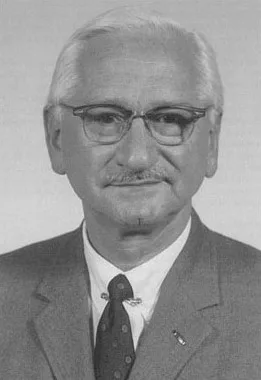
1518 BERENGARIO DA CARPI, Giacomo (1460 – 1530)
Tractatus de fractura calve sive cranei.
The first separate treatise on head wounds and their surgical treatment. Berengario described several types of skull fractures and grouped the resulting lesions according to their symptoms, citing the relation between…
GMN 4850.2 · https://historyofmedicine.com/id/5578
1768 WHYTT, Robert (1714 – 1766)
Observations on the dropsy in the brain.
The first account of the clinical course of tuberculous meningitis in children. This work is notable for its fullness of detail and its accuracy. Whytt divided the disease into three stages, according to the character…
GMN 4634 · https://historyofmedicine.com/id/696
1805 VIEUSSEUX, Gaspard (1746 – 1814)
Mémoire sur la maladie qui a régné à Genève au printemps de 1805.
First definite description of cerebrospinal meningitis. Partial English translation in No. 2241.
GMN 4674 · https://historyofmedicine.com/id/940
1810 STRONG, Nathan (1781 – 1837)
An inaugural dissertation on the disease termed petechial, or spotted fever. Submitted to the Examining Committee of the Medical Society of Connecticut, for the county of Hartford.
This graduation dissertation was the first published brochure on cerebrospinal meningitis. Digital facsimile from U.S. National Library of Medicine at this link.
GMN 4675 · https://historyofmedicine.com/id/942
1811 NORTH, Elisha (1771 – 1843)
A treatise on a malignant epidemic, commonly called spotted fever.
First book on cerebrospinal meningitis; in it North recommended the use of the clinical thermometer, not in general use until the time of Wunderlich. For more information on this book, see the article by F. L. Pleadwe…
GMN 4676 · https://historyofmedicine.com/id/944
1834 GERHARD, William Wood (1809 – 1872)
Cerebral affections of children.
Accurate clinical description of tuberculous meningitis.
GMN 4636 · https://historyofmedicine.com/id/701
1846 DUBINI, Angelo (1813 – 1902)
Primi cenni sulla corea elettrica.
First description of electric chorea, “Dubini’s chorea”, the myoclonic form of epidemic encephalitis.
GMN 4637 · https://historyofmedicine.com/id/702
1866 HIRSCH, August (1817 – 1894)
Die Meningitis cerebro-spinalis epidemica vom historisch-geographischen und pathologisch-therapeutischen Standpunkte.
Digital facsimile from the Hathi Trust at this link.
GMN 12347 · https://historyofmedicine.com/id/14571
1867 VOLTOLINI, Friedrich Eduard Rudolph (1819 – 1889)
Die akute Entzündung des heutigen Labyrinthes, gewöhnlich für Meningitis cerebro-spinalis gehalten.
First description of “Voltolini’s disease” – an acute painful inflammation of the internal ear, followed by fever, delirium, and loss of consciousness. Voltolini was the founder of the Monatsschrift.
GMN 3379 · https://historyofmedicine.com/id/4799
1874 MITCHELL, Silas Weir (1829 – 1914)
Headaches, from heat-stroke, from fevers, after meningitis, from overuse of brain, from eyestrain.
Mitchell drew attention to the importance of eyestrain as a cause of headache.
GMN 4551 · https://historyofmedicine.com/id/411
1879 –1880 LEYDEN, Ernst Viktor von (1832 – 1910)
Ueber Poliomyelitis und Neuritis.
Leyden enjoyed a great reputation as a neurologist and his paper on poliomyelitis and neuritis is one of his best works. He was one of the founders of the journal in which it appeared.
GMN 4666 · https://historyofmedicine.com/id/817
1882 KERNIG, Vladimir Mikhailovich (Woldemar) (1840 – 1917)
Ein Krankheitssymptom der acuten Meningitis.
Kernig drew attention to a flexor contracture of the leg on attempting to extend it on the thigh (“Kernig’s sign”), almost always present in cerebrospinal meningitis and an important diagnostic sign. A fuller descript…
GMN 4677 · https://historyofmedicine.com/id/947
1885 STRÜMPELL, Ernst Adolf Gustav Gottfried (1853 – 1925)
Ueber die akute Encephalitis der Kinder (Polioencephalitis acuta, cerebrale Kinderlähmung).
“Strumpell’s disease” – polioencephalomyelitis.
GMN 4643 · https://historyofmedicine.com/id/721
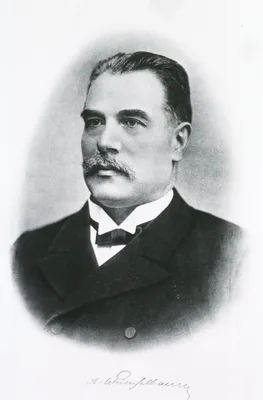
1887 WEICHSELBAUM, Anton (1845 – 1920)
Ueber die Aetiologie der akuten Meningitis cerebro-spinalis.
Weichselbaum discovered the meningococcus, Neisseria meningitidis, causative agent of cerebrospinal meningitis.
GMN 4678 · https://historyofmedicine.com/id/949
1891 WYNTER, Walter Essex (1860 – 1945)
Four cases of tubercular meningitis in which paracentesis of the theca vertebralis was performed for the relief of fluid pressure.
Lumbar puncture. Reprinted in Middx. Hosp. J., 1951, 51, 147.
GMN 4868 · https://historyofmedicine.com/id/5681
1891 EPPINGER, Hans, senior (1846 – 1916)
Ueber eine neue, pathogene Cladothrix und eine durch sie hervorgerufene Pseudotuberculosis (cladothrichica).
Eppinger isolated Cladothrix (Nocardia) asteroides in a patient suffering from pseudotuberculosis with brain abscesses and meningitis.
GMN 5513.1 · https://historyofmedicine.com/id/6518
1899 SLAWYK, Coelestin Wilhelm (1866 – )
Ein Fall von Allgemeininfection mit Influenzabacillen.
First description of influenzal meningitis.
GMN 4681 · https://historyofmedicine.com/id/954
1906 JOCHMANN, Georg (1874 – 1915)
Versuche zur Serodiagnostik und Serotherapie der epidemischen Genickstarre.
First attempts at the serum treatment of cerebrospinal meningitis.
GMN 4682 · https://historyofmedicine.com/id/955
1907 FLEXNER, Simon (1863 – 1946)
Concerning a serum therapy for experimental infection with Diplococcus intracellularis.
Flexner prepared an antiserum for use in cerebrospinal meningitis.
GMN 4683 · https://historyofmedicine.com/id/958
1909 WILSON, William James (1879 – 1954)
On heterologous agglutinins more particularly those present in the blood serum of cerebro-spinal fever and typhus fever cases.
The reaction described by Wilson was later developed by Weil and Felix and named after them (see No. 5390). See also the paper by Wilson in J. Hyg., 1920, 19, 115-30.
GMN 5381 · https://historyofmedicine.com/id/7072
1910 GAY, Frederick Parker (1874 – 1939); LUCAS, William Palmer (1880 – 1960)
Anterior poliomyelitis. Methods of diagnosis from spinal fluid and blood in monkeys and in human beings.
Gay and Lucas were the first to make accurate cell counts of the spinal fluid in poliomyelitis.
GMN 4670.1 · https://historyofmedicine.com/id/837
1910 LANDSTEINER, Karl (1868 – 1943); LEVADITI, Constantin (1874 – 1953)
La poliomyélite experimental.
Serum from a monkey that had recovered from experimental poliomyelitis was mixed with an emulsion containing active polio virus; it failed to produce paralytic disease when injected into fresh monkeys.
GMN 4670.3 · https://historyofmedicine.com/id/853
1912 SCHILDER, Paul Ferdinand (1886 – 1940)
Zur Kenntnis der sogenannten diffusen Sklerose (über Encephalitis periaxialis diffusa).
“Schilder’s disease” – encephalitis periaxialis diffusa.
GMN 4646 · https://historyofmedicine.com/id/730
1917 CAMPBELL, Alfred Walter (1868 – 1937); CLELAND, Sir John Burton (1878 – 1971)
The Australian epidemics of an acute polio-encephalomyelitis (X disease).
Campbell was Australia's first neurologist. This paper described Murray Valley encephalitis (Australian X disease). Cleland and Campbell isolated a virus from the cerebral tissue of three patients.
GMN 4648 · https://historyofmedicine.com/id/738
1917 CRUCHET, Jean René (1875 – 1959); CALMETTE, Léon Charles Albert (1863 – 1933); ET AL
Quarante cas d’encéphalo-myélite subaiguë.
Cruchet’s account of epidemic encephalitis was given on 27 April 1917, preceding that of Economo by 13 days. With F. Moutier
GMN 4649 · https://historyofmedicine.com/id/743
1917 ECONOMO, Constantin von (1876 – 1931)
Encephalitis lethargica.
Economo’s classic description of epidemic encephalitis (“von Economo’s disease”) was published on 10 May 1917; see No. 4649.
GMN 4650 · https://historyofmedicine.com/id/8868
1919 LOEWE, Leo (1896 – ); STRAUSS, Israel (1873 – 1955)
Etiology of epidemic (lethargic) encephalitis. Preliminary note.
Experimental transmission of encephalitis lethargica.
GMN 4651 · https://historyofmedicine.com/id/750
1921 SOUQUES, Achille Alexandre (1860 – 1944)
Rapport sur les syndromes parkinsoniens.
Souques recognized the importance of encephalitis lethargica as a cause of Parkinsonism; more than any other neurologist he was responsible for unifying its diverse manifestations.
GMN 4723 · https://historyofmedicine.com/id/1225
1922 STERN, Felix (1884 – 1941)
Die epidemische Encephalitis. (Monographien aus dem Gesamtgebiete der Neurologie und Psychiatrie. Bd. 30).
Felix Stern was the leading German specialist in encephalitis lethargica . No national statistics for this disease, first described in Vienna in 1916, were kept in Germany. For this reason, the data collected by Stern…
GMN 12637 · https://historyofmedicine.com/id/14878
1924 WALLGREN, Arvid Johann (1889 – 1973)
Une nouvelle maladie infectieuse du système nerveux central?
Acute lymphocytic choriomeningitis (aseptic meningitis syndrome) first described.
GMN 4687 · https://historyofmedicine.com/id/8877
1927 BALÓ, József Mátyas (1895 – 1979)
A leukoenkephalitis periaxialis concentricaról.
“Baló’s disease” – encephalitis periaxialis concentrica. Translation in Arch. Neurol. Psychiat. (Chicago), 1928, 19, 242-64.
GMN 4653 · https://historyofmedicine.com/id/755
1928 KANEKO, Renjiro (1886 – ); AOKI, Y
Ueber die Encephalitis epidemica in Japan.
Japanese encephalitis distinguished from encephalitis lethargica.
GMN 4654 · https://historyofmedicine.com/id/760
1929 ECONOMO, Constantin von (1876 – 1931)
Die Encephalitis lethargica, ihre Nachkrankheiten und ihre Behandlung.
Translated and adapted by K. O. Newman as Encephalitis lethargica its sequelae and treatment. London: Oxford University Press, 1931.
GMN 12642 · https://historyofmedicine.com/id/14883
1931 BURNET, Sir Frank Macfarlane (1899 – 1985); MACNAMARA, Annie Jean Dame (1899 – 1968)
Immunological differences between strains of poliomyelitis virus.
GMN 4670.5 · https://historyofmedicine.com/id/861
1933 MUCKENFUSS, Ralph S. (1916 – )
Encephalitis: studies on experimental transmission.
Isolation of the St. Louis encephalitis virus. With C. Armstrong and H. A. McCordock.
GMN 4656 · https://historyofmedicine.com/id/765
1934 HAYASHI, Michitomo
Übertragung des Virus von Encephalitis epidemica auf Affen.
Experimental transmission of Japanese B encephalitis.
GMN 4657 · https://historyofmedicine.com/id/767
1934 ARMSTRONG, Charles (1886 – 1967); LILLIE, Ralph Dougall (1896 – 1979)
Experimental lymphocytic choriomeningitis of monkeys and mice produced by a virus encountered in studies of the 1933 St. Louis encephalitis epidemic.
Isolation of the virus of benign lymphocytic choriomeningits.
GMN 4688 · https://historyofmedicine.com/id/966
1936 TANIGUCHI, Tenji (1889 – 1961); ET AL
A virus isolated in 1935 epidemic of summer encephalitis in Japan.
T. Taniguchi, M. Hosokawa, and S. Kuga established a virus etiology for Japanese B encephalitis.
GMN 4659 · https://historyofmedicine.com/id/774
1937 SCHWENTKER, Francis Frederic (1904 – 1954); ET AL
The treatment of meningococcic meningitis with sulfanilamide.
With S. Gelman and P. H. Long.
GMN 4689 · https://historyofmedicine.com/id/968
1937 WOLF, Abner (1902 – 1983); COWEN, David (1907 – 2001)
Granulomatous encephalomyelitis due to an encephalitozoon (encephalitozoic encephalomyelitis), a new protozoon disease of man.
Definite recognition of human toxoplasmosis. See also their later paper in the same journal, 1938, 7, 266-83.
GMN 5544.1 · https://historyofmedicine.com/id/6754
1938 FOTHERGILL, Leroy Dryden (1901 – 1967); ET AL
Human encephalitis caused by the virus of the Eastern variety of equine encephalomyelitis.
Isolation of the virus of Eastern equine encephalitis from man. With J. H. Dingle, S. Farber, and M. L. Connerley.
GMN 4659.1 · https://historyofmedicine.com/id/780
1938 HOWITT, Beatrice Fay (1891 – )
Recovery of the virus of equine encephalomyelitis from the brain of a child.
Western equine encephalitis virus recovered from man.
GMN 4660 · https://historyofmedicine.com/id/783
1939 ZILBER, Lev Aleksandrovich (Alexandrovich) (1894 – 1966)
Vesennij (vesenne-letnij) endemiceskij klescevoj encefalit. [Vernal (verno-aestival) endemic tick-borne encephalitis.]
Isolation of the virus of spring–summer (Russian Far East) encephalitis.
GMN 4660.1 · https://historyofmedicine.com/id/785
1940 SMITHBURN, K. C.; HUGHES, T. P.; BURKE, A. W.; ET AL
A neurotropic virus isolated from the blood of a native in Uganda.
Order of authorship in the original paper: Smithburn, Hughes, Burke. In 1937 the authors isolated a virus from the blood of an adult female with fever from the Omogo West Nile district of Uganda, and named it West Nil…
GMN 10951 · https://historyofmedicine.com/id/13147
1944 ROSENBERG, David Harry (1903 – ); ARLING, Philip Arthur (1908 – 1955)
Penicillin in the treatment of meningitis.
GMN 4689.1 · https://historyofmedicine.com/id/970
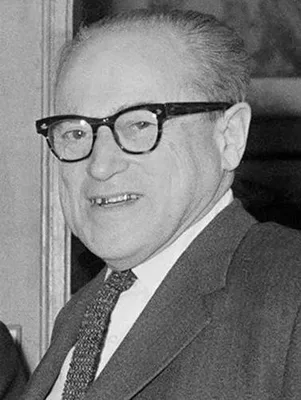
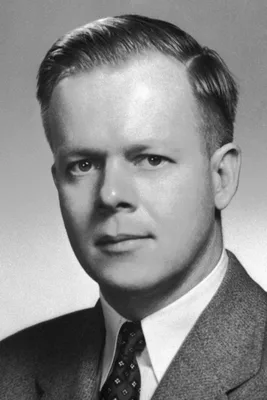
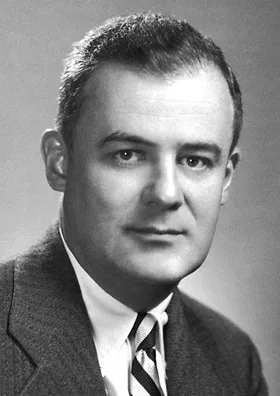
1949 ENDERS, John Franklin (1897 – 1985); WELLER, Thomas Huckle (1915 – 2008); ROBBINS, Frederick Chapman (1916 – 2003)
Cultivation of the Lansing strain of poliomyelitis virus in cultures of various human embryonic tissues.
Enders, Weller, and Robbins grew the poliomyelitis virus in cultures of different tissues. Their method proved of great value in virus research, and removed the final obstacles to vaccine production. In 1974 Enders, W…
GMN 4671.1 · https://historyofmedicine.com/id/874
1952 ENDERS, John Franklin (1897 – 1985); WELLER, Thomas Huckle (1915 – 2008); ROBBINS, Frederick Chapman (1916 – 2003); ET AL
Studies on the cultivation of poliomyelitis viruses in tissue culture.
Order of authorship in the original publication: Weller, Enders, Robbins. In this paper the authors describe their improved method for culturing poliomyelitis viruses in "normal kidney tissue." Followed by Robbins, We…
GMN 11103 · https://historyofmedicine.com/id/13299
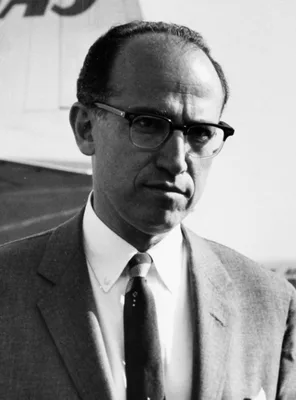
1953 SALK, Jonas Edward (1914 – 1995); ET AL
Studies in human subjects on active immunization against poliomyelitis. 1. A preliminary report of experiments in progress.
Killed-virus vaccine. With four co-authors.
GMN 4672.2 · https://historyofmedicine.com/id/889
1954 IBSEN, Bjørn Aage (1915 – 2007)
The anaesthetist's viewpoint on the treatment of respiratory complications in poliomyelitis during the epidemic in Copenhagen, 1952.
Ibsen developed the first Intensive Care Unit (ICU) during the polio epidemic in Copenhagen in 1952, formally setting up the unit in 1953 in a converted student nurse classroom in the Municipal Hospital in Copenhagen.…
GMN 12968 · https://historyofmedicine.com/id/15216
1955 SABIN, Albert Bruce (1906 – 1993)
Immunization of chimpanzees and human beings with avirulent strains of poliomyelitis virus.
Sabin reported the successful immunization of chimpanzees by oral and I.M. route using the Brunhilde, Mahoney and Leon strains of polio virus. On p. 1055 he reported the experimental results on humans given a "single …
GMN 4672.3 · https://historyofmedicine.com/id/894