1480 BERNARD DE GORDON, (Bernardus de Gordonio) (1250 – 1330)
Practica, seu Lilium medicinae.
Includes descriptions of plague, tuberculosis, scabies, epilepsy, anthrax, and leprosy. ISTC No. ib00447000.
GMN 8369 · https://historyofmedicine.com/id/10546
1546 FRACASTORO, Girolamo [FRACASTORIUS] (1478 – 1553)
De sympathia et antipathia rerum liber unus. De contagione et contagiosis morbis et curatione.
Though Fracastoro wrote this book more than a century before Leewenhoek invented the microscope, and could only express the theory of contagion in very general terms, this book represents a landmark in the development…
GMN 2528 · https://historyofmedicine.com/id/3485
1676 WISEMAN, Richard (1622 – 1676)
Severall chirurgicall treatises.
Wiseman ranks in surgery as high as does Sydenham in medicine. He made many valuable contributions to the subject; he was the first to describe tuberculosis of the joints (“tumor albus”) and he gave a good account of …
GMN 5573 · https://historyofmedicine.com/id/6989
1679 LE BÖE, Franz de [FRANCISCUS SYLVIUS] (1614 – 1672)
Opera medica.
Tuberculosis was known to the ancients only in its advanced form, and little progress was made in the knowledge of the condition until the time of Sylvius. He asserted that tubercles are often to be found in the lung …
GMN 2321 · https://historyofmedicine.com/id/3015
1684 WILLIS, Thomas (1621 – 1675); PORDAGE, Samuel (1633 – 1691)
Dr. Willis's practice of physick.
The only complete edition of Willis's works in English, translated by the poet Samuel Pordage. It contains the translations of all his works except his Affectionum quae dicuntur hystericae (1671). The collection inclu…
GMN 1311 · https://historyofmedicine.com/id/10280
1720 MARTEN, Benjamin (1690 – 1750)
A new theory of consumptions : more especially of a phthisis, or consumption of the lungs.
Marten believed that an infectious micro-organism was the cause of tuberculosis, thus forecasting the existence of the tubercle bacillus 162 years before its actual discovery. Though Leeuwenhoek reported seeing bacter…
GMN 3217 · https://historyofmedicine.com/id/4394
1744 PLATNER, Johann Zacharias (1694 – 1747)
De iis, qui ex tuberculis gibberosi fiunt.
Platner affirmed the tuberculous nature of humpback, which had earlier been surmised by Hippocrates and confirmed by Galen.
GMN 4302 · https://historyofmedicine.com/id/5460
1745 HENCKEL, Johann Friedrich (1678 – 1744)
Berg-Raths Medicinischer Aufstand und Schmelz-Bogen Von der Bergsucht und Hütten-Katze auch einigen andern, Denen Bergleuten und Hütten-Arbeitern zustoßenden Krankheiten, Vor dieselben und diejenigen So in Stein, Erz, Metall und Feuer arbeiten, ausgestellet.
A key early work on the Bergsucht or miner's phthisis.
GMN 10474 · https://historyofmedicine.com/id/12667
1768 WHYTT, Robert (1714 – 1766)
Observations on the dropsy in the brain.
The first account of the clinical course of tuberculous meningitis in children. This work is notable for its fullness of detail and its accuracy. Whytt divided the disease into three stages, according to the character…
GMN 4634 · https://historyofmedicine.com/id/696
1779 DAVID, Jean Pierre (1737 – 1784)
Dissertation sur les effets du mouvement et du repos dans les maladies chirurgicales.
Includes a description of Pott’s disease, with post-mortem findings, better than Pott’s own account. This is an important early work on the effect of movement and of rest in the treatment of joint conditions. English …
GMN 4303 · https://historyofmedicine.com/id/5469
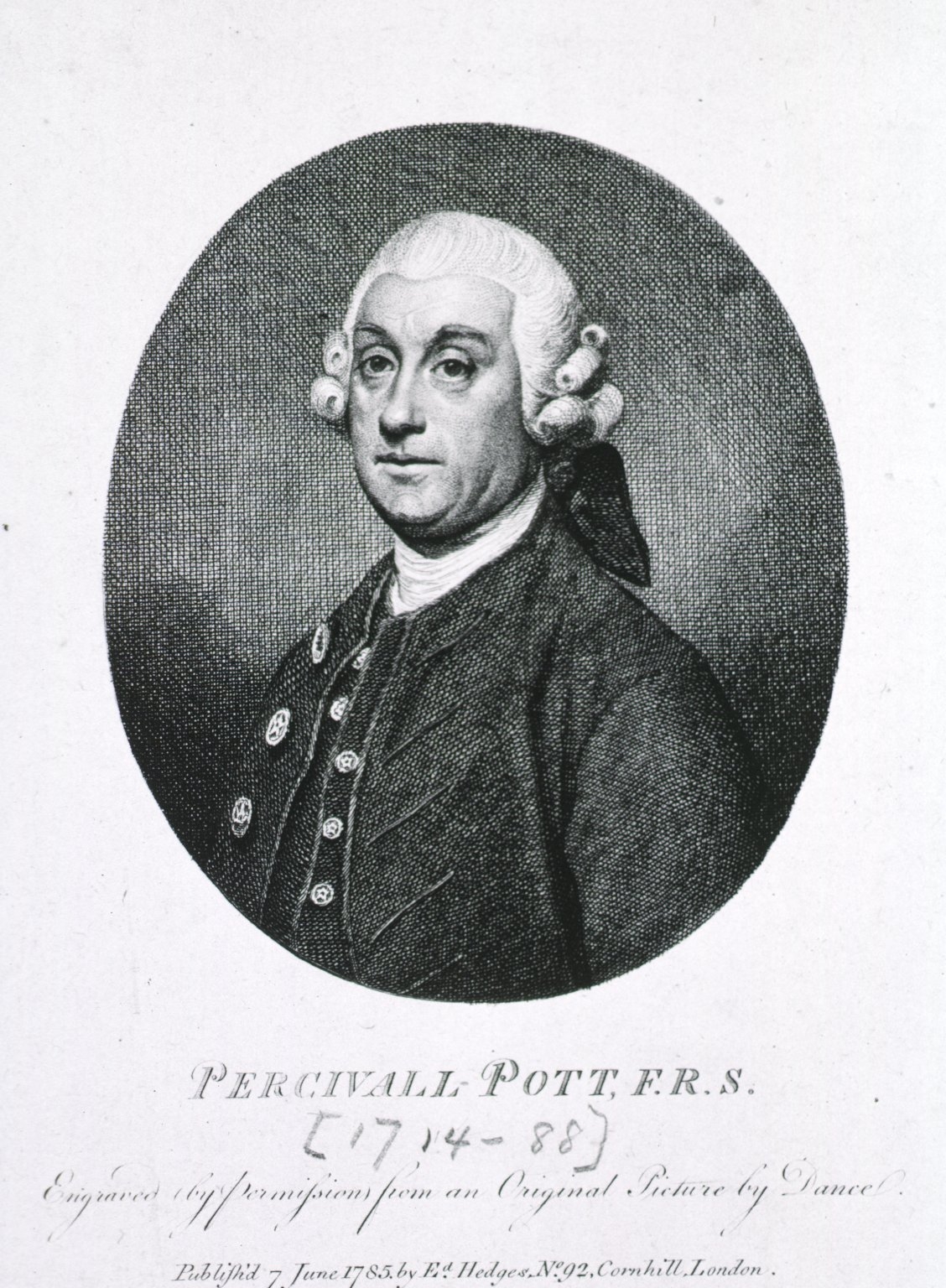
1779 POTT, Percivall (1714 – 1788)
Remarks on that kind of palsy of the lower limbs, which is frequently found to accompany a curvature of the spine.
“Pott’s disease”. Percival Pott, surgeon to St. Bartholomew’s Hospital for more than 40 years, left a classic description of spinal curvature due to tuberculous caries and causing paralysis of the lower limbs. He did …
GMN 4304 · https://historyofmedicine.com/id/5473
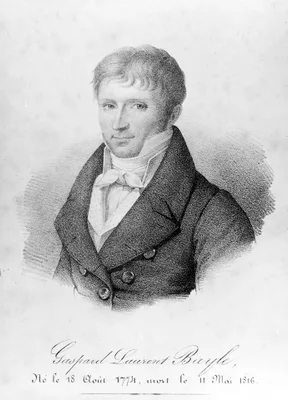
1810 BAYLE, Gaspar Laurent (1774 – 1816)
Recherches sur la phthisie pulmonaire.
The beginning of the modern clinical conception of tuberculosis. Bayle gave the best description to date of the varieties of tuberculosis. He was first to use the term “miliary” to describe small tubercles and first t…
GMN 2322 · https://historyofmedicine.com/id/3019
1815 GALLUP, Joseph Adams (1769 – 1849)
Sketches of epidemic diseases in the state of Vermont; from the first settlement to the year 1815, with a consideration of their causes, phenomena, and treatment. To which is added remarks on pulmonary consumption.
Digital facsimile from U.S. National Library of Medicine at this link:
GMN 13487 · https://historyofmedicine.com/id/15761
1820 CLARK, Sir James (1788 – 1870)
Medical notes on climate, diseases, hospitals, and medical schools, in France, Italy, and Switzerland; comprising an inquiry into the effects of a residence in the South of Europe, in cases of pulmonary consumption, and illustrating the present state of medicine in those countries.
Pages 153-59 contain an account of Clark's visit to the Hopital Necker in Paris, with a detailed discussion of the use of the stethoscope introduced by Laennec, one year earlier, in 1819. This was possibly the first a…
GMN 13239 · https://historyofmedicine.com/id/15504
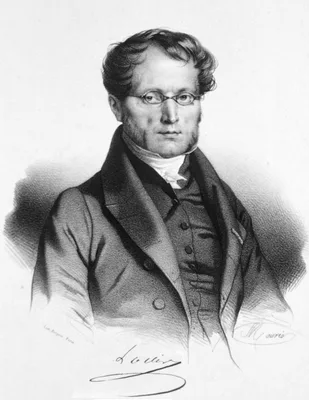
1825 LOUIS, Pierre Charles Alexandre (1787 – 1872)
Recherches anatomico-pathologiques sur la phthisis.
Louis’ researches were based on 358 dissections and 1,960 clinical cases, and included a numerical study of extra-pulmonary lesions. First edition in English, London, 1835. English translation, Boston, 1836. A transla…
GMN 3221 · https://historyofmedicine.com/id/5008
1828 DELPECH, Jacques Mathieu (1777 – 1832)
De l’orthomorphie. 2 vols. and atlas.
Delpech, Professor of Surgery at Montpellier, published a comprehensive treatise on deformities of the bones and joints. He established the tuberculous nature of Pott’s disease. Delpech did more than any other man tow…
GMN 4315 · https://historyofmedicine.com/id/5526
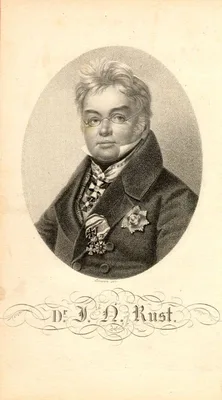
1834 RUST, Johann Nepomuk (1775 – 1840)
Aufsätze und Abhandlungen aus dem Gebiete der Medizin, Chirurgie und Staatsarzneikunde. 1, 196.
First description of “Rust’s disease” – tuberculous spondylitis of the cervical vertebrae.
GMN 4319 · https://historyofmedicine.com/id/5536
1835 LOUIS, Pierre Charles Alexandre (1787 – 1872)
Recherches sur les effets de la saignée dans quelques maladies inflammatoires, et sur l’action de l’émétique et des vésicatoires dans la pneumonie.
Louis refuted Broussais’s system of medicine, his “médicine physiologique.” Louis was instrumental in establishing medicine as an exact science by the introduction of the numerical or statistical method. English trans…
GMN 1698 · https://historyofmedicine.com/id/2455
1843 ADDISON, William (1802 – 1881)
Experimental and practical researches on the structure and function of blood corpuscles; on inflammation; and on the origin and nature of tubercles in the lungs.
Addison gave an important account of the process of inflammation. See L.J. Rather, Addison and the white corpuscles: An aspect of nineteenth-century biology. London, Wellcome Institute, 1972. See also No. 3059.
GMN 2294 · https://historyofmedicine.com/id/2926
1846 KLENCKE, Philipp Friedrich Hermann (1813 – 1881)
Ueber die Ansteckung und Verbreitung der Scrophelkrankheit bei Menschen durch den Genuss der Kuhmilch.
Klencke showed the possibility of the transmission of tuberculosis to man by cow’s milk. In 1843 he succeeded in inoculating rabbits with tuberculosis.
GMN 2323 · https://historyofmedicine.com/id/3023
1851 PARKER, Willard (1800 – 1884)
Cystitis; lateral operation on the bladder, death; tuberculous kidney.
First cystotomy for inflammation and rupture of the bladder.
GMN 4169 · https://historyofmedicine.com/id/5997
1862 WILKS, Sir Samuel (1824 – 1911)
Disease of the skin produced by post mortem examinations, or verruca necrogenica.
Description of dissecting-room warts (verrucae necrogenicae),tuberculosis verrucosa cutis (also known as Lupus verrucosus, Prosector's wart, and "Warty tuberculosis"[ the cutaneous tuberculosis of Laennec, sometimes c…
GMN 4053 · https://historyofmedicine.com/id/5407
1862 HASTINGS, John (1805 – 1875)
An inquiry into the medicinal value of the excreta of reptiles, in phthisis and some other diseases.
Digital facsimile from the Internet Archive at this link.
GMN 11625 · https://historyofmedicine.com/id/13825
1868 VILLEMIN, Jean Antoine (1827 – 1892)
Etudes sur la tuberculose; preuves rationelles et expérimentales de sa spécifité et de son inoculabilité.
Villemin inoculated guinea-pigs and rabbits with sputum, caseous material, and miliary tubercles, with resulting development of tuberculosis. His brilliant experimental work proved tuberculosis to be a specific infect…
GMN 2324 · https://historyofmedicine.com/id/3027
1871 FANEAU DE LA COUR, Ferdinand-Valère (1843 – 1871); LORAIN, Paul Joseph (1827 – 1875)
Du féminisme et de l’infantilisme chez les tuberculeux.
In a letter prefaced to Faneau de La Cour’s thesis, Paul Joseph Lorain (1827-1875) described the idiopathic arrest of growth now known as “Lorain’s type”. It was subsequently ascribed to hypopituitarism. The word “inf…
GMN 3883 · https://historyofmedicine.com/id/5314
1872 BUHL, Ludwig von (1816 – 1880)
Lungenentzündung, Tuberkulose und Schwindsucht.
Buhl stated that disseminated miliary tuberculosis is always associated with the presence of a caseous focus in some part of the body, which is the centre from which infection starts (Buhl-Dittrich law). English trans…
GMN 2325 · https://historyofmedicine.com/id/3043
1873 GRANCHER, Jacques Joseph (1843 – 1907)
De l’unité de la phthisie. Thèse pour le doctorat en médecine. No. 50
Confirmation of Villemin. Grancher in 1903 instituted the “Grancher system” – the boarding out of children from tuberculous households in France. Digital facsimile from the Internet Archive at this link.
GMN 2326 · https://historyofmedicine.com/id/3044
1873 KLEBS, Theodor Albrecht Edwin (1834 – 1913)
Die künstliche Erzeugung der Tuberkulose.
Klebs was the first to produce experimental bovine tuberculosis (by feeding cattle with infected milk). His work confirmed the earlier researches of Villemin.
GMN 2327 · https://historyofmedicine.com/id/3046
1873 THAON, Louis Albert (1846 – 1886)
Recherches sur l’anatomie pathologique de la tuberculose. Thèse No. 45.
Digital facsimile from the Internet Archive at this link.
GMN 2328 · https://historyofmedicine.com/id/3049
1874 PRUNIÈRES, Pierre Marie Barthélémy (1828 – 1893)
Sur les crânes artificiellement perforés à l'époque des dolmens.
Prunières separated postmortem trepanations and rondelles from antemortem operations, and also described tuberculous lesions in Neolithic bones.
GMN 7705 · https://historyofmedicine.com/id/9877
1875 HAVILAND, Alfred Joseph (1824 – 1903)
The geographical distribution of heart disease and dropsy, cancer in females & phthisis in females, in England and Wales. Illustrated by six small and three large coloured maps.
Haviland used the national mortality statistics for England and Wales to develop an elaborate geographical explanation based on map analysis for the cause of heart, cancer, and tuberculosis deaths. He found that femal…
GMN 10451 · https://historyofmedicine.com/id/12644
1876 SAYRE, Lewis Albert (1820 – 1900)
Report on Pott’s disease, or caries of the spine; treated by extension, and the plaster of Paris bandage.
Sayre was the first to use plaster of Paris as a support for the spinal column in scoliosis and Pott’s disease. His name is eponymically linked with Sayre’s jacket, a plaster of Paris jacket applied while the patient …
GMN 4344 · https://historyofmedicine.com/id/5714
1877 SAYRE, Lewis Albert (1820 – 1900)
Spinal disease and spinal curvature, their treatment by suspension and the use of the plaster of Paris bandage.
Sayre’s monograph on his methods of treating tuberculosis of the spine and scoliosis is the first American surgical textbook to contain actual mounted photographs, some of which are remarkable for their artistic quali…
GMN 4344.1 · https://historyofmedicine.com/id/5717
1880 COHNHEIM, Julius Friedrich (1839 – 1884)
Die Tuberkulose vom Standpunkte der Infectionslehre.
Cohnheim, a pioneer pathologist, was Virchow’s most distinguished pupil. Among his many valuable experiments, the greatest was perhaps his successful inoculation of tuberculosis in the anterior chamber of the rabbit’s…
GMN 2329 · https://historyofmedicine.com/id/3051
1881 CONCATO, Luigi Maria (1825 – 1882)
Sulla poliorromennite scrofolosa, o tisi delle sierose.
Concato’s excellent description of tuberculous inflammation of the serous membranes resulted in the eponym “Concato’s disease”.
GMN 2330 · https://historyofmedicine.com/id/3054
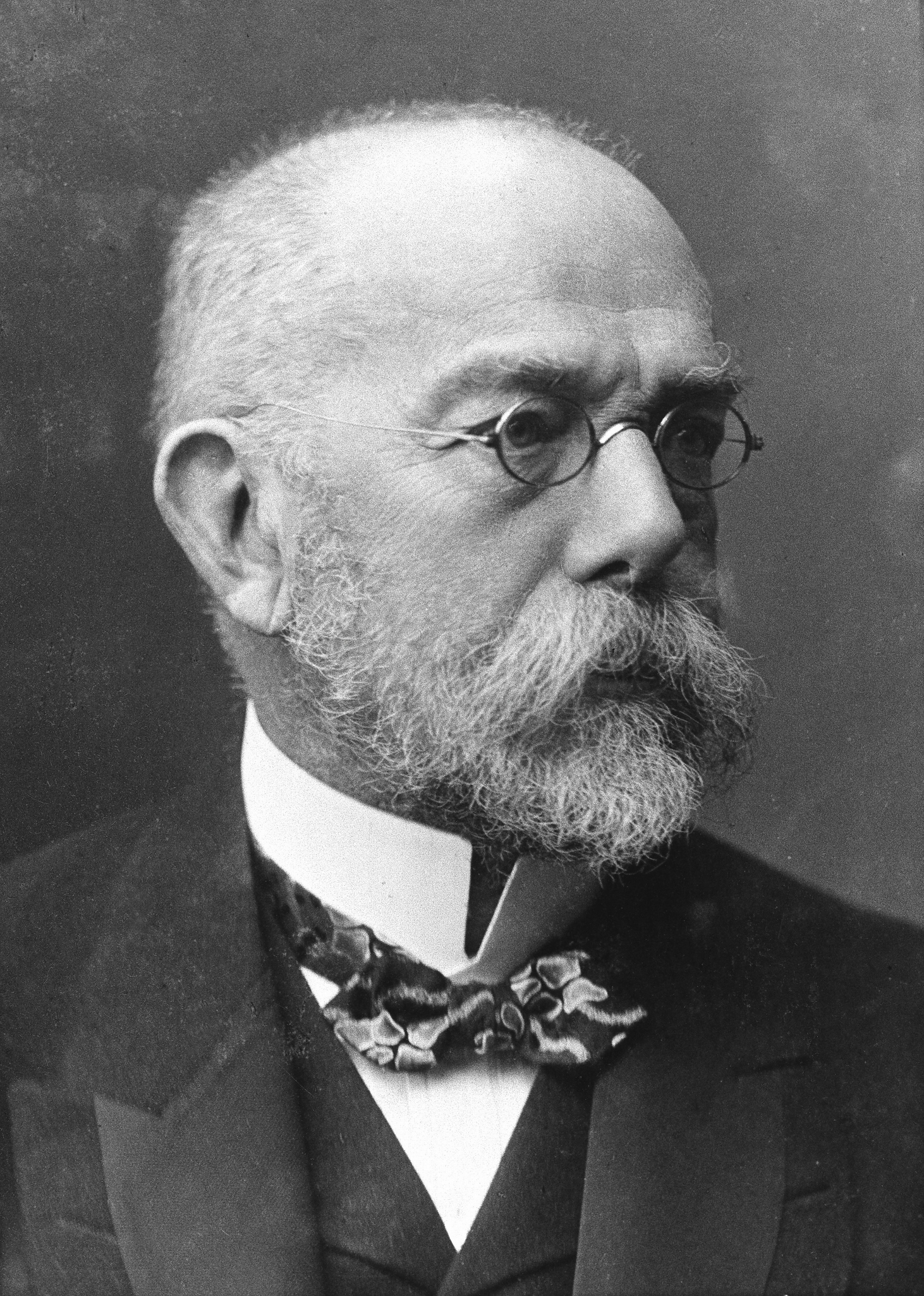
1882 KOCH, Robert Heinrich Hermann (1843 – 1910)
Die Aetiologie der Tuberkulose.
Discovery of the tubercle bacillus announced March 24, 1882. This paper also contains a statement of “Koch’s postulates”. See also Nos. 2536 and 5167. Koch published a fuller account as "Die Aetiologie der Tuberkulose…
GMN 2331 · https://historyofmedicine.com/id/3057
1882 ZIEHL, Franz (1859 – 1926)
Zur Färbung des Tuberkelbacillus.
Ziehl-Neelsen stain.
GMN 2331.1 · https://historyofmedicine.com/id/3061
1883 NEELSEN, Friedrich Carl Adolf (1854 – 1894)
Ein casuistischer Beitrag zur Lehre von der Tuberkulose.
Includes (p. 500) details of his stain for the tubercle bacillus (see No. 2331.1).
GMN 2331.2 · https://historyofmedicine.com/id/3064
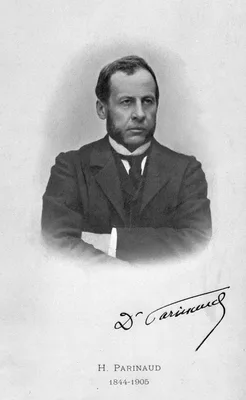
1889 PARINAUD, Henri (1844 – 1905); GALEZOWSKI, Xavier (1832 – 1907)
Conjonctivite infectieuse transmise par les animaux.
Parinaud described an infectious tuberculous conjunctivitis transmissible from animals to man. In 1924 Gifford suggested the name “Parinaud’s oculo-glandular syndrome” as a more suitable description. See also Rec. Oph…
GMN 5936 · https://historyofmedicine.com/id/6889
1890 KOCH, Robert Heinrich Hermann (1843 – 1910)
Weitere Mittheilungen über ein Heilmittel gegen Tuberkulose.
In 1890, Koch announced the discovery of tuberculin, a substance derived from tubercle bacilli, which he thought was capable of arresting bacterial development in-vitro and in animals. This news gave rise to tremendou…
GMN 2332 · https://historyofmedicine.com/id/3068
1891 WYNTER, Walter Essex (1860 – 1945)
Four cases of tubercular meningitis in which paracentesis of the theca vertebralis was performed for the relief of fluid pressure.
Lumbar puncture. Reprinted in Middx. Hosp. J., 1951, 51, 147.
GMN 4868 · https://historyofmedicine.com/id/5681
1891 HADRA, Berthold Ernest (1842 – 1903)
Wiring of the vertebrae as a means of immobilization in fracture and Pott’s disease.
“In a case of fracture-dislocation of the cervical spine (C 6-7) he [Hadra] performed open reduction, twisting metal wires around the spinous processes to stabilize the injured sector” (Bick). This is the first report…
GMN 4359.1 · https://historyofmedicine.com/id/5800
1891 HADRA, Berthold Ernest (1842 – 1903)
Wiring the spinal processes in Pott’s disease.
First spinal fusion.
GMN 4359.2 · https://historyofmedicine.com/id/5802
1893 HAND, Alfred (1868 – 1949)
Polyuria and tuberculosis.
“Hand–Schüller–Christian syndrome”, which Hand called polyuria and tuberculosis.
GMN 6361 · https://historyofmedicine.com/id/8263
1895 LENOIR, Pierre-Jean-Baptiste (1859 – )
Des insufflations d'air dans le traitement des péritonites tuberculeuses. Thèse de médecine, Lille.
Describes the earliest experiments with artificial pneumoperitoneum by Mosetig-Moorhof, Duran and Nolen and Folet, which were not published formally. See Jean-Jacques Peumery, "1993: Le centenaire du penumopéritoine a…
GMN 8482 · https://historyofmedicine.com/id/10659
1896 DARIER, Ferdinand-Jean (1856 – 1938)
Des “tubercules” cutanées.
Darier grouped together, under the heading “tuberculides”, the skin eruptions associated with tuberculosis.
GMN 4122 · https://historyofmedicine.com/id/5719
1897 KOCH, Robert Heinrich Hermann (1843 – 1910)
Ueber neue Tuberkulinpräparate.
Koch’s new tuberculin (Tuberculin R).
GMN 2333 · https://historyofmedicine.com/id/3070
1897 PONCET, Antonin (1849 – 1913)
Polyarthrite tuberculeuse simulant des lésions rhumatismales chroniques déformantes.
Tuberculous rheumatism (“Poncet’s disease”). See also his later paper in Bull. Acad. Méd. (Paris), 1902, 3 sér., 48, 97-114.
GMN 4504 · https://historyofmedicine.com/id/8888
1898 ARLOING, Saturnin (1846 – 1911)
Sur l’obtention de cultures et d’émulsions homogènes du bacille de la tuberculose humaine en milieu liquide et “sur une variété mobile de ce bacille”.
Sero-agglutination for the diagnosis of tubercle bacillus.
GMN 2334 · https://historyofmedicine.com/id/3072
1898 SMITH, Theobald (1859 – 1934)
A comparative study of bovine tubercle bacilli and of human bacilli from sputum.
First clear differentiation between the bovine and human types of tubercle bacillus.
GMN 2335 · https://historyofmedicine.com/id/3074