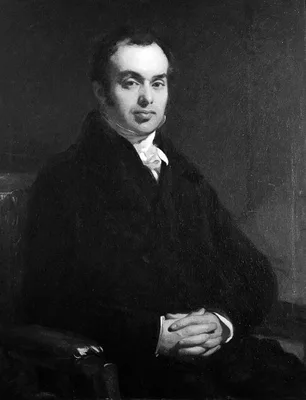
1563 ORTA, Garcia de [Garcia d'Orta] (1501 – 1568)
Colóquios dos simples, e drogas he cousas mediçinais da Índia e assi dalgũas frutas achadas nella onde se tratam algũas cousas tocantes a medicina, pratica, e outras cousas boas pera saber.
The first account of Indian materia medica and the first textbook on tropical medicine written by a European. It includes a classic account of Asiatic cholera, the first account of this disease by a European. This is …
GMN 1815 · https://historyofmedicine.com/id/2046
1642 BONDT, Jacob de [Jacobus Bontius] (1592 – 1631)
De medicina Indorum.
Bontius was probably the first to regard tropical medicine as an independent branch of medical science. He spent the last four years of his life in the Dutch East Indies, and his book incorporates the experience he ga…
GMN 2263 · https://historyofmedicine.com/id/2816
1782 SONNERAT, Pierre (1749 – 1814)
Voyage aux Indes Orientales et à la Chine, fait par ordre du Roi depuis 1774 jusqu’en 1781. 2 vols.
Vol. 1, pp. 113-16, “No author before the time of Sonnerat gives us so distinct an account of the epidemic prevalence of cholera, so full a description of its varieties or has attributed it so positively to the physic…
GMN 5104.1 · https://historyofmedicine.com/id/6038
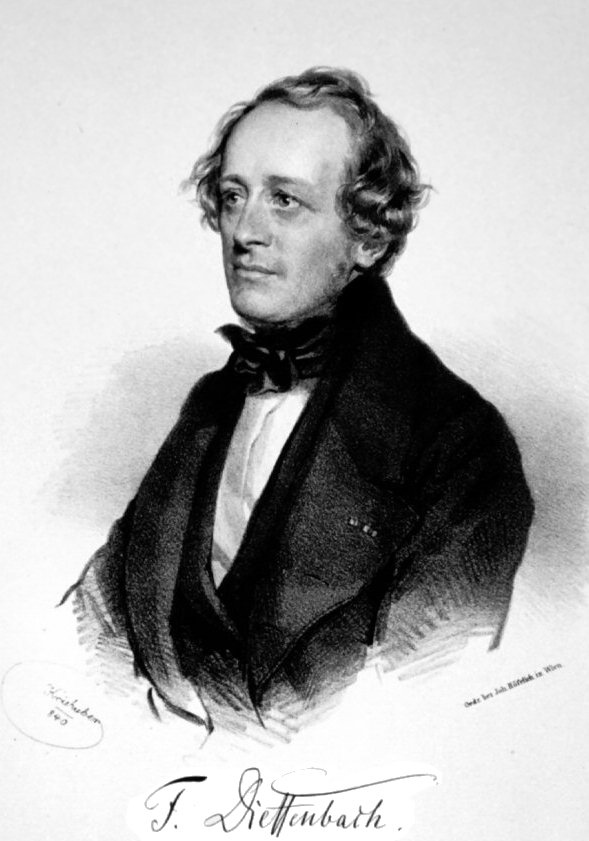
1832 DIEFFENBACH, Johann Friedrich (1792 – 1847)
Physiologisch-chirurgische Beobachtungen bei Cholera-Kranken.
First recorded example of cardiac catheterization, performed during an unsuccessful attempt to obtain blood from a patient suffering from cholera (p. 100). Second edition as separate pamphlet with a new Foreward, Güst…
GMN 2748.1 · https://historyofmedicine.com/id/4628
1832 PARKIN, John (1801 – 1886)
Suggestions respecting the cause, nature, and treatment of cholera.
Parkin suggested the water-born character of cholera and the use of charcoal filters for water purification.
GMN 5105 · https://historyofmedicine.com/id/6040
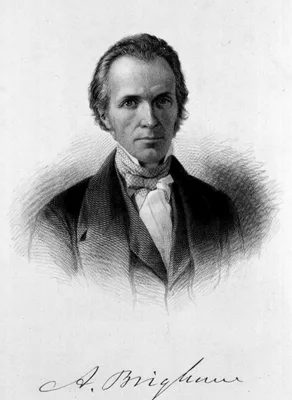
1832 BRIGHAM, Amariah (1798 – 1849)
A treatise on epidemic cholera; including an historical account of its origin and progress, to the present period. Compiled from the most authentic sources.
This compendium contains one of the first world charts of a disease, tracing the spread of cholera from two main sources, India (1817) and China (1820), across Asia and the Middle East via trade routes, to France and …
GMN 7688 · https://historyofmedicine.com/id/9860
1832 BRIERRE DE BOISMONT, Alexandre-Jacques-François (Brière de Boismont) (1797 – 1881)
Relation historique et médicale du choléra-morbus de Pologne, comprenant l'apparition de la maladie, sa march, ses progrès, ses symptômes, son mode de traitement et les moyens préservatifs. Avec une carte.
In his study of the spread of cholera in Poland in 1831 Brière de Boismont used a map to show the progression of the disease from a central point through the country along a red line through principal towns and the da…
GMN 10457 · https://historyofmedicine.com/id/12650
1832 HAMETT, John
The substance of the official medical reports upon the epidemic, called cholera: Which prevailed among the poor at Dantzick, between the end of May and the first part of September, 1831, as transmitted to their lordships; being an analysis of the said epidemic disease in that city--founded upon actual observation and accurate inquiry: With important and well-authenticated facts relative to the same disease, as it prevailed among the poor in other parts of the North of Europe.
Hamett privately published this report after it was rejected for publication by the British government. He included hospital admission tables in his book and produced perhaps the first map based on hospital reports of…
GMN 10462 · https://historyofmedicine.com/id/12655
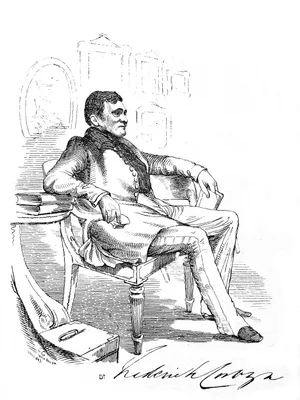
1832 CORBYN, Frederick
A treatise on the epidemic cholera, as it has prevailed in India; together with the reports of the medical officers, made to the medical boards of the presidencies of Bengal, Madras, and Bombay, for the purpose of ascertaining a successful mode of treating that destructive disease; And a critical examination of all the works that have hitherto appeared on the subject.
Corbyn mapped the history of cholera in India within British regimental stations. He included the date of each reported outbreak in a table of British regimental locations to describe the temporal progression of the d…
GMN 10463 · https://historyofmedicine.com/id/12656
1832 TANNER, Henry Schenck (1786 – 1858)
A geographical and statistical account of the epidemic cholera: From its commencement in India to its entrance into the United States: Comprehended in a series of maps and tables, exhibiting the names of places visited by the pestilence, the time of its commencement, the number of cases, and deaths, and duration, at each place: Compiled from a great variety of printed and manuscript documents.
Tanner, a prolific cartographer, wished to provide a geographic account of the spread of the worldwide cholera epidemic of 1817. Statistics concerning the epidemic, he complained, were "given in such a loose and uncon…
GMN 10526 · https://historyofmedicine.com/id/12719
1832 YATES, Christopher C. (1778 – 1848)
Observations on the epidemic now prevailing in the city of New-York; called the Asiatic or spasmodic cholera; with advice to the planters of the South, for the medical treatment of their slaves.
Digital facsimile from the Internet Archive at this link.
GMN 10812 · https://historyofmedicine.com/id/13008
1834 CHÂTEAUNEUF, Louis-François Benoiston de (1776 – 1856)
Rapport sur la marche et les effets du choléra-morbus dans Paris et les communes rurales du département de la Seine par la commission nommée, avec l'approbation de M. le ministre du commerce et des travaux publics, par MM. les préfets de la Seine et de police; année 1832.
This work contained one of the earliest applications of spatial analysis in epidemiology—an early thematic map by geographer and cartographer Charles Picquet, in which the 48 districts of Paris were represented by gra…
GMN 7480 · https://historyofmedicine.com/id/9652
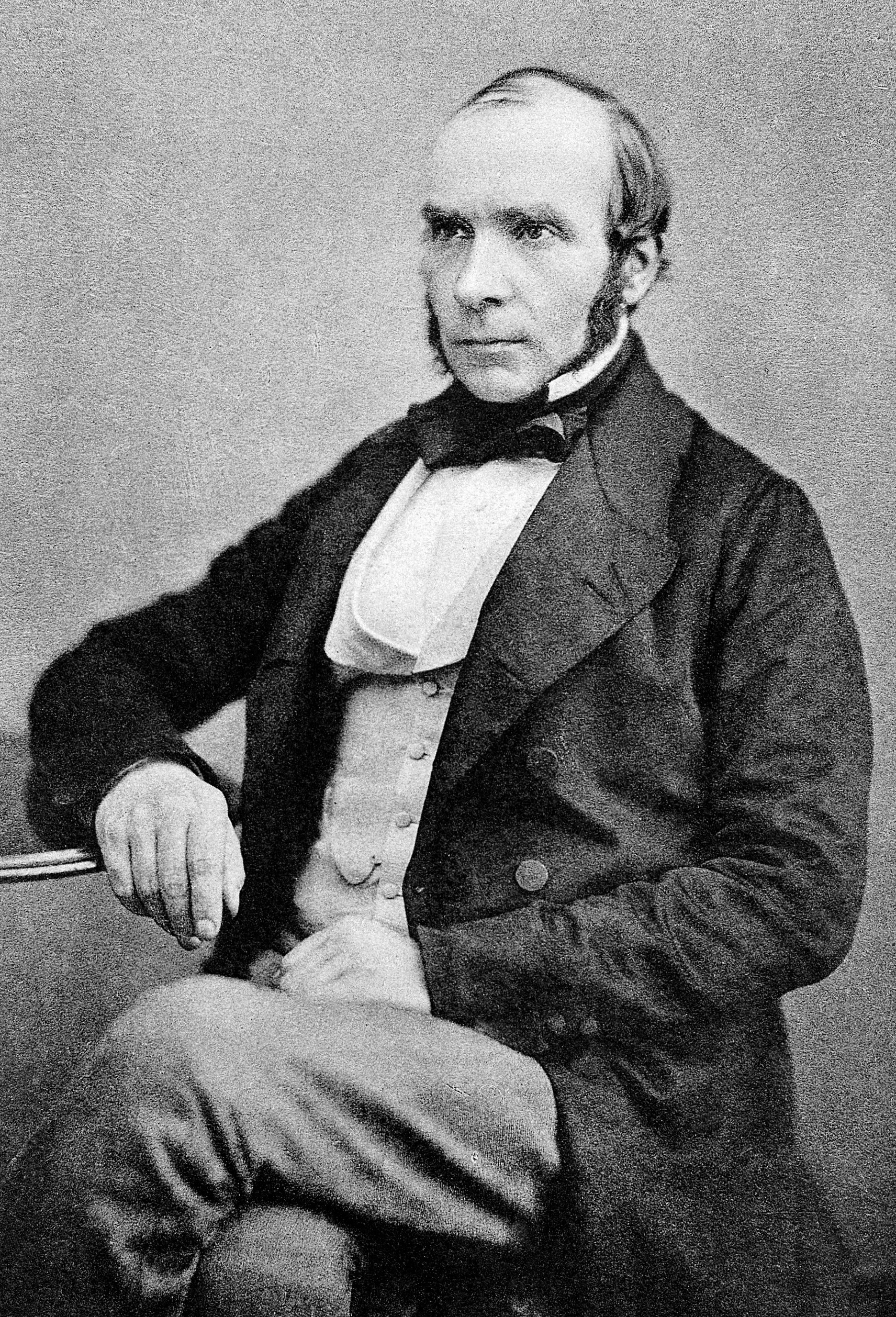
1849 SNOW, John (1813 – 1858)
On the pathology and mode of communication of the cholera.
Snow first became interested in cholera at Newcastle-on-Tyne during the epidemic of 1831-1832, and recurrent outbreaks of the disease gave him the opportunity to investigate it in detail. His paper on cholera, publish…
GMN 5106 · https://historyofmedicine.com/id/6042
1849 SHAPTER, Thomas (1809 – 1902)
The history of the cholera in Exeter in 1832.
Includes “Map of Exeter in 1832 Shewing the Localities Where the Deaths Caused by Pestilential Cholera Occurred in the Years 1832, 1833 & 1834.” This map used red horizontal bars to illustrate outbreaks in 1832, red d…
GMN 7689 · https://historyofmedicine.com/id/9861
1849 SNOW, John (1813 – 1858)
On the mode of communication of cholera.
Publication of Snow's 31-page pamphlet on cholera preceded his paper in the London Medical Gazette by about one month.
GMN 9981 · https://historyofmedicine.com/id/12170
1854 PACINI, Filippo (1812 – 1883)
Osservazioni microscopiche e deduzioni patologiche sul cholera asiatico.
Pacini described vibrios seen in the intestinal contents of cholera victims. He incriminated these vibrios as the pathogen in the disease, anticipating Koch (No. 5108) by 30 years. See N. Howard-Jones. Perspect. Biol.…
GMN 5106.1 · https://historyofmedicine.com/id/6043
1855 PETTENKOFER, Max Josef von (1818 – 1901)
Unterschungen und Beobachtungen über die Verbreitungsart der Cholera.
Pettenkofer gave much attention to the etiology of cholera. He postulated the theory that a specific germ, certain local conditions, certain seasonal conditions, and certain individual conditions are all necessary for…
GMN 5107 · https://historyofmedicine.com/id/6046
1855 SNOW, John (1813 – 1858)
On the mode of communication of the cholera. Second edition, much enlarged.
The second edition of Snow's book on cholera, with 162pp. compared to 31pp. in the first edition, incorporated the results of five more years of research, and contained so much additional material that it was essentia…
GMN 9982 · https://historyofmedicine.com/id/12171
1866 BROCKETT, Linus Pierpont (1820 – 1893)
Asiatic cholera: Its origin, history, and progress, for over two hundred years, and the devastations it has caused in the East and West; Its ravages in Europe and America in 1831-2, in 1848-9, in 1854-5, and in 1865-6 with a full description of the causes, nature, and character of the disease, its means of propagation, whether by the atmosphere or by contagion; its premonitory and distinctive symptoms; the best known means of preventing its attack both in communities and individuals; and the most effectual remedies for it according to the celebrated physicians who have treated It; Together with simple and plain directions for the care of those who from any cause can not obtain medical aid.
Digital facsimile from Google Books at this link.
GMN 11487 · https://historyofmedicine.com/id/13686
1872 MACPHERSON, John (1817 – 1890)
Annals of cholera: from the earliest periods to the year 1817.
GMN 5111.2 · https://historyofmedicine.com/id/6064
1876 MACNAMARA, Nottidge Charles (1832 – 1918)
A history of Asiatic cholera.
GMN 5111.3 · https://historyofmedicine.com/id/6068
1876 CHRISTIE, James
Cholera epidemics in East Africa. An account of the several diffusions of the disease in the country from 1821 till 1872, with an outline of the geography, ethnology, and trade connections of the regions through which the epidemics passed.
Digital facsimile from the Internet Archive at this link.
GMN 10681 · https://historyofmedicine.com/id/12874
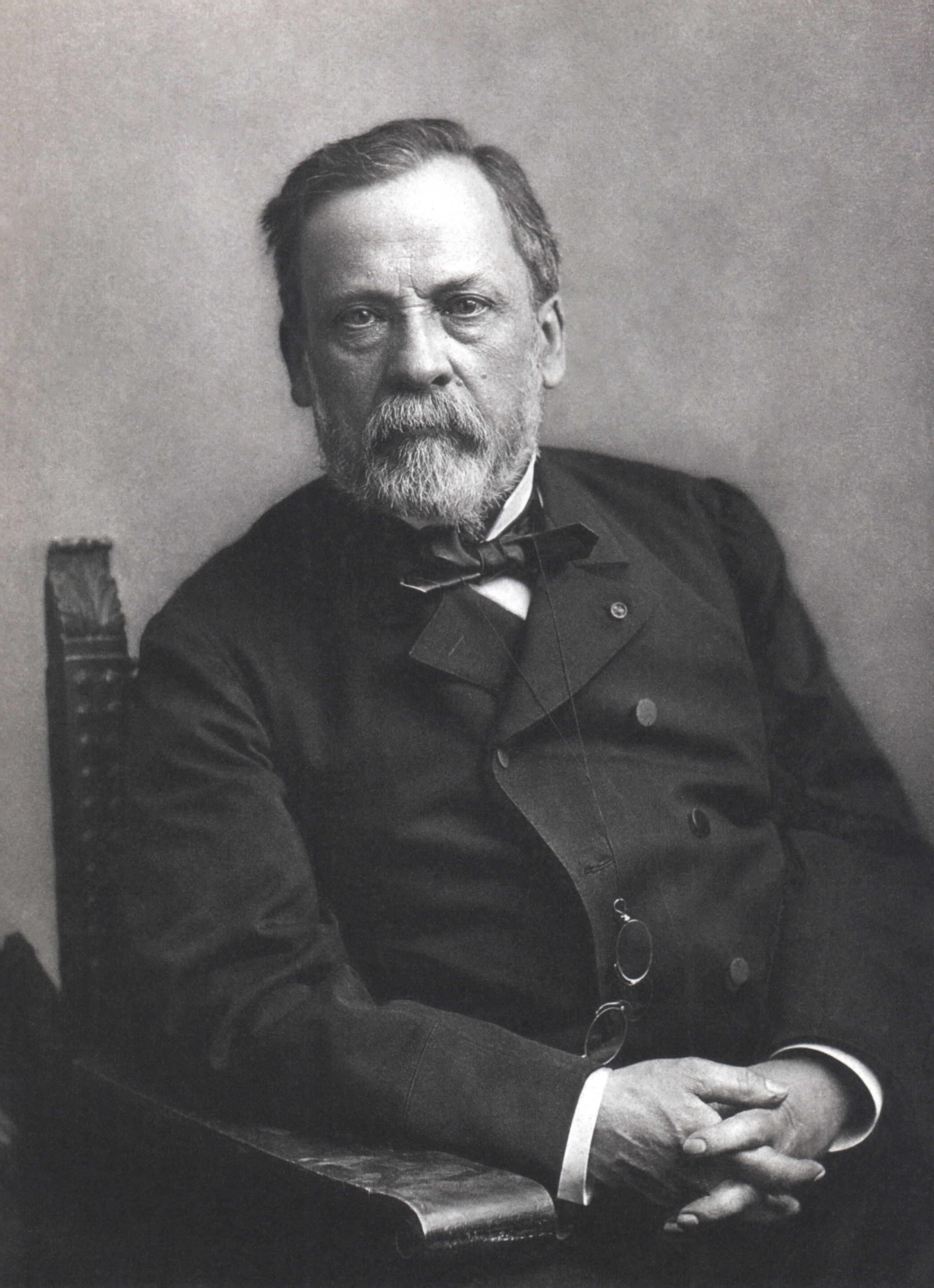
1880 PASTEUR, Louis (1822 – 1895)
Sur les maladies virulentes, et en particulier sur la maladie appelée vulgairement choléra des poules.
This paper marked the beginning of Pasteur’s work on the attenuation of the infective organism. Noting that fowls inoculated with an attenuated form of the chicken cholera bacterium acquired immunity, he developed the…
GMN 2537 · https://historyofmedicine.com/id/3526
1884 FINKLER, Dittmar (1852 – 1912); PRIOR, J
Untersuchungen über Cholera nostras.
Finkler and Prior isolated Vibrio proteus from stools in a case of acute gastro-enteritis.
GMN 3481 · https://historyofmedicine.com/id/5685
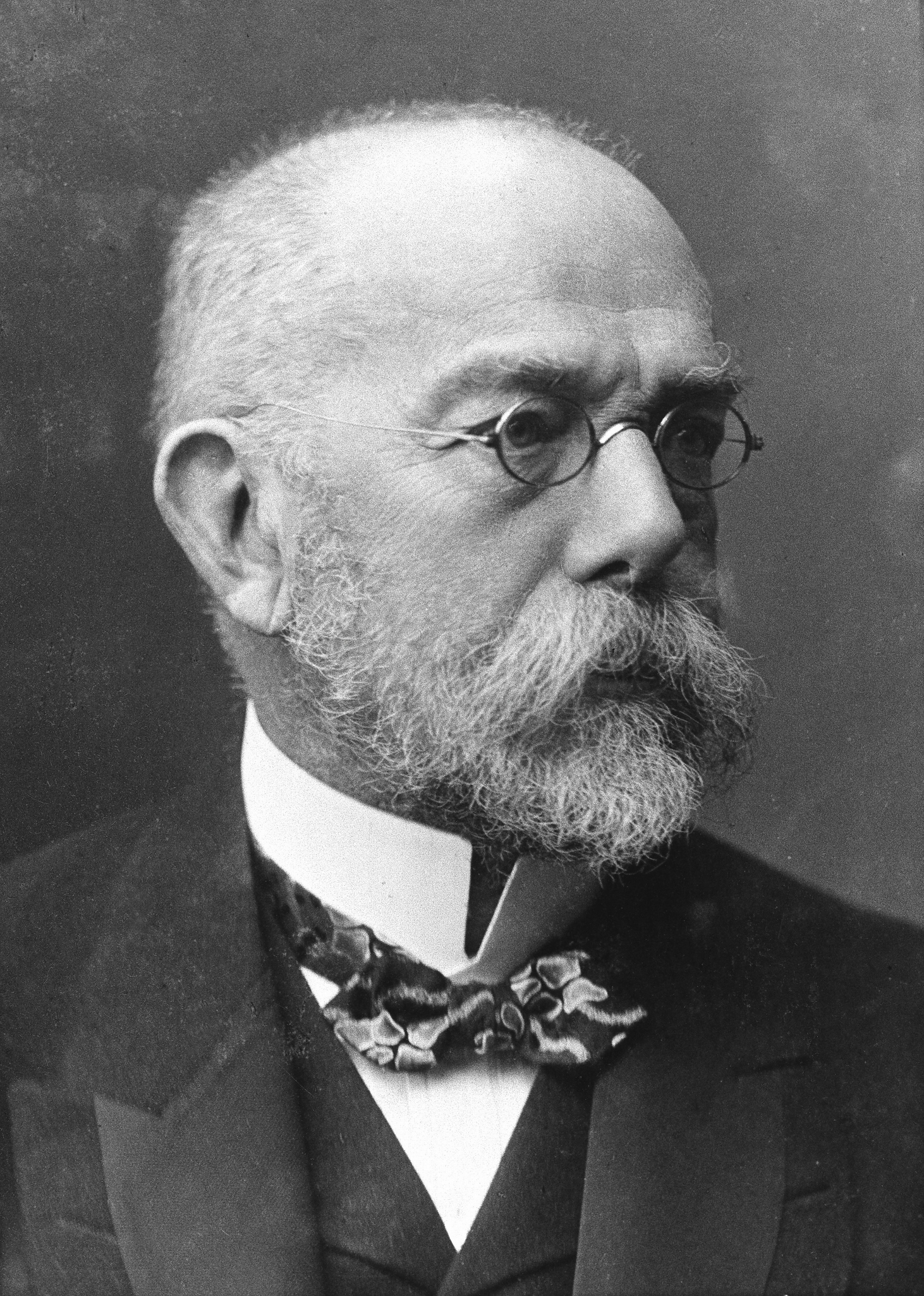
1884 KOCH, Robert Heinrich Hermann (1843 – 1910)
Sechster Bericht der deutschen wissenschaftlichen Commission zur Ehrforschung der Cholera.
In this paper, dated 2 February 1884, written while Koch and his team were in Calcutta, Koch first published his discovery of the cholera bacillus and the main route of its transmission. He based his discovery on the …
GMN 5108 · https://historyofmedicine.com/id/6047
1892 HAFFKINE, Waldemar Mordecai Wolff (1860 – 1930)
Le choléra asiatique chez le cobaye.
Haffkine’s vaccine against cholera was the first to meet with any success.
GMN 5109 · https://historyofmedicine.com/id/6050
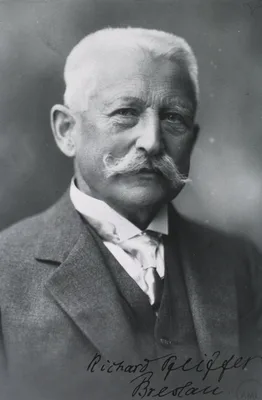
1894 PFEIFFER, Richard Friedrich Johannes (1858 – 1945); ISAYEV, Vasily Isayevich (1854 – 1911)
Ueber die specifische Bedeutung der Choleraimmunität (Bakteriolyse).
Pfeiffer and Isayev recorded the occurrence of bacteriolysis in cholera vibrios under certain conditions: immune bacteriolysis, “Pfeiffer’s phenomenon”. Abridged English translation of second part in Bibel, Milestones…
GMN 2546 · https://historyofmedicine.com/id/3588
1896 DURHAM, Herbert Edward (1866 – 1945); GRUBER, Max von (1853 – 1927)
Eine neue Methode zur raschen Erkennung des Choleravibrio und des Typhusbacillus.
The discovery of bacterial agglutination. Gruber and Durham discovered the agglutinating action of the serum of typhoid patients upon the typhoid bacillus. First briefly reported by Durham: On a special action of seru…
GMN 2549 · https://historyofmedicine.com/id/3604
1896 KOLLE, Wilhelm (1868 – 1935)
Zur aktiven Immunisierung des Menschen gegen Cholera.
Kolle introduced the killed cholera vaccine.
GMN 5111 · https://historyofmedicine.com/id/6059
1896 HANKIN, Ernest Hanbury (1865 – 1939)
L'action bactericide des eaux de la Jumna et du Gange sur le vibrion du cholera.
Hankin described the antibacterial activity of a then-unknown source in the Ganges and Jumna Rivers in India. He noted that "It is seen that the unboiled water of the Ganges kills the cholera germ in less than 3 hours…
GMN 11380 · https://historyofmedicine.com/id/13579
1897 KRAUS, Rudolf (1868 – 1932)
Über specifische Reactionen im keimfreien Filtraten aus Cholera, Typhus und Pestbouillonculturen, erzeugt durch homologes Serum.
The precipitin reaction, employed for the qualitative identification of antigens and antibodies. English translation in Bibel, Milestones in immunology,(1988) pp. 265-68.
GMN 2550.1 · https://historyofmedicine.com/id/3665
1906 GOTSCHLICH, Felix (1874 – 1914)
Über Cholera- und choleraähnliche Vibrionen unter den aus Mekka zurückkehrenden Pilgern.
Isolation of El Tor vibrio, a particular strain of the bacterium Vibrio cholerae. Gotschlich first identified this strain in 1905 at a quarantine camp on the Sinai Peninsula in El Tor, Egypt . The vibrios were found i…
GMN 5111.1 · https://historyofmedicine.com/id/6061
1908 –1912 STICKER, Georg (1860 – 1960)
Abhandlungen aus der Seuchengeschichte und Seuchenlehre. Pt. 1: Die Pest. Pt. 2: Die Cholera. 2 vols. in 3.
GMN 1681 · https://historyofmedicine.com/id/2368
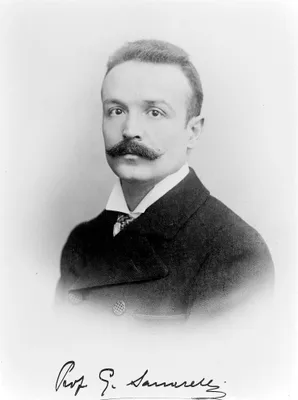
1916 SANARELLI, Giuseppe (1864 – 1940)
Pathogénie du choléra. Reproduction expérimentale de la maladie.
Sanarelli claimed priority in observing the Shwartzman phenomenon (See No. 2576). See Ann. Inst. Pasteur,1939, 63, 105.
GMN 2571.1 · https://historyofmedicine.com/id/3684
1932 DUGUET, Firmin (1876 – ); GODART, Justin (1871 – 1956)
Le pèlerinage de la Mecque au point de vue religieux, social et sanitaire par le docteur Duguet. Avec un préface de Justin Godart.
"Duguet also served as inspector general of health services of Lebanon and Syria under the French Mandate and was responsible for the medical supervision of the pilgrimage to Mecca. The first part of the book gives so…
GMN 12051 · https://historyofmedicine.com/id/14259
1959 POLLITZER, Robert (1885 – 1968)
Cholera.
Includes a section on the history of cholera. WHO Monograph Series,No. 43.
GMN 5111.4 · https://historyofmedicine.com/id/6070
1962 ROSENBERG, Charles Ernest (1936 – )
The cholera years: The United States in 1832, 1849, and 1866.
Edition with new Afterword published in 1987.
GMN 7927 · https://historyofmedicine.com/id/10100
1968 CASH, Richard Alan (1941 – 2024); NALIN, David R. (1941 – ); ISLAM, Rafiqul; PHILLIPS, Robert Allan (1906 – 1976); ET AL
Oral maintenance therapy for cholera in adults.
Abstract: "An oral solution containing glucose, sodium chloride, sodium bicarbonate, and potassium chloride or citrate was used as maintenance therapy for acute cholera. In comparison with control patients who receive…
GMN 14303 · https://historyofmedicine.com/id/16628
1971 CASH, Richard Alan (1941 – 2024); NALIN, David R. (1941 – )
Oral or nasogastric maintenance therapy in pediatric cholera patients.
GMN 14304 · https://historyofmedicine.com/id/16629
1993 ARNOLD, David (1946 – )
Colonizing the body: State medicine and epidemic disease in nineteenth-century India.
An authoritative account of the way that medicine was practiced in India in adaptation to the situation faced by physicians and the state in India, focusing on three major epidemic diseases: smallpox, cholera plague.
GMN 8811 · https://historyofmedicine.com/id/10989
2004 BRIGGS, Charles Leslie (1953 – ); MANTINI-BRIGGS, Clara
Stories in the time of cholera: Racial profiling during a medical nightmare.
'In 1992-93, some five hundred people died from cholera in the Orinoco Delta of eastern Venezuela. In some communities, a third of the adults died in a single night, as anthropologist Charles Briggs and Clara Mantini-…
GMN 9025 · https://historyofmedicine.com/id/11204
2004 GILBERT, Pamela K. (1964 – )
Mapping the Victorian social body.
"The cholera epidemics that plagued London in the nineteenth century were a turning point in the science of epidemiology and public health, and the use of maps to pinpoint the source of the disease initiated an explos…
GMN 10508 · https://historyofmedicine.com/id/12701
2008 GILBERT, Pamela K. (1964 – )
Cholera and nation: Doctoring the Victorian social body.
GMN 10509 · https://historyofmedicine.com/id/12702
2013 ADLER, Richard
Cholera in Detroit: A history.
GMN 12141 · https://historyofmedicine.com/id/14350
2014 KOTAR, Susan Louellen; GESSLER, J. E.
Cholera: A worldwide history.
GMN 10771 · https://historyofmedicine.com/id/12967

![ORTA, Garcia de [Garcia d'Orta] (1501 – 1568)](/media/portraits/2236)