1480 BERNARD DE GORDON, (Bernardus de Gordonio) (1250 – 1330)
Practica, seu Lilium medicinae.
Includes descriptions of plague, tuberculosis, scabies, epilepsy, anthrax, and leprosy. ISTC No. ib00447000.
GMN 8369 · https://historyofmedicine.com/id/10546
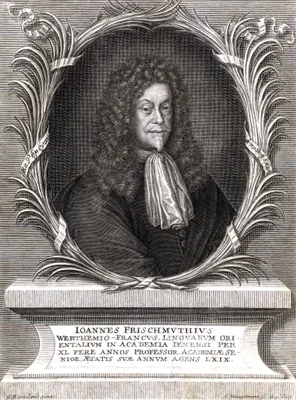
1681 FRISCHMUTH, Johann (1619 – 1687)
Epistola… qua simul de anthrace, carbunculo, bubone et altauna, philologice disseritur.
GMN 5161 · https://historyofmedicine.com/id/6225
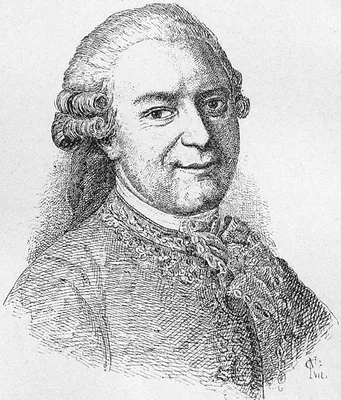
1780 CHABERT, Philibert (1737 – 1814)
Description et traitement du charbon dans les animaux.
First important clinical description of anthrax. For some time after the appearance of Chabert’s short book, the condition was known as “Chabert’s disease”. Chabert was Directeur & Inspecteur général of the Écoles Roy…
GMN 5162 · https://historyofmedicine.com/id/6227
1850 RAYER, Pierre François Olive (1793 – 1867)
Inoculation du sang de rate.
Rayer inoculated sheep with blood of other sheep dead of anthrax. Microscopically he saw the anthrax bacillus in the blood of the inoculated sheep. Rayer was associated with Davaine, who later, in Bull. Acad. Méd., 18…
GMN 5163 · https://historyofmedicine.com/id/6231
1855 POLLENDER, Franz Aloys Antoine (1799 – 1879)
Mikroskopische und mikrochemische Untersuchung des Milzbrandblutes sowie über Wesen und Kurdes Milzbrandes.
Pollender discovered the B. anthracis in 1849, but did not record this fact until 1855. He gave a more exact account of the organism than did Rayer (No. 5163).
GMN 5164 · https://historyofmedicine.com/id/6234
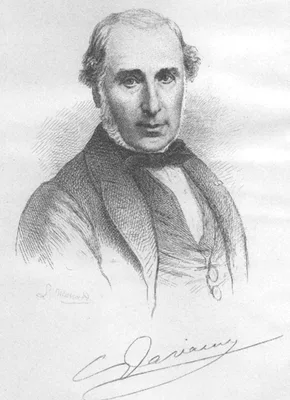
1863 DAVAINE, Casimir Joseph (1812 – 1882)
Recherches sur les infusoires du sang dans la maladie connue sous le nom de sang de rate.
Davaine showed that anthrax could be transmitted to sheep, horses, cattle, guinea-pigs, and mice, and that in such animals the bacilli did not appear in the blood until 4-5 hours before death.
GMN 5165 · https://historyofmedicine.com/id/6237
1865 DAVAINE, Casimir Joseph (1812 – 1882)
Recherches sur la nature et la constitution anatomique de la pustule maligne.
Davaine was the first conclusively to prove that a definite disease (anthrax) was due to a definite micro-organism (B. anthracis), and was thus one of the first to prove the germ theory of disease. He showed that the …
GMN 5166 · https://historyofmedicine.com/id/6239
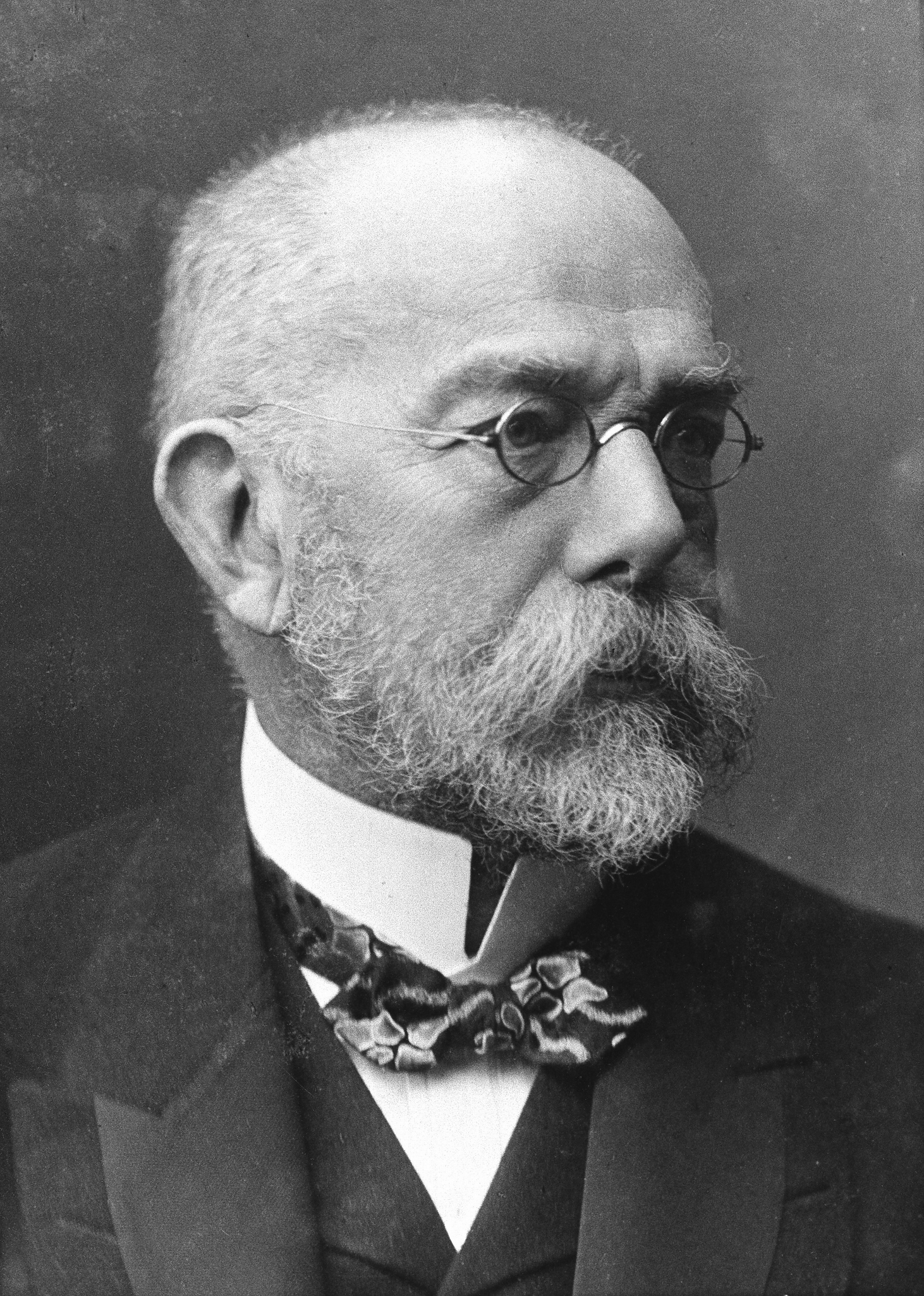
1876 KOCH, Robert Heinrich Hermann (1843 – 1910)
Die Aetiologie der Milzbrand-Krankheit, begründet auf die Entwicklungsgeschichte des Bacillus anthracis.
In 1876 Koch first obtained pure cultures of B. anthracis and described its complete life history. With Davaine (Nos. 5165-66) he did much to prove that infectious diseases are caused by living reproductive microorgan…
GMN 5167 · https://historyofmedicine.com/id/6243
1877 PASTEUR, Louis (1822 – 1895); JOUBERT, Jules François (1834 – 1910)
Étude sur la maladie charbonneuse.
Pasteur confirmed Koch’s results regarding anthrax; with Joubert he carried the bacillus through 100 generations and succeeded in producing anthrax from the last, thus disposing of the idea of a separate virus.
GMN 5168 · https://historyofmedicine.com/id/6246
1880 PASTEUR, Louis (1822 – 1895); CHAMBERLAND, Charles (1851 – 1908); ROUX, Pierre Paul Émile (1853 – 1933)
Sur l’étiologie du charbon.
First use of attenuated bacteria for therapeutic purposes. See also the same journal, 1881, 92, 1378-83.
GMN 5169 · https://historyofmedicine.com/id/6251
1895 SCLAVO, Achille (1861 – 1930)
Sulla preparazione del siero anti-carbonchioso.
Specific anti-anthrax serum. German translation in Zbl. Bakt., 1895, 1 Abt., 18, 744-45.
GMN 5170 · https://historyofmedicine.com/id/6253
1911 ASCOLI, Alberto (1877 – 1957)
La precipitina nella diagnosi del carbonchio ematico.
Ascoli’s thermoprecipitin reaction for the diagnosis of anthrax. German translation in Zbl. Bakt., 1911, 1 Abt., 58, Orig., 63-70. Preliminary note in Patbologica, 1910, 3, 101.
GMN 5171 · https://historyofmedicine.com/id/6255
1911 BECKER, Georg
Die bakteriologische Blutuntersuchung beim Milzbrand des Menschen.
Salvarsan first used in the treatment of anthrax.
GMN 5172 · https://historyofmedicine.com/id/6263
1939 STERNE, Max (1905 – 1997)
The use of anthrax vaccines prepared from avirulent (uncapsulatec) variants of Bacillus anthracis.
Nonencapsulated spore vaccine.
GMN 5172.1 · https://historyofmedicine.com/id/6264
1968 PASTEUR, Louis (1822 – 1895); THUILLIER, Louis (1856 – 1883); FRANK, Robert M.; WROTNOWSKA, Denise
Correspondence of Pasteur & Thuillier concerning anthrax and swine fever vaccinations. Translated and edited by Robert M. Frank and Denise Wrotnowska. Preface by Louis Pasteur Vallery-Radot.
Edition and translation of about 60 letters mostly between Pasteur and his protegé Louis Thuillier in the Reynolds Historical Library at the University of Alabama. During the period involved in this correspondence "Th…
GMN 12038 · https://historyofmedicine.com/id/14246
2004 SWIDERSKI, Richard M.
Anthrax: A history.
GMN 9652 · https://historyofmedicine.com/id/11839