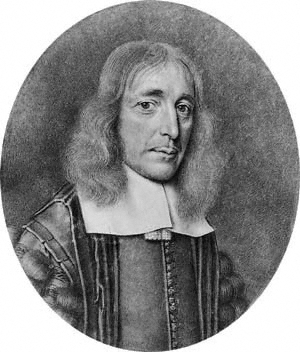
1640 BAILLOU, Guillaume de [BALLONIUS] (1538 – 1616)
Epidemiorum et ephemeridum libri duo.
A pupil of Fernel, De Baillou was a follower of Hippocrates in his advancement of the doctrine of “epidemic constitutions”. Crookshank regards him as the first modern epidemiologist. This work includes the first descr…
GMN 1673 · https://historyofmedicine.com/id/2328
1674 –1675 WILLIS, Thomas (1621 – 1675)
Pharmaceutice rationalis sive diatriba de medicamentorum operationibus in humano corpore. 2 vols.
Willis’s last work deals with the anatomy and physiology of the thoracic and abdominal organs, and contains the first description of the superficial lymphatics of the lungs, the first clinical and pathological account…
GMN 3926 · https://historyofmedicine.com/id/5095
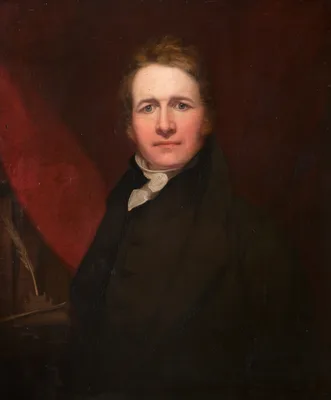
1773 BUTTER, William (1726 – 1805)
A treatise on the kinkcough. With an appendix. Containing an account of hemlock, and its preparation.
Probably the first book on whooping cough, proceeding Watt's book by 40 years. Butter proposed hemlock as a treatment for whooping cough. Digital facsimile from Google Books at this link. (Thanks to Webb Dordick for t…
GMN 14117 · https://historyofmedicine.com/id/16428
1813 WATT, Robert (1774 – 1819)
Treatise on the history, nature, and treatment of chincough: Including a variety of cases and dissections. To which is subjoined an inquiry into the relative mortality of the principal diseases of children, and the numbers who have died under ten years of age, in Glasgow, during the last thirty years.
Probably the second book on whooping cough, written after two of Watt's children died from the disease. After vaccination for smallpox was introduced, Watt found, as he had expected, that the number of deaths from tha…
GMN 5086.1 · https://historyofmedicine.com/id/5963
1896 STICKER, Georg (1860 – 1960)
Der Keuchhusten.
An important history of whooping cough.
GMN 5088 · https://historyofmedicine.com/id/5980
1904 HAMMURABI, King of Babylon (-1792 – -1750); HARPER, Robert Francis (1864 – 1914)
The code of Hammurabi, King of Babylon about 2000 BCE. Autographed text, transliteration, translation, glossary, index of subjects, lists of proper names, signs, numerals, corrections, and erasures, with map, frontispiece, and photograph of text by Robert Francis Harper.
The Code of Hammurabi was found among the cuneiform tablets of the library of Ashurbanipal. It is now in the Louvre. It was first published in Scheil, "Textes élamites-sémitiques. Deuxième série: accompagné de 20 plan…
GMN 1 · https://historyofmedicine.com/id/8605
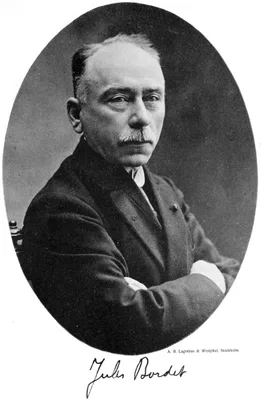
1906 BORDET, Jules Jean Baptiste Vincent (1870 – 1961); GENGOU, Octave (1875 – 1957)
Le microbe de la coqueluche.
The cocco-bacillus Haemophilus pertussis, commonly regarded as the causal organism of whooping cough, was at first named “Bordet–Gengou bacillus” after its discoverers. It has later renamed Bordetella pertussis.
GMN 5087 · https://historyofmedicine.com/id/5968
1931 LESLIE, Patrick Holt (1900 – 1972); GARDNER, Arthur Duncan (1884 – 1977)
The phases of Haemophilus pertussis.
Leslie and Gardner classified H. pertussis cultures into four types and established an experimental basis for the development of an effective vaccine.
GMN 5087.1 · https://historyofmedicine.com/id/5975
1939 KENDRICK, Pearl Louella (1890 – 1980); ELDERING, Grace (1900 – 1988)
A study in active immunization against pertussis.
Pertussis vaccine.
GMN 5087.2 · https://historyofmedicine.com/id/5978