1808 BADHAM, Charles (1780 – 1845)
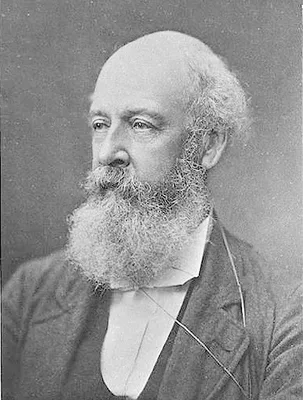
Observations on the inflammatory affections of the mucous membrane of the bronchiae.
Badham distinguished acute and chronic bronchitis from pneumonia and pleurisy, with which it had previously been confused. He gave the disease its present name. Digital facsimile from Google Books at this link.
GMN 3168 · https://historyofmedicine.com/id/4129
1819 LAENNEC, René Théophile Hyacinthe (1781 – 1826)
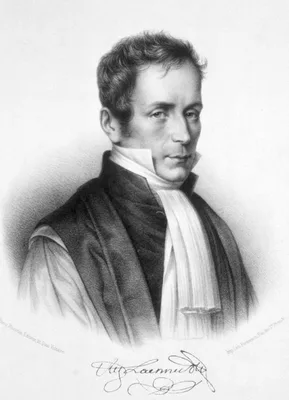
De l’auscultation médiate, ou traité du diagnostic des maladies des poumons et du coeur. 2 vols.
This book revolutionized the study of diseases of the chest. Auscultation in the instrumental sense dates from Laennec’s invention of the stethoscope (at first merely a roll of stiff paper) with a view to amplifying t…
GMN 2673 · https://historyofmedicine.com/id/3518
1826 LAENNEC, René Théophile Hyacinthe (1781 – 1826)
Traité de l'auscultation médiate ou traité diagnostic des maladies des poumons et du coeur. 2 vols.
Second edition, hugely revised, expanded, and improved. The pagination of the first edition (1819) was 456 pp. in vol. 1 and 472 pp. in vol. 2. The second edition was expanded to 728pp. in vol. 1 and 790 pp. in vol. 2…
GMN 14323 · https://historyofmedicine.com/id/16648
1837 STOKES, William (1804 – 1878)
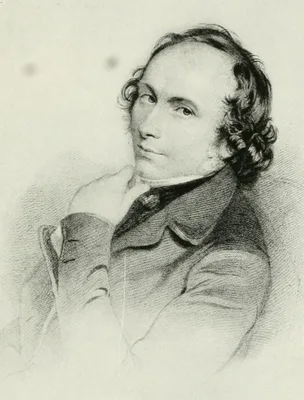
A treatise on the diagnosis and treatment of diseases of the chest.
Stokes, most prominent of the Irish school of medicine, established his reputation by his book on diseases of the chest. Important among its contents are his discovery of a stage of pneumonia prior to that described b…
GMN 2213 · https://historyofmedicine.com/id/1697
1839 ŠKODA, Josef (1805 – 1881)
Abhandlung über Perkussion und Auskultation.
Skoda classified the various sounds obtained on percussion according to their musical pitch and tone. “Skoda’s resonance” is an important diagnostic sign in pneumonia and pericardial effusion. Following Skoda’s work, …
GMN 2676 · https://historyofmedicine.com/id/3525
1882 FRIEDLÄNDER, Carl (1847 – 1887)
Ueber die Schizomyceten bei der acuten fibrösen Pneumonie.
Isolation of Klebsiella pneumoniae (“Friedländer bacillus”), which Friedländer regarded as the causal organism in all cases of lobar pneumonia.
GMN 3174 · https://historyofmedicine.com/id/4160
1886 FRAENKEL, Albert (1848 – 1916)
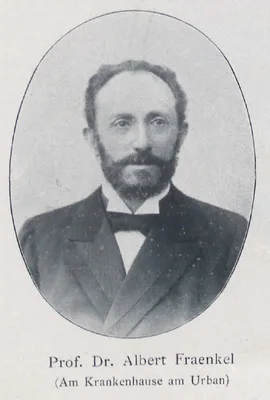
Die Mikrococcen der Pneumonie.
Fraenkel showed definitely that the organism found by Pasteur (No. 3172) and Sternberg (No. 3173) was a cause of pneumonia.
GMN 3175 · https://historyofmedicine.com/id/4165
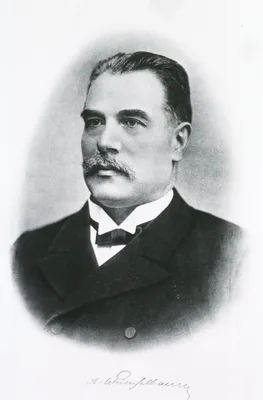
1886 WEICHSELBAUM, Anton (1845 – 1920)
Ueber die Aetiologie der acuten Lungen- und Rippenfellentzündungen.
Weichselbaum definitely established that Friedländer’s bacillus was responsible for pneumonia in a small percentage of cases.
GMN 3176 · https://historyofmedicine.com/id/4169
1913 DOCHEZ, Alphonse Raymond (1882 – 1964); GILLESPIE, Louis John (1886 – 1941)
A biological classification of pneumococci by means of immunity reactions.
Dochez and Gillespie differentiated four types of pneumococci.
GMN 3192.1 · https://historyofmedicine.com/id/4234
1925 LAUGHLEN, George Franklin (1888 – 1946)
Studies on pneumonia following naso-pharyngeal injections of oil.
Lipoid pneumonia first described.
GMN 3200 · https://historyofmedicine.com/id/4295
1929 COLE, Rufus Ivory (1872 – 1966)
Serum treatment in type I lobar pneumonia.
Introduction of monovalent antiserum.
GMN 3202.2 · https://historyofmedicine.com/id/4306
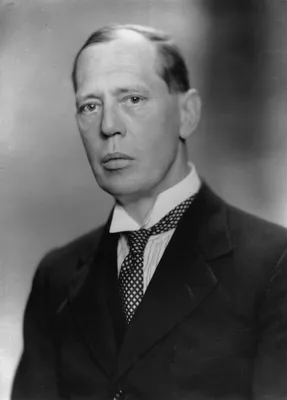
1938 WHITBY, Sir Lionel Ernest Howard (1895 – 1956)
Chemotherapy of pneumococcal and other infections with 2-(p-aminobenzenesulphonamido) pyridine.
Experimental proof of the efficacy of sulfapyridine (M & B 693) in pneumococcal pneumonia.
GMN 1951 · https://historyofmedicine.com/id/2827
1938 GAISFORD, Wilfrid Fletcher (1902 – 1988); EVANS, Gladys Mary (1897 – 1973)
Treatment of pneumonia with 2-(p-aminobenzenesulphonamido) pyridine.
Clinical proof of the value of sulphapyridine. M & B 693 (sulphapyridine) treatment of pneumonia. This followed the experimental work of L. E. H. Whitby (see No. 1951).
GMN 1952 · https://historyofmedicine.com/id/2829
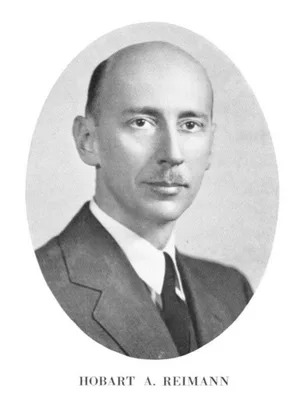
1938 REIMANN, Hobart Ansteth (1897 – 1986)
An acute infection of the respiratory tract with atypical pneumonia: A disease entity probably caused by a filterable virus.
Atypical pneumonia.
GMN 3211 · https://historyofmedicine.com/id/4348
1939 HEFFRON, Roderick (1901 – )
Pneumonia. With special reference to pneumococcus lobar pneumonia.
GMN 3212 · https://historyofmedicine.com/id/4352
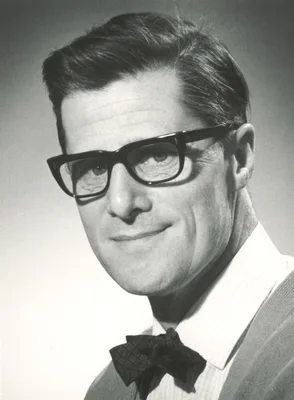
1944 EATON, Monroe Davis (1904 – ); ET AL
Studies on the etiology of primary atypical pneumonia. A filterable agent transmissible to cotton rats, hamsters, and chick embryos.
The Eaton agent, isolated from primary atypical pneumonia. With G. Meiklejohn and W. van Herick.
GMN 3213.1 · https://historyofmedicine.com/id/4356
1945
Transmission of primary atypical pneumonia to human volunteers.
COMMISSION ON ACUTE RESPIRATORY DISEASES
GMN 3214 · https://historyofmedicine.com/id/4357
1949 STOKER, Sir Michael George Parke (1918 – 2013)
Serological evidence of Q fever in Great Britain.
Relationship of primary atypical pneumonia and Q fever.
GMN 5402.1 · https://historyofmedicine.com/id/7237
1962 CHANOCK, Robert Merritt (1904 – 2010); HAYFLICK, Leonard (1928 – 2024)
Growth on artificial medium of an agent associated with atypical pneumonia and its identification as a PPLO.
Using a novel agar and fluid medium formulation he had devised, Hayflick isolated a unique mycoplasma Mycoplasma pneumoniae, a mycoplasma shown to be the cause of some cases of primary atypical pneumonia, or "walking …
GMN 3215.5 · https://historyofmedicine.com/id/4377
1977 FRASER, David William
Legionnaires’ disease. Description of an epidemic of pneumonia.
First major scientific account. With 11 co-authors. Legionnaire's disease acquired its name after an outbreak of a then-unknown "mystery disease" sickened 221 persons, causing 34 deaths. The people affected were atten…
GMN 3215.7 · https://historyofmedicine.com/id/4380
1977 SHEPARD, Charles Carter (1914 – 1985); FRASER, David William; MCDADE, Joseph E.; ET AL
Legionnaires’ disease. Isolation of a bacterium and demonstration of its role in other respiratory disease.
Order of authorship in the original publication: McDade, Shepard, Fraser.... See also p. 1218.
GMN 3215.8 · https://historyofmedicine.com/id/4382
1979 MCDADE, Joseph E.; BRENNER, Don J.; STEIGERWALT, A. G.
Classification of the Legionnaires' disease bacterium: Legionella pneumophila, genus novum, species nova, of the family Legionellaceae, familia nova.
Order of authorship in the original publication: Brenner, Steigerwalt, McDade. (Thanks to Juan Weiss for this reference and its interpretation.)
GMN 11256 · https://historyofmedicine.com/id/13453
1980 ROWBOTHAM, Timothy J.
Preliminary report on the pathogenicity of Legionella pneumophila for freshwater and soil amoebae.
Discovery of the pathogenic relationship between amoebas and Legionella bacteria--a key step in understanding how this bacteria infects mankind. Legionella bacteria, along with amoeba, live in the organic contaminatio…
GMN 11257 · https://historyofmedicine.com/id/13454
1988 WINN, Washington C. Jr. (1941 – 2011)
Legionnaires disease: Historical perspective.
Digital facsimile from cmr.asm.org at this link.
GMN 11255 · https://historyofmedicine.com/id/13452