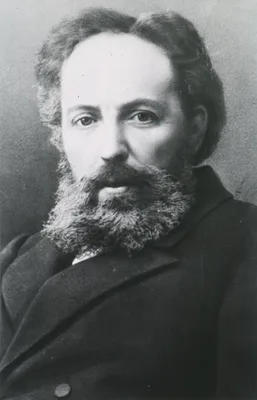
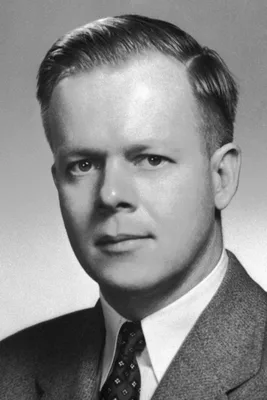
1829 WAGNER, Friedrich August (1775 – 1856)
Die Rötheln, als für sich bestehende Krankheit.
Wagner separated rubella from measles and scarlet fever.
GMN 5501 · https://historyofmedicine.com/id/6472
1866 VEALE, Henry Richard Lobb (1832 – 1908)
History of an epidemic of rötheln, with observations on its pathology.
Veale introduced the term “rubella” to describe German measles.
GMN 5502 · https://historyofmedicine.com/id/6475
1887 FILATOV, Nil Feodorovich (1847 – 1902)
Lektsii ob ostrikh infektsionnîkh bolieznyakh u dietei. [Lectures on acute infectious diseases of children.] Vol. 2
On p. 113 is Filatov’s account of a form of rubella with a scarlatiniform rash. To this he gave the name “rubeola scarlatinosa”. (See also No. 5505.)
GMN 5503 · https://historyofmedicine.com/id/6476
1889 TSCHAMER, Anton
Ueber örtliche Rötheln.
First description of acute infectious erythema, “fifth disease”, called also “Sticker’s disease” after the latter’s description of it in Z. prakt. Aerzte, 1899, 8, 353.
GMN 5504 · https://historyofmedicine.com/id/6481
1900 DUKES, Clement (1845 – 1925)
On the confusion of two different diseases under the name of rubella (rose-rash).
Dukes described a condition similar to that noted earlier by Filatov (No. 5503). Dukes called it the “fourth disease”, distinguishing it from scarlet fever, measles, and rubella on the ground that an attack of any of …
GMN 5505 · https://historyofmedicine.com/id/6485
1910 ZAHORSKY, John (1871 – 1963)
Roseola infantilis.
Roseola (exanthema) subitum first described as a distinct entity.
GMN 5506 · https://historyofmedicine.com/id/6491
1914 HESS, Alfred Fabian (1875 – 1933)
German measles (rubella): an experimental study.
Experimental proof that rubella is caused by a virus.
GMN 5506.1 · https://historyofmedicine.com/id/6494
1938 HIRO, Y; TASAKA, S
Die Röteln sind eine Viruskrankheit.
Successful transfer of rubella to children by means of filtered nasal washings.
GMN 5506.2 · https://historyofmedicine.com/id/6497
1941 GREGG, Sir Norman McAlister (1892 – 1966)
Congenital cataract following German measles in the mother.
Gregg drew attention to congenital defects in infants following rubella in the mother during the early part of pregnancy.
GMN 5507 · https://historyofmedicine.com/id/6499
1942 HABEL, Karl (1908 – 1991)
Transmission of rubella to Macacus mulatta monkeys.
Successful transmission of rubella.
GMN 5508 · https://historyofmedicine.com/id/6501
1943 SWAN, Charles Spencer (1912 – 1963)
Congenital defects in infants following infectious diseases during pregnancy.
Figures demonstrating that rubella in the first or second month of pregnancy always results in an abnormal infant. With A. L. Tostevin, B. Moore, H. Mayo, and G. H. B. Black.
GMN 5509 · https://historyofmedicine.com/id/6503
1962 WELLER, Thomas Huckle (1915 – 2008); NEVA, Franklin Allen (1922 – 2011)
Propagation in tissue culture of cytopathic agents from patients with rubella-like illness.
Isolation of rubella virus. It was simultaneously isolated by P. D. Parkman, et al. (No. 5509.2.)
GMN 5509.1 · https://historyofmedicine.com/id/6505
1962 PARKMAN, Paul Douglas (1932 – ); BUESCHER, Col. Edward L. (1925 – 1989); ARTENSTEIN, Malcolm S. (1930 – 1976)
Recovery of rubella virus from army recruits.
Isolation of the rubella virus.
GMN 5509.2 · https://historyofmedicine.com/id/6507
1966 PARKMAN, Paul Douglas (1932 – ); MEYER, Harry Martin Jr. (1928 – 2001); ET AL
Attenuated rubella virus. II. Production of an experimental live-virus vaccine and clinical trial.
With T. C. Panos.
GMN 5509.3 · https://historyofmedicine.com/id/6509
1967 STEWART, George Louis (1936 – ); ET AL
Rubella-virus hemagglutination-inhibition test.
With five co-authors.
GMN 5509.4 · https://historyofmedicine.com/id/6510