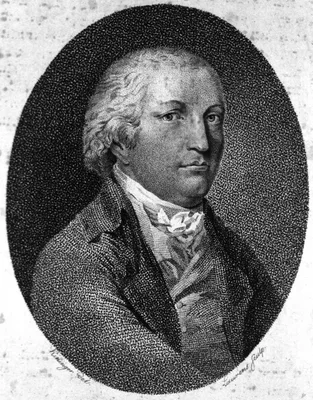
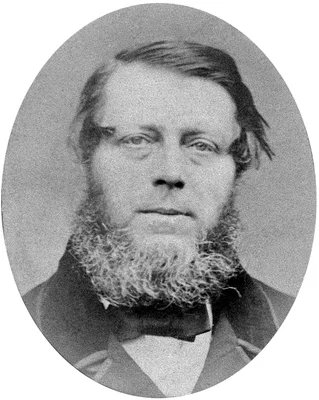
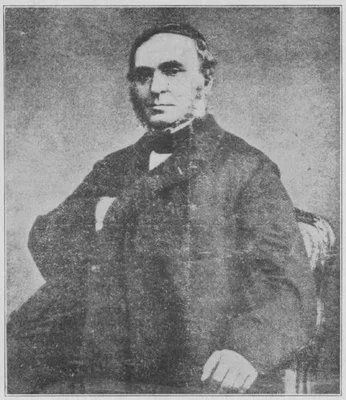
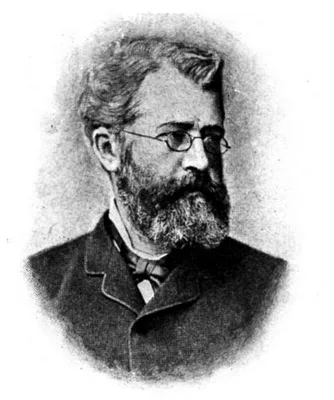
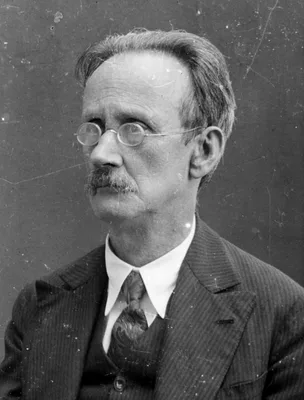
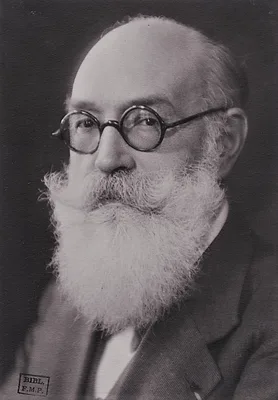
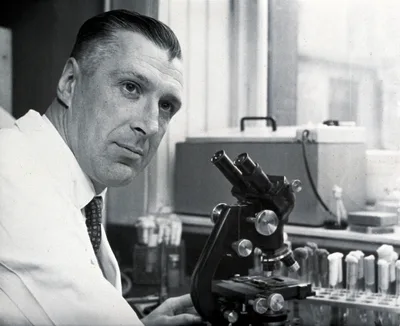
1791 BEER, Georg Joseph (1763 – 1821)
Praktische Beobachtungen über verschiedene, vorzüglich aber über jene Augenkrankheiten, welche aus allgemeinen Krankheiten des Körpers entspringen.
“This is the first monograph ever published dealing with ocular signs of systemic disease. It deals with lacrimal fistulas, trichiasis, adhesions of the lids, lid ulcers, ephiphora, and ocular inflammations. He illust…
GMN 5833.2 · https://historyofmedicine.com/id/7103
1794 BALMIS, Francisco Javier de (1793 – 1819)
Demostracion de las eficaces virtudes nuevamente descubiertas en las raices de dos plantas de Nueva-España, especies de ágave y de begónia, para la curacion del vicio venéreo y escrofuloso ...
Balmis conducted experimental trials on the effectiveness of two Mexican plants, agave and begonia, which were believed, according to folk medicine practices in Mexico, to cure syphilis and scrofula. The trials confir…
GMN 8004 · https://historyofmedicine.com/id/10180
1814 ADAMS, Joseph (1756 – 1818)
A treatise on the supposed hereditary properties of diseases, containing remarks on the unfounded terrors and ill-judged cautions consequent on such erroneous opinions; with notes, illustrative of the subject, particularly in madness and scrofula.
Adams was a pioneer in medical genetics. He distinguished between familial and hereditary diseases, saw that an increase in hereditary disease frequency in isolated areas could be caused by inbreeding, and suggested t…
GMN 216.1 · https://historyofmedicine.com/id/4032
1842 BENNETT, John Hughes (1812 – 1875)
On the parasitic fungi found growing in living animals.
Bennett confirmed and extended the observations and experiments of Gruby concerning the mycodermatous vegetations found in the crusts of the disease called Tinea favosa, or Zorigo lupinosa of Bateman; he announced the…
GMN 12423 · https://historyofmedicine.com/id/14654
1853 BAZIN, Pierre Antoine Ernest (1807 – 1878)
Recherches sur la nature et le traitement des teignes.
Bazin proved the fungal origin of favus and tinea; this was the first work to incorporate mycotic skin diseases into dermatological literature. Digital facsimile from BnF Gallica at this link.
GMN 7313 · https://historyofmedicine.com/id/9483
1870 BOLLINGER, Otto (1843 – 1909)
Mycosis der Lunge beim Pferde.
Botriomycosis first described.
GMN 5526 · https://historyofmedicine.com/id/6632
1879 BURNETT, James Compton (1840 – 1901)
Gold as a remedy in disease, notably in some forms of organic heart disease, angina pectoris, melancholy, tedium vitae, scrofula, syphilis, skin disease, & as an antidote to the ill effects of mercury.
Burnett, a homeopath, provided an excellent summary of the history of gold as it was used in medicine, with extensive references to the historical literature. Digital facsimile from the Hathi Trust at this link.
GMN 8852 · https://historyofmedicine.com/id/11030
1885 PALTAUF, Arnold (1860 – 1893)
Mycosis mucorina.
First authentic case reported in man.
GMN 5528 · https://historyofmedicine.com/id/6637
1892 POSADAS, Alejandro (1870 – 1902)
Un nuovo caso de micosis fungoides con psorospermias.
As an intern in Buenos Aires, Posadas described an Argentine soldier who had a dermatological problem since 1889. Posadas had seen the patient while a medical student in 1891, and skin biopsies revealed organisms rese…
GMN 5528.1 · https://historyofmedicine.com/id/6639
1892 WERNICKE, Roberto Johann (1854 – 1922)
Pentastomas.
Posadas (No. 5528.1) and Wernicke, a professor pathology in Buenos Aires, were the first to report cases of coccidioidomycosis. German translation of Wernicke’s paper in Zbl. Bakt., 1892, 12, 859-61.
GMN 5528.2 · https://historyofmedicine.com/id/6642
1895 BUSSE, Otto Emil Franz Ulrich (1867 – 1922)
Ueber parasitäre Zelleinschlüsse und ihre Züchtung.
“Busse–Buschke disease” –blastomycosis of the skin due to Cryptococcus neoformans. See also No. 5529.2. Busse first described it in Zbl. Bakt., 1894, 16, 175-80.
GMN 5529.1 · https://historyofmedicine.com/id/6648
1895 BUSCHKE, Abraham (1868 – 1943)
Ueber eine durch Coccidien hervorgerufene Krankheit des Menschen.
See No. 5529.1.
GMN 5529.2 · https://historyofmedicine.com/id/6652
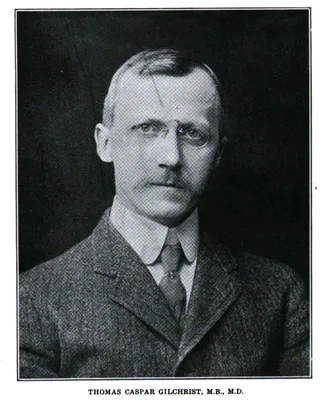
1896 GILCHRIST, Thomas Caspar (1862 – 1927)
A case of blastomycetic dermatitis in man.
Gilchrist’s description of blastomycosis (“Gilchrist’s disease”, “Busse-Buschke disease”, Nos. 5529.1 and 5529.2), is an important contribution to the knowledge of the infectious granulomata involving the skin.
GMN 5530.1 · https://historyofmedicine.com/id/6659
1900 OPHÜLS, William (1871 – 1933); MOFFITT, Herbert Charles (1867 – 1951)
A new pathogenic mould (formerly described as a protozoon: Coccidioides immitis pyogenes). Preliminary report.
Recognition that the protozoan was the pathogenic phase of a mycelial fungus.
GMN 5530.3 · https://historyofmedicine.com/id/6667
1904 SABOURAUD, Raymond Jacques Adrien (1864 – 1938)
Surla radiothérapie des teignes.
Sabouraud’s method of radiological treatment of ringworm.
GMN 4004 · https://historyofmedicine.com/id/5099
1906 STRONG, Richard Pearson (1872 – 1948)
A study of some tropical ulcerations of skin with particular reference to their etiology.
Strong described organisms consistent with Histoplasma capsulatum before Darling, although his work was overshadowed by the latter.
GMN 5531.1 · https://historyofmedicine.com/id/6675
1906 DARLING, Samuel Taylor (1872 – 1925)
A protozoon general infection producing pseudotubercles in the lungs and focal necroses in the liver, spleen and lymphnodes.
Histoplasmosis (Histoplasma capsulatum), “Darling’s disease”.
GMN 5532 · https://historyofmedicine.com/id/6676
1908 LUTZ, Adolfo (1855 – 1940)
Uma mycose pseudococcidica localisada na bocca e observada no Brazil. Contribuiçao ao conhocimento das hyphoblastomycoses americanas.
South American blastomycosis.
GMN 5532.1 · https://historyofmedicine.com/id/6677
1909 GOUGEROT, Henri (1881 – 1955); CARAVEN, Pierre Jean Baptiste (1879 – 1958)
Mycose nouvelle: l’hémisporose. Ostéite humaine primitive du tibia due à l’Hemispora Stellata.
Hemisporosis described.
GMN 5535 · https://historyofmedicine.com/id/6694
1911 CRAWFURD, Sir Raymond Henry Payne (1865 – 1938)
The king’s evil.
A classic account of the history of touching for the “king’s evil” or scrofula— a practice of kings from ancient times until the 18th century.
GMN 6646 · https://historyofmedicine.com/id/7769
1914 MAGROU, Joseph Émile (1883 – 1951)
Les grains botryomycotiques. Leur signification en pathologie et en biologie générales.
Thèse de Paris, No. 267, 1914. Magrou showed botriomycosis (granuloma pyogenicum) to be due to a staphylococcus.
GMN 5536 · https://historyofmedicine.com/id/6699
1916 CUTLER, Elliott Carr (1888 – 1947); STODDARD, James Leavitt (1888 – 1977)
Torula infection in man.
Description of Torula histolytica infection in man, later shown to be identical with Cryptococcus neoformans. Digital facsimile from Google Books at this link.
GMN 5537 · https://historyofmedicine.com/id/6711
1923 ASHWORTH, James Hartley (1874 – 1936)
On Rhinosporidium seeberi (Wernicke, 1903), with special reference to its sporulation and affinities.
Ashworth was the first to show that Rhinosporidium was a fungus.
GMN 5538.1 · https://historyofmedicine.com/id/6716
1934 HANSMANN, George Henry (1890 – 1949); SCHENKEN, John Rudolph (1905 – 1982)
A unique infection in man caused by a new yeast-like organism, a pathogenic member of the genus Sepedomum.
Cultivation of Histoplasma capsulatum before DeMonbreun (No. 5542); preliminary announcement in Science, 1933, 77, Suppl. 2002, p. 8. DeMonbreun and Hansmann & Schenken independently and almost simultaneously demonstr…
GMN 5541.2 · https://historyofmedicine.com/id/6739
1934 DEMONBREUN, William Andrew (1899 – 1968)
The cultivation and cultural characteristics of Darling’s Histoplasma capsulatum.
Demonstration of the fungal nature of the pathogen.
GMN 5542 · https://historyofmedicine.com/id/6742
1949 CUTTINO, John Tindal (1912 – 1988); MCCABE, Anne M.
Pure granulomatous nocardiosis: a new fungus disease distinguished by intracellular parasitism. A description of a new disease in man due to a hitherto undescribed organism, Nocardia intracellularis, n.sp., including a study of the biological and pathogenic properties of this species.
Nocardiosis described.
GMN 5515 · https://historyofmedicine.com/id/6522
1958 GENTLES, James Clark (1921 – 1987)
Experimental ringworm in guinea pigs: oral treatment with griseofulvin.
Use of griseofulvin in the treatment of ringworm.
GMN 4011.1 · https://historyofmedicine.com/id/5165