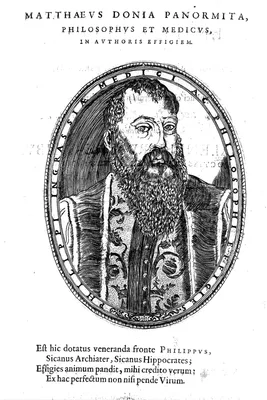
1553 INGRASSIA, Giovanni Filippo (Ioannis Philippi Ingrassiae) (1510 – 1580)
De tumoribus praeter naturam.
This treatise on tumors includes (p. 194) the first known description of an epidemic disease resembling scarlet fever. This was a malady prevalent in Italy, and was commonly called rossania or rossalia. Ingrassia was …
GMN 5073 · https://historyofmedicine.com/id/5915
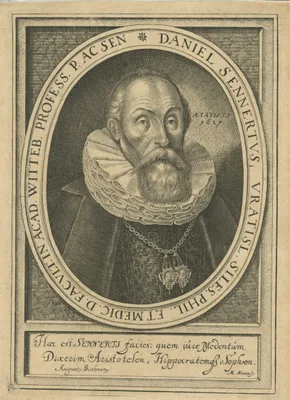
1641 SENNERT, Daniel (1572 – 1637)
De febribus libri IV.
Sennert gave the first scientific description of scarlet fever. He was the first to mention the scarlatinal desquamation, the early arthritis, and post-scarlatinal edema, but made no mention of sore throat.
GMN 5074 · https://historyofmedicine.com/id/5918
1676 SENNERT, Daniel (1572 – 1637)
Opera. 6 vols.
Besides giving early accounts of scarlatina and rubella, Sennert added to the knowledge of scurvy, dysentery and alcoholism. He was an able clinician and also a believer in witchcraft. His Opera was first published in…
GMN 61 · https://historyofmedicine.com/id/975
1676 SYDENHAM, Thomas (1624 – 1689)
Observationes medicae circa morborum acutorum historiamet curationem.
Sydenham recorded significant observations on dysentery, scarlet fever (p. 387), scarlatina, measles and other conditions. He stressed the clinical study of medicine and kept careful case records. Includes (pp. 272-80…
GMN 2198 · https://historyofmedicine.com/id/1522
1736 DOUGLASS, William (1691 – 1752)
The practical history of a new epidemical eruptive miliary fever, with an angina ulcusculosa, which prevailed in Boston New England in the years 1735 and 1736.
Douglass left the first adequate clinical description of scarlet fever, which he called angina ulcusculosa, in his account of New England’s first scarlet fever epidemic. He was one of the first American physicians to …
GMN 5076 · https://historyofmedicine.com/id/5925
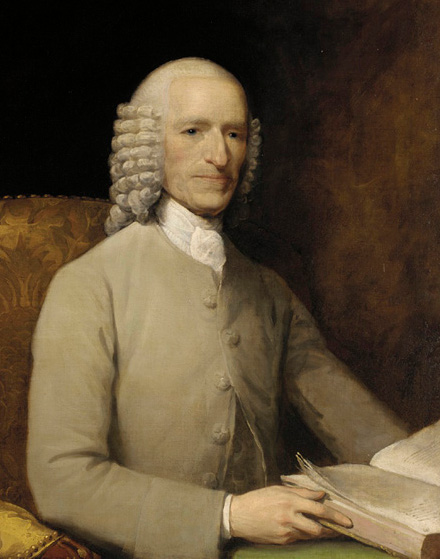
1748 FOTHERGILL, John (1712 – 1780)
An account of the sore throat attended with ulcers.
First authoritative account of both diphtheria and scarlatinal angina, although failing to differentiate between the two conditions. Reprinted in Med. Classics, 1940, 5, 58-99.
GMN 5049 · https://historyofmedicine.com/id/5928
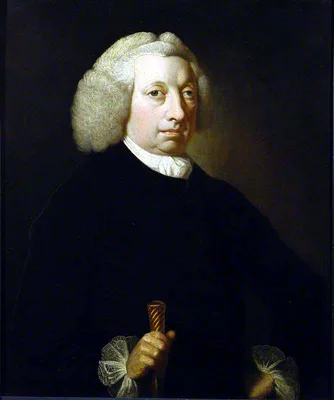
1757 HUXHAM, John (1692 – 1768)
A dissertation on the malignant, ulcerous sore-throat.
Huxham’s reputation rests mainly on his Essays on fevers, but he also left an excellent account of diphtheria. Although he failed to differentiate the disease from scarlatinal angina, he was the first to observe the p…
GMN 5050 · https://historyofmedicine.com/id/5841
1762 PLENCIZ, Marc Angon von (1705 – 1786)
Opera medico-physica in quatuor tractatus digesta.
Plenciz was the first to grasp the significance of Leeuwenhoek’s animalculae for the etiology of contagious disease. Part III of the above is concerned with scarlatina.
GMN 5078 · https://historyofmedicine.com/id/5931
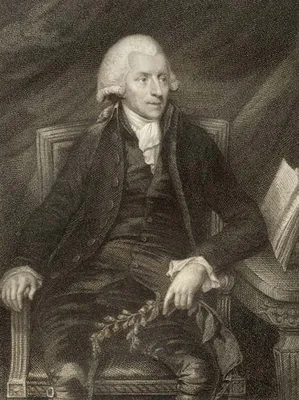
1779 WITHERING, William (1741 – 1799)
An account of the scarlet fever and sore throat, or scarlatina anginosa; particularly as it appeared at Birmingham in the year 1778.
Withering, best remembered for his book on the foxglove, described the epidemics of scarlet fever which occurred in England in 1771 and 1778.
GMN 5079 · https://historyofmedicine.com/id/5934
1780 CLARK, John (1744 – 1805)
Observations on fevers, especially those of the continued type, and on the scarlet fever attended with ulcerated sore-throat, as it appeared at Newcastle upon Tyne in the year 1778: Together with a comparative view of that epidemic with the scarlet fever as described by authors, and the angina maligna.
Digital facsimile from the Intenet Archive at this link.
GMN 2205 · https://historyofmedicine.com/id/1642
1886 KLEIN, Edward Emanuel (1844 – 1925)
Report on a disease of cows prevailing at a farm from which scarlatina had been distributed along with the milk of cows.
Contains the first suggestion of the streptococcal origin of scarlet fever.
GMN 5080 · https://historyofmedicine.com/id/5937
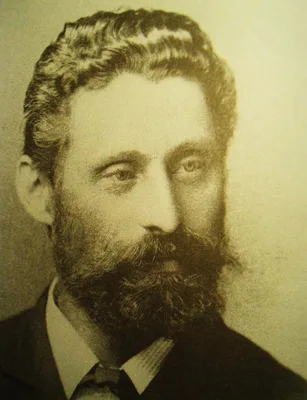
1893 BERGE, André
Sur la pathogénie de la scarlatine.
Bergé stated all the essential facts concerning the aetiology of scarlet fever, and definitely attributed its cause to a streptococcus. He published a thesis on the subject in 1895.
GMN 5080.1 · https://historyofmedicine.com/id/5940
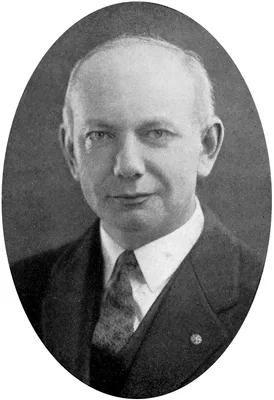
1918 SCHULTZ, Werner (1878 – 1944); CHARLTON, Willy (1889 – )
Serologische Beobachtungen am Scharlachexanthem.
Schultz–Charlton reaction.
GMN 5081 · https://historyofmedicine.com/id/5943
1924 DICK, George Frederick (1881 – 1967); DICK, Gladys Rowena Henry (1881 – 1963)
A skin test for susceptibility to scarlet fever.
The “Dick test” for the determination of individual susceptibility to scarlet fever.
GMN 5082 · https://historyofmedicine.com/id/5946
1924 DICK, George Frederick (1881 – 1967); DICK, Gladys Rowena Henry (1881 – 1963)
The etiology of scarlet fever.
Proof that streptococcus is the cause of scarlet fever.
GMN 5082.1 · https://historyofmedicine.com/id/5949
1924 DICK, George Frederick (1881 – 1967); DICK, Gladys Rowena Henry (1881 – 1963)
A scarlet fever antitoxin.
Following their successful attempts to establish individual susceptibility to scarlet fever, these workers prepared an antitoxin for immunization.
GMN 5083 · https://historyofmedicine.com/id/5951
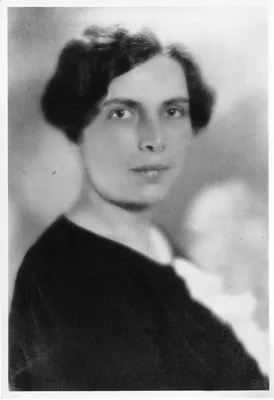
1924 DOCHEZ, Alphonse Raymond (1882 – 1964); SHERMAN, Lillian
The significance of Streptococcus hemolyticus in scarlet fever and the preparation of a specific anti-scarlatinal serum by immunization of the horse to Streptococcus hemolyticus-scarlatinae.
Dochez and Sherman immunized a horse by repeated injections of scarlet fever toxin. A serum obtained from the horse blanched a scarlet fever rash and, when injected subcutaneously, caused marked amelioration of the ea…
GMN 5084 · https://historyofmedicine.com/id/5955