1804 ZINKE, Georg Gottfried (1813 – )
Neue Ansichten der Hundswuth, ihrer Ursachen und Folgen, nebst einer sichem ehandlungsart der von tollen Thieren gebissenen Menschen.
Zinke transmitted rabies from a rabid dog to a normal one, and to a rabbit and a hen, by injection of saliva and proved the disease to be infectious. Digital facsimile from wellcomecollection.org at this link.
GMN 5481 · https://historyofmedicine.com/id/6370
1826 KRÜGELSTEIN, Franz Christian Karl (1779 – 1864)
Die Geschichte der Hundswuth und der Wasserscheu und deren Behandlung.
A full account of rabies, summarizing current knowledge, with a bibliography of about 300 items.
GMN 5481.1 · https://historyofmedicine.com/id/6372
1840 WILCOX, Whitman (1808 – 1876)
Violent symptoms from the bite of a rat.
First report of rat-bite fever to appear in a medical journal.
GMN 5322 · https://historyofmedicine.com/id/6618
1879 GALTIER, Pierre-Victor (1846 – 1908)
Études sur la rage.
Galtier demonstrated the transmissibility of rabies from dog to rabbit to rabbit in a series, a matter of considerable interest to Pasteur.
GMN 5481.2 · https://historyofmedicine.com/id/6375
1881 GALTIER, Pierre-Victor (1846 – 1908)
Les injections de virus rabique dans le torrent circulatoire ne provoquent pas l’éclosion de la rage et semblant conférer l’immunité. La rage peut être transmise par l’ingestion de la matiére rabique.
Galtier immunized sheep by inoculating rabid saliva in the veins; this did not produce the disease and protected the animals from a further inoculation. His work aroused the interest of Pasteur.
GMN 5481.3 · https://historyofmedicine.com/id/6378
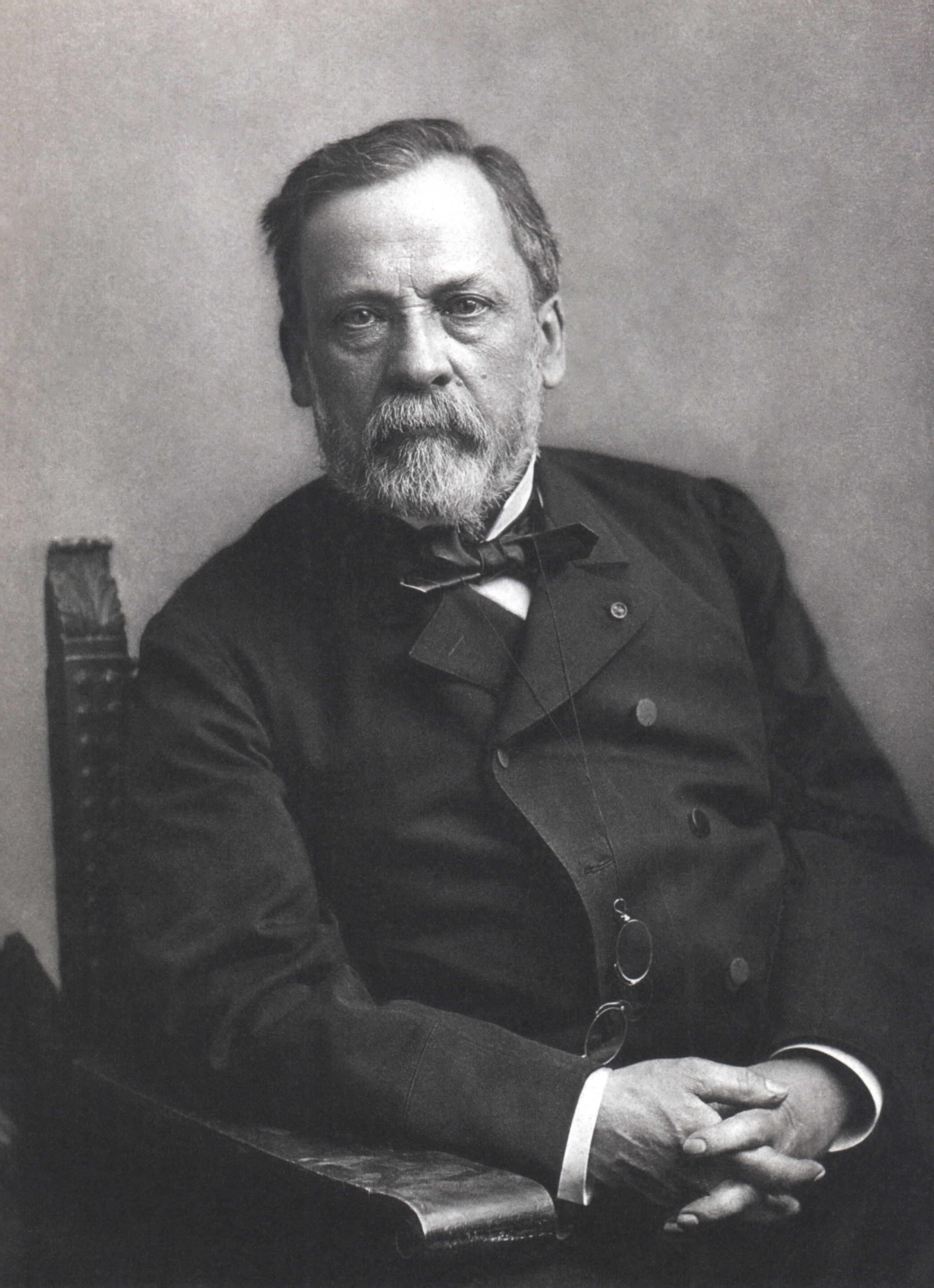
1881 PASTEUR, Louis (1822 – 1895); CHAMBERLAND, Charles (1851 – 1908); ROUX, Pierre Paul Émile (1853 – 1933); THUILLIER, Louis (1856 – 1883)
Sur la rage.
This paper marks the beginning of Pasteur’s studies on rabies. English translation in R. Suzor, Hydrophobia: An account of M. Pasteur’s system…London, 1887.
GMN 5481.4 · https://historyofmedicine.com/id/6382
1884 PASTEUR, Louis (1822 – 1895); CHAMBERLAND, Charles (1851 – 1908); ROUX, Pierre Paul Émile (1853 – 1933)
Nouvelle communication sur la rage.
Demonstration in the blood of the rabies virus. English translation in R. Suzor, Hydrophobia: An account of M. Pasteur’s system…London, 1887.
GMN 5482 · https://historyofmedicine.com/id/6383
1885 PASTEUR, Louis (1822 – 1895)
Méthode pour prévenir la rage après morsure.
Pasteur’s papers describing his rabies vaccine, and the results he attained with it gave further proof of the value of attenuated virus as a protective inoculum against infective diseases in man and animals. This is c…
GMN 2541 · https://historyofmedicine.com/id/3549
1887 PASTEUR, Louis (1822 – 1895); SUZOR, Renaud
Hydrophobia: An account of M. Pasteur's system containing a translation of all his communications on the subject, the technique of his method, and the latest statistical results
The author, qualified M.D. in both Edinburgh and Paris, characterized himself on the title page of this work as "Commissioned by the Government of the Colony of Mauritius to study M. Pasteur's new treatment in Paris."…
GMN 12039 · https://historyofmedicine.com/id/14247
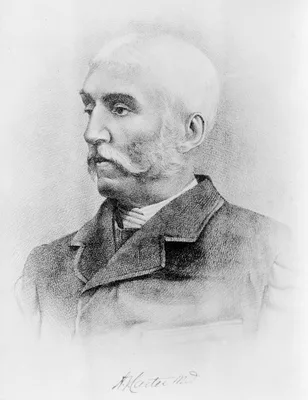
1888 CARTER, Henry Vandyke (1831 – 1897)
Note on the occurrence of a minute blood-spirillum in an Indian rat.
Demonstration of Spirillum minus, later shown to be a cause of rat-bite fever. (See also No. 5327).
GMN 5323 · https://historyofmedicine.com/id/6621
1903 NEGRI, Adelchi (1876 – 1912)
Contributo alio studio dell’ eziologia della rabia.
Discovery of the “Negri bodies” in rabies, the size of which makes viewing possible with a light microscope, and allows prompt microscopic diagnosis. German translation in Z. Hyg. InfektKr., 1903, 43, 507-28. Even tho…
GMN 5484 · https://historyofmedicine.com/id/6388
1908 FERMI, Claudio (1862 – 1952)
Über die Immunisierung gegen Wutkrankheit.
Fermi was the first to use chemical treatment of tissue suspensions of fixed rabies virus for the preparation of vaccine (Fermi vaccine). He introduced the use of carbolic acid for this purpose.
GMN 5484.1 · https://historyofmedicine.com/id/6389
1908 WELLMANN, Max (1863 – 1933); PHILUMENOS, [Philumenus; Φιλούμενος] ( – 200)
Philumeni de venenatis animalibus eorumque remediis capita XXXVIII ed. M. Wellmann. Corpus medicorum graecorum X 1, 1.
This work on venoms and their antidotes is the only surviving work of the Byzantine physician Philomenos. Within this context Philomenos also discusses the bites of rabid dogs. Digital facsimile from Corpus medicorum …
GMN 9018 · https://historyofmedicine.com/id/11197
1912 HATA, Sahachiro (1873 – 1938)
Salvarsantherapie der Rattenbisskrankheit in Japan.
Salvarsan first used in the treatment of rat-bite fever.
GMN 5324 · https://historyofmedicine.com/id/6624
1914 SCHOTTMÜLLER, Hugo (1867 – 1936)
Zurt Aetiologie und Klinik der Bisskrankheit.
Isolation of Streptothrix (Actinomyces) muris ratti from human patients bitten by rats.
GMN 5325 · https://historyofmedicine.com/id/6627
1916 FUTAKI, Kenzo (1873 – 1966); ET AL
The cause of rat-bite fever.
K. Futaki, I. Takaki, T. Taniguchi, and S. Osumi found a spirillum (Sp. morsus muris) in the lymphatic glands and blood stream in cases of rat-bite fever (sodoku).
GMN 5326 · https://historyofmedicine.com/id/6630
1924 ROBERTSON, Andrew
Observations on the causal organism of rat-bite fever in man.
Robertson proved one of the causal organisms of rat-bite fever to be Sp. morsus muris. He re-named it Spirillum minus Carter, 1887, identifying it as the first spiral micro-organism to be described from a rodent.
GMN 5327 · https://historyofmedicine.com/id/6633
1926 PLACE, Edwin Hemphill (1880 – ); ET AL
Erythema arthriticum epidemicum; preliminary report.
“Haverhill fever” first reported. The writers isolated an organism, later found to be identical with Streptothrix muris ratti and Streptobacillus moniliformis. With L. E. Sutton and O. Willner.
GMN 5328 · https://historyofmedicine.com/id/6636
1936 WEBSTER, Leslie Tillotson (1894 – 1943); CLOW, Anna D. (1905 – 1992)
Propagation of rabies virus in tissue culture and the successful use of culture virus as antirabic vaccine.
Webster and Clow succeeded in growing rabies virus in tissue culture.
GMN 5484.2 · https://historyofmedicine.com/id/6390
1937 LEMIERRE, André (1875 – 1956); ET AL
Sur une nouvelle fièvre par morsure de rat.
A. Lemierre, J. Reilly, A. Laporte, and M. Morin isolated Streptobacillus moniliformis from a case of rat-bite fever.
GMN 5329 · https://historyofmedicine.com/id/6643
1939 DAWSON, James Robertson Jr. (1908 – 1986)
Infection of chicks and chick embryos with rabies.
Cultivation of rabies virus in the chick embryo. Soon afterwards I. J. Kligler and H. Bernkopf, Nature, 1939, 143, 899, made a similar report.
GMN 5484.3 · https://historyofmedicine.com/id/6391
1951 GREER, William Edward R. (1918 – ); KEEFER, Chester Scott (1897 – 1972)
Cat-scratch fever. A disease entity.
First description.
GMN 5546.2 · https://historyofmedicine.com/id/6769
1973 WIKTOR, Tadeusz Jan (1921 – 1986)
Human cell culture rabies vaccine. Antibody response in man.
Human diploid cell vaccine. With S. A. Plotkin and D. W. Grella. See also Develop, biol. Standard., 1978, 40, 3-9.
GMN 5484.4 · https://historyofmedicine.com/id/6393
1977 BUTLER, Thomas Campbell (1941 – ); WEAVER, Robert E.; RAMANI, T. K. Venata; BOBO, Raymond A.
Unidentified gram-negative rod infection: A new disease of man.
Order of authorship in the original paper: Butler, Weaver, Ramani....Bobo....First description of a newly discovered bacterium associated with dog bites, affecting in this case alcoholic patients or patients predispos…
GMN 11245 · https://historyofmedicine.com/id/13442
1987 CARPENTER, Priscilla D.; HEPPNER, Bradley T.; GNANN, John W.
DF-2 bacteremia following cat bites. Report of two cases.
Order of authorship in the original paper: Carpenter, Heppner, Gnann. Report of two cases of infection from cat bites by the bacterium then identified by the CDC as DF-2 (later called Capnocytophaga canimorsus) in non…
GMN 11246 · https://historyofmedicine.com/id/13443
1989 BRENNER, Don J.; HOLLIS, D. G.; FANNING, G. R.; ET AL
Capnocytophaga canimorsus sp. nov. (formerly CDC group DF-2), a cause of septicemia following dog bite, and C. cynodegmi sp. nov., a cause of localized wound infection following dog bite.
Order of authorship in the original publication: Brenner, Hollis, Fanning....The authors defined the genus and species of previously unclassified bacteria that infect dog and cat bites, previous identified as DF-2, an…
GMN 11247 · https://historyofmedicine.com/id/13444
1990 RELMAN, David Arnold; LOUTIT, Jeffrey S.; SCHMIDT, Thomas M.; ET AL
The agent of bacillary angiomatosis - An approach to the identification of uncultured pathogens.
To identify an uncultured and unidentified pathogen that was often visualized in tissue sections of lesions of bacillary angiomatosis with Warthin-Starry staining, the authors utilized two different techniques that we…
GMN 11929 · https://historyofmedicine.com/id/14134
1993 REGNERY, Russell L.; DOLAN, Matthew J.; WONG, Michael T.; ET AL
Syndrome of Rochalimea henselae adenitis suggesting cat scratch disease.
Order of authorship in the original publication: Dolan, Wong, Regnery....The authors demonstrated that Rochalimea henselae (now Bartonella henselae) is the infectious agent causing cat scratch fever. (Thanks to Juan W…
GMN 11932 · https://historyofmedicine.com/id/14137
1996 CHOMEL, Bruno B.; KASTEN, Rickie W.; FLOYD-HAWKINS, Kim; ET AL
Experimenal transmission of Bartonella henselae by the cat flea.
Order of authorship in the original publication: Chomel, Kasten, Floyd-Hawkins.... Chomel and colleagues studied 47 cattery cats from a private home for 12 months. They found that such cats typically are bacteremic. S…
GMN 11933 · https://historyofmedicine.com/id/14138
2007 PEMBERTON, Neil; WORBOYS, Michael
Rabies in Britain: Dogs, disease and culture, 1830-2000.
Also published as Mad dogs and Englishmen: Rabies in Britain, 1830-2000.
GMN 9777 · https://historyofmedicine.com/id/11965