1546 FRACASTORO, Girolamo [FRACASTORIUS] (1478 – 1553)
De sympathia et antipathia rerum liber unus. De contagione et contagiosis morbis et curatione.
Though Fracastoro wrote this book more than a century before Leewenhoek invented the microscope, and could only express the theory of contagion in very general terms, this book represents a landmark in the development…
GMN 2528 · https://historyofmedicine.com/id/3485
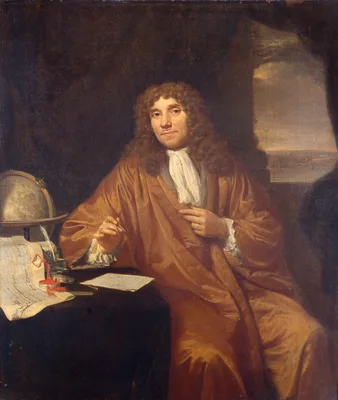
1684 LEEUWENHOEK, Antonie van (1632 – 1723)
An abstract of a letter…Sep. 17, 1683. Containing some microscopical observations, about animals in the scurf of the teeth.
Records discovery of bacteria in the mouth, with the first illustrations of the basic types – what were much later called cocci (round or oval), bacilli (rod-shaped) and spiriillum (spiral) forms. Although Leeuwenhoek…
GMN 2464.1 · https://historyofmedicine.com/id/5444
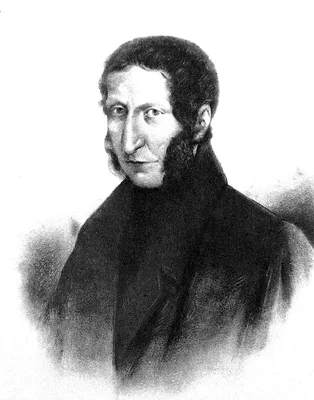
1835 –1836 BASSI, Agostino (1773 – 1856)
Del mal del segno calcinaccio o moscardino malattia che affligge i bachi da seta e sul modo di liberarne le bigattaje anche le piu infestate. 2 vols.
Bassi preceded Louis Pasteur in the discovery that microorganisms can be the cause of disease (the germ theory of disease). He discovered that the muscardine disease of silkworms--a disease that was destroying the sil…
GMN 2532 · https://historyofmedicine.com/id/3515
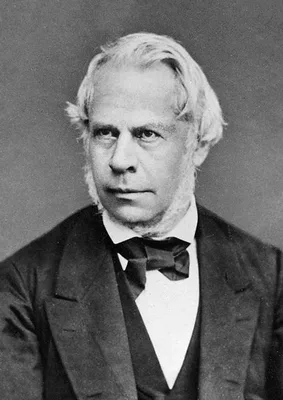
1840 HENLE, Friedrich Gustav Jakob (1809 – 1885)
Von den Miasmen und Contagien. In his Pathologische Untersuchungen, pp. 1-82.
Bassi’s work on the muscardine disease of silkworms (see No. 2532), with its prophecy of the discovery of microbes as the causal agents of other diseases, inspired Henle to write this famous essay on miasms and contag…
GMN 2533 · https://historyofmedicine.com/id/3517
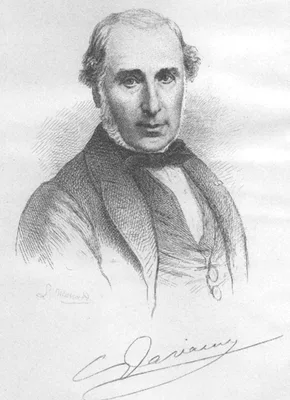
1865 DAVAINE, Casimir Joseph (1812 – 1882)
Recherches sur la nature et la constitution anatomique de la pustule maligne.
Davaine was the first conclusively to prove that a definite disease (anthrax) was due to a definite micro-organism (B. anthracis), and was thus one of the first to prove the germ theory of disease. He showed that the …
GMN 5166 · https://historyofmedicine.com/id/6239
1876 KOCH, Robert Heinrich Hermann (1843 – 1910)
Die Aetiologie der Milzbrand-Krankheit, begründet auf die Entwicklungsgeschichte des Bacillus anthracis.
In 1876 Koch first obtained pure cultures of B. anthracis and described its complete life history. With Davaine (Nos. 5165-66) he did much to prove that infectious diseases are caused by living reproductive microorgan…
GMN 5167 · https://historyofmedicine.com/id/6243
1877 DOWNES, Sir Arthur Henry (1851 – 1938); BLUNT, Thomas Porter (1842 – 1929)
Researches on the effect of light upon bacteria and other organisms.
Downes and Blunt were the first to demonstrate the bactericidal action of sunlight; they regarded the germicidal property of light as depending on oxidation.
GMN 1997 · https://historyofmedicine.com/id/1871
1878 KOCH, Robert Heinrich Hermann (1843 – 1910)
Untersuchungen über die Aetiologie der Wundinfectionskrankheiten.
Koch’s epochal work on the etiology of traumatic infectious disease established his reputation. He inoculated animals with material from various sources and produced six types of infection, each due to microorganisms.…
GMN 2536 · https://historyofmedicine.com/id/3524
1882 KOCH, Robert Heinrich Hermann (1843 – 1910)
Die Aetiologie der Tuberkulose.
Discovery of the tubercle bacillus announced March 24, 1882. This paper also contains a statement of “Koch’s postulates”. See also Nos. 2536 and 5167. Koch published a fuller account as "Die Aetiologie der Tuberkulose…
GMN 2331 · https://historyofmedicine.com/id/3057
1884 LOEFFLER, Friedrich August Johann (1852 – 1915)
Untersuchungen über die Bedeutung der Mikroorganismen für die Entstehung der Diphtherie beim Menschen, bei der Taube und beim Kalbe.
Loeffler succeeded in cultivating C. diphtheriae, the diphtheria bacillus. He reproduced the characteristic membrane by swabbing the mucous membranes of various animals with pure cultures of the bacillus. In this pape…
GMN 5056 · https://historyofmedicine.com/id/5859
1890 KOCH, Robert Heinrich Hermann (1843 – 1910)
Weitere Mittheilungen über ein Heilmittel gegen Tuberkulose.
In 1890, Koch announced the discovery of tuberculin, a substance derived from tubercle bacilli, which he thought was capable of arresting bacterial development in-vitro and in animals. This news gave rise to tremendou…
GMN 2332 · https://historyofmedicine.com/id/3068
1941 HIRST, George Keble (1909 – 1994)
The agglutination of red cells by allantoic fluid of chick embryos infected with influenza virus.
Discovery of virus hemagglutination. Between 1941 and 1942 Hirst developed the hemagglutination assay for quantifying the relative concentration of viruses, bacteria or antibodies.
GMN 2577 · https://historyofmedicine.com/id/4130
1955 WELLS, William Firth ( – 1963)
Airborne contagion and air hygiene: An ecological study of droplet infections.
"In 1954, Wells began a long-term experiment to demonstrate that tuberculosis could be transmitted through air. At the VA Hospital in Baltimore, collaborating with Riley, John Barnwell, and Cretyl C. Mills, he built a…
GMN 13140 · https://historyofmedicine.com/id/15398
1988 FALKOW, Stanley (1934 – 2018)
Molecular Koch's postulates applied to microbial pathogenicity.
"Molecular Koch's postulates are a set of experimental criteria that must be satisfied to show that a gene found in a pathogenic microorganism encodes a product that contributes to the disease caused by the pathogen. …
GMN 11780 · https://historyofmedicine.com/id/13981
2004 PRUSINER, Stanley Benjamin (1942 – ); LEGNAME, Giuseppe; BASKAKOV, Ilia V.; NGUYEN, Hoang-Oanh B.; ET AL
Synthetic mammalian prions.
The authors modified Koch's Postulates within the context of prion disease. To do so the followed these steps: 1) They created recombinant mouse prion proteins in an E. coli and polymerized them. 2) They proved that t…
GMN 12836 · https://historyofmedicine.com/id/15082