1671 VOLLGNAD, Heinrich (1634 – 1682)
Globus vitulinus.
First authentic report on variolation.
GMN 5405 · https://historyofmedicine.com/id/7253
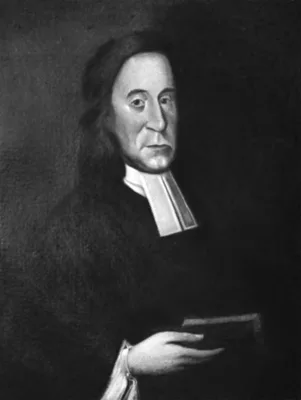
1677 THACHER, Thomas (1620 – 1678)
A brief rule to guide the common-people of New-England how to order themselves and theirs in the small pocks, or measels.
The first medical publication of North America and the only one to appear in the 17th century. Only one copy of the original printing of this broadside survived, written by Thacher, a Boston minister. The sheet was re…
GMN 5406 · https://historyofmedicine.com/id/7256
1683 MOURÃO, Simão Pinheiro [Morão] (1620 – 1686)
Trattado unico das bexigas, e sarampo, offerecido a D. João de Sousa, composto por Romaõ Mõsia Reinhipo.
One of the first works on medicine practiced in Brazil, published by Mourão under the pseudonym Romaõ Mõsia Reinhipo. Mourão distinguished clearly between smallpox and measles. There was still much confusion in the se…
GMN 8934 · https://historyofmedicine.com/id/11112
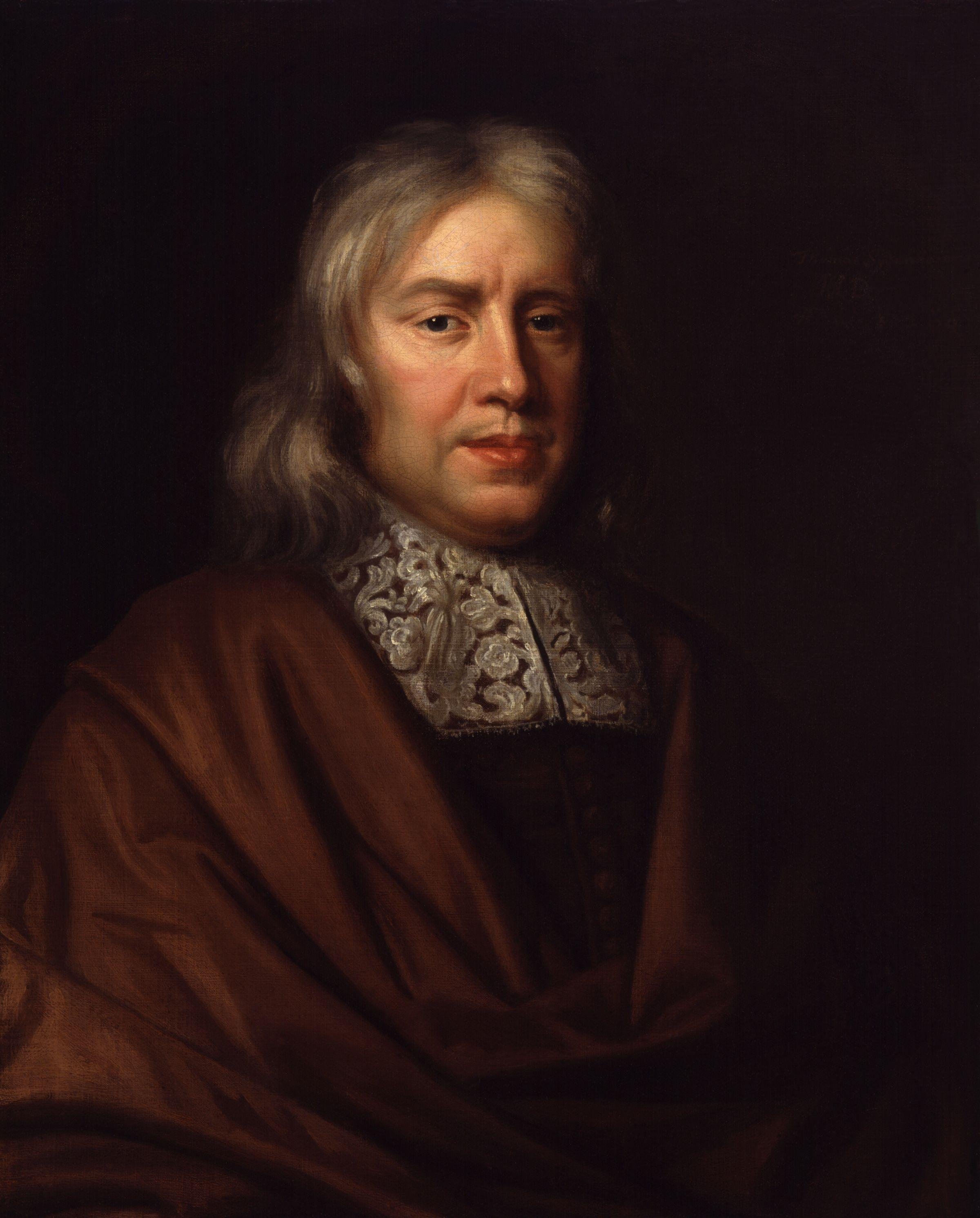
1685 SYDENHAM, Thomas (1624 – 1689)
Observationes medicae circa morborum acutorum historiam et curationem. Ed. quarta.
Contains (Book 3, Cap. 2; Book 5, Cap. 4) an important account of smallpox, particularly the epidemics of 1667-69 and 1674-75. Sydenham attributed smallpox to a specific inflammation of the blood; he clearly distingui…
GMN 5407 · https://historyofmedicine.com/id/7260
1714 –1716 TIMONI, Emmanuel (1670 – 1718)
An account, or history, of the procuring of the smallpox by incision or inoculation, as it has for some time been practised at Constantinople.
A letter dated December, 1713 from Timoni of Constantinople to John Woodward, and read to the Royal Society in May, 1714, described the practice in that city of inoculation against smallpox. The letter aroused interes…
GMN 5409 · https://historyofmedicine.com/id/7263
1714 –1716 PILARINO, Giacomo [PYLARINI] (1659 – 1718)
Nova & tuta variolas excitandi per transplantationem methodus, nuper inventa & in usum tracta.
This reprint of No. 5409.1 appeared in the same volume as Timoni’s paper. Both were republished in Latin: Tractatus bini de nova variolas per transplantationem excitandi methodo, Leyden, 1721. Digital facsimile of 172…
GMN 5410 · https://historyofmedicine.com/id/7305
1715 PILARINO, Giacomo [PYLARINI] (1659 – 1718)
Nova et tuta variolas excitandi per transplantationem methodus; nuper inventa & in usum tracta: Qua rite peracta, immunia in posterum praeservantur ab huiusmodi contagio corpora.
Inoculation was practiced in ancient times. In 1701 Pilarino inoculated three children at Constantinople with smallpox virus. He is credited with the “medical” discovery of variolation, and is thus the first immunolog…
GMN 5409.1 · https://historyofmedicine.com/id/7266
1721 BOYLSTON, Zabdiel (1679 – 1766)
Some account of what is said of inoculating or transplanting the small pox by the learned Dr. Emmanuel Timonius, and Jacobus Pylarinus. With some remarks theron. To which are added, a few queries in answer to the scruples of many about the lawfulness of this method.
An abridgement of Nos. 5409 & 5410 together with Boylston’s remarks. From internal evidence this 24-page pamphlet would appear to be the first North American publication on inoculation. See No. 5415. Digital facsimile…
GMN 5410.1 · https://historyofmedicine.com/id/7308
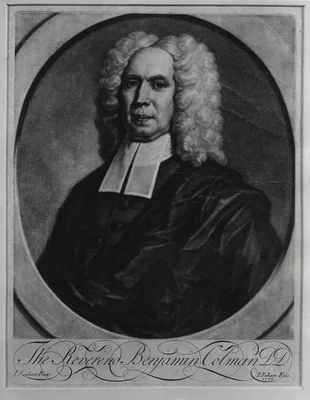
1721 COLMAN, Benjamin (1673 – 1747)
Some observations on the new method of receiving the smallpox by ingrafting or inoculating.
This work offers general support for the practice of Zabdiel Boylston, detailing some of Boylston’s cases, including accounts of occasions when patients died. Reprinted with additional material by Daniel Neal, as A na…
GMN 5411 · https://historyofmedicine.com/id/7309
1722 DOUGLASS, William (1691 – 1752)
Inoculation of the smallpox as practised in Boston.
GMN 5412 · https://historyofmedicine.com/id/7312
1722 DOUGLASS, William (1691 – 1752)
The abuses and scandals of some late pamphlets in favour of inoculation of the small-pox.
Douglass at first opposed inoculation for smallpox, but by 1730 he had changed his views and had become an advocate of inoculation.
GMN 5413 · https://historyofmedicine.com/id/7315
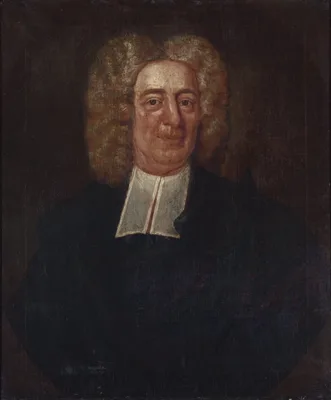
1722 MATHER, Cotton (1663 – 1728)
An account of the method and success of inoculating the small pox in Boston in New England.
Mather republished reports of earlier writers on inoculation. He persuaded Boylston to adopt the practice in June 1721, and he supported Boylston during a period of great opposition to inoculation.
GMN 5414 · https://historyofmedicine.com/id/7318
1722 MAITLAND, Charles (1668 – 1748)
Mr. Maitland’s account of inoculating the small pox.
Maitland inoculated the children of Lady Mary Wortley Montagu in 1721, and also inoculated six condemned prisoners as part of the so-called “Royal Experiment”. Success with these trials lead to his inoculation of the …
GMN 5414.1 · https://historyofmedicine.com/id/7321
1723 JURIN, James (1684 – 1750)
A letter … containing, a comparison between the mortality of the natural small pox, and that given by inoculation.
Jurin was an enthusiastic supporter of inoculation against smallpox, and proved statistically that the fatality of inoculated smallpox is very much less than the fatality of natural smallpox. This is one of the earlie…
GMN 1689 · https://historyofmedicine.com/id/2406
1726 BOYLSTON, Zabdiel (1679 – 1766)
An historical account of the small-pox inoculated in New-England, upon all sorts of persons, whites, blacks, and of all ages and constitutions: With some account of the nature of the infection in the natural and inoculated way, and their different effects on human bodies; with some short directions to the unexperienced in this method of practice .
Boylston was the first in America to inoculate for smallpox, at Boston on 26 June 1721. "During a smallpox outbreak in 1721 in Boston, he inoculated about 248 people[5] by applying pus from a smallpox sore to a small …
GMN 5415 · https://historyofmedicine.com/id/7324
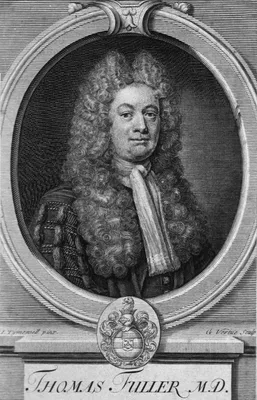
1730 FULLER, Thomas (1654 – 1734)
Exanthematologia ; or, an attempt to give a rational account of eruptive fevers, especially of the measles and small pox, In two parts. Parts I Of the blood, the air, venoms, Infection: fever of all kinds in general with their varieties, descriptions, names & C but more professedly and fully of the measles ... Part II Of the small pox ... To which is added. An appendix concerning inoculation.
Includes the first clear account of chicken pox as a distinct disease, and the first distinction between the spots made by flea bites from those seen in eruptive fevers.
GMN 10109 · https://historyofmedicine.com/id/12298
1743 KILPATRICK, James (Kirkpatrick) (1696 – 1770)
An essay on inoculation, occasioned by the small-pox being brought into South Carolina in the year 1738.
After its initial popularity, inoculation fell into disuse in England. Kirkpatrick, who became a prominent inoculator in England after experience in America, helped considerably in reviving its popularity. He attempte…
GMN 5416 · https://historyofmedicine.com/id/7327
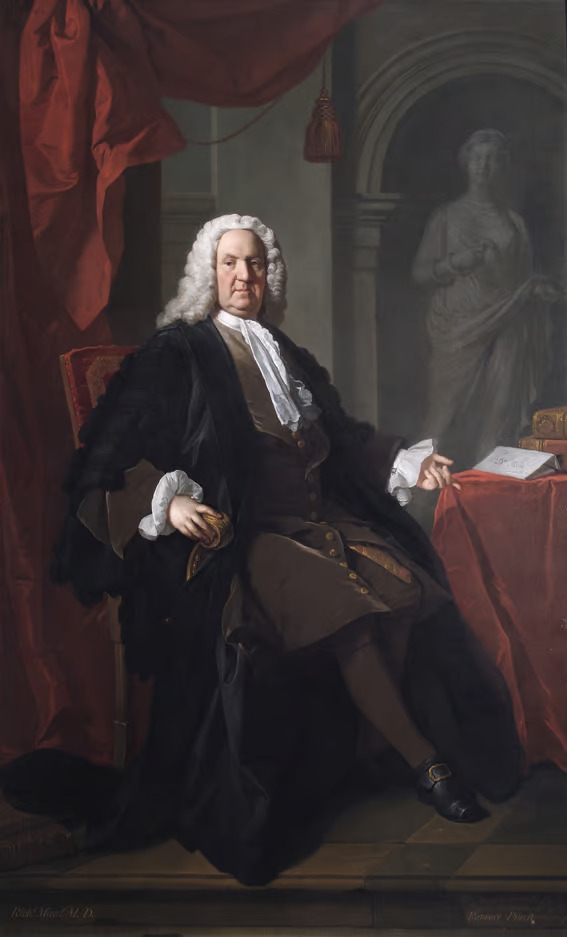
1747 RHAZES [MUHAMMAD IBN ZAKARIYĀ AL-RĀZĪ (PERSIAN: محمد زکریای رازی ] (854 – 925); MEAD, Richard (1673 – 1754)
De variolis et morbillis liber.
Includes a Latin translation of Rhazes’s commentary on smallpox. Mead favored inoculation, and his great authority and influence contributed to a more general acceptance of this measure. English translation entitled A…
GMN 5417 · https://historyofmedicine.com/id/7330
1750 THOMSON, Adam ( – 1767)
A discourse on the preparation of the body for the small-pox; and the manner of receiving the infection.
Thomson, a physician in Philadelphia, was the originator of the American method of inoculation against smallpox. Printed by Benjamin Franklin. Digital facsimile from dla.library.upenn.edu at this link.
GMN 5418 · https://historyofmedicine.com/id/7334
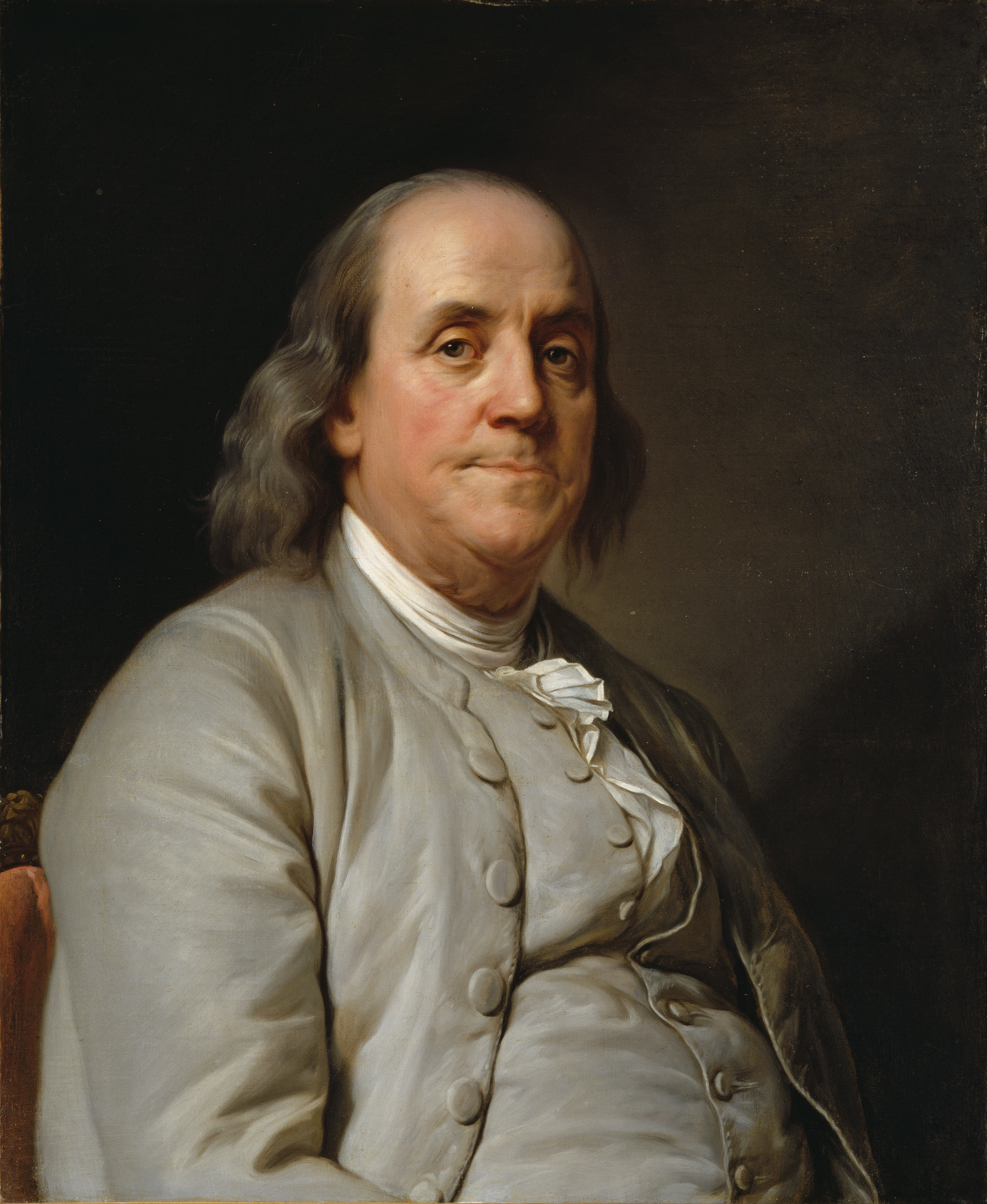
1759 FRANKLIN, Benjamin (1706 – 1790)
Some account of the success of inoculation for the small-pox in England and America. Together with plain instructions, by which any person may be enabled to perform the operation.
Franklin’s statistical account of smallpox inoculation in Boston during the epidemic of 1753-54, showing the beneficial effects of the practice, was written for William Heberden, who contributed the “Plain instruction…
GMN 5419 · https://historyofmedicine.com/id/7337
1766 RHAZES [MUHAMMAD IBN ZAKARIYĀ AL-RĀZĪ (PERSIAN: محمد زکریای رازی ] (854 – 925); CHANNING, John (1703 – 1775)
De variolis et morbillis commentarius.
The first medical description of smallpox was written by Rhazes, about the year 910… The above work is the first edition of the Arabic text with a parallel Latin translation by the English pharmacist and scholar, John…
GMN 2527.99 · https://historyofmedicine.com/id/3481
1767 DIMSDALE, Thomas (1712 – 1800)
The present method of inoculating for the small-pox.
Dimsdale is notable as having inoculated Catherine of Russia and her son. For this he received a fee of £10,000 and a life pension. His reputation and the exalted rank of his patient helped in popularizing the measure…
GMN 5420 · https://historyofmedicine.com/id/7341
1767 HOLWELL, John Zephaniah (1711 – 1798)
An account of the manner of inoculating for the small pox in the East Indies: With some observations on the practice and mode of treating that disease in those parts.
Holwell's account of smallpox variolation in India prior to Jenner has been disputed by historians. Digital facsimile from the Internet Archive at this link.
GMN 12397 · https://historyofmedicine.com/id/14626
1768 HEBERDEN, William Sr. (1710 – 1801)
On the chickenpox.
In a paper read before the (Royal) College of Physicians on 11 August 1767, Heberden first definitely differentiated chickenpox from smallpox.
GMN 5438 · https://historyofmedicine.com/id/7454
1776 DIMSDALE, Thomas (1712 – 1800)
Thoughts on general and partial inoculations: Containing a translation of two treatises written when the author was at Petersburg, and published there in the Russian language; also outlines of two plans: One, for the general inoculation of the poor in small towns and villages. The other, for the general inoculation of the poor in London and other large and populous places.
Digital facsimile from the Internet Archive at this link.
GMN 9520 · https://historyofmedicine.com/id/11705
1780 HUNTER, John (1728 – 1793)
Account of a woman who had the smallpox during pregnancy, and who seemed to have communicated the same disease to the foetus.
GMN 5421 · https://historyofmedicine.com/id/7344
1781 RUSH, Benjamin (1745 – 1813)
The new method in inoculating for the small pox.
GMN 5422 · https://historyofmedicine.com/id/7348
1791 BEER, Georg Joseph (1763 – 1821)
Praktische Beobachtungen über verschiedene, vorzüglich aber über jene Augenkrankheiten, welche aus allgemeinen Krankheiten des Körpers entspringen.
“This is the first monograph ever published dealing with ocular signs of systemic disease. It deals with lacrimal fistulas, trichiasis, adhesions of the lids, lid ulcers, ephiphora, and ocular inflammations. He illust…
GMN 5833.2 · https://historyofmedicine.com/id/7103
1798 JENNER, Edward (1749 – 1823)
An inquiry into the causes and effects of the variolae vaccinae.
Jenner established the fact that a “vaccination” or inoculation with vaccinia (cowpox) lymph matter protects against smallpox. He performed his first vaccination on May 14, 1796. The above work, describing 23 successf…
GMN 2529.3 · https://historyofmedicine.com/id/7353
1800 –1802 WATERHOUSE, Benjamin (1754 – 1846)
A prospect of exterminating the small-pox, being the history of the variolae vaccinae, or kine-pox, commonly called the cow-pox; as it has appeared in England: With an account of a series of inoculations performed for the kine-pox in Massachusetts. [Part II:] A prospect of exterminating the small pox part II, being a continuation of a narrative of facts concerning the progress of the new inoculation in America; together with practical observations on the local appearance, symptoms, and mode of treating the variola vaccina, or kine pock; including some letters to the author, from distinguished characters, on the subject of this benign remedy, now passing with a rapid step through all ranks of society in Europe and America.
Waterhouse introduced Jennerian vaccination into the U.S.A. He vaccinated his own child as his first case. See J. B. Blake, Benjamin Waterhouse and the introduction of vaccination. A reappraisal. Philadelphia, 1957. D…
GMN 5424 · https://historyofmedicine.com/id/7359
1802 COXE, John Redman (1773 – 1864)
Practical observations on vaccination: or inoculation for the cow pock.
Coxe did much to destroy ignorant prejudice against vaccination; he was the first in Philadelphia to practice it. Like Waterhouse, he inoculated his own child as his first case.
GMN 5425 · https://historyofmedicine.com/id/7362
1803 MOREAU DE LA SARTHE, Jacques-Louis (1771 – 1826); BALMIS, Francisco Javier de (1793 – 1819)
Tratado histórico y práctico de la vacuna que contiene en compendio el orígen y los resultados de las observaciones y experimentos sobre la vacuna, con un exámen imparcial de sus ventajas, y de las objeciones que se le han puesto, con todo lo demás que concierne á la práctica del nuevo modo de inocular. [Translated From the French by] Francisco Xavier de Balmis.
On November 30, 1803 Spanish physician Francisco Javier de Balmis and his team embarked from Spain, on an expedition to vaccinate the people of Spanish America against smallpox. This three year voyage, which became kn…
GMN 8006 · https://historyofmedicine.com/id/10182
1806 DUVILLARD, Emmanuel Etienne (1755 – 1832)
Analyse et tableaux de l’influence de la petite vérole sur la mortalité à chaque âge, et de celle qu’un préservatif tel que la vaccine peut avoir sur la population et la longevité.
Duvillard showed statistically the effect of smallpox vaccination on the mortality rate. Digital facsimile from Google Books at this link.
GMN 1695 · https://historyofmedicine.com/id/2441
1815 MOORE, James Carrick (1763 – 1834)
The history of the small pox.
Digital facsimile from Google Books at this link.
GMN 13799 · https://historyofmedicine.com/id/16086
1848 RHAZES [MUHAMMAD IBN ZAKARIYĀ AL-RĀZĪ (PERSIAN: محمد زکریای رازی ] (854 – 925); GREENHILL, William Alexander (1814 – 1894)
A treatise on the smallpox and measles. Translated from the Arabic by William Alexander Greenhill.
Rhazes differentiated measles from smallpox. Reprinted in Med. Classics, 1939, 4, 22-84. For original publication see No. 5404. The first English translation appeared in No. 5417. Digital facsimile from the Internet A…
GMN 5441 · https://historyofmedicine.com/id/7473
1868 CHAUVEAU, Jean Baptiste Auguste (1827 – 1917)
Nature des virus vaccin. Détermination expérimentale des éléments qui constituent le principe virulent dans le pus varioleux et le pus morveux.
Chauveau first used the term “elementary bodies” to describe the minute bodies inside the inclusions and which were the infective particles.
GMN 5425.1 · https://historyofmedicine.com/id/7368
1871 WEIGERT, Carl (1845 – 1904)
Ueber Bakterien in der Pockenhaut.
Weigert was the first to stain bacteria. He introduced many of the best staining methods in use today. Weigert discovered bacteria in hemorrhagic smallpox. In the same paper is described how carmine will color cocci.
GMN 2482 · https://historyofmedicine.com/id/3084
1874 –1875 WEIGERT, Carl (1845 – 1904)
Anatomische Beiträge zur Lehre von den Pocken. 2 pts.
In the course of his important studies on smallpox, Weigert carried out the first successful staining of bacteria (see No. 2482). His fine description of the destructive effects of the smallpox virus on the skin led t…
GMN 5426 · https://historyofmedicine.com/id/7372
1885 PENNA, José (1855 – 1919)
La viruela en la América del Sud y principalmente en la República Argentina: Historia, estadística, clínica, y profilaxia.
Digital facsimile from wellcomecollection.org at this link.
GMN 13805 · https://historyofmedicine.com/id/16093
1886 BUIST, John Brown (1846 – 1915)
The life-history of the micro-organisms associated with variola and vaccinia. An abstract of results obtained from a study of smallpox and vaccination in the surgical laboratory of the University of Edinburgh.
The “Paschen elementary bodies” (No. 5430) were first recognized and demonstrated by Buist. Republished as an appendix to his Vaccinia and variola, London, 1887.
GMN 5427 · https://historyofmedicine.com/id/7375
1889 CROOKSHANK, Edgar March (1858 – 1928)
History and pathology of vaccination. 2 vols.
This very full history of the subject caused a good deal of controversy; see the review of it in Lancet, 1890, 1, 470-72. Crookshank was an opponent of vaccination.
GMN 5435 · https://historyofmedicine.com/id/7431
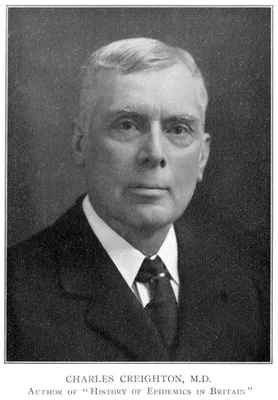
1889 CREIGHTON, Charles (1847 – 1927); JENNER, Edward (1749 – 1823)
Jenner and vaccination: A strange chapter of medical history.
Creighton, one of the founders of epidemiology, disputed the germ theory of infectious disease, and became "one of the anti-vaccination movement's 'most ardent and distinguished spokesmen.' Creighton argued that vacci…
GMN 12348 · https://historyofmedicine.com/id/14572
1893 GUARNIERI, Guiseppe (1856 – 1918)
Ricerche sulla patogenesi ed etiologia dell’ infezione vaccinica e vaiolosa.
Guamieri described bodies found in the specific lesions of smallpox. Cytorrhyctes variolae guarnieri, which he believed to be the causative organism of the disease. Guarnieri bodies are found in all poxvirus infection…
GMN 5428 · https://historyofmedicine.com/id/7380
1899 COPEMAN, Sydney Arthur Monckton (1862 – 1947)
Vaccination, its natural history and pathology.
Milroy Lectures, Royal College of Physicians, 1898. Copeman’s bacteriological studies permanently determined the validity of vaccination as a preventive of smallpox.
GMN 5429 · https://historyofmedicine.com/id/7383
1902 EDWARDES, Edward Joshua
A concise history of small-pox and vaccination in Europe.
A comprehensive summary, in tabular form.
GMN 5435.1 · https://historyofmedicine.com/id/7435
1904 MAGRATH, George Burgess (1870 – 1938); BRINCKERHOFF, Walter Remsen (1875 – 1911)
On experimental variola in the monkey.
Inoculation of smallpox into the monkey. An earlier report of successful inoculation by W. Zuelzer (Zbl. med. Wiss., 1874, 12, 82) is not generally accepted.
GMN 5429.1 · https://historyofmedicine.com/id/7391
1906 PASCHEN, Enrique Federico Mauricio (1860 – 1936)
Was wissen wir über den Vakzineerreger?
“Paschen elementary bodies”; see also No. 5427.
GMN 5430 · https://historyofmedicine.com/id/7397
1909 JAMES, Sydney Price (1870 – 1946)
Smallpox and vaccination in British India.
Includes the history of the introduction of vaccination in India from 1799 onward. Digital facsimile from the Internet Archive at this link.
GMN 13795 · https://historyofmedicine.com/id/16082
1913 KLEBS, Arnold Carl (1870 – 1943)
The historic evolution of variolation.
GMN 5436 · https://historyofmedicine.com/id/7437
1914 CUMPSTON, John Howard Lidgett (1890 – 1954)
The history of small-pox in Australia 1788-1908.
A second volume, The history of small-pox in Australia, 1909-1923 by J.H.L. Compston and F. McCallum was published in Melbourne: H. J. Green, govt. printer, 1925.
GMN 13802 · https://historyofmedicine.com/id/16089