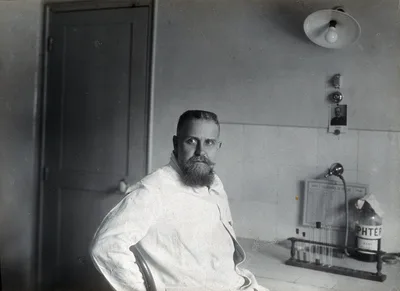
1928 KANEKO, Renjiro (1886 – ); AOKI, Y
Ueber die Encephalitis epidemica in Japan.
Japanese encephalitis distinguished from encephalitis lethargica.
GMN 4654 · https://historyofmedicine.com/id/760
1928 SHWARTZMAN, Gregory (1896 – 1965)
Studies on Bacillus typhosus toxic substances. I. Phenomenon of local skin reactivity to B. typhosus culture filtrate.
“Shwartzman phenomenon.”
GMN 2576 · https://historyofmedicine.com/id/3712
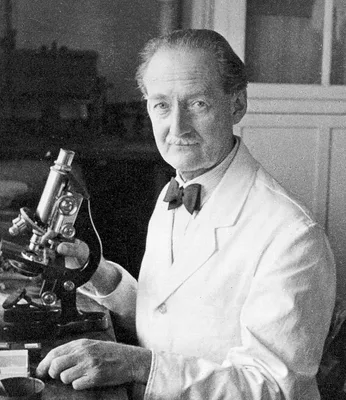
1928 RAMON, Gaston Léon (1886 – 1963)
L’anatoxine diphtérique. Ses propriétés–ses applications.
In 1923 Ramon so modified the diphtheria toxin with formaldehyde that it lost its toxic properties while retaining its antigenic virtues. This modified “anatoxin” (toxoid) superseded toxin–antitoxin as an immunizing a…
GMN 5070 · https://historyofmedicine.com/id/5909
1928 DEW, Sir Harold Robert (1891 – 1962)
Hydatid disease. Its pathology, diagnosis and treatment.
Dew’s book remains the authoritative source. His many contributions to the knowledge of hydatid disease are summarized in it.
GMN 5351 · https://historyofmedicine.com/id/6877
1928 DOBELL, Clifford (1886 – 1949)
Researches on the intestinal protozoa of monkeys and man.
Classic account of the life-cycle of Entamoeba histolytica.
GMN 5194.1 · https://historyofmedicine.com/id/7093
1928 MOOSER, Hermann (1891 – 1971)
Experiments relating to the pathology and the etiology of Mexican typhus (tabardillo).
Mooser differentiated murine from epidemic typhus. The causative organism was later named Rickettsia mooseri.
GMN 5396.1 · https://historyofmedicine.com/id/7173
1928 MCKINNON, Neil E. (1894 – 1985); DEFRIES, Robert Davies (1889 – 1975)
The reaction of the skin of the normal rabbit following intradermal injection of material from smallpox lesions: the specificity of this reaction and its application as a diagnostic test.
McKinnon’s diagnostic test.
GMN 5434 · https://historyofmedicine.com/id/7416
1928 MAITLAND, Hugh Bethune (1895 – 1972); MAITLAND, Mary L. Cowan ( – 1972)
Cultivation of vaccinia virus without tissue culture.
Introduction of “Maitland’s medium”.
GMN 5434.1 · https://historyofmedicine.com/id/7422
1928 HINDLE, Edward (1886 – 1973)
A yellow fever vaccine.
First vaccine for immunization against yellow fever. Hindle devised a method for the transportation of frozen infected material from West Africa to London, making it possible to carry on experimental work in Britain.
GMN 5461 · https://historyofmedicine.com/id/7571
1928 STOKES, Adrian (1887 – 1927); ET AL
Experimental transmission of yellow-fever to laboratory animals.
Experimental infection of the monkey, Macacus rhesus, with the yellow fever virus. Stokes succumbed to yellow fever while investigating the disease. With J. H. Bauer and N. P. Hudson.
GMN 5462 · https://historyofmedicine.com/id/7575
1928 SINTON, Brigadier John Alexander (1884 – 1956); BIRD, William
Studies in malaria, with special references to treatment. Part IX. Plasmoquine in the treatment of malaria.
Clinical trials of pamaquin.
GMN 5256.1 · https://historyofmedicine.com/id/7918
1929 COLE, Rufus Ivory (1872 – 1966)
Serum treatment in type I lobar pneumonia.
Introduction of monovalent antiserum.
GMN 3202.2 · https://historyofmedicine.com/id/4306
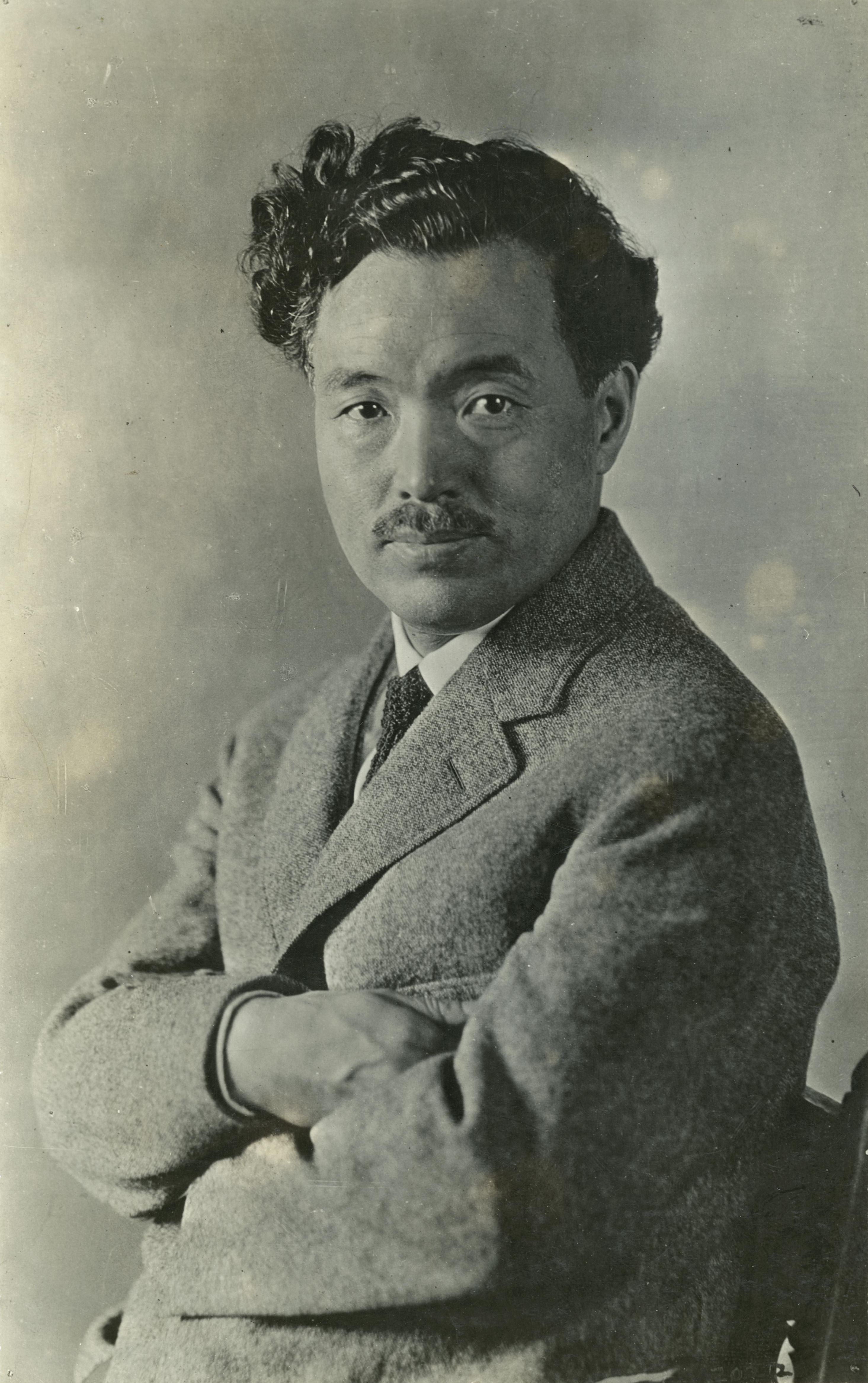
1929 NOGUCHI, Hideyo (1876 – 1928); ET AL
Etiology of Oroya fever. XIV. The insect vectors of Carrión’s disease.
Phlebotomus sand flies shown to be the vector of Oroya fever. With R. C. Shannon, E. B. Tilden, and J. B. Tyler.
GMN 5538.2 · https://historyofmedicine.com/id/6720
1929 ECONOMO, Constantin von (1876 – 1931)
Die Encephalitis lethargica, ihre Nachkrankheiten und ihre Behandlung.
Translated and adapted by K. O. Newman as Encephalitis lethargica its sequelae and treatment. London: Oxford University Press, 1931.
GMN 12642 · https://historyofmedicine.com/id/14883
1930 GLENNY, Alexander Thomas (1882 – 1965)
Insoluble precipitates in diphtheria and tetanus immunization.
Alum-precipitated toxoid for active immunization.
GMN 5071 · https://historyofmedicine.com/id/5911
1930 OHARA, Hachiro
Ueber Identität von “Yato-Byo” (Ohara’s disease) und “Tularämie”, sowie ihren Erreger.
In Japan tularemia is known as “Ohara’s disease”.
GMN 5177 · https://historyofmedicine.com/id/6284
1930 BECKER, Frederick Edward (1888 – )
Tick-borne infections in Colorado. I. The diagnosis and management of infections transmitted by the wood tick.
Becker first clearly described Colorado tick fever as a separate entity and suggested that the causal organism was transmitted by the tick, Dermacentor andersoni.
GMN 5538.3 · https://historyofmedicine.com/id/6722
1930 LEVINTHAL, Claude Walter (1886 – 1963)
Die Ätiologie der Psittakosis.
Discovery of the causal agent of psittacosis, Chlamydia psittaci. Simultaneously A. C. Coles (Lancet, 1930, 1, 1011-12) and R. D. Lillie (Publ. Hlth. Rep., Wash., 1930, 45, 773-78) made the same discovery, and the ele…
GMN 5539 · https://historyofmedicine.com/id/6726
1930 SYLVEST, Ejnar Oluf Sorenson (1880 – 1931)
En Bornholmsk epidemi-myositis epidemica.
First full description of epidemic myositis, “Bornholm disease”. See also Sylvest’s monograph on the subject, London, 1934.
GMN 5540 · https://historyofmedicine.com/id/6728
1930 THEILER, Max (1899 – 1972)
Studies on the action of yellow fever virus in mice.
The intracerebral protection test in mice, a test for the diagnosis of yellow fever and for the determination of its past existence in a community, was made possible by Theiler’s discovery that white mice are suscepti…
GMN 5463 · https://historyofmedicine.com/id/7579
1930 HELLERSTRÖM, Sven Curt Alfred (1901 – 1977); WASSÉN, Erik
Meningo-enzephalitische Veränderungen bei Affen nach intra-cerebraler Impfung mit Lymphogranuloma inquinale.
The authors transmitted lymphogranuloma venereum to animals and attributed it to a virus. See also C. R. Soc. Biol. (Paris), 1931, 106, 802-03.
GMN 5220 · https://historyofmedicine.com/id/7831
1931 BURNET, Sir Frank Macfarlane (1899 – 1985); MACNAMARA, Annie Jean Dame (1899 – 1968)
Immunological differences between strains of poliomyelitis virus.
GMN 4670.5 · https://historyofmedicine.com/id/861
1931 JEANSELME, Antoine Edouard (1858 – 1935)
Histoire de la syphilis.
Forms tome I of Traité de la syphilis, ed. by E. Jeanselme and E. Shulmann.
GMN 2428 · https://historyofmedicine.com/id/2885
1931 PIÉRY, Antoine Marius (1873 – 1957); ROSHEM, Julien
Historie de la tuberculose.
GMN 2355 · https://historyofmedicine.com/id/3156
1931 KAUFFMANN, Fritz (1899 – 1978)
Der heutige Stand der Paratyphusforschung.
Kauffmann–White classification of Salmonella based on antigenic structure. For historical note, including the part played by P. B. White, see J. Hyg. (camb), 1934, 34, 335.
GMN 5044.1 · https://historyofmedicine.com/id/5823
1931 ANDERSON, James Stirling (1891 – 1976); ET AL
On the existence of two forms of diphtheria bacillus B. diphtheria gravis and B. diphtheriae mitis.
J. S. Anderson, F. C. Happold, J. W. McLeod, and J. G. Thomson were the first to distinguish the gravis, mitis, and intermediate types of C. diphtheriae.
GMN 5072 · https://historyofmedicine.com/id/5914
1931 LESLIE, Patrick Holt (1900 – 1972); GARDNER, Arthur Duncan (1884 – 1977)
The phases of Haemophilus pertussis.
Leslie and Gardner classified H. pertussis cultures into four types and established an experimental basis for the development of an effective vaccine.
GMN 5087.1 · https://historyofmedicine.com/id/5975
1931 CAMPBELL, Anna Montgomery (1888 – 1965)
The black death and men of learning.
GMN 5142.1 · https://historyofmedicine.com/id/6158
1931 SHOPE, Richard Edwin (1901 – 1966)
Swine influenza. III. Filtration experiments and etiology.
Isolation in pigs of influenzavirus A or influenza A virus. Full text available from PubMedCentral at this link.
GMN 5493 · https://historyofmedicine.com/id/6443
1931 DAUBNEY, Robert (1891 – ); HUDSON, John Richard
Enzootic hepatitis or Rift Valley fever. An undescribed virus disease of sheep, cattle and man from East Africa.
First description.
GMN 5541 · https://historyofmedicine.com/id/6730
1931 KHALIL, Mohamed
The bibliography of schistosomiasis (bilharziasis).
GMN 5352 · https://historyofmedicine.com/id/6900
1931 DYER, Rollo Eugene (1886 – ); ET AL
Typhus fever. A virus of the typhus type derived from fleas collected from wild rats.
Murine typhus shown to be caused by an organism later named Rickettsia mooseri, transmitted by fleas from rats to man. With A. Rumreich and L. F. Badger.
GMN 5396.2 · https://historyofmedicine.com/id/7175
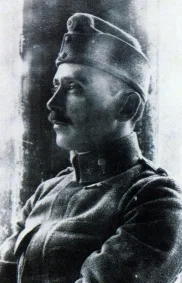
1931 OGATA, Norio (1883 – )
Aetiologie der Tsutsugamushi-Kiankheit: Rickettsia tsutsugamushi.
Ogata isolated the causal agent of tsutsugamushi disease, Orientia Tsutsugamushi, in 1927.
GMN 5396.3 · https://historyofmedicine.com/id/7176
1931 SAWYER, Wilbur Augustus (1879 – 1951); LLOYD, Wray Devere Marr (1902 – 1936)
The use of mice in tests of immunity against yellow fever.
Intraperitoneal protection test.
GMN 5464 · https://historyofmedicine.com/id/7584
1931 SIMMONS, James Stevens (1890 – 1954); ET AL
Experimental studies of dengue.
Proof that Aëdes albopictus is a vector of dengue. See also the earlier paper in the same journal, 1930, 41, 215-29. With J. H. St. John and F. H. K. Reynolds.
GMN 5475 · https://historyofmedicine.com/id/7620
1931 STICKER, Georg (1860 – 1960); JADASSOHN, Josef (1863 – 1936)
Entwurf einer Geschichte der ansteckenden Geschlechtskrankheiten.
GMN 5227.1 · https://historyofmedicine.com/id/7849
1931 CARTER, Henry Rose (1852 – 1925)
Yellow fever: an epidemiological and historical study of its place of origin. Edited by Laura Armistead Carter and Wade Hampton Frost.
Digital facsimile from the Internet Archive at this link.
GMN 5468 · https://historyofmedicine.com/id/8625
1931 COBURN, Alvin Frederick (1899 – 1975)
The factor of infection in the rheumatic state.
Coburn demonstated that streptococcus is the infective agent in rheumatic fever that can lead to rheumatic heart disease.
GMN 11570 · https://historyofmedicine.com/id/13769
1932 LONG, Esmond Ray (1890 – 1979); WELLS, Henry Gideon (1875 – 1943)
The chemistry of tuberculosis. Second edition.
GMN 2347 · https://historyofmedicine.com/id/3109
1932 SHOPE, Richard Edwin (1901 – 1966)
A transmissible tumor-like condition in rabbits.
Shope papilloma virus (SPV), a benign infectious tumor due to a virus. This was the first mammalian tumor virus discovered. Full text from PubMedCentral at this link. See also Shope, "Infectious Papillomatosis of Rabb…
GMN 2656 · https://historyofmedicine.com/id/3328
1932 EAGLE, Harry (1905 – 1992)
Studies in the serology of syphilis. VII. A new flocculation test for the serum diagnosis of syphilis.
Eagle flocculation test.
GMN 2414.1 · https://historyofmedicine.com/id/3409
1932 STANTON, Sir Ambrose Thomas (1875 – 1938); FLETCHER, William ( – 1938)
Melioidosis.
Studies from the Institute for Medical Research, F.M.S., No. 21. Stanton gave melioidosis its present name and, with Fletcher, wrote the authoritative work on the subject.
GMN 5159.2 · https://historyofmedicine.com/id/6219
1932 FOSHAY, Lee (1896 – 1960)
Tularemia: Accurate and earlier diagnosis by means of the intradermal reaction.
Skin test for the diagnosis of tularemia. Digital facsimile from Jstor at this link.
GMN 5178 · https://historyofmedicine.com/id/6288
1932 FOSHAY, Lee (1896 – 1960)
Serum treatment of tularemia.
Foshay devised a serum for the treatment of tularemia.
GMN 5179 · https://historyofmedicine.com/id/6292
1932 PAUL, John Rodman (1893 – 1971); BUNNELL, Walls Willard (1902 – 1965)
The presence of heterophile antibodies in infectious mononucleosis.
The Paul–Bunnell test for the diagnosis of infectious mononucleosis.
GMN 5487 · https://historyofmedicine.com/id/6425
1932 BEDSON, Sir Samuel Phillips (1886 – 1969); BLAND, J. O. W.
A morphological study of psittacosis virus, with the description of a developmental cycle.
Conclusive proof of the causal relationship of the psittacosis agent to the infection.
GMN 5541.1 · https://historyofmedicine.com/id/6735
1932 AUGUSTINE, Donald Leslie (1895 – ); THEILER, Hans (1894 – )
Precipitin and skin tests as aids in diagnosing trichinosis.
Intradermal test for trichinosis.
GMN 5351.1 · https://historyofmedicine.com/id/6880
1932 LEAKE, Chauncey Depew (1896 – 1978); REED, Alfred Cummings (1884 – 1951); ET AL
Carbarsone in the treatment of amebiasis.
With H. H. Anderson and N. A. David.
GMN 5194.2 · https://historyofmedicine.com/id/7095
1932 SAWYER, Wilbur Augustus (1879 – 1951); LLOYD, Wray Devere Marr (1902 – 1936)
Vaccination against yellow fever with immune serum and virus fixed for mice.
These workers devised an immune serum for prophylactic inoculation against yellow fever. With S. F. Kitchen and W. D. M. Lloyd.
GMN 5465 · https://historyofmedicine.com/id/7586
1932 THEILER, Max (1899 – 1972); HAAGEN, Eugen (1898 – 1972)
Untersuchungen über das Verhalten des Gelbfiebervirus in der Gewebekultur. Mit besonderer Berücksichtigung seiner Kultivierbarkeit.
Yellow fever virus grown in tissue culture.
GMN 5465.1 · https://historyofmedicine.com/id/7591