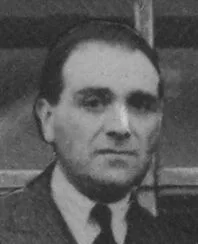
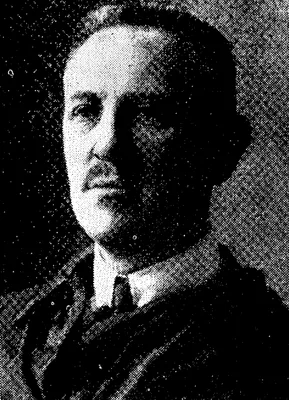
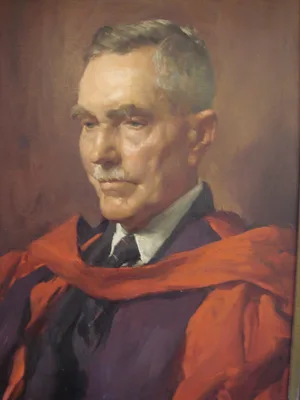
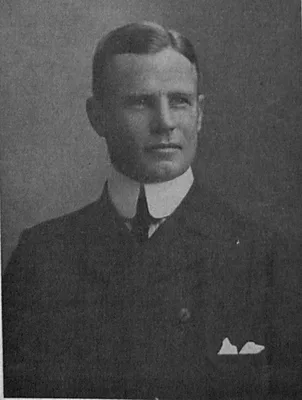
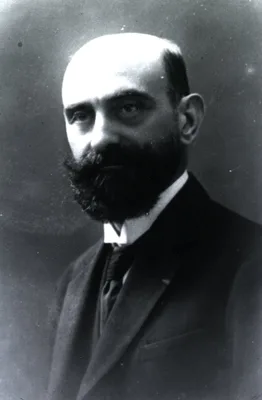
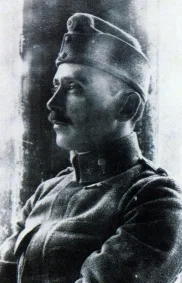
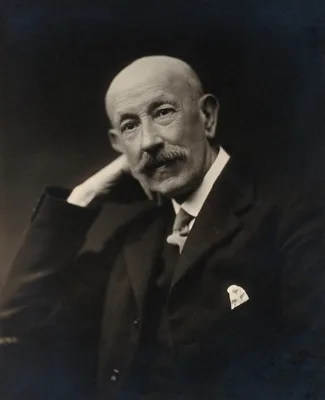
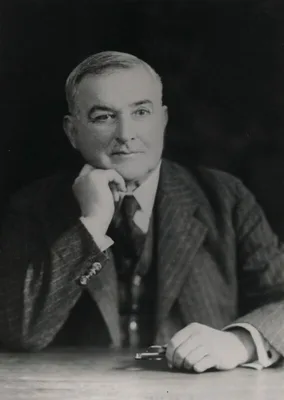
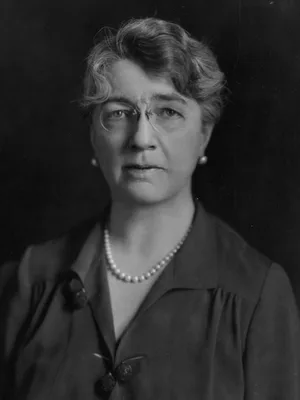
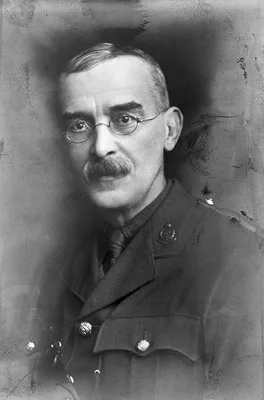
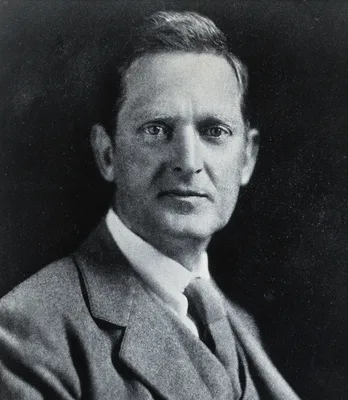
1916 FELIX, Arthur (1887 – 1956); WEIL, Edmund (1880 – 1922)
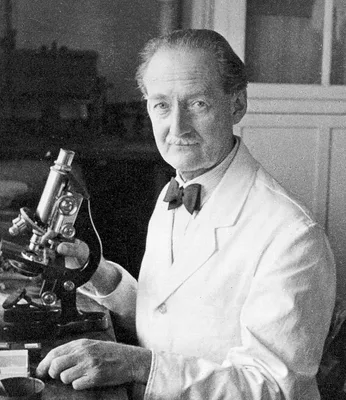
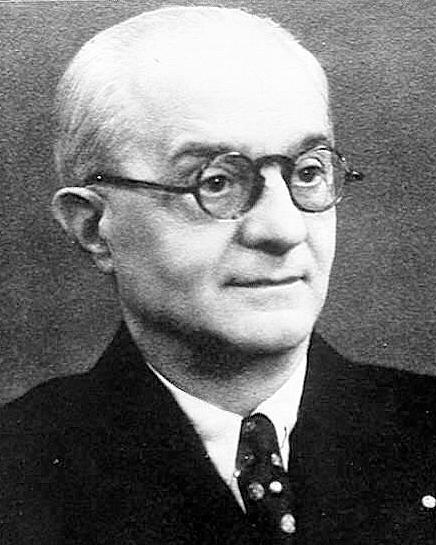
Zurserologischen Diagnose des Fleckfiebers.
Weil-Felix reaction for the diagnosis of typhus. See also the later paper in the same journal, 1916, 29, 974-78.
GMN 5390 · https://historyofmedicine.com/id/7144
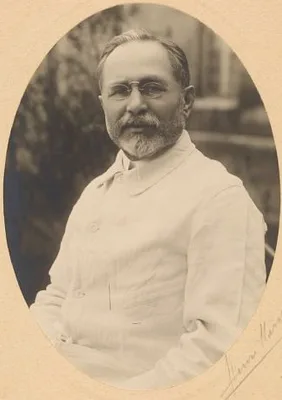
1916 CLELAND, Sir John Burton (1878 – 1971); ET AL
On the transmission of Australian dengue by the mosquito Stegomyia fasciata.
These workers proved that Aëdes aegypti (Stegomyia fasciata) is capable of transmitting dengue fever. See also J. Hyg. (Camb.), 1918, 16, 317-418. With C. H. Bradley and W. McDonald.
GMN 5474 · https://historyofmedicine.com/id/7616
1916 MOURITZ, Arthur Albert St. M. (1861 – 1943)
"The path of the destroyer": A history of leprosy in the Hawaiian Islands, and thirty years research into the means by which it has been spread.
Digital facsimile from the Internet Archive at this link.
GMN 10522 · https://historyofmedicine.com/id/12715
1917 CAMPBELL, Alfred Walter (1868 – 1937); CLELAND, Sir John Burton (1878 – 1971)
The Australian epidemics of an acute polio-encephalomyelitis (X disease).
Campbell was Australia's first neurologist. This paper described Murray Valley encephalitis (Australian X disease). Cleland and Campbell isolated a virus from the cerebral tissue of three patients.
GMN 4648 · https://historyofmedicine.com/id/738
1917 CRUCHET, Jean René (1875 – 1959); CALMETTE, Léon Charles Albert (1863 – 1933); ET AL
Quarante cas d’encéphalo-myélite subaiguë.
Cruchet’s account of epidemic encephalitis was given on 27 April 1917, preceding that of Economo by 13 days. With F. Moutier
GMN 4649 · https://historyofmedicine.com/id/743
1917 MEINICKE, Ernst (1878 – 1945)
Ueber ein neue Methode der serologischen Luesdiagnose.
Meinicke diagnostic reaction.
GMN 2407 · https://historyofmedicine.com/id/3375
1917 SCHMITZ, Karl Eitel Friedrich (1889 – )
Eine neuer Typus aus der Gruppe der Ruhrbazillen als Erreger einer grösseren Epidemie.
Schmitz’s bacillus – Bact. ambiguum (Shigella schmitzii),a cause of dysentery.
GMN 5095 · https://historyofmedicine.com/id/6010
1917 STANTON, Sir Ambrose Thomas (1875 – 1938)
A form of pseudo-tuberculosis (melioidosis).
Stanton identified the bacillus of melioidosis and reproduced the disease in animals by feeding and inoculation of cultures.
GMN 5159.1 · https://historyofmedicine.com/id/6218
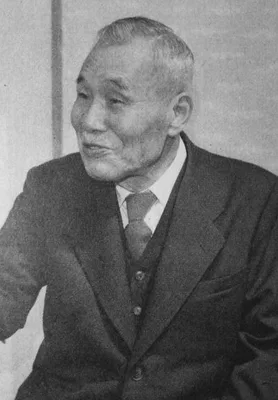
1917 IDO, Yutaka (1881 – 1919); ET AL
The rat as a carrier of Spirochaeta icterohaemorrhagiae, the causative agent in Weil’s disease (spirochaetosis icterohaemorrhagica)
Rats shown to be the carriers of Leptospira. With R. Hoki, H. Ito, and H. Wani.
GMN 5334.1 · https://historyofmedicine.com/id/6673
1917 ECONOMO, Constantin von (1876 – 1931)
Encephalitis lethargica.
Economo’s classic description of epidemic encephalitis (“von Economo’s disease”) was published on 10 May 1917; see No. 4649.
GMN 4650 · https://historyofmedicine.com/id/8868
1918 –1919 WAGNER VON JAUREGG, Julius (1857 – 1940)
Ueber die Einwirkung der Malaria auf die progressive Paralyse.
In 1917 Wagner von Jauregg returned to the idea of the inoculation of paretics with malaria to induce pyrexia, first proposed by him in 1887 (Ueber die Einwirkung fieberhafter Erkrankungen auf Psychosen, Jb. Psychiat.…
GMN 4806 · https://historyofmedicine.com/id/1579
1918 ANDREWES, Sir Frederick William (1859 – 1932)
Dysentery bacilli: the differentiation of the true dysentery bacilli from allied species.
Shigella alkalescens described.
GMN 3542 · https://historyofmedicine.com/id/4049
1918 SCHULTZ, Werner (1878 – 1944); CHARLTON, Willy (1889 – )
Serologische Beobachtungen am Scharlachexanthem.
Schultz–Charlton reaction.
GMN 5081 · https://historyofmedicine.com/id/5943
1918 IDO, Yutaka (1881 – 1919)
Spirochaeta hebdomadis, the causative agent of seven-day fever (nanukayami)
Discovery of Leptospira hebdomadis, carried by a mouse. With H. Ito and H. Wani.
GMN 5334.2 · https://historyofmedicine.com/id/6679
1918 CHRISTOPHERSON, John Brian (1868 – 1955)
The successful use of antimony in bilharziosis.
Introduction of tartar emetic (antimony) in the treatment of schistosomiasis.
GMN 5350.6 · https://historyofmedicine.com/id/6869
1918 HURST, Sir Arthur Frederick (1879 – 1944)
Medical diseases of the war. Second edition
Roughly the first half of this work is on "war neuroses." The second half is on "infective and other disorders," including gas poisoning. Hurst greatly expanded the first section after experience as a neurologist in E…
GMN 8604 · https://historyofmedicine.com/id/10781
1918 U.S. PUBLIC HEALTH SERVICE
"Spanish influenza," "Three-day fever," "The flu".
Public health advice from the U.S. Public Health Service published during the pandemic.
GMN 11922 · https://historyofmedicine.com/id/14127
1919 LOEWE, Leo (1896 – ); STRAUSS, Israel (1873 – 1955)
Etiology of epidemic (lethargic) encephalitis. Preliminary note.
Experimental transmission of encephalitis lethargica.
GMN 4651 · https://historyofmedicine.com/id/750
1919 MITSUDA, Kensuke (1876 – 1964)
On the value of a skin reaction to a suspension of leprous nodules.
Mitsuda (lepromin) reaction. English translation by the author in Int. J. Leprosy, 1953, 21, 347-58.
GMN 2440 · https://historyofmedicine.com/id/2914
1919 SACHS, Hans (1877 – 1945); GEORGI, Walter (1889 – 1920)
Zur Kritik des serologischen Luesnachweises mittels Ausflockung.
Sachs–Georgi diagnostic reaction.
GMN 2408 · https://historyofmedicine.com/id/3378
1919 WEICHARDT, Julius Wolfgang (1875 – 1945); SCHRADER, Erich
Über die Serodiagnostik der Syphilis mittels Ausflockung durch cholesterinierte Extrakte.
Weichardt’s reagent.
GMN 2409 · https://historyofmedicine.com/id/3382
1919 HIRSZFELD, Ludwik Maurycy [Hirschfeld] (1884 – 1954)
A new generation of paratyphoid.
Hirszfeld gave an important description of Salmonella paratyphi C. (“Hirszfeld’s bacillus”).
GMN 5044 · https://historyofmedicine.com/id/5822
1919 WOLBACH, Simeon Burt (1880 – 1954)
Studies on Rocky Mountain spotted fever.
In his important aetiological and pathological studies of Rocky Mountain spotted fever, Wolbach mentioned the causal agent Dermacentroxenus rickettsi.
GMN 5391 · https://historyofmedicine.com/id/7147
1919 DOBELL, Clifford (1886 – 1949)
The amoebae living in man; a zoological monograph.
"I have attempted in this monograph to give an accurate and concise account of all the amoebae which live in human beings." Digital facsimile from Biodiversity Heritage Library at this link.
GMN 11486 · https://historyofmedicine.com/id/13685
1920 CREUTZFELD, Hans Gerhard (1885 – 1964)
Ueber eine eigenartige herdförmige Erkrankung des Zentralnervensystems.
Creutzfeld-Jakob disease, spatic pseudoschlerosis, independently discovered by Jakob. (see No. 4722). English translation in No. 5019.14, pp. 97-112. Creutzfeld described a single case and later reported that "his cas…
GMN 4719.1 · https://historyofmedicine.com/id/1205
1920 WARTHIN, Aldred Scott (1866 – 1931); STARRY, Allen Chronister (1890 – 1973)
A more rapid and improved method of demonstrating spirochetes in tissues (Warthin and Starry’s cover-glass method).
Warthin and Starry’s method.
GMN 2410 · https://historyofmedicine.com/id/3386
1920 HAENDEL, Ludwig (1869 – 1939); JOETTEN, Karl Wilhelm (1886 – 1958)
Ueber chemotherapeutische Versuche mit “205 Bayer”, einen neuen trypanoziden Mittel von besonderer Wirkung.
Introduction of “Bayer 205” (germanin, suramin, naphuride).
GMN 5286 · https://historyofmedicine.com/id/6361
1920 SPRUNT, Thomas Peck (1884 – 1955); EVANS, Frank Alexander (1889 – 1956)
Mononucleosis leukocytosis in reaction to acute infections (“infectious mononucleosis”).
Classic account, with first use of the term “infectious mononucleosis”.
GMN 5486.1 · https://historyofmedicine.com/id/6423
1920 GREAT BRITAIN. MINISTRY OF HEALTH
Report on the pandemic of influenza 1918-19.
Reports on Public Health and Medical Subjects, No. 4. The most widespread and serious pandemic of influenza occurred in 1918-19. It spread throughout Europe, Russia, Canada, S. America, New Zealand, Australia, Africa,…
GMN 5492 · https://historyofmedicine.com/id/6441
1920 ZAHORSKY, John (1871 – 1963)
Herpetic sore throat.
First description of herpangina, an acute infection associated with Coxsackie viruses.
GMN 5538 · https://historyofmedicine.com/id/6713
1920 U.S. BUREAU OF THE CENSUS
Special tables of mortality from influenza and pneumonia in Indiana, Kansas, and Philadelphia, Pa., September 1 to December 31, 1918.
Digital facsimile from the Hathi Trust at this link.
GMN 11921 · https://historyofmedicine.com/id/14126
1921 JAKOB, Afons Maria (1884 – 1931)
Ueber eigenartige Erkrankungen der Zentralnervensystems mit bemerkenswertem anatomischem Befunde. (Spastische Pseudosklerose — Encephalomyclopathie mit disseminirrten Degenerationsherden.)
“Creutzfeld-Jakob disease”, spastic pseudosclerosis. Traditionally considered to have been independently discovered by Creutzfeld, but in the 21st century recognized as a discovery by Jakob alone. See also No. 4719.1.
GMN 4722 · https://historyofmedicine.com/id/1219
1921 SOUQUES, Achille Alexandre (1860 – 1944)
Rapport sur les syndromes parkinsoniens.
Souques recognized the importance of encephalitis lethargica as a cause of Parkinsonism; more than any other neurologist he was responsible for unifying its diverse manifestations.
GMN 4723 · https://historyofmedicine.com/id/1225
1921 LIPSCHÜTZ, Benjamin (1878 – 1931)
Untersuchungen über die Ätiologie der Krankheiten der Herpesgruppe (Herpes zoster, Herpes genitalis, Herpes febrilis).
Lipschütz’s account of herpes virus diseases included identification of the characteristic inclusion bodies (“Zosterkörperchen”).
GMN 2521.1 · https://historyofmedicine.com/id/3300
1921 LEVADITI, Constantin (1874 – 1953); SAZERAC, Robert (1875 – )
Traitement de la syphilis par le bismuth.
Introduction of sodium-potassium bismuth tartrate in the treatment of syphilis.
GMN 2411 · https://historyofmedicine.com/id/3390
1921 PEARCE, Louise (1886 – 1959)
Studies on the treatment of human trypanosomiasis with tryparsamide (the sodium salt of N-phenylglycineamide-p-arsonic acid).
Introduction of tryparsamide in the treatment of trypanosomiasis.
GMN 5287 · https://historyofmedicine.com/id/6364
1921 NAKAGAWA, Koan (1874 – 1959)
On the life cycle of Fasciolopsis buski Lankester.
GMN 5350.7 · https://historyofmedicine.com/id/6872
1921 HALL, Maurice Crowther (1881 – 1938)
The use of carbon tetrachloride for the removal of hookworms.
Introduction of the carbon tetrachloride treatment of ankylostomiasis.
GMN 5368 · https://historyofmedicine.com/id/6996
1921 MÜHLENS, Peter (1874 – 1943); MENK, W
Ueber Behandlungsversuche der chronischen Amoebenruhr mit Yatren.
Introduction of Yatren.
GMN 5192 · https://historyofmedicine.com/id/7057
1921 LOEWE, Leo (1896 – ); ET AL
Cultivation of rickettsia-like bodies in typhus fever.
Isolation of Rickettsia prowazeki from the blood. With S. A. Ritter and G. Baehr.
GMN 5392 · https://historyofmedicine.com/id/7151
1921 VAUGHAN, Warren Taylor (1893 – 1944)
Influenza: An epidemiological study. The American Journal of Hygiene. Monographic Series No. 1.
A comprehensive survey written two years after the pandemic, including historical information back to 1893. Digital facsimile from Google Books at this link.
GMN 11920 · https://historyofmedicine.com/id/14125
1922 KAHN, Reuben Leon (1887 – 1979)
A simple quantative precipitation reaction for syphilis.
Kahn test.
GMN 2412 · https://historyofmedicine.com/id/3402
1922 KOLMER, John Albert (1886 – 1962)
Studies in the standardization of the Wassermann reaction. XXX. A new complement-fixation test for syphilis based upon the results of studies in the standardization of technic.
Kolmer test.
GMN 2413 · https://historyofmedicine.com/id/3404
1922 INTERNATIONAL HEALTH BOARD
Bibliography of hookworm disease.
Contains 5,680 references to all aspects of hookworm disease, prefaced by a short history. Digital facsimile from the Internet Archive at this link.
GMN 5369 · https://historyofmedicine.com/id/6998
1922 TODD, John Lancelot (1876 – 1949); WOLBACH, Simeon Burt (1880 – 1954); PALFREY, Francis Winslow (1876 – 1953)
The etiology and pathology of typhus. Being the main report of the Typhus Research Commission of the League of Red Cross Societies to Poland.
The carefully controlled experiments of Wolbach, Todd, and Palfrey eliminated all doubt that R. prowazeki was the causal agent in typhus. Digital facsimile from the U.S. National Library of Medicine at this link.
GMN 5393 · https://historyofmedicine.com/id/7155
1922 STEPHENS, John William Watson (1865 – 1946)
A new malaria parasite of man.
Plasmodium ovale described.
GMN 5255.2 · https://historyofmedicine.com/id/7916
1922 ZINSSER, Hans (1878 – 1940)
The etiology and epidemiology of influenza.
Digital facsimile from Harvard Library at this link.
GMN 11919 · https://historyofmedicine.com/id/14124
1922 STERN, Felix (1884 – 1941)
Die epidemische Encephalitis. (Monographien aus dem Gesamtgebiete der Neurologie und Psychiatrie. Bd. 30).
Felix Stern was the leading German specialist in encephalitis lethargica . No national statistics for this disease, first described in Vienna in 1916, were kept in Germany. For this reason, the data collected by Stern…
GMN 12637 · https://historyofmedicine.com/id/14878
1923 DOHI, Keizo (1866 – 1931)
Beiträge zur Geschichte der Syphilis: insbesondere über ihren Ursprung und ihre Pathologie in Ostasien.
Gives, in an appendix, a list of writers on syphilis from 1495 to 1829. Digital facsimile from wellcomecollection.org at this link.
GMN 2426 · https://historyofmedicine.com/id/2884
1923 –1924 HEIDELBERGER, Michael (1888 – 1991); AVERY, Oswald Theodore Jr. (1877 – 1955)
The soluble specific substance of pneumococcus.
Heidelberger, Avery, and their colleagues made a chemical study of the antigenic constituents of the pneumococcus, separating the polysaccharide antigens.
GMN 2573.2 · https://historyofmedicine.com/id/3704