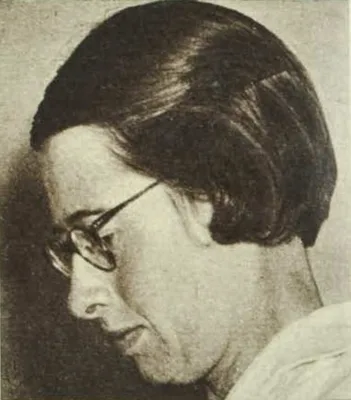
1932 KIKUTH, Walter (1896 – 1968)
Zur Weiterentwicklung synthetisch dargestellter Malariamittel. I. Ueber die chemotherapeutische Wirkung des Atebrin.
Introduction of atebrin (mepacrine, quinacrine).
GMN 5257 · https://historyofmedicine.com/id/7919
1932 DUGUET, Firmin (1876 – ); GODART, Justin (1871 – 1956)
Le pèlerinage de la Mecque au point de vue religieux, social et sanitaire par le docteur Duguet. Avec un préface de Justin Godart.
"Duguet also served as inspector general of health services of Lebanon and Syria under the French Mandate and was responsible for the medical supervision of the pilgrimage to Mecca. The first part of the book gives so…
GMN 12051 · https://historyofmedicine.com/id/14259
1932 KNOWLES, Robert (1883 – 1936); DAS GUPTA, Biraj Mohan (Dasgupta) (1889 – 1945)
A study of monkey-malaria, and its experimental transmission to man.
Das Gupta and his supervisor Robert Knowles first described Plasmodium knowlesi as a distinct species, and as a potential cause of human malaria in 1932 when they described the morphology of the parasite in macaque bl…
GMN 12586 · https://historyofmedicine.com/id/14825
1933 MUCKENFUSS, Ralph S. (1916 – )
Encephalitis: studies on experimental transmission.
Isolation of the St. Louis encephalitis virus. With C. Armstrong and H. A. McCordock.
GMN 4656 · https://historyofmedicine.com/id/765
1933 LANCEFIELD, Rebecca Craighill (1895 – 1981)
A serological differentiation of human and other groups of hemolytic streptococci.
Lancefield determined the principal pathogenic strains of hemolytic streptococci and subdivided them into types. All important strains pathogenic to humans fall into Lancefield’s Group A.
GMN 2524.2 · https://historyofmedicine.com/id/3337
1933 PUSEY, William Allen (1865 – 1940)
The history and epidemiology of syphilis.
GMN 2429 · https://historyofmedicine.com/id/3651
1933 RAMON, Gaston Léon (1886 – 1963); ZOELLER, Christian (1888 – 1934)
Sur la valeur et la durée de l’immunité conférée par l’anatoxine tétanique dans la vaccination de l’homme contre le tétanos.
Tetanus toxoid first employed in the immunization of humans.
GMN 5151 · https://historyofmedicine.com/id/6194
1933 LAIDLAW, Sir Patrick Playfair (1881 – 1940); ANDREWES, Sir Christopher Howard (1896 – 1988); SMITH, Wilson (1897 – 1965)
A virus obtained from influenza patients.
Smith, Andrewes, and Laidlaw first isolated the influenza A virus in humans. They successfully infected ferrets with filtered throat-washings from influenzal patients by intranasal instillation.
GMN 5494 · https://historyofmedicine.com/id/6445
1933 –1934 THOMSON, David (1884 – 1969); THOMSON, Robert (1888 – )
Influenza. 2 vols.
Annals of the Pickett Thomson Research Lab., Monograph 16. "In two massive volumes Thomson and Thomson reviewed the literature on influenza up to 1934" (Spink).
GMN 5495 · https://historyofmedicine.com/id/6451
1933 KLARENBEEK, Arie (1888 – ); SCHÜFFNER, Wilhelm August Paul (1867 – 1949)
Het voorkomen van een afwijkend Leptospira-ras in Nederland.
Leptospira canicola first isolated (1913) from the urine of a dog.
GMN 5335 · https://historyofmedicine.com/id/6683
1933 WANI, Hidetsune
Ueber die Prophylaxe der Spirochaetosis icterohaemorrhagica Inada (Weilschen Krankheit) durch Schutzimpfung.
Prophylactic vaccination against leptospirosis.
GMN 5335.1 · https://historyofmedicine.com/id/6688
1933 THEILER, Max (1899 – 1972)
A yellow fever protection test in mice by intracerebral injection.
Intracerebral protection test.
GMN 5466 · https://historyofmedicine.com/id/7594
1933 STANNUS, Hugh Stannus (1877 – 1957)
A sixth venereal disease. Climatic bubo, lymphogranuloma inguinale, esthioméne, chronic ulcer and elephantiasis of the genito-ano-rectal region, inflammatory stricture of the rectum.
In this exhaustive review of the literature, Stannus considered all the conditions he discussed to be different manifestations of infection by the same organisms – the agent causing lymphogranuloma venereum. Includes …
GMN 5221 · https://historyofmedicine.com/id/7838
1933 CELLI, Angelo (1857 – 1914)
The history of malaria in the Roman Campagna from ancient times. Edited and enlarged by Anna Celli-Fraentzel.
Reprinted New York, 1977.
GMN 5264 · https://historyofmedicine.com/id/8556
1934 HAYASHI, Michitomo
Übertragung des Virus von Encephalitis epidemica auf Affen.
Experimental transmission of Japanese B encephalitis.
GMN 4657 · https://historyofmedicine.com/id/767
1934 ARMSTRONG, Charles (1886 – 1967); LILLIE, Ralph Dougall (1896 – 1979)
Experimental lymphocytic choriomeningitis of monkeys and mice produced by a virus encountered in studies of the 1933 St. Louis encephalitis epidemic.
Isolation of the virus of benign lymphocytic choriomeningits.
GMN 4688 · https://historyofmedicine.com/id/966
1934 TATUM, Arthur Lawrie (1884 – 1955); COOPER, Garrett Arthur (1904 – )
An experimental study of mapharsen (meta-amino para-hydroxy phenyl arsine oxide) as an antisyphilitic agent.
Introduction of mapharsen.
GMN 2415 · https://historyofmedicine.com/id/3412
1934 DHONT, C. M.; ET AL
De leptospiroses bij den hond, en de beteekenis der Leptospira canicola.
First reported cases of human infection with L. canicola. With A. Klarenbeek, W. A. P. Schüffner, and J. Voet.
GMN 5336 · https://historyofmedicine.com/id/6696
1934 HANSMANN, George Henry (1890 – 1949); SCHENKEN, John Rudolph (1905 – 1982)
A unique infection in man caused by a new yeast-like organism, a pathogenic member of the genus Sepedomum.
Cultivation of Histoplasma capsulatum before DeMonbreun (No. 5542); preliminary announcement in Science, 1933, 77, Suppl. 2002, p. 8. DeMonbreun and Hansmann & Schenken independently and almost simultaneously demonstr…
GMN 5541.2 · https://historyofmedicine.com/id/6739
1934 DEMONBREUN, William Andrew (1899 – 1968)
The cultivation and cultural characteristics of Darling’s Histoplasma capsulatum.
Demonstration of the fungal nature of the pathogen.
GMN 5542 · https://historyofmedicine.com/id/6742
1934 GOODPASTURE, Ernest William (1886 – 1960); JOHNSON, Claud D.
An investigation of the etiology of mumps.
Isolation of mumps virus.
GMN 5543 · https://historyofmedicine.com/id/6746
1934 ZINSSER, Hans (1878 – 1940)
Varieties of typhus virus and the epidemiology of the American form of European typhus fever (Brill’s disease).
Zinsser advanced the theory that Brill’s disease is a recrudescence of epidemic typhus in persons who have contracted the typhus some time previously. The condition has subsequently been renamed “Brill-Zinsser disease”.
GMN 5396.4 · https://historyofmedicine.com/id/7180
1934 TAMURA, Joseph Takao (1903 – )
Cultivation of the virus of lymphogranuloma inguinale and its use in therapeutic inoculation. Preliminary report.
GMN 5222 · https://historyofmedicine.com/id/7839
1934 FELIX, Arthur (1887 – 1956); PITT, R. Margaret
A new antigen of B. typhosus. Its relation to virulence and to active and passive immunisation.
Vi antigens first described.
GMN 5045 · https://historyofmedicine.com/id/8970
1934 JEANSELME, Antoine Edouard (1858 – 1935)
La lèpre.
A handsome folio volume of some seven hundred pages, well printed on fine paper and beautifully illustrated, the book is a tribute to the printer's art as well as to the scientist's efforts. Of special interest is the…
GMN 11131 · https://historyofmedicine.com/id/13327
1934 SEIBERT, Florence Barbara (1897 – 1991)
The isolation and properties of the purified protein derivative of tuberculin
Purification of tuberculin (PPD). By the 1940s Seibert's PPD was the international standard for tuberculin tests.
GMN 12387 · https://historyofmedicine.com/id/14614
1934 STRONG, Richard Pearson (1872 – 1948); BEQUAERT, Joseph Charles (1886 – 1982); SANDGROUND, Jack Henry (1899 – 1987); OCHOA, Miguel Muños
Onchocerciasis: With special reference to the Central American form of the disease. Parts I, II, III, and IV
In depth study of onchcerciasis in Guatemala, where "the disease was of real importance to human beings" at the time. Each of the 4 authors contributed a separate part of the report.
GMN 12575 · https://historyofmedicine.com/id/14814
1935 FLECK, Ludwik (1896 – 1961)
Entstehung und Entwicklung einer wissenschaftlichen Tatsache. Einführung in die Lehre vom Denkstil und Denkkollektiv.
A very thorough history of the discovery of the Wasserman reaction, and its acceptance by the scientific community. English translation: Genesis and development of a scientific fact, Chicago, Univ. of Chicago Press, 1…
GMN 2429.1 · https://historyofmedicine.com/id/2887
1935 FOERSTER, Otto Hottinger (1876 – 1965); ET AL
Mapharsen in the treatment of syphilis. A preliminary report.
Clinical use of mapharsen. With R. L. McIntosh, L. M. Wieder, H. R. Foerster, and G. A. Cooper.
GMN 2416 · https://historyofmedicine.com/id/3416
1935 BAEHR, George (1887 – 1978)
A diffuse disease of the peripheral circulation (usually associated with lupus erythematosus and endocarditis).
See No. 2237. With P. Klemperer and A. Schifrin.
GMN 2236 · https://historyofmedicine.com/id/3804
1935 BURNET, Sir Frank Macfarlane (1899 – 1985)
Propagation of the virus of epidemic influenza on the developing egg.
Cultivation of the influenza virus.
GMN 5496 · https://historyofmedicine.com/id/6453
1935 RIVERS, Thomas Milton (1888 – 1962); BERRY, George Packer (1898 – 1986)
Diagnosis of psittacosis in man by means of injections of sputum into white mice.
GMN 5544 · https://historyofmedicine.com/id/6751
1935 ZINSSER, Hans (1878 – 1940)
Rats, lice and history: being a study in biography, which, after 12 preliminary chapters indispensable for the preparation of the lay reader, deals with the life history of typhus fever.
GMN 5403 · https://historyofmedicine.com/id/7242
1936 TANIGUCHI, Tenji (1889 – 1961); ET AL
A virus isolated in 1935 epidemic of summer encephalitis in Japan.
T. Taniguchi, M. Hosokawa, and S. Kuga established a virus etiology for Japanese B encephalitis.
GMN 4659 · https://historyofmedicine.com/id/774
1936 MEACHEN, George Norman (1876 – )
A short history of tuberculosis.
GMN 2356 · https://historyofmedicine.com/id/3158
1936 WEBB, Gerald Bertram (1871 – 1948)
Tuberculosis.
Clio Medica series.
GMN 2357 · https://historyofmedicine.com/id/3162
1936 SHORTT, Henry Edward (1887 – 1987); ET AL
Cultivation of the viruses of sandfly fever and dengue fever on the chorioallantoic membrane of the chick-embryo.
Cultivation of the virus of phlebotomus fever. With R. S. Rao and C. S. Swaminath.
GMN 5480 · https://historyofmedicine.com/id/6369
1936 WEBSTER, Leslie Tillotson (1894 – 1943); CLOW, Anna D. (1905 – 1992)
Propagation of rabies virus in tissue culture and the successful use of culture virus as antirabic vaccine.
Webster and Clow succeeded in growing rabies virus in tissue culture.
GMN 5484.2 · https://historyofmedicine.com/id/6390
1936 SMITH, Wilson (1897 – 1965); STUART-HARRIS, Sir Charles Herbert (1909 – 1996)
Influenza infection of man from the ferret.
First record of successful passage of influenza from animal to man. The ferret had previously been infected with a virus from a case of influenza.
GMN 5497 · https://historyofmedicine.com/id/6459
1936 LEMIERRE, André (1875 – 1956)
On certain septicemias due to anaerobic organisms.
"Lemierre's syndrome (or Lemierre's disease, also known as postanginal shock including sepsis and human necrobacillosis) refers to infectious thrombophlebitis of the internal jugular vein. It most often develops as a …
GMN 9893 · https://historyofmedicine.com/id/12081
1936 FLEXNER, Abraham (1866 – 1959); HESS, Alfred Fabian (1875 – 1933)
Collected writings. With a biographical memoir by Abraham Flexner. 2 vols.
GMN 13044 · https://historyofmedicine.com/id/15295
1937 SCHWENTKER, Francis Frederic (1904 – 1954); ET AL
The treatment of meningococcic meningitis with sulfanilamide.
With S. Gelman and P. H. Long.
GMN 4689 · https://historyofmedicine.com/id/968
1937 HOLCOMBE, Richmond Cranston (1874 – 1945)
Who gave the world syphilis? The Haitian myth.
GMN 2430 · https://historyofmedicine.com/id/2888
1937 VOLLMER, Hermann (1896 – 1959); GOLDBERGER, Esther White (1905 – )
A new tuberculin patch test.
GMN 2348 · https://historyofmedicine.com/id/3118
1937 KAYNE, George Gregory (1901 – 1945)
The control of tuberculosis in England, past and present.
GMN 2358 · https://historyofmedicine.com/id/3165
1937 LEMIERRE, André (1875 – 1956); ET AL
Sur une nouvelle fièvre par morsure de rat.
A. Lemierre, J. Reilly, A. Laporte, and M. Morin isolated Streptobacillus moniliformis from a case of rat-bite fever.
GMN 5329 · https://historyofmedicine.com/id/6643
1937 WOLF, Abner (1902 – 1983); COWEN, David (1907 – 2001)
Granulomatous encephalomyelitis due to an encephalitozoon (encephalitozoic encephalomyelitis), a new protozoon disease of man.
Definite recognition of human toxoplasmosis. See also their later paper in the same journal, 1938, 7, 266-83.
GMN 5544.1 · https://historyofmedicine.com/id/6754
1937 DERRICK, Edward Holbrook (1898 – 1976)
“Q” fever, a new fever entity: clinical features and laboratory investigation.
First account of “Q” (query) fever. See also No. 5398.
GMN 5397 · https://historyofmedicine.com/id/7184
1937 BURNET, Sir Frank Macfarlane (1899 – 1985); FREEMAN, Mavis Louisa (1907 – 1992)
Experimental studies on the virus of “Q” fever.
Discovery of Rickettsia burneti, causal agent in Q fever.
GMN 5398 · https://historyofmedicine.com/id/7187
1937 THEILER, Max (1899 – 1972); SMITH, Hugh Hollingsworth (1902 – 1995)
The use of yellow fever virus modified by in vitro cultivation for human immunization.
Immunization without the use of immune serum. In 1951 Theiler was awared the Nobel Prize in Physiology or Medicine "for his discovery of an effective vaccine against yellow fever." This was the first Nobel Prize award…
GMN 5467 · https://historyofmedicine.com/id/7597