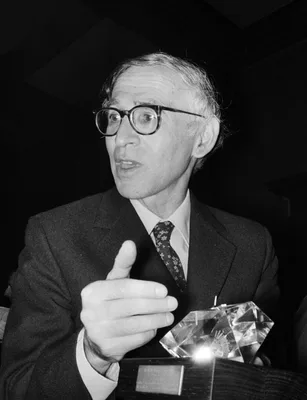
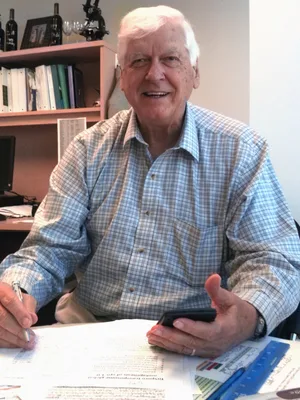
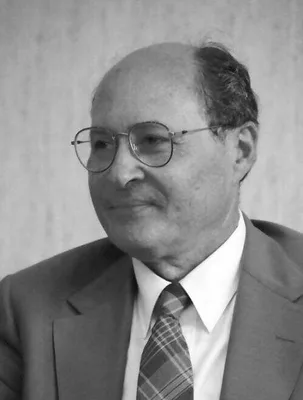
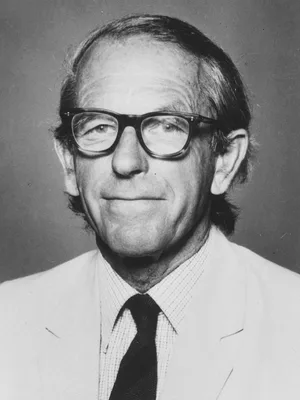
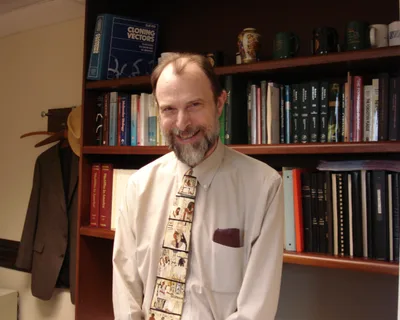
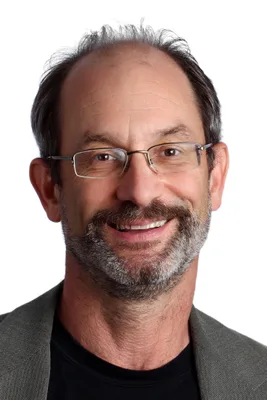
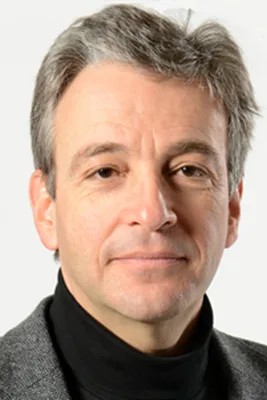
1968 KLUG, Sir Aaron (1926 – 2018); DEROSIER, David J.
Reconstruction of three-dimensional structures from electron micrographs.
Klug and deRosier invented methods for two-dimensional and three-dimensional digital image processing of electron microscope images. The latter method provided the theory behind the development of computed tomography …
GMN 13935 · https://historyofmedicine.com/id/16231
1970 SMITH, Hamilton Othanel (1931 – ); KELLY, T. J.
A restriction endonuclease from Hemophilus influenzae. II. Base sequence of the recognition site.
Discovery of the first type II restriction enzyme (HindII). Smith shared the 1978 Nobel Prize in Physiology or Medicine with Werner Arber and Daniel Nathans "for the discovery of restriction enzymes and their applicat…
GMN 6889 · https://historyofmedicine.com/id/9053
1971 NATHANS, Daniel (1928 – 1999)
Specific cleavage of simian virus 40 DNA by restriction endonuclease of Hemophilus influenzae.
Nathans showed that the restriction enzyme discovered by Hamilton Smith cleaved SV40 DNA into 11 specific pieces. Nathans and his student Kathleen Danna wrote: "The availability of pieces of SV40 DNA from specific sit…
GMN 6890 · https://historyofmedicine.com/id/9054
1976 CARBON, John B.; CLARKE, Louise B.
A colony bank containing synthetic Col El hybrid plasmids representative of the entire E. coli genome.
First description of a "complete" genomic library. This paper includes the Carbon-Clarke equation used for calculating the number of clones required when constructing a clone library to ensure a given probability (usu…
GMN 13972 · https://historyofmedicine.com/id/16275
1977 SANGER, Frederick (1918 – 2013)
DNA sequencing with chain-terminating inhibitors.
Sanger and colleagues developed methods for rapid sequencing of long sections of DNA molecules. Sanger’s method, and that developed by Gilbert and Maxam, made it possible to read the nucleotide sequence for entire gen…
GMN 6883 · https://historyofmedicine.com/id/9047
1977 SANGER, Frederick (1918 – 2013)
The nucleotide sequence of bacteriophage phi-X174.
Sanger and colleagues sequenced the first whole DNA genome—that of bacteriophage phi-X174 (5375 bases)
GMN 6884 · https://historyofmedicine.com/id/9048
1977 GILBERT, Walter (1932 – ); MAXAM, Allan M. (1942 – )
A new method for sequencing DNA.
The Gilbert-Maxam method for sequencing DNA. This paper is available from PNAS at this link. In 1980 Gilbert shared the 1980 Nobel Prize in Chemistry with Frederick Sanger and Paul Berg. Berg received half of the priz…
GMN 6926 · https://historyofmedicine.com/id/9091
1979 LEVINE, Arnold Jay (1939 – ); LINZER, Daniel I. H. (1954 – )
Characterization of a 54K Dalton cellular SV40 tumor antigen present in SV40 transformed cells and uninfected embryonal carcinoma cells.
Levine discovered the tumor suppressor protein p53, also known as Tumor protein P53. Because it prevents cancer formation TP 53 is classified as a tumor suppressor gene. The discovery was completed in 1989 and recorde…
GMN 14007 · https://historyofmedicine.com/id/16312
1980 SANGER, Frederick (1918 – 2013); ET AL
Cloning in single-stranded bacteriophage as an aid to rapid DNA sequencing.
Sanger and colleagues developed the random shotgun method to prepare templates for DNA sequencing. With A. R. Coulson, B. G. Barrell, A. J. H. Smith & B. A. Roe.
GMN 6893 · https://historyofmedicine.com/id/9057
1981 BALTIMORE, David (1938 – ); RACANIELLO, Vincent R. (1953 – )
Molecular cloning of poliovirus cDNA and determination of the complete nucleotide sequence of the viral genome.
The poliovirus genome. Digital facsimile from PNAS through PubMedCentral at this link.
GMN 9175 · https://historyofmedicine.com/id/11354
1981 KITAMURA, Naomi; WIMMER, Eckard (1936 – )
Primary structure, gene organization and polypeptide expression of poliovirus RNA.
The poliovirus genome. With around 10 co-authors. "The primary structure of the poliovirus genome has been determined. The RNA molecule is 7,433 nucleotides long, polyadenylated at the 3′ terminus, and covalently link…
GMN 9176 · https://historyofmedicine.com/id/11355
1981 MESSING, Joachim (1946 – 2019); GARDNER, Richard C.; HOWARTH, Alan J.; ET AL
A complete nucleotide sequence of an infectious clone of cauliflower mosaic virus by M13mp7 shotgun sequencing.
Messing and colleagues employed shotgun sequencing to sequence the genome of cauliflower mosaic virus, the first genome sequenced by the shotgun method. They developed the shotgun DNA sequencing method with single and…
GMN 13960 · https://historyofmedicine.com/id/16261
1982 SANGER, Frederick (1918 – 2013)
Nucleotide sequence of bacteriophage lambda.
Sanger and colleagues sequenced the entire genome of bacteriophage lambda using a random shotgun technique. This was the first whole genome shotgun (WGS) sequence.
GMN 6885 · https://historyofmedicine.com/id/9049
1984 HIGUCHI, Russell; RYDER, Oliver Allison III
DNA sequences from the quagga, an extinct member of the horse family.
Probably the first study of DNA isolated from ancient specimens, or ancient DNA (aDNA). By Higuchi, Barbara Bowman, and Mary Freiberger from the Department of Biochemistry, University of California, Berkeley and Ryder…
GMN 7428 · https://historyofmedicine.com/id/9600
1984 SOLTER, Davor (1941 – ); MCGRATH, James
Completion of mouse embryogenesis requires both the maternal and paternal genomes.
Solter discovered mammalian genomic imprinting that causes parent-of-origin specific gene expression, with consequences for development and disease. "Genomic imprinting is an epigenetic phenomenon that causes genes to…
GMN 13991 · https://historyofmedicine.com/id/16295
1986 HOOD, Leroy Edward (1938 – ); SMITH, Lloyd M. (1954 – )
Fluorescence detection in automated DNA sequence analysis.
Invention of the first semi-automated DNA sequencing machine by Leroy H. Hood, Lloyd M. Smith and colleagues. Abstract of the paper: "We have developed a method for the partial automation of DNA sequence analysis. Flu…
GMN 13990 · https://historyofmedicine.com/id/16294
1987 BITENSKY, Mark W. ( – 2014)
Sequencing the human genome. Summary report of the Santa Fe workshop, March 3-4, 1986.
The initial report on the Human Genome Project. For further information see the entry at HistoryofInformation.com at this link. The report is available at this link.
GMN 6927 · https://historyofmedicine.com/id/9092
1989 ROMMENS, Johanna M.; IANNUZZI, Michael C.; RIORDAN, John Richard (1943 – ); COLLINS, Francis Sellers (1950 – ); TSUI, Lap-Chee (1950 – ); ET AL
Identification of the cystic fibrosis gene: Chromosome walking and jumping.
Utilizing the chromosome "walking and and jumping" technique developed by Collins, the authors showed how they cloned the cystic fibrosis locus on the basis of its chromosomal location without the benefit of genomic r…
GMN 13568 · https://historyofmedicine.com/id/15846
1989 ROMMENS, Johanna M.; RIORDAN, John Richard (1943 – ); COLLINS, Francis Sellers (1950 – ); TSUI, Lap-Chee (1950 – ); ET AL
Identification of the cystic fibrosis gene: Cloning and characterization of complimentary DNA.
The authors first published a ‘map’ of the cystic fibrosis (CF) gene and on p. 1071, they published an illustration/schematic model of the predicted CFTR (cystic fibrosis transmembrane conductance regulator). They fir…
GMN 13569 · https://historyofmedicine.com/id/15847
1989 ROMMENS, Johanna M.; TSUI, Lap-Chee (1950 – ); KEREM, Batsheva (1955 – ); ET AL
Identification of the cystic fibrosis gene: Genetic analysis.
The authors demonstrated that about 70% of the crucial mutation in cystic fibrosis (CF) patients corresponds to the specific deletion of 3 base pairs, which results in the loss of a phenylalanine residue at A.A. posit…
GMN 13570 · https://historyofmedicine.com/id/15848
1991 VENTER, John Craig (1946 – ); ADAMS, Mark D.; ET AL
Complementary DNA sequencing: "expressed sequence tags" and the human genome project.
Expressed Sequence Tags (ESTs) for DNA sequencing. By Adams, M.D., Kelley, J.M., Gocayne, J.D., Dubnick, M., Polymeropoulos, M.H., Xiao, H., Merril, C.R., Wu, A., Olde, B., Moreno, R., Kerlavage, A.R., McCombie, W.R.,…
GMN 6886 · https://historyofmedicine.com/id/9050
1992 KEVLES, Daniel J. (1939 – ); HOOD, Leroy Edward (1938 – )
The code of codes: Scientific and social issues in the human genome project. Edited by Daniel J. Kevles and Leroy Hood.
Chapter 1. "Out of eugenics: The historical politics of the human genome" by D. J. Kevles. Chapter 2. "A history of the science and technology behind gene mapping and sequencing" by Horace Freeland Judson. Chapter 7. …
GMN 10400 · https://historyofmedicine.com/id/12593
1994 SKOLNICK, Mark Henry (1946 – ); MIKI, Yoshio; SHATTUCK-EIDENS, Donna; ET AL
A strong candidate for the breast and ovarian cancer susceptibility gene BRCA1.
Discovery of the BRCA1 gene using the technique of restriction fragment length polymorphism (RFLP). (Thanks to Juan Weiss for this reference and its interpretation.)
GMN 14015 · https://historyofmedicine.com/id/16322
1994 STRATTON, Sir Michael Rudolf (1957 – ); WOOSTER, Richard; NEUHAUSEN, Susan L.; MANGION, Jonathan; ET AL
Location of a breast cancer susceptibility gene, BRACA2, to chromosome 13q12-13.
Stratton and colleagues discovered the BRCA2 gene. Oder of authorship in the original publication: Wooster, Neuhausen, Mangion....Stratton. (Thanks to Juan Weiss for this reference and its interpretation.)
GMN 14016 · https://historyofmedicine.com/id/16323
1995 VENTER, John Craig (1946 – ); SMITH, Hamilton Othanel (1931 – ); FLEISCHMANN, Robert D.; ADAMS, Mark D.; WHITE, Owen; ET AL
Whole-genome random sequencing and assembly of Haemophilus influenzae Rd.
First sequence of the complete genome of a free-living non-viral organism—Haemophilus influenzae—the bacterium that causes lower respiratory tract infections and meningitis in infants and young children. This genome c…
GMN 11343 · https://historyofmedicine.com/id/13541
1997 BLATTNER, Frederick R.; PLUNKETT, Guy III; BLOCH, Craig B.; ET AL
The complete genome sequence of Escherichia coli K-12.
Order of authorship in the original publication: Blattner, Plunkett, Bloch.... Complete genome sequence of E. coli, the first complete genome sequence of an organism. Following p. 1462 there are two large, unpaginated…
GMN 11408 · https://historyofmedicine.com/id/13607
1997 WILKINS, Marc R.; HOCHSTRASSER, Denis F.; WILLIAMS, Keith L.; APPEL, Ron David (1959 – )
Proteome research: New frontiers in functional genomics.
Order of editorship in the original publication: Wilkins, Williams, Appel, Hochstrasser. "Recent advances in two-dimensional gel electrophoresis, protein microanalytsis and bioinformatics have made the large-scale, sy…
GMN 14131 · https://historyofmedicine.com/id/16442
1998 C. ELEGANS SEQUENCING CONSORTIUM
Genome sequence of the nematode C. elegans: A platform for investigating biology.
Completion of the first genome of a multi-cellular organism—C. elegans. "C. elegans is a free-living nematode which is widely used as a model organism. The C. elegans genome has been fully sequenced and is therefore a…
GMN 6888 · https://historyofmedicine.com/id/9052
1998 VENTER, John Craig (1946 – ); SMITH, Hamilton Othanel (1931 – ); FRASER, Claire M. (1955 – ); NORRIS, Steven J.; WEINSTOCK, George M. (1949 – ); ET AL
Complete genome sequence of treponema pallidum, the syphilis spirochete.
Order of authorship in the original publication: Fraser, Norris, Weinstock....Smith, Venter. Sequence of the genome of the bacterium that causes syphilis. (Thanks to Juan Weiss for this reference and its interpretation.)
GMN 11342 · https://historyofmedicine.com/id/13540
1998 COLE, S. T.; ET AL
Deciphering the biology of Mycobacterium tuberculosis from the complete genome sequence.
Abstract: "Countless millions of people have died from tuberculosis, a chronic infectious disease caused by the tubercle bacillus. The complete genome sequence of the best-characterized strain of Mycobacterium tubercu…
GMN 11998 · https://historyofmedicine.com/id/14206
2001 INTERNATIONAL HUMAN GENOME SEQUENCING CONSORTIUM
Initial sequencing and analysis of the human genome.
Initial draft sequence of the human genome from the publically financed project, involving the coordinated efforts of 20 laboratories and hundreds of people around the world. The full text is available from Nature at …
GMN 6891 · https://historyofmedicine.com/id/9055
2001 VENTER, John Craig (1946 – ); ET AL
The sequence of the human genome.
Initial draft sequence of the human genome by Venter and the staff at Celera Genomics. The full text is available from Science at this link.
GMN 6892 · https://historyofmedicine.com/id/9056
2002 GARDNER, Malcolm J.; HALL, Neil; FUNG, Eula; ET AL
Genome sequence of the human malaria parasite Plasmodium falciparum.
Order of authorship in the original paper: Gardner, Hall, Fung.... Genome of the Plasmodium falciparum parasite carried by the mosquito that causes malaria in humans. (Thanks to Juan Weiss for this reference and its i…
GMN 11336 · https://historyofmedicine.com/id/13534
2002 HOLT, Robert A.; SUBRAMANIAN, G. Mani; HALPERN, Aaron L.; ET AL
The genome sequence of the malaria mosquito Anopheles gambiae.
Order of authorship in the original publication: Holt, Subramanian, Halpern.... Sequence of the genome of Anopheles gambiae, the mosquito that carries the malaria parasite, Plasmodium falciparum. (Thanks to Juan Weiss…
GMN 11337 · https://historyofmedicine.com/id/13535
2003 MARRA, Marco A. (1966 – ); JONES, Steven J. M.; ASTELL, Caroline R.
The genome sequence of the SARS-associated coronavirus.
Dated May 30, 2003 and published immediately after No. 10862 in the same issue of Science, this reported the work of Marco Marra and his team in Canada. Order of authorship in the published paper was Marra, Jones, Ast…
GMN 10863 · https://historyofmedicine.com/id/13059
2005 TAUBENBERGER, Jeffery K. (1961 – ); TUMPEY, Terence M.; BASLER, Christopher F.; AGUILAR, Patricia V.; ET AL
Characterization of the reconstructed 1918 Spanish Influenza Pandemic virus.
Order of authorship in the original publication: Tumpey, Basler, Aguilar... Taubenberger. Reconstruction of the genome of the 1918 Spanish Influenza virus from frozen tissue samples from a mass grave of victims of the…
GMN 11335 · https://historyofmedicine.com/id/13533
2005 BERRIMAN, Matthew; GHEDIN, Elodie (1967 – ); HERTZ-FOWLER, Christiane; ET AL
The genome of the African trypanosome Trypanosoma brucei.
Genome of the parasite that causes Sleeping Sickness. (Thanks to Juan Weiss for this reference and its interpretation.)
GMN 11339 · https://historyofmedicine.com/id/13537
2007 VENTER, John Craig (1946 – )
A life decoded. My genome: My life.
GMN 7434 · https://historyofmedicine.com/id/9606
2007 NENE, Vishvanath M.; WORTMAN, Jennifer Russo; LAWSON, Daniel; ET AL
Genome sequence of Aedes aegypti, a major arbovirus vector.
Order of authorship in the original publication: Nene, Wortman, Lawson.... Sequence of the genome of the mosquito that transmits Zika, Yellow fever, Dengue, Chikungunya, etc. (Thanks to Juan Weiss for this reference a…
GMN 11338 · https://historyofmedicine.com/id/13536
2007 VENTER, John Craig (1946 – ); LEVY, Samuel; SUTTON, Granger G. III; NG, Pauline G.; ET AL
The diploid genome sequence of an individual human.
The first genome sequence of a single human (Craig Venter), including analysis and comments on his genetic markers, and their possible medical and prognosticating implications. (Order of authorship in the original pub…
GMN 12965 · https://historyofmedicine.com/id/15212
2008 LEY, Timothy J.; MARDIS, Elaine R. (1962 – ); WILSON, Richard K. (1959 – )
DNA sequencing of a cytogenetically normal acute myeloid leukaemia genome.
Ley and collaborators decoded all the genes of a person with cancer (acute myeloid leukemia (AML)) and found a set of mutations that might have caused the disease or aided its progression.
GMN 13058 · https://historyofmedicine.com/id/15310
2010 PÄÄBO, Svante (1955 – ); KRAUSE, Johannes (1980 – )
The complete mitochondrial DNA genome of an unknown hominin from southern Siberia.
Svante Pääbo and collaborators reconstructed the genome of the Denisova hominins and announced that they were a new species, that they interbred with our species, and that the DNA results suggest that they had dark ha…
GMN 7290 · https://historyofmedicine.com/id/9460
2013 ADEY, Andrew C.; BURTON, Joshua N.; KLITZMAN, Jacob O.; ET AL
The haplotype-resolved genome and epigenome of the aneuploidy HeLa cancer cell line.
Adey and colleagues sequenced the haplotype-resolved whole genome of the HeLa cancer cell line. This showed a highly rearranged region at chromosome 8q24.21, where an integration locus of the HPV (human papillomavirus…
GMN 14101 · https://historyofmedicine.com/id/16412
2014 PÄÄBO, Svante (1955 – )
The complete genome sequence of a Neanderthal from the Altai Mountains.
First complete sequence of a Neanderthal genome. With more than 20 co-authors. In 2022 Pääbo was awarded the Nobel Prize in Physiology or Medicine "for his discoveries concerning the genomes of extinct hominins and hu…
GMN 7289 · https://historyofmedicine.com/id/9459
2014 THE INTERNATIONAL GLOSSINA GENOME INITIATIVE
Genome sequence of the Tsetse Fly (Glossina morsitans): Vector of African Tyrpanosomiasis.
The Internation Glossina Genome Initiative consisted of 179 collaborators. (Thanks to Juan Weiss for this reference and its interpretation.)
GMN 11340 · https://historyofmedicine.com/id/13538
2014 TSIAMIS, George; FALCHETTO, Marco; BRELSFOARD, Corey; ET AL
Presence of extensive Wolbachia symbiont insertions discovered in the genome of its host Glossina morsitans morsitans.
Order of authorship in the original publication: Brelsfoard, Tsiamis, Falchetto....The authors suggested that infection by Wolbachia may give a reproductive advantage to the fly that carries the parasite causing Sleep…
GMN 11341 · https://historyofmedicine.com/id/13539
2014 WILSON, Michael R.; NACCACHE, Samia N.; SAMAYOA, Erik; CHIU, Charles Y.; ET AL
Actionable diagnosis of neuroleptospirosis by next-generation sequencing.
Order of authorship in the original publication: Wilson, Naccache, Samayoa...Chiu. This research demonstrated the value of "next-generation-sequencing" in the diagnosis of a specific meningoencephalitis, a disease whi…
GMN 11397 · https://historyofmedicine.com/id/13596
2015 GRANT, Peter Raymond (1936 – ); GRANT, Barbara Rosemary (1936 – ); LAMICHHANEY, Sangeet; BERGLUND, Jonas; ET AL
Evolution of Darwin’s finches and their beaks revealed by genome sequencing.
The authors sequenced the genome of 120 individuals representing all of Darwin’s finches. They found that a 240 kilobase haplotype encompassing the ALX1 gene, which encodes a transcription factor affecting craniofacia…
GMN 14067 · https://historyofmedicine.com/id/16378
2016 GRANDE, Laura; MICHELACCI, Valeria; BONDI, Roslen; ET AL
Whole-genome characterization and strain comparison of VT2f-producing Escherichia coli causing hemolytic uremic syndrome.
Order of authorship in the original publication: Grande, Michelacci, Bondi.... Demonstration that a phage infecting E. coli conveys the genes into the E. coli that code for the production of the verotoxin that causes …
GMN 11409 · https://historyofmedicine.com/id/13608
2017 GRUBAUGH, Nathan D.; LADNER, Jason T.; KRAEMER, Moritz U.G.; ET AL
Genomic epidemiology reveals multiple introductions of Zika virus into the United States.
Order of authorship in the original publication: Grubaugh, Ladner, Kraemer. The authors found that the Zika virus was introduced into Florida at least 4 times, but perhaps as many as 40 times, before it was detected, …
GMN 10945 · https://historyofmedicine.com/id/13141