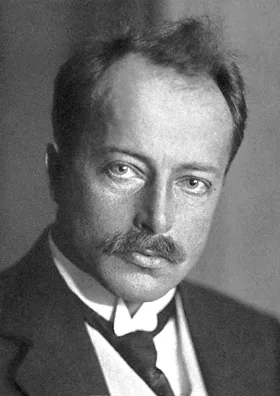
1912 LAUE, Max Theodor Felix von (1879 – 1960); KNIPPING, Paul (1883 – 1935)
Interferenz-Erscheinungen bei Röntgenstrahlen. . . . Eine quantitative Prüfung der Theorie für die Interferenz-Erscheinungen bei Röntgenstrahlen
Discovery of the diffraction of X-rays in crystals. Laue’s discovery was of dual importance: it allowed the subsequent investigation of X-radiation by means of wavelength determination, and it provided the means for t…
GMN 6917 · https://historyofmedicine.com/id/9082
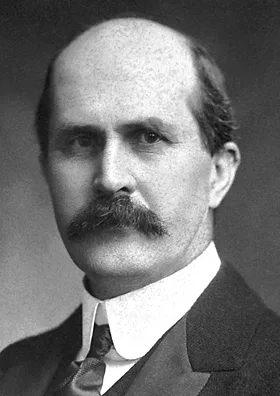
1913 BRAGG, Sir William Lawrence (1890 – 1971)
The diffraction of short electromagnetic waves by a crystal.
At the age of 22, Bragg discovered that the regular pattern of dots produced on a photographic plate by an X-ray beam passing through a crystal could be regarded as a reflection of electromagnetic radiation from plane…
GMN 6919 · https://historyofmedicine.com/id/9084
1913 BRAGG, Sir William Lawrence (1890 – 1971); BRAGG, Sir William Henry (1862 – 1942)
The reflection of x-rays by crystals.
Discovery of X-ray crystallography. The father and son team of physicists, William Henry Bragg and William Lawrence Bragg, constructed the first X-ray spectrometer using crystals as gratings, using a known wavelength …
GMN 6920 · https://historyofmedicine.com/id/9085
1915 BRAGG, Sir William Lawrence (1890 – 1971); BRAGG, Sir William Henry (1862 – 1942)
X rays and crystal structure.
Digital facsimile from the Internet Archive at this link.
GMN 9646 · https://historyofmedicine.com/id/11833
1926 SUMNER, James Batcheller (1887 – 1955)
The isolation and crystallization of the enzyme urease.
Sumner first isolated and crystallized an enzyme (urease) and proved that enzymes are proteins. One month after publication of the above paper Sumner reinforced his discovery by recrystalizing urease, publishing a fol…
GMN 14025 · https://historyofmedicine.com/id/16332
1932 ASTBURY, William Thomas (1898 – 1961)
X-ray studies of the structures of hair, wool, and related fibres. I. General.
Astbury, a student of William Lawrence Bragg, was the first to study proteins by X-ray analysis. He applied X-ray analysis to the structure of hair, wool, and related fibers, of which the protein keratin is the princi…
GMN 6918 · https://historyofmedicine.com/id/9083
1934 BERNAL, John Desmond (1901 – 1971); HODGKIN, Dorothy Crowfoot (1910 – 1994)
X-Ray photographs of crystalline pepsin.
Bernal and Hodgkin took the first X-ray photograph of a protein structure—crystalline pepsin. They showed that crystals of pepsin give an X-ray diffaction pattern, beginning protein crystallography. This may also be t…
GMN 6923 · https://historyofmedicine.com/id/9088
1935 STANLEY, Wendell Meredith (1904 – 1971)
Isolation of a crystalline protein possessing the properties of tobacco-mosaic virus.
Stanley first crystallized a virus— tobacco mosaic virus. The following year Bawden, Pirie, Bernal and Fankuchen (No. 12005) showed that tobacco mosaic virus molecules are asnisometric and consist of ribonucleoprotein…
GMN 2524.5 · https://historyofmedicine.com/id/3353
1936 BERNAL, John Desmond (1901 – 1971); BAWDEN, Sir Frederick Charles (1908 – 1972); PIRIE, Norman Wingate (1907 – 1997); FANKUCHEN, Isidor (1904 – 1964); ET AL
Liquid crystalline substances from virus infected plants.
Order of authorship in the original publication: Bawden, Pirie, Bernal, Fankuchen. The authors isolated and crystallized tobacco mosaic virus, finding for the first time that a virus contained nucleic acids, when othe…
GMN 12005 · https://historyofmedicine.com/id/14213
1952 CRICK, Francis Harry Compton (1916 – 2004); COCHRAN, William (1922 – 2003); VAND, Vladimir (1911 – 1968)
The structure of synthetic polypeptides. 1. The transform of atoms on a helix.
This paper gives the formulae for the Fourier transforms of a number of helical structures, and provides evidence that the structure of a synthetic polypeptide was based on the alpha helix of Pauling and Corey. "It wa…
GMN 13998 · https://historyofmedicine.com/id/16302
1953 WILKINS, Maurice Hugh Frederick (1916 – 2004); STOKES, Alexander Rawson (1919 – 2003); SEEDS, William Etienne; WILSON, Herbert Rees (1929 – 2008)
Helical structure of crystalline deoxypentose nucleic acid.
In 1962 Wilkins shared the Nobel Prize in Physiology or Medicine with Crick and Watson "for their discoveries concerning the molecular structure of nucleic acids and its significance for information transfer in living…
GMN 256.4 · https://historyofmedicine.com/id/8701
1953 FRANKLIN, Rosalind Elsie (1920 – 1958); GOSLING, Raymond (1926 – 2015)
Evidence for 2-chain helix in crystalline structure of sodium deoxyribonucleate.
Franklin and Gosling's completed Patterson synthesis of the A-form of DNA, based on work begun in 1952, represents the first independent confirmation that the Watson-Crick double-helix model was correct. "We suggest t…
GMN 13946 · https://historyofmedicine.com/id/16244
1955 HODGKIN, Dorothy Crowfoot (1910 – 1994)
The crystal structure of the hexacarboxylic acid derived from B12 and the molecular structure of the vitamin.
The final structure of vitamin B12. With J. Pickworth, J.H. Robertson, K.N. Trueblood, R.J. Prosen, J. G. White. In 1964 Hodgkin was awarded the Nobel Prize in Chemistry "for her determinations by X-ray techniques of …
GMN 6928 · https://historyofmedicine.com/id/9093
1990 LIMA-DE-FARIA, José (1925 – 2018)
Historical atlas of crystallography.
GMN 14237 · https://historyofmedicine.com/id/16556
2014 WLODAWER, Alexander; JASKOLSKI, Mariuz; DAUTER, Zbigniew
A brief history of macromolecular crystallography, illustrated by a family tree and its Nobel fruits.
Free access from FEBS Press at this link.
GMN 14024 · https://historyofmedicine.com/id/16331