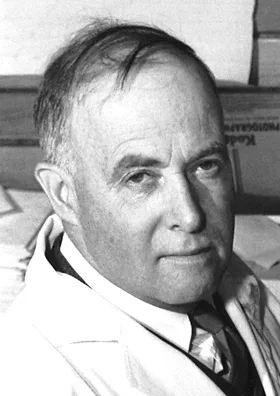
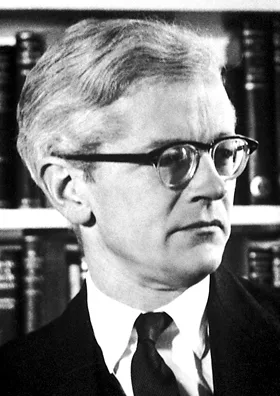
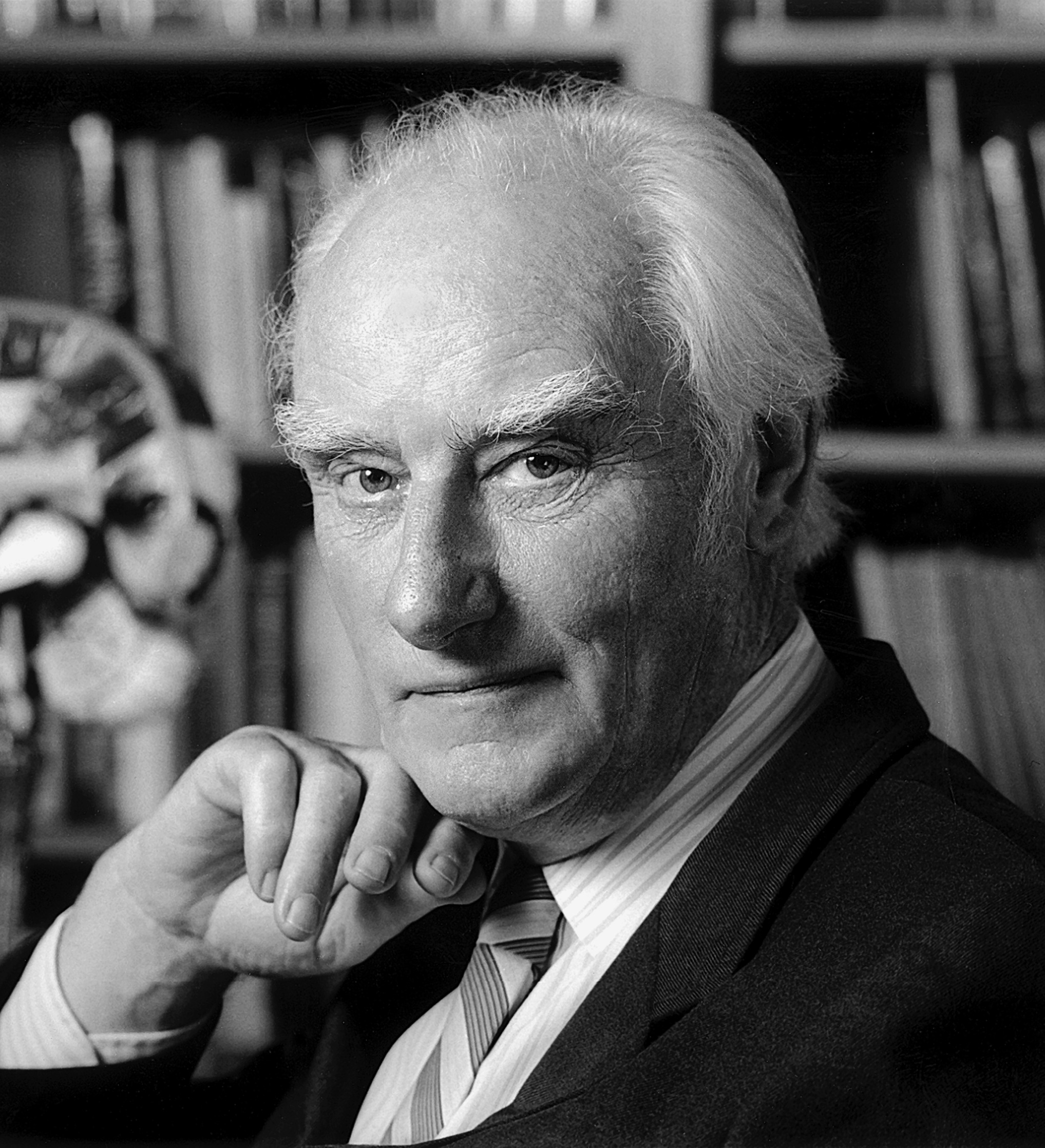
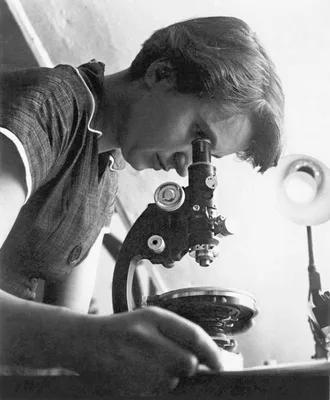
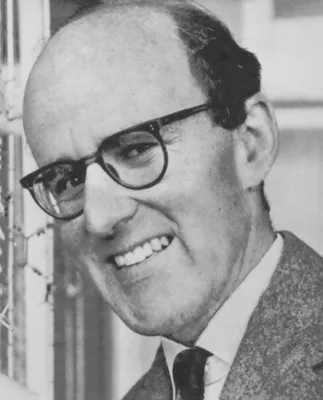
1926 SUMNER, James Batcheller (1887 – 1955)
The isolation and crystallization of the enzyme urease.
Sumner first isolated and crystallized an enzyme (urease) and proved that enzymes are proteins. One month after publication of the above paper Sumner reinforced his discovery by recrystalizing urease, publishing a fol…
GMN 14025 · https://historyofmedicine.com/id/16332
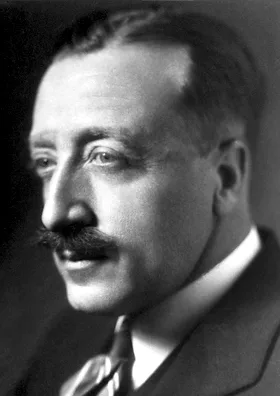
1930 NORTHROP, John Howard (1891 – 1987)
Crystalline pepsin.
Crystallization of pepsin and its identity as a protein. In 1946 Northrop shared half of the Nobel Prize in Chemistry with Wendell Meredith Stanley "for their preparation of enzymes and virus proteins in a pure form."…
GMN 1038.1 · https://historyofmedicine.com/id/1021
1949 HODGKIN, Dorothy Crowfoot (1910 – 1994); ROGERS-LOW, Barbara Wharton (1920 – 2019)
X-ray crystallographic investigation of the structure of penicillin. IN: Clarke, Johnson, Robinson (eds.) Chemistry of penicillin (1949) 310-67.
Hodgkin and colleagues, including biochemist Barbara Low, solved the structure of penicillin in 1945, demonstrating, contrary to scientific opinion at the time, that it contains a β-lactam ring. The discovery was orig…
GMN 12635 · https://historyofmedicine.com/id/14876
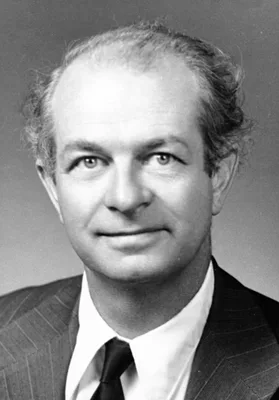
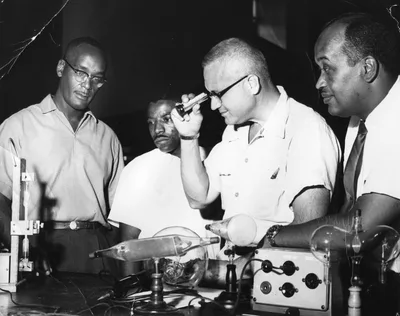
1951 PAULING, Linus Carl (1901 – 1994); COREY, Robert Brainard (1897 – 1971); BRANSON, Herman Russell (1914 – 1995)
The structure of proteins: Two hydrogen-bonded configurations of the polypeptide chain.
Pauling, his crystallographer R. B. Corey, and African-American physicist and chemist H.R. Branson announced the α-helix, a principal structural feature of proteins. Digital facsimile from the National Academy of Scie…
GMN 6846 · https://historyofmedicine.com/id/9010
1951 –1952 BENNETT, John Makepeace (1921 – 2010); KENDREW, Sir John Cowdery (1917 – 1997)
The computation of Fourier syntheses with a digital electronic calculating machine.
The first paper published in a scientific journal on the application of an electronic computer to computational biology. At the second English computer conference held in Manchester from July 9-12, 1951 computer scien…
GMN 6910 · https://historyofmedicine.com/id/9075
1951 PAULING, Linus Carl (1901 – 1994); COREY, Robert Brainard (1897 – 1971)
The pleated sheet, a new layer configuration of polypeptide chains.
Pauling and Corey discovered the β-sheet, a principal structural feature of proteins. Digital facsimile from PNAS.org at this link.
GMN 13298 · https://historyofmedicine.com/id/15564
1952 CRICK, Francis Harry Compton (1916 – 2004); COCHRAN, William (1922 – 2003); VAND, Vladimir (1911 – 1968)
The structure of synthetic polypeptides. 1. The transform of atoms on a helix.
This paper gives the formulae for the Fourier transforms of a number of helical structures, and provides evidence that the structure of a synthetic polypeptide was based on the alpha helix of Pauling and Corey. "It wa…
GMN 13998 · https://historyofmedicine.com/id/16302
1955 CRICK, Francis Harry Compton (1916 – 2004); RICH, Alexander (1924 – 2015)
The structure of collagen.
Rich and Crick solved the structure of collagen, the main structural protein in the extracellular matrix found in the body's various connective tissues. As the main component of connective tissue, it is the most abund…
GMN 13954 · https://historyofmedicine.com/id/16253
1955 FRANKLIN, Rosalind Elsie (1920 – 1958)
Structure of tobacco mosaic virus.
The first discovery of the geometry of a protein structure. Franklin, whose X-ray photographs of DNA were crucial to Watson and Crick's discovery of the molecule's double helix structure in 1953, began researching the…
GMN 14001 · https://historyofmedicine.com/id/16306
1958 KENDREW, Sir John Cowdery (1917 – 1997); DINTZIS, Howard M.
A three-dimensional model of the myoglobin molecule obtained by x-ray analysis.
Initial paper on the first solution of the three-dimensional molecular structure of a protein. Computing the molecular structure in 3 dimensions was possible through the use of the Cambridge EDSAC stored-program elect…
GMN 6911 · https://historyofmedicine.com/id/9076
1960 KENDREW, Sir John Cowdery (1917 – 1997); ET AL
Structure of myoglobin: A three-dimensional Fourier synthesis at 2 Å resolution.
Kendrew's second paper reporting the first solution of the three-dimensional molecular structure of a protein, for which he shared the 1962 Nobel Prize in chemistry with Max Perutz, who solved the structure of the rel…
GMN 6912 · https://historyofmedicine.com/id/9077
1960 PERUTZ, Max Ferdinand (1914 – 2002); ROSSMANN, Michael G. (1930 – 2019); CULLIS, Ann F.; MUIRHEAD, Hilary; WILL, Georg A.; NORTH, A. C. T.
Structure of haemoglobin: A three-dimensional Fourier synthesis at 5.5-A. resolution, obtained by X-ray analysis.
Solution of the structure of hemoglobin, a protein with 10,000 atoms. This was the culmination of 30 years of research by Perutz. Order of authorship in the original paper: Perutz, Rossmann, Culis, Muirhead, Will, Nor…
GMN 14283 · https://historyofmedicine.com/id/16606
1963 ANFINSEN, Christian Boehmer Jr. (1916 – 1995); EPSTEIN, Charles Joseph (1933 – 2011); GOLDBERGER, Robert Frank (1934 – 2003)
The genetic control of tertiary protein structure studies with mode systems.
In 1972 Anfinsen shared half of the Nobel Prize in Chemistry with Stanford Moore and William H. Stein for "for his work on ribonuclease, especially concerning the connection between the amino acid sequence and biologi…
GMN 14305 · https://historyofmedicine.com/id/16630
1965 GIBBONS, Ian Read (1931 – 2018); ROWE, A. J.
Dynein: A protein with adenosine triphosphate activity from cilia.
IN 1963 Gibbons discovered a novel protein on microtubules. In 1965 he purified two regions of the protein, known as its two "arms" and named the protein dynein. This protein converts the chemical energy stored in ATP…
GMN 14174 · https://historyofmedicine.com/id/16489
1968 PERUTZ, Max Ferdinand (1914 – 2002)
Three-dimensional Fourier synthesis of horse oxyhaemoglobin at 2.8Å resolution: The atomic model.
Thirty years after beginning his research on hemoglobin Perutz solved the Fourier synthesis of hemoglobin at 2.8Å (high resolution) and built an atomic model of the molecule. With Hilary Muirhead, J. M. Cox & L. C. G.…
GMN 6913 · https://historyofmedicine.com/id/9078
1968 LEHMANN, Hermann (1910 – 1985); PERUTZ, Max Ferdinand (1914 – 2002)
Molecular pathology of human haemoglobin.
Perutz opened up "the field of 'molecular pathology,' relating a structural abnormality to a disease" (Aaron Klug, "Max Perutz 1914-2002," Science 295 ([2002] 2383). Specifically Perutz showed that hemoglobin molecule…
GMN 6916 · https://historyofmedicine.com/id/9081
1975 PHILLIPS, James Charles (1933 – ); WLODAWER, Alexander; HODGSON, Keith O. (1947 – ); ET AL
Application of synchrotron radiation to protein crystallography: Preliminary results.
First report on the application of synchrotron radiation to protein crystallography. Order of authorship in the original publication: Phillips, Wlodwawer..., Hodgson. Digital facsimile from pnas.org at this link. "Syn…
GMN 14006 · https://historyofmedicine.com/id/16311
1975 HENDERSON, Richard (1945 – ); UNWIN, Peter Nigel Tripp
Three-dimensional model of purple membrane obtained by electron microscopy.
The invention of Cryogenic electron microscopy (cryo-EM). The novel technique was achieved by "by applying the method to tilted specimens, and using the principles put forward by De Rosier and Klug (GM - 13935), for t…
GMN 14182 · https://historyofmedicine.com/id/16497
1978 HUTCHISON, III, Clyde A.; SMITH, Michael (1932 – 2000); ET AL
Mutagenesis at a specific position in a DNA sequence.
Smith and Hutchison introduced site-directed mutagenesis, or oligonucleotide-directed mutagenesis, into molecular biology, resolving the problem of how to determine the effect of a single mutant gene with efficiency. …
GMN 13986 · https://historyofmedicine.com/id/16289
1981 FRANK, Joachim (1940 – ); VERSCHOOR, Adriana; BOUBLIK, Miloslav (1929 – 1994)
Computer averaging of electron micrographs of the 405 ribosomal subunit.
Frank and colleagues developed a method that allows sorting of particle images into classes based on their orientation, as well as their structural features. Specifically Frank developed mathematical tools used for im…
GMN 14183 · https://historyofmedicine.com/id/16498
1984 DUBOCHET, Jacques (1942 – ); ADRIAN, Marc; LEPAULT, Jean; ET AL
Cryo-electron microscopy of viruses.
Dubochet and colleagues introduced "Dubochet's vitrification method" to vitrify water by cooling it so rapidly that it solidified to form a glass instead of crystals. Using this method, the authors published the first…
GMN 14184 · https://historyofmedicine.com/id/16499
1985 KLUG, Sir Aaron (1926 – 2018); MILLER, J.; MCLACHLAN, A. D.
Repetitive zinc-binding domains in the protein transcription factor IIIA from Xenopus oocytes.
Discovery of Zinc fingers, a protein structural motif. "Zinc fingers were first identified in a study of transcription in the African clawed frog, Xenopus laevis in the laboratory of Aaron Klug. A study of the transcr…
GMN 13936 · https://historyofmedicine.com/id/16232
1994 CHALFIE, Martin Lee (1947 – ); TU, Yuan; EUSKIRCHEN, Ghia; PRASHER, Douglas C. (1951 – ); WARD, William W.
Green fluorescent protein as a marker for gene expression.
Chalfie and colleagues showed that the green fluorescent protein (GFP) from the jellyfish Aequorea victoria, could be used as a visible marker for protein localization and expression in vivo, in bacteria and worm cell…
GMN 13564 · https://historyofmedicine.com/id/15842
1996 HODGKIN, Dorothy Crowfoot (1910 – 1994)
Collected works of Dorothy Crowfoot Hodgkin. Vol. I: Insulin. Vol. 2: Cholestrol, penicillin and other antibiotics. Vol. 3: General crystallography and essays. Edited by G. G. Dodson, J. P. Glusker, S. Ramaseshan and K. Venkatesan.
GMN 12640 · https://historyofmedicine.com/id/14881
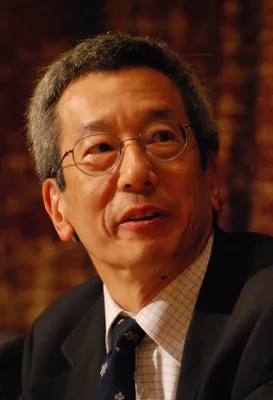
1996 TSIEN, Roger Yonchien (1952 – 2016); ORMÖ, Mats F.; CUBITT, Andrew; KALLIO, Karen; REMINGTON, S. James; ET AL
Crystal structure of Aequorea victoria green fluorescent protein.
Tsien and colleagues published the crystal structure of the 238 A.A. long green fluorescent protein (GFP). With this data, the authors could determine what had to be modified within the protein in such a way that the …
GMN 13565 · https://historyofmedicine.com/id/15843
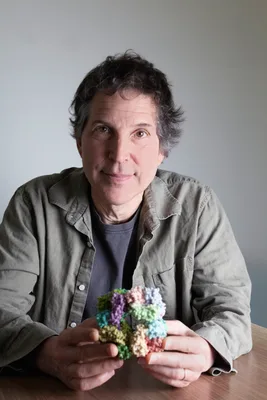
2000 KORNBERG, Roger David (1947 – )
Architecture of RNA polymerase II and implications for the transcription mechanism.
Kornberg devoted two decades to the development of methods to visualize the atomic structure of RNA polymerase and its associated protein components. Initially, Kornberg took advantage of expertise with lipid membrane…
GMN 13982 · https://historyofmedicine.com/id/16285
2003 BAKER, David (1962 – ); KUHLMAN, Brian A.; DANTAS, Gautam; IRETON, Gregory C.; VARANI, Gabriele; ET AL
Design of a novel globular protein fold with atomic-level accuracy.
Called, "the breakthrough in computational de novo protein design." This was the proof of concept paper that computers and AI could be used to predict protein structures accurately and much faster than with convention…
GMN 14300 · https://historyofmedicine.com/id/16625
2014 WLODAWER, Alexander; JASKOLSKI, Mariuz; DAUTER, Zbigniew
A brief history of macromolecular crystallography, illustrated by a family tree and its Nobel fruits.
Free access from FEBS Press at this link.
GMN 14024 · https://historyofmedicine.com/id/16331
2020 SENIOR, Andrew W.; EVANS, Richard; JUMPER, John; ET AL
Improved protein structure prediction using potentials from deep learning.
Order of authorship in the original paper: Senior, Evans, Jumper. ABSTRACT: "Protein structure prediction can be used to determine the three-dimensional shape of a protein from its amino acid sequence. This problem is…
GMN 13106 · https://historyofmedicine.com/id/15359
2020 NAKANE, Takanore; KOTECHA, Abhay; SENTE, Andrija; ET AL
Single particle cryo-EM at atomic resolution.
The authors located individual atoms with a protein molecule for the first time using cryo-EM. This was the highest resolution imaging of a single protein molecule achieved to date using cryo-EM. Order of authorship o…
GMN 14185 · https://historyofmedicine.com/id/16501
2021 EVANS, Richard; JUMPER, John; HASSABIS, Demis (1976 – ); ET AL
Highly accurate protein structure prediction with AlphaFold.
Abstract: "Proteins are essential to life, and understanding their structure can facilitate a mechanistic understanding of their function. Through an enormous experimental effort1,2,3,4, the structures of around 100,0…
GMN 14026 · https://historyofmedicine.com/id/16333
2022 VIRADI, Mihaly; ANYANGO, Stephen; VELANKAR, Sameer; ET AL
AlphaFold Protein Structure Database: massively expanding the structural coverage of protein-sequence space with high-accuracy models.
Abstract: "The AlphaFold Protein Structure Database (AlphaFold DB, https://alphafold.ebi.ac.uk) is an openly accessible, extensive database of high-accuracy protein-structure predictions. Powered by AlphaFold v2.0 of …
GMN 14027 · https://historyofmedicine.com/id/16334