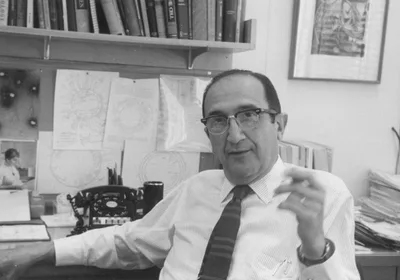
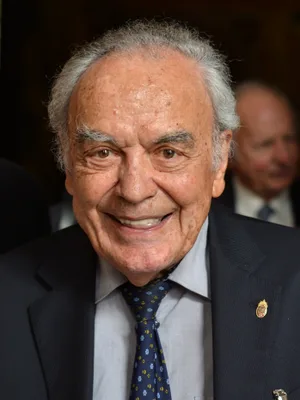
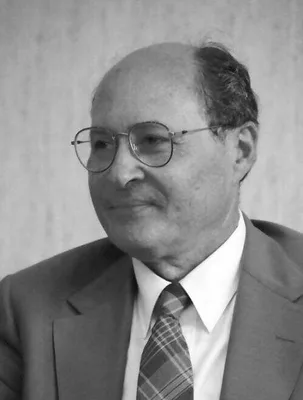
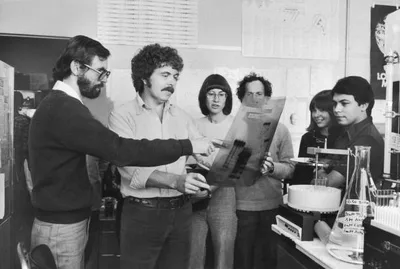
1952 LURIA, Salvador Edward (1912 – 1991); HUMAN, Mary L.
A nonhereditary, host-induced variation of bacterial viruses.
Order of authorship in the original publication: Luria, Human. Luria and Human discovered the restriction modification system found in bacteria and other prokaryotic organisms. This system provides a defense against f…
GMN 12032 · https://historyofmedicine.com/id/14240
1962 ARBER, Werner (1929 – ); ROULLAND-DUSSOIX, Daisy (1936 – 2014)
Host specificity of DNA produced by escherichia coli. II. Control over acceptance of DNA from infecting phage lambda.
Order of authorship in the original publication: Dussoix, Arber. The authors discovered that restriction of DNA from infecting bacteriophage was due to the attack and breakdown of the modified bacteriophage's DNA by s…
GMN 12033 · https://historyofmedicine.com/id/14241
1968 ARBER, Werner (1929 – ); LINN, Stuart M.
Host specificity of DNA produced by Escherichia coli, X. In vitro restriction of phage FD replicative form.
Order of authorship in the original publication: Linn, Arber. Arber announced the discovery, with proof, of the first restriction endonuclease (restriction enzyme or restrictase)."These enzymes are found in bacteria a…
GMN 12028 · https://historyofmedicine.com/id/14236
1970 SMITH, Hamilton Othanel (1931 – ); KELLY, T. J.
A restriction endonuclease from Hemophilus influenzae. II. Base sequence of the recognition site.
Discovery of the first type II restriction enzyme (HindII). Smith shared the 1978 Nobel Prize in Physiology or Medicine with Werner Arber and Daniel Nathans "for the discovery of restriction enzymes and their applicat…
GMN 6889 · https://historyofmedicine.com/id/9053
1971 NATHANS, Daniel (1928 – 1999)
Specific cleavage of simian virus 40 DNA by restriction endonuclease of Hemophilus influenzae.
Nathans showed that the restriction enzyme discovered by Hamilton Smith cleaved SV40 DNA into 11 specific pieces. Nathans and his student Kathleen Danna wrote: "The availability of pieces of SV40 DNA from specific sit…
GMN 6890 · https://historyofmedicine.com/id/9054
1971 BOYER, Herbert Wayne (1936 – )
DNA restriction and modification mechanisms in bacteria.
In this single author paper Boyer isolated, characterized and named the enzyme that Arber No. 12028 had observed and described in terms of its basic action on DNA. Boyer called it the “fi R-factor restriction endonucl…
GMN 12029 · https://historyofmedicine.com/id/14237
1972 MERTZ, Janet E. (1949 – ); DAVIS, Ronald Wayne (1941 – )
Cleavage of DNA by R1 restriction endonuclease generates cohesive ends.
Order of authorship in the original publication: Mertz, Davis. Mertz discovered that DNA ends generated by cutting with the EcoRI restriction enzyme are “sticky”, permitting any two such DNAs to be readily “recombined…
GMN 12030 · https://historyofmedicine.com/id/14238
1973 COHEN, Stanley Norman (1935 – ); CHANG, Annie C.Y. (1936 – ); HELLING, Robert Bruce (1936 – 2006); BOYER, Herbert Wayne (1936 – )
Construction of biologically functional bacterial plasmids in vitro.
Cohen, Boyer and associates developed the first practical method for cloning genes, by the formation of recombinant plasmids which can be used to infect plasmid-free bacteria. The authors demonstrated that if DNA is f…
GMN 257.5 · https://historyofmedicine.com/id/8715
1977 BOYER, Herbert Wayne (1936 – ); BETLACH, Mary C.; RODRIGUEZ, Raymond L.; BOLÍVAR ZAPATA, Francisco Gonzalo (1948 – ); ET AL
The construction of molecular cloning vehicles. II. A multipurpose cloning system.
Order of authorship in the original publication Bolivar, Rodriguez, Betlach...Boyer...The authors describe the composition and molecular construction of pBR-322 (named after Bolivar and Rodriguez) and call it "the mos…
GMN 12031 · https://historyofmedicine.com/id/14239