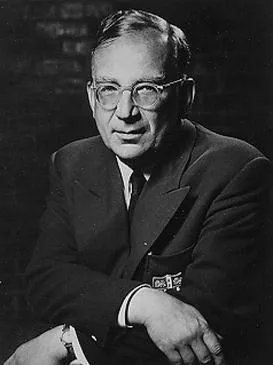
1949 BARR, Murray Llewellyn (1908 – 1995); BERTRAM, Ewart George (1923 – )
A morphological distinction between neurones of the male and female, and the behaviour of the nucleolar satellite during accelerated nucleoprotein synthesis.
The Barr body, " the inactive X chromosome in a female somatic cell,[2] rendered inactive in a process called lyonization, in those species in which sex is determined by the presence of the Y (including humans) or W c…
GMN 255.5 · https://historyofmedicine.com/id/8694
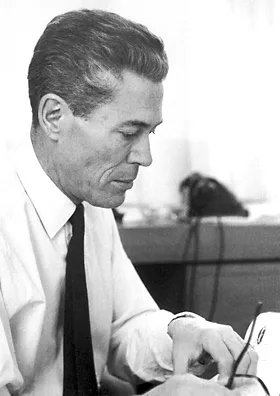
1954 GAMOW, George (Gamov) (1904 – 1968)
Possible relation between deoxyribonucleic acid and protein structures.
Gamow, a physicist, invented the concept of a genetic code. This brief 1-page paper, published in the February 13, 1954 issue of Nature was the first specific positive response to Watson and Crick's structure of DNA. …
GMN 6896 · https://historyofmedicine.com/id/9060
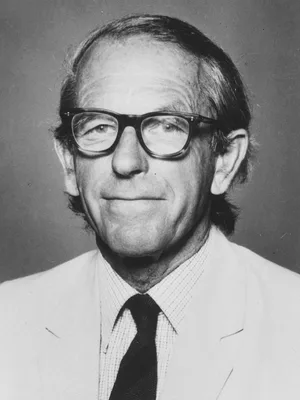
1955 SANGER, Frederick (1918 – 2013)
The disulphide bonds of insulin.
Sanger sequenced the amino acids of insulin, the first of any protein. His work “revealed that a protein has a definite constant, genetically determined sequence—and yet a sequence with no general rule for its assembl…
GMN 1207 · https://historyofmedicine.com/id/1852
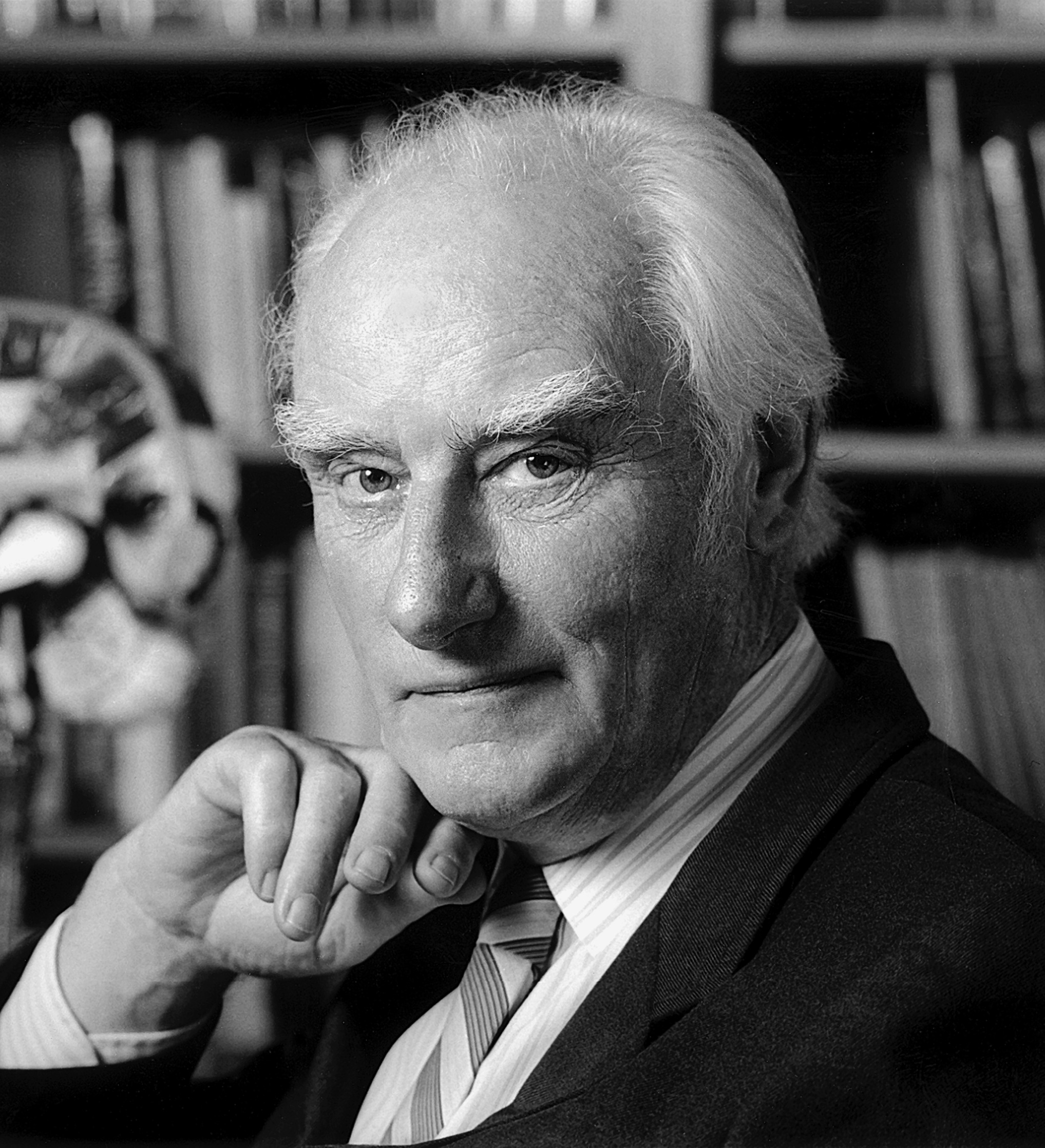
1957 CRICK, Francis Harry Compton (1916 – 2004)
Nucleic acids.
This paper published in September 1957, based on Crick's famous "Central Dogma" lecture given the same month, presented his first published statement of The Central Dogma: “Information is transmitted from DNA and RNA …
GMN 13097 · https://historyofmedicine.com/id/15349
1958 JACOB, François (1920 – 2013); MONOD, Jacques (1910 – 1976); PARDEE, Arthur Beck (1921 – )
Sur l’expression et le rôle des allèles “inductible” et “constitutif” dans la synthèse de la β-galactosidase chez des zygotes d’ “Escherichia coli.
The “PaJaMo” experiment of PArdee, JAcob, and MOnod “broke the impasse in Crick and Brenner’s comprehension of how information in the sequence of bases in DNA came to be expressed as a sequence of the amino acids in p…
GMN 6894 · https://historyofmedicine.com/id/9058
1958 CRICK, Francis Harry Compton (1916 – 2004)
On protein synthesis.
This paper proposed two general principles: 1) The Sequence Hypothesis: “The order of bases in a portion of DNA represents a code for the amino acid sequence of a specific protein. Each ‘word’ in the code would name a…
GMN 6895 · https://historyofmedicine.com/id/9059
1961 JACOB, François (1920 – 2013); MONOD, Jacques (1910 – 1976)
Genetic regulatory mechanisms in the synthesis of proteins.
In 1965 Jacob, Monod, and André Lwoff shared the Nobel Prize in Physiology or Medicine "for their discoveries concerning genetic control of enzyme and virus synthesis."
GMN 256.9 · https://historyofmedicine.com/id/8706
1961 MESELSON, Matthew Stanley (1930 – ); JACOB, François (1920 – 2013); BRENNER, Sydney (1927 – 2019)
An unstable intermediate carrying information from genes to ribosomes for protein synthesis.
Demonstration of the existence of “messenger” RNA. The following paper (pp. 581-85) by F. Gros et al. is also relevant.
GMN 256.10 · https://historyofmedicine.com/id/8707
1961 MATTHAEI, J. Heinrich (1929 – ); NIRENBERG, Marshall Warren (1927 – 2010)
Characteristics and stabilization of DNAase-sensitive protein synthesis in E. coli extracts.
With Matthaei, Nirenberg demonstrated that messenger RNA is required for protein synthesis, and that synthetic messenger RNA preparations can be used to decipher various aspects of the genetic code. Nirenberg first re…
GMN 256.11 · https://historyofmedicine.com/id/8708
1963 RICH, Alexander (1924 – 2015); WARNER, Jonathan R.; KNOPF, Paul M.
A multiple ribosomal structure in protein synthesis.
Alexander Rich discovered polysomes, clusters of ribosomes which read one strand of mRNA simultaneously. Order of authorship in the original publication: Warner, Knopf, Rich. Digital facsimile from PubMedCentral at th…
GMN 13955 · https://historyofmedicine.com/id/16255
1964 STRETTON, Antony Oliver Ward (1936 – ); BRENNER, Sydney (1927 – 2019); SARABHAI, A. S.; BOLLE, A.
Co-linearity of the gene with the polypeptide chain.
Order of authorship in the original publication: Sarabhai, Stretton, Brenner, Bolle. Brenner (Nobel Prize 2002) and colleagues performed the first study to show co-linearity; i.e., that there is a simple congruence be…
GMN 13968 · https://historyofmedicine.com/id/16270
1966 MARCKER, Kjeld Adrian (1932 – 2018)
N-Formyl-methionyl-sRibonucleic acid and chain initiation in protein biosynthesis - polypeptide synthesis directed by a bacteriophage ribonucleic acid in a cell-free system.
Marcker discovered that the biosynthesis of proteins is always initiated by a tRNA molecule that carries the modified amino acid formyl-methionine.
GMN 13939 · https://historyofmedicine.com/id/16236
1966 GILBERT, Walter (1932 – ); MÜLLER-HILL, Benno (1933 – 2018)
Isolation of the LAC repressor.
With his Ph.D. student Benno Müller-Hill, Gilbert was the first to purify the lac repressor, just beating out Mark Ptashne for purifying the first gene regulatory protein.
GMN 13951 · https://historyofmedicine.com/id/16250
1967 GRIFFITH, John Stanley (1928 – 1972)
Self replication and scrapie.
Griffith discussed complex physical chemistry mechanisms by which the scrapie agent could arise from information encoded in protein structure which could then be transferred to other protein molecules. He also conside…
GMN 12833 · https://historyofmedicine.com/id/15079
1967 ALPER, Tikvah (1909 – 1995); CRAMP, W. A.; HAIG, D. A.; ET AL
Does the agent of scrapie replicate without nucleic acids?
This paper, which predated Griffith's' paper (No. 12833), demonstrated that the scrapie agent replicates without nucleic acids. Alper and colleagues irradiated scrapie infected mouse brain extracts with lethal ultravi…
GMN 12834 · https://historyofmedicine.com/id/15080
1970 BALTIMORE, David (1938 – )
Viral RNA-dependent DNA polymerase: RNA-dependent DNA polymerase in virions of RNA tumour viruses.
In 1970 Baltimore and Temin discovered that certain viruses that have their genes in the form of RNA can copy the RNA "backward" into DNA in infected cells. The enyzme, reverse transcriptase, enables the manufacture o…
GMN 2660.22 · https://historyofmedicine.com/id/3429
1970 TEMIN, Howard Martin (1934 – 1994); MIZUTANI, Satoshi
RNA-dependent DNA polymerase in virions of Rous sarcoma virus.
Discovery of reverse transcriptase. "In 1969, Temin and a postdoctoral fellow, Satoshi Mizutani, began searching for the enzyme that was responsible for the phenomenon of viral RNA being transferred into proviral DNA.…
GMN 2660.23 · https://historyofmedicine.com/id/3432
1971 EDMONDS, Mary P. (1922 – 2005); NAKAZATO, Hiroshi; VAUGHAN, Maurice H.
Polyadenylic acid sequences in the heterogeneous nuclear RNA and rapidly-labeled polyribosomal RNA of HeLa cells: Possible evidence for a precursor relationship.
Edmonds discovered the poly-A tails on eukaryotic mRNA. The addition of a poly(A) tail to an RNA transcript, typically a messenger RNA (mRNA), is called polyadenylation. Poly(A)polymerase was first identified in 1960 …
GMN 13973 · https://historyofmedicine.com/id/16276
1976 FURUICHI, Yashiro; SHATKIN, Aaron J. (1934 – 2012)
Reovirus messenger RNA contains a methylated, blocked 5'-terminal structure: m7G(5')ppp(5')GmpCp.
Furuichi, working in Shatkin's laboratory, discovered that the viral mRNAs synthesized in vitro by the virion-associated RNA polymerase of reovirus contain a unique 5′-terminal structure m7GpppNm or cap. The precise b…
GMN 13976 · https://historyofmedicine.com/id/16279
1978 ZAMECNIK, Paul Charles (1912 – 2009); STEPHENSON, Mary Louise (1921 – 2009)
Inhibition of Rous sarcoma virus replication and cell transformation by a specific oligodeoxynucleotide (tridecamer deoxyribonucleotide/hybridization competitor/hybridon).
Zamecnick and Stephenson reported the first example of specific inhibition of gene expression by an oligonucleotide when they demonstrated that a short oligonucleotide inhibited Rous sarcoma virus replication in cell …
GMN 13969 · https://historyofmedicine.com/id/16271
1980 SZEKELEY, Maria
From DNA to Protein: The transfer of genetic information.
GMN 13206 · https://historyofmedicine.com/id/15467
1981 YONATH, Ada E. (1939 – ); APPELT, Krzysztof; DIJK, Jan; ET AL
The crystallization of ribsomal proteins from the 50 S subunit of the Escherichia coli and Bacillus stearothermophilus ribosome.
The authors crystallized fragments of the 50S subunit of a thermophile bacterium’s ribosome to 3 angstroms resolution. Order of authorship in the original publication: Appelt, Dyck, et al., Yonath. Digital facsimile f…
GMN 14224 · https://historyofmedicine.com/id/16541
1990 KORNBERG, Roger David (1947 – ); KELLEHER, Raymond J.; FLANAGAN, Peter M.
A novel mediator between activator proteins and the RNA polymerase II transcription apparatus.
Kornberg discovered that transmission of gene regulatory signals to the RNA polymerase machinery is accomplished by an additional protein complex dubbed the Mediator. As noted by the Nobel Prize committee, "the great …
GMN 13949 · https://historyofmedicine.com/id/16248
1992 NOLLER, Harry F. (1939 – ); ZIMNIAK, Ludwika; ET AL
Unusual resistance to peptidyl transferase to protein extraction procedures.
Noller demonstrated that the ribosome is a ribozyme, a critical step in understanding how ribosomes translate the genetic information in DNA into the language of proteins.
GMN 14009 · https://historyofmedicine.com/id/16315
1993 AMBROS, Victor R. (1953 – ); LEE, Rosalind C.; FEINBAUM, Rhonda L.
The C. elegans heterochronic gene lin-4 encodes small RNAs with antisense complementarity to lin-14.
Ambros and colleagues discovered the first known microRNA (miRNA), a small single-stranded non-coding RNA molecule (containing about 22 nucleotides) found in plants, animals and some viruses, that functions in RNA sil…
GMN 14010 · https://historyofmedicine.com/id/16316
1994 CHALFIE, Martin Lee (1947 – ); TU, Yuan; EUSKIRCHEN, Ghia; PRASHER, Douglas C. (1951 – ); WARD, William W.
Green fluorescent protein as a marker for gene expression.
Chalfie and colleagues showed that the green fluorescent protein (GFP) from the jellyfish Aequorea victoria, could be used as a visible marker for protein localization and expression in vivo, in bacteria and worm cell…
GMN 13564 · https://historyofmedicine.com/id/15842
1996 PRUSINER, Stanley Benjamin (1942 – ); TELLING, Glenn C.; PARCHI, Piero (1951 – ); DE ARMOND, Stephen J.; ET AL
Evidence for the conformation of the pathologic isoform of the prion protein enciphering and propagating prion diversity.
The authors showed that the " 'normal prion protein' in the brains of living mice can be converted into different forms depending on the type of abnormal human prion that initiated the conversion. The result is differ…
GMN 12835 · https://historyofmedicine.com/id/15081
1996 TSIEN, Roger Yonchien (1952 – 2016); ORMÖ, Mats F.; CUBITT, Andrew; KALLIO, Karen; REMINGTON, S. James; ET AL
Crystal structure of Aequorea victoria green fluorescent protein.
Tsien and colleagues published the crystal structure of the 238 A.A. long green fluorescent protein (GFP). With this data, the authors could determine what had to be modified within the protein in such a way that the …
GMN 13565 · https://historyofmedicine.com/id/15843
2000 RAMAKRISHNAN, Venkatraman (1952 – ); ET AL
Structure of the 30S ribosomal subunit.
Ramakrishnan and colleagues determined the complete molecular structure of the 30S subunit of the ribosome and its complexes with several antibiotics. " The Abstract: "Genetic information encoded in messenger RNA is t…
GMN 13952 · https://historyofmedicine.com/id/16251
2000 STEITZ, Thomas Arthur (1940 – 2018)
The structural basis of ribosome activity in peptide bond synthesis.
With Poul Nissen, Jeffrey Hansen, Nenad Ban, Peter B. Moore. Steitz shared the 2009 Nobel Prize in Chemistry with Venkatraman Ramakrishnan and Ada Yonath "for studies of the structure and function of the ribosome."
GMN 13953 · https://historyofmedicine.com/id/16252
2000 KORNBERG, Roger David (1947 – )
Architecture of RNA polymerase II and implications for the transcription mechanism.
Kornberg devoted two decades to the development of methods to visualize the atomic structure of RNA polymerase and its associated protein components. Initially, Kornberg took advantage of expertise with lipid membrane…
GMN 13982 · https://historyofmedicine.com/id/16285