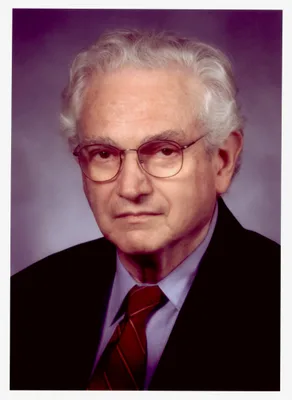
1871 MIESCHER, Johann Friedrich (1844 – 1895)
Ueber die chemische Zusammensetzung der Eiterzellen.
In 1869 Miescher discovered a substance which he termed nuclein (nucleoprotein), later shown to be the hereditary genetic material. He demonstrated it in pus cells. The discovery he first published in 1871. He was als…
GMN 695 · https://historyofmedicine.com/id/897
1897 MIESCHER, Johann Friedrich (1844 – 1895)
Die histochemischen und physiologischen Arbeiten. 2 vols.
In a letter to his uncle, the embryologist, Wilhelm His, written on December 17, 1892, and first published in this collected edition, Miescher described a kind of genetic code. He remarked how "some of the large molec…
GMN 11094 · https://historyofmedicine.com/id/13290
1954 GAMOW, George (Gamov) (1904 – 1968)
Possible relation between deoxyribonucleic acid and protein structures.
Gamow, a physicist, invented the concept of a genetic code. This brief 1-page paper, published in the February 13, 1954 issue of Nature was the first specific positive response to Watson and Crick's structure of DNA. …
GMN 6896 · https://historyofmedicine.com/id/9060
1958 GILHAM, Peter Thomas (1930 – 2008); KHORANA, Har Gobind (1922 – 2011)
Studies on polynucleotides. I. A new and general method for the chemical synthesis of the C5'-C3' intemucleotide linkage. Synthesis of deoxyribo-dinucleotides.
In 1968 Khorana shared the Nobel Prize in Physiology or Medicine with R. W. Holley and M. W. Nirenberg "for their interpretation of the genetic code and its function in protein synthesis." H. G. Khorana, T. M. Jacob, …
GMN 752.6 · https://historyofmedicine.com/id/1862
1961 CRICK, Francis Harry Compton (1916 – 2004); BRENNER, Sydney (1927 – 2019); BARNETT, Leslie Margaret Collard (1920 – 2002); WATTS-TOBIN, Richard J.
General nature of the genetic code for proteins.
The codons in DNA specifying amino acids in proteins.
GMN 256.8 · https://historyofmedicine.com/id/8705
1961 MATTHAEI, J. Heinrich (1929 – ); NIRENBERG, Marshall Warren (1927 – 2010)
Characteristics and stabilization of DNAase-sensitive protein synthesis in E. coli extracts.
With Matthaei, Nirenberg demonstrated that messenger RNA is required for protein synthesis, and that synthetic messenger RNA preparations can be used to decipher various aspects of the genetic code. Nirenberg first re…
GMN 256.11 · https://historyofmedicine.com/id/8708
1964 KHORANA, Har Gobind (1922 – 2011); NISHIMURA, S; JACOB, Thazhuthaveetil Mathai (J. T.) (1927 – 2014)
Synthetic deoxyribopolynucleotides as templates for ribonucleic acid polymerase: The formation and characterization of a ribopolynucleotide with a repeating trinucleotide sequence.
Order of authorship in the original publication: Nishimura, Jacob, Khorana. Digital facsimile from PubMedCentral at this link.
GMN 257 · https://historyofmedicine.com/id/8710
1964 YANOFSKY, Charles (1925 – 2018); CARLTON, Bruce C.; HENNING, U.; ET AL
On the colinearity of gene structure and protein structure.
Yanofsky and colleagues established that gene sequences and protein sequences are colinear in bacteria. Order of authorship in the original publication: Yanofsky, Carlton, ... Henning. In genetics, coliniarity is a pr…
GMN 13944 · https://historyofmedicine.com/id/16242
1964 STRETTON, Antony Oliver Ward (1936 – ); BRENNER, Sydney (1927 – 2019); SARABHAI, A. S.; BOLLE, A.
Co-linearity of the gene with the polypeptide chain.
Order of authorship in the original publication: Sarabhai, Stretton, Brenner, Bolle. Brenner (Nobel Prize 2002) and colleagues performed the first study to show co-linearity; i.e., that there is a simple congruence be…
GMN 13968 · https://historyofmedicine.com/id/16270
1966 CRICK, Francis Harry Compton (1916 – 2004)
Codon-anticodon pairing: The wobble hypothesis.
"In the genetic code, there are 43 = 64 possible codons (3 nucleotide sequences). For translation, each of these codons requires a tRNA molecule with an anticodon with which it can stably complement. If each tRNA mole…
GMN 13967 · https://historyofmedicine.com/id/16269