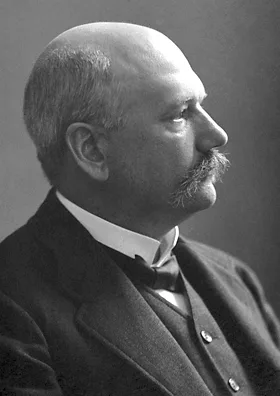
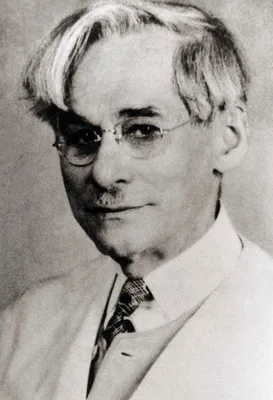
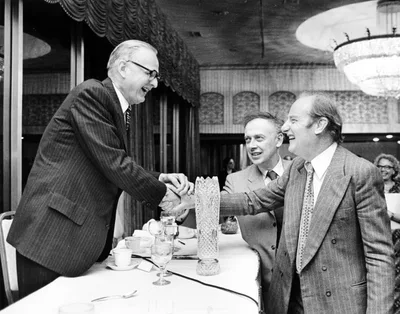
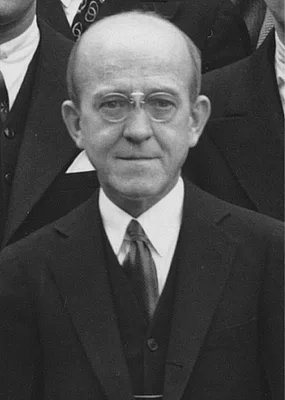
1871 MIESCHER, Johann Friedrich (1844 – 1895)
Ueber die chemische Zusammensetzung der Eiterzellen.
In 1869 Miescher discovered a substance which he termed nuclein (nucleoprotein), later shown to be the hereditary genetic material. He demonstrated it in pus cells. The discovery he first published in 1871. He was als…
GMN 695 · https://historyofmedicine.com/id/897
1874 MIESCHER, Johann Friedrich (1844 – 1895)
Die Spermatozoen einiger Wirbelthiere. Ein Beitrag zur Histochemie.
Miescher first isolated DNA and identified it as an acid through chemical analysis of salmon spermatozoa. See Ralf Dahm, "Discovering DNA: Friedrich Miescher and the early years of nucleic acid research," Human Geneti…
GMN 11093 · https://historyofmedicine.com/id/13289
1882 –1883 KOSSEL, Albrecht (1853 – 1927)
Zur Chemie des Zellkerns.
Among the many important contributions of Kossel was his study of the chemistry of the cell and cell-nucleus. Kossel correctly concluded that the function of nuclein is neither to act as a storage substance nor to fur…
GMN 702 · https://historyofmedicine.com/id/1829
1889 ALTMANN, Richard (1852 – 1900)
Ueber Nucleinsäuren.
Atlmann coined the term "nucleic acid", replacing Friedrich Miescher's term "nuclein" when it was demonstrated that nuclein was acidic.
GMN 713 · https://historyofmedicine.com/id/973
1893 KOSSEL, Albrecht (1853 – 1927)
Ueber die Nucleinsaure.
See No. 702.
GMN 719 · https://historyofmedicine.com/id/1040
1897 MIESCHER, Johann Friedrich (1844 – 1895)
Die histochemischen und physiologischen Arbeiten. 2 vols.
In a letter to his uncle, the embryologist, Wilhelm His, written on December 17, 1892, and first published in this collected edition, Miescher described a kind of genetic code. He remarked how "some of the large molec…
GMN 11094 · https://historyofmedicine.com/id/13290
1901 –1903 LEVENE, Phoebus Aaron Theodore (1869 – 1940)
Darstellung und Analyse einiger Nucleinsäuren. I.-VI. Mittheilung.
Chemical distinction between DNA and RNA. Levene elucidated the fundamentals of nucleic acid chemistry. His work led to the tetranucleotide hypothesis.
GMN 725.1 · https://historyofmedicine.com/id/1070
1944 MCCARTY, Maclyn (1911 – 2005); AVERY, Oswald Theodore Jr. (1877 – 1955); MACLEOD, Colin Munro (1909 – 1972)
Studies on the chemical nature of the substance inducing transformation of pneumococcal types. Induction of transformation by a deoxyribonucleic acid fraction isolated from pneumococcus type III.
Demonstration that deoxyribonucleic acid (DNA) is the basic material responsible for genetic transformation. Digital facsimile from PubMedCentral at this link. Followed by: McCarty & Avery, "Studies on the chemical na…
GMN 255.3 · https://historyofmedicine.com/id/8692
1950 CHARGAFF, Erwin (1905 – 2002)
Chemical specificity of nucleic acids and the mechanism of their enzymatic degradation.
"Chargaff's rules." Between 1946 and 1950 Chargaff carried out chemical studies that revolutionized attitudes towards DNA.
GMN 255.6 · https://historyofmedicine.com/id/8695
1953 WATSON, James Dewey (1928 – ); CRICK, Francis Harry Compton (1916 – 2004)
Molecular structure of nucleic acids. A structure for deoxyribose nucleic acid.
Watson and Crick shared the Nobel Prize with M. H. F. Wilkins (No. 256.4) "for their discoveries concerning the molecular structure of nucleic acids and its significance for information transfer in living material." L…
GMN 256.3 · https://historyofmedicine.com/id/8700
1953 WILKINS, Maurice Hugh Frederick (1916 – 2004); STOKES, Alexander Rawson (1919 – 2003); SEEDS, William Etienne; WILSON, Herbert Rees (1929 – 2008)
Helical structure of crystalline deoxypentose nucleic acid.
In 1962 Wilkins shared the Nobel Prize in Physiology or Medicine with Crick and Watson "for their discoveries concerning the molecular structure of nucleic acids and its significance for information transfer in living…
GMN 256.4 · https://historyofmedicine.com/id/8701
1953 FRANKLIN, Rosalind Elsie (1920 – 1958); GOSLING, Raymond (1926 – 2015)
Molecular configuration in sodium thymonucleate.
This paper reports Franklin's discovery of the existence of DNA in 2 forms, and conditions for readily and rapidly changing from one to the other. Its phosphates were on the outside.” (Maddox 195) The Watson-Crick mod…
GMN 6847 · https://historyofmedicine.com/id/9011
1953 WATSON, James Dewey (1928 – ); CRICK, Francis Harry Compton (1916 – 2004)
Genetical implications of the structure of deoxyribonucleic acid.
In this paper published on May 30, 1953 Watson and Crick proposed the method of replication of DNA. This discovery has been called as significant, or possibly even more significant, than their discovery of the double-…
GMN 7138 · https://historyofmedicine.com/id/9305
1953 FRANKLIN, Rosalind Elsie (1920 – 1958); GOSLING, Raymond (1926 – 2015)
Evidence for 2-chain helix in crystalline structure of sodium deoxyribonucleate.
Franklin and Gosling's completed Patterson synthesis of the A-form of DNA, based on work begun in 1952, represents the first independent confirmation that the Watson-Crick double-helix model was correct. "We suggest t…
GMN 13946 · https://historyofmedicine.com/id/16244
1955 GRUNBERG-MANAGO, Marianne (1921 – 2013); OCHOA DE ALBORNOZ, Severo (1905 – 1993); ORTIZ, Priscilla J.
Enzymatic synthesis of nucleic acidlike polynucleotides.
Ochoa shared the Nobel Prize with Arthur Kornberg in 1959 for their artificial synthesis of nucleic acids by means of enzymes. Order of authorship in the original publication: Ochoa, Grunberg-Manago, Ortiz. See also O…
GMN 752.3 · https://historyofmedicine.com/id/1738
1956 KORNBERG, Arthur (1918 – 2007); LEHMAN, Israel Robert (1924 – ); BESSMAN, Maurice Jules (1928 – 2021); SIMMS, E. S.; ET AL
Enzymic synthesis of deoxyribonucleic acid.
In 1959 Kornberg shared the Nobel Prize in Physiology or Medicine with Severo Ochoa "for their discovery of the mechanisms in the biological synthesis of ribonucleic acid and deoxyribonucleic acid." Order of authorshi…
GMN 752.4 · https://historyofmedicine.com/id/1739
1956 GIERER, Alfred (1929 – ); SCHRAMM, Gerhard (1910 – 1989)
Infectivity of ribonucleic acid from tobacco mosaic virus.
Proof that nucleic acid produces infectivity. See also Z. Naturf., 1956, 11b, 138-42.
GMN 2578.17 · https://historyofmedicine.com/id/4154
1958 GILHAM, Peter Thomas (1930 – 2008); KHORANA, Har Gobind (1922 – 2011)
Studies on polynucleotides. I. A new and general method for the chemical synthesis of the C5'-C3' intemucleotide linkage. Synthesis of deoxyribo-dinucleotides.
In 1968 Khorana shared the Nobel Prize in Physiology or Medicine with R. W. Holley and M. W. Nirenberg "for their interpretation of the genetic code and its function in protein synthesis." H. G. Khorana, T. M. Jacob, …
GMN 752.6 · https://historyofmedicine.com/id/1862
1960 MARMUR, Julius (1926 – 1996); DOTY, Paul Mead (1920 – 2011)
Strand separation and specific recombination in deoxyribonucleic acids: Biological studies: Physical chemical studies.
While working in the laboratory of Paul Doty at Harvard University, Marmur discovered that the denaturation of DNA was reversible (DNA hybridization) and depended on salt- and GC-content. Marmur and Doty accurately de…
GMN 13962 · https://historyofmedicine.com/id/16264
1961 MULLER, Hermann Joseph (1890 – 1967)
Genetic nucleic acid: Key material in the origin of life.
Muller was one of the earliest proponents of a genetics-first theory for the origin of life.
GMN 7468 · https://historyofmedicine.com/id/9640
1964 KHORANA, Har Gobind (1922 – 2011); NISHIMURA, S; JACOB, Thazhuthaveetil Mathai (J. T.) (1927 – 2014)
Synthetic deoxyribopolynucleotides as templates for ribonucleic acid polymerase: The formation and characterization of a ribopolynucleotide with a repeating trinucleotide sequence.
Order of authorship in the original publication: Nishimura, Jacob, Khorana. Digital facsimile from PubMedCentral at this link.
GMN 257 · https://historyofmedicine.com/id/8710
1964 HOLLIDAY, Robin (1932 – 2014)
A mechanism for gene conversion in fungi.
Holliday described a mechanism of DNA-strand exchange that attempted to explain gene-conversion events that occur during meiosis in fungi. That model became known as the Holliday Junction. "A Holliday junction is a br…
GMN 13984 · https://historyofmedicine.com/id/16287
1965 HOLLEY, Robert William (1922 – 1993); ET AL
Structure of a ribonucleic acid.
The complete sequence of an alanine transfer RNA determined – the first nucleic acid structure to be determined. With seven co-authors. In 1968 Holley shared the Nobel Prize in Physiology or Medicine with Har Gobind K…
GMN 257.2 · https://historyofmedicine.com/id/8712
1965 LEBOWITZ, Jacob; VINOGRAD, Jerome (1913 – 1976)
The twisted circular form of polyoma viral DNA.
Discovery of DNA supercoiling. DNA supercoiling refers to the amount of twist in a particular DNA strand, which determines the amount of strain on it. A given strand may be "positively supercoiled" or "negatively supe…
GMN 13963 · https://historyofmedicine.com/id/16265
1965 SPIEGELMAN, Sol (1914 – 1983); ET AL
The synthesis of a self-propagating and infectious nucleic acid with a purified enzyme.
Spiegelman's Monster, the name given to an RNA chain of only 218 nucleotides that can be reproduced by the RNA replication enzyme RNA-dependent RNA polymerase, also called RNA replicase. Spiegelman achieved the first …
GMN 13992 · https://historyofmedicine.com/id/16296
1967 PTASHNE, Mark (1940 – )
Specific binding of the λ phage repressor to λ DNA.
Ptashne was the first to demonstrate specific binding between protein and DNA. Abstract for the paper: "Genetic experiments show that a group of genes may be switched off by the product of a regulator gene, called a r…
GMN 13988 · https://historyofmedicine.com/id/16291
1968 OKAZAKI, Tsuneko (1933 – ); OKAZAKI, Reiji (1930 – 1975); ET AL
Mechanism of DNA chain growth, I. Possible discontinuity and unusual secondary structure of newly synthesized chains.
The Okazakis discovered what became known as Okazaki fragments, short sequences of DNA nucleotides (approximately 150 to 200 base pairs long in eukaryotes) which are synthesized discontinuously and later linked togeth…
GMN 13987 · https://historyofmedicine.com/id/16290
1973 RICH, Alexander (1924 – 2015); ROSENBERG, John M.; SEEMAN, Nadrian C.; ET AL
Double helix at atomic resolution.
Order of authorship in the original publication: Rosenberg, Seeman,...Rich. This paper was the first confirmation of the double-helix structure at atomic resolution. See also: Roberta Ogilvie Day, Nadrian C. Seeman,..…
GMN 13956 · https://historyofmedicine.com/id/16256
1976 GELLERT, Martin Frank (1929 – ); MIZUUCHI, Kiyoshi; O'DEA, Mary H.; NASH, Howard A. (1937 – 2011)
DNA gyrase: An enzyme that introduces superhelical turns into DNA (Escherichia coli / ATP-dependent reaction / superhelix density).
Order of authorship in the original publication: Gellert, Mizuuchi, O'Dea, Nash. Discovery of DNA gyrase, the first type II topoisomerase to be discovered. "It is the only type II enzyme to retain its historical name.…
GMN 13978 · https://historyofmedicine.com/id/16281
1980 STEITZ, Joan Elaine Argetsinger (1941 – ); LERNER, Michael R.; WOLIN, Sandra Lynn; ET AL
Are snRNPs involved in splicing?
Steitz and Lerner used immunoprecipitation with human antibodies from patients with autoimmunity to isolate and identify the novel entities snRNPs (pronounced "snurps") and detect their role in splicing. A snRNP is a …
GMN 13993 · https://historyofmedicine.com/id/16297
1998 FIRE, Andrew Zachary (1959 – ); MELLO, Craig Cameron (1960 – ); XU, SiQun; ET AL
Potent and specific genetic interference by double-stranded RNA in Caenorhabditis elegans.
The authors reported that tiny snippets of double-stranded RNA (dsRNA) effectively shut down specific genes, driving the destruction of messenger RNA (mRNA) with sequences matching the dsRNA. As a result, the mRNA can…
GMN 13957 · https://historyofmedicine.com/id/16258