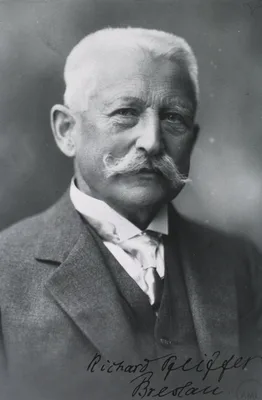
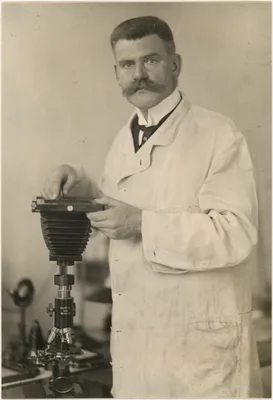
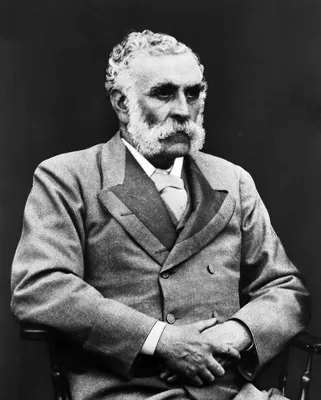
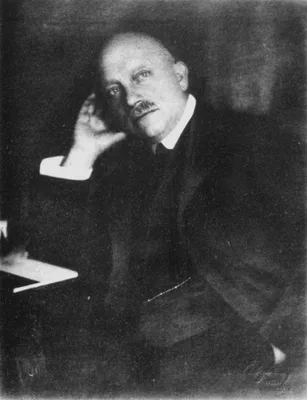
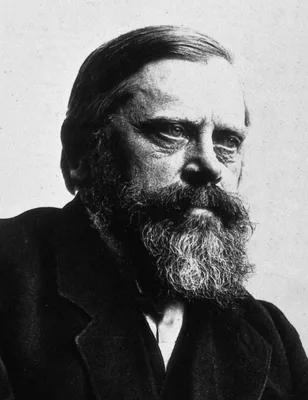
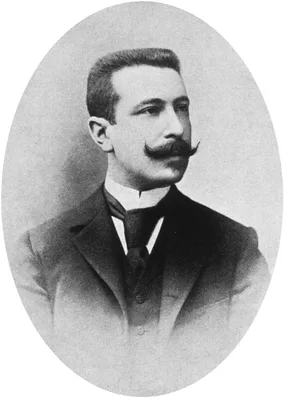
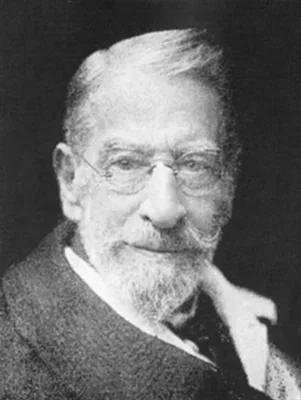
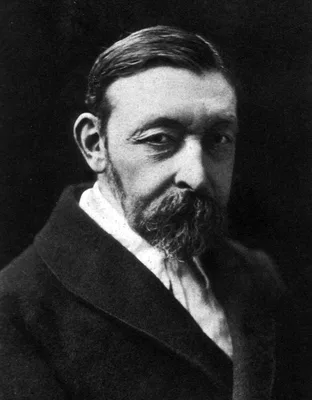
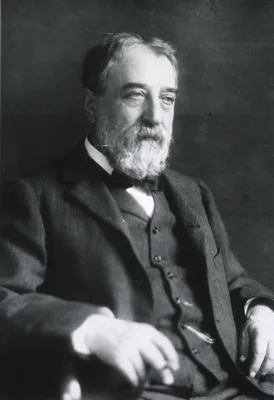
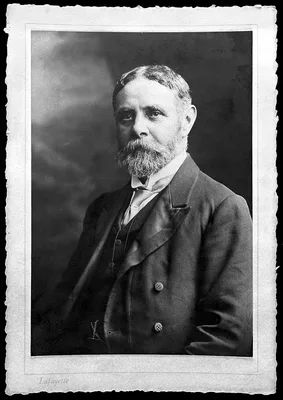
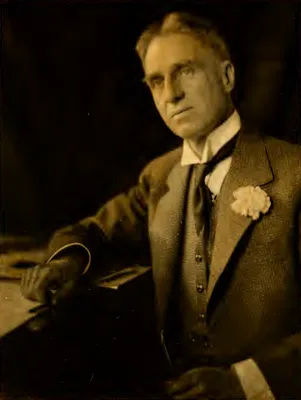
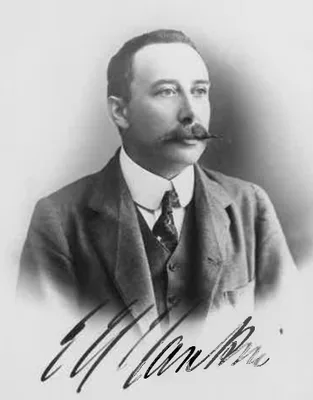
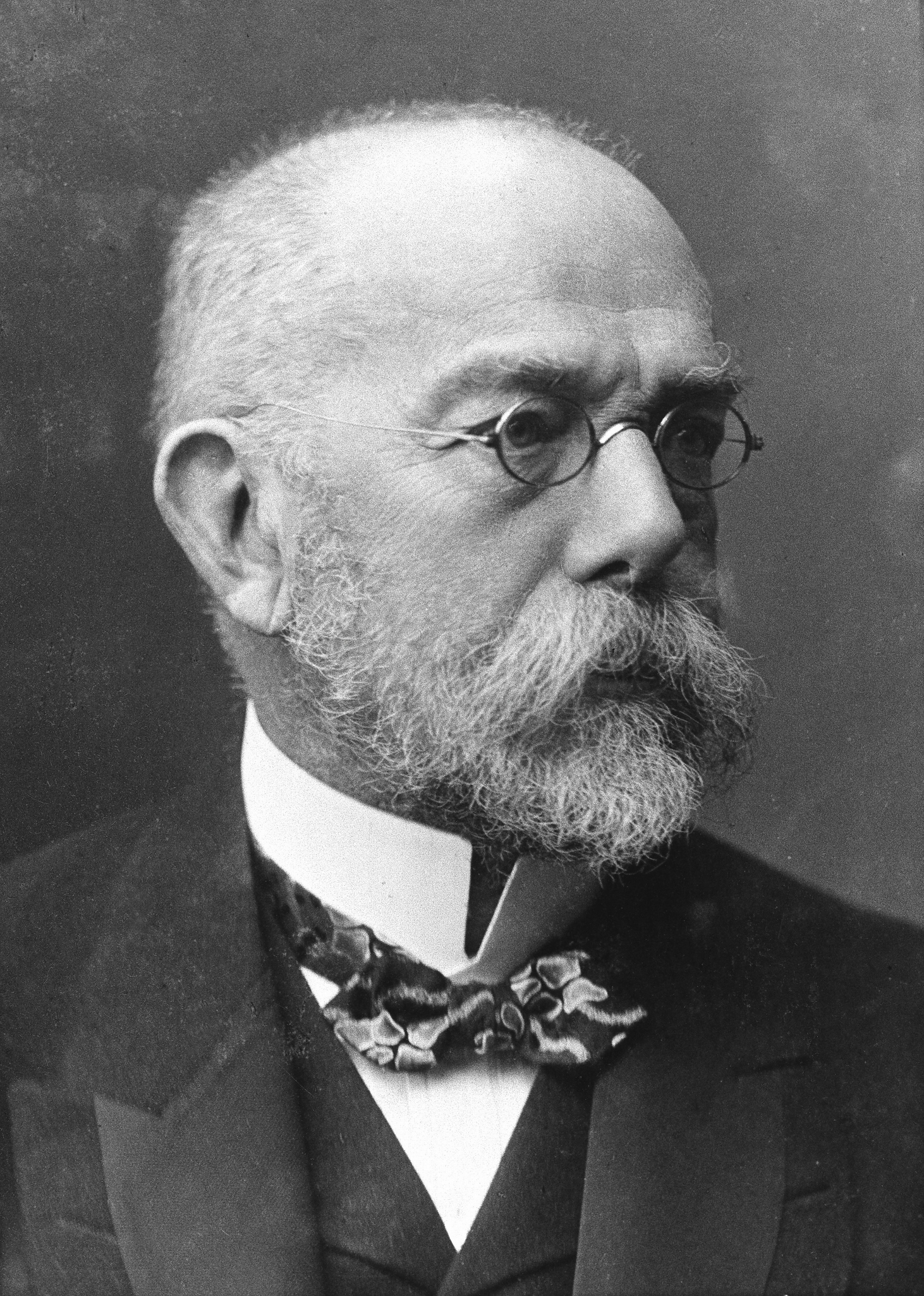
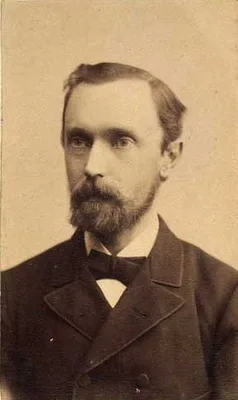
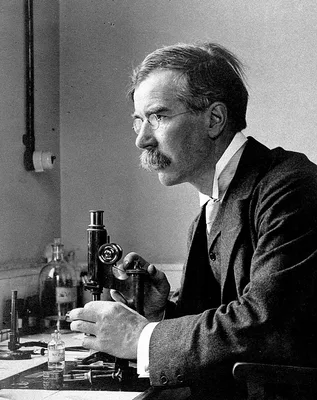
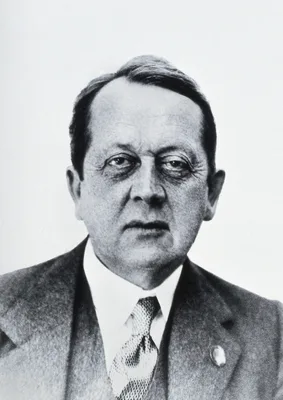
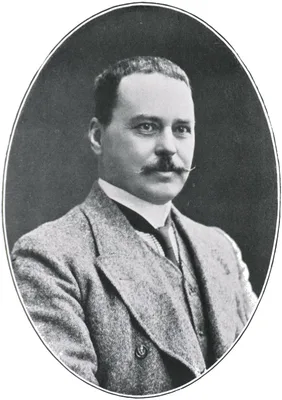
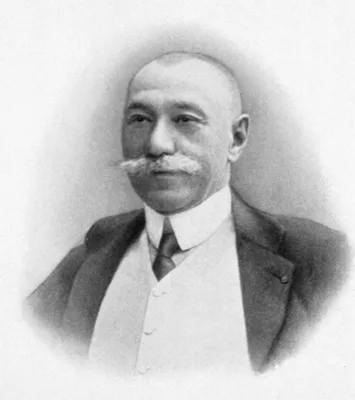
1894 PFEIFFER, Richard Friedrich Johannes (1858 – 1945); ISAYEV, Vasily Isayevich (1854 – 1911)
Ueber die specifische Bedeutung der Choleraimmunität (Bakteriolyse).
Pfeiffer and Isayev recorded the occurrence of bacteriolysis in cholera vibrios under certain conditions: immune bacteriolysis, “Pfeiffer’s phenomenon”. Abridged English translation of second part in Bibel, Milestones…
GMN 2546 · https://historyofmedicine.com/id/3588
1894 ROUX, Pierre Paul Émile (1853 – 1933); MARTIN, André Louis François Justin (1853 – 1921)
Contribution à l’étude de la diphtérie (sérum thérapie).
Roux and Martin demonstrated the value of Behring’s specific antitoxin in the treatment of human diphtheria, and showed how it could be produced on a large scale.
GMN 5063 · https://historyofmedicine.com/id/5893
1894 BOGHURST, William (1631 – 1685); PAYNE, Joseph Frank (1840 – 1910)
Loimographia. An account of the great plague of London in the year 1665
This work was written in 1666 and first published as above. Boghurst, an apothecary, did good work during the great plague; in his book he differentiated plague from typhus. Payne’s introduction to the book contains s…
GMN 5120 · https://historyofmedicine.com/id/6092
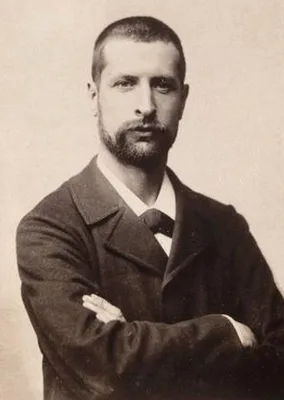
1894 YERSIN, Alexandre Émile Jean (1863 – 1943)
La peste bubonique à Hong-Kong.
Yersin discovered the plague bacillus Pasteurella (Yersinia) pestis, isolating it from excised buboes. He published the first account of this organism. Preliminary note in C. R. Acad. Sci. (Paris), 1894, 119, 356.
GMN 5125 · https://historyofmedicine.com/id/6113
1894 RENNIE, Alexander (1859 – 1940)
The plague in the East.
Rennie appears to be the first seriously to support the theory of transmission of the plague bacillus by rats and to present evidence in support of that theory.
GMN 5126 · https://historyofmedicine.com/id/6115
1894 MANSON, Sir Patrick (1844 – 1922)
On the nature and significance of the crescentic and flagellated bodies in malarial blood.
Manson’s mosquito–malaria hypothesis. See also his Gulstonian Lectures in Lancet, 1896, 1, 695-98, 751-55, 831-33.
GMN 5245 · https://historyofmedicine.com/id/7902
1895 JARISCH, Adolf (1850 – 1902)
Therapeutische Versuche bei Syphilis.
Jarisch-Herxheimer reaction; see also No. 2397.
GMN 2396 · https://historyofmedicine.com/id/3343
1895 DÖHLE, Karl Gottfried Paul (1855 – 1928)
Ueber Aortenerkrankung bei Syphilitischen und deren Beziehung zur Aneurysmenbildung.
Döhle clearly defined a specific syphilitic lesion of the aorta as a prerequisite of aortic aneurysm.
GMN 2985.1 · https://historyofmedicine.com/id/5176
1895 YERSIN, Alexandre Émile Jean (1863 – 1943); CALMETTE, Léon Charles Albert (1863 – 1933); BORREL, Amédée (1867 – 1936)
La peste bubonique. By Alexandre Yersin with L.C.A. Calmette and A. Borrel.
Successful inoculation of animals with anti-plague vaccine.
GMN 5127 · https://historyofmedicine.com/id/6116
1895 SCLAVO, Achille (1861 – 1930)
Sulla preparazione del siero anti-carbonchioso.
Specific anti-anthrax serum. German translation in Zbl. Bakt., 1895, 1 Abt., 18, 744-45.
GMN 5170 · https://historyofmedicine.com/id/6253
1895 BREDA, Achille (1850 – 1933)
Beitrag zum klinischen und bacteriologischen Studium der brasilianischen Framboesie oder “Boubas”.
“Breda’s disease” – Brazilian yaws. English translation New Sydenham Society, 1897.
GMN 5293.1 · https://historyofmedicine.com/id/6435
1895 BUSSE, Otto Emil Franz Ulrich (1867 – 1922)
Ueber parasitäre Zelleinschlüsse und ihre Züchtung.
“Busse–Buschke disease” –blastomycosis of the skin due to Cryptococcus neoformans. See also No. 5529.2. Busse first described it in Zbl. Bakt., 1894, 16, 175-80.
GMN 5529.1 · https://historyofmedicine.com/id/6648
1895 BUSCHKE, Abraham (1868 – 1943)
Ueber eine durch Coccidien hervorgerufene Krankheit des Menschen.
See No. 5529.1.
GMN 5529.2 · https://historyofmedicine.com/id/6652
1895 ODRIOZOLA, Ernesto (1862 – 1921)
La erupción en la enfermedad de Carrión (verruga peruana).
“Carrion’s disease” (Oroya fever) was named by the Peruvian physician Ernesto Odriozola, after Daniel Alcides Carrión Garcia (1859-85), a student. In order to prove or disprove the connection between Oroya fever and v…
GMN 5530 · https://historyofmedicine.com/id/6655
1895 ROBERTSON, Douglas Moray Cooper Lamb Argyll (1837 – 1909)
Case of Filaria loa in which the parasite was removed from under the conjunctiva.
First detailed description of Loa loa. See also Trans. ophthal. Soc. U.K., 1897, 17, 227-32. Robertson first briefly mentioned this procedure and the Loa Loa worm in a brief article written for him by the editor of La…
GMN 5347.1 · https://historyofmedicine.com/id/6817
1895 WERTHEIM, Ernst (1864 – 1920)
Ueber Uterus-Gonorrhöe.
Wertheim emphasized the importance of latent uterine gonorrhoea.
GMN 6099 · https://historyofmedicine.com/id/7526
1895 PROKSCH, Johann Karl (1840 – 1923)
Die Geschichte der venerischen Krankheiten. 2 vols.
Vol. 1. Alterthum und Mittelalter. Vol. 2. Neuzeit.
GMN 5227 · https://historyofmedicine.com/id/7844
1895 BRUCE, Sir David (1855 – 1931)
Preliminary report on the tsetse fly disease or nagana, in Zululand.
In 1895 Bruce found that nagana, the tsetse fly disease of Zululand, was due to a trypanosome (T. brucei). He described a hematozoon in the blood of the affected animals that had not been previously described. Digital…
GMN 5273 · https://historyofmedicine.com/id/8580
1895 LENOIR, Pierre-Jean-Baptiste (1859 – )
Des insufflations d'air dans le traitement des péritonites tuberculeuses. Thèse de médecine, Lille.
Describes the earliest experiments with artificial pneumoperitoneum by Mosetig-Moorhof, Duran and Nolen and Folet, which were not published formally. See Jean-Jacques Peumery, "1993: Le centenaire du penumopéritoine a…
GMN 8482 · https://historyofmedicine.com/id/10659
1895 HANSEN, Gerhard Henrik Armauer (1841 – 1912); LOOFT, Carl (1863 – 1943)
Leprosy: In its clinical & pathological aspects. Translated by Norman Walker.
Digital facsimile from the Internet Archive at this link.
GMN 9528 · https://historyofmedicine.com/id/11714
1896 DURHAM, Herbert Edward (1866 – 1945); GRUBER, Max von (1853 – 1927)
Eine neue Methode zur raschen Erkennung des Choleravibrio und des Typhusbacillus.
The discovery of bacterial agglutination. Gruber and Durham discovered the agglutinating action of the serum of typhoid patients upon the typhoid bacillus. First briefly reported by Durham: On a special action of seru…
GMN 2549 · https://historyofmedicine.com/id/3604
1896 WIDAL, Georges-Fernand Isidor (1862 – 1929); SICARD, Arthur
Recherches de la réaction agglutinante dans le sang et le sérum desséchés des typhiques et dans la sérosité des vesicatoires.
Developing the work of Gruber and Durham, Widal noted that a patient’s serum could be tested with bacteria of known type and his disease identified by this means. They demonstrated specific agglutinins in the blood of…
GMN 2550 · https://historyofmedicine.com/id/3664
1896 DARIER, Ferdinand-Jean (1856 – 1938)
Des “tubercules” cutanées.
Darier grouped together, under the heading “tuberculides”, the skin eruptions associated with tuberculosis.
GMN 4122 · https://historyofmedicine.com/id/5719
1896 ACHARD, Émile Charles (1860 – 1944); BENSAUDE, Raoul (1866 – 1938)
Infections paratyphoïdiques.
Isolation of Salmonella paratyphi B. First use of the term “paratyphoid fever”.
GMN 5035 · https://historyofmedicine.com/id/5770
1896 STICKER, Georg (1860 – 1960)
Der Keuchhusten.
An important history of whooping cough.
GMN 5088 · https://historyofmedicine.com/id/5980
1896 KOLLE, Wilhelm (1868 – 1935)
Zur aktiven Immunisierung des Menschen gegen Cholera.
Kolle introduced the killed cholera vaccine.
GMN 5111 · https://historyofmedicine.com/id/6059
1896 LEICHTENSTERN, Otto Michael Ludwig (1845 – 1900)
Influenza und Dengue.
Forms Bd. IV, Teil 1 of Nothnagel’s Specielle Pathologie und Therapie.
GMN 5491 · https://historyofmedicine.com/id/6437
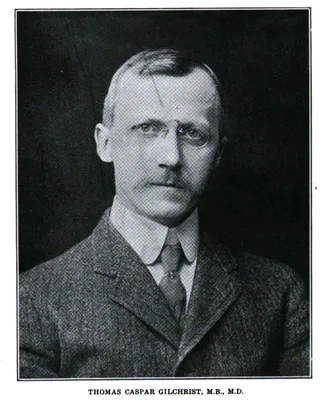
1896 GILCHRIST, Thomas Caspar (1862 – 1927)
A case of blastomycetic dermatitis in man.
Gilchrist’s description of blastomycosis (“Gilchrist’s disease”, “Busse-Buschke disease”, Nos. 5529.1 and 5529.2), is an important contribution to the knowledge of the infectious granulomata involving the skin.
GMN 5530.1 · https://historyofmedicine.com/id/6659
1896 LOOSS, Arthur (1861 – 1923)
Notizen zur Helminthologie Aegyptens. Die Lebensgeschichte des Anchylostomum duodenale (Dub.).
Looss elucidated the life cycle and mode of transmission of the hookworm. See also No. 5365. English translation in Kean (No. 2268.1).
GMN 5361 · https://historyofmedicine.com/id/6968
1896 KOPLIK, Henry (1858 – 1927)
The diagnosis of the invasion of measles from a study of the exanthema as it appears on the buccal mucous membrane.
Koplik, American pediatrician, was the first to note and report on “Koplik’s spots”, the buccal spots which are an important early diagnostic sign in measles.
GMN 5444 · https://historyofmedicine.com/id/7480
1896 WERTHEIM, Ernst (1864 – 1920)
Über Blasen-Gonorrhöe.
Wertheim demonstrated the gonococcus in acute cystitis.
GMN 6103 · https://historyofmedicine.com/id/7536
1896 CONYERS, James Salters (1841 – 1896); DANIELS, Charles Wilberforce (1862 – 1927)
The lupoid form of the so-called “groin ulceration” of this colony.
Granuloma inguinale distinguished from other similar lesions in the genital region.
GMN 5205.1 · https://historyofmedicine.com/id/7797
1896 THAYER, William Sydney (1864 – 1932); BLUMER, George Alder (1857 – 1940)
Ulcerative endocarditis due to the gonococcus; gonorrheal septicemia.
Thayer and Blumer found the gonococcus in cases of gonorrheal endocarditis.
GMN 5212 · https://historyofmedicine.com/id/7812
1896 BRUCE, Sir David (1855 – 1931)
Further report on the tsetse fly disease or nagana, in Zululand.
In this more-detailed follow-up to his "preliminary" paper of 1895 published in Durban, South Africa, Bruce provided definitive proof that the Trypanosoma was the cause of nagana, and the tsetse fly was the vector of …
GMN 11077 · https://historyofmedicine.com/id/13273
1896 HANKIN, Ernest Hanbury (1865 – 1939)
L'action bactericide des eaux de la Jumna et du Gange sur le vibrion du cholera.
Hankin described the antibacterial activity of a then-unknown source in the Ganges and Jumna Rivers in India. He noted that "It is seen that the unboiled water of the Ganges kills the cholera germ in less than 3 hours…
GMN 11380 · https://historyofmedicine.com/id/13579
1897 KOCH, Robert Heinrich Hermann (1843 – 1910)
Ueber neue Tuberkulinpräparate.
Koch’s new tuberculin (Tuberculin R).
GMN 2333 · https://historyofmedicine.com/id/3070
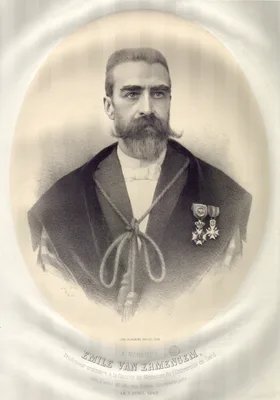
1897 ERMENGEM, Émile Pierre Marie van (1851 – 1932)
Contribution à l’ètude des intoxications alimentaires. Recherches sur des accidents à caractères botuliniques provoqués par du jambon.
Cl. botulinum was discovered by van Ermengem in cases of food poisoning.
GMN 2510 · https://historyofmedicine.com/id/3244
1897 FOURNIER, Jean Alfred (1832 – 1915)
Les chancres extra-génitaux.
GMN 2395 · https://historyofmedicine.com/id/3338
1897 KRAUS, Rudolf (1868 – 1932)
Über specifische Reactionen im keimfreien Filtraten aus Cholera, Typhus und Pestbouillonculturen, erzeugt durch homologes Serum.
The precipitin reaction, employed for the qualitative identification of antigens and antibodies. English translation in Bibel, Milestones in immunology,(1988) pp. 265-68.
GMN 2550.1 · https://historyofmedicine.com/id/3665
1897 EHRLICH, Paul (1854 – 1915)
Die Wertbestimmung des Diphtherieheilserums.
Ehrlich improved Behring’s diphtheria antitoxin through quantitative titration and established an international standard for this and other antitoxins. This was the beginning of the concept of biological standardizati…
GMN 5064 · https://historyofmedicine.com/id/5894
1897 BANG, Bernhard Laurits Frederik (1848 – 1932)
Die Aetiologie des seuchenhaften (“infectiösen”) Verwerfens.
Discovery of Brucella abortus.
GMN 5099 · https://historyofmedicine.com/id/6023
1897 HUGHES, Matthew Louis (1867 – 1899)
Mediterranean, Malta, or undulant fever.
An authoritative summary of current knowledge of Malta fever.
GMN 5100 · https://historyofmedicine.com/id/6025
1897 WRIGHT, Sir Almroth Edward (1861 – 1947); SMITH, Frederick
On the application of the serum test to the differential diagnosis of typhoid and Malta fever.
Agglutination test for the diagnosis of undulant fever.
GMN 5101 · https://historyofmedicine.com/id/6028
1897 OGATA, Masanori (1852 – 1919)
Ueber die Pestepidemie in Formosa.
Ogata considered the flea (principally Xenopsylla cheopis) to be the principal, if not the sole, vector of bubonic plague infection.
GMN 5128 · https://historyofmedicine.com/id/6130
1897 MACCALLUM, William George (1874 – 1944)
On the flagellated form of the malarial parasite.
MacCallum reported at a meeting of the British Association his observation of the mode of fertilization of the malarial parasite of birds; two months later he announced that he had found the same to hold good for the …
GMN 5246 · https://historyofmedicine.com/id/7903
1897 ROSS, Sir Ronald (1857 – 1932)
On some peculiar pigmented cells found in two mosquitoes fed on malarial blood.
Ross proved that the mosquito was responsible for the transmission of malaria. On 20 August 1897, he found Laveran’s Plasmodium in the stomach of the Anopheles mosquito after it had fed on the blood of malaria patient…
GMN 5247 · https://historyofmedicine.com/id/7904
1897 PONCET, Antonin (1849 – 1913)
Polyarthrite tuberculeuse simulant des lésions rhumatismales chroniques déformantes.
Tuberculous rheumatism (“Poncet’s disease”). See also his later paper in Bull. Acad. Méd. (Paris), 1902, 3 sér., 48, 97-114.
GMN 4504 · https://historyofmedicine.com/id/8888
1898 MANSON, Sir Patrick (1844 – 1922)
Tropical diseases.
Manson has been called the “father of modern tropical medicine”. He had vast experience of disease in the Tropics and himself made many valuable contributions to the knowledge of this subject. He described tinea nigra…
GMN 2266 · https://historyofmedicine.com/id/2823
1898 KOCH, Robert Heinrich Hermann (1843 – 1910)
Reise-Bericht über Rinderpest, Bubonenpest in Indien und Afrika, Tsetse-oder Surrakrankheit, Texasfieber, tropische Malaria, Schwarzwasserfieber.
GMN 2457 · https://historyofmedicine.com/id/2986
1898 ARLOING, Saturnin (1846 – 1911)
Sur l’obtention de cultures et d’émulsions homogènes du bacille de la tuberculose humaine en milieu liquide et “sur une variété mobile de ce bacille”.
Sero-agglutination for the diagnosis of tubercle bacillus.
GMN 2334 · https://historyofmedicine.com/id/3072