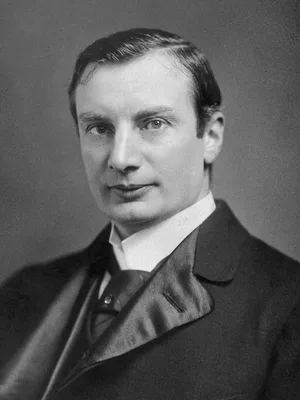
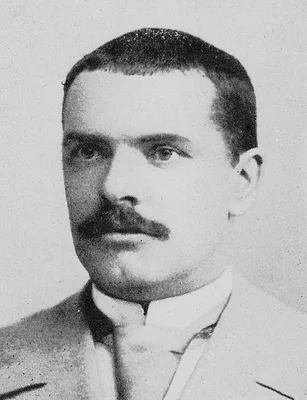
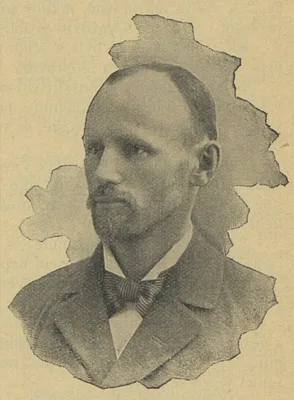
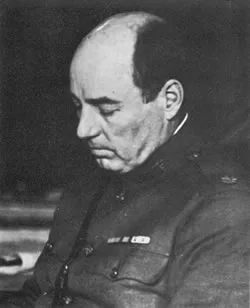
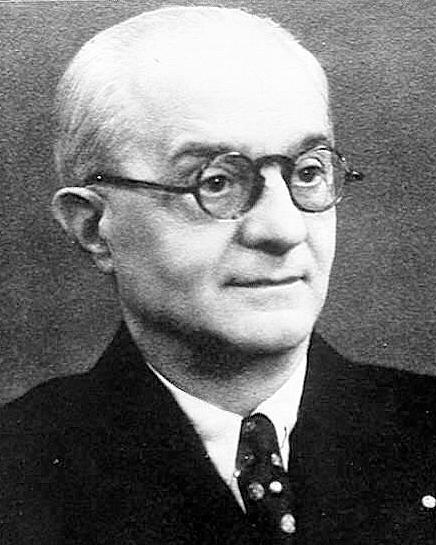
1906 GOTSCHLICH, Felix (1874 – 1914)
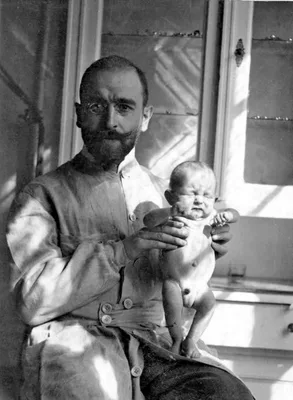
Über Cholera- und choleraähnliche Vibrionen unter den aus Mekka zurückkehrenden Pilgern.
Isolation of El Tor vibrio, a particular strain of the bacterium Vibrio cholerae. Gotschlich first identified this strain in 1905 at a quarantine camp on the Sinai Peninsula in El Tor, Egypt . The vibrios were found i…
GMN 5111.1 · https://historyofmedicine.com/id/6061
1906 HAGNER, Francis Randall (1873 – 1940)
The operative treatment of acute gonorrheal epididymitis.
Hagner devised the open operation for the relief of acute epididymitis.
GMN 4194 · https://historyofmedicine.com/id/6131
1906 HAFFKINE, Waldemar Mordecai Wolff (1860 – 1930)
Les inoculations antipesteuses.
Haffkine developed an anti-bubonic plague vaccine (killed bouillon cultures), for use in man.
GMN 5129 · https://historyofmedicine.com/id/6133
1906 NICOLLE, Maurice (1862 – 1932); MESNIL, Félix (1868 – 1938)
Traitement des trypanosomiases par les “couleurs de benzidine”.
Introduction of trypan-blue in the treatment of trypanosomiasis. Second paper by Mesnil and Nicolle.
GMN 5280 · https://historyofmedicine.com/id/6339
1906 NORRIS, Charles (1867 – 1935); ET AL
Study of a spirochete obtained from a case of relapsing fever in man, with notes on morphology, animal reactions, and attempts at cultivation.
Spirochaete causing the American variety of relapsing fever first isolated. With A. W. Pappenheimer and T. Flournoy.
GMN 5319 · https://historyofmedicine.com/id/6613
1906 NOVY, Frederick George (1864 – 1957); KNAPP, Richard Edward (1884 – )
Studies in Spirillum obermeieri and related organisms.
Novy and Knapp made important observations on the spirochaete isolated by Norris et al. from a case of (American) relapsing fever, proving it to be different from Borrelia obermeieri, sometimes referred to as “Novy’s …
GMN 5320 · https://historyofmedicine.com/id/6616
1906 STRONG, Richard Pearson (1872 – 1948)
A study of some tropical ulcerations of skin with particular reference to their etiology.
Strong described organisms consistent with Histoplasma capsulatum before Darling, although his work was overshadowed by the latter.
GMN 5531.1 · https://historyofmedicine.com/id/6675
1906 DARLING, Samuel Taylor (1872 – 1925)
A protozoon general infection producing pseudotubercles in the lungs and focal necroses in the liver, spleen and lymphnodes.
Histoplasmosis (Histoplasma capsulatum), “Darling’s disease”.
GMN 5532 · https://historyofmedicine.com/id/6676
1906 RICKETTS, Howard Taylor (1871 – 1910)
The transmission of Rocky Mountain spotted fever by the bite of the wood-tick (Dermacentor occidentalis).
Ricketts (who himself died of typhus) demonstrated that the wood tick Dermacentor andersoni is a vector of Rocky Mountain spotted fever.
GMN 5378 · https://historyofmedicine.com/id/7054
1906 PASCHEN, Enrique Federico Mauricio (1860 – 1936)
Was wissen wir über den Vakzineerreger?
“Paschen elementary bodies”; see also No. 5427.
GMN 5430 · https://historyofmedicine.com/id/7397
1906 BANCROFT, Thomas Lane (1860 – 1933)
On the etiology of dengue fever.
Bancroft was the first to produce evidence that Aëdes aegypti is a vector of dengue.
GMN 5472 · https://historyofmedicine.com/id/7611
1906 MÜLLER, Rudolf (1877 – ); OPPENHEIM, Moritz (1876 – 1949)
Ueber den Nachweis von Antikörpern im Serum eines an Arthritis gonorrhoica Erkrankten mittels Komplementablenkung.
“Müller–Oppenheim reaction” – a complement fixation test for the diagnosis of gonorrhoea.
GMN 5213 · https://historyofmedicine.com/id/7815
1906 KELLY, Howard Atwood (1858 – 1943); REED, Walter (1851 – 1902)
Walter Reed and yellow fever.
Digital facsimile of the revised edition published in 1907 from Google Books at this link.
GMN 12820 · https://historyofmedicine.com/id/15066
1907 FLEXNER, Simon (1863 – 1946)
Concerning a serum therapy for experimental infection with Diplococcus intracellularis.
Flexner prepared an antiserum for use in cerebrospinal meningitis.
GMN 4683 · https://historyofmedicine.com/id/958
1907 CALMETTE, Léon Charles Albert (1863 – 1933)
Sur un nouveau procédé de diagnostic de la tuberculose chez l’homme par l’ophtalmo-reaction à la tuberculine.
Calmette’s conjunctival reaction test for tuberculosis.
GMN 2337 · https://historyofmedicine.com/id/3077
1907 PIRQUET, Clemens Peter Freiherr von (1874 – 1929)
Der diagnostische Wert der kutanen Tuberkulinreaktion bei der Tuberkulose des Kindesalters auf Grund von 100 Sektionen.
Introduction of Pirquet’s test – a cutaneous reaction employed in the diagnosis of tuberculosis.
GMN 2338 · https://historyofmedicine.com/id/3080
1907 WHIPPLE, George Hoyt (1878 – 1976)
A hitherto undescribed disease characterized anatomically by deposits of fat and fatty acids in the intestinal and mesenteric lymphatic tissues.
“Whipple’s disease”. Whipple suggested the name lipodystrophia intestinalis (intestinal lipodystrophy) for this condition because there were abnormal lipid deposits in the small intestine wall. In figure 9 of his pape…
GMN 3782 · https://historyofmedicine.com/id/4680
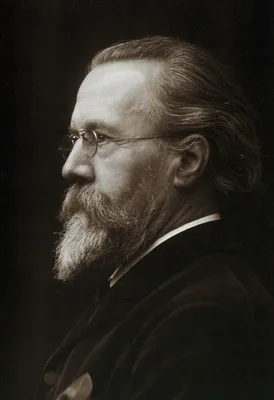
1907 EHRLICH, Paul (1854 – 1915)
Chemotherapeutische Trypanosomen-Studien.
The first account of induced microbial drug resistance. Ehrlich encountered induced drug resistance in microbes while researching arsenical preparations as cures for sleeping sickness and other trypanosome-caused illn…
GMN 5281 · https://historyofmedicine.com/id/6342
1907 MACKIE, Frederick Percival (1875 – 1944)
The part played by Pediculus corporis in the transmission of relapsing fever.
Proof that relapsing fever is conveyed by the body louse, Pediculus corporis.
GMN 5321 · https://historyofmedicine.com/id/6617
1907 STIMSON, Arthur Marston (1876 – )
Note on an organism found in yellow-fever tissue.
Stimson discovered a spirochete in the organs of persons dying of (?) yellow fever. He called it Sp. interrogans, but it was almost certainly Leptospira icterohaemorrhagiae.
GMN 5333 · https://historyofmedicine.com/id/6661
1907 FLEIG, Charles Auguste (1883 – 1912); LISBONNE, Marcel (1883 – 1946)
Recherches sur un séro-diagnostic du kyste hydatique par la méthode des précipitines.
Precipitin reaction for the diagnosis of hydatid disease.
GMN 5350 · https://historyofmedicine.com/id/6837
1907 FUJINAMI, Akira (1870 – 1934); NAKAMURA, Hachitaro
Ueber den Wohnort von Schistosomum japonicum. [Japanese text.]
Fujinami and Nakamura identified the intermediate host of S. japonicum. Abstract in Arch. Schiffs-u. Tropenhyg., 1908, 12,471. Later (1909, 6, 224-52) they demonstrated that infection occurred by skin penetration. Eng…
GMN 5350.1 · https://historyofmedicine.com/id/6841
1907 CENCI, Francesco
Alcune esperienze di sieroimmunizzazione e sieroterapia nel morbillo.
First use of convalescent serum in prophylaxis against measles.
GMN 5447 · https://historyofmedicine.com/id/7486
1907 ASHBURN, Percy Moreau (1872 – 1940); CRAIG, Charles Franklin (1872 – 1950)
Experimental investigations regarding the aetiology of dengue fever, with a general consideration regarding the disease.
Proof that the causal organism of dengue is a filterable virus. Published also in J. infect. Dis., 1907, 4, 440-75.
GMN 5473 · https://historyofmedicine.com/id/7613
1907 HUNT, James Ramsay (1872 – 1937)
On herpetic inflammations of the geniculate ganglion: A new syndrome and its complications.
Herpes zoster oticus, also known as Ramsay Hunt syndrome type 2.
GMN 12253 · https://historyofmedicine.com/id/14468
1908 –1912 STICKER, Georg (1860 – 1960)
Abhandlungen aus der Seuchengeschichte und Seuchenlehre. Pt. 1: Die Pest. Pt. 2: Die Cholera. 2 vols. in 3.
GMN 1681 · https://historyofmedicine.com/id/2368
1908 MORO, Ernst (1874 – 1951)
Ueber eine diagnostische verwertbare Reaktion der Haul auf Einreibung mit Tuberkulinsalbe.
Moro’s percutaneous tuberculin reaction, employed as a diagnostic measure.
GMN 2339 · https://historyofmedicine.com/id/3083
1908 WOLFF-EISNER, Alfred (1877 – 1948)
Die kutane und konjunktivale Tuberkulinreaktion, ihre Bedeutung für Diagnostik und Prognose der Tuberkulose.
Wolff-Eisner’s conjunctival tuberculin reaction.
GMN 2340 · https://historyofmedicine.com/id/3086
1908 MANTOUX, Charles (1877 – 1947)
Intradermo-réaction de la tuberculine.
Mantoux’s intradermal tuberculin skin test.
GMN 2341 · https://historyofmedicine.com/id/3089
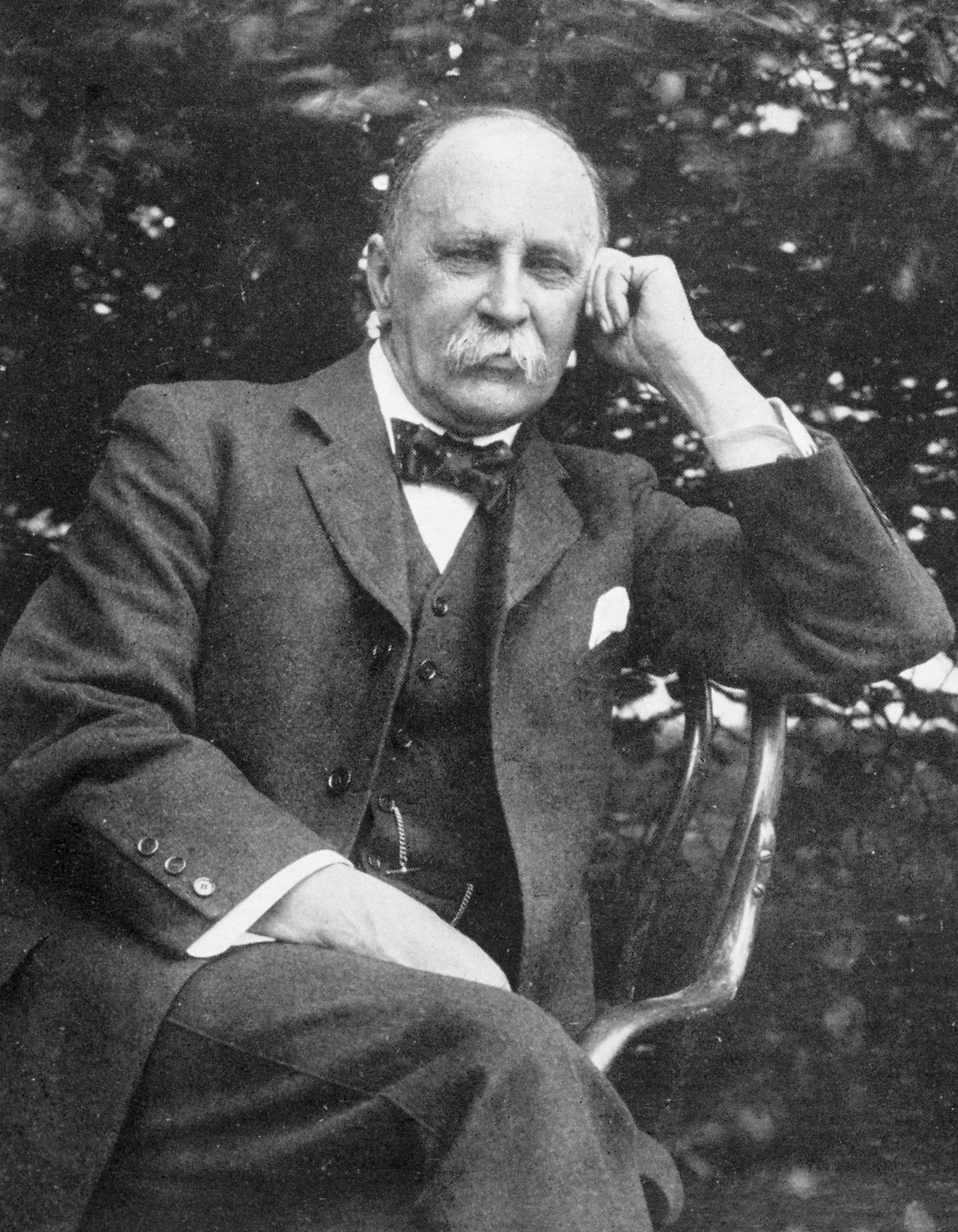
1908 –1909 OSLER, Sir William (1849 – 1919)
Chronic infectious endocarditis.
The tender subcutaneous nodes in subacute bacterial endocarditis (“Osler’s nodes”) were first observed by Osler in 1888, and reported in 1909. This paper is the first definite clinical description of subacute bacteria…
GMN 2827 · https://historyofmedicine.com/id/3538
1908 SCHICK, Béla (1877 – 1967)
Kutanreaktion beil Impfung mit Diphtherietoxin.
The Schick test for the determination of susceptibility to diphtheria.
GMN 5065 · https://historyofmedicine.com/id/5896
1908 PLIMMER, Henry George (1856 – 1918); THOMSON, John D.
Further results of the experimental treatment of trypanosomiasis in rats.
Trial of antimony in the treatment of trypanosomiasis.
GMN 5282 · https://historyofmedicine.com/id/6343
1908 DOERR, Robert (1871 – 1952)
Ueber ein neues invisibles Virus.
Doerr showed the relation of phlebotomus fever to the sandfly, Phlebotomus.
GMN 5477 · https://historyofmedicine.com/id/6363
1908 FERMI, Claudio (1862 – 1952)
Über die Immunisierung gegen Wutkrankheit.
Fermi was the first to use chemical treatment of tissue suspensions of fixed rabies virus for the preparation of vaccine (Fermi vaccine). He introduced the use of carbolic acid for this purpose.
GMN 5484.1 · https://historyofmedicine.com/id/6389
1908 LUTZ, Adolfo (1855 – 1940)
Uma mycose pseudococcidica localisada na bocca e observada no Brazil. Contribuiçao ao conhocimento das hyphoblastomycoses americanas.
South American blastomycosis.
GMN 5532.1 · https://historyofmedicine.com/id/6677
1908 NICOLLE, Charles Jules Henri (1866 – 1936); MANCEAUX, Louis Herbert (1865 – 1943)
Sur une infection à corps de Leishman (ou organismes voisins) du gondi.
Toxoplasma described. English translation in Kean (No. 2268.1).
GMN 5534 · https://historyofmedicine.com/id/6684
1908 SPLENDORE, Alfonso (1871 – 1953)
Un nuovo protozoa parassito de’ conigli incontrato nelle lesioni anatomiche d’una malattia che ricorda in molti punti il kala azar dell’uomo.
Splendore discovered Toxoplasma in a rabbit; it was named T. cuniculi.
GMN 5534.1 · https://historyofmedicine.com/id/6689
1908 WELLMANN, Max (1863 – 1933); PHILUMENOS, [Philumenus; Φιλούμενος] ( – 200)
Philumeni de venenatis animalibus eorumque remediis capita XXXVIII ed. M. Wellmann. Corpus medicorum graecorum X 1, 1.
This work on venoms and their antidotes is the only surviving work of the Byzantine physician Philomenos. Within this context Philomenos also discusses the bites of rabid dogs. Digital facsimile from Corpus medicorum …
GMN 9018 · https://historyofmedicine.com/id/11197
1908 MENDEL, Felix (1862 – 1925)
Die von Pirquet'sche Hautreaktion und die intravenöse Tuberkulinbehandlung.
First publication on the The Mantoux test or Mendel–Mantoux test (also known as the Mantoux screening test, tuberculin sensitivity test, Pirquet test, or PPD test for purified protein derivative) is a tool for screeni…
GMN 12385 · https://historyofmedicine.com/id/14611
1909 BRACHT, Erich Frans Eugen (1882 – 1969); WÄCHTER, Hermann Julius Gustav (1878 – 1944)
Beitrag zur Aetiologie und pathologischen Anatomie der Myokarditis rheumatica.
“Bracht–Wächter bodies” in the myocardium in bacterial endocarditis.
GMN 2828 · https://historyofmedicine.com/id/3543
1909 HORDER, Thomas Jeeves (1871 – 1955)
Infective endocarditis, with an analysis of 150 cases.
Classic description of subacute bacterial endocarditis.
GMN 2829 · https://historyofmedicine.com/id/3546
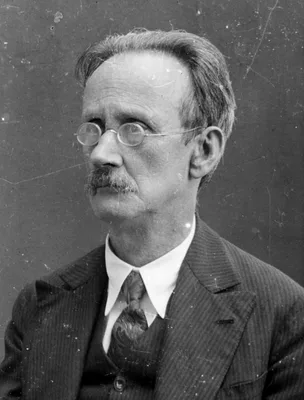
1909 CHAGAS, Carlos Justiniano Ribiero (1879 – 1934)
Nova tripanozomiaze humana. Estudos sobre a morfolojia e o ciclo evolutivo do Schizotrypanum cruzi n.gen., n.sp., ajente etiolojico de nova entidade morbida do homen.
Chagas discovered T. cruzi, causal organism in American trypanosomiasis (“Chagas’s disease”). Partial English translation in Kean (No. 2268.1).
GMN 5283 · https://historyofmedicine.com/id/6345
1909 KLEINE, Friedrich Karl (1861 – 1950)
Positive Infektionsversuche mit Trypanosoma brucei durch Glossina palpalis.
Glossina was believed to transmit Trypanosoma mechanically to the new host until Kleine showed that the latter undergoes a developmental cycle in Glossina. English translation in Kean (No. 2268.1).
GMN 5283.1 · https://historyofmedicine.com/id/6347
1909 LEVADITI, Constantin (1874 – 1953)
Le mécanisme d’action des dérivés arsenicaux dans les trypanosomiases.
A study of the action of atoxyl and arsacétine.
GMN 5284 · https://historyofmedicine.com/id/6349
1909 DOERR, Robert (1871 – 1952); RUSS, Viktor Karl (1879 – )
Weitere Untersuchungen über das Pappatacifieber.
Doerr and Russ suggested that the virus of phlebotomus fever may be transmitted from one generation of infected Phlebotomus papatasii to another.
GMN 5478 · https://historyofmedicine.com/id/6366
1909 DOERR, Robert (1871 – 1952); ET AL
Das Pappatacifieber.
An Austrian military commission consisting of R. Doerr, K. Franz, and S. Taussig proved that the causal organism of pappataci fever was a virus and that Phlebotomus papatasii was the vector.
GMN 5479 · https://historyofmedicine.com/id/6367
1909 THIMM, C. A.
Bibliography of trypanosomiasis.
Subject index…with additional references and corrections, 1910.
GMN 5289.2 · https://historyofmedicine.com/id/6376
1909 LINDENBERG, Adolfo Carlos (1872 – 1944)
L’ulcère de Bauru ou le bouton d’orientau Brésil.
Muco-cutaneous leishmaniasis of South America. English translation in Kean (No. 2268.1).
GMN 5299.1 · https://historyofmedicine.com/id/6483
1909 NICOLLE, Charles Jules Henri (1866 – 1936)
Le kala azar infantile.
Nicolle considered infantile kala-azar to be caused by a distinct species of Leishmania; to this he gave the name L. infantum.
GMN 5300 · https://historyofmedicine.com/id/6488
1909 BARTON, Alberto Leonardo (1870 – 1950)
Descripción de elementos endo-globulares hallados en las enfermos de fiebre verrucosa.
The causal organism of Oroya fever and verruga peruana, endemic in Peru, was named Bartonella bacilliformis after Barton, who was one of the first to observe it.
GMN 5533 · https://historyofmedicine.com/id/6681