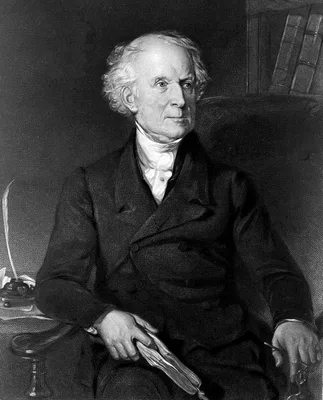
1776 ARTHAUD, Charles (1748 – 1791)
Traité des pians.
One of the earliest medical publications printed in Haiti. Duvivier, Bibliographie générale et méthodique d'Haiti, 2, p. 197.
GMN 13364 · https://historyofmedicine.com/id/15635
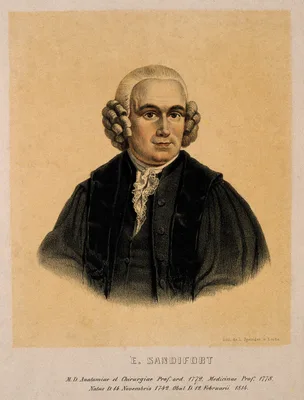
1777 –1781 SANDIFORT, Eduard (1742 – 1814)
Observationes anatomicae-pathologicae. 4 vols.
Sandifort’s beautifully illustrated work on pathological anatomy included records of ulcerative aortic endocarditis, renal calculi, hemias, bony ankyloses, and congenital abnormalities. A good account of the “tetralog…
GMN 2278 · https://historyofmedicine.com/id/2893
1779 DAVID, Jean Pierre (1737 – 1784)
Dissertation sur les effets du mouvement et du repos dans les maladies chirurgicales.
Includes a description of Pott’s disease, with post-mortem findings, better than Pott’s own account. This is an important early work on the effect of movement and of rest in the treatment of joint conditions. English …
GMN 4303 · https://historyofmedicine.com/id/5469
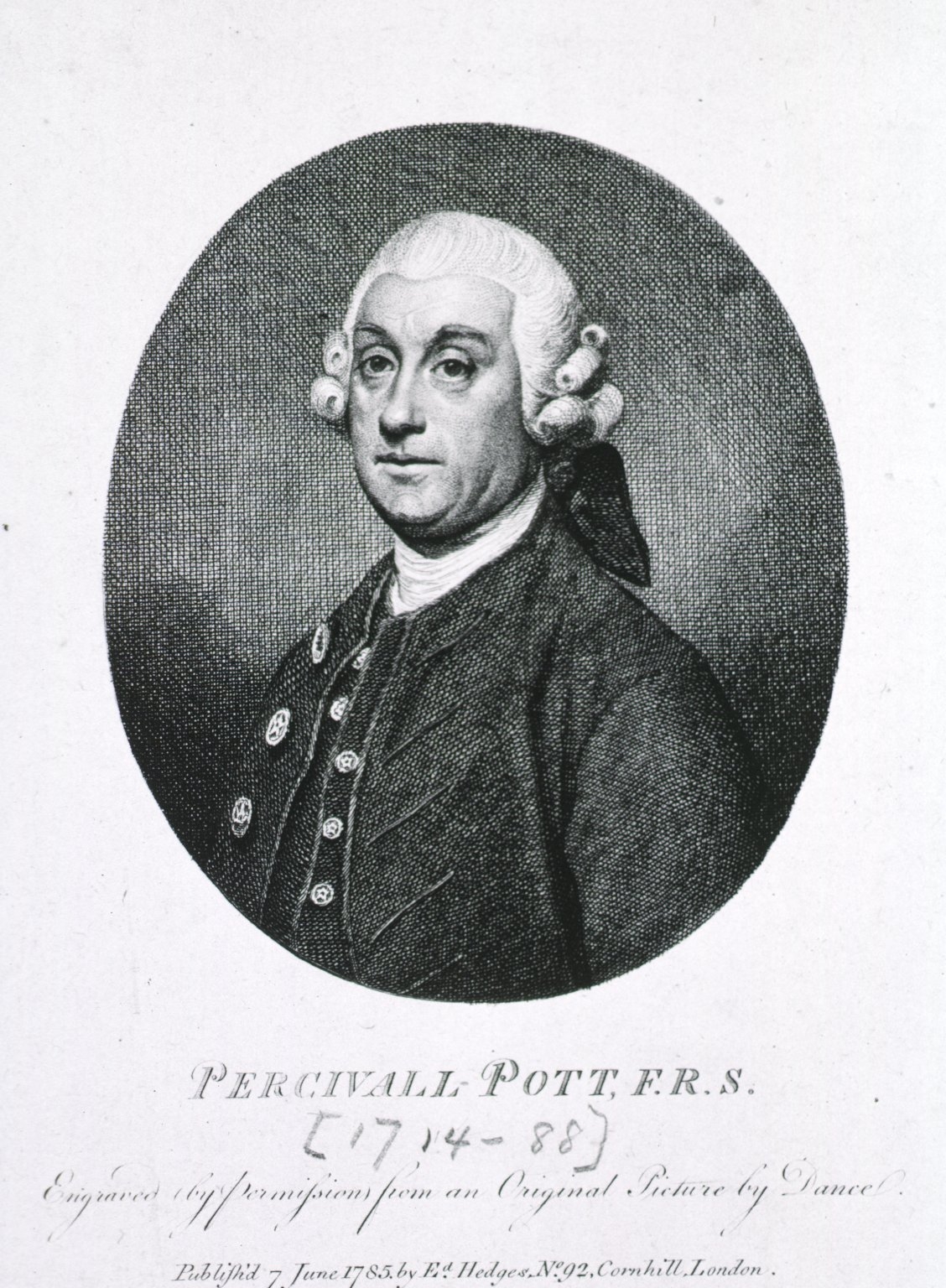
1779 POTT, Percivall (1714 – 1788)
Remarks on that kind of palsy of the lower limbs, which is frequently found to accompany a curvature of the spine.
“Pott’s disease”. Percival Pott, surgeon to St. Bartholomew’s Hospital for more than 40 years, left a classic description of spinal curvature due to tuberculous caries and causing paralysis of the lower limbs. He did …
GMN 4304 · https://historyofmedicine.com/id/5473
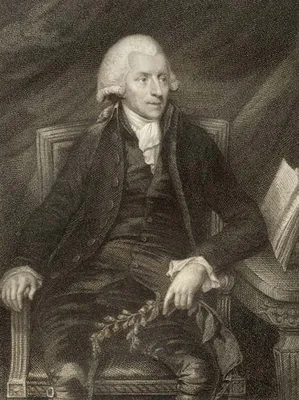
1779 WITHERING, William (1741 – 1799)
An account of the scarlet fever and sore throat, or scarlatina anginosa; particularly as it appeared at Birmingham in the year 1778.
Withering, best remembered for his book on the foxglove, described the epidemics of scarlet fever which occurred in England in 1771 and 1778.
GMN 5079 · https://historyofmedicine.com/id/5934
1780 CLARK, John (1744 – 1805)
Observations on fevers, especially those of the continued type, and on the scarlet fever attended with ulcerated sore-throat, as it appeared at Newcastle upon Tyne in the year 1778: Together with a comparative view of that epidemic with the scarlet fever as described by authors, and the angina maligna.
Digital facsimile from the Intenet Archive at this link.
GMN 2205 · https://historyofmedicine.com/id/1642
1780 CHABERT, Philibert (1737 – 1814)
Description et traitement du charbon dans les animaux.
First important clinical description of anthrax. For some time after the appearance of Chabert’s short book, the condition was known as “Chabert’s disease”. Chabert was Directeur & Inspecteur général of the Écoles Roy…
GMN 5162 · https://historyofmedicine.com/id/6227
1780 SAILLANT, Charles Jacques (1747 – 1804)
Tableau historique et raisonné des épidémies catharrales vulgairement dites la grippe; depuis 1510 jusques et y compris celle de 1780.
GMN 5488 · https://historyofmedicine.com/id/6429
1780 HUNTER, John (1728 – 1793)
Account of a woman who had the smallpox during pregnancy, and who seemed to have communicated the same disease to the foetus.
GMN 5421 · https://historyofmedicine.com/id/7344
1780 BYLON, David
Korte aantekening wegens eene algemeene ziekte, doorgaans genaamd knokkel-koorts.
Bylon described an epidemic of dengue which appeared in the Dutch East Indies in 1779, the first definite description of the disease. O. H. P. Pepper published a photographic reproduction of the article in Ann. med. H…
GMN 5469 · https://historyofmedicine.com/id/7605
1781 RUSH, Benjamin (1745 – 1813)
The new method in inoculating for the small pox.
GMN 5422 · https://historyofmedicine.com/id/7348
1782 SONNERAT, Pierre (1749 – 1814)
Voyage aux Indes Orientales et à la Chine, fait par ordre du Roi depuis 1774 jusqu’en 1781. 2 vols.
Vol. 1, pp. 113-16, “No author before the time of Sonnerat gives us so distinct an account of the epidemic prevalence of cholera, so full a description of its varieties or has attributed it so positively to the physic…
GMN 5104.1 · https://historyofmedicine.com/id/6038
1784 UNDERWOOD, Michael (1737 – 1820)
A treatise on the diseases of children.
Underwood laid the foundation of modern pediatrics. His work was superior to anything that had previously appeared and remained the most important book on the subject for sixty years, passing through many editions. Th…
GMN 2734.4 · https://historyofmedicine.com/id/8101
1784 HENDY, James
A treatise on the glandular disease of Barbadoes: Proving it to be seated in the lymphatic system.
Digital facsimile from Google Books at this link.
GMN 13467 · https://historyofmedicine.com/id/15741
1786 HUNTER, John (1728 – 1793)
A treatise on the venereal disease.
In Hunter's day venereal diseases were thought to be due to a single poison. To test this theory Hunter experimented with matter taken from a gonorrhoeal patient who, unknown to Hunter, also had syphilis. Hunter maint…
GMN 2377 · https://historyofmedicine.com/id/7782
1786 STOLL, Maximilian (1742 – 1788)
Aphorismi de cognoscendis et curandis febribus.
Stoll was one of the few physicians of the Viennese school who supported Auenbrugger's views on percussion. In this treatise on fevers Stoll referred favorably to the practice, and it is thought that Corvisart became …
GMN 11711 · https://historyofmedicine.com/id/13912
1787 NISBET, William (1759 – 1822)
First lines of theory and practice in venereal diseases.
First complete description of lymphatic chancre – “Nisbet’s chancre”.
GMN 5198 · https://historyofmedicine.com/id/7783
1788 –1789 GIRTANNER, Christoph (1760 – 1800)
Abhandlung über die venerische Krankheit. 3 vols.
Girtanner’s important textbook on the venereal diseases contains some history.
GMN 5199 · https://historyofmedicine.com/id/7785
1789 HOWARD, John (1726 – 1790)
An account of the principle lazarettos in Europe. With various papers relative to the plague: Together with further observations on some foreign prisons and hospitals and additional remarks on the present state of those in Great Britain and Ireland.
Following on his work for the improvement of the conditions in prisons, Howard travelled extensively in Europe, carrying out an elaborate investigation into the conditions of hospitals. Digital facsimile of the second…
GMN 1601 · https://historyofmedicine.com/id/1721
1789 RUSH, Benjamin (1745 – 1813)
An account of the bilious remitting fever. In his Medical inquiries and observations, 1, 104-21
One of the first important accounts of dengue (“breakbone fever”). Rush described the Philadelphia outbreak of 1780.
GMN 5470 · https://historyofmedicine.com/id/7607
1790 HAMILTON, Robert (1721 – 1793)
An account of a distemper, by the common people in England vulgarly called the mumps.
First modern account of the occurrence of parotitis and orchitis complicating it. Hamilton’s paper, read in 1773, by its fullness and clarity made the disease more generally known, so that within a few years many text…
GMN 5523 · https://historyofmedicine.com/id/6596
1791 BEER, Georg Joseph (1763 – 1821)
Praktische Beobachtungen über verschiedene, vorzüglich aber über jene Augenkrankheiten, welche aus allgemeinen Krankheiten des Körpers entspringen.
“This is the first monograph ever published dealing with ocular signs of systemic disease. It deals with lacrimal fistulas, trichiasis, adhesions of the lids, lid ulcers, ephiphora, and ocular inflammations. He illust…
GMN 5833.2 · https://historyofmedicine.com/id/7103
1791 RUSSELL, Patrick (1727 – 1805)
A treatise of the plague: Containing an historical journal, and medical account, of the plague, at Aleppo, in the years 1760, 1761, and 1762.
Digital facsimile from the Internet Archive at this link.
GMN 9522 · https://historyofmedicine.com/id/11708
1793 CAREY, Mathew (1760 – 1839)
A short account of the malignant fever, lately prevalent in Philadelphia: With a statement of the proceedings that took place on the subject in different parts of the United States.
Carey was a Philadelphia publisher and economist rather than a physician. In this little book, which passed through four editions in a few months, Carey left a graphic description of the great yellow fever epidemic of…
GMN 5451 · https://historyofmedicine.com/id/7515
1793 CURRIE, William (1754 – 1828)
A description of the malignant, infectious fever prevailing at present in Philadelphia; with an account of the means to prevent infection, and the remedies and method of treatment, which have been found most successful.
Digital facsimile from the Internet Archive at this link.
GMN 5452 · https://historyofmedicine.com/id/7523
1793 BELL, Benjamin (1749 – 1806)
A treatise on gonorrhoea virulenta, and lues venerea. 2 vols.
Bell was the first to differentiate between gonorrhoea and syphilis.
GMN 2378 · https://historyofmedicine.com/id/7786
1794 RUSH, Benjamin (1745 – 1813)
An account of the bilious remitting yellow fever, as it appeared in the city of Philadelphia in the year 1793.
Benjamin Rush was the most eminent figure in Philadelphia medicine in his day. His description of the yellow fever epidemic of 1793 is classic. He did magnificent work in treating the sick during the epidemic and in p…
GMN 5453 · https://historyofmedicine.com/id/7528
1794 JONES, Absolom (1746 – 1818); ALLEN, Richard (1760 – 1831); CLARKSON, Matthew (1733 – 1800)
A narrative of the proceedings of the black people during the late awful calamity in Philadelphia, in the year 1793: and a refutation of some censures thrown upon them in some late publications.
A refutation of slights by Matthew Carey in his Short account of the malignant fever, lately prevalent in Philadelphia (1793; No. 5451) to the important contributions of black people, many of whom served as nurses and…
GMN 5453.1 · https://historyofmedicine.com/id/7530
1794 BALMIS, Francisco Javier de (1793 – 1819)
Demostracion de las eficaces virtudes nuevamente descubiertas en las raices de dos plantas de Nueva-España, especies de ágave y de begónia, para la curacion del vicio venéreo y escrofuloso ...
Balmis conducted experimental trials on the effectiveness of two Mexican plants, agave and begonia, which were believed, according to folk medicine practices in Mexico, to cure syphilis and scrofula. The trials confir…
GMN 8004 · https://historyofmedicine.com/id/10180
1794 DEVÈZE, Jean (1753 – 1829)
An enquiry into, and observations upon the causes and effects of the epidemic disease, which raged in Philadelphia from the month of August till towards the middle of December, 1793.
Text in English and French on facing pages. Digital facsimile from the Medical Heritage Library, Internet Archive at this link.
GMN 9387 · https://historyofmedicine.com/id/11570
1795 CHISHOLM, Colin (1755 – 1825)
An essay on the malignant pestilential fever introduced into the West Indian Islands from Boullam, on the coast of Guinea, as it appeared in 1793 and 1794.
Chisholm, "Surgeon to his Majesty's Ordnance in Grenada," was apparently the first to observe the mode of transmission of the Guinea worm, Dracunculus medinensis. Chishom was also one of the first to recognize that th…
GMN 5336.3 · https://historyofmedicine.com/id/6710
1797 BAILLIE, Matthew (1761 – 1823)
The morbid anatomy of some of the most important parts of the human body. 2nd ed.
First clinical description of chronic obstructive pulmonary emphysema. The lung on which Baillie performed an autopsy before describing this condition is said to have been that of Samuel Johnson. P. 46: Baillie sugges…
GMN 2736 · https://historyofmedicine.com/id/4126
1797 SEAMAN, Valentine (1770 – 1817)
An inquiry into the cause of the prevalence of the yellow fever in New-York.
Includes four early plot maps; Seaman was one of the first to create maps that attempted to show the spread of contagious disease.
GMN 7687 · https://historyofmedicine.com/id/9859
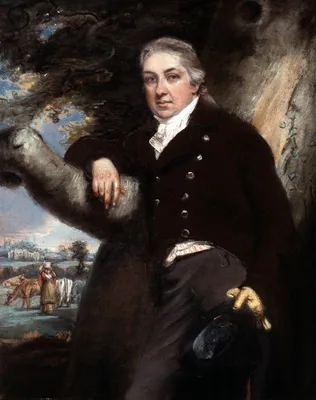
1798 JENNER, Edward (1749 – 1823)
An inquiry into the causes and effects of the variolae vaccinae.
Jenner established the fact that a “vaccination” or inoculation with vaccinia (cowpox) lymph matter protects against smallpox. He performed his first vaccination on May 14, 1796. The above work, describing 23 successf…
GMN 2529.3 · https://historyofmedicine.com/id/7353
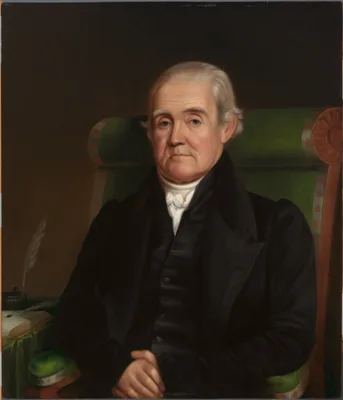
1799 WEBSTER, Noah (1758 – 1843)
A brief history of epidemic and pestilential diseases. 2 vols.
“The best general summary of epidemiological opinion at the beginning of the nineteenth century; and few works surpass it as a compendium of earlier speculations in this field”. (Winslow). A great linguist, Webster wa…
GMN 1675.1 · https://historyofmedicine.com/id/2338
1799 AZEREDO, José Pinto de (1766 – 1810)
Ensaios sobre algumas enfermidades d'Angola....
Azeredo noted that the tropical fevers found in Brazil and Angola were very similar. He claimed to have achieved excellent results with his “new method” of treatment, which included the use of quinine, nux vomica, ars…
GMN 9070 · https://historyofmedicine.com/id/11249
1799 LINING, John (1708 – 1760)
A description of the American yellow fever, which prevailed at Charleston, in South Carolina, in the year 1748.
Digital facsimile from U.S. National Library of Medicine at this link.
GMN 10511 · https://historyofmedicine.com/id/12704
1800 –1801 LARREY, Dominique Jean (1766 – 1842)
Mémoire sur l’ophtalmie régnante en Egypte.
The great military surgeon Larrey served during the Napoleonic campaign in Egypt, where he was the first to observe the contagiousness of trachoma shortly after the successful invasion in 1798. The disease spread to E…
GMN 5837 · https://historyofmedicine.com/id/7120
1800 –1802 WATERHOUSE, Benjamin (1754 – 1846)
A prospect of exterminating the small-pox, being the history of the variolae vaccinae, or kine-pox, commonly called the cow-pox; as it has appeared in England: With an account of a series of inoculations performed for the kine-pox in Massachusetts. [Part II:] A prospect of exterminating the small pox part II, being a continuation of a narrative of facts concerning the progress of the new inoculation in America; together with practical observations on the local appearance, symptoms, and mode of treating the variola vaccina, or kine pock; including some letters to the author, from distinguished characters, on the subject of this benign remedy, now passing with a rapid step through all ranks of society in Europe and America.
Waterhouse introduced Jennerian vaccination into the U.S.A. He vaccinated his own child as his first case. See J. B. Blake, Benjamin Waterhouse and the introduction of vaccination. A reappraisal. Philadelphia, 1957. D…
GMN 5424 · https://historyofmedicine.com/id/7359
1801 HEBERDEN, William Jr. (1767 – 1845)
Observations on the increase and decrease of different disease, and particularly of the plague.
Heberden observed that the number of deaths from dysentery sharply decreased over the 18th century, but that deaths attributed to apoplexy increased. Digital facsimile from the Internet Archive at this link.
GMN 8372 · https://historyofmedicine.com/id/10549
1801 ASSALINI, Paolo (1759 – 1846)
Observations sur la maladies appelée peste, le flux dissentérique, l'ophtalmie d'Égypte, et les moyens de s'en préserver. Avec des notions sur la fièvre jaune de Cadix, et les projet et plan d'un hôpital, pour le traitement maladies épidémiques et contagieuses.
At the time of publication Assalini, a military surgeon with Napoleon, characterized himself on the title page as "Docteur en Médecine et Chirugien de 1re classe de la Garde des Consuls..." Digital facsimile from well…
GMN 12053 · https://historyofmedicine.com/id/14261
1802 COXE, John Redman (1773 – 1864)
Practical observations on vaccination: or inoculation for the cow pock.
Coxe did much to destroy ignorant prejudice against vaccination; he was the first in Philadelphia to practice it. Like Waterhouse, he inoculated his own child as his first case.
GMN 5425 · https://historyofmedicine.com/id/7362
1802 GILBERT, Nicolas-Pierre (1751 – 1814); TRABUC, Michel; BONAMY, Louis Esprey
Instruction des Officiers de Santé en Chef de l'Armée sur les maladies internes et externes des troupes à Sainte-Domingue, et sur leur traitement.
The date of this undated work has been inferred. The 40-page pamphlet issued during the early stages of the French expedition to the island, provided instructions by the chief medical officers of the army for medical …
GMN 13356 · https://historyofmedicine.com/id/15627
1803 WINTERBOTTOM, Thomas Masterman (1765 – 1859)
An account of the native Africans in the neighbourhood of Sierra Leone; to which is added, an account of the present state of medicine among them. 2 vols.
In his travels in Africa, Winterbottom, physician to the Colony of Sierra Leone (now Republic of Sierra Leone) on the west coast of Africa, saw sleeping sickness, which he described in vol. 2, pp. 29-31, as a species …
GMN 5266 · https://historyofmedicine.com/id/8561
1803 WITTMAN, William
Travels in Turkey, Asia-Minor, Syria, and across the desert into Egypt during the years 1799, 1800, and 1801, in company with the Turkish Army, and the British Military Mission.To which are annexed, observations on the plague, and on the diseases prevalent in Turkey, and a meteorological journal.
Wittman described the plague and other epidemics that afflicted both the Ottoman and British armies. In the Appendix he provided medical suggestions for treatment, together with a history of the plague. Digital facsim…
GMN 7367 · https://historyofmedicine.com/id/9539
1803 MOREAU DE LA SARTHE, Jacques-Louis (1771 – 1826); BALMIS, Francisco Javier de (1793 – 1819)
Tratado histórico y práctico de la vacuna que contiene en compendio el orígen y los resultados de las observaciones y experimentos sobre la vacuna, con un exámen imparcial de sus ventajas, y de las objeciones que se le han puesto, con todo lo demás que concierne á la práctica del nuevo modo de inocular. [Translated From the French by] Francisco Xavier de Balmis.
On November 30, 1803 Spanish physician Francisco Javier de Balmis and his team embarked from Spain, on an expedition to vaccinate the people of Spanish America against smallpox. This three year voyage, which became kn…
GMN 8006 · https://historyofmedicine.com/id/10182
1803 GILBERT, Nicolas-Pierre (1751 – 1814)
Histoire médicale de l'Armée Française, a Saint-Domingue, en l'an dix; ou mémoire sur la fièvre jaune, avec un apperçu de la topographie médicale de cette colonie.
Digital facsimile from Google Books at this link.
GMN 9657 · https://historyofmedicine.com/id/11844
1804 ZINKE, Georg Gottfried (1813 – )
Neue Ansichten der Hundswuth, ihrer Ursachen und Folgen, nebst einer sichem ehandlungsart der von tollen Thieren gebissenen Menschen.
Zinke transmitted rabies from a rabid dog to a normal one, and to a rabbit and a hen, by injection of saliva and proved the disease to be infectious. Digital facsimile from wellcomecollection.org at this link.
GMN 5481 · https://historyofmedicine.com/id/6370
1805 VIEUSSEUX, Gaspard (1746 – 1814)
Mémoire sur la maladie qui a régné à Genève au printemps de 1805.
First definite description of cerebrospinal meningitis. Partial English translation in No. 2241.
GMN 4674 · https://historyofmedicine.com/id/940
1806 DUVILLARD, Emmanuel Etienne (1755 – 1832)
Analyse et tableaux de l’influence de la petite vérole sur la mortalité à chaque âge, et de celle qu’un préservatif tel que la vaccine peut avoir sur la population et la longevité.
Duvillard showed statistically the effect of smallpox vaccination on the mortality rate. Digital facsimile from Google Books at this link.
GMN 1695 · https://historyofmedicine.com/id/2441