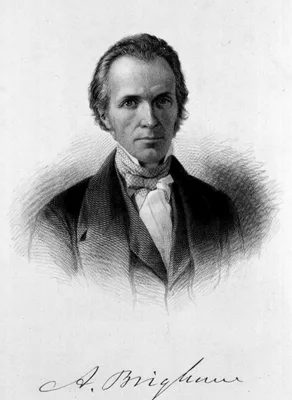
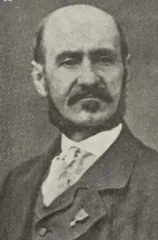
1832 BRIGHAM, Amariah (1798 – 1849)
A treatise on epidemic cholera; including an historical account of its origin and progress, to the present period. Compiled from the most authentic sources.
This compendium contains one of the first world charts of a disease, tracing the spread of cholera from two main sources, India (1817) and China (1820), across Asia and the Middle East via trade routes, to France and …
GMN 7688 · https://historyofmedicine.com/id/9860
1832 BRIERRE DE BOISMONT, Alexandre-Jacques-François (Brière de Boismont) (1797 – 1881)
Relation historique et médicale du choléra-morbus de Pologne, comprenant l'apparition de la maladie, sa march, ses progrès, ses symptômes, son mode de traitement et les moyens préservatifs. Avec une carte.
In his study of the spread of cholera in Poland in 1831 Brière de Boismont used a map to show the progression of the disease from a central point through the country along a red line through principal towns and the da…
GMN 10457 · https://historyofmedicine.com/id/12650
1832 HAMETT, John
The substance of the official medical reports upon the epidemic, called cholera: Which prevailed among the poor at Dantzick, between the end of May and the first part of September, 1831, as transmitted to their lordships; being an analysis of the said epidemic disease in that city--founded upon actual observation and accurate inquiry: With important and well-authenticated facts relative to the same disease, as it prevailed among the poor in other parts of the North of Europe.
Hamett privately published this report after it was rejected for publication by the British government. He included hospital admission tables in his book and produced perhaps the first map based on hospital reports of…
GMN 10462 · https://historyofmedicine.com/id/12655
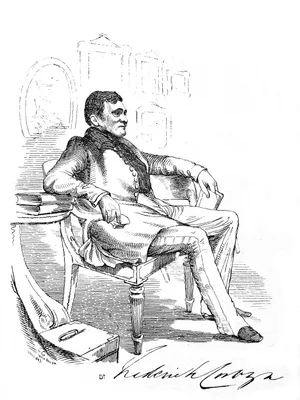
1832 CORBYN, Frederick
A treatise on the epidemic cholera, as it has prevailed in India; together with the reports of the medical officers, made to the medical boards of the presidencies of Bengal, Madras, and Bombay, for the purpose of ascertaining a successful mode of treating that destructive disease; And a critical examination of all the works that have hitherto appeared on the subject.
Corbyn mapped the history of cholera in India within British regimental stations. He included the date of each reported outbreak in a table of British regimental locations to describe the temporal progression of the d…
GMN 10463 · https://historyofmedicine.com/id/12656
1832 TANNER, Henry Schenck (1786 – 1858)
A geographical and statistical account of the epidemic cholera: From its commencement in India to its entrance into the United States: Comprehended in a series of maps and tables, exhibiting the names of places visited by the pestilence, the time of its commencement, the number of cases, and deaths, and duration, at each place: Compiled from a great variety of printed and manuscript documents.
Tanner, a prolific cartographer, wished to provide a geographic account of the spread of the worldwide cholera epidemic of 1817. Statistics concerning the epidemic, he complained, were "given in such a loose and uncon…
GMN 10526 · https://historyofmedicine.com/id/12719
1832 YATES, Christopher C. (1778 – 1848)
Observations on the epidemic now prevailing in the city of New-York; called the Asiatic or spasmodic cholera; with advice to the planters of the South, for the medical treatment of their slaves.
Digital facsimile from the Internet Archive at this link.
GMN 10812 · https://historyofmedicine.com/id/13008
1833 TROUSSEAU, Armand (1801 – 1867)
Mémoire sur un cas de trachéotomie pratiquée dans la période extréme de croup.
Trousseau popularized tracheotomy.
GMN 5054 · https://historyofmedicine.com/id/5855
1833 HILTON, John (1804 – 1878)
Notes of a peculiar appearance observed in human muscle, probably depending upon the formation of very small cysticerci.
Hilton described Trichinella spiralis and suggested its parasitic nature.
GMN 5336.5 · https://historyofmedicine.com/id/6718
1833 WALLACE, William (1791 – 1837)
A treatise on the venereal disease and its varieties.
On p. 371 commences the first description of lymphogranuloma venereum, which Wallace called “indolent primary syphilitic bubo”.
GMN 5215 · https://historyofmedicine.com/id/7822
1834 GERHARD, William Wood (1809 – 1872)
Cerebral affections of children.
Accurate clinical description of tuberculous meningitis.
GMN 4636 · https://historyofmedicine.com/id/701
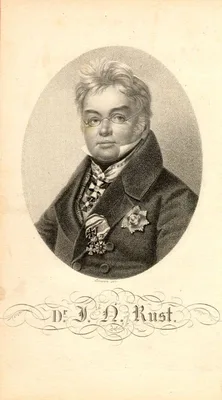
1834 RUST, Johann Nepomuk (1775 – 1840)
Aufsätze und Abhandlungen aus dem Gebiete der Medizin, Chirurgie und Staatsarzneikunde. 1, 196.
First description of “Rust’s disease” – tuberculous spondylitis of the cervical vertebrae.
GMN 4319 · https://historyofmedicine.com/id/5536
1834 CHÂTEAUNEUF, Louis-François Benoiston de (1776 – 1856)
Rapport sur la marche et les effets du choléra-morbus dans Paris et les communes rurales du département de la Seine par la commission nommée, avec l'approbation de M. le ministre du commerce et des travaux publics, par MM. les préfets de la Seine et de police; année 1832.
This work contained one of the earliest applications of spatial analysis in epidemiology—an early thematic map by geographer and cartographer Charles Picquet, in which the 48 districts of Paris were represented by gra…
GMN 7480 · https://historyofmedicine.com/id/9652
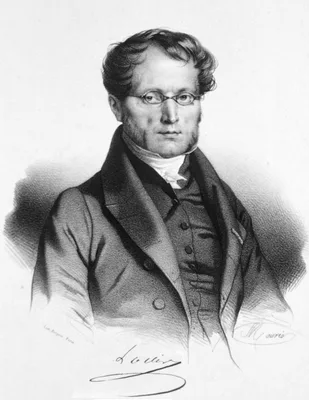
1835 LOUIS, Pierre Charles Alexandre (1787 – 1872)
Recherches sur les effets de la saignée dans quelques maladies inflammatoires, et sur l’action de l’émétique et des vésicatoires dans la pneumonie.
Louis refuted Broussais’s system of medicine, his “médicine physiologique.” Louis was instrumental in establishing medicine as an exact science by the introduction of the numerical or statistical method. English trans…
GMN 1698 · https://historyofmedicine.com/id/2455
1835 –1836 WALLACE, William (1791 – 1837)
Treatment of the venereal disease by the hydriodate of potash, or iodide of potassium.
Wallace introduced potassium iodide in the treatment of syphilis, reporting good results in 139 patients.
GMN 2379 · https://historyofmedicine.com/id/3274
1835 –1836 BASSI, Agostino (1773 – 1856)
Del mal del segno calcinaccio o moscardino malattia che affligge i bachi da seta e sul modo di liberarne le bigattaje anche le piu infestate. 2 vols.
Bassi preceded Louis Pasteur in the discovery that microorganisms can be the cause of disease (the germ theory of disease). He discovered that the muscardine disease of silkworms--a disease that was destroying the sil…
GMN 2532 · https://historyofmedicine.com/id/3515
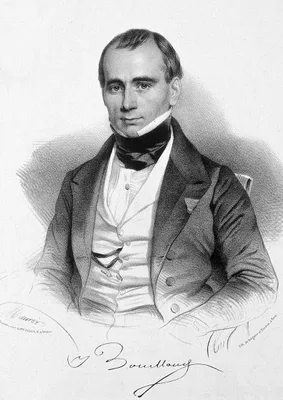
1835 BOUILLAUD, Jean Baptiste (1796 – 1881)
Traité cliniques des maladies du coeur. 2 vols.
Bouillaud applied Laennec's technique of auscultation to diseases of the heart. Vol. 2, page 238: “Bouillaud’s disease” – rheumatic endocarditis. Although not first to note the cardiac manifestations of acute rheumati…
GMN 2749 · https://historyofmedicine.com/id/4633
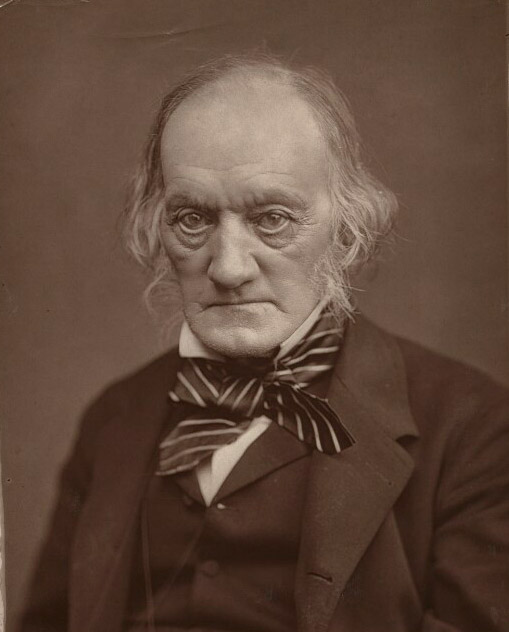
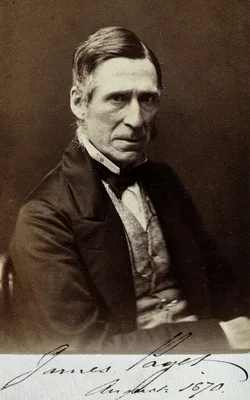
1835 OWEN, Sir Richard (1804 – 1892); PAGET, Sir James (1814 – 1899)
Description of a microscopic entozoon infesting the muscles of the human body.
While a first-year student at St. Bartholomew’s Hospital, James Paget discovered trichina in muscle during dissection. Richard Owen, his teacher, named it Trichina spiralis and published an account, barely mentioning …
GMN 5337 · https://historyofmedicine.com/id/6724
1835 JULLIARD, Etienne François
De l’emploi de l’excision et de la cautérisation à l’aide du nitrate d’argent fondu dans l’ophthalmie blennorrhagique.
Silver nitrate for treatment of gonococcal ophthalmia. Digital facsimile from wellcomecollection.org at this link.
GMN 5850 · https://historyofmedicine.com/id/7177
1836 PERRY, Robert (1783 – 1848)
Observations on continued fever, as it occurs in the city of Glasgow hospitals.
Perry correctly described many of the distinctions between typhus and typhoid.
GMN 5023.1 · https://historyofmedicine.com/id/6736
1836 DONNÉ, Alfred François (1801 – 1878)
Animalcules observés dans les matières purulentes et le produit des sécrétions des organes génitaux de l’homme et de la femme.
First description of Trichomonas vaginalis, which Donné at first believed to be the pernicious agent in gonorrhoea. He later recognized that the organism is a normal inhabitant of the female genital tract. By this wor…
GMN 5207 · https://historyofmedicine.com/id/7800
1836 BOUILLAUD, Jean Baptiste (1796 – 1881)
Nouvelles recherches sur le rhumatisme articulaire en général, et spécialement sur la loi de coincidence de la péricardite et de l'endocardite avec cette maladie, ainsi que sur l'efficacité de la formule des émissions sanguines coup sur coup dans son traitement.
"In this volume he [Bouillaud] irrevocably established the etiologic relationship between rheumatic fever and heart disease. Early reports on this relationship had been contributed by Pitcairn, Jenner, and Wells, but …
GMN 11556 · https://historyofmedicine.com/id/13755
1837 STOKES, William (1804 – 1878)
A treatise on the diagnosis and treatment of diseases of the chest.
Stokes, most prominent of the Irish school of medicine, established his reputation by his book on diseases of the chest. Important among its contents are his discovery of a stage of pneumonia prior to that described b…
GMN 2213 · https://historyofmedicine.com/id/1697
1837 COLLES, Abraham (1773 – 1843)
Practical observations on the venereal disease, and on the use of mercury.
“Colles’s law” is stated on. p. 304. Colles introduced small doses of mercury in the treatment of syphilis. He was Professor of Surgery at Dublin.
GMN 2380 · https://historyofmedicine.com/id/3277
1837 RAYER, Pierre François Olive (1793 – 1867)
De la morve et du farcin chez l’homme.
In this treatise on glanders and farcy in man Rayer showed that glanders is contagious, but is not a form of tuberculosis. Rayer began the work with a thoroughly documented historical chapter. Digital facsimile of the…
GMN 5154 · https://historyofmedicine.com/id/6201
1837 GERHARD, William Wood (1809 – 1872)
On the typhus fever which occurred at Philadelphia in the spring and summer of 1836; illustrated by clinical observations at the Philadelphia Hospital; showing the distinction between this form of disease and dothinenteritis, the typhoid fever with alteration of the follicles of the small intestine.
Gerhard, a pupil of Louis, correctly differentiated between typhus and typhoid. Part of his paper is reproduced in R. H. Major, Classic descriptions of disease, 3rd ed., 1945, p. 174.
GMN 5024 · https://historyofmedicine.com/id/6740
1838 RICORD, Philippe (1800 – 1889)
Traité pratique des maladies vénériennes.
Includes the description of “Ricord’s chancre”, the initial lesion in syphilis. Ricord re-demonstrated the specific character of syphilis and divided it into the three stages, primary, secondary, and tertiary. Repeati…
GMN 2381 · https://historyofmedicine.com/id/3282
1839 ŠKODA, Josef (1805 – 1881)
Abhandlung über Perkussion und Auskultation.
Skoda classified the various sounds obtained on percussion according to their musical pitch and tone. “Skoda’s resonance” is an important diagnostic sign in pneumonia and pericardial effusion. Following Skoda’s work, …
GMN 2676 · https://historyofmedicine.com/id/3525
1839 LANGENBECK, Bernard Rudolf Conrad von (1810 – 1887)
Auffindung von Pilzen auf der Schleimhaut der Speiseröhre einer Typhus-Leiche.
Discovery of Candida albicans, which Berg (No. 5518) showed to be the causal organism in thrush.
GMN 5517 · https://historyofmedicine.com/id/6534
1839 DICKSON, Samuel Henry (1798 – 1872)
On dengue; its history, pathology, and treatment.
GMN 5471 · https://historyofmedicine.com/id/7610
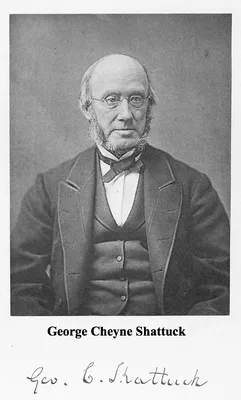
1839 TROUSSEAU, Armand (1801 – 1867); LOUIS, Pierre Charles Alexandre (1787 – 1872); SHATTUCK, George Cheyne (1813 – 1893)
Anatomical, pathological and therapeutic researches on the yellow fever of Gibraltar of 1828, by P. Ch. A. Louis. From observations taken by himself and M. Trousseau as memebers of the French Commission at Gibraltar. Translated from the manuscript by G. C. Shattuck.
The Translator's Introduction begins as follows: "The work now presented to the public has heretofore existed in manuscript only. Circumstances have delayed its publication in France, and some years may yet elapse bef…
GMN 12011 · https://historyofmedicine.com/id/14219
1839 SMITH, Ashbel (1805 – 1886)
An account of the yellow fever which appeared in the city of Galveston, Republic of Texas, in the autumn of 1839, with cases and dissections,
In 1839 Smith treated the victims of a yellow fever epidemic in Galveston while writing reports about the treatment of the disease in the Galveston News. As a result of this experience, he wrote the first treatise on …
GMN 13896 · https://historyofmedicine.com/id/16188
1840 BOUILLAUD, Jean Baptiste (1796 – 1881)
Traité clinique du rhumatisme articulaire.
Extension of Bouillaud’s work on the coincidence of heart disease and acute rheumatism. He regarded fever as the effect of endocarditis (see also No. 2749).
GMN 4494 · https://historyofmedicine.com/id/93
1840 HENLE, Friedrich Gustav Jakob (1809 – 1885)
Von den Miasmen und Contagien. In his Pathologische Untersuchungen, pp. 1-82.
Bassi’s work on the muscardine disease of silkworms (see No. 2532), with its prophecy of the discovery of microbes as the causal agents of other diseases, inspired Henle to write this famous essay on miasms and contag…
GMN 2533 · https://historyofmedicine.com/id/3517
1840 WILCOX, Whitman (1808 – 1876)
Violent symptoms from the bite of a rat.
First report of rat-bite fever to appear in a medical journal.
GMN 5322 · https://historyofmedicine.com/id/6618
1840 STEWART, Alexander Patrick (1813 – 1883)
Some considerations on the nature and pathology of typhus and typhoid fever, applied to the solution of the question of the identity or non-identity of the two diseases.
Typhoid and typhus were often confused. Stewart made a careful analysis of a number of cases of both fevers and clearly demonstrated that there were in Britain two distinct fevers – typhoid and typhus.
GMN 5025 · https://historyofmedicine.com/id/6744
1840 CLARKE, Robert B.
Observations on the disease lethargus: with cases and pathology.
Clarke left a detailed account of African trypanosomiasis; he saw cases of the disease while serving as a colonial surgeon at Sierra Leone, and named it “narcoleptic dropsy”.
GMN 5267 · https://historyofmedicine.com/id/8562
1841 BERG, Fredrik Theodor (1806 – 1887)
Torsk i mikroskopiskt anatomiskt hänseende.
Discovery of Candida albicans in thrush.
GMN 5518 · https://historyofmedicine.com/id/6537
1841 VALENTIN, Gabriel Gustav (1810 – 1883)
Ueber ein Entozoon im Blute von Salmo fario.
Valentin was the first to discover a trypanosome; this was in a salmon. English translation in Kean (No. 2268.1).
GMN 5267.1 · https://historyofmedicine.com/id/8563
1842 GRUBY, David (1810 – 1898)
Recherches anatomiques sur une plante cryptogame qui constitue le vrai muguet des enfants.
Independently of Berg, Gruby found Candida albicans in thrush. He demonstrated its fungal nature.
GMN 5519 · https://historyofmedicine.com/id/6542
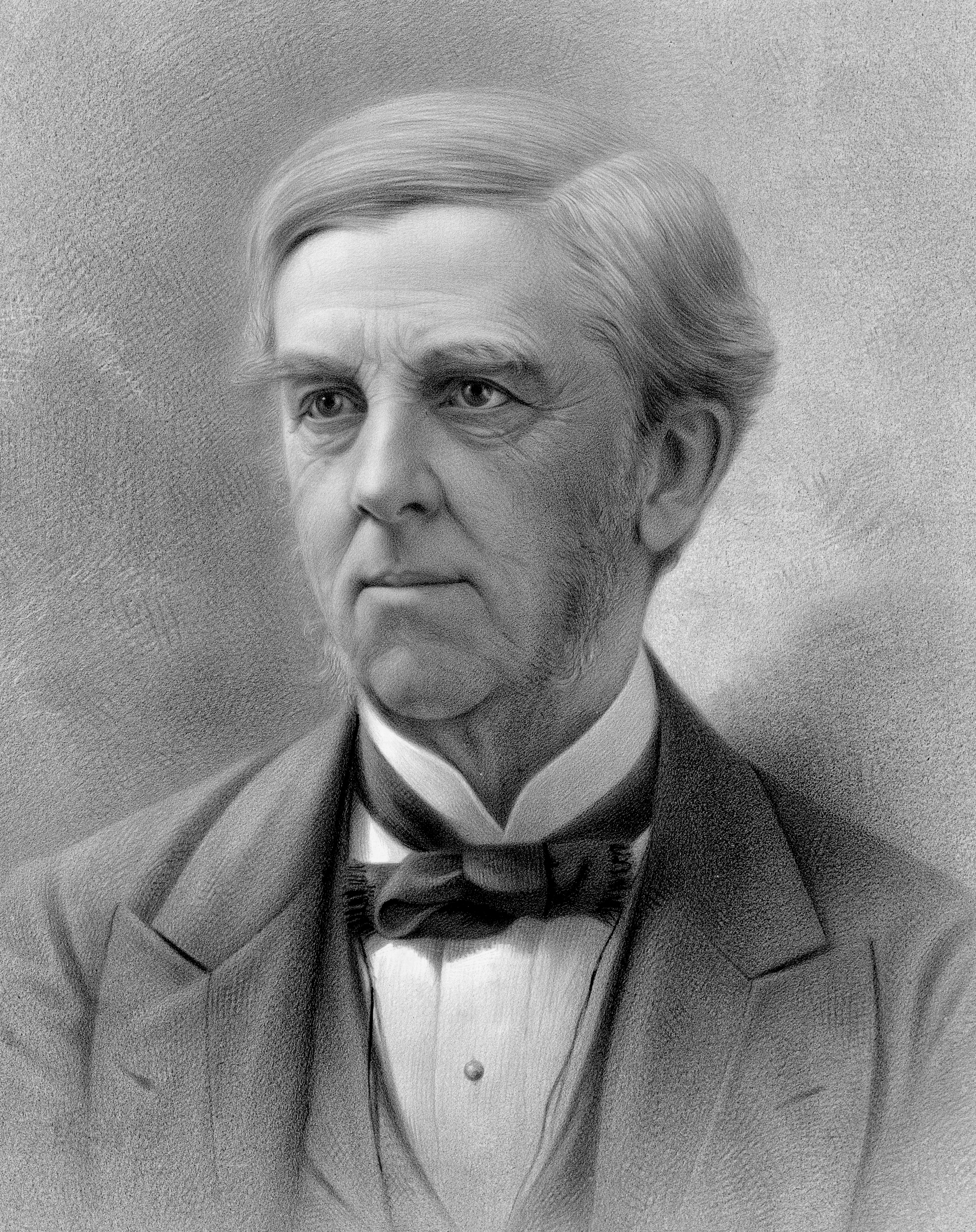
1842 –1843 HOLMES, Oliver Wendell Sr. (1809 – 1894)
The contagiousness of puerperal fever.
Oliver Wendell Holmes was the first to establish the contagious nature of puerperal fever. His essay on the subject took a strong line against the opinions then prevailing, stirring up violent opposition among the obs…
GMN 6274 · https://historyofmedicine.com/id/7989
1842 BARTLETT, Elisha (1804 – 1855)
The history, diagnosis, and treatment of typhoid and of typhus fever: With an essay on the diagnosis of bilious remittent and of yellow fever.
Bartlett's book contains the first complete description of typhoid fever in English. In 1908 Osler wrote, "The chief interest of the work today lies in the remarkably accurate picture which is given of typhoid fever--…
GMN 10064 · https://historyofmedicine.com/id/12253
1842 BENNETT, John Hughes (1812 – 1875)
On the parasitic fungi found growing in living animals.
Bennett confirmed and extended the observations and experiments of Gruby concerning the mycodermatous vegetations found in the crusts of the disease called Tinea favosa, or Zorigo lupinosa of Bateman; he announced the…
GMN 12423 · https://historyofmedicine.com/id/14654
1843 ADDISON, William (1802 – 1881)
Experimental and practical researches on the structure and function of blood corpuscles; on inflammation; and on the origin and nature of tubercles in the lungs.
Addison gave an important account of the process of inflammation. See L.J. Rather, Addison and the white corpuscles: An aspect of nineteenth-century biology. London, Wellcome Institute, 1972. See also No. 3059.
GMN 2294 · https://historyofmedicine.com/id/2926
1843 FUCHS, Conrad Heinrich (1803 – 1855)
Die ältesten Schriftseller über die Lustseuche in Deutschland, von 1495 bis 1510.
Gives texts of German tracts on syphilis published between 1495 and 1510.
GMN 2420 · https://historyofmedicine.com/id/3637
1843 BARLOW, George Hilaro (1806 – 1866); REES, George Owen (1813 – 1889)
Account of observations… on patients whose urine was albuminous.
An early description of a case of subacute bacterial endocarditis is reported on pp. 227-32 (Case 8).
GMN 2753 · https://historyofmedicine.com/id/4645
1843 CORMACK, Sir John Rose (1815 – 1882)
Natural history, pathology and treatment of the epidemic fever at present prevailing in Edinburgh and other towns.
The epidemic of relapsing fever in Edinburgh in 1843 was well described by Cormack. He was first editor of the Association Medical Journal which later became the British Medical Journal.
GMN 5310 · https://historyofmedicine.com/id/6575
1843 CRAIGIE, David (1793 – 1866)
Notice of a febrile disorder which has prevailed at Edinburgh during the summer of 1843.
Relapsing fever was given its name by Craigie, in his description of the Edinburgh epidemic.
GMN 5311 · https://historyofmedicine.com/id/6577
1843 DUBINI, Angelo (1813 – 1902)
Nuovo verme intestinale umano (Agchylostoma duodenale), constituente un sesto genere dei nematoidei proprii dell’uomo.
Dubini first found the hookworm of ankylostomiasis in 1838. His account of 1843, describing it, named it Agchylostoma duodenale, a name etymologically erroneous. Partial English translation in Kean (No. 2268.1).
GMN 5353 · https://historyofmedicine.com/id/6935
1843 GRUBY, David (1810 – 1898)
Recherches et observations sur une nouvelle espèce d’hématozoaire, Trypanosoma sanguinis.
Gruby discovered trypanosomes in the frog. He first suggested the name “trypanosome” to describe the parasite.
GMN 5268 · https://historyofmedicine.com/id/8569
1843 MACGREGOR, William Lewis (1801 – 1853)
Practical observations on the principal diseases affecting the health of the European and native soldiers in the north-western provinces of India with a supplement on dysentery.
Digital facsimile from the Internet Archive at this link.
GMN 8807 · https://historyofmedicine.com/id/10985