1843 MCWILLIAM, James Ormiston (1808 – 1862)
Medical history of the expedition to the Niger during the years 1841-42, comprising an account of the fever which led to its abrupt termination.
McWilliam included a history of yellow fever, pathology, description of symptoms, sequences, causes, treatment. He also described the state of medicine among the Africans. He specifically described the ventilation of …
GMN 10737 · https://historyofmedicine.com/id/12932
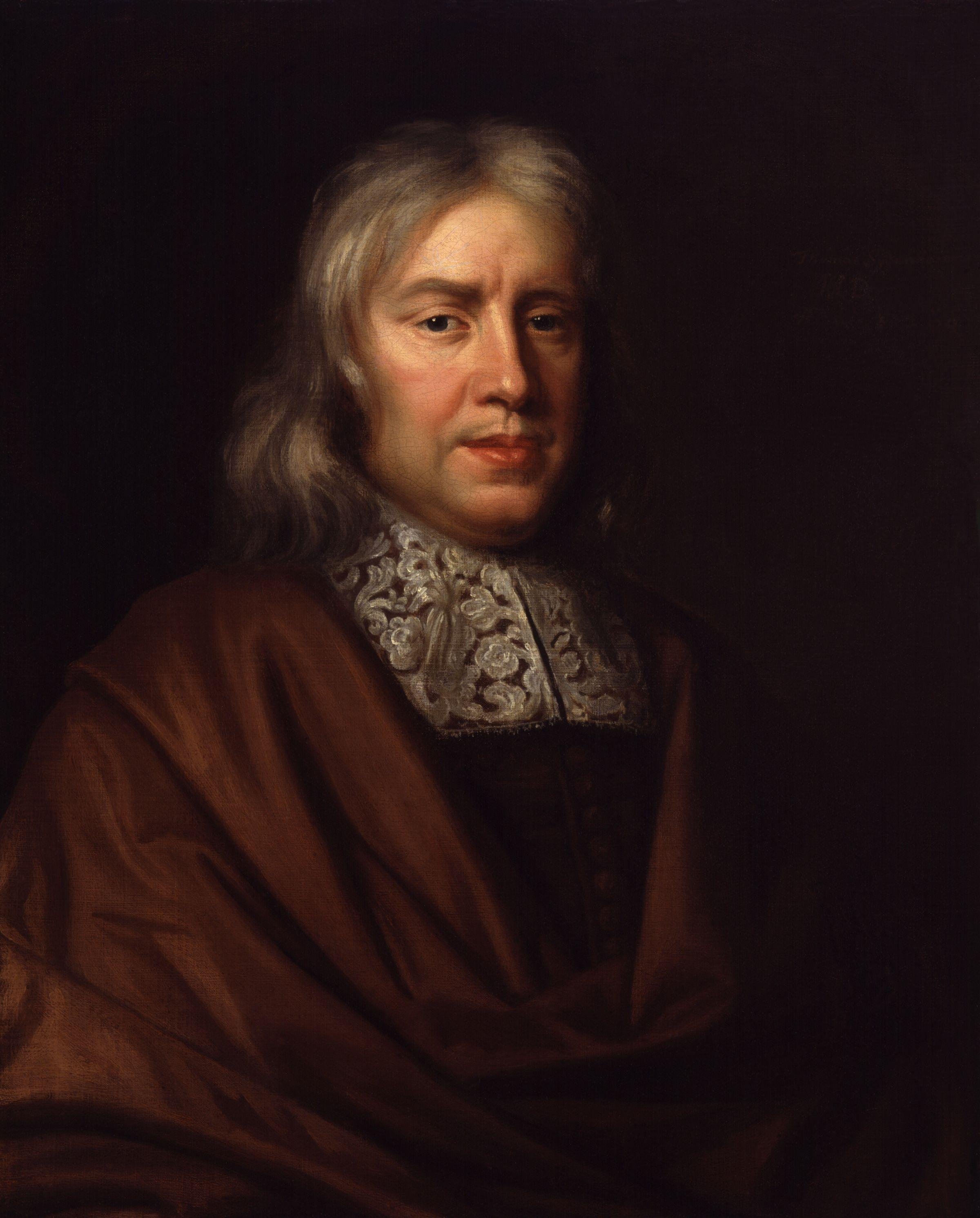
1844 SYDENHAM, Thomas (1624 – 1689); GREENHILL, William Alexander (1814 – 1894)
Thomae Sydenham, M. D., Opera omnia. Edidit Gulielmus Alexander Greenhill.
Sydenham has been called the “Father of English Medicine”. His reputation rests on his first-hand accounts of such conditions as the malarial fevers of his times, gout, scarlatina, measles, etc. A better edition of th…
GMN 63 · https://historyofmedicine.com/id/991
1844 HENDERSON, William (1810 – 1872)
On some of the characters which distinguish the fever at present epidemic from typhus fever.
Henderson, professor of pathology at Edinburgh, gave a good account of relapsing fever seen during the epidemic in 1843. He was one of the first to differentiate it from typhus.
GMN 5311.1 · https://historyofmedicine.com/id/6582
1844 SAPPINGTON, John S. (1776 – 1856)
The theory and treatment of fevers. Revised and corrected by Ferdinando Stith.
The first medical treatise published in Missouri and the first medical treatise published west of the Mississippi River. "John Sappington provided medical services, was a financial lender, and imported and exported go…
GMN 10446 · https://historyofmedicine.com/id/12639
1845 ROSENBAUM, Julius (1807 – 1874)
Geschichte der Lustseuche. Erster Theil. Die Lustseuche im Alterthume.
French translation, 1847; English translation as The plague of lust, being a history of venereal disease in classical antiquity, and including: Detailed investigations into the cult of Venus, and phallic worship, brot…
GMN 2421 · https://historyofmedicine.com/id/2880
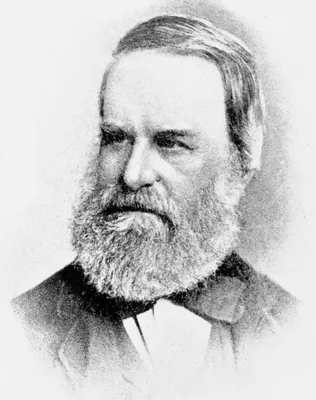
1845 SIEBOLD, Carl Theodor Ernst von [Karl] (1804 – 1885)
Bericht über die Leistungen im Gebiete der Helminthologie während des Jahres 1843 und 1844.
Siebold classified the hookworm as belonging to the Strongyloidae (pp. 220-21).
GMN 5354 · https://historyofmedicine.com/id/6939
1846 DUBINI, Angelo (1813 – 1902)
Primi cenni sulla corea elettrica.
First description of electric chorea, “Dubini’s chorea”, the myoclonic form of epidemic encephalitis.
GMN 4637 · https://historyofmedicine.com/id/702
1846 KLENCKE, Philipp Friedrich Hermann (1813 – 1881)
Ueber die Ansteckung und Verbreitung der Scrophelkrankheit bei Menschen durch den Genuss der Kuhmilch.
Klencke showed the possibility of the transmission of tuberculosis to man by cow’s milk. In 1843 he succeeded in inoculating rabbits with tuberculosis.
GMN 2323 · https://historyofmedicine.com/id/3023
1846 –1847 RITCHIE, Charles (1799 – 1878)
Practical remarks on the continued fevers of Great Britain, and on the generic distinctions between enteric fever and typhus.
Introduction of the term “enteric fever”, a term for typhoid. Ritchie carefully differentiated the symptoms of typhus and typhoid.
GMN 5026 · https://historyofmedicine.com/id/6748
1846 LEIDY, Joseph (1823 – 1891)
Entozoon in the superficial part of the extensor muscles of the thigh of the hog. Abstract
First description of trichinosis in the pig.
GMN 5338 · https://historyofmedicine.com/id/8611
1847 DANIELSSEN, Daniel Cornelius (1815 – 1894); BOECK, Carl Wilhelm (1808 – 1875)
Om spedalskhed. Udgivet efter Foranstaltning af den Kongelige Norske Regjerings Department for det Indre. 1 vol. and atlas.
First modern description of leprosy (“Danielssen-Boeck disease’’). Danielssen, physician to the leprosy hospital at Bergen, was the founder of scientific leprology. The extremely rare Atlas consists of 24 plates and t…
GMN 2434 · https://historyofmedicine.com/id/2894
1847 GRUNER, Christian Gottfried (1744 – 1815)
Scriptores de sudore anglico superstites. Colliget C. G. Gruner. Post mortem auctoris adomavit et edidit H. Haeser.
A collection of all the important earlier writings on sweating sickness.
GMN 5524 · https://historyofmedicine.com/id/6614
1847 PANUM, Peter Ludvig (1820 – 1885)
Iagttagelser, anstillede under Maeslinge-Epidemien paa Faerøerne i Aaret 1846.
When only 26 years of age, Panum was sent by the Danish Government to investigate the epidemic of measles then raging in the Faroe Islands. His report on the subject was a valuable contribution to medical literature. …
GMN 5443 · https://historyofmedicine.com/id/7478
1847 –1848 SEMMELWEIS, Ignaz Philipp (Ignác Fülöp) (1818 – 1865)
Höchst wichtige Erfahrungen über die Aetiologie der in Gebäranstalten epidemischen Puerperalfieber.
Semmelweis, pioneer of antisepsis in obstetrics, was the first to recognize that puerperal fever is a septicemia. He concluded that the doctors and students of Vienna’s First Obstetrical Clinic carried the infection o…
GMN 6275 · https://historyofmedicine.com/id/7990
1848 RHAZES [MUHAMMAD IBN ZAKARIYĀ AL-RĀZĪ (PERSIAN: محمد زکریای رازی ] (854 – 925); GREENHILL, William Alexander (1814 – 1894)
A treatise on the smallpox and measles. Translated from the Arabic by William Alexander Greenhill.
Rhazes differentiated measles from smallpox. Reprinted in Med. Classics, 1939, 4, 22-84. For original publication see No. 5404. The first English translation appeared in No. 5417. Digital facsimile from the Internet A…
GMN 5441 · https://historyofmedicine.com/id/7473
1848 NOTT, Josiah Clark (1804 – 1873)
Yellow fever contrasted with bilious fever – reasons for believing it a disease sui generis – its mode of propagation – remote cause – probable insect or animalcular origin.
Nott advanced the theory that yellow fever was caused by minute animalcula. Reproduced in part in R. H. Major, Classic descriptions of disease, 3rd ed., 1945, p. 122.
GMN 5454 · https://historyofmedicine.com/id/7534
1848 VIRCHOW, Rudolf Ludwig Karl (1821 – 1902)
Mittheilungen über die in Oberschlesien herrschende Typhus-Epidemie.
Virchow was one of the first to identify medicine as a social science. He developed a theory of epidemics that emphasized the social circumstances permitting spread of illness. This approach has been called sociologic…
GMN 12083 · https://historyofmedicine.com/id/14292
1849 SNOW, John (1813 – 1858)
On the pathology and mode of communication of the cholera.
Snow first became interested in cholera at Newcastle-on-Tyne during the epidemic of 1831-1832, and recurrent outbreaks of the disease gave him the opportunity to investigate it in detail. His paper on cholera, publish…
GMN 5106 · https://historyofmedicine.com/id/6042
1849 GROS, G
Fragments d’helminthologie et de physiologie microscopique.
First observations of entozoic amoebae.
GMN 5183.1 · https://historyofmedicine.com/id/6314
1849 JENNER, Sir William (1815 – 1898)
On typhoid and typhus fevers, – an attempt to determine the question of their identity or non-identity, by an analysis of the symptoms, and of the appearances found after death in 66 fatal cases observed at the London Fever Hospital from Jan. 1847–Feb. 1849.
Despite Stewart’s work, there was still controversy as to the identity of typhoid and typhus. Jenner’s paper demonstrated that the etiology of the two was quite different, that one did not communicate or protect again…
GMN 5027 · https://historyofmedicine.com/id/6752
1849 HUGUIER, Pierre Charles (1804 – 1873)
Mémoire sur l’esthioméne, ou dartre rongeante de la région vulvo-anale.
Huguier gave the name esthiomène to the characteristic induration and discoloration of the affected parts in lymphogranuloma venereum.
GMN 5216 · https://historyofmedicine.com/id/7823
1849 MITCHELL, John Kearsley (1793 – 1858)
On the cryptogamous origin of malarious and epidemic fevers.
Although Hensinger in 1844 had suggested a parasite as the cause of malaria, Mitchell was the first to approach this theory in a scientific spirit. He was Professor of Medicine at Jefferson College, and the father of …
GMN 5234 · https://historyofmedicine.com/id/7880
1849 SHAPTER, Thomas (1809 – 1902)
The history of the cholera in Exeter in 1832.
Includes “Map of Exeter in 1832 Shewing the Localities Where the Deaths Caused by Pestilential Cholera Occurred in the Years 1832, 1833 & 1834.” This map used red horizontal bars to illustrate outbreaks in 1832, red d…
GMN 7689 · https://historyofmedicine.com/id/9861
1849 SNOW, John (1813 – 1858)
On the mode of communication of cholera.
Publication of Snow's 31-page pamphlet on cholera preceded his paper in the London Medical Gazette by about one month.
GMN 9981 · https://historyofmedicine.com/id/12170
1849 BLACKWELL, Elizabeth (1821 – 1910)
Ship fever. An inaugural thesis, submitted for the degree of M.D., at Geneva Medical College, Jan. 1849.
Elizabeth Blackwell was the first woman to graduate M.D. in the United States. This paper on typhus was her first publication, and is thus the first publication in America by a woman physician educated in the United S…
GMN 11948 · https://historyofmedicine.com/id/14153
1850 –1854 DRAKE, Daniel (1785 – 1852); SMITH, Samuel Hanbury (1810 – 1894); SMITH, Francis G.
A systematic treatise, historical, etiological, and practical, on the principal diseases of the interior valley of North America as they appear in the Causcasian, African, Indian, and Esquimaux varieties of Its population. 2 vols.
This classical contribution to the social / medical history of North America includes the most important work on the natural history of malaria published up to that time. Digital facsimile of vol. 1 from the Internet …
GMN 1777 · https://historyofmedicine.com/id/3345
1850 RAYER, Pierre François Olive (1793 – 1867)
Inoculation du sang de rate.
Rayer inoculated sheep with blood of other sheep dead of anthrax. Microscopically he saw the anthrax bacillus in the blood of the inoculated sheep. Rayer was associated with Davaine, who later, in Bull. Acad. Méd., 18…
GMN 5163 · https://historyofmedicine.com/id/6231
1851 PARKER, Willard (1800 – 1884)
Cystitis; lateral operation on the bladder, death; tuberculous kidney.
First cystotomy for inflammation and rupture of the bladder.
GMN 4169 · https://historyofmedicine.com/id/5997
1851 HERBST, Ernst Friedrich Gustav (1803 – 1893)
Beobachtungen über Trichina spiralis in Betriff der Uebertragung der Eingeweidewürmer.
Herbst was the first to demonstrate that an animal eating trichinous flesh would thereby develop trichinae in its own muscles. English translation of part I in Kean (No. 2268.1).
GMN 5338.1 · https://historyofmedicine.com/id/6737
1851 STILLMAN, Jacob David Babcock (1819 – 1888)
Observations on the medical topography and diseases (especially diarrhoea) of the Sacramento Valley, California, during the Years 1849, 1850.
Stillman was personal physician to Leland Stanford, the first governor of California, and was a partner of railroad magnate Mark Hopkins from their days on board a ship to California in 1849. Stillman was also co-foun…
GMN 12086 · https://historyofmedicine.com/id/14295
1851 RICORD, Philippe (1800 – 1889)
Traité complet des maladies vénériennes. Clinique iconographique de l'Hôpital des vénériens. Recueil d'observations, suivies de considérations pratiques sur les maladies qui ont été traitées dans cet hôpital.
Ricord's extensive work with veneral diseases at the Hopital du Midi includes 66 hand-colored ithographs illustrating a multitude of conditions at various levels of infection in both sexes. The illustrations were draw…
GMN 14130 · https://historyofmedicine.com/id/16441
1852 THOMPSON, Theophilus (1807 – 1860)
Annals of influenza or epidemic catarrhal fever in Great Britain from 1510-1837.
GMN 5489 · https://historyofmedicine.com/id/6432
1852 BASSEREAU, Léon (1811 – 1888)
Traité des affections de la peau symptomatiques de la syphilis.
Bassereau defined chancroid clearly for the first time.
GMN 5203 · https://historyofmedicine.com/id/7793
1852 BILHARZ, Theodor Maximilian (1825 – 1862)
Ein Beitrag zur Helminthographia humana aus brieflichen Mittheilungen des Dr. Bilharz in Cairo, nebst Bemerkungen von C. T. v. Siebold.
Discovery, in 1851, of Schistosoma haematobium, the parasite of bilharziasis. Bilharz was Professor of Zoology at Cairo. English translation in Rev. infect. Dis., 1984, 4, 727-32, and in Kean (No. 2268.1).
GMN 5339 · https://historyofmedicine.com/id/8612
1853 KÜCHENMEISTER, Gottlob Friedrich Heinrich (1821 – 1890)
Ueber Cestoden im allgemeinen und die des Menschen insbesondere, hauptsächlich mit Berücksichtigung ihrer Entwickelungsgeschichte, geographischen Verbreitung, Prophylaxe und Abtreibung; für Freunde der Naturwissenschaften, Aerzte, Medicinalpolizei-Beamte, Staats- und Privat-Oekonomen.
Kuchenmeister conducted research on tapeworms, trichinosis, and other parasites and wrote about it several works. In 1852, his theory that bladder-worms are juvenile tapeworms gained the attention of the medical profe…
GMN 2450 · https://historyofmedicine.com/id/2965
1853 BAZIN, Pierre Antoine Ernest (1807 – 1878)
Recherches sur la nature et le traitement des teignes.
Bazin proved the fungal origin of favus and tinea; this was the first work to incorporate mycotic skin diseases into dermatological literature. Digital facsimile from BnF Gallica at this link.
GMN 7313 · https://historyofmedicine.com/id/9483
1854 MOUAT, Frederic John (1816 – 1897)
Notes on native remedies. No. 1. The chaulmoogra.
Chaulmoogra oil was first introduced into Western medicine by Mouat, having been used for many centuries previously by the Chinese
GMN 2435 · https://historyofmedicine.com/id/2897
1854 PACINI, Filippo (1812 – 1883)
Osservazioni microscopiche e deduzioni patologiche sul cholera asiatico.
Pacini described vibrios seen in the intestinal contents of cholera victims. He incriminated these vibrios as the pathogen in the disease, anticipating Koch (No. 5108) by 30 years. See N. Howard-Jones. Perspect. Biol.…
GMN 5106.1 · https://historyofmedicine.com/id/6043
1854 SIEBOLD, Carl Theodor Ernst von [Karl] (1804 – 1885)
Ueber die Band-und Blasenwürmer.
Siebold succeeded in infecting dogs with Taenia echinococcus. Translation by T. H. Huxley Sydenham Society London, 1857.
GMN 5340 · https://historyofmedicine.com/id/6745
1854 GRIESINGER, Wilhelm (1817 – 1868)
Klinische und anatomische Beobachtungen über die Krankheiten von Aegypten.
Griesinger connected the worm of ankylostomiasis with Egyptian chlorosis, a condition in which the worm had previously been noted without its being considered the causal agent (pp. 555-61). Apparently Bilharz in 1853 …
GMN 5355 · https://historyofmedicine.com/id/6943
1854 BEAUPERTHUY, Louis-Daniel (1807 – 1871)
Fiebre amarilla.
Beauperthuy was the first protagonist of the mosquito theory of the transmission of yellow fever. Reprinted in Beauperthuy’s La Obra, Caracas, 1963, pp. 260-70; French translation in Travaux scientifiques de Louis-Dan…
GMN 5454.1 · https://historyofmedicine.com/id/7539
1855 PETTENKOFER, Max Josef von (1818 – 1901)
Unterschungen und Beobachtungen über die Verbreitungsart der Cholera.
Pettenkofer gave much attention to the etiology of cholera. He postulated the theory that a specific germ, certain local conditions, certain seasonal conditions, and certain individual conditions are all necessary for…
GMN 5107 · https://historyofmedicine.com/id/6046
1855 POLLENDER, Franz Aloys Antoine (1799 – 1879)
Mikroskopische und mikrochemische Untersuchung des Milzbrandblutes sowie über Wesen und Kurdes Milzbrandes.
Pollender discovered the B. anthracis in 1849, but did not record this fact until 1855. He gave a more exact account of the organism than did Rayer (No. 5163).
GMN 5164 · https://historyofmedicine.com/id/6234
1855 KÜCHENMEISTER, Gottlob Friedrich Heinrich (1821 – 1890)
Die in und an dem Körper des lebenden Menschen vorkommenden Parasiten. Ein Lehr- und Handbuch der Diagnose und Behandlung der thierischen und pflanzlichen Parasiten des Menschen. Zum Gebrauche für Studirende der Medicin und der Naturwissenschaften, für Lehrer der Zoologie, Botanik, Physiologie, pathologischen Anatomie und für praktische Ärzte. 2 vols.
English translation of 2nd ed. by Edwin Ray Lankester as On animal and vegetable parasites of the human body: A manual of their natural history, diagnosis, and treatment. 2 vols. London: Sydenham Society, 1857. Digita…
GMN 5341 · https://historyofmedicine.com/id/6749
1855 BENDZ, Jacob Christian (1802 – 1858)
Quelques considérations sur la nature de l’ophthalmie dite militaire, par rapport à son apparition dans l’armée danoise depuis 1851.
Description of trachoma.
GMN 5876 · https://historyofmedicine.com/id/7272
1855 LA ROCHE, René (1795 – 1872)
Yellow fever, considered in its historical, pathological, etiological, and therapeutical relations: including a sketch of the disease as it has occurred in Philadelphia from 1699 to 1854, with an examination of the connections between it and the fevers known under the same name in other parts of temperate, as well as in tropical, regions. 2 vols.
The most important 19th century American monograph on yellow fever. La Roche’s work sketched the disease in its appearances from 1699 to 1854 at Philadelphia, which saw some of the worst yellow fever epidemics, and pr…
GMN 5454.2 · https://historyofmedicine.com/id/7545
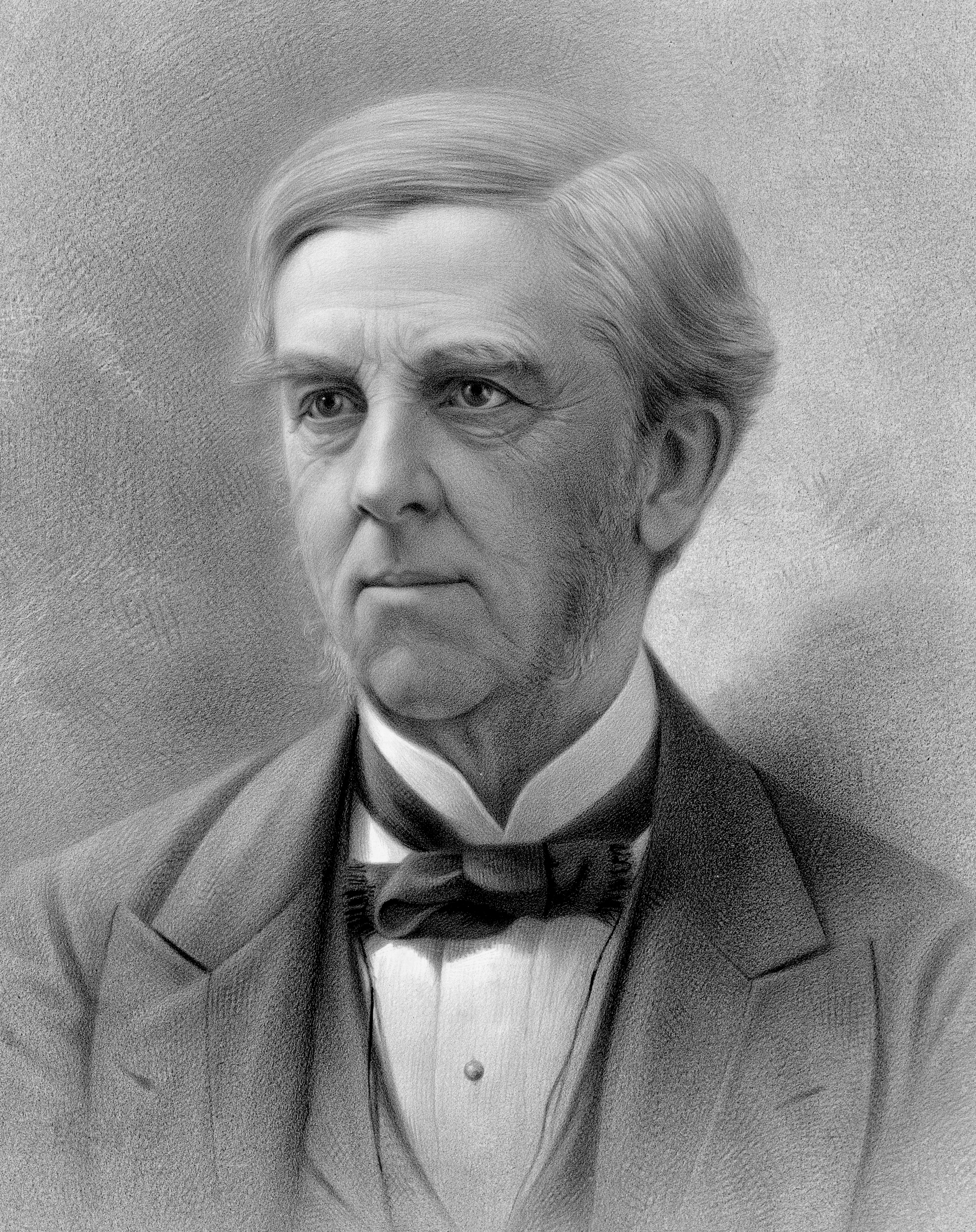
1855 HOLMES, Oliver Wendell Sr. (1809 – 1894)
Puerperal fever, as a private pestilence.
Because his first paper (No. 6274) had been published in a short-lived journal with very small circulation, Holmes enlarged his famous essay on the contagiousness of puerperal fever, and in this reiteration mentioned …
GMN 6276 · https://historyofmedicine.com/id/7992
1855 WEBB, Allan (1803 – 1863)
Elephantiasis orientalis, and especially elephantiasis genitalis in Bengal.
Digital facsimile from Google Books at this link.
GMN 8809 · https://historyofmedicine.com/id/10987
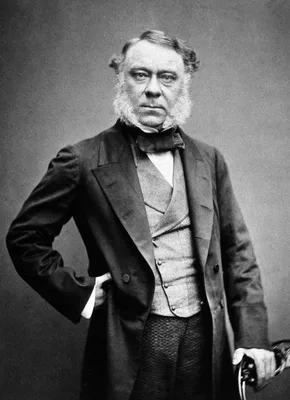
1855 WILSON, Sir William James Erasmus (1809 – 1884); BAGG, William (1803 – 1869)
Portraits of diseases of the skin.
Wilson's atlas, with 48 plates drawn and engraved by the medical artist, William Bagg, was the first English large folio atlas of dermatology in the style of similar folios issued in France by Alibert and Cazenave. Th…
GMN 9921 · https://historyofmedicine.com/id/12109
1855 SNOW, John (1813 – 1858)
On the mode of communication of the cholera. Second edition, much enlarged.
The second edition of Snow's book on cholera, with 162pp. compared to 31pp. in the first edition, incorporated the results of five more years of research, and contained so much additional material that it was essentia…
GMN 9982 · https://historyofmedicine.com/id/12171

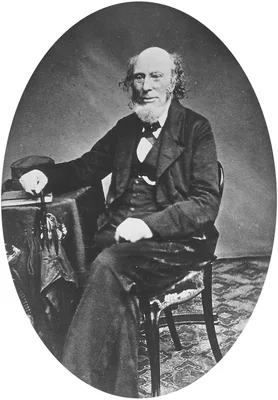
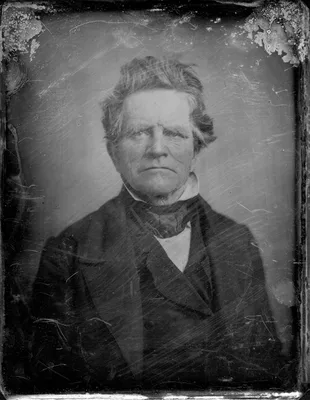
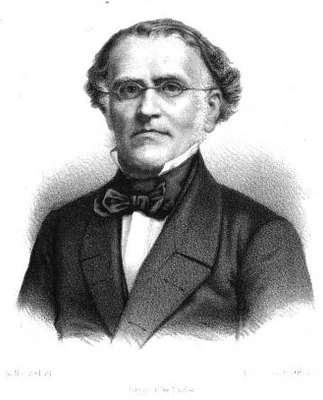
![SIEBOLD, Carl Theodor Ernst von [Karl] (1804 – 1885)](/media/portraits/231)