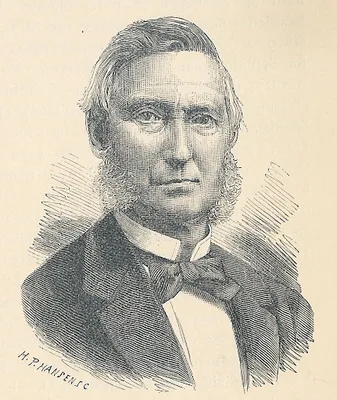
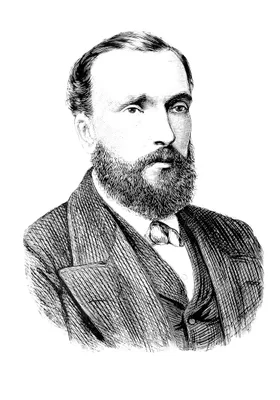
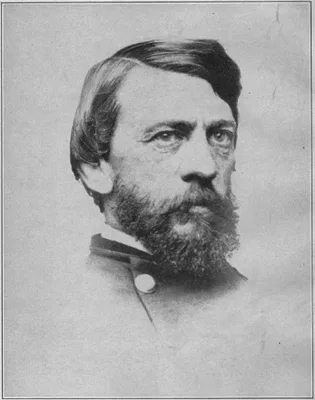
1856 BETTINGER, Julius (1802 – 1887)
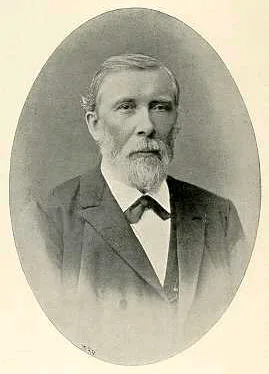
First demonstration of the experimental inoculability of syphilis. The information is given in a discussion on the subject by the Society of Physicians of the Palatinate; it appeared anonymously, without title, and id…
GMN 2384 · https://historyofmedicine.com/id/3295
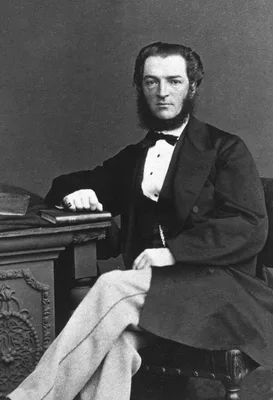
1856 PANUM, Peter Ludvig (1820 – 1885)
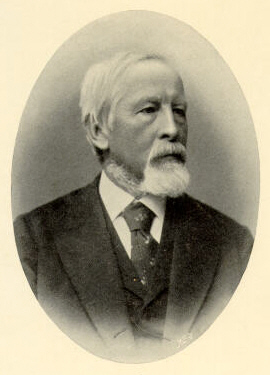
Bidrag til Laeren om den saakaldte putride eller septiske Infection.
Panum was the first to investigate the chemical products of putrefaction. His work had great significance for the doctrine of putrid intoxication. An abstract of the above paper is in jb. in-u. ausländ. ges. Med., 185…
GMN 2534 · https://historyofmedicine.com/id/3520
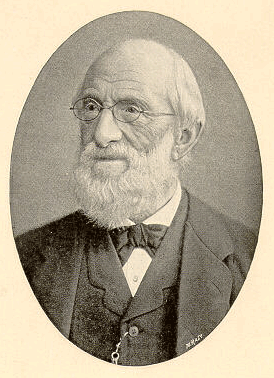
1856 JIMÉNEZ, Miguel Francisco (1813 – 1876)
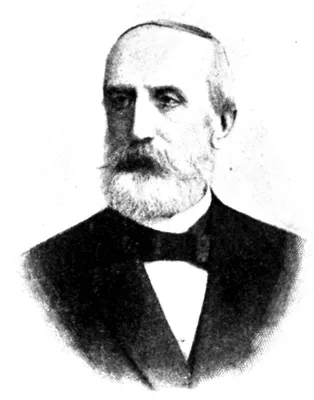
Clinica médica. Abcesos del higado.
Jimenez gave a classic account of liver abscess in amoebiasis.
GMN 5183.2 · https://historyofmedicine.com/id/6317
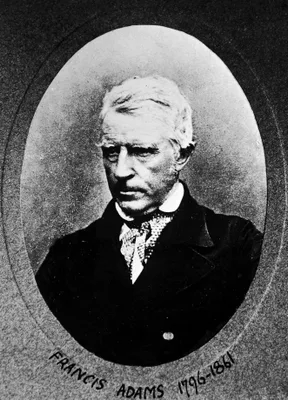
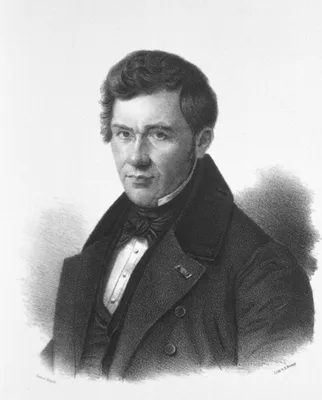
1856 ARETAEUS OF CAPPADOCIA, (Ἀρεταῖος Καππάδοκος) (80 – 140); ADAMS, Francis (1796 – 1861)
Тα ∑ωζομενα. The extant works of Aretaeus, the Cappadocian. Edited and translated by Francis Adams.
Aretaeus left many fine descriptions of disease; in fact Garrison ranks him second only to Hippocrates in this respect. In the printed editions of this bibliography, before the present online version, the Adams editio…
GMN 22 · https://historyofmedicine.com/id/8934
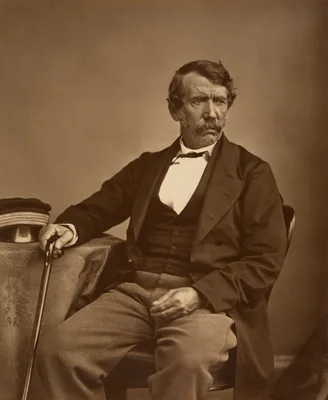
1857 LIVINGSTONE, David (1813 – 1873)
Missionary travels and researches in South Africa.
Livingstone gave an accurate account of the tsetse fly Glossina morsitans and of the disease in cattle following its bite (see pp. 80-83; picture of the tsetse fly on p. 571). In his time the bite of the fly was thoug…
GMN 5269 · https://historyofmedicine.com/id/8570
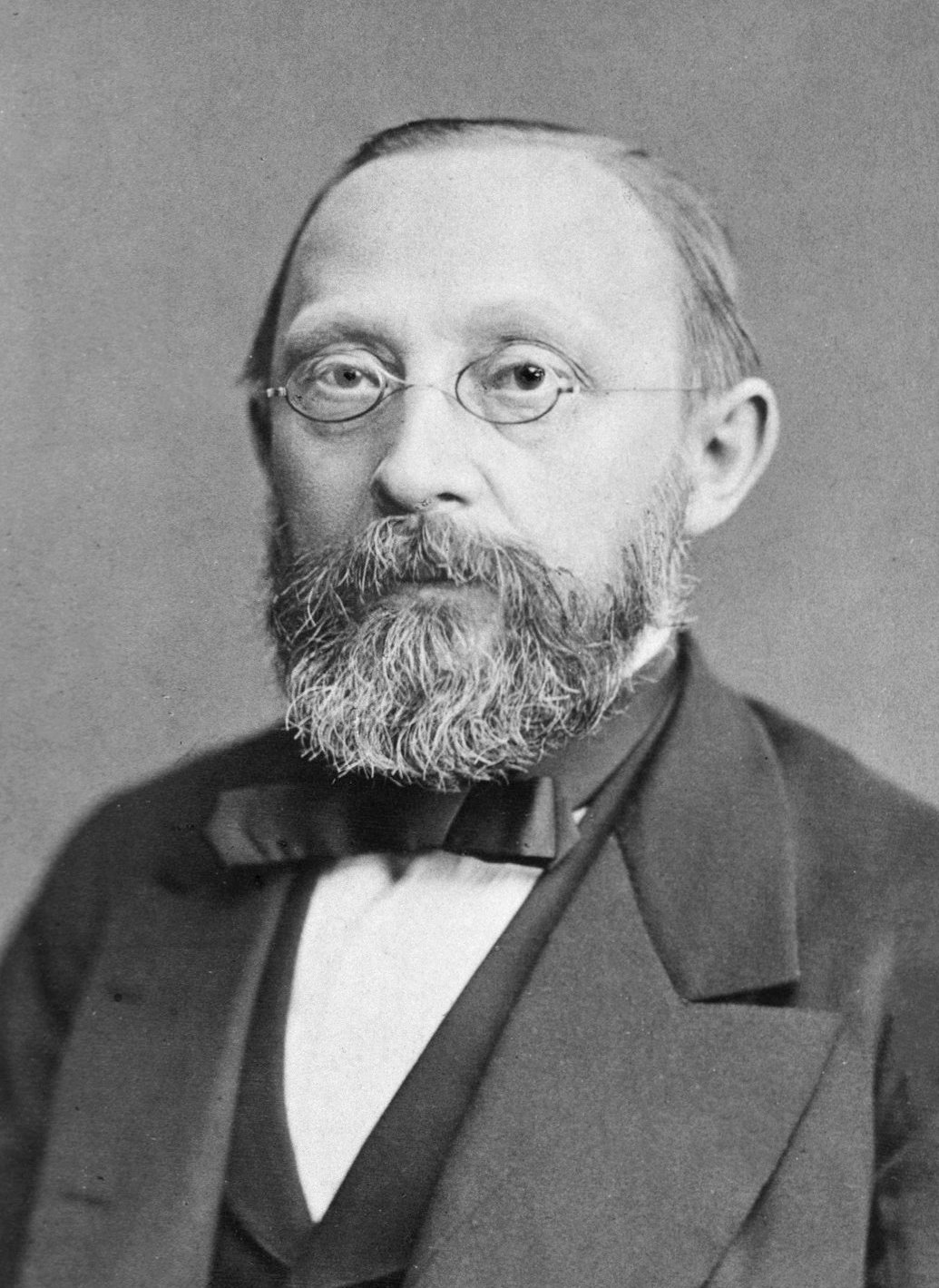
1858 VIRCHOW, Rudolf Ludwig Karl (1821 – 1902)
Ueber die Natur der constitutionell-syphilitischen Affectionen.
Virchow’s great work on the pathology of syphilis confirmed the fact that it was a disease which involved all organs and tissues of the body and showed that the causal organism was transferred through the blood to the…
GMN 2385 · https://historyofmedicine.com/id/3296
1858 SALAZAR, Tomas (1830 – 1917)
Historia de la verrugas.
Verruga peruana.
GMN 5525 · https://historyofmedicine.com/id/6611
1858 SIMS, James Marion (1813 – 1883)
Silver sutures in surgery.
Sims, famous American gynecologist, introduced a silver wire suture, in order to avoid sepsis. See No. 6037.
GMN 5605 · https://historyofmedicine.com/id/7117
1858 LIVINGSTONE, David (1813 – 1873)
Arsenic as a remedy for the tsetse bite.
Livingstone was probably the first to administer arsenic for the treatment of “nagana”, a disease of horses caused by trypanosomes. This followed a suggestion by James Braid. Digital facsimile from PubMedCentral at th…
GMN 5270 · https://historyofmedicine.com/id/8572
1858 FOURGEAUD, Victor Jean (1817 – 1875)
Diphtheritis: A concise historical and critical essay on the late epidemic pseudo-membranous sore throat of California (1856-7), with a few remarks illustrating the diagnosis, pathology, and treatment of the disease.
For publishing this 46-page pamphlet Fourgeaud has been called "California's first medical historian." Digital facsimile from U.S. National Library of Medicine at this link.
GMN 12152 · https://historyofmedicine.com/id/14362
1860 ZENKER, Friedrich Albert von (1825 – 1898)
Ueber die Trichinen-Krankheit des Menschen.
The intestinal and muscular forms of trichinosis were first noted by Zenker, who established their connection with the disease. English translation in Kean (No. 2268.1).
GMN 5342 · https://historyofmedicine.com/id/6753
1860 LEUCKART, Karl Georg Friedrich Rudolf (1823 – 1898)
Untersuchungen über Trichina spiralis.
Leuckart provided an articulate and detailed description of Trichinella spiralis.
GMN 5343 · https://historyofmedicine.com/id/6759
1861 KUSSMAUL, Adolf (1822 – 1902)
Untersuchungen über den constitutionellen Mercurialismus und sein Verhältniss zur constitutionellen Syphilis.
GMN 2387 · https://historyofmedicine.com/id/3303
1861 BRAND, Ernst (1827 – 1897)
Die Hydrotherapie des Typhus.
Brand’s cold bath treatment of typhoid fever consisted of total immersion in water at 65°F. and the pouring of cold water over the neck and shoulders. The cold bath treatment of fevers was instituted by Currie (see No…
GMN 5028 · https://historyofmedicine.com/id/6758
1861 SEMMELWEIS, Ignaz Philipp (Ignác Fülöp) (1818 – 1865)
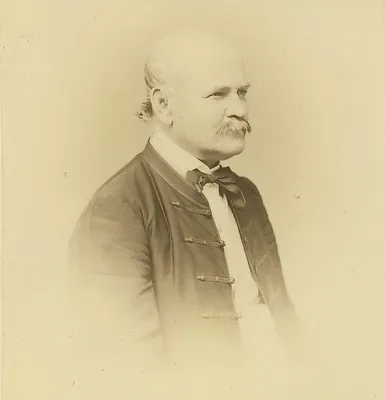
Die Aetiologie, der Begriff und die Prophylaxis des Kindbettfiebers.
Semmelweis, who earlier had shown puerperal fever to be a septicemia, strove to improve conditions in the lying-in wards of Vienna and Budapest. Misunderstood and maligned by many, he eventually published this book in…
GMN 6277 · https://historyofmedicine.com/id/7996
1861 –1862 BÄRENSPRUNG, Friedrich Wilhelm Felix von (1822 – 1864)
Die Gürtelkrankheit.
Herpes zoster first ascribed to a lesion of the spinal ganglia.
GMN 4640 · https://historyofmedicine.com/id/8866
1861 –1862 SEMMELWEIS, Ignaz Philipp (Ignác Fülöp) (1818 – 1865)
(1) Zwei offene Briefe an Hofrath Dr. Eduard Casp. Jac. v. Siebold, . . . und an Hofrath Dr. F. W. Scanzoni . . .Ofen... 1861. (2) Zwei offene Briefe an Dr. J. Spaeth, Professor der Geburtshilfe an der k. k. Josefs-Akademie in Wien, und an Hofrath Dr. F. W. Scanzoni, Professor der Geburtshilfe zu Würzburg. Pest...1861. (3) Offener Brief an sämmtliche Professoren der Geburtshilfe. Ofen...1862.
Semmelweis’s last publications on antisepsis in obstetrics. Although the information and conclusions that Semelweis drew in his Die Aetiologie, der Begriff und die Prophylaxis des Kindbettfiebers (1861) were of the fi…
GMN 13270 · https://historyofmedicine.com/id/15536
1862 –1876 LEUCKART, Karl Georg Friedrich Rudolf (1823 – 1898)
Die menschlichen Parasiten und die von ihnen herrührenden Krankheiten. 2 vols.
Includes the first complete and accurate account of the life history and morphology of Taenia echinococcus. Leuckart proved the relationship between hydatid cysts and minute tape-worms in dogs. English translation, Ed…
GMN 2453 · https://historyofmedicine.com/id/2973
1862 PELLIZZARI, Pietro (1823 – 1892)
Della trasmissione delle sifilide mediante la inoculazione del sangue.
Proof of the possibility of transmission of syphilis by blood transfusion.
GMN 2388 · https://historyofmedicine.com/id/3308
1862 MURCHISON, Charles (1830 – 1879)
A treatise on the continued fevers of Great Britain.
Murchison was one of the greatest clinical teachers London has ever known; of his many writings his book on continued fever is probably the most important. Digital facsimile from the Internet Archive at this link.
GMN 2220 · https://historyofmedicine.com/id/3756
1862 WILKS, Sir Samuel (1824 – 1911)
Disease of the skin produced by post mortem examinations, or verruca necrogenica.
Description of dissecting-room warts (verrucae necrogenicae),tuberculosis verrucosa cutis (also known as Lupus verrucosus, Prosector's wart, and "Warty tuberculosis"[ the cutaneous tuberculosis of Laennec, sometimes c…
GMN 4053 · https://historyofmedicine.com/id/5407
1862 FRIEDREICH, Nikolaus (1825 – 1882)
Ein Beitrag zur Pathologie der Trichinenkrankheit beim Menschen.
First confirmed diagnosis of trichinosis in a living person.
GMN 5344.1 · https://historyofmedicine.com/id/6765
1862 HASTINGS, John (1805 – 1875)
An inquiry into the medicinal value of the excreta of reptiles, in phthisis and some other diseases.
Digital facsimile from the Internet Archive at this link.
GMN 11625 · https://historyofmedicine.com/id/13825
1863 WILKS, Sir Samuel (1824 – 1911)
On the syphilitic affections of internal organs.
Wilks’s outstanding work was on visceral syphilis, a subject which he was one of the first to study.
GMN 2389 · https://historyofmedicine.com/id/3311
1863 MARSTON, Jeffery Allen (1831 – 1911)
Report on fever (Malta).
Marston wrote the first description of Malta fever as a distinct disease. He contracted the disease while serving in the Mediterranean area and described his own case. Marston was apparently the first to describe “Wei…
GMN 5097 · https://historyofmedicine.com/id/6018
1863 DAVAINE, Casimir Joseph (1812 – 1882)
Recherches sur les infusoires du sang dans la maladie connue sous le nom de sang de rate.
Davaine showed that anthrax could be transmitted to sheep, horses, cattle, guinea-pigs, and mice, and that in such animals the bacilli did not appear in the blood until 4-5 hours before death.
GMN 5165 · https://historyofmedicine.com/id/6237
1863 BASTIAN, Henry Charlton (1837 – 1915)
On the structure and nature of the Dracunculus or Guinea worm.
First detailed description.
GMN 5344.2 · https://historyofmedicine.com/id/6768
1863 DEMARQUAY, Jean Nicolas (1811 – 1875)
Note sur une tumeur des bourses contenant un liquide laiteux (galactocèle de Vidal) et renfermant de petits êtres vermiformes que l’on peut considérer comme les helminthes hèmatoïdes à l’étatd’embryon.
Description of the embryonic stage of Wuchereria bancrofti in hydrocele fluid.
GMN 5344.3 · https://historyofmedicine.com/id/6770
1864 COBBOLD, Thomas Spencer (1828 – 1886)
Entozoa.
Cobbold suggested (p. 36) that a mollusc was the intermediate host in bilharziasis.
GMN 5344.4 · https://historyofmedicine.com/id/6774
1864 HARLEY, John (1833 – 1921)
On the endemic haematuria of the Cape of Good Hope.
Like Cobbold, Harley expressed the view that a mollusc was the intermediate host in bilharziasis.
GMN 5344.5 · https://historyofmedicine.com/id/6777
1865 HIRSCH, August (1817 – 1894); HECKER, Justus Friedrich Karl (1795 – 1850)
Die grossen Volkskrankheiten des Mittelalters. Historischpathologische Untersuchungen. Von J. F. K. Hecker. Gesammelt und in erweiteter Bearbeitung hrsg. von A. Hirsch.
A collection of essays on the Black Death, the dancing mania, and the English sweat, published 1832-34 and later in a collective English edition, The epidemics of the Middle Ages, 2 pts., London, 1833-35; reprinted 18…
GMN 1678 · https://historyofmedicine.com/id/2353
1865 PROFETA, Guiseppe (1840 – 1911)
Sulla sifilide per allattamento.
Profeta’s law – a non-syphilitic child born of syphilitic parents is immune.
GMN 2390 · https://historyofmedicine.com/id/3313
1865 DAVAINE, Casimir Joseph (1812 – 1882)
Recherches sur la nature et la constitution anatomique de la pustule maligne.
Davaine was the first conclusively to prove that a definite disease (anthrax) was due to a definite micro-organism (B. anthracis), and was thus one of the first to prove the germ theory of disease. He showed that the …
GMN 5166 · https://historyofmedicine.com/id/6239
1866 LANCEREAUX, Étienne (1829 – 1910)
Traité historique et pratique de la syphilis.
A complete review of contemporary knowledge. English translation, 2 vols., 1868-69.
GMN 2390.1 · https://historyofmedicine.com/id/3317
1866 VEALE, Henry Richard Lobb (1832 – 1908)
History of an epidemic of rötheln, with observations on its pathology.
Veale introduced the term “rubella” to describe German measles.
GMN 5502 · https://historyofmedicine.com/id/6475
1866 ROLLET, Joseph Pierre (1824 – 1894)
Coincidence du chancre syphilitique primitif avec la gale, la blénorrhagie, le chancre simple et la vaccine.
Rollet recognized the possibility of mixed infection of one sore with syphilis and chancroid, thus establishing the dualist theory of venereal infection. The mixed chancre is named “Rollet’s disease”.
GMN 5204 · https://historyofmedicine.com/id/7794
1866 BROCKETT, Linus Pierpont (1820 – 1893)
Asiatic cholera: Its origin, history, and progress, for over two hundred years, and the devastations it has caused in the East and West; Its ravages in Europe and America in 1831-2, in 1848-9, in 1854-5, and in 1865-6 with a full description of the causes, nature, and character of the disease, its means of propagation, whether by the atmosphere or by contagion; its premonitory and distinctive symptoms; the best known means of preventing its attack both in communities and individuals; and the most effectual remedies for it according to the celebrated physicians who have treated It; Together with simple and plain directions for the care of those who from any cause can not obtain medical aid.
Digital facsimile from Google Books at this link.
GMN 11487 · https://historyofmedicine.com/id/13686
1866 HIRSCH, August (1817 – 1894)
Die Meningitis cerebro-spinalis epidemica vom historisch-geographischen und pathologisch-therapeutischen Standpunkte.
Digital facsimile from the Hathi Trust at this link.
GMN 12347 · https://historyofmedicine.com/id/14571
1867 VOLTOLINI, Friedrich Eduard Rudolph (1819 – 1889)
Die akute Entzündung des heutigen Labyrinthes, gewöhnlich für Meningitis cerebro-spinalis gehalten.
First description of “Voltolini’s disease” – an acute painful inflammation of the internal ear, followed by fever, delirium, and loss of consciousness. Voltolini was the founder of the Monatsschrift.
GMN 3379 · https://historyofmedicine.com/id/4799
1868 VILLEMIN, Jean Antoine (1827 – 1892)
Etudes sur la tuberculose; preuves rationelles et expérimentales de sa spécifité et de son inoculabilité.
Villemin inoculated guinea-pigs and rabbits with sputum, caseous material, and miliary tubercles, with resulting development of tuberculosis. His brilliant experimental work proved tuberculosis to be a specific infect…
GMN 2324 · https://historyofmedicine.com/id/3027
1868 WUCHERER, Otto Eduard Heinrich (1820 – 1873)
Noticiar preliminar sobre vermes de uma especie ainda nao descripta, encontrados na urina de doentes de hematuria intertropical no Brazil.
In 1866 Wucherer saw the embryo form of the filaria worm. Later the name Wuchereria bancrofti was applied to it. English translation in Kean (No. 2268.1).
GMN 5344.6 · https://historyofmedicine.com/id/6781
1868 VIRCHOW, Rudolf Ludwig Karl (1821 – 1902)
Ueber den Hungertyphus und einige verwandte Krankheitsformen.
Virchow was instrumental in introducing into Germany an epidemiology based on the study of multiple factors – sociological as well as bacteriological. In the above report on the reappearance of typhus in Berlin and Ea…
GMN 5376 · https://historyofmedicine.com/id/7033
1868 CHAUVEAU, Jean Baptiste Auguste (1827 – 1917)
Nature des virus vaccin. Détermination expérimentale des éléments qui constituent le principe virulent dans le pus varioleux et le pus morveux.
Chauveau first used the term “elementary bodies” to describe the minute bodies inside the inclusions and which were the infective particles.
GMN 5425.1 · https://historyofmedicine.com/id/7368
1869 PETTENKOFER, Max Josef von (1818 – 1901)
Das Kanal- Oder Siel-System in München.
Pettenkofer was responsible for the installation of the modern system of sewage disposal in Munich, and thus succeeded in almost completely ridding that city of typhoid.
GMN 1618 · https://historyofmedicine.com/id/1934
1869 WINGE, Emanuel Fredrik Hagbarth (1827 – 1894)
Mycosis endocardii.
Winge first suggested that endocarditis was due to microbial infection. A translation of part of his paper is in Major, Classic descriptions of disease, 3rd ed., 1945, p. 472.
GMN 2767 · https://historyofmedicine.com/id/4700
1869 SILLIAU, Pierre Marie (1813 – 1871)
Fièvre à rechutes. (Thesis.)
Silliau gave a good account of the epidemic of relapsing fever at Réunion, 1865. He showed the contagious nature of the disease.
GMN 5312 · https://historyofmedicine.com/id/6585
1869 –1870 FEDCHENKO, Alexei Pavlovich (Aleksei FEDTSCHENKO) (1844 – 1873)
On the structure and reproduction of Filaria medinensis L.
Fedchenko, a Russian naturalist and explorer of central Asia, elucidated the life cycle of Dracunculus medinensis, the parasite of dracunculiasis. He discovered its means of transmission via copepod intermediate hosts…
GMN 5344.7 · https://historyofmedicine.com/id/8616
1869 BEANEY, James George (1828 – 1891)
Syphilis: Its nature & diffusion popularly considered.
The first work on dermatology or syphilology written, printed and published in Australia. This work is illustrated with chromolithographed plates printed in Australia. This may be the earliest medical book printed in …
GMN 10890 · https://historyofmedicine.com/id/13086
1870 –1888 WOODWARD, Joseph Janvier (1833 – 1884); OTIS, George Alexander (1830 – 1881); HUNTINGTON, David Low (1834 – 1899); BARNES, Joseph K. (1817 – 1883); SMART, Charles (1830 – 1881); LETTERMAN, Jonathan (1824 – 1872)
The medical and surgical history of the War of the Rebellion, 1861-65. 6 vols.
UNITED STATES. War Dept. Surgeon General
Written by Woodward, Smart, Otis, and Huntington under the direction of Joseph K. Barnes, Surgeon General of the Army. This massive, graphically illustrated set has been called the “first comprehensive American medica…
GMN 2171 · https://historyofmedicine.com/id/1174
1870 WILKS, Sir Samuel (1824 – 1911)
Capillary embolism or arterial pyaemia.
One of the first accounts of bacterial endocarditis was given by Wilks, who, in his classic paper on the subject, called the condition “arterial pyaemia.” Reprinted in Willius & Keys, Cardiac classics, 1941, pp. 579-84.
GMN 2769 · https://historyofmedicine.com/id/4702