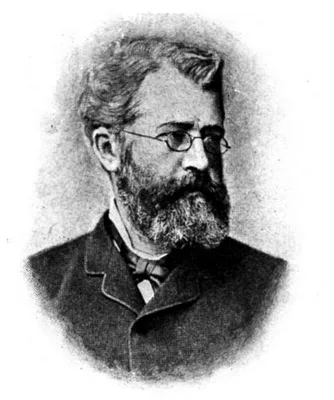
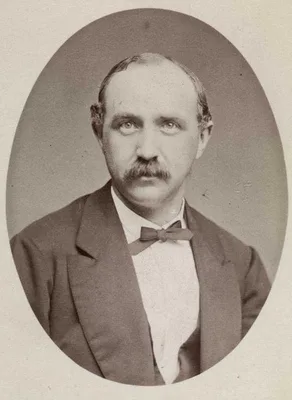
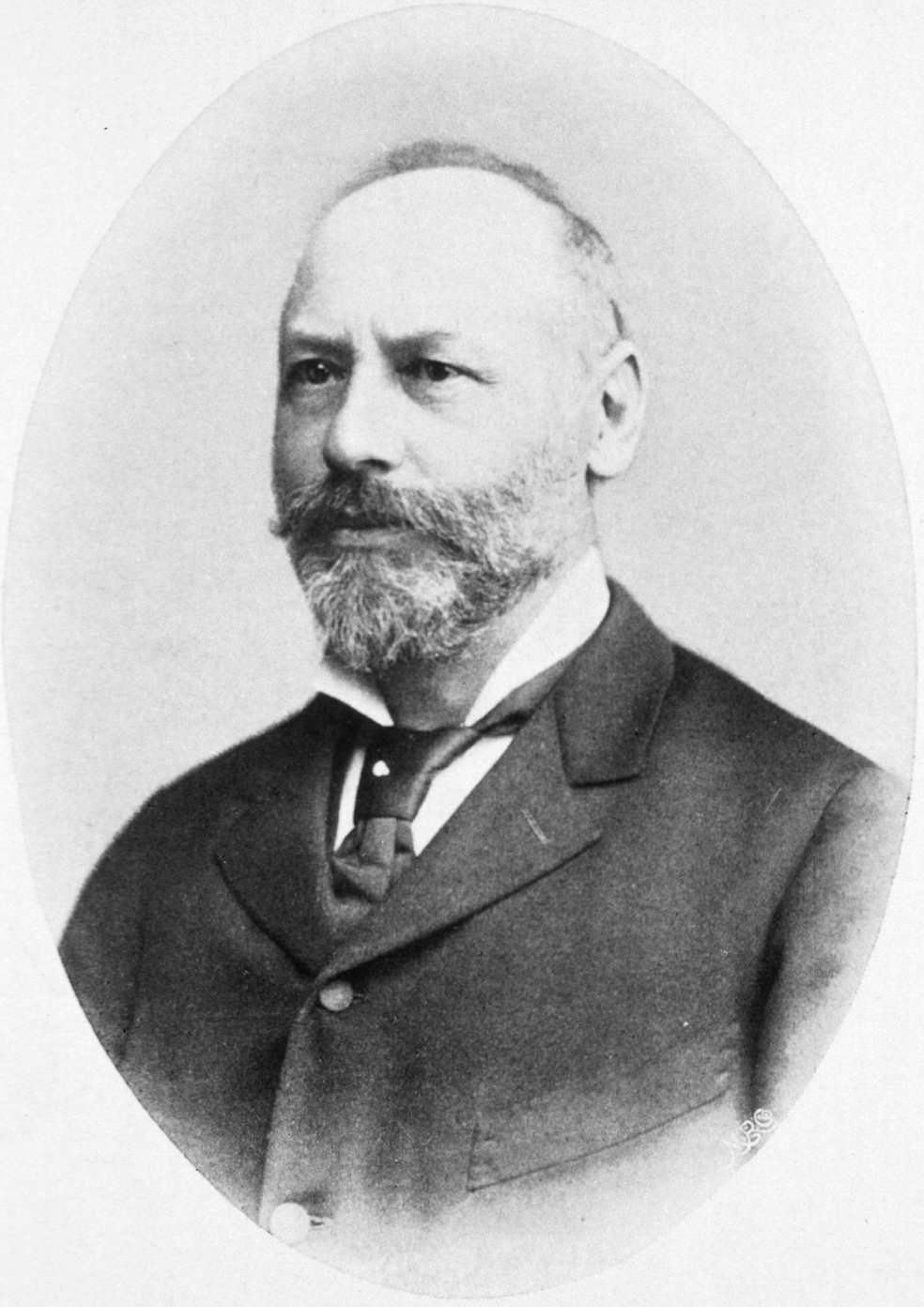
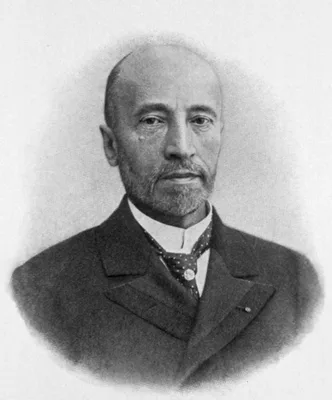
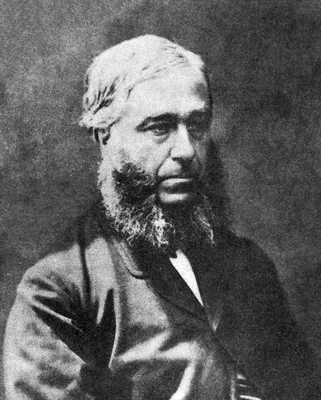
1870 WEGNER, Friedrich Rudolph Georg (1843 – 1917)
Ueber hereditäre Knochensyphilis bei jungen Kindern.
“Wegner’s disease” – osteochondritic separation of the epiphyses in congenital syphilis.
GMN 4339 · https://historyofmedicine.com/id/5678
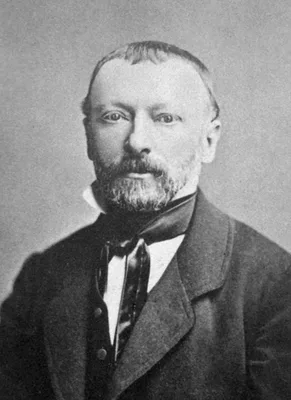
1870 PARRY, John Stubbs (1843 – 1876)
Observations on relapsing fever, as it occurred in Philadelphia in the winter of 1869 and 1870.
Parry called attention to infection from articles of clothing worn by victims of the epidemic of relapsing fever in Philadelphia in 1869.
GMN 5313 · https://historyofmedicine.com/id/6589
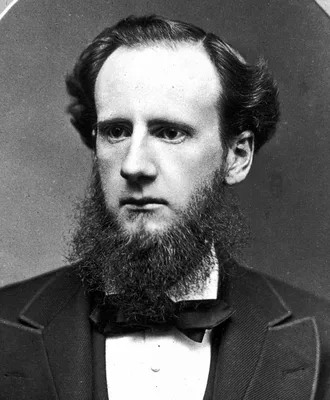
1870 BOLLINGER, Otto (1843 – 1909)
Mycosis der Lunge beim Pferde.
Botriomycosis first described.
GMN 5526 · https://historyofmedicine.com/id/6632
1870 BRISCOE, Thomas Benjamin
Kala azar.
Kala azar is mentioned briefly in the Proceedings in 1869 (No. 34, p. 19) but the above is the first full description, given by Briscoe in a report dated 1 Dec 1869.
GMN 5292 · https://historyofmedicine.com/id/8609
1871 WEIGERT, Carl (1845 – 1904)
Ueber Bakterien in der Pockenhaut.
Weigert was the first to stain bacteria. He introduced many of the best staining methods in use today. Weigert discovered bacteria in hemorrhagic smallpox. In the same paper is described how carmine will color cocci.
GMN 2482 · https://historyofmedicine.com/id/3084
1871 KLEBS, Theodor Albrecht Edwin (1834 – 1913)
Die Ursache der infectiösen Wundkrankheiten.
Klebs, Professor of Pathology at Berne, Würzburg, Prague, Zurich, and Chicago, preceded Koch in investigations of the pathology of traumatic infection. He found bacteria in gunshot wounds, granulation tissue, etc., an…
GMN 2535 · https://historyofmedicine.com/id/3522
1871 –1878 TRAUBE, Ludwig (1818 – 1876)
Zur Fieberlehre. In his: Gesammelte Beiträge zur Pathologie und Physiologie, 2 (1871) pt. 1, 624-56, 679-83; 3 (1878) 503-05, 582-87.
Digital facsimile of Vol. 2, pt. 1 from the Internet Archive at this link, of Vol. 3 at this link.
GMN 2224 · https://historyofmedicine.com/id/3776
1871 FANEAU DE LA COUR, Ferdinand-Valère (1843 – 1871); LORAIN, Paul Joseph (1827 – 1875)
Du féminisme et de l’infantilisme chez les tuberculeux.
In a letter prefaced to Faneau de La Cour’s thesis, Paul Joseph Lorain (1827-1875) described the idiopathic arrest of growth now known as “Lorain’s type”. It was subsequently ascribed to hypopituitarism. The word “inf…
GMN 3883 · https://historyofmedicine.com/id/5314
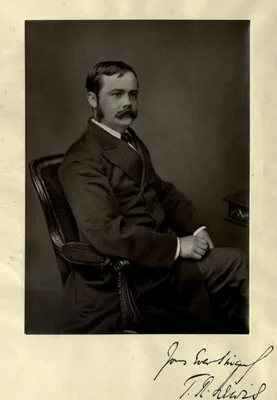
1871 LEWIS, Timothy Richards (1841 – 1886)
On a haemotozoon inhabiting human blood. Its relation to chyluria and other diseases.
Independently of Demarquay (No. 5344.3) and Wucherer (No. 5344.6), Lewis found microfilariae in the urine and blood in chyluria. He was first to use the term Filaria sanguinis hominis for the parasite.
GMN 5344.8 · https://historyofmedicine.com/id/6785
1871 –1872 DUHRING, Louis Adolphus (1845 – 1913); MAURY, Francis Fontaine (1840 – 1879)
Photographic review of medicine and surgery. A bi-monthly illustration of interesting cases, accompanied by notes. Edited by F.F. Maury [and] L.A. Duhring. Vols. 1 & 2 (All published).
The leading 19th century American publication of artistic medical photography. Each of the two volumes includes 24 mounted photographs. The photographs ilustrate cases of unusual and extreme disease, such as gross def…
GMN 10585 · https://historyofmedicine.com/id/12778
1872 BUHL, Ludwig von (1816 – 1880)
Lungenentzündung, Tuberkulose und Schwindsucht.
Buhl stated that disseminated miliary tuberculosis is always associated with the presence of a caseous focus in some part of the body, which is the centre from which infection starts (Buhl-Dittrich law). English trans…
GMN 2325 · https://historyofmedicine.com/id/3043
1872 HEIBERG, Hjalmar (1837 – 1897)
Ein Fall von Endocarditis ulcerosa puerperalis mit Pilzbildungen im Herzen (Mycosis endocardii).
Heiberg suggested the microbic nature of endocarditis. He described what appeared to him to be the mycelia of Leptothrix in the vegetations of a case of ulcerative endocarditis.
GMN 2774 · https://historyofmedicine.com/id/4719
1872 KAPOSI, Moritz Kohn (1837 – 1902)
Idiopathisches multiples Pigmentsarkom der Haut.
First description of “Kaposi’s sarcoma” – multiple idiopathic hemorrhagic sarcoma. English translation in CA, 1982, 32, 342-47.
GMN 4063 · https://historyofmedicine.com/id/5455
1872 MACPHERSON, John (1817 – 1890)
Annals of cholera: from the earliest periods to the year 1817.
GMN 5111.2 · https://historyofmedicine.com/id/6064
1872 NOEGGERATH, Emil Oscar Jacob Bruno (1827 – 1895)
Die latente Gonorrhoe im weiblichen Geschlecht.
Noeggerath was the first to point out the late effects of gonorrhoea in women, particularly its role in the production of sterility.
GMN 6064 · https://historyofmedicine.com/id/7430
1873 GRANCHER, Jacques Joseph (1843 – 1907)
De l’unité de la phthisie. Thèse pour le doctorat en médecine. No. 50
Confirmation of Villemin. Grancher in 1903 instituted the “Grancher system” – the boarding out of children from tuberculous households in France. Digital facsimile from the Internet Archive at this link.
GMN 2326 · https://historyofmedicine.com/id/3044
1873 KLEBS, Theodor Albrecht Edwin (1834 – 1913)
Die künstliche Erzeugung der Tuberkulose.
Klebs was the first to produce experimental bovine tuberculosis (by feeding cattle with infected milk). His work confirmed the earlier researches of Villemin.
GMN 2327 · https://historyofmedicine.com/id/3046
1873 THAON, Louis Albert (1846 – 1886)
Recherches sur l’anatomie pathologique de la tuberculose. Thèse No. 45.
Digital facsimile from the Internet Archive at this link.
GMN 2328 · https://historyofmedicine.com/id/3049
1873 OBERMEIER, Otto Hugo Franz (1843 – 1873)
Vorkommen feinster, eine Eigenbewegung zeigender Fäden im Blute von Recurrenskranken.
Discovery (in 1868) of Borrelia recurrentis, causative agent in relapsing fever.
GMN 5314 · https://historyofmedicine.com/id/6602
1873 BUDD, William (1811 – 1880)
Typhoid fever; its nature, mode of spreading, and prevention.
Budd insisted that typhoid fever was spread by contagion and established the fact that infection with typhoid came from the dejecta of the patients; he strengthened the theory of water-born infection. See also his ear…
GMN 5029 · https://historyofmedicine.com/id/6762
1874 MITCHELL, Silas Weir (1829 – 1914)
Headaches, from heat-stroke, from fevers, after meningitis, from overuse of brain, from eyestrain.
Mitchell drew attention to the importance of eyestrain as a cause of headache.
GMN 4551 · https://historyofmedicine.com/id/411
1874 HANSEN, Gerhard Henrik Armauer (1841 – 1912)
Indberetning til det Norske mediciniske Selskab i Christiania om en med understottelse af selskabet foretaghen reise for at anstille undersogelser angaende spedalskhedens arsager, tidels udforte sammen med forstander Hartwig.
Hansen discovered the leprosy bacillus on 28 February 1873. He had been stimulated by the previous work of Danielssen and Boeck, and his own demonstration of the leprosy bacillus is one of the earliest observations of…
GMN 2436 · https://historyofmedicine.com/id/2901
1874 HAYEM, Georges (1841 – 1933)
Contribution à l’étude de l’hépatite interstitielle chronique avec hypertrophie (sclérose ou cirrhose hypertrophique du foie).
Classic description of chronic interstitial hepatitis.
GMN 3623 · https://historyofmedicine.com/id/4568
1874 –1875 WEIGERT, Carl (1845 – 1904)
Anatomische Beiträge zur Lehre von den Pocken. 2 pts.
In the course of his important studies on smallpox, Weigert carried out the first successful staining of bacteria (see No. 2482). His fine description of the destructive effects of the smallpox virus on the skin led t…
GMN 5426 · https://historyofmedicine.com/id/7372
1874 BERENGER-FÉRAUD, Laurent Jean Baptiste (1832 – 1900)
De la fièvre bilieuse mélanurique des pays chauds comparée avec la fièvre jaune.
An important description of blackwater fever. Berenger-Féraud had experience with the disease in French West Africa.
GMN 5235 · https://historyofmedicine.com/id/7883
1874 PRUNIÈRES, Pierre Marie Barthélémy (1828 – 1893)
Sur les crânes artificiellement perforés à l'époque des dolmens.
Prunières separated postmortem trepanations and rondelles from antemortem operations, and also described tuberculous lesions in Neolithic bones.
GMN 7705 · https://historyofmedicine.com/id/9877
1875 LÖSCH, Friedrich (1840 – 1903)
Massenhafte Entwickelung von Amöben im Dickdarm.
Lösch discovered Entamoeba histolytica as the infective agent in amoebic dysentery. Before this time distinction between the different forms of dysentery had been made on purely clinical grounds. English translation i…
GMN 5184 · https://historyofmedicine.com/id/6320
1875 MCCONNELL, James Frederick Parry (1848 – 1896)
Remarks on the anatomy and pathological relations of a new species of liver fluke.
First complete description of Chlonorchis sinensis.
GMN 5344.9 · https://historyofmedicine.com/id/6786
1875 O’NEILL, John
On the presence of a Filaria in “craw-craw”.
In 1874, while examining skin snips from craw-craw patients in Ghana, during his service on the H. M. S. Decoy, the Irish surgeon O’Neill discovered the subcutaneous microfilaria. This was the earliest known visual id…
GMN 5344.10 · https://historyofmedicine.com/id/6790
1875 HAVILAND, Alfred Joseph (1824 – 1903)
The geographical distribution of heart disease and dropsy, cancer in females & phthisis in females, in England and Wales. Illustrated by six small and three large coloured maps.
Haviland used the national mortality statistics for England and Wales to develop an elaborate geographical explanation based on map analysis for the cause of heart, cancer, and tuberculosis deaths. He found that femal…
GMN 10451 · https://historyofmedicine.com/id/12644
1876 WELCH, Francis Henry (1839 – 1910)
On aortic aneurism in the army and the conditions associated with it.
Welch, an Army surgeon, supported the theory of a causal connexion between syphilis and aneurysm.
GMN 2983 · https://historyofmedicine.com/id/5160
1876 SAYRE, Lewis Albert (1820 – 1900)
Report on Pott’s disease, or caries of the spine; treated by extension, and the plaster of Paris bandage.
Sayre was the first to use plaster of Paris as a support for the spinal column in scoliosis and Pott’s disease. His name is eponymically linked with Sayre’s jacket, a plaster of Paris jacket applied while the patient …
GMN 4344 · https://historyofmedicine.com/id/5714
1876 MACNAMARA, Nottidge Charles (1832 – 1918)
A history of Asiatic cholera.
GMN 5111.3 · https://historyofmedicine.com/id/6068
1876 KOCH, Robert Heinrich Hermann (1843 – 1910)
Die Aetiologie der Milzbrand-Krankheit, begründet auf die Entwicklungsgeschichte des Bacillus anthracis.
In 1876 Koch first obtained pure cultures of B. anthracis and described its complete life history. With Davaine (Nos. 5165-66) he did much to prove that infectious diseases are caused by living reproductive microorgan…
GMN 5167 · https://historyofmedicine.com/id/6243
1876 NORMOND, Louis Alexis (1834 – 1885)
Sur la maladie dite diarrhée de Cochinchine.
Normond found Strongyloides stercoralis, the causal parasite in strongyloidiasis. English translation in Kean (No. 2268.1).
GMN 5344.11 · https://historyofmedicine.com/id/6792
1876 CHRISTIE, James
Cholera epidemics in East Africa. An account of the several diffusions of the disease in the country from 1821 till 1872, with an outline of the geography, ethnology, and trade connections of the regions through which the epidemics passed.
Digital facsimile from the Internet Archive at this link.
GMN 10681 · https://historyofmedicine.com/id/12874
1877 DOWNES, Sir Arthur Henry (1851 – 1938); BLUNT, Thomas Porter (1842 – 1929)
Researches on the effect of light upon bacteria and other organisms.
Downes and Blunt were the first to demonstrate the bactericidal action of sunlight; they regarded the germicidal property of light as depending on oxidation.
GMN 1997 · https://historyofmedicine.com/id/1871
1877 SAYRE, Lewis Albert (1820 – 1900)
Spinal disease and spinal curvature, their treatment by suspension and the use of the plaster of Paris bandage.
Sayre’s monograph on his methods of treating tuberculosis of the spine and scoliosis is the first American surgical textbook to contain actual mounted photographs, some of which are remarkable for their artistic quali…
GMN 4344.1 · https://historyofmedicine.com/id/5717
1877 PASTEUR, Louis (1822 – 1895); JOUBERT, Jules François (1834 – 1910)
Étude sur la maladie charbonneuse.
Pasteur confirmed Koch’s results regarding anthrax; with Joubert he carried the bacillus through 100 generations and succeeded in producing anthrax from the last, thus disposing of the idea of a separate virus.
GMN 5168 · https://historyofmedicine.com/id/6246
1877 MANSON, Sir Patrick (1844 – 1922)
Filaria sanguinis hominis.
GMN 5345 · https://historyofmedicine.com/id/6795
1877 MANSON, Sir Patrick (1844 – 1922)
Further observations on Filaria sanguinis hominis.
Manson showed that Wuchereria bancrofti, the cause of filarial elephantiasis in man, develops in, and is transmitted by, the Culex mosquito. This was the first proof that infective diseases are spread by animal vector…
GMN 5345.1 · https://historyofmedicine.com/id/6800
1877 CUNNINGHAM, David Douglas (1843 – 1914); LEWIS, Timothy Richards (1841 – 1886)
Leprosy in India. A report.
The first quantitative study of leprosy in India. Leprosy first appeared in India at least 2,000 years ago and continued to exist throughout the subcontinent over the succeeding centuries. Upon the establishment of th…
GMN 10722 · https://historyofmedicine.com/id/12916
1877 LEWIS, Timothy Richards (1841 – 1886)
Filiaria sanguinis hominis - mature form.
Lewis made the critical connection/association of the worm, Filaria sanguinis,(Wuchereria bancrofti ) to Elephantiasis. This brief account appears to be a third person account summarizing Lewis's work written by an ed…
GMN 10787 · https://historyofmedicine.com/id/12983
1878 –1879 KLEBS, Theodor Albrecht Edwin (1834 – 1913)
Das Contagium der Syphilis. Eine experimentelle Studie.
Klebs inoculated syphilis into apes and probably saw the spirochete before Schaudinn and Hoffmann.
GMN 2392 · https://historyofmedicine.com/id/3325
1878 KOCH, Robert Heinrich Hermann (1843 – 1910)
Untersuchungen über die Aetiologie der Wundinfectionskrankheiten.
Koch’s epochal work on the etiology of traumatic infectious disease established his reputation. He inoculated animals with material from various sources and produced six types of infection, each due to microorganisms.…
GMN 2536 · https://historyofmedicine.com/id/3524
1878 ISRAEL, James Adolf (1848 – 1926)
Neue Beobachtungen auf dem Gebiete der Mykosen des Menschen.
Israel contributed an important early paper on the ray fungus Actinomyces. He included some drawings made by Langenbeck in 1845 and was the first to describe a human case of actinomycosis.
GMN 5511 · https://historyofmedicine.com/id/6512
1878 BANCROFT, Joseph (1836 – 1894)
Cases of filarious disease.
Discovery (1876) of Wuchereria bancrofti. Bancroft’s first report on this was in the form of a letter to T. S. Cobbold, who published it in Lancet, 1877, 2, 70-71.
GMN 5346 · https://historyofmedicine.com/id/6802
1878 GRASSI, Giovanni Battista (1854 – 1925); ET AL
Intornoall’Anchilostoma duodenale (Dubini).
Fecal diagnosis of hookworm disease. Before this time hookworm had been diagnosed only post mortem. With C. Parona and E. Parona. English translation in Kean (No. 2268.1).
GMN 5357 · https://historyofmedicine.com/id/6952
1878 LEWIS, Timothy Richards (1841 – 1886)
The microscopic organisms found in the blood of man and animals, and their relation to disease.
First description of a trypanosome (T. lewisi) in a mammal. Seoarate edition in book form with the same title: Calcutta: Office of the Superintendent of Government Printing, 1879.
GMN 5270.1 · https://historyofmedicine.com/id/8574
1878 PASTEUR, Louis (1822 – 1895)
La théorie des germes et ses applications à la médecine et à la chirurgie. Lecture faite à l'Académie de médecine par M. Pasteur en son nom et au nom de MM. Joubert et Chamberland ....
In this speech Pasteur first introduced the term "germ theory" and defined its applications in medicine, surgery, and infectious disease. The speech was first published in condensed form in Comptes rendus...de l'Acadé…
GMN 14194 · https://historyofmedicine.com/id/16510