1578 COYTARD DE THAIRÉ, Jean (Johannes Coytarrus) ( – 1590)
De febre purpura epidemiali et contagiosa libri duo.
Coytard distinguished between petechial typhus and typhoid.
GMN 5372.1 · https://historyofmedicine.com/id/7016
1623 ABREU, Aleixo de (1568 – 1630)
Tratado de las siete enfermedades, de la inflammacion universal del higado, zirbo, pyloron, y riñones, y de la obstrucion, de la satiriasi, de la terciana y febre maligna, y passion hipocondriaca. Lleva otros tres tratados, del mal de Loanda, del guzano, y de las fuentes y sedales.
The first important work on tropical diseases. Only six copies of the original edition of this book are known. It includes full accounts of malaria, typhoid, and scurvy, and the first accurate descriptions of yellow f…
GMN 2262.1 · https://historyofmedicine.com/id/2808
1659 WILLIS, Thomas (1621 – 1675)
Diatribae duae medico-philosophicae, quarum prior agit de fermentatione sive de motu intestino particularum in quovis corpore, altera de febribus sive de motu earundum in sanguine animalium.
Includes (De febribus, cap. X, XIV) first description of epidemic typhoid. English translation in his Practice of physick, 1684, Treatise II, 83-98, 1111-18. Contains the earliest suggestion that fermentation is an in…
GMN 2464 · https://historyofmedicine.com/id/6719
1677 PEYER, Johann Conrad (1653 – 1712)
Exercitatio anatomico-medica de glandulis intestinorum, earumque usu et affectionibus.
Independently of Bartholin and Rudbeck, George Joyliffe (1621-58) observed the lymphatics. He communicated his discovery to Glisson early in 1652 and the latter included an account in the above work (Cap. xxxi). See N…
GMN 1100 · https://historyofmedicine.com/id/1075
1750 HUXHAM, John (1692 – 1768)
An essay on fevers.
Huxham’s best work. He was well known in the west of England and wrote important monographs on diphtheria and on Devonshire colic. Huxham seemed to appreciate that a difference existed between typhus and typhoid, at t…
GMN 2201 · https://historyofmedicine.com/id/1609
1762 ROEDERER, Johann Georg (1727 – 1763); WAGLER, Carl Gottlieb (1731 – 1778)
De morbo mucoso.
An exhaustive study of typhoid, which the writers confused with dysentery and relapsing fever.
GMN 5021 · https://historyofmedicine.com/id/6723
1824 SMITH, Nathan (1762 – 1829)
A practical essay on typhous fever.
Nathan Smith left a classic account of typhoid; this was reprinted in Med. Classics, 1937, 1, 781-819 He clearly recognized the contagious nature of the disease.
GMN 5022 · https://historyofmedicine.com/id/6727
1829 LOUIS, Pierre Charles Alexandre (1787 – 1872)
Recherches anatomiques, pathologiques et thérapeutiques sur la maladie connue sous les noms de gastro-entérite; fièvre putride, adynamique, ataxique, typhoïde, etc. 2 vols.
Louis introduced the term “typhoid fever” in reference to the disturbed mental condition of the patient; he first described the lenticular rose spots. His book established the pathological picture of the disease. Engl…
GMN 5023 · https://historyofmedicine.com/id/6733
1836 PERRY, Robert (1783 – 1848)
Observations on continued fever, as it occurs in the city of Glasgow hospitals.
Perry correctly described many of the distinctions between typhus and typhoid.
GMN 5023.1 · https://historyofmedicine.com/id/6736
1837 GERHARD, William Wood (1809 – 1872)
On the typhus fever which occurred at Philadelphia in the spring and summer of 1836; illustrated by clinical observations at the Philadelphia Hospital; showing the distinction between this form of disease and dothinenteritis, the typhoid fever with alteration of the follicles of the small intestine.
Gerhard, a pupil of Louis, correctly differentiated between typhus and typhoid. Part of his paper is reproduced in R. H. Major, Classic descriptions of disease, 3rd ed., 1945, p. 174.
GMN 5024 · https://historyofmedicine.com/id/6740
1840 STEWART, Alexander Patrick (1813 – 1883)
Some considerations on the nature and pathology of typhus and typhoid fever, applied to the solution of the question of the identity or non-identity of the two diseases.
Typhoid and typhus were often confused. Stewart made a careful analysis of a number of cases of both fevers and clearly demonstrated that there were in Britain two distinct fevers – typhoid and typhus.
GMN 5025 · https://historyofmedicine.com/id/6744
1842 BARTLETT, Elisha (1804 – 1855)
The history, diagnosis, and treatment of typhoid and of typhus fever: With an essay on the diagnosis of bilious remittent and of yellow fever.
Bartlett's book contains the first complete description of typhoid fever in English. In 1908 Osler wrote, "The chief interest of the work today lies in the remarkably accurate picture which is given of typhoid fever--…
GMN 10064 · https://historyofmedicine.com/id/12253
1846 –1847 RITCHIE, Charles (1799 – 1878)
Practical remarks on the continued fevers of Great Britain, and on the generic distinctions between enteric fever and typhus.
Introduction of the term “enteric fever”, a term for typhoid. Ritchie carefully differentiated the symptoms of typhus and typhoid.
GMN 5026 · https://historyofmedicine.com/id/6748
1849 JENNER, Sir William (1815 – 1898)
On typhoid and typhus fevers, – an attempt to determine the question of their identity or non-identity, by an analysis of the symptoms, and of the appearances found after death in 66 fatal cases observed at the London Fever Hospital from Jan. 1847–Feb. 1849.
Despite Stewart’s work, there was still controversy as to the identity of typhoid and typhus. Jenner’s paper demonstrated that the etiology of the two was quite different, that one did not communicate or protect again…
GMN 5027 · https://historyofmedicine.com/id/6752
1861 BRAND, Ernst (1827 – 1897)
Die Hydrotherapie des Typhus.
Brand’s cold bath treatment of typhoid fever consisted of total immersion in water at 65°F. and the pouring of cold water over the neck and shoulders. The cold bath treatment of fevers was instituted by Currie (see No…
GMN 5028 · https://historyofmedicine.com/id/6758
1869 PETTENKOFER, Max Josef von (1818 – 1901)
Das Kanal- Oder Siel-System in München.
Pettenkofer was responsible for the installation of the modern system of sewage disposal in Munich, and thus succeeded in almost completely ridding that city of typhoid.
GMN 1618 · https://historyofmedicine.com/id/1934
1873 BUDD, William (1811 – 1880)
Typhoid fever; its nature, mode of spreading, and prevention.
Budd insisted that typhoid fever was spread by contagion and established the fact that infection with typhoid came from the dejecta of the patients; he strengthened the theory of water-born infection. See also his ear…
GMN 5029 · https://historyofmedicine.com/id/6762
1880 EBERTH, Carl Joseph (1835 – 1926)
Die Organismen in den Organen bei Typhus abdominalis.
Salmonella typhi, causal organism of typhoid, was discovered by Eberth. Some European writers refer to the disease as “Eberth’s disease”.
GMN 5030 · https://historyofmedicine.com/id/6764
1881 KLEBS, Theodor Albrecht Edwin (1834 – 1913)
Der Bacillus des Abdominaltyphus und dertyphöse Process.
Klebs probably saw the typhoid bacillus before Eberth, reporting it later.
GMN 5031 · https://historyofmedicine.com/id/5741
1884 GAFFKY, Georg Theodor August (1850 – 1918)
Zur Aetiologie des Abdominaltyphus.
Gaffky was the first to grow pure cultures of Salmonella typhi; he showed it to be the true activator of the disease. English translation, New Sydenham Society, 1886. Digital facsimile of the 1884 printing from Google…
GMN 5032 · https://historyofmedicine.com/id/5747
1888 ANTON, Bernhard; FÜTTERER, Gustav (1854 – 1922)
Untersuchungen über Typhus abdominalis.
Salmonella typhi first demonstrated in the gall-bladder in cases of typhoid.
GMN 5033 · https://historyofmedicine.com/id/5757
1888 WIDAL, Georges-Fernand Isidor (1862 – 1929); CHANTEMESSE, André (1851 – 1919)
De l’immunité contre le virus de la fièvre typhoöde conférée par des substances solubles.
Experimental antityphoid inoculation.
GMN 5034 · https://historyofmedicine.com/id/5758
1892 LOEFFLER, Friedrich August Johann (1852 – 1915)
Ueber Epidemieen unter den im hygienischen Institute zu Greifswald gehaltenen Mäusen und über die Bekämpfung der Feldmausplage.
Isolation of Salm. typhi-murium.
GMN 2507 · https://historyofmedicine.com/id/3231
1896 DURHAM, Herbert Edward (1866 – 1945); GRUBER, Max von (1853 – 1927)
Eine neue Methode zur raschen Erkennung des Choleravibrio und des Typhusbacillus.
The discovery of bacterial agglutination. Gruber and Durham discovered the agglutinating action of the serum of typhoid patients upon the typhoid bacillus. First briefly reported by Durham: On a special action of seru…
GMN 2549 · https://historyofmedicine.com/id/3604
1896 WIDAL, Georges-Fernand Isidor (1862 – 1929); SICARD, Arthur
Recherches de la réaction agglutinante dans le sang et le sérum desséchés des typhiques et dans la sérosité des vesicatoires.
Developing the work of Gruber and Durham, Widal noted that a patient’s serum could be tested with bacteria of known type and his disease identified by this means. They demonstrated specific agglutinins in the blood of…
GMN 2550 · https://historyofmedicine.com/id/3664
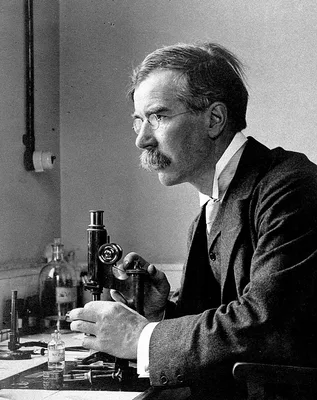
1900 WRIGHT, Sir Almroth Edward (1861 – 1947); LEISHMAN, Sir William Boog (1865 – 1926)
Remarks on the results which have been obtained by the antityphoid inoculations.
The active inoculation of man against typhoid was first performed by Wright in 1896. For a preliminary note see Lancet, 1896, 2, 807.
GMN 5039 · https://historyofmedicine.com/id/5789
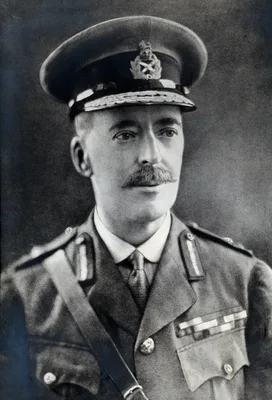
1910 RUSSELL, Brigadier Frederick Fuller (1870 – 1960)
The control of typhoid in the Army by vaccination.
Russell carried out important and long-continued investigations on anti-typhoid vaccination in the U.S. Army, demonstrating beyond question its value in selected groups. The war of 1914-18 confirmed the value of the w…
GMN 5042 · https://historyofmedicine.com/id/5817
1928 SHWARTZMAN, Gregory (1896 – 1965)
Studies on Bacillus typhosus toxic substances. I. Phenomenon of local skin reactivity to B. typhosus culture filtrate.
“Shwartzman phenomenon.”
GMN 2576 · https://historyofmedicine.com/id/3712
1938 FELIX, Arthur (1887 – 1956); PETRIE, George Ford (1863 – 1955)
The preparation of anti-typhoid serum in the horse for therapeutic use in man.
Typhoid antiserum.
GMN 5045.1 · https://historyofmedicine.com/id/5826