1656 BADO, Sebastiano [Baldi, Baldo] (1610 – 1676)
Cortex Peruviae redivivus, profligator febrium, assertus ab impugnationibus Melippi Protimi ...
The first book on Peruvian bark or cinchona (chinchona) in the treatment of malaria.
GMN 7620 · https://historyofmedicine.com/id/9792
1663 BADO, Sebastiano [Baldi, Baldo] (1610 – 1676)
Anastasis corticis Peruviae, seu chinae defensio
A defence of the virtues of Jesuit's bark or Peruvian bark (cinchona, chinchona), the most celebrated specific remedy for malaria. It was obtained from the bark of several species of the genus Cinchona, of the Rubiace…
GMN 1826 · https://historyofmedicine.com/id/7875
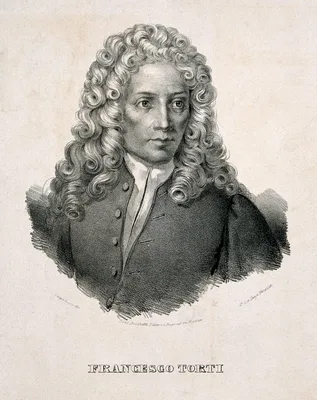
1712 TORTI, Francesco (1658 – 1741)
Therapeutice specialis ad febres quasdam pemiciosas, inopinato, ac repente lethales, una vera china china, peculiare methodo ministrata, sanabiles
Torti’s work finally established the specific nature of cinchona bark. His demonstration of its effectiveness in periodic over continuous fevers finally overthrew the doctrine of the common origin of all fevers. He is…
GMN 5231 · https://historyofmedicine.com/id/7866
1790 BAUMES, Jean Baptiste Timothée (1756 – 1828)
De l'usage du quinquina dans les fièvres rémittentes. Mémoire qui a remporté en 1785, au jugement de la Societé Royale de Médecine de Paris.
Digital facsimile from Biodiversity Heritage Library at this link.
GMN 13623 · https://historyofmedicine.com/id/15903
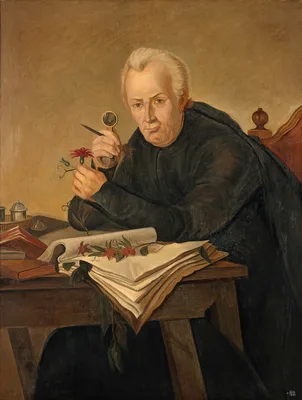
1792 LÓPEZ, Hipólito Ruiz (1754 – 1816)
Quinología o Tratado del árbol de la quina ó cascarilla:con su descripción y la de otras especies de quinos nuevamente descubiertas en el Perú....
Ruiz, a Spanish pharmacist and botanist, was appointed director of the Expedición Botánica al Virreinato del Perú, during which he traveled extensively through Chile and Peru along with botanists José Pavón and Joseph…
GMN 13323 · https://historyofmedicine.com/id/15590
1799 AZEREDO, José Pinto de (1766 – 1810)
Ensaios sobre algumas enfermidades d'Angola....
Azeredo noted that the tropical fevers found in Brazil and Angola were very similar. He claimed to have achieved excellent results with his “new method” of treatment, which included the use of quinine, nux vomica, ars…
GMN 9070 · https://historyofmedicine.com/id/11249
1810 GOMES, Bernardino António (1769 – 1823)
Ensaio sobre o cinchonino, e sobre sua influencia em a virtude da quina, e de outras cascas.
Gomes obtained a substance, which he named cinchonino, from cinchona bark. That it contained the active principle of cinchona was later proved by Pelletier and Caventou. For an English translation of the paper, see Ed…
GMN 1840 · https://historyofmedicine.com/id/2272
1820 PELLETIER, Pierre Joseph (1788 – 1842); CAVENTOU, Joseph Bienaimé (1795 – 1877)
Recherches chimique sur les quinquinas.
Isolation of quinine.
GMN 5233 · https://historyofmedicine.com/id/7879
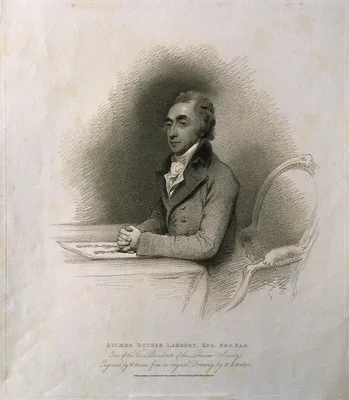
1821 HUMBOLDT, Friedrich Wilhelm Heinrich Alexander von (1769 – 1859); LÓPEZ, Hipólito Ruiz (1754 – 1816); LAMBERT, Aylmer Bourke (1761 – 1842); LAUBERT, Jean Charles (1762 – 1834)
An illustration of the genus cinchona; comprising descriptions of all the officinal Peruvian barks, including several new species. Baron de Humboldt's Account of the Cinchona forests of South America, and Laubert's Memoir on the different species of quinquina: To which are added several dissertations of Don Hippolito Ruiz on various medicinal plants of South America ... And a short account of the spikenard of the ancients.
Digital facsimile from Biodiversity Heritage Library at this link.
GMN 13324 · https://historyofmedicine.com/id/15591
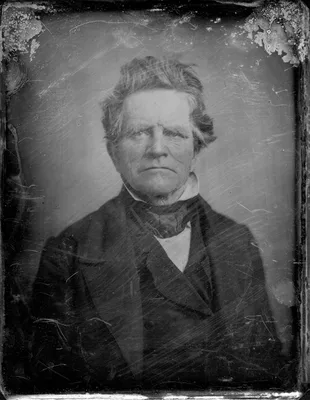
1844 SAPPINGTON, John S. (1776 – 1856)
The theory and treatment of fevers. Revised and corrected by Ferdinando Stith.
The first medical treatise published in Missouri and the first medical treatise published west of the Mississippi River. "John Sappington provided medical services, was a financial lender, and imported and exported go…
GMN 10446 · https://historyofmedicine.com/id/12639
1870 TRIANA SILVA, José Jerónimo (1828 – 1890); MUTIS, José Celestino (1732 – 1808)
Nouvelles études sur les quinquinas, d'après les matériaux présentés en 1867 à l'Exposition universelle de Paris et accompagnées de facsimilé des dessins de la quinologie de Mutis, suivis de remarques sur la culture de quinquinas.
Digital facsimile from Biodiversity Heritage Library at this link.
GMN 13675 · https://historyofmedicine.com/id/15957
1884 –1886 BINZ, Karl (1832 – 1913)
Vorlesungen über Pharmakologie.
Includes his test for quinine in urine. English translation of second edition, 1895-97. Binz was Professor of Pharmacology at Bonn. His most important work was perhaps the demonstration that quinine in low concentrati…
GMN 1880 · https://historyofmedicine.com/id/2512
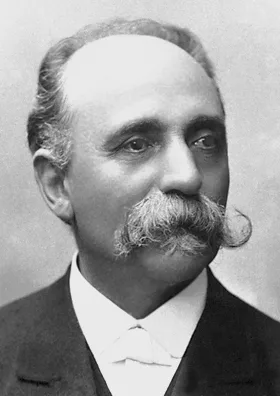
1892 GOLGI, Camillo (1844 – 1926)
Azione della chinina sui parasite malarici e sui corrispondente accessi febbrili.
French translation in Arch. ital. Biol., 1892, 17, 456-71.
GMN 5243 · https://historyofmedicine.com/id/7900
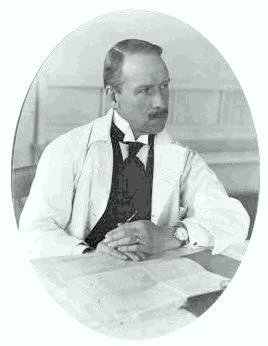
1914 WENCKEBACH, Karel Frederik (1864 – 1940)
Die unregelmässige Herztätigkeit und ihre klinische Bedeutung.
Wenckebach was the first to demonstrate (pp. 173-75) the value of quinine (“Wenckebach’s pills”) in the treatment of paroxysmal fibrillation. The same work contains a number of excellent descriptions of various forms …
GMN 2844 · https://historyofmedicine.com/id/3605
1918 FREY, Walter (1884 – 1972)
Ueber Vorhofflimmern beim Menschen und seine Beseitigung durch Chinidin.
Following Wenckebach’s discovery of the efficacy of quinine in the restoration of normal rhythm in auricular fibrillation. Frey showed that quinidine was the most effective of the cinchona alkaloids in this respect.
GMN 2848 · https://historyofmedicine.com/id/3617
1926 HANZLIK, Paul John (1885 – 1951)
Actions and uses of the salicylates and cinchophen in medicine.
Republished in book form, Baltimore, 1927.
GMN 1914 · https://historyofmedicine.com/id/2680
1941 HAGGIS, Alec William (1889 – 1946)
Fundamental errors in the early history of cinchona.
GMN 2060 · https://historyofmedicine.com/id/2326
1945 TAYLOR, Norman (1883 – 1967)
Cinchona in Java: The story of quinine.
GMN 2061 · https://historyofmedicine.com/id/2330
1947 PAREDES BORJA, Virgilio (1858 – 1983)
La contribución del Ecuador a la material médica: La quina.
GMN 13496 · https://historyofmedicine.com/id/15771
1949 JARAMILLO-ARANGO, Jaime (1897 – 1962)
A critical review of the basic facts in the history of cinchona.
GMN 2065 · https://historyofmedicine.com/id/2349
2016 CRAWFORD, Matthew James
The Andean wonder drug: Cinchona bark and imperial science in the Spanish Atlantic, 1630-1800.
GMN 11614 · https://historyofmedicine.com/id/13814