1941 HAGGIS, Alec William (1889 – 1946)
Fundamental errors in the early history of cinchona.
GMN 2060 · https://historyofmedicine.com/id/2326
1945 TAYLOR, Norman (1883 – 1967)
Cinchona in Java: The story of quinine.
GMN 2061 · https://historyofmedicine.com/id/2330
1947 PAREDES BORJA, Virgilio (1858 – 1983)
La contribución del Ecuador a la material médica: La quina.
GMN 13496 · https://historyofmedicine.com/id/15771
1949 JARAMILLO-ARANGO, Jaime (1897 – 1962)
A critical review of the basic facts in the history of cinchona.
GMN 2065 · https://historyofmedicine.com/id/2349
1950 GRAHAM, Evarts Ambrose (1883 – 1957); WYNDER, Ernst Ludwig (1922 – 1999)
Tobacco smoking as a possible etiologic factor in bronchogenic carcinoma: A study of 684 proved cases.
A case-control study proving an association between heavy prolonged cigarette smoking and bronchogenic carcinoma. See also the following paper on pp. 336-38. Reprinted in J. Amer. med. Assoc. 1985, 253, 2986-97.
GMN 3215.1 · https://historyofmedicine.com/id/4362
1951 ROTH, Grace M. (1894 – 1982)
Tobacco and the cardiovascular system: The effects of smoking and of nicotine on normal persons.
GMN 11699 · https://historyofmedicine.com/id/13900
1952 MÜLLER, J. M.; ET AL
Reserpin, der sedative Wirkstoff aus Rauwolfia serpentina Benth.
Isolation of reserpine. With E. Schlittler and H. J. Bein.
GMN 1931 · https://historyofmedicine.com/id/2750
1955 FRAENKEL-CONRAT, Heinz Ludwig (1910 – 1999); WILLIAMS, Robley Cook (1908 – 1995)
Reconstitution of active tobacco mosaic virus from its inactive protein and nucleic acid components.
First reconstitution of a virus.
GMN 2527 · https://historyofmedicine.com/id/3465
1960 MUELLER, Wolf
Bibliographie des Kaffe, des Kakao der Schokolade, des Tee und deren Surrogate bis zum Jahre 1900.
GMN 13632 · https://historyofmedicine.com/id/15912
1964 MECHOULAM, Raphael (1930 – ); GAONI, Y.
Isolation, structure, and partial synthesis of an active constituent of hashish.
Mechoulam and Gaoni showed that the active ingredient of "one of the most widely used illicit narcotic drugs," the flowering tops of Cannabis sativa, is "pure tetrhydrocannabinol" (THC). This they called the "psychoto…
GMN 14091 · https://historyofmedicine.com/id/16402
1971 VANE, Sir John Robert (1927 – 2004)
Inhibition of prostaglandin synthesis as a mechanism of action for aspirin-like drugs.
In 1982 Vane shared the Nobel Prize in Physiology or Medicine with Sune Bergström and Bengt Samuelsson for "their discoveries concerning prostaglandins and related biologically active substances."
GMN 13958 · https://historyofmedicine.com/id/16259
1984 PARSSINEN, Terry M.
Secret passions, secret remedies: Narcotic drugs in British Society, 1820-1930.
"....The major orientation is to opium, with two chapters on its alkaloid, morphine, occasional references to cocaine, and a mention of heroin. There is an enlightening discussion of reasons for the initial acceptance…
GMN 10243 · https://historyofmedicine.com/id/12433
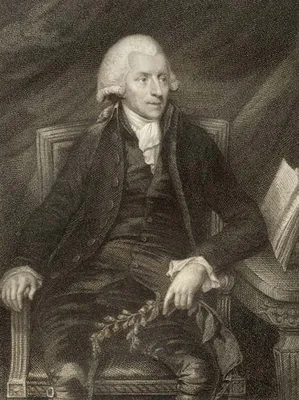
1985 WITHERING, William (1741 – 1799); ARONSON, Jeffrey Kenneth (1947 – )
An account of the foxglove and its medical uses 1785-1985.
This work consists of a reproduction of Withering's classic text published in 1785, extensively annotated by Aronson, followed by Aronson's history of "the use of the digitalis glycosides and related compounds over th…
GMN 9233 · https://historyofmedicine.com/id/11415
1993 WILBERT, Johannes
Tobacco and shamanism in South America.
A comprehensive ethnography of magico-religious, medicinal, and recreational tobacco use among native South American societies, based on a survey of nearly three hundred societies.
GMN 9017 · https://historyofmedicine.com/id/11196
1994 GOODMAN, Jordan
Tobacco in history: The cultures of dependence.
GMN 9684 · https://historyofmedicine.com/id/11871
1994 GAGLIANO, Joseph
Coca prohibition in Peru: The historical debates.
Traces the arguments of the participants in the coca debates in Peru during the last four centuries. Gagliano surveys the role of the leaf in Peru's socio-political history, focusing on coca usage as a source of contr…
GMN 11889 · https://historyofmedicine.com/id/14094
1996 GLANTZ, Stanton Arnold (1945 – ); ET AL
The cigarette papers. Edited by Stanton A. Glantz, John Slade, Lisa A. Bero, Peter Hanauer, and Deborah E. Barnes.
Analysis and selective reproduction of 4000 pages of internal tobacco industry documents proving that a tobacco company was fully aware that it was promoting and marketing a highly addictive carcinogenic substance. El…
GMN 8660 · https://historyofmedicine.com/id/10837
1996
Industry Documents Library. University of California, San Francisco.
https://www.library.ucsf.edu/industry-documents/ "The Industry Documents Library (IDL) provides public access to internal corporate documents to facilitate research about cross-industry practices that harm public heal…
GMN 8661 · https://historyofmedicine.com/id/10838
1998 KARCH, Steven B.
A brief history of cocaine.
Second edition, 2006.
GMN 11743 · https://historyofmedicine.com/id/13943
1999 GOOTENBERG, Paul Eliot (1954 – )
Cocaine: Global histories.
GMN 9034 · https://historyofmedicine.com/id/11213
1999 HARRISON, Bryan Desmond (1931 – ); WILSON, T. M. A.
Tobacco mosaic virus: Pioneering research for a century. A theme issue edited by B. D. Harrison and T. M. A. Wilson.
GMN 11071 · https://historyofmedicine.com/id/13267
2001 GATELY, Iain (1965 – )
Tobacco: A cultural history of how an exotic plant seduced civilization.
GMN 9686 · https://historyofmedicine.com/id/11873
2001 WEINBERG, Bennett Alan; BEALER, Bonnie K.
The world of caffeine: The science and culture of the world's most popular drug.
GMN 13628 · https://historyofmedicine.com/id/15908
2002 HUGHES, Jason
Learning to smoke: Tobacco use in the West.
GMN 9685 · https://historyofmedicine.com/id/11872
2002 HÜNERSDORFF, Richard von; HASENKAMP, Holger G.
Coffee: A bibliography. A guide to the literature on coffee. 2 vols.
"...listing over 15,000 imprints relating to every aspect of coffee from the past to the present. The principal writings on coffee have been identified and described in light of available source material. Represented …
GMN 11720 · https://historyofmedicine.com/id/13921
2002 MUSTO, David Franklin (1936 – 2010); KORSMEYER, Pamela (1945 – ); MAULUCCI, Thomas W. Jr.
One hundred years of heroin. Edited by David F. Musto with the assistance of Pamela Korsmeyer and Thomas W. Maulucci, Jr.
GMN 12416 · https://historyofmedicine.com/id/14646
2003 KARCH, Steven B.
A history of cocaine: The mystery of coca Java and the Kew plant.
This work is not actually a "history", rather it contains translations, with commentary, of three late nineteenth and early twentieth century treatises on coca and cocaine, plus other documents. "An exploration of the…
GMN 11744 · https://historyofmedicine.com/id/13944
2006 TIBI, Selma
The medicinal use of opium in ninth-century Baghdad. (Sir Henry Wellcome Asian Series, vol. 5).
GMN 12523 · https://historyofmedicine.com/id/14758
2008 GOOTENBERG, Paul Eliot (1954 – )
Cocaine: Global drug.
Traces cocaine's history from its origins as a medical commodity in the nineteenth century to its repression during the early twentieth century and its dramatic reemergence as an illicit good after World War II. Conne…
GMN 9035 · https://historyofmedicine.com/id/11214
2010 SWIDERSKI, Richard M.
Poison eaters: Snakes, opium, arsenic, and the lethal show.
"This book is the first to explore the tradition of deliberate poison eating, its practitioners, and the substances that might nourish or kill them" (publisher).
GMN 9884 · https://historyofmedicine.com/id/12072
2011 MARKEL, Howard (1960 – )
An anatomy of addiction: Sigmund Freud, William Halsted and the miracle drug, cocaine.
GMN 8709 · https://historyofmedicine.com/id/10887
2013 AGNEW, Jeremy
Alcohol and opium in the Old West: Use, abuse and influence.
GMN 12102 · https://historyofmedicine.com/id/14311
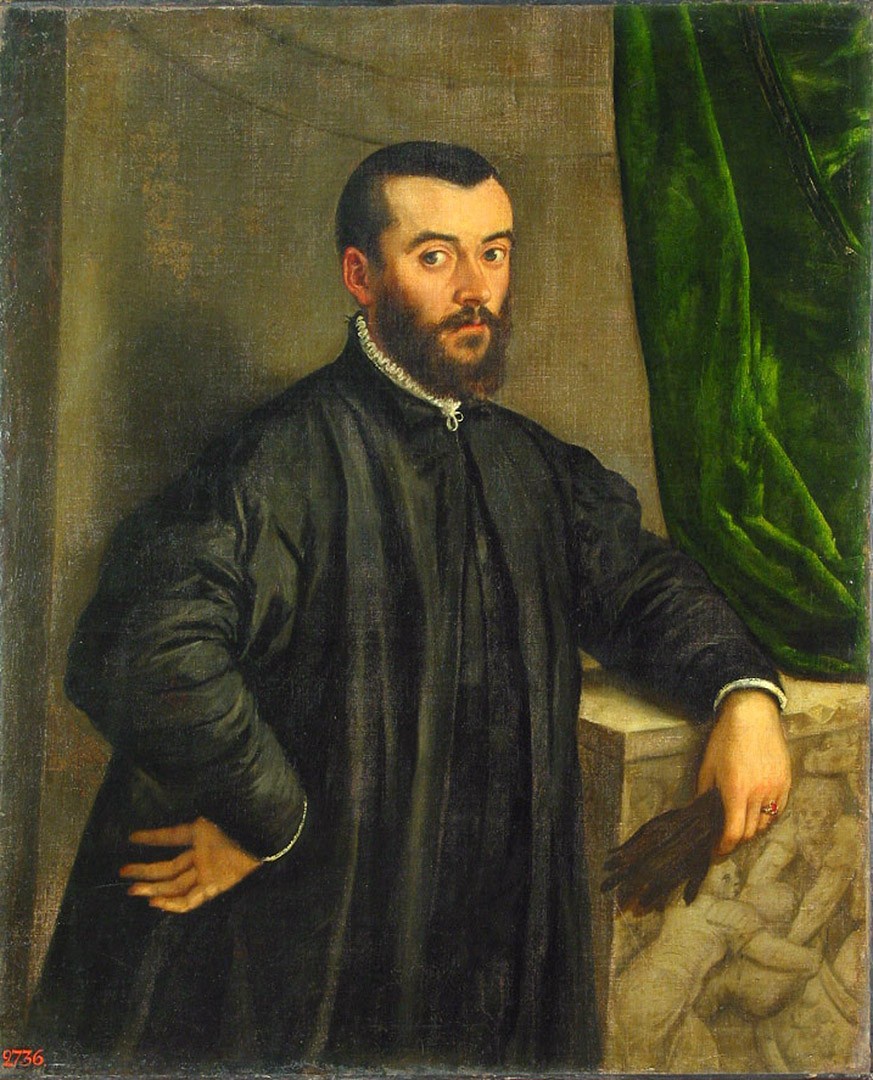
2015 VESALIUS, Andreas (1514 – 1564); GARRISON, Daniel H.
Vesalius: The China Root epistle. A new translation and critical edition, edited and translated by Daniel H. Garrison, with added illustrations from the 1543 and 1555 De humani corporis fabrica.
GMN 13024 · https://historyofmedicine.com/id/15274
2015 TU (TU YOUYOU), Youyou (1930 – )
NOBEL LECTURE: Discovery of Artemisinin - A gift from traditional Chinese medicine to the world.
In 1972 Tu Youyou discovered Artemisinin, the standard treatment worldwide for P. falciparum malaria as well as malaria due to other species of Plasmodium. Artemisinin is extracted from Artemisia annua (sweet wormwood…
GMN 14260 · https://historyofmedicine.com/id/16581
2016 CRAWFORD, Matthew James
The Andean wonder drug: Cinchona bark and imperial science in the Spanish Atlantic, 1630-1800.
GMN 11614 · https://historyofmedicine.com/id/13814