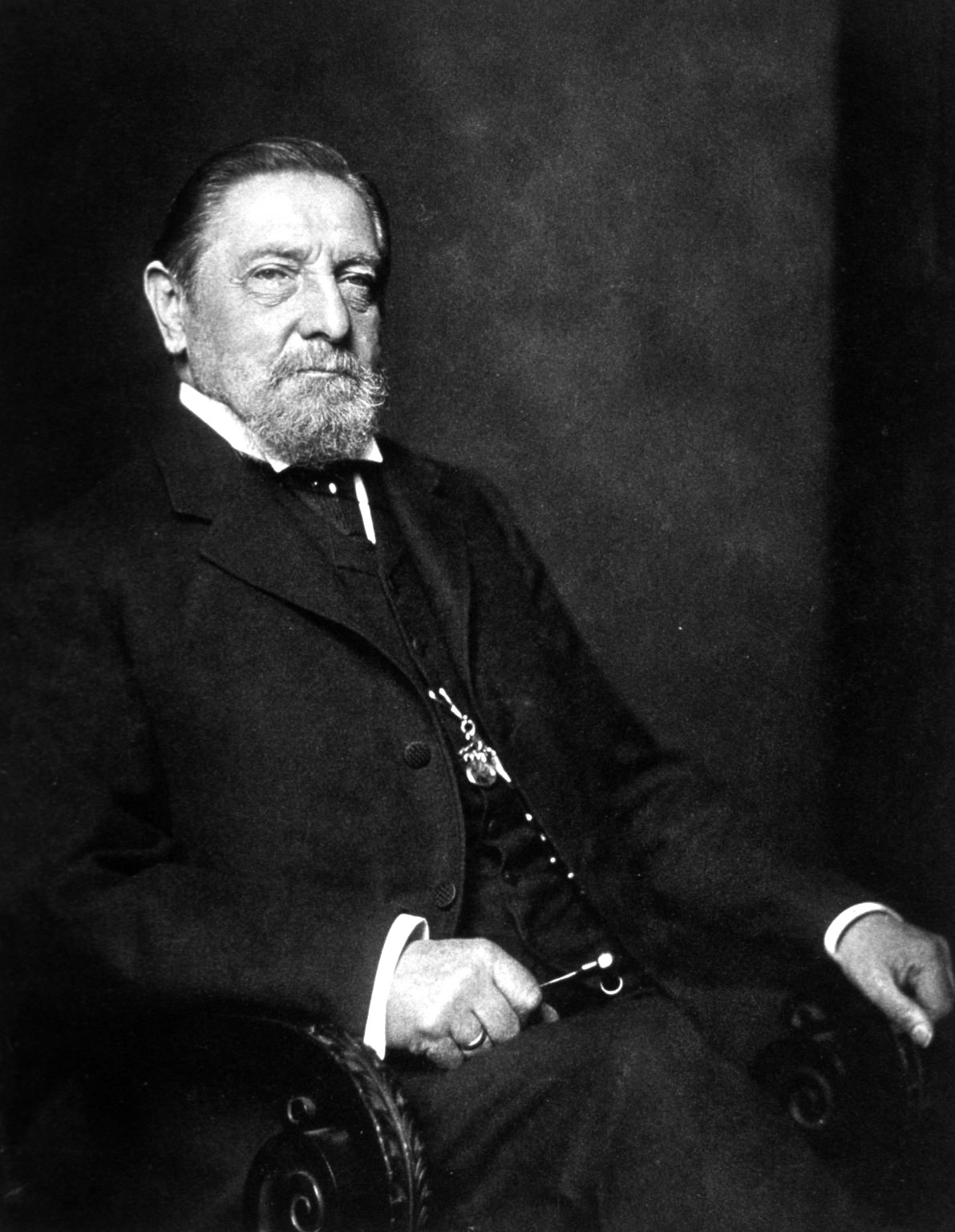
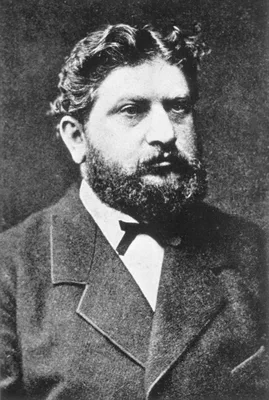
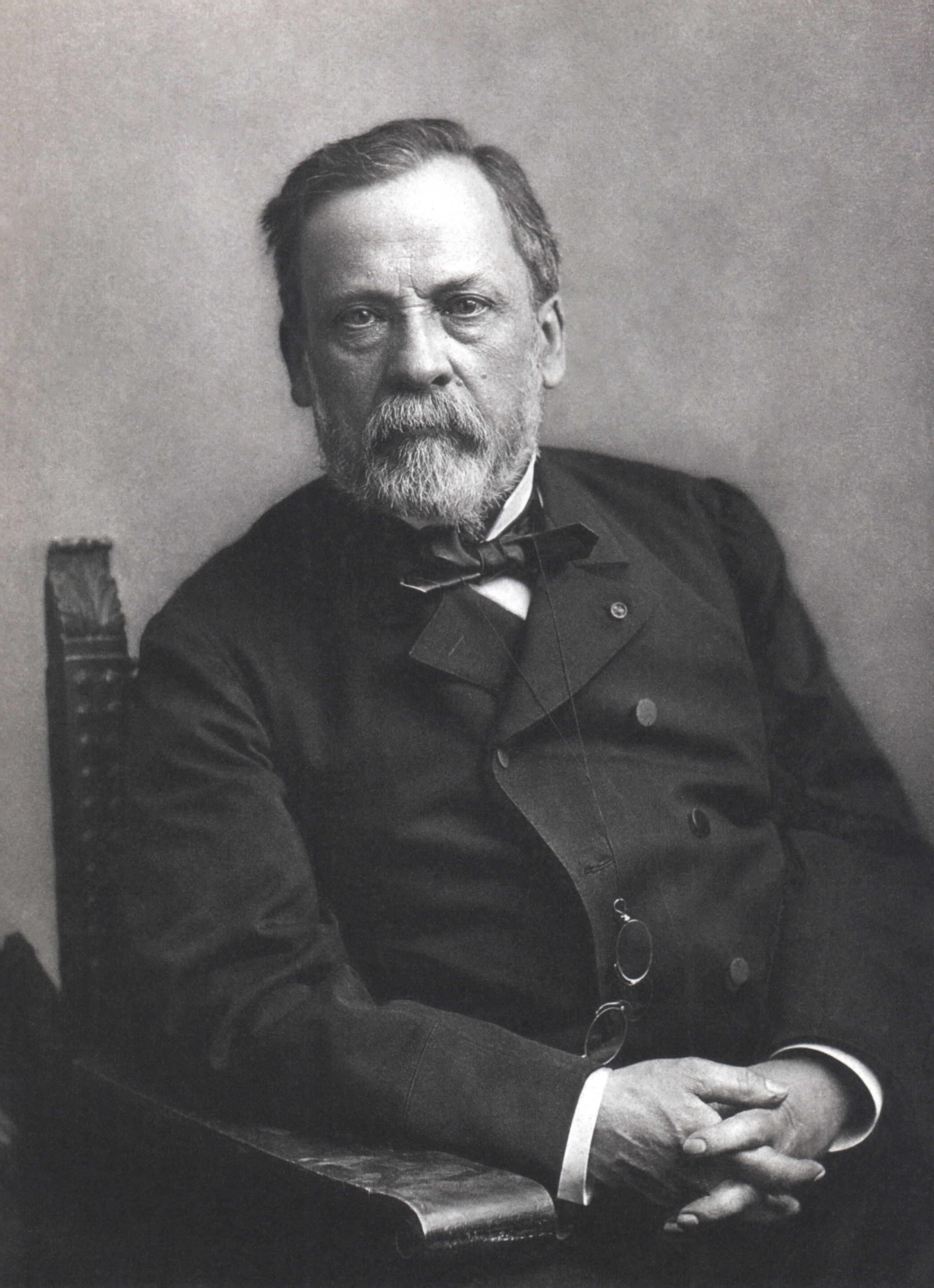
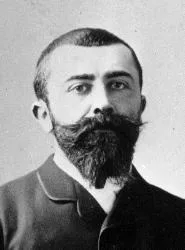
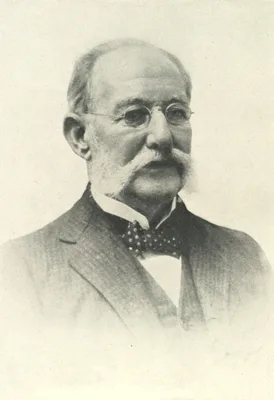
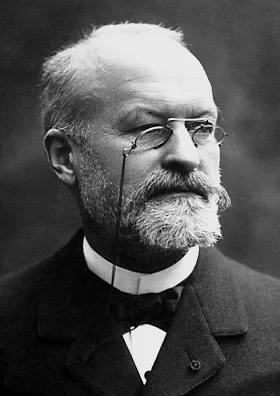
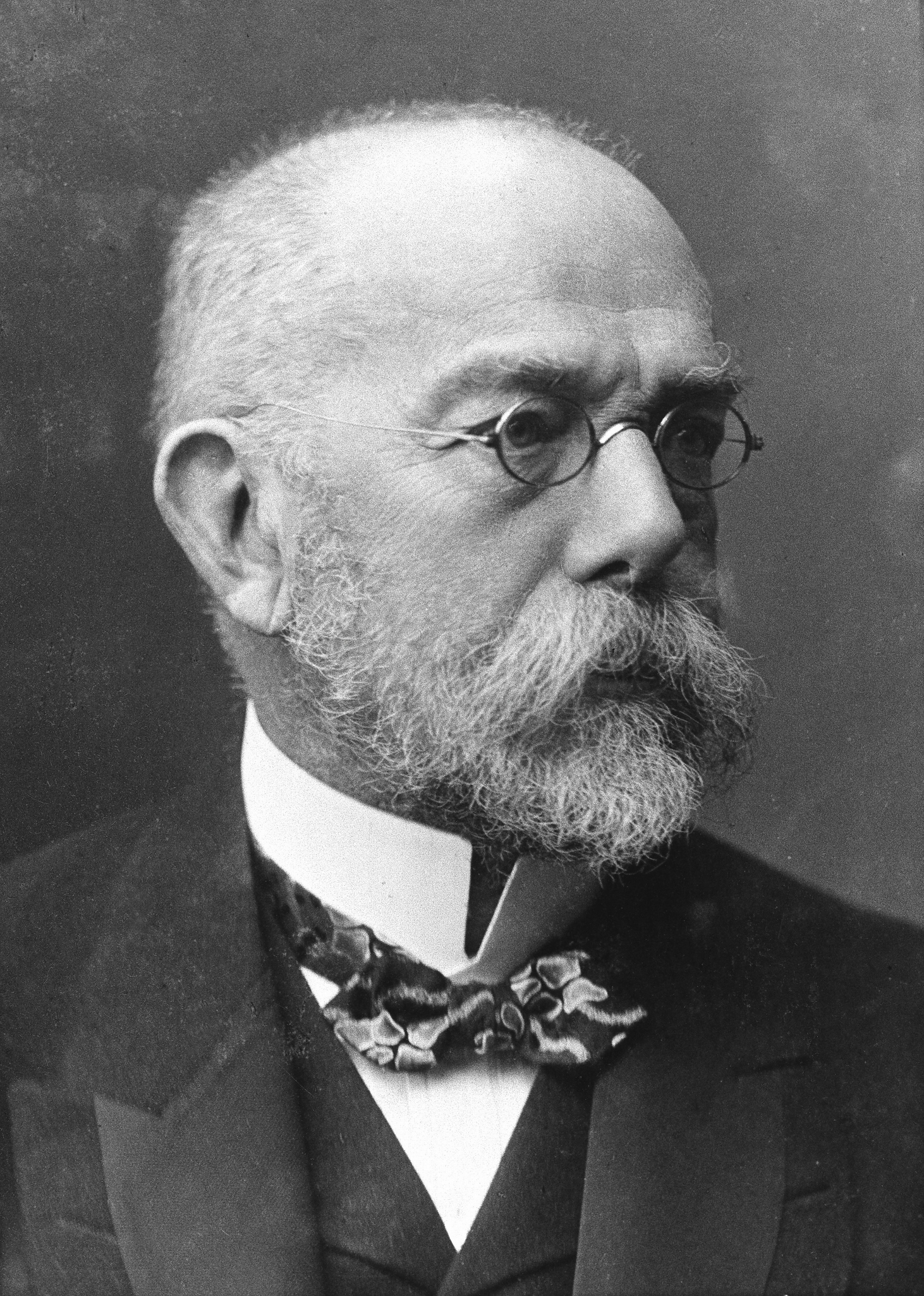
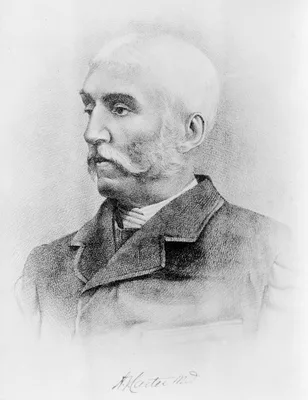
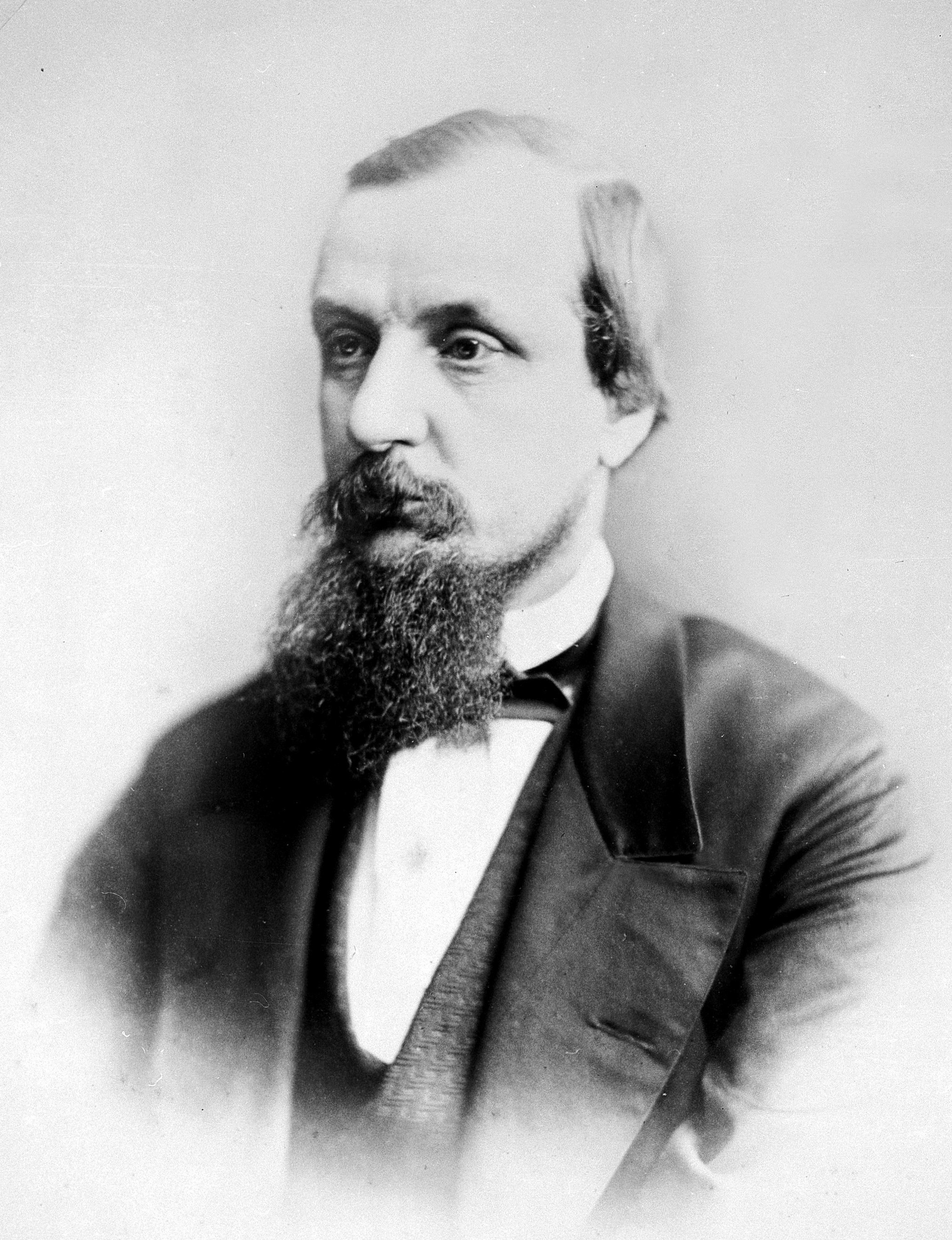
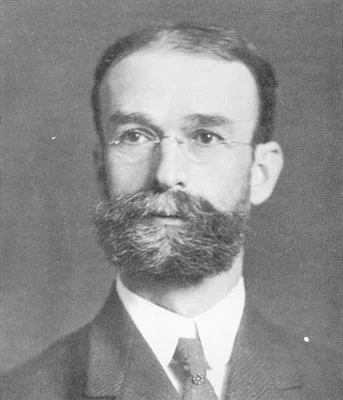
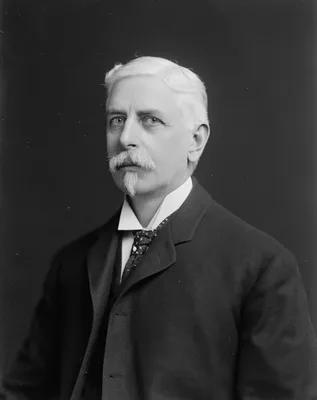
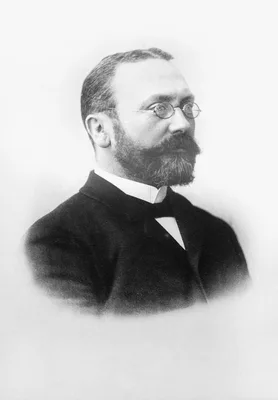
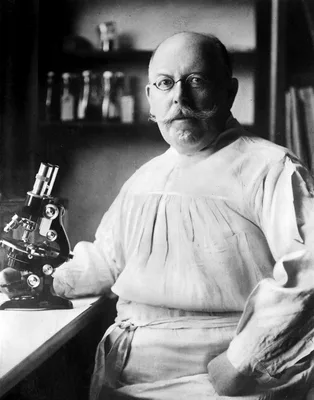
1879 –1880 LEYDEN, Ernst Viktor von (1832 – 1910)
Ueber Poliomyelitis und Neuritis.
Leyden enjoyed a great reputation as a neurologist and his paper on poliomyelitis and neuritis is one of his best works. He was one of the founders of the journal in which it appeared.
GMN 4666 · https://historyofmedicine.com/id/817
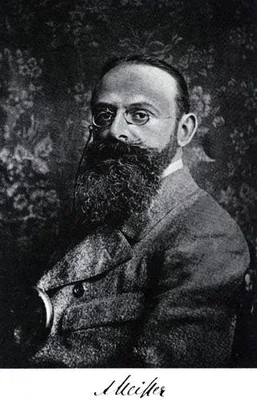
1879 NEISSER, Albert Ludwig Siegmund (1855 – 1916)
Über die Ätiologie des Aussatzes.
Neisser obtained leprosy tissue from Hansen and, using aniline dyes for staining Myco. leprae, was able to demonstrate it more convincingly than Hansen.
GMN 2436.1 · https://historyofmedicine.com/id/2903
1879 GALTIER, Pierre-Victor (1846 – 1908)
Études sur la rage.
Galtier demonstrated the transmissibility of rabies from dog to rabbit to rabbit in a series, a matter of considerable interest to Pasteur.
GMN 5481.2 · https://historyofmedicine.com/id/6375
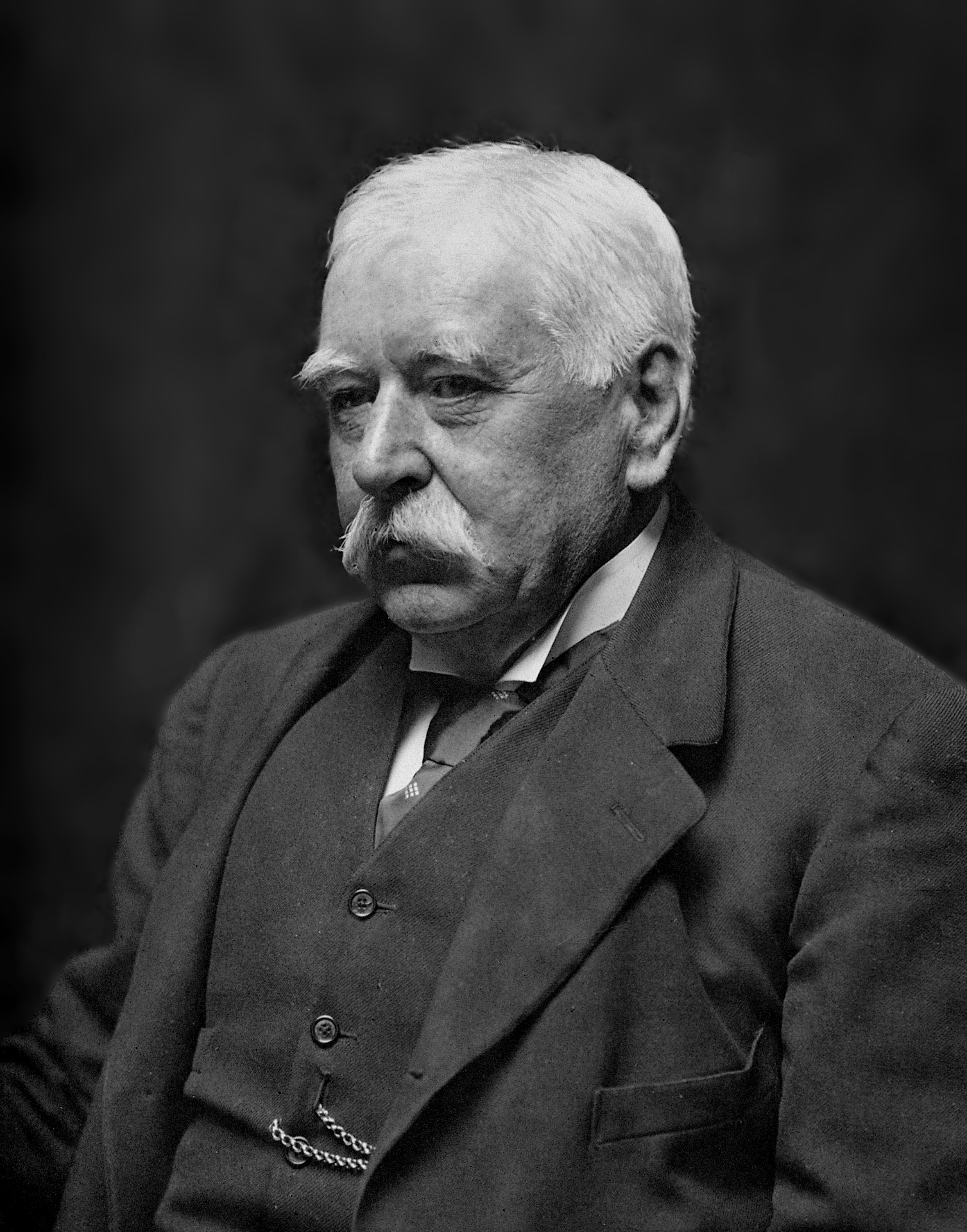
1879 MOCZUTKOWSKI, Osip Osipovich (Józef Broislaw Moczutkowski) (1845 – 1903)
Materialien zur Pathologie und Therapie des Rückfallstyphus.
By inoculating healthy subjects with blood of patients suffering from replapsing fever, and producing the fever in the former, Mochutkovski demonstrated not only the communicability of the disease but also the specifi…
GMN 5315 · https://historyofmedicine.com/id/6604
1879 RITTER, Jacob
Beitrag zur Frage des Pneumotyphus. (Eine Hausepidemie in Uster[Schweiz] betreffend.)
First description of psittacosis in a human.
GMN 5527 · https://historyofmedicine.com/id/6634
1879 BOZZOLO, Camillo (1845 – 1920)
L’anchilostomiasi e l’anemia che ne conseguita (anchilostomanemia).
Introduction of thymol as a hookworm vermifuge.
GMN 5358 · https://historyofmedicine.com/id/6955
1879 BÄLZ, Erwin Otto Eduard von (1849 – 1933); KAWAKAMI
Das japanische Fluss- oder Ueberschwemmings-fieber, eine acute Infectionskrankheit.
Early scientific account of tsutsugamushi fever.
GMN 5376.1 · https://historyofmedicine.com/id/7038
1879 NEISSER, Albert Ludwig Siegmund (1855 – 1916)
Ueber eine der Gonorrhoe eigentümliche Micrococcusform.
Discovery of the gonococcus – causal organism in gonorrhoea.
GMN 5208 · https://historyofmedicine.com/id/7802
1879 BURNETT, James Compton (1840 – 1901)
Gold as a remedy in disease, notably in some forms of organic heart disease, angina pectoris, melancholy, tedium vitae, scrofula, syphilis, skin disease, & as an antidote to the ill effects of mercury.
Burnett, a homeopath, provided an excellent summary of the history of gold as it was used in medicine, with extensive references to the historical literature. Digital facsimile from the Hathi Trust at this link.
GMN 8852 · https://historyofmedicine.com/id/11030
1879 POWER, John Logan (1834 – 1901)
The epidemic of 1878 in Mississippi: Report of the yellow fever relief work.
Digital facsimile from the U.S. National Library of Medicine at this link.
GMN 10524 · https://historyofmedicine.com/id/12717
1879 MANSON, Sir Patrick (1844 – 1922)
Additional notes on filaria sanguinis hominis and filiaria disease.
On p. 36 of this paper Manson first described nocturnal periodicity in Filaria Bancrofti, an adaptation to the nocturnal biting habits of their mosquito vector. (Thanks to Juan Weiss for this reference and its interpr…
GMN 11248 · https://historyofmedicine.com/id/13445
1880 COHNHEIM, Julius Friedrich (1839 – 1884)
Die Tuberkulose vom Standpunkte der Infectionslehre.
Cohnheim, a pioneer pathologist, was Virchow’s most distinguished pupil. Among his many valuable experiments, the greatest was perhaps his successful inoculation of tuberculosis in the anterior chamber of the rabbit’s…
GMN 2329 · https://historyofmedicine.com/id/3051
1880 PASTEUR, Louis (1822 – 1895)
Sur les maladies virulentes, et en particulier sur la maladie appelée vulgairement choléra des poules.
This paper marked the beginning of Pasteur’s work on the attenuation of the infective organism. Noting that fowls inoculated with an attenuated form of the chicken cholera bacterium acquired immunity, he developed the…
GMN 2537 · https://historyofmedicine.com/id/3526
1880 PASTEUR, Louis (1822 – 1895); CHAMBERLAND, Charles (1851 – 1908); ROUX, Pierre Paul Émile (1853 – 1933)
Sur l’étiologie du charbon.
First use of attenuated bacteria for therapeutic purposes. See also the same journal, 1881, 92, 1378-83.
GMN 5169 · https://historyofmedicine.com/id/6251
1880 PONFICK, Emil (1844 – 1913)
Ueber Actinomykose.
Ponfick recognized the causative role of Actinomyces in human actinomycosis; he established the identity of the human and animal forms of the disease. He published a book on the subject, Die Actinomykose des Menschen,…
GMN 5512 · https://historyofmedicine.com/id/6513
1880 EBERTH, Carl Joseph (1835 – 1926)
Die Organismen in den Organen bei Typhus abdominalis.
Salmonella typhi, causal organism of typhoid, was discovered by Eberth. Some European writers refer to the disease as “Eberth’s disease”.
GMN 5030 · https://historyofmedicine.com/id/6764
1880 BÄLZ, Erwin Otto Eduard von (1849 – 1933)
Ueber parasitäre Hämoptoë (Gregarinosis pulmonum).
Description of the ova of Paragonimus (which Baelz named Gregarina pulmonalis) and its relationship to endemic hemoptysis. Translation in Kean (No. 2268.1), p. 602.
GMN 5346.1 · https://historyofmedicine.com/id/6804
1880 MANSON, Sir Patrick (1844 – 1922)
Distoma ringeri.
Manson made a fundamental contribution to knowledge on paragonimiasis with his description of its etiology and of the parasite. He named it Distoma ringeri after Dr. Ringer, who recovered it from the lung at necropsy;…
GMN 5346.2 · https://historyofmedicine.com/id/6808
1880 LEISTIKOW, Leo (1847 – 1917)
Ueber Bacterien bei den venerischen Krankheiten.
Leistikow was first to report the cultivation of the gonococcus.
GMN 5209 · https://historyofmedicine.com/id/7804
1881 CONCATO, Luigi Maria (1825 – 1882)
Sulla poliorromennite scrofolosa, o tisi delle sierose.
Concato’s excellent description of tuberculous inflammation of the serous membranes resulted in the eponym “Concato’s disease”.
GMN 2330 · https://historyofmedicine.com/id/3054
1881 KLEBS, Theodor Albrecht Edwin (1834 – 1913)
Der Bacillus des Abdominaltyphus und dertyphöse Process.
Klebs probably saw the typhoid bacillus before Eberth, reporting it later.
GMN 5031 · https://historyofmedicine.com/id/5741
1881 GALTIER, Pierre-Victor (1846 – 1908)
Les injections de virus rabique dans le torrent circulatoire ne provoquent pas l’éclosion de la rage et semblant conférer l’immunité. La rage peut être transmise par l’ingestion de la matiére rabique.
Galtier immunized sheep by inoculating rabid saliva in the veins; this did not produce the disease and protected the animals from a further inoculation. His work aroused the interest of Pasteur.
GMN 5481.3 · https://historyofmedicine.com/id/6378
1881 PASTEUR, Louis (1822 – 1895); CHAMBERLAND, Charles (1851 – 1908); ROUX, Pierre Paul Émile (1853 – 1933); THUILLIER, Louis (1856 – 1883)
Sur la rage.
This paper marks the beginning of Pasteur’s studies on rabies. English translation in R. Suzor, Hydrophobia: An account of M. Pasteur’s system…London, 1887.
GMN 5481.4 · https://historyofmedicine.com/id/6382
1881 –1882 FINLAY, Carlos Juan (1833 – 1915)
El mosquito hipoteticamente considerado como agente de transmisión de la fiebre amarilla.
Finlay was the first to suggest that the Aedes aegypti mosquito was the vector of yellow fever. Digital facsimile from Google Books at this link. English translation by Rudolph Matas as "The mosquito hypothetically co…
GMN 5455 · https://historyofmedicine.com/id/7549
1881 LAVERAN, Charles Louis Alphonse (1845 – 1922)
Un nouveau parasite trouvé dans le sang plusieurs malades atteints de fièvre palustre.
Laveran first saw the malaria parasite on 20 October 1880; he at once recognized its significance. He named it Oscillaria malariae. English translation in Kean (No. 2268.1). Laveran also published a monograph on the d…
GMN 5236 · https://historyofmedicine.com/id/7884
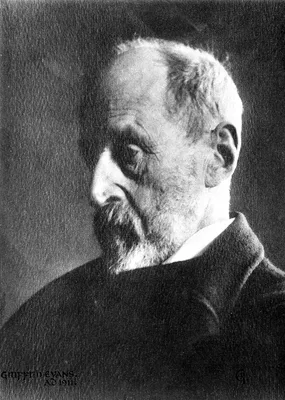
1881 EVANS, Griffith (1835 – 1935)
On a horse disease in India known as “surra”, probably due to a haematozoon.
While serving in India as a veterinary surgeon, Evans discovered parasites in the blood of horses suffering from surra; this was the first pathogenic trypanosome to be described.
GMN 5271 · https://historyofmedicine.com/id/8576
1881 HILLIS, John D.
Leprosy in British Guiana. An account of West Indian Leprosy. Illustrated with twenty lithographic plates, coloured and plain, from original drawings and photographs of patients at the asylum, and several engravings from camera-lucida drawings, by E. Noble Smith, of pathological specimens, mounted and prepared, with explanatory remarks by P. S. Abraham....
The author was medical superintendent of the General Leper Asylum, British Guiana, West Indies. Digital facsimile from the Internet Archive at this link.
GMN 13045 · https://historyofmedicine.com/id/15296
1882 KERNIG, Vladimir Mikhailovich (Woldemar) (1840 – 1917)
Ein Krankheitssymptom der acuten Meningitis.
Kernig drew attention to a flexor contracture of the leg on attempting to extend it on the thigh (“Kernig’s sign”), almost always present in cerebrospinal meningitis and an important diagnostic sign. A fuller descript…
GMN 4677 · https://historyofmedicine.com/id/947
1882 KOCH, Robert Heinrich Hermann (1843 – 1910)
Die Aetiologie der Tuberkulose.
Discovery of the tubercle bacillus announced March 24, 1882. This paper also contains a statement of “Koch’s postulates”. See also Nos. 2536 and 5167. Koch published a fuller account as "Die Aetiologie der Tuberkulose…
GMN 2331 · https://historyofmedicine.com/id/3057
1882 ZIEHL, Franz (1859 – 1926)
Zur Färbung des Tuberkelbacillus.
Ziehl-Neelsen stain.
GMN 2331.1 · https://historyofmedicine.com/id/3061
1882 FRIEDLÄNDER, Carl (1847 – 1887)
Ueber die Schizomyceten bei der acuten fibrösen Pneumonie.
Isolation of Klebsiella pneumoniae (“Friedländer bacillus”), which Friedländer regarded as the causal organism in all cases of lobar pneumonia.
GMN 3174 · https://historyofmedicine.com/id/4160
1882 PFEIFFER, Ludwig (1842 – 1921); RULAND, C
Pestilentia in nummis.
A study of medals and tokens relating to epidemics of plague and other infectious diseases.
GMN 5132 · https://historyofmedicine.com/id/6140
1882 CARTER, Henry Vandyke (1831 – 1897)
Spirillum fever.
Asiatic relapsing fever; original work on this disease by Carter is remembered by the eponym “Carter’s fever” and the name Borrelia carteri. He reproduced the disease in the monkey.
GMN 5316 · https://historyofmedicine.com/id/6607
1882 DEUTSCHMANN, Richard (1852 – 1935)
Ein experimenteller Beitrag zur Pathogenese der sympathischen Augen-Entzündung.
Deutschmann was the chief protagonist of the infective theory of sympathetic ophthalmia.
GMN 5921 · https://historyofmedicine.com/id/6834
1882 HUTCHINSON, Sir Jonathan (1828 – 1913)
On gangrenous eruptions in connection with vaccination and chickenpox.
Original description of varicella gangrenosa.
GMN 5439 · https://historyofmedicine.com/id/7457
1882 MACLEOD, Kenneth (1840 – 1922)
Precis of operations performed in the wards of the first surgeon, Medical College Hospital, during the year 1881.
MacLeod was first to draw attention to granuloma inguinale.
GMN 5204.1 · https://historyofmedicine.com/id/7795
1883 NEELSEN, Friedrich Carl Adolf (1854 – 1894)
Ein casuistischer Beitrag zur Lehre von der Tuberkulose.
Includes (p. 500) details of his stain for the tubercle bacillus (see No. 2331.1).
GMN 2331.2 · https://historyofmedicine.com/id/3064
1883 KLEBS, Theodor Albrecht Edwin (1834 – 1913)
Ueber Diphtherie.
First account of Corynebacterium diphtheriae (Klebs–Loeffler bacillus), causal organism in diphtheria, discovered by Klebs.
GMN 5055 · https://historyofmedicine.com/id/5856
1883 LANDOUZY, Louis Théophile Joseph (1845 – 1917)
Fièvre bilieuse ou hépatique.
An early account of “Weil’s disease”, Leptospirosis icterohaemorrhagica.
GMN 5331 · https://historyofmedicine.com/id/6653
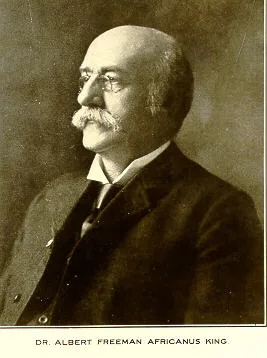
1883 KING, Albert Freeman Africanus (1841 – 1914)
Insects and disease - mosquitoes and malaria.
The first reasoned argument in support of the belief of transmission of malaria by mosquitoes. King was an English-born American physician who witnessed the assassination of Abraham Lincoln in April, 1865, and as a by…
GMN 5237 · https://historyofmedicine.com/id/7886
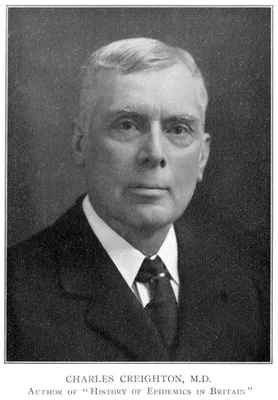
1883 –1886 HIRSCH, August (1817 – 1894); CREIGHTON, Charles (1847 – 1927)
Handbook of geographical and historical pathology. Translated from the second German edition by Charles Creighton. Vol. 1.-Acute infective diseases. Vol. 2.-Chronic infective, toxic, parasitic, septic and constitutional diseases. Vol. 3.-Diseases of organs and parts.
This is the best edition of Hirsch's Handbuch. Digital facsimiles of all 3 vols. from the Internet Archive at this link.
GMN 8378 · https://historyofmedicine.com/id/10555
1884 LANDOUZY, Louis Théophile Joseph (1845 – 1917)
Fièvre zoster etexanthèmes zosteriformes.
Landouzy first suggested the infective nature of herpes.
GMN 4642 · https://historyofmedicine.com/id/717
1884 METCHNIKOFF, Élie [MECHNIKOV] (1845 – 1916)
Über eine Sprosspilzkrankheit der Daphnien. Beitrag zur Lehre über den Kampf der Phagocyten gegen Krankheitserreger.
Metchnikoff originated the theory of phagocytosis. He described phagocytes in leucocytes and showed their function as scavengers. Abridged English translation in Bibel, Milestones in immunology (1988).
GMN 2538 · https://historyofmedicine.com/id/3529
1884 –1886 SMITH, Theobald (1859 – 1934); SALMON, Daniel Elmer (1850 – 1914)
On a new method of producing immunity from contagious diseases.
Smith found that dead virus can induce immunity against the living virulent virus. Although Smith made the discovery on his own, his supervisor, D.E. Salmon, usurped credit. See Bibel, Milestones in immunology (1988) …
GMN 2539 · https://historyofmedicine.com/id/3540
1884 FINKLER, Dittmar (1852 – 1912); PRIOR, J
Untersuchungen über Cholera nostras.
Finkler and Prior isolated Vibrio proteus from stools in a case of acute gastro-enteritis.
GMN 3481 · https://historyofmedicine.com/id/5685
1884 GAFFKY, Georg Theodor August (1850 – 1918)
Zur Aetiologie des Abdominaltyphus.
Gaffky was the first to grow pure cultures of Salmonella typhi; he showed it to be the true activator of the disease. English translation, New Sydenham Society, 1886. Digital facsimile of the 1884 printing from Google…
GMN 5032 · https://historyofmedicine.com/id/5747
1884 LOEFFLER, Friedrich August Johann (1852 – 1915)
Untersuchungen über die Bedeutung der Mikroorganismen für die Entstehung der Diphtherie beim Menschen, bei der Taube und beim Kalbe.
Loeffler succeeded in cultivating C. diphtheriae, the diphtheria bacillus. He reproduced the characteristic membrane by swabbing the mucous membranes of various animals with pure cultures of the bacillus. In this pape…
GMN 5056 · https://historyofmedicine.com/id/5859
1884 KOCH, Robert Heinrich Hermann (1843 – 1910)
Sechster Bericht der deutschen wissenschaftlichen Commission zur Ehrforschung der Cholera.
In this paper, dated 2 February 1884, written while Koch and his team were in Calcutta, Koch first published his discovery of the cholera bacillus and the main route of its transmission. He based his discovery on the …
GMN 5108 · https://historyofmedicine.com/id/6047
1884 CARLE, Antonio (1854 – 1927); RATTONE, Giorgio (1857 – 1929)
Studio experimentale sull’ eziologia del tetano.
Demonstration of the transmissibility of tetanus by inoculation into rabbits of pus from a human case.
GMN 5147 · https://historyofmedicine.com/id/6181
1884 NICOLAIER, Arthur (1862 – 1942)
Ueber infectiösen Tetanus.
The discovery of the tetanus bacillus, Clostridum tetani, is attributed to Nicolaier; he was, however, unable to isolate the organism in pure culture.
GMN 5148 · https://historyofmedicine.com/id/6182