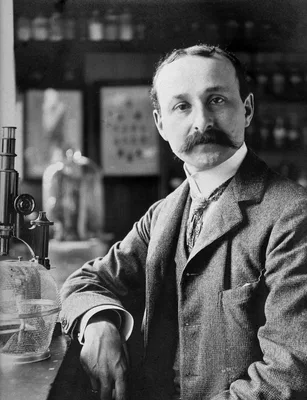
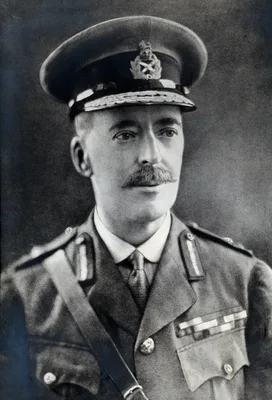
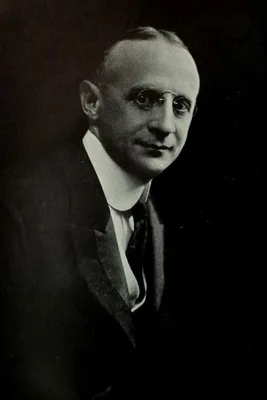
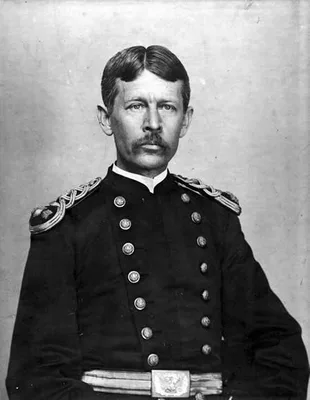
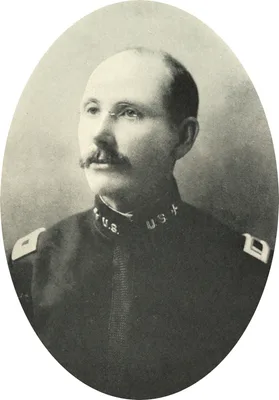
1898 SMITH, Theobald (1859 – 1934)
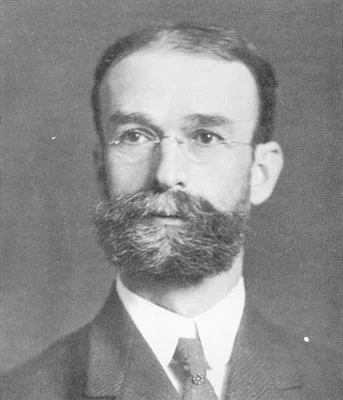
A comparative study of bovine tubercle bacilli and of human bacilli from sputum.
First clear differentiation between the bovine and human types of tubercle bacillus.
GMN 2335 · https://historyofmedicine.com/id/3074
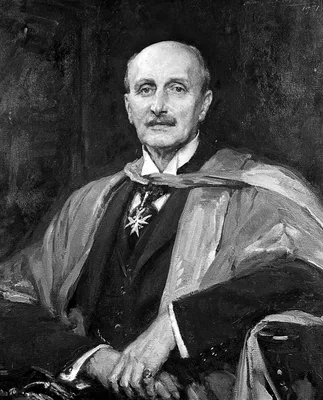
1898 DURHAM, Herbert Edward (1866 – 1945)
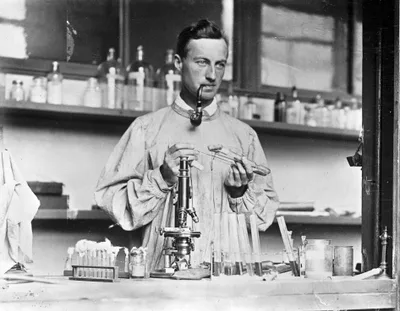
On an epidemic of gastro-enteritis associated with the presence of a variety of the Bacillus enteritidis (Gaertner), and with positive sero-diagnostic evidence (in vivo and in vitro).
Discovery of Salm. Aertrycke in patients suffering from food poisoning.
GMN 2513 · https://historyofmedicine.com/id/3256
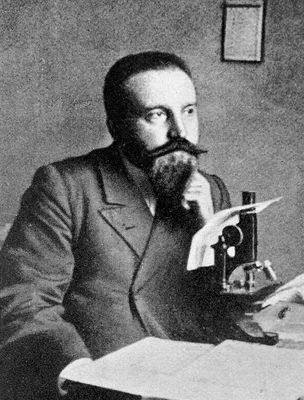
1898 NOBELE, Jules de (1865 – 1946)
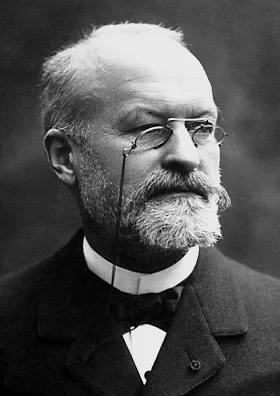
Du séro-diagnostic dans les affections gastro-intestinales d’origine alimentaire.
Discovery of Salmonella aertrycke, independently of Durham.
GMN 2514 · https://historyofmedicine.com/id/3259
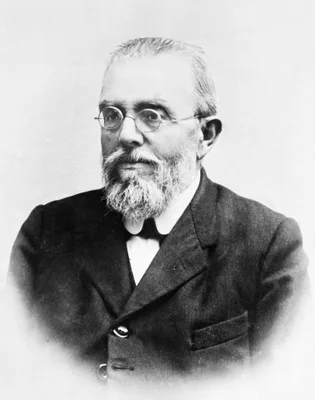
1898 GWYN, Norman Beechey (1875 – 1952)
On infection with a para-colon bacillus in a case with all the clinical features of typhoid fever.
Isolation of Salmonella paratyphi A.
GMN 5038 · https://historyofmedicine.com/id/5784
1898 SHIGA, Kiyoshi (1870 – 1957)
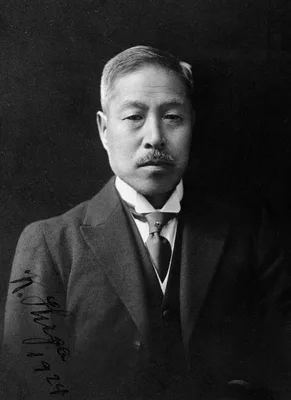
Ueber den Dysenteriebacillus (Bacillus dysenteriae).
Discovery of the dysentery bacillus, Shigella. Preliminary paper in the same journal, 1898, 23, 599-600.
GMN 5091 · https://historyofmedicine.com/id/6000
1898 SIMOND, P. L.
La propagation de la peste.
Simond provided substantial evidence to support Ogata that fleas transmitted plague from rat to man.
GMN 5128.1 · https://historyofmedicine.com/id/6132
1898 BOROVSKII, Petr Fokich (1863 – 1932)
On sart sore.
First description of the protozoon later named Leishmania tropica. The paper is in Russian; for a translation, see C. A. Hoare, in Trans. roy. Soc. trop. Med. Hyg., 1938, 32, 78-90.
GMN 5294 · https://historyofmedicine.com/id/6438
1898 BROWN, Thomas Richardson (1872 – 1950)
Studies on trichinosis, with especial reference to the increase of the eosinophilic cells in the blood and muscle, the origin of these cells and their diagnostic importance.
Brown pointed out the occurrence of eosinophilia in trichinosis. A preliminary communication upon the subject, by W. S. Thayer, was published in C. R. XII Congr. int. Med., Moscou, 1897, 126-31.
GMN 5348 · https://historyofmedicine.com/id/6821
1898 JOSIAS, Albert Henri Louis (1852 – 1906)
Recherches expérimentales sur la transmissibilité de la rougeole animaux.
Measles transmitted to animals.
GMN 5445 · https://historyofmedicine.com/id/7482
1898 LAVERAN, Charles Louis Alphonse (1845 – 1922)
Traité du paludisme.
GMN 5248 · https://historyofmedicine.com/id/7905
1898 OPIE, Eugene Lindsay (1873 – 1971)
On the haemocytozoa of birds.
Demonstration of sexual conjugation in the malaria parasite. See also No. 5250.
GMN 5249 · https://historyofmedicine.com/id/7906
1898 MACCALLUM, William George (1874 – 1944)
Notes on the pathological changes in the organs of birds infected with haemocytozoa.
MacCallum and Opie discovered the sexual phase of malaria parasites.
GMN 5250 · https://historyofmedicine.com/id/7907
1898 ROSS, Sir Ronald (1857 – 1932)
The rôle of the mosquito in the evolution of the malarial parasite.
Ross provided the last link in the chain demonstrating the complete life-cycle of the parasite of bird malaria. He found that mosquitoes which had fed on malaria-infected birds, and which had allowed the parasites to …
GMN 5251 · https://historyofmedicine.com/id/7908
1898 –1900 GHON, Anton (1866 – 1936); ALBRECHT, Heinrich; MÜLLER, Hermann Franz (1866 – 1898)
Über die Beulenpest in Bombay im Jahre 1897. Gesamtbericht von der Kaiserlichen Akademie der Wissenschaften in Wien zur Studium der Beulenpest nach Indien entsendeten Commission. 2 vols. in 3.
Müller died at the age of 32 as a result of exposure to this plague.
GMN 11394 · https://historyofmedicine.com/id/13593
1899 SLAWYK, Coelestin Wilhelm (1866 – )
Ein Fall von Allgemeininfection mit Influenzabacillen.
First description of influenzal meningitis.
GMN 4681 · https://historyofmedicine.com/id/954
1899 NUTTALL, George Henry Falkiner (1862 – 1937)
On the rôle of insects, arachnids and myriapods, as carriers in the spread of bacterial and parasitic diseases of man and animals. A critical and historical study.
GMN 2554 · https://historyofmedicine.com/id/3669
1899 HELLER, Arnold Ludwig Gotthilf (1840 – 1913)
Die Aortensyphilis als Ursache von Aneurysmen.
Heller established the fact that syphilis is a cause of aortic aneurysm.
GMN 2987 · https://historyofmedicine.com/id/5184
1899 MAXEY, Edward Ernest (1867 – 1934)
Some observations on the so-called spotted fever of Idaho.
Rocky Mountain spotted fever first described.
GMN 5377 · https://historyofmedicine.com/id/7044
1899 COPEMAN, Sydney Arthur Monckton (1862 – 1947)
Vaccination, its natural history and pathology.
Milroy Lectures, Royal College of Physicians, 1898. Copeman’s bacteriological studies permanently determined the validity of vaccination as a preventive of smallpox.
GMN 5429 · https://historyofmedicine.com/id/7383
1899 BIGNAMI, Amico (1862 – 1929); GRASSI, Giovanni Battista (1854 – 1925)
Ciclo evolutivo della semilune nell’ Anopheles claviger.
Grassi and Bignami showed that the Plasmodium undergoes its sexual phase only in the Anopheles mosquito.
GMN 5252 · https://historyofmedicine.com/id/7909
1900 HEAD, Sir Henry (1861 – 1940); CAMPBELL, Alfred Walter (1868 – 1937)
The pathology of herpes zoster and its bearing on sensory localisation.
Head and Campbell showed herpes zoster to be a hemorrhagic inflammation of the posterior nerve roots and the homologous spinal ganglia.
GMN 4644 · https://historyofmedicine.com/id/724
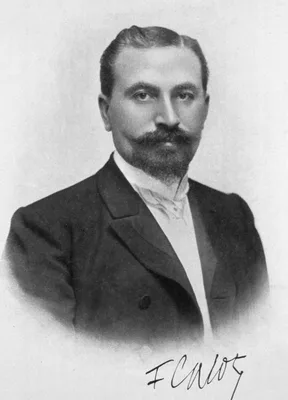
1900 CALOT, Jean François (1861 – 1944)
Les maladies qu’on soigne à Berck.
An account of the work of the Rothschild Hospital at Berck-sur-Mer, where Calot specialized in the treatment of surgical tuberculosis in children.
GMN 2336 · https://historyofmedicine.com/id/3076
1900 WRIGHT, Sir Almroth Edward (1861 – 1947); LEISHMAN, Sir William Boog (1865 – 1926)
Remarks on the results which have been obtained by the antityphoid inoculations.
The active inoculation of man against typhoid was first performed by Wright in 1896. For a preliminary note see Lancet, 1896, 2, 807.
GMN 5039 · https://historyofmedicine.com/id/5789
1900 KRUSE, Walther (1864 – 1943)
Ueber die Ruhr als Volkskrankheit und ihren Erreger.
Further work on dysentery by Kruse led to the coupling of his name with Shiga to designate both the “Shiga–Kruse bacillus” and “Shiga–Kruse disease”.
GMN 5092 · https://historyofmedicine.com/id/6002
1900 FLEXNER, Simon (1863 – 1946)
On the etiology of tropical dysentery.
The organism isolated by Flexner was at first thought to be identical with Shiga’s bacillus. Later Martini and Lentz, Z. Hyg., 1902, 41, 540, showed it to be different; it was named Bact. flexneri, and later Shigella …
GMN 5093 · https://historyofmedicine.com/id/6006
1900 DUKES, Clement (1845 – 1925)
On the confusion of two different diseases under the name of rubella (rose-rash).
Dukes described a condition similar to that noted earlier by Filatov (No. 5503). Dukes called it the “fourth disease”, distinguishing it from scarlet fever, measles, and rubella on the ground that an attack of any of …
GMN 5505 · https://historyofmedicine.com/id/6485
1900 LAVERAN, Charles Louis Alphonse (1845 – 1922)
Au sujet de l’hématozoaire endoglobulaire de Padda oryzivora.
Toxoplasma described.
GMN 5530.2 · https://historyofmedicine.com/id/6662
1900 OPHÜLS, William (1871 – 1933); MOFFITT, Herbert Charles (1867 – 1951)
A new pathogenic mould (formerly described as a protozoon: Coccidioides immitis pyogenes). Preliminary report.
Recognition that the protozoan was the pathogenic phase of a mycelial fungus.
GMN 5530.3 · https://historyofmedicine.com/id/6667
1900 LOW, George Carmichael (1872 – 1952)
A recent observation on Filaria nocturna in Culex. probable mode of infection of man.
Demonstration of the complete chain of filarial infection from man-to-mosquito-to-man.
GMN 5349 · https://historyofmedicine.com/id/6825
1900 CARTER, Henry Rose (1852 – 1925)
A note on the interval between infecting and secondary cases of yellow fever from the records of yellow fever at Orwood and Taylor, Mississippi, in 1898.
Carter's determination of the incubation period yellow fever influenced the direction of Reed’s researches, and was instrumental in the discovery of the mode of transmission of the yellow fever virus.
GMN 5456 · https://historyofmedicine.com/id/7553
1900 REED, Walter (1851 – 1902); CARROLL, James (1854 – 1907); AGRAMONTE Y SIMONI, Aristides (1868 – 1931); LAZEAR, Jesse William (1866 – 1900)
The etiology of yellow fever. A preliminary note.
First definite proof that the organism causing yellow fever is transmitted to man by the mosquito Aëdes aegypti. During the period spent by these workers in the investigation of the disease in Cuba Lazear and Carroll …
GMN 5457 · https://historyofmedicine.com/id/7559
1900 GRASSI, Giovanni Battista (1854 – 1925)
Studi di uno zoologo sulla malaria.
Includes the best illustrations of the various stages of the malaria parasite published up to that time.
GMN 5252.1 · https://historyofmedicine.com/id/7910
1900 MANSON, Sir Patrick (1844 – 1922)
Experimental proof of the mosquito-malaria theory.
In a classic demonstration Manson allowed infected mosquitoes from Rome to bite a volunteer (his son) in London, who developed malaria 15 days later with tertian parasites in the blood, and who was cured by quinine.
GMN 5252.2 · https://historyofmedicine.com/id/7911
1900 POYNTON, Frederick John (1869 – 1943); PAINE, Alexander
The etiology of rheumatic fever.
After extensive bacteriological researches, Poynton and Paine considered that a diplococcus was the cause of rheumatic fever.
GMN 4505 · https://historyofmedicine.com/id/8890
1900 REED, Walter (1851 – 1902); CARROLL, James (1854 – 1907)
A comparative study of the biological characters and pathogenesis of bacillus X (Sternberg), bacillus icteroides (Sanarelli), and the Hog Cholera Bacillus (Salmon and Smith).
Order of authorship in the original publication: Reed, Carroll. In this paper of monograph length the authors irrefutably proved that yellow fever was not caused by a bacterial infection, allowing them to concentrate …
GMN 12007 · https://historyofmedicine.com/id/14215
1901 –1910 THEOBALD, Frederick Vincent (1868 – 1930)
A monograph of the Culicidae, or mosquitoes. Mainly compiled from the collections received at the British Museum from various parts of the world in connection with the cause of malaria conducted by the Colonial Office and the Royal Society. 4 vols. and atlas.
Digital facsimile from the Internet Archive at this link.
GMN 346 · https://historyofmedicine.com/id/253
1901 –1911 BLOCH, Iwan (Ivan) (1872 – 1922)
Der Ursprung der Syphilis. 2 pts.
Bloch was a chief modern supporter of the theory of the Columbian origin of syphilis.
GMN 2423 · https://historyofmedicine.com/id/2882
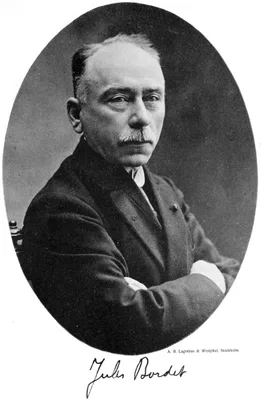
1901 BORDET, Jules Jean Baptiste Vincent (1870 – 1961); GENGOU, Octave (1875 – 1957)
Sur l’existence de substances sensibilisatrices dans la plupart des sérums antimicrobiens.
The Bordet–Gengou complement-fixation reaction is the basis of many tests for infection, notably the Wassermann test for syphilis, and reactions for gonococcus infection, glanders, hydatid disease. English translation…
GMN 2553 · https://historyofmedicine.com/id/3668
1901 METCHNIKOFF, Élie [MECHNIKOV] (1845 – 1916)
L’immunité dans les maladies infectieuses.
A classic study of the mechanisms concerned in specific antibacterial immunity, and one of Metchnikoff’s best works. Russian edition: Nevospriimchivost’ k infekcionnim boleznyam. St. Petersburg: K.L. Rikker, 1903. Eng…
GMN 2555 · https://historyofmedicine.com/id/3670
1901 LOOSS, Arthur (1861 – 1923)
Ueber das Eindringen der Ankylostomalarven in die menschliche Haut.
Looss discovered that hookworms can penetrate the skin; he himself became infected when hookworm culture accidentally spilled on his hands. English translation in Kean (No. 2268.1).
GMN 5362 · https://historyofmedicine.com/id/6971
1901 LEISHMAN, Sir William Boog (1865 – 1926)
Note on a simple and rapid method of producing Romanowsky staining in malarial and other blood films.
“Leishman’s stain”, a modification of that introduced by Romanovsky in 1891.
GMN 5253 · https://historyofmedicine.com/id/7912
1901 HEITZ, Paul
Pestblätter des XV. Jahrhunderts. Hrsg. von P. Heitz, mit einleitendem Text von W.L. Scheiber.
GMN 5135 · https://historyofmedicine.com/id/8859
1901 REED, Walter (1851 – 1902)
The etiology of yellow fever: An additional note.
"The article describes a series of experiments conducted to explore how yellow fever is propagated from individual to individual and how the contagium is spread within households. The study was conducted in an experim…
GMN 9372 · https://historyofmedicine.com/id/11555
1902 HERXHEIMER, Karl (1861 – 1944)
Ueber eine bei Syphilitischen vorkommende Quecksilberreaktion.
See No. 2396.
GMN 2397 · https://historyofmedicine.com/id/3344
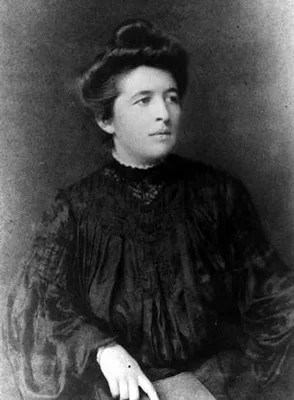
1902 MENDENHALL, Dorothy Mabel Reed (1874 – 1964)
On the pathological changes in Hodgkin’s disease, with especial reference to its relation to tuberculosis.
Dorothy Reed’s classic work on Hodgkin’s disease included a study of the histological picture. She described the proliferation of the endothelial and reticular cells, and the formation of lymphadenoma cells – “Dorothy…
GMN 3780 · https://historyofmedicine.com/id/4677
1902 BENTLEY, Charles Albert (1873 – 1949)
On the causal relationship between “ground itch”, or “pani-ghao”, and the presence of the larvae of the Ankylostoma duodenale in the soil.
While a medical officer in the tea plantations in Assam, India, Bentley demonstrated the mode of entry of Ankylostoma into the body.
GMN 5362.1 · https://historyofmedicine.com/id/6980
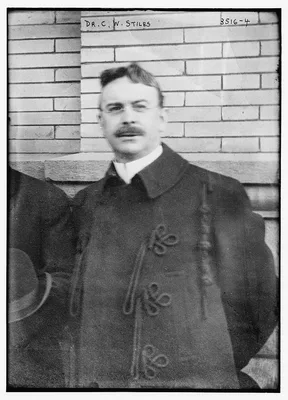
1902 STILES, Charles Wardell (1867 – 1941)
A new species of hookworm (Uncinaria americana) parasitic in man.
Discovery of the American species of hookworm, afterward re-named Necator americanus. It was later believed to have originated in Africa, being brought over by slaves.
GMN 5363 · https://historyofmedicine.com/id/6986
1902 EDWARDES, Edward Joshua
A concise history of small-pox and vaccination in Europe.
A comprehensive summary, in tabular form.
GMN 5435.1 · https://historyofmedicine.com/id/7435
1902 FORDE, Robert Michael (1861 – 1948)
Some clinical notes on a European patient in whose blood a trypanosoma was observed.
In 1901 Forde saw (but did not at first recognize as such) trypanosomes in the blood of a patient in Gambia. (See No. 5275.)
GMN 5274 · https://historyofmedicine.com/id/8581
1902 DUTTON, Joseph Everett (1877 – 1905)
Preliminary note upon a trypanosome occurring in the blood of man.
Dutton was the first to recognize human trypanosomiasis. He saw Forde’s patient (see No. 5274) and named the trypanosome T. gambiense. Sleeping sickness itself has been referred to as “Dutton’s disease”. The first ann…
GMN 5275 · https://historyofmedicine.com/id/8584