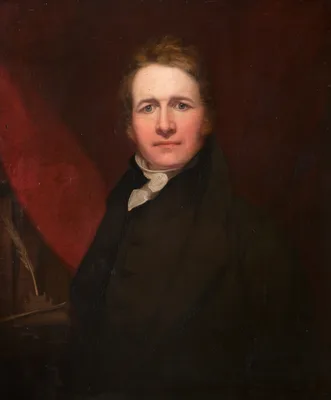
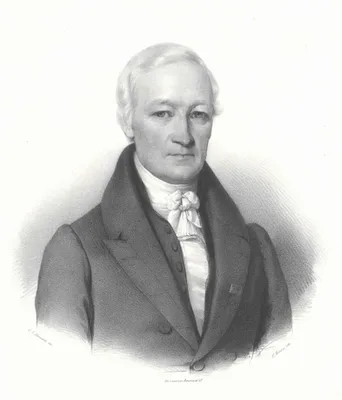
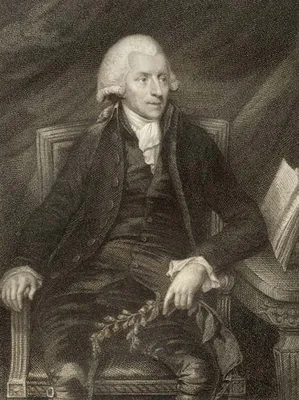
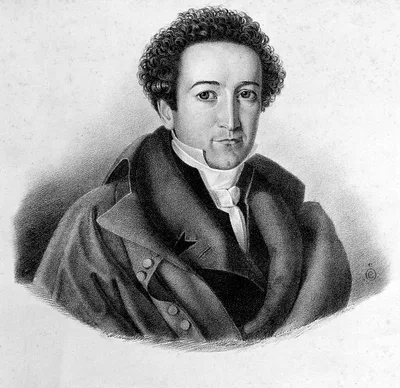
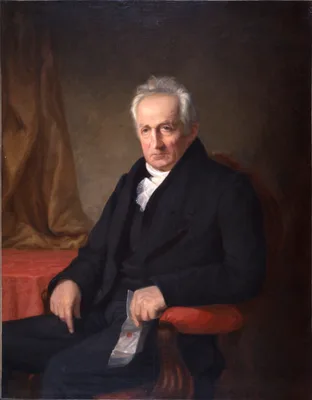
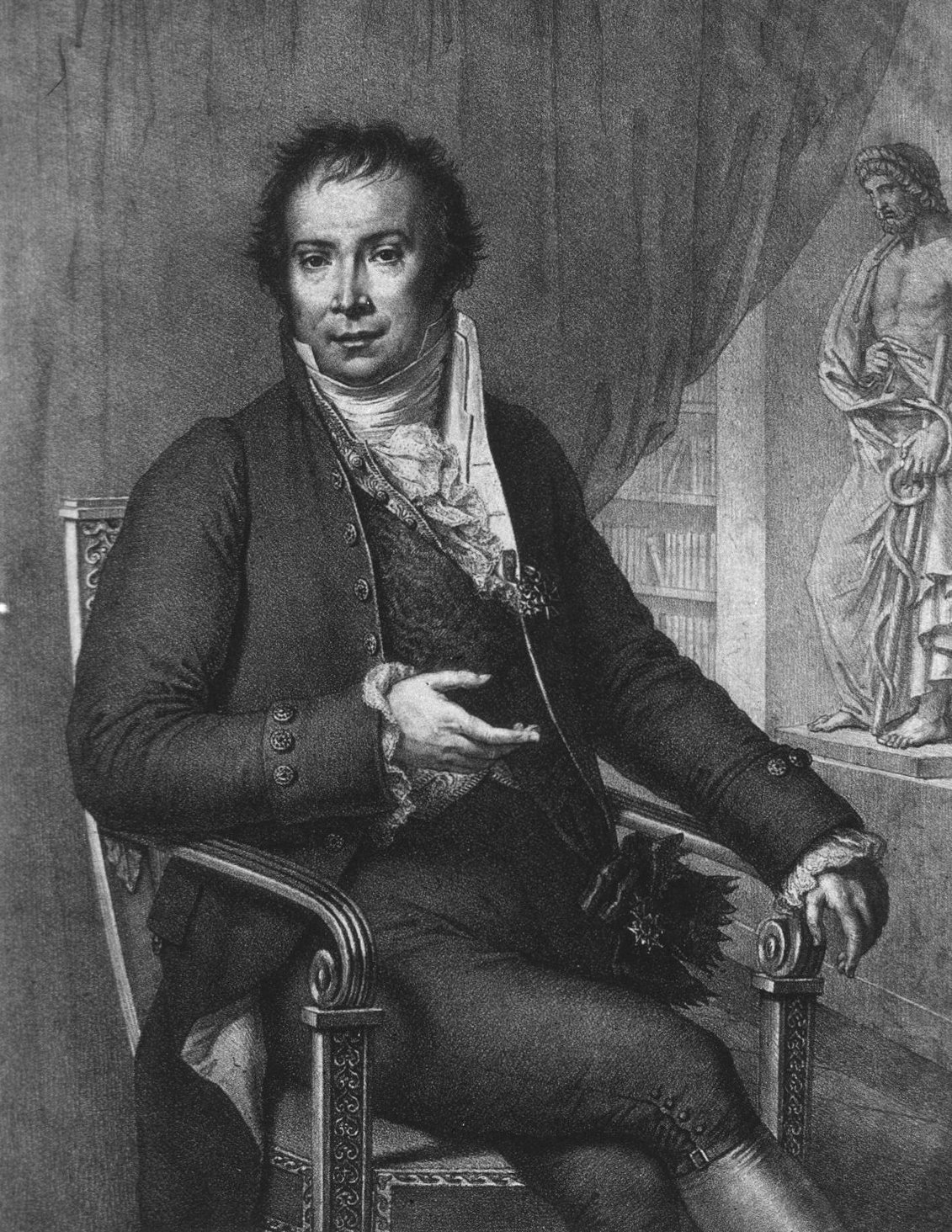
1807 VETCH, John (1783 – 1835)
An account of the ophthalmia which has appeared in England since the return of the British Army from Egypt.
Vetch described trachoma.
GMN 5839 · https://historyofmedicine.com/id/7142
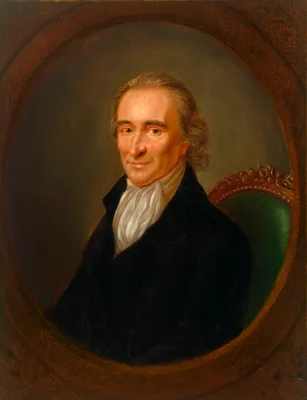
1807 PAINE, Thomas (1737 – 1809)
Of the cause of the yellow fever; and the means of preventing it in places not yet infected with it: Addressed to the Board of Health in America.
This 13-page pamphlet was probably the only medical publication by the English-born American political activist, philosopher, political theorist, and revolutionary, Thomas Paine. Paine's essay was first published in n…
GMN 12875 · https://historyofmedicine.com/id/15122
1808 BADHAM, Charles (1780 – 1845)
Observations on the inflammatory affections of the mucous membrane of the bronchiae.
Badham distinguished acute and chronic bronchitis from pneumonia and pleurisy, with which it had previously been confused. He gave the disease its present name. Digital facsimile from Google Books at this link.
GMN 3168 · https://historyofmedicine.com/id/4129
1809 DUNDAS, David
An account of a peculiar disease of the heart.
Account of nine cases of rheumatic endocarditis.
GMN 2739 · https://historyofmedicine.com/id/4574
1809 BURNS, Allan (1781 – 1813)
Observations on some of the most frequent and important diseases of the heart.
Burns described endocarditis and reported three cases of mitral stenosis. He recognized the thrill present in the latter condition and seems to have understood the mechanism of a cardiac murmur. He also described unil…
GMN 2738 · https://historyofmedicine.com/id/8654
1810 STRONG, Nathan (1781 – 1837)
An inaugural dissertation on the disease termed petechial, or spotted fever. Submitted to the Examining Committee of the Medical Society of Connecticut, for the county of Hartford.
This graduation dissertation was the first published brochure on cerebrospinal meningitis. Digital facsimile from U.S. National Library of Medicine at this link.
GMN 4675 · https://historyofmedicine.com/id/942
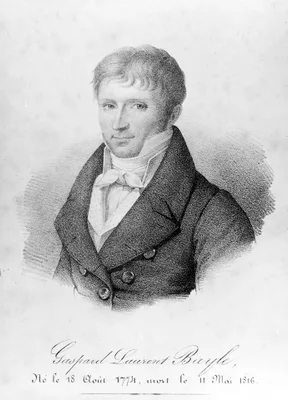
1810 BAYLE, Gaspar Laurent (1774 – 1816)
Recherches sur la phthisie pulmonaire.
The beginning of the modern clinical conception of tuberculosis. Bayle gave the best description to date of the varieties of tuberculosis. He was first to use the term “miliary” to describe small tubercles and first t…
GMN 2322 · https://historyofmedicine.com/id/3019
1810 BERTIN, René Joseph Hyacinthe (1757 – 1828)
Traité de la maladie vénérienne chez les enfans nouveau-nés, les femmes enceintes et les nourrices.
The first systematic work on congenital syphilis.
GMN 2378.1 · https://historyofmedicine.com/id/3269
1810 HILDENBRAND, Johann Valentin von (1763 – 1818)
Ueber den ansteckenden Typhus.
Hildenbrand gave a classic description of typhus. The French literature sometimes refers to the condition as “Hildenbrand’s disease”. English translation by S. D. Gross, 1829.
GMN 5375 · https://historyofmedicine.com/id/7026
1811 NORTH, Elisha (1771 – 1843)
A treatise on a malignant epidemic, commonly called spotted fever.
First book on cerebrospinal meningitis; in it North recommended the use of the clinical thermometer, not in general use until the time of Wunderlich. For more information on this book, see the article by F. L. Pleadwe…
GMN 4676 · https://historyofmedicine.com/id/944
1813 WATT, Robert (1774 – 1819)
Treatise on the history, nature, and treatment of chincough: Including a variety of cases and dissections. To which is subjoined an inquiry into the relative mortality of the principal diseases of children, and the numbers who have died under ten years of age, in Glasgow, during the last thirty years.
Probably the second book on whooping cough, written after two of Watt's children died from the disease. After vaccination for smallpox was introduced, Watt found, as he had expected, that the number of deaths from tha…
GMN 5086.1 · https://historyofmedicine.com/id/5963
1814 ADAMS, Joseph (1756 – 1818)
A treatise on the supposed hereditary properties of diseases, containing remarks on the unfounded terrors and ill-judged cautions consequent on such erroneous opinions; with notes, illustrative of the subject, particularly in madness and scrofula.
Adams was a pioneer in medical genetics. He distinguished between familial and hereditary diseases, saw that an increase in hereditary disease frequency in isolated areas could be caused by inbreeding, and suggested t…
GMN 216.1 · https://historyofmedicine.com/id/4032
1814 CHARAULT, C. R.
Coup-d'oeil sur Saint-Domingue; observations sur le caractère des négres et sur la fièvre jaune; moyens de recouvrer cette colonie, et de se préserver des maladies qui y règnent.
Digital facsimile from patrimoines-martinique.org at this link.
GMN 8219 · https://historyofmedicine.com/id/10395
1814 CARMICHAEL, Richard (1779 – 1849)
An essay on the venereal diseases which have been confounded with syphilis, and the symptoms which exclusively arise from that poison. Illustrated by drawings of the cutaneous eruptions of true syphilis, and the resembling diseases.
Carmichael "subdivided venereal infections into four major classes, each of which he maintained had a distinct exciting poison, a peculiar primary manifestation and a separate series of constitutional affections. From…
GMN 12762 · https://historyofmedicine.com/id/15008
1815 HODGSON, Joseph (1788 – 1869)
A treatise on the diseases of arteries and veins. 1 vol. and atlas.
Includes the best illustrations of aneurysms and of aortic valvular endocarditis so far published, and the first description on non-sacculated dilatation of the aortic arch (“Hodgson’s disease”).
GMN 2741 · https://historyofmedicine.com/id/4588
1815 GALLUP, Joseph Adams (1769 – 1849)
Sketches of epidemic diseases in the state of Vermont; from the first settlement to the year 1815, with a consideration of their causes, phenomena, and treatment. To which is added remarks on pulmonary consumption.
Digital facsimile from U.S. National Library of Medicine at this link:
GMN 13487 · https://historyofmedicine.com/id/15761
1815 MOORE, James Carrick (1763 – 1834)
The history of the small pox.
Digital facsimile from Google Books at this link.
GMN 13799 · https://historyofmedicine.com/id/16086
1816 BURNETT, William Sir (1779 – 1861)
A practical account of the Mediterranean fever, as it appeared in the ships and hospitals of His Majesty's fleet on that station: With cases and dissections. To which are added facts and observations, illustrative of the causes, symptoms and treatment comprehending the history of the fever in the fleet, during the years 1810, 1811, 1813, and of the Gibraltar and Carthagena fevers.
"Burnett in 1816 described an epidemic of a short term fever occurring among the Naval Forces engaged in the Siege of Malta in 1799, and this fever was almost certainly phlebotomus" (Coulter, The Royal Naval Medical S…
GMN 11143 · https://historyofmedicine.com/id/13340
1817 KERNER, Christian Andreas Justinus (1786 – 1862)
Vergiftung durch verdorbene Würste.
Botulism first described. Kerner published an expanded study as Neue Beobachtungen über die in Würtemberg so häufig vorfallenden tödtlichen Vergiftung durch den Genuss geräuchter Würstem, Tübingen, 1820. He published …
GMN 2468 · https://historyofmedicine.com/id/3039
1817 MAGENDIE, François (1783 – 1855); PELLETIER, Pierre Joseph (1788 – 1842)
Mémoire sur l’émétine, et sur les trois espèces d’ipecacuanha.
Isolation of emetine. It was not until a century later that Vedder demonstrated its value in the treatment of amoebiasis. Also during 1817 Magendie and Pelletier published "Recherches chimiques et physiologiques sur l…
GMN 1843 · https://historyofmedicine.com/id/6304
1817 MACLEAN, Charles (1760 – 1824)
Results of an investigation, respecting epidemic and pestilential diseases; including researches in the Levant, concerning the plague. 2 vols.
"From 1815 to 1817 Maclean travelled in Spain, Turkey, and the Levant, and he studied the plague at the Greek Pest Hospital at Constantinople, in the service of the Levant Company. His experiences in the Levant and in…
GMN 8816 · https://historyofmedicine.com/id/10994
1818 BALLINGALL, Sir George (1780 – 1855)
Practical observations on fever, dysentery and liver complaints as they occur amongst European troops in India. With introductory remarks on the disadvantages of selecting boys for Indian military service.
Ballingall distinguished between amoebic and bacillary dysentery. Digital facsimile from the Internet Archive at this link.
GMN 5182.1 · https://historyofmedicine.com/id/6307
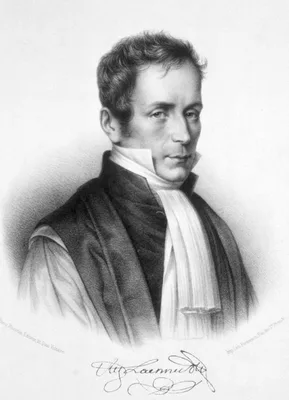
1819 LAENNEC, René Théophile Hyacinthe (1781 – 1826)
De l’auscultation médiate, ou traité du diagnostic des maladies des poumons et du coeur. 2 vols.
This book revolutionized the study of diseases of the chest. Auscultation in the instrumental sense dates from Laennec’s invention of the stethoscope (at first merely a roll of stiff paper) with a view to amplifying t…
GMN 2673 · https://historyofmedicine.com/id/3518
1819 PASCALIS OUVIERE, Felix (1762 – 1833)
A statement of the occurrences during a malignant yellow fever in the city of New-York, in the summer and autumnal months of 1819; and of the check given to its progress, by the measures adopted by the Board of Health. With a list of cases and names of sick persons, and a map of their places of residence within the infected and proscribed limits: With a view of ascertaining, by comparative arguments, whether the distemper was engendered by domestic causes, or communicated by human contagion from foreign ports.
Pascalis mapped this yellow fever outbreak using a method similar to Valentine Seaman, but with a more extensive and detailed list of cases. A condensation of his 60-page pamphlet with a reissue of his map appeared in…
GMN 10456 · https://historyofmedicine.com/id/12649
1820 PELLETIER, Pierre Joseph (1788 – 1842); CAVENTOU, Joseph Bienaimé (1795 – 1877)
Recherches chimique sur les quinquinas.
Isolation of quinine.
GMN 5233 · https://historyofmedicine.com/id/7879
1820 PARISET, Étienne (1770 – 1847); MAZET, André (1793 – 1821)
Observations sur la fièvre jaune, faites à Cadix, en 1819 par MM. Pariset et Mazet, docteurs en médecine de la Faculté de Paris, et rédigées par M. Pariset.
Pariset and Mazet distinguished themselves combating an outbreak of yellow fever in Spain. Pariset's colleague was apparently not involved with publication of the book, and died in a yellow fever outbreak in Barcelona…
GMN 8948 · https://historyofmedicine.com/id/11127
1820 CLARK, Sir James (1788 – 1870)
Medical notes on climate, diseases, hospitals, and medical schools, in France, Italy, and Switzerland; comprising an inquiry into the effects of a residence in the South of Europe, in cases of pulmonary consumption, and illustrating the present state of medicine in those countries.
Pages 153-59 contain an account of Clark's visit to the Hopital Necker in Paris, with a detailed discussion of the use of the stethoscope introduced by Laennec, one year earlier, in 1819. This was possibly the first a…
GMN 13239 · https://historyofmedicine.com/id/15504
1821 TIEDEMANN, Friedrich (1781 – 1861)
Description of the calcified cysts of trichinosis in human muscle. (A brief notice with no title).
GMN 5336.4 · https://historyofmedicine.com/id/8610
1821 TULLY, James D.
The history of plague, as it has lately appeared in the islands of Malta, Gozo, Corfu, Cephalonia, &c. detailing specific contagion of that disease, with particulars of the means adeopted for its eradication.
Concerns the Maltese plague,. 1813-1814. Digital facsimile from the Internet Archive at this link.
GMN 12757 · https://historyofmedicine.com/id/15003
1822 GASPARD, Marie Humbert Bernard (1788 – 1871)
Mémoire physiologique sur les maladies purulentes et putrides, sur la vaccine, etc.
Gaspard was one of the first to make experimental studies on pyemia following the injection of putrid fluids. He experimented on dogs, sheep, foxes, and pigs, injecting putrid infusions pus, vaccine, lymph, blood, bil…
GMN 2530 · https://historyofmedicine.com/id/3663
1822 HARDIE, James (1758 – 1826)
An account of the yellow fever which occurred in the city of New York, in the year 1822, to which is prefixed a brief sketch of the different pestilential diseases, with which this city was afflicted, in the years 1798, 1799, 1803 & 1805, with the opinion of several of our most eminent physicians, respecting the origin of the disease, its prevention and cure.To which is added a correct list of all the deaths by yellow fever during the late season.
Digital facsimile from the Internet Archive at this link.
GMN 9523 · https://historyofmedicine.com/id/11709
1822 WITHERING, William (1741 – 1799)
The miscellaneous tracts of the late William Withering. To which is prefixed a memoir of his life, character and writings. 2 vols.
Withering's collected works, with the exception of his A botanical arrangement of all the the vegetables naturally growing in the Great Britain. Includes the second edition of his monograph on the foxglove. Digital fa…
GMN 11738 · https://historyofmedicine.com/id/13939
1824 MARX, Karl Friedrich Heinrich (1796 – 1877)
Origines contagii.
History of contagious disease in the ancient world through readings from the texts. A supplementary “Additamenta” was published in 1826. Digital facsimile of the 1824 edition from the Internet Archive at this link.
GMN 2531 · https://historyofmedicine.com/id/3512
1824 SMITH, Nathan (1762 – 1829)
A practical essay on typhous fever.
Nathan Smith left a classic account of typhoid; this was reprinted in Med. Classics, 1937, 1, 781-819 He clearly recognized the contagious nature of the disease.
GMN 5022 · https://historyofmedicine.com/id/6727
1825 LOUIS, Pierre Charles Alexandre (1787 – 1872)
Recherches anatomico-pathologiques sur la phthisis.
Louis’ researches were based on 358 dissections and 1,960 clinical cases, and included a numerical study of extra-pulmonary lesions. First edition in English, London, 1835. English translation, Boston, 1836. A transla…
GMN 3221 · https://historyofmedicine.com/id/5008
1825 HEUSTIS, Jabez Wiggins (1784 – 1841)
Medical facts and inquiries, respecting the causes, nature, prevention and cure of fever: more expressly in relation to the endemic fevers of summer and autumn in the southern states: Together with a history of the bilious remitting fever of Alabama, as it appeared in Cahawba and its vicinity in the summers and autumns of 1821 and 1822.
Digital facsimile from the U.S. National Library of Medicine at this link.
GMN 10518 · https://historyofmedicine.com/id/12711
1826 BRETONNEAU, Pierre Fidèle (1778 – 1862)
Des inflammations spéciales du tissu muqueux et en particulier de la diphthérite, ou inflammation pelliculaire.
Bretonneau showed that croup, malignant angina, and “scorbutic gangrene of the gums” were all the same disease, for which he suggested the term dipntheritis, later substituting “dipnthérite”. He performed (pp. 300-38)…
GMN 5053 · https://historyofmedicine.com/id/5849
1826 KRÜGELSTEIN, Franz Christian Karl (1779 – 1864)
Die Geschichte der Hundswuth und der Wasserscheu und deren Behandlung.
A full account of rabies, summarizing current knowledge, with a bibliography of about 300 items.
GMN 5481.1 · https://historyofmedicine.com/id/6372
1826 DEVERGIE, Marie-Guillaume-Alphonse (1798 – 1879)
Clinique de la maladie syphilitique. Enrichie d’observations communiquées par messieurs Cullerier oncle, Cullerier neveu, Bard, Gama, Desruelles et autre médecins. Text and atlas.
Includes 126 hand-colored engraved plates from drawings by Dupont the elder, assisted by Delestre the younger and Verollot, engraved by Johann Theodor Susemihl, a German engraver working in Paris, known for his zoolog…
GMN 10529 · https://historyofmedicine.com/id/12722
1826 LAENNEC, René Théophile Hyacinthe (1781 – 1826)
Traité de l'auscultation médiate ou traité diagnostic des maladies des poumons et du coeur. 2 vols.
Second edition, hugely revised, expanded, and improved. The pagination of the first edition (1819) was 456 pp. in vol. 1 and 472 pp. in vol. 2. The second edition was expanded to 728pp. in vol. 1 and 790 pp. in vol. 2…
GMN 14323 · https://historyofmedicine.com/id/16648
1828 CAZENAVE, Pierre Louis Alphée (1795 – 1877); SCHEDEL, Henry Edward (1804 – 1856)
Abrégé pratique des maladies de la peau.
This book codified and published the lectures, doctrines and observations of Laurent Biett (1781-1840), the leading clinical teacher in dermatology of the early 19th century, who published very little himself. Cazenav…
GMN 3990 · https://historyofmedicine.com/id/5013
1828 DELPECH, Jacques Mathieu (1777 – 1832)
De l’orthomorphie. 2 vols. and atlas.
Delpech, Professor of Surgery at Montpellier, published a comprehensive treatise on deformities of the bones and joints. He established the tuberculous nature of Pott’s disease. Delpech did more than any other man tow…
GMN 4315 · https://historyofmedicine.com/id/5526
1829 ALIBERT, Jean Louis Marc (1768 – 1837)
Sur la pyrophlyctide endémique, ou pustule d’Aleppo.
Important description of “Aleppo boil”, furunculosis orientalis.
GMN 5291 · https://historyofmedicine.com/id/6412
1829 WAGNER, Friedrich August (1775 – 1856)
Die Rötheln, als für sich bestehende Krankheit.
Wagner separated rubella from measles and scarlet fever.
GMN 5501 · https://historyofmedicine.com/id/6472
1829 LOUIS, Pierre Charles Alexandre (1787 – 1872)
Recherches anatomiques, pathologiques et thérapeutiques sur la maladie connue sous les noms de gastro-entérite; fièvre putride, adynamique, ataxique, typhoïde, etc. 2 vols.
Louis introduced the term “typhoid fever” in reference to the disturbed mental condition of the patient; he first described the lenticular rose spots. His book established the pathological picture of the disease. Engl…
GMN 5023 · https://historyofmedicine.com/id/6733
1830 SMITH, Thomas Southwood (1788 – 1861)
A treatise on fever.
Both a doctor and a minister, Smith, physician to the London Fever Hospital, called himself, “physician to body and soul.” He argued that the poor are impoverished by fever and that fever was preventable. This book in…
GMN 2211 · https://historyofmedicine.com/id/1689
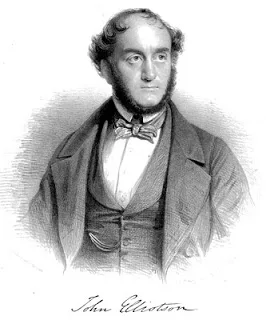
1830 ELLIOTSON, John (1791 – 1868)
On the glanders in the human subject.
Proof that glanders in the horse is communicable to man.
GMN 5153 · https://historyofmedicine.com/id/6198
1830 BARDSLEY, Sir James Lomax (1801 – 1876)
Hospital facts and observations.
First record (p. 149) of the use of emetine in the treatment of amoebiasis.
GMN 5183 · https://historyofmedicine.com/id/6310
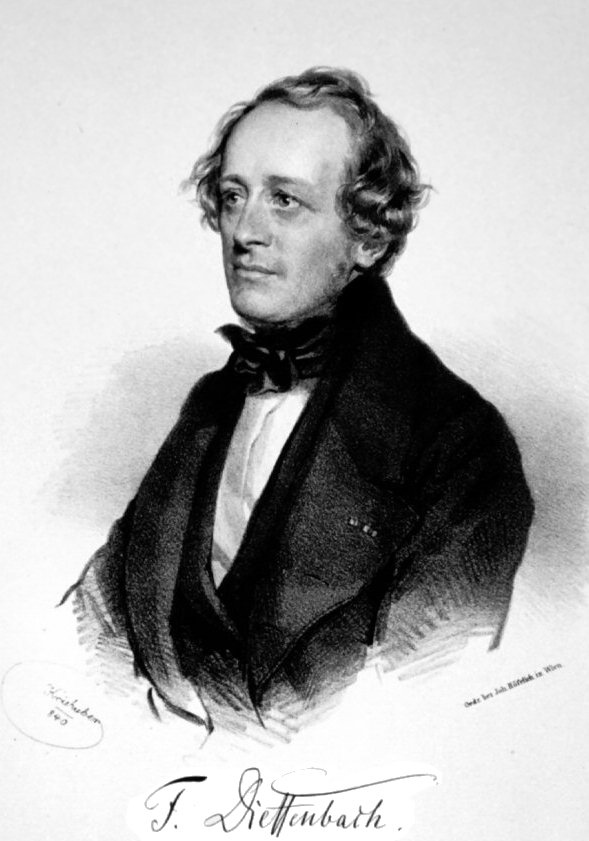
1832 DIEFFENBACH, Johann Friedrich (1792 – 1847)
Physiologisch-chirurgische Beobachtungen bei Cholera-Kranken.
First recorded example of cardiac catheterization, performed during an unsuccessful attempt to obtain blood from a patient suffering from cholera (p. 100). Second edition as separate pamphlet with a new Foreward, Güst…
GMN 2748.1 · https://historyofmedicine.com/id/4628
1832 PARKIN, John (1801 – 1886)
Suggestions respecting the cause, nature, and treatment of cholera.
Parkin suggested the water-born character of cholera and the use of charcoal filters for water purification.
GMN 5105 · https://historyofmedicine.com/id/6040