SPECIAL COLLECTIONS UNIVERSITY OF GLASGOW
A catalogue of rare syphilis books held in the Special Collections Department of the University of Glasgow.
https://www.gla.ac.uk/media/Media_389083_smxx.pdf Describes and illustrates in color over 200 rare books from the 15th century to 1820, including those in the Hunterian Collection, with links to more extensive online …
GMN 13552 · https://historyofmedicine.com/id/15829
1496 –1497 GRÜNPECK, Josef (1473 – 1532)
Tractatus de pestilentiali scorra sive mala de Franzos: originem remediaqu[ue] eiusdem continens.
Grünpeck was first to record mixed primary lesions, multiple primary lesions, and to note the second incubation period of syphilis. A translation of the above is in Arch. Derm. Syph. (Chicago), 1930, 22, 430. Digital …
GMN 2362 · https://historyofmedicine.com/id/3177
1497 LEONICENO, Niccolò [Nicolaus Leonicenus] (1428 – 1524)
Libellus de Epidemia, quam uulgo morbum Gallicum uocant,
One of the earliest treatises on syphilis, and one of the few medical books printed by Aldus Manutius in the 15th century. Leoniceno included a good description of syphilitic hemiplegia. He believed that syphilis was …
GMN 2363 · https://historyofmedicine.com/id/3186
1498 LÓPEZ DE VILLALOBOS, Francisco (1473 – 1549)
El sumario de la medicina, con un tratado sobre las pestiferas buuas.
H. Goodman considers this treatise, written in verse, among the best of all works on the syphilis in the 15th and 16th centuries. Reprinted Salamanca, 1973. For English translation see Bull. Inst. Hist. Med., 1939, 7,…
GMN 2363.1 · https://historyofmedicine.com/id/3189
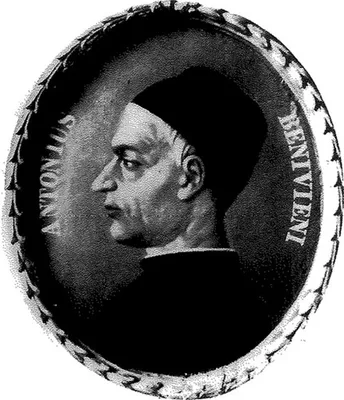
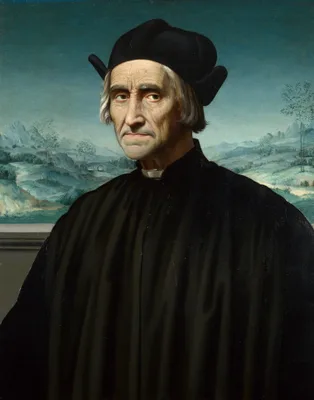
1507 BENIVIENI, Antonio (1443 – 1502); BENIVIENI, Girolamo (1453 – 1542)
De abditis nonnulus ac mirandis morborum et sanationum causis. Edited by Girolamo Benivieni.
Antonio Benivieni's The hidden causes of diseases was the first book on pathological anatomy, presenting the first reports of autopsies made specifically to determine the cause of death. The work records twenty post-m…
GMN 2270 · https://historyofmedicine.com/id/2836
1514 VIGO, Giovanni da (1460 – 1525)
Practica in arte chirurgica copiosa… continens novem libros.
The first complete system of surgery after that of Guy de Chauliac. In 1503 Vigo became the personal surgeon to Pope Julius II. His Practica in arte chirurgia copiosa was completed in 1514 and first published in Latin…
GMN 5559.1 · https://historyofmedicine.com/id/6916
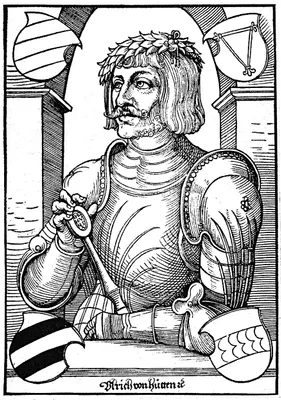
1519 HUTTEN, Ulrich von (1488 – 1523)
De guaiaci medicina et morbo gallico liber unus.
The German scholar, poet, satirist and reformer von Hutten issued a remarkably widely published and influential account of his suffering from syphilis and his treatment with gum from Guaiacum wood. This is considered …
GMN 9847 · https://historyofmedicine.com/id/12035
1527 MASSA, Niccoló (1489 – 1569)
Liber de morbo gallico.
Includes a description of the neurological manifestations of syphilis. Though this work bears the date 1507, Peter Krivatsy, provided evidence that this edition was printed in 1527. See Krivatsy, "Nicola Massa's Liber…
GMN 2365 · https://historyofmedicine.com/id/3200
1530 FRACASTORO, Girolamo [FRACASTORIUS] (1478 – 1553)
Syphilis sive morbus gallicus.
The most famous of all medical poems. It epitomized contemporary knowledge of syphilis, gave to it its present name, and recognized a venereal cause. Fracastorius refers to mercury as a remedy. First complete English …
GMN 2364 · https://historyofmedicine.com/id/3194
1533 MATTIOLI, Pietro Andrea Gregorio (Matthiolus) (1500 – 1577)
Morbi gallici novum ac utilissimum opusculum quo vera et omnimoda ejus cura percipi potest.
Mattioli considered mercury a specific in the treatment of syphilis. He was probably the first to work extensively on syphilis of the newborn. He is better known for his commentary on Dioscorides.
GMN 2366 · https://historyofmedicine.com/id/3203
1539 DIAZ DE ISLA, Ruy (147 – 1542)
Tractado cótra el mal serpentino.
Diaz de Isla, a Barcelonese surgeon, wrote of a disease “previously unknown, unseen and undescribed”, which appeared in Barcelona in 1493 and which was obviously syphilis. This is probably the earliest reference to th…
GMN 2367 · https://historyofmedicine.com/id/3213
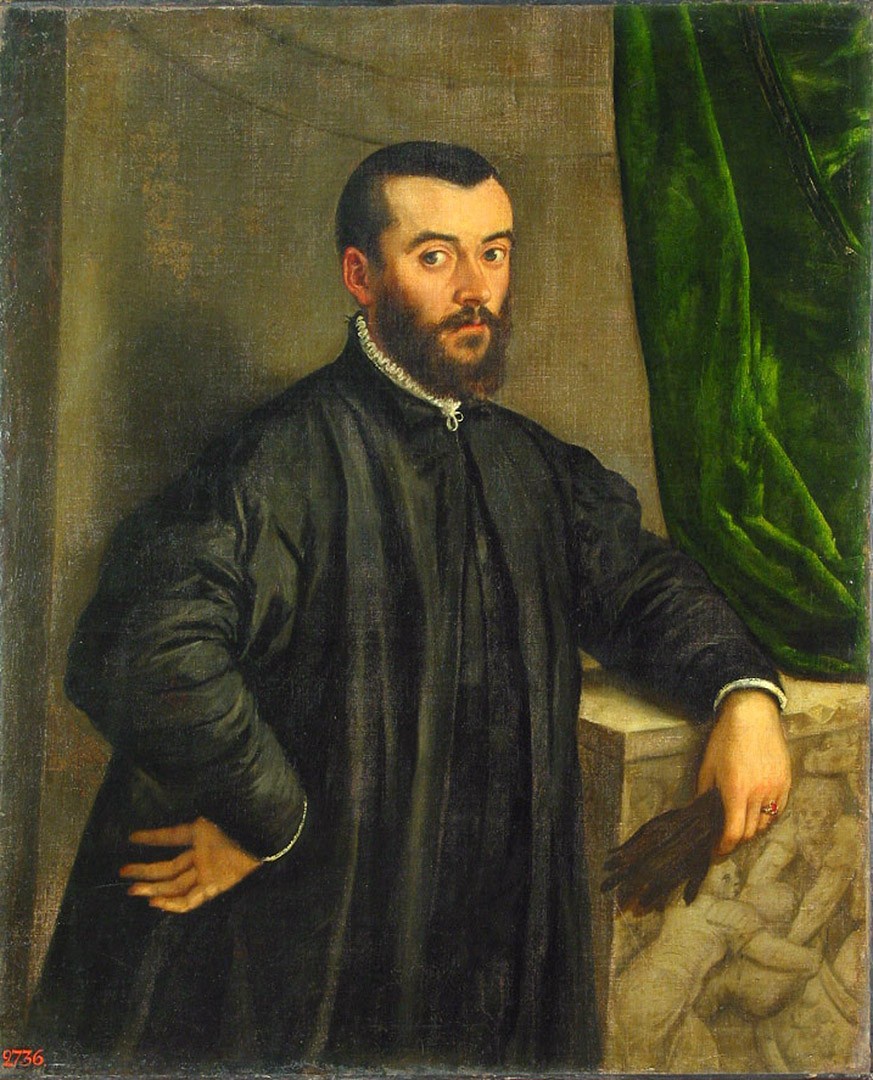
1546 VESALIUS, Andreas (1514 – 1564)
Epistola, rationem modumque propinandi radicis Chynae decocti…
In this work on the discovery and therapeutic use of the china root (Smilax china) in the treatment of syphilis, Vesalius described the first attempt to formulate methods of identification of an exotic drug. He also o…
GMN 1810.1 · https://historyofmedicine.com/id/1983
1552 HÉRY, Thierry de (1500 – 1599)
La méthode curatoire de la maladie venerienne.
De Héry made a fortune from treating syphilitic patients. He recommended mercurial inunctions and guaiac internally.
GMN 2368 · https://historyofmedicine.com/id/3216
1553 PARACELSUS, [Philippus Aureolus Theophrastus Bombastus von Hohenheim] (1493 – 1541)
Von der frantzösischen kranckheit drey Bücher.
Paracelsus suggested the hereditary transmission of syphilis and advocated mercury internally, as an antisyphilitic. He called the disease “French gonorrhoea” and thus started the confusion over the geographic origins…
GMN 2369 · https://historyofmedicine.com/id/3221
1554 FERNEL, Jean François (1497 – 1558)
Medicina. 3 pts.
The first systematic treatise on pathology, which also introduced the names for the sciences of pathology and physiology. In the second part, entitled “Pathologia”, Fernel provided the first systematic essay on the su…
GMN 2271 · https://historyofmedicine.com/id/2838
1563 FALLOPPIO, Gabriele [FALLOPPIUS] (1523 – 1562)
De morbo gallico.
Falloppius was one of the first prominent opponents of the use of mercury in syphilis. He distinguished syphilitic and non-syphilitic condylomata.
GMN 2370 · https://historyofmedicine.com/id/3224
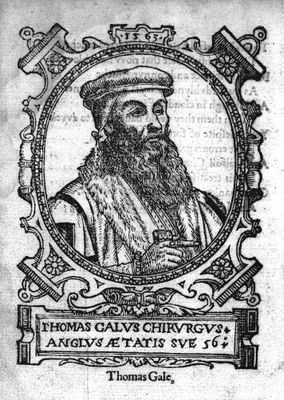
1563 GALE, Thomas (1507 – 1587)
Certaine works of chirurgerie.
Includes the first mention of syphilis in the English literature. Facsimile reprint, New York, Da Capo Press, 1971.
GMN 2371 · https://historyofmedicine.com/id/3228
1565 VALLAMBERT, Simon de [VALLEMBERT] (1525 – 1565)
Cinq livres, de la manière de nourrir et gouverner les enfans dès leur naissance.
The first French work on pediatrics. Vallambert considered a wider range of diseases than any previous writer, including the first reference to syphilis in children, and gave the best commentary up to his time on infa…
GMN 6318 · https://historyofmedicine.com/id/8085
1566 –1567 LUISINUS, Aloysius [Aloisio LUVIGINI] (1526 – )
De morbo gallico omnia quae extant. 3 vols.
A collection of important writings on syphilis to 1500. Boerhaave published a revision of this work in 1728, covering the period 1495-1566.
GMN 2372 · https://historyofmedicine.com/id/3232
1567 ARIAS DE BENEVIDES, Pedro (1505 – )
Secretos de chirurgia, en especial de la enfermedades de morbo-galico y lamparones, y asimismo la manera como se curan los indos las llgas y heridas, y otras pasiones en las Indias, muy útil y provechoso par España, y otros muchos secretos de chirugia hasta ahora no escritos.
Arias de Benevides travelled to the New World where he observed native remedies and reported them in this book. In the book he also described his performance in Mexico City (1561) of the first neurosurgical interventi…
GMN 9053 · https://historyofmedicine.com/id/11232
1575 PARÉ, Ambroise (1510 – 1590)
Les oeuvres de M. Ambroise Paré.
Paré was the greatest of the army surgeons before Larrey. Born in poor circumstances, he became the most famous surgeon in France. He is particularly remembered for his abandonment of boiling oil and the cautery (No. …
GMN 5565 · https://historyofmedicine.com/id/6944
1579 CLOWES, William (1544 – 1604)
A short and profitable treatise touching the cure of the morbus gallicus by unctions.
William Clowes, the greatest of the Elizabethan surgeons, published the first original English treatise on syphilis. It was his first work; it demonstrates the prevalence of the disease at that time (Clowes says that …
GMN 2373 · https://historyofmedicine.com/id/3235
1579 FERNEL, Jean François (1497 – 1558)
Deluis venereae curatione perfectissima liber.
French translation, Paris, 1879.
GMN 2374 · https://historyofmedicine.com/id/3248
1684 ABERCROMBY, David (1621 – 1695)
Tuta, ac efficax luis venereae, saepe absque mercurio, ac semper absque salivatione mercuriali curando methodus.
Abercromby advanced the idea that syphilis was caused by a parasite, and promoted mercury as a treatment. Digital facsimile from Google Books at this link.
GMN 2375 · https://historyofmedicine.com/id/3250
1717 TURNER, Daniel (1667 – 1742)
Syphilis: A practical dissertation on the venereal disease. In which, after a short account of its nature and original; the diagnostick and prognostick signs, with the best ways of curing the several degrees of that distemper, together with some historical observations relating to the same, are candidly and without reserve, communicated. In two parts.
The first work published in English to include the word syphilis, and also the first English work to include the word condom. Digital facsimile from the Internet Archive at this link.
GMN 10530 · https://historyofmedicine.com/id/12723
1736 TURNER, Daniel (1667 – 1742)
Aphrodisiacus. Containing a summary of the ancient writers on the venereal disease ... Extracted from the two tomes of Aloysius Luisinus, which by the direction of Dr. Boerhaave, were lately revised and reprinted at Leyden. Together with an index of all others omitted in that collection ... from the beginning of the sixteenth century down to the present time. With a large preface, by Daniel Turner.
A partial English translation of Luisinus's, De morbo gallico omnia quae extant (1566-67) as expanded by Boerhaave (1728). Digital facsimile of the 1736 work from the Internet Archive at this link.
GMN 10978 · https://historyofmedicine.com/id/13174
1774 GRUNER, Christian Gottfried (1744 – 1815)
Morborum antiquitates.
Pp. 85-100: “Lists 191 semeiological varieties of syphilis described in the period” (Garrison).
GMN 2376 · https://historyofmedicine.com/id/3260
1786 HUNTER, John (1728 – 1793)
A treatise on the venereal disease.
In Hunter's day venereal diseases were thought to be due to a single poison. To test this theory Hunter experimented with matter taken from a gonorrhoeal patient who, unknown to Hunter, also had syphilis. Hunter maint…
GMN 2377 · https://historyofmedicine.com/id/7782
1793 BELL, Benjamin (1749 – 1806)
A treatise on gonorrhoea virulenta, and lues venerea. 2 vols.
Bell was the first to differentiate between gonorrhoea and syphilis.
GMN 2378 · https://historyofmedicine.com/id/7786
1794 BALMIS, Francisco Javier de (1793 – 1819)
Demostracion de las eficaces virtudes nuevamente descubiertas en las raices de dos plantas de Nueva-España, especies de ágave y de begónia, para la curacion del vicio venéreo y escrofuloso ...
Balmis conducted experimental trials on the effectiveness of two Mexican plants, agave and begonia, which were believed, according to folk medicine practices in Mexico, to cure syphilis and scrofula. The trials confir…
GMN 8004 · https://historyofmedicine.com/id/10180
1810 BERTIN, René Joseph Hyacinthe (1757 – 1828)
Traité de la maladie vénérienne chez les enfans nouveau-nés, les femmes enceintes et les nourrices.
The first systematic work on congenital syphilis.
GMN 2378.1 · https://historyofmedicine.com/id/3269
1814 CARMICHAEL, Richard (1779 – 1849)
An essay on the venereal diseases which have been confounded with syphilis, and the symptoms which exclusively arise from that poison. Illustrated by drawings of the cutaneous eruptions of true syphilis, and the resembling diseases.
Carmichael "subdivided venereal infections into four major classes, each of which he maintained had a distinct exciting poison, a peculiar primary manifestation and a separate series of constitutional affections. From…
GMN 12762 · https://historyofmedicine.com/id/15008
1826 DEVERGIE, Marie-Guillaume-Alphonse (1798 – 1879)
Clinique de la maladie syphilitique. Enrichie d’observations communiquées par messieurs Cullerier oncle, Cullerier neveu, Bard, Gama, Desruelles et autre médecins. Text and atlas.
Includes 126 hand-colored engraved plates from drawings by Dupont the elder, assisted by Delestre the younger and Verollot, engraved by Johann Theodor Susemihl, a German engraver working in Paris, known for his zoolog…
GMN 10529 · https://historyofmedicine.com/id/12722
1828 CAZENAVE, Pierre Louis Alphée (1795 – 1877); SCHEDEL, Henry Edward (1804 – 1856)
Abrégé pratique des maladies de la peau.
This book codified and published the lectures, doctrines and observations of Laurent Biett (1781-1840), the leading clinical teacher in dermatology of the early 19th century, who published very little himself. Cazenav…
GMN 3990 · https://historyofmedicine.com/id/5013
1835 –1836 WALLACE, William (1791 – 1837)
Treatment of the venereal disease by the hydriodate of potash, or iodide of potassium.
Wallace introduced potassium iodide in the treatment of syphilis, reporting good results in 139 patients.
GMN 2379 · https://historyofmedicine.com/id/3274
1837 COLLES, Abraham (1773 – 1843)
Practical observations on the venereal disease, and on the use of mercury.
“Colles’s law” is stated on. p. 304. Colles introduced small doses of mercury in the treatment of syphilis. He was Professor of Surgery at Dublin.
GMN 2380 · https://historyofmedicine.com/id/3277
1838 RICORD, Philippe (1800 – 1889)
Traité pratique des maladies vénériennes.
Includes the description of “Ricord’s chancre”, the initial lesion in syphilis. Ricord re-demonstrated the specific character of syphilis and divided it into the three stages, primary, secondary, and tertiary. Repeati…
GMN 2381 · https://historyofmedicine.com/id/3282
1843 FUCHS, Conrad Heinrich (1803 – 1855)
Die ältesten Schriftseller über die Lustseuche in Deutschland, von 1495 bis 1510.
Gives texts of German tracts on syphilis published between 1495 and 1510.
GMN 2420 · https://historyofmedicine.com/id/3637
1845 ROSENBAUM, Julius (1807 – 1874)
Geschichte der Lustseuche. Erster Theil. Die Lustseuche im Alterthume.
French translation, 1847; English translation as The plague of lust, being a history of venereal disease in classical antiquity, and including: Detailed investigations into the cult of Venus, and phallic worship, brot…
GMN 2421 · https://historyofmedicine.com/id/2880
1852 BASSEREAU, Léon (1811 – 1888)
Traité des affections de la peau symptomatiques de la syphilis.
Bassereau defined chancroid clearly for the first time.
GMN 5203 · https://historyofmedicine.com/id/7793
1855 WILSON, Sir William James Erasmus (1809 – 1884); BAGG, William (1803 – 1869)
Portraits of diseases of the skin.
Wilson's atlas, with 48 plates drawn and engraved by the medical artist, William Bagg, was the first English large folio atlas of dermatology in the style of similar folios issued in France by Alibert and Cazenave. Th…
GMN 9921 · https://historyofmedicine.com/id/12109
1856 BETTINGER, Julius (1802 – 1887)
First demonstration of the experimental inoculability of syphilis. The information is given in a discussion on the subject by the Society of Physicians of the Palatinate; it appeared anonymously, without title, and id…
GMN 2384 · https://historyofmedicine.com/id/3295
1858 VIRCHOW, Rudolf Ludwig Karl (1821 – 1902)
Ueber die Natur der constitutionell-syphilitischen Affectionen.
Virchow’s great work on the pathology of syphilis confirmed the fact that it was a disease which involved all organs and tissues of the body and showed that the causal organism was transferred through the blood to the…
GMN 2385 · https://historyofmedicine.com/id/3296
1861 KUSSMAUL, Adolf (1822 – 1902)
Untersuchungen über den constitutionellen Mercurialismus und sein Verhältniss zur constitutionellen Syphilis.
GMN 2387 · https://historyofmedicine.com/id/3303
1862 PELLIZZARI, Pietro (1823 – 1892)
Della trasmissione delle sifilide mediante la inoculazione del sangue.
Proof of the possibility of transmission of syphilis by blood transfusion.
GMN 2388 · https://historyofmedicine.com/id/3308
1863 WILKS, Sir Samuel (1824 – 1911)
On the syphilitic affections of internal organs.
Wilks’s outstanding work was on visceral syphilis, a subject which he was one of the first to study.
GMN 2389 · https://historyofmedicine.com/id/3311
1865 PROFETA, Guiseppe (1840 – 1911)
Sulla sifilide per allattamento.
Profeta’s law – a non-syphilitic child born of syphilitic parents is immune.
GMN 2390 · https://historyofmedicine.com/id/3313
1866 LANCEREAUX, Étienne (1829 – 1910)
Traité historique et pratique de la syphilis.
A complete review of contemporary knowledge. English translation, 2 vols., 1868-69.
GMN 2390.1 · https://historyofmedicine.com/id/3317
1866 ROLLET, Joseph Pierre (1824 – 1894)
Coincidence du chancre syphilitique primitif avec la gale, la blénorrhagie, le chancre simple et la vaccine.
Rollet recognized the possibility of mixed infection of one sore with syphilis and chancroid, thus establishing the dualist theory of venereal infection. The mixed chancre is named “Rollet’s disease”.
GMN 5204 · https://historyofmedicine.com/id/7794
1869 BEANEY, James George (1828 – 1891)
Syphilis: Its nature & diffusion popularly considered.
The first work on dermatology or syphilology written, printed and published in Australia. This work is illustrated with chromolithographed plates printed in Australia. This may be the earliest medical book printed in …
GMN 10890 · https://historyofmedicine.com/id/13086