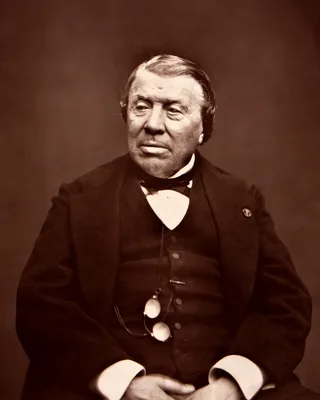
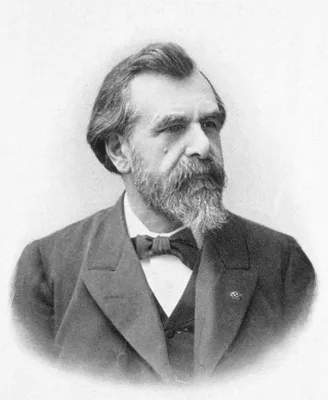
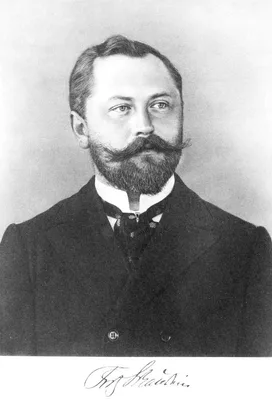
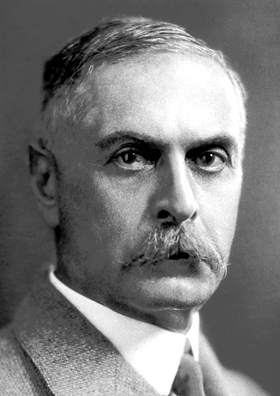
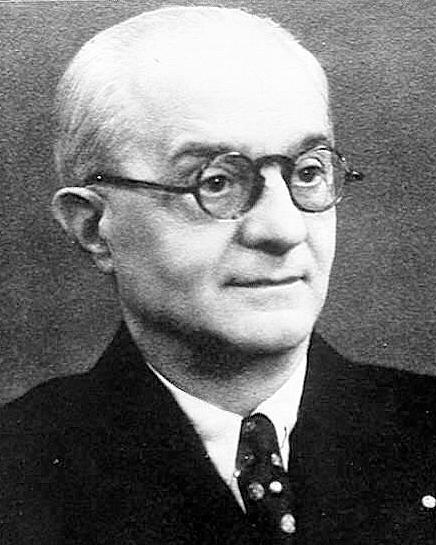
1849 HUGUIER, Pierre Charles (1804 – 1873)
Mémoire sur l’esthioméne, ou dartre rongeante de la région vulvo-anale.
Huguier gave the name esthiomène to the characteristic induration and discoloration of the affected parts in lymphogranuloma venereum.
GMN 5216 · https://historyofmedicine.com/id/7823
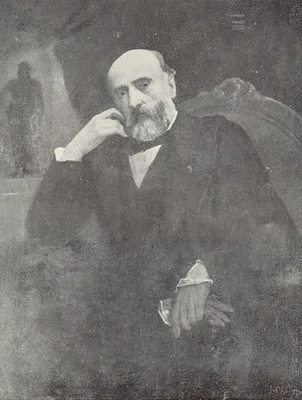
1851 RICORD, Philippe (1800 – 1889)
Traité complet des maladies vénériennes. Clinique iconographique de l'Hôpital des vénériens. Recueil d'observations, suivies de considérations pratiques sur les maladies qui ont été traitées dans cet hôpital.
Ricord's extensive work with veneral diseases at the Hopital du Midi includes 66 hand-colored ithographs illustrating a multitude of conditions at various levels of infection in both sexes. The illustrations were draw…
GMN 14130 · https://historyofmedicine.com/id/16441
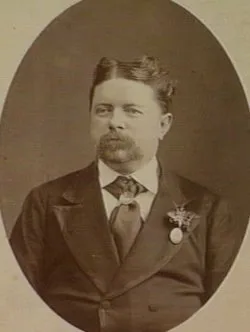
1852 BASSEREAU, Léon (1811 – 1888)
Traité des affections de la peau symptomatiques de la syphilis.
Bassereau defined chancroid clearly for the first time.
GMN 5203 · https://historyofmedicine.com/id/7793
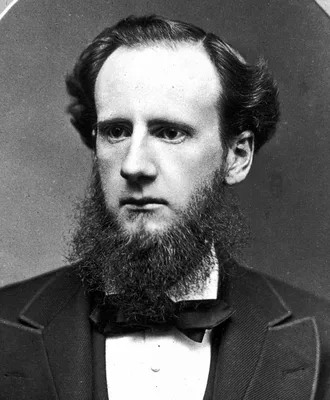
1855 WILSON, Sir William James Erasmus (1809 – 1884); BAGG, William (1803 – 1869)
Portraits of diseases of the skin.
Wilson's atlas, with 48 plates drawn and engraved by the medical artist, William Bagg, was the first English large folio atlas of dermatology in the style of similar folios issued in France by Alibert and Cazenave. Th…
GMN 9921 · https://historyofmedicine.com/id/12109
1856 BETTINGER, Julius (1802 – 1887)
First demonstration of the experimental inoculability of syphilis. The information is given in a discussion on the subject by the Society of Physicians of the Palatinate; it appeared anonymously, without title, and id…
GMN 2384 · https://historyofmedicine.com/id/3295
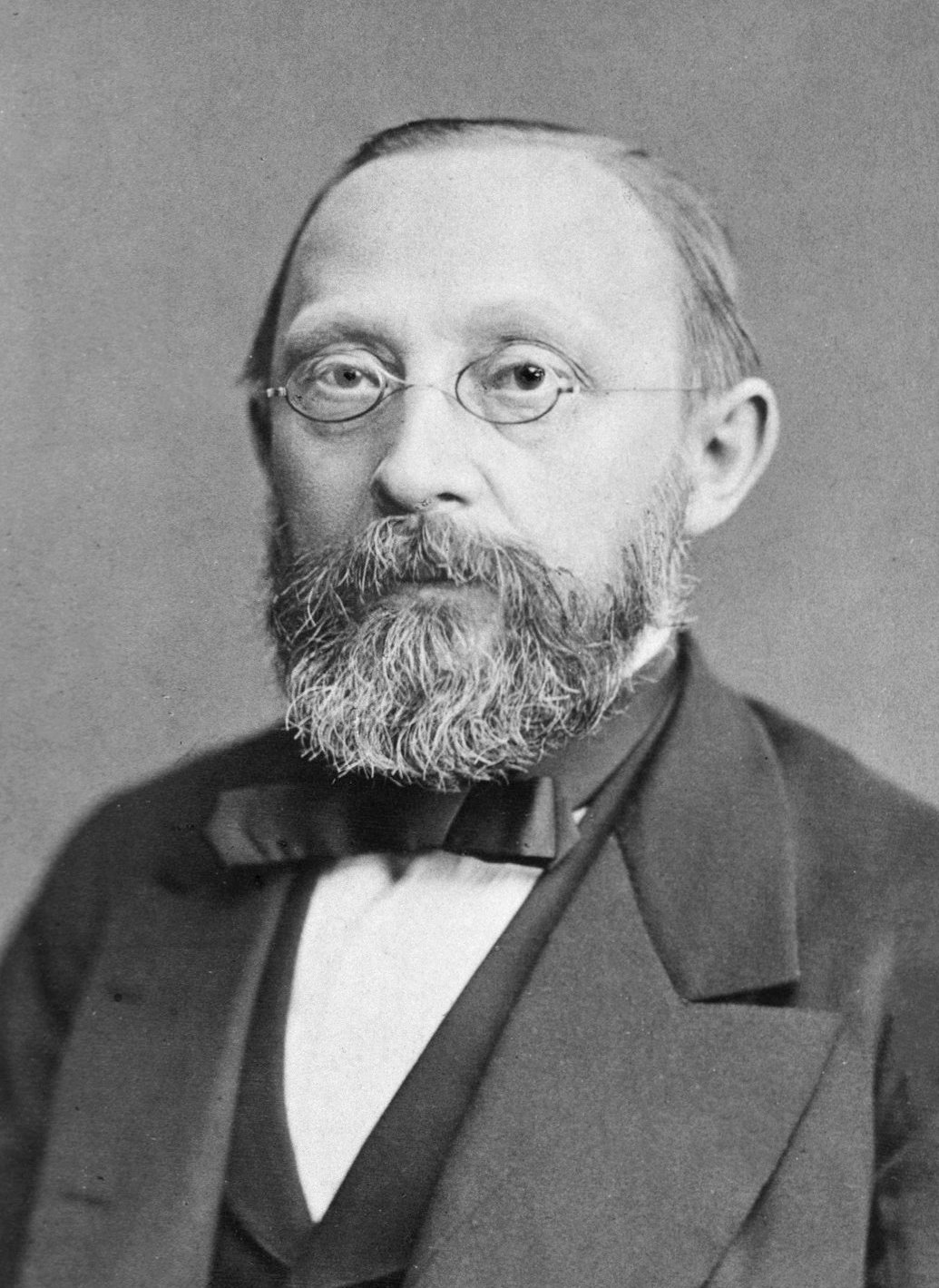
1858 VIRCHOW, Rudolf Ludwig Karl (1821 – 1902)
Ueber die Natur der constitutionell-syphilitischen Affectionen.
Virchow’s great work on the pathology of syphilis confirmed the fact that it was a disease which involved all organs and tissues of the body and showed that the causal organism was transferred through the blood to the…
GMN 2385 · https://historyofmedicine.com/id/3296
1861 KUSSMAUL, Adolf (1822 – 1902)
Untersuchungen über den constitutionellen Mercurialismus und sein Verhältniss zur constitutionellen Syphilis.
GMN 2387 · https://historyofmedicine.com/id/3303
1862 PELLIZZARI, Pietro (1823 – 1892)
Della trasmissione delle sifilide mediante la inoculazione del sangue.
Proof of the possibility of transmission of syphilis by blood transfusion.
GMN 2388 · https://historyofmedicine.com/id/3308
1863 WILKS, Sir Samuel (1824 – 1911)
On the syphilitic affections of internal organs.
Wilks’s outstanding work was on visceral syphilis, a subject which he was one of the first to study.
GMN 2389 · https://historyofmedicine.com/id/3311
1865 PROFETA, Guiseppe (1840 – 1911)
Sulla sifilide per allattamento.
Profeta’s law – a non-syphilitic child born of syphilitic parents is immune.
GMN 2390 · https://historyofmedicine.com/id/3313
1866 LANCEREAUX, Étienne (1829 – 1910)
Traité historique et pratique de la syphilis.
A complete review of contemporary knowledge. English translation, 2 vols., 1868-69.
GMN 2390.1 · https://historyofmedicine.com/id/3317
1866 ROLLET, Joseph Pierre (1824 – 1894)
Coincidence du chancre syphilitique primitif avec la gale, la blénorrhagie, le chancre simple et la vaccine.
Rollet recognized the possibility of mixed infection of one sore with syphilis and chancroid, thus establishing the dualist theory of venereal infection. The mixed chancre is named “Rollet’s disease”.
GMN 5204 · https://historyofmedicine.com/id/7794
1869 BEANEY, James George (1828 – 1891)
Syphilis: Its nature & diffusion popularly considered.
The first work on dermatology or syphilology written, printed and published in Australia. This work is illustrated with chromolithographed plates printed in Australia. This may be the earliest medical book printed in …
GMN 10890 · https://historyofmedicine.com/id/13086
1870 WEGNER, Friedrich Rudolph Georg (1843 – 1917)
Ueber hereditäre Knochensyphilis bei jungen Kindern.
“Wegner’s disease” – osteochondritic separation of the epiphyses in congenital syphilis.
GMN 4339 · https://historyofmedicine.com/id/5678
1871 –1872 DUHRING, Louis Adolphus (1845 – 1913); MAURY, Francis Fontaine (1840 – 1879)
Photographic review of medicine and surgery. A bi-monthly illustration of interesting cases, accompanied by notes. Edited by F.F. Maury [and] L.A. Duhring. Vols. 1 & 2 (All published).
The leading 19th century American publication of artistic medical photography. Each of the two volumes includes 24 mounted photographs. The photographs ilustrate cases of unusual and extreme disease, such as gross def…
GMN 10585 · https://historyofmedicine.com/id/12778
1872 KAPOSI, Moritz Kohn (1837 – 1902)
Idiopathisches multiples Pigmentsarkom der Haut.
First description of “Kaposi’s sarcoma” – multiple idiopathic hemorrhagic sarcoma. English translation in CA, 1982, 32, 342-47.
GMN 4063 · https://historyofmedicine.com/id/5455
1872 NOEGGERATH, Emil Oscar Jacob Bruno (1827 – 1895)
Die latente Gonorrhoe im weiblichen Geschlecht.
Noeggerath was the first to point out the late effects of gonorrhoea in women, particularly its role in the production of sterility.
GMN 6064 · https://historyofmedicine.com/id/7430
1876 WELCH, Francis Henry (1839 – 1910)
On aortic aneurism in the army and the conditions associated with it.
Welch, an Army surgeon, supported the theory of a causal connexion between syphilis and aneurysm.
GMN 2983 · https://historyofmedicine.com/id/5160
1878 –1879 KLEBS, Theodor Albrecht Edwin (1834 – 1913)
Das Contagium der Syphilis. Eine experimentelle Studie.
Klebs inoculated syphilis into apes and probably saw the spirochete before Schaudinn and Hoffmann.
GMN 2392 · https://historyofmedicine.com/id/3325
1879 NEISSER, Albert Ludwig Siegmund (1855 – 1916)
Ueber eine der Gonorrhoe eigentümliche Micrococcusform.
Discovery of the gonococcus – causal organism in gonorrhoea.
GMN 5208 · https://historyofmedicine.com/id/7802
1880 LEISTIKOW, Leo (1847 – 1917)
Ueber Bacterien bei den venerischen Krankheiten.
Leistikow was first to report the cultivation of the gonococcus.
GMN 5209 · https://historyofmedicine.com/id/7804
1882 MACLEOD, Kenneth (1840 – 1922)
Precis of operations performed in the wards of the first surgeon, Medical College Hospital, during the year 1881.
MacLeod was first to draw attention to granuloma inguinale.
GMN 5204.1 · https://historyofmedicine.com/id/7795
1885 BUMM, Ernst (1858 – 1925)
Der Mikro-Organismus der gonorrhöischen Schleimhaut-Erkrankungen, Gonococcus-Neisser.
Bumm cultured the gonococcus. By human inoculations he demonstrated its pathogenicity in pure culture.
GMN 5209 · https://historyofmedicine.com/id/7808
1885 FRAENKEL, Eugen (1853 – 1925)
Bericht über eine bei Kindern beobachtete Endemie infectiöser Colpitis.
The gonococcus shown to be the cause of vulvovaginitis in children.
GMN 5210.1 · https://historyofmedicine.com/id/7810
1886 –1890 MANSUROV, Nikolai Porfir'evich (1834 – 1892)
Klinicheskii sbornik po dermatologii i sifilologii. 4 vols.
Mansurov was the first dermatologist in Russia, and one of the first physicians to use photography systematically in medical illustration. This was a periodical, illustrated with original photographs, of which Manusro…
GMN 7744 · https://historyofmedicine.com/id/9916
1888 FINGER, Ernest Anton Franz (1856 – 1939)
Die Blenorrhöe der Sexualorgane und ihre Complicationen.
GMN 5211 · https://historyofmedicine.com/id/7811
1889 BALZER, Félix (1849 – 1929)
Expériences sur la toxicité du bismuth.
Balzer was the first to suggest bismuth in the treatment of syphilis.
GMN 2394 · https://historyofmedicine.com/id/3334
1889 DUCREY, Augusto (1860 – 1940)
Il virus dell’ ulcera venerea.
Announcement of the discovery of Haemophilus ducreyi (Ducrey’s bacillus), causal organism in chancroid.
GMN 5205 · https://historyofmedicine.com/id/7796
1889 –1900 PROKSCH, Johann Karl (1840 – 1923)
Die Litteratur über die venerischen Krankheiten von der ersten Schriften über Syphilis aus dem Ende des fünfzehnten Jahrhunderts bis zum Jahre 1889. (Supplement Band I. Enthält die Litteratur von 1889-99 und Nachträge aus früherer Zeit.) 5 vols.
Reprinted Nieuwkoop, De Graaf 1966.
GMN 5226 · https://historyofmedicine.com/id/7843
1891 –1895 BURET, Frédéric
Syphilis today and among the ancients. 2 vols.
GMN 2422 · https://historyofmedicine.com/id/2881
1891 CHIARI, Hans (1851 – 1916)
Ueber Magensyphilis.
Important study of gastric syphilis.
GMN 3498 · https://historyofmedicine.com/id/3911
1892 –1896 BRAMWELL, Sir Byrom (1847 – 1931)
Atlas of clinical medicine. 3 vols.
Published at the end of the 19th century, and employing the wide variety of illustration technologies then available, including color lithography, lithography, and photography, this work testifies to the breadth and d…
GMN 10621 · https://historyofmedicine.com/id/12814
1893 HÖCK, Heinrich
Ein Beitrag zur Arthritis blennorrhoica.
Gonococci isolated from an arthritic joint.
GMN 4502.1 · https://historyofmedicine.com/id/97
1895 JARISCH, Adolf (1850 – 1902)
Therapeutische Versuche bei Syphilis.
Jarisch-Herxheimer reaction; see also No. 2397.
GMN 2396 · https://historyofmedicine.com/id/3343
1895 DÖHLE, Karl Gottfried Paul (1855 – 1928)
Ueber Aortenerkrankung bei Syphilitischen und deren Beziehung zur Aneurysmenbildung.
Döhle clearly defined a specific syphilitic lesion of the aorta as a prerequisite of aortic aneurysm.
GMN 2985.1 · https://historyofmedicine.com/id/5176
1895 WERTHEIM, Ernst (1864 – 1920)
Ueber Uterus-Gonorrhöe.
Wertheim emphasized the importance of latent uterine gonorrhoea.
GMN 6099 · https://historyofmedicine.com/id/7526
1895 PROKSCH, Johann Karl (1840 – 1923)
Die Geschichte der venerischen Krankheiten. 2 vols.
Vol. 1. Alterthum und Mittelalter. Vol. 2. Neuzeit.
GMN 5227 · https://historyofmedicine.com/id/7844
1896 WERTHEIM, Ernst (1864 – 1920)
Über Blasen-Gonorrhöe.
Wertheim demonstrated the gonococcus in acute cystitis.
GMN 6103 · https://historyofmedicine.com/id/7536
1896 CONYERS, James Salters (1841 – 1896); DANIELS, Charles Wilberforce (1862 – 1927)
The lupoid form of the so-called “groin ulceration” of this colony.
Granuloma inguinale distinguished from other similar lesions in the genital region.
GMN 5205.1 · https://historyofmedicine.com/id/7797
1896 THAYER, William Sydney (1864 – 1932); BLUMER, George Alder (1857 – 1940)
Ulcerative endocarditis due to the gonococcus; gonorrheal septicemia.
Thayer and Blumer found the gonococcus in cases of gonorrheal endocarditis.
GMN 5212 · https://historyofmedicine.com/id/7812
1897 FOURNIER, Jean Alfred (1832 – 1915)
Les chancres extra-génitaux.
GMN 2395 · https://historyofmedicine.com/id/3338
1899 HELLER, Arnold Ludwig Gotthilf (1840 – 1913)
Die Aortensyphilis als Ursache von Aneurysmen.
Heller established the fact that syphilis is a cause of aortic aneurysm.
GMN 2987 · https://historyofmedicine.com/id/5184
1901 –1911 BLOCH, Iwan (Ivan) (1872 – 1922)
Der Ursprung der Syphilis. 2 pts.
Bloch was a chief modern supporter of the theory of the Columbian origin of syphilis.
GMN 2423 · https://historyofmedicine.com/id/2882
1902 HERXHEIMER, Karl (1861 – 1944)
Ueber eine bei Syphilitischen vorkommende Quecksilberreaktion.
See No. 2396.
GMN 2397 · https://historyofmedicine.com/id/3344
1903 –1904 METCHNIKOFF, Élie [MECHNIKOV] (1845 – 1916); ROUX, Pierre Paul Émile (1853 – 1933)
Études expérimentales sur la syphilis.
Metchnikoff and Roux successfully transmitted syphilis from man to the higher apes. Although not the first to do this, they recorded much new information concerning the disease.
GMN 2398 · https://historyofmedicine.com/id/3347
1904 CHIARI, Hans (1851 – 1916)
Ueber die syphilitischen Aortenerkrankungen.
GMN 2815 · https://historyofmedicine.com/id/3489
1905 HOFFMANN, Erich (1868 – 1959); SCHAUDINN, Fritz Richard (1871 – 1906)
Vorläufiger Bericht über das Vorkommen von Spirochaeten in syphilitischen Krankheitsprodukten und bei Papillomen.
On March 3, 1905, Schaudinn discovered the causal organism of syphilis Spirochaeta pallida, in serum obtained from a genital lesion by Hoffmann. Schaudinn later renamed the spirochete Treponema pallidum.
GMN 2399 · https://historyofmedicine.com/id/3349
1906 BERTARELLI, Ernesto (1873 – 1957)
Ueber die Transmission der Syphilis auf das Kaninchen. Vorläufiger Bericht.
Transmission of syphilis to rabbits.
GMN 2399.1 · https://historyofmedicine.com/id/3351
1906 LANDSTEINER, Karl (1868 – 1943); MUCHA, Viktor (1877 – 1919)
Zur Technik der Spirochaetenuntersuchung.
Dark field method of diagnosis for presence of T. pallidum.
GMN 2400 · https://historyofmedicine.com/id/3357
1906 LEVADITI, Constantin (1874 – 1953)
A propos de l’impregnation au nitrate d’argent des spirochètes sur coupes.
Levaditi’s method of staining T. pallidum.
GMN 2401 · https://historyofmedicine.com/id/3359