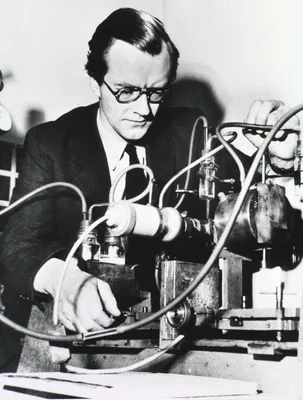
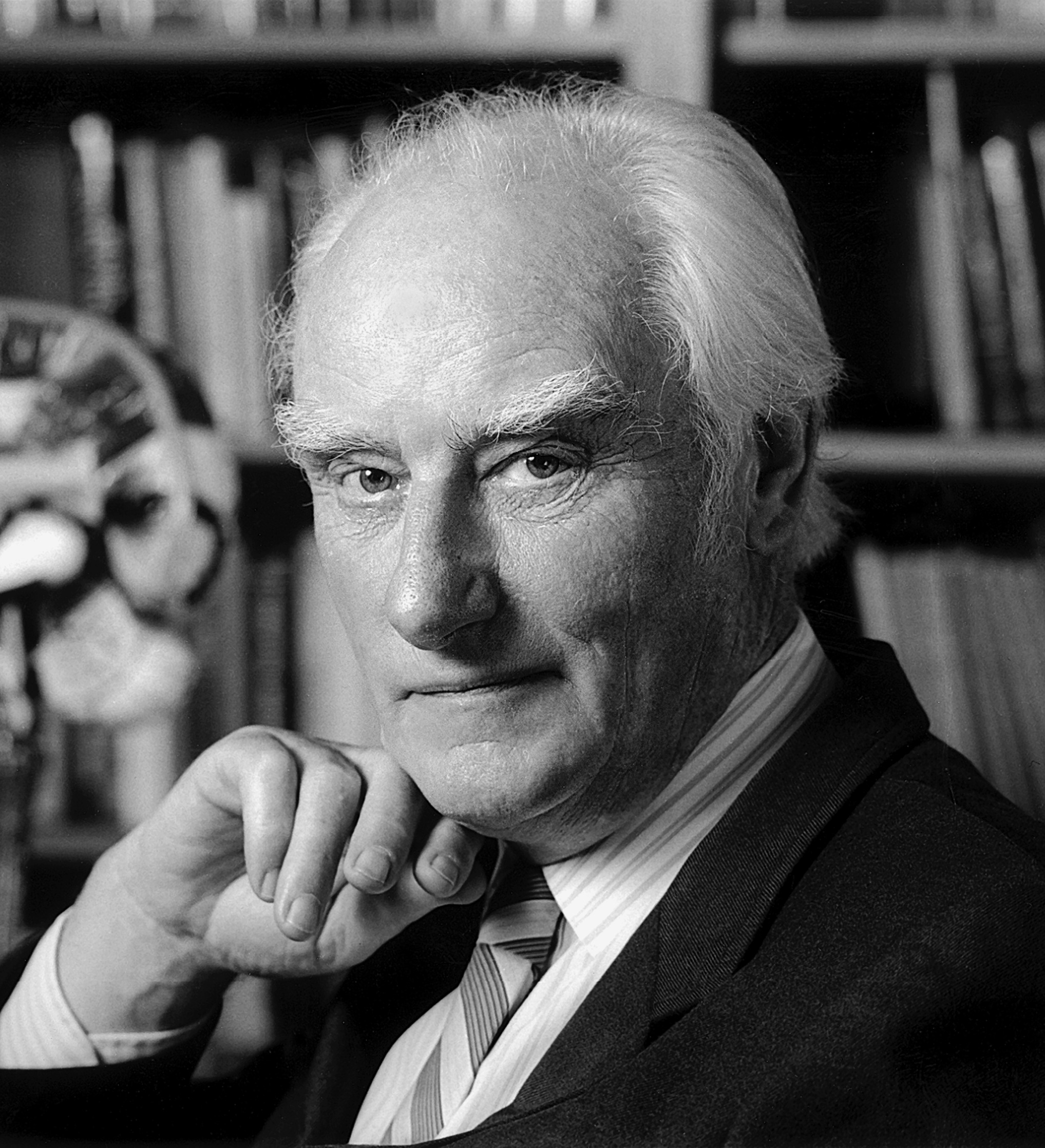
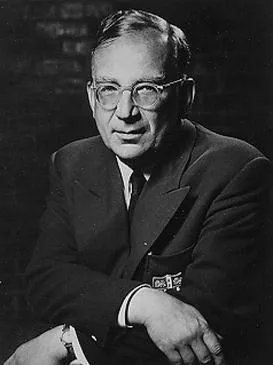
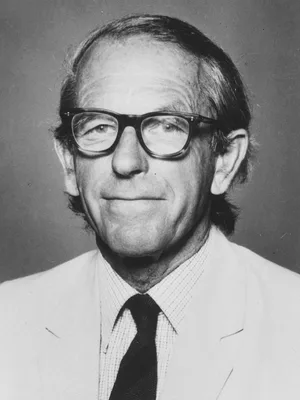
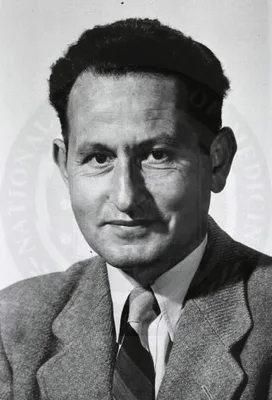
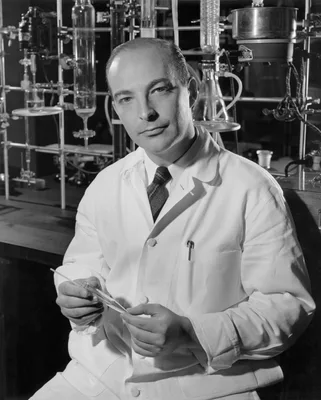
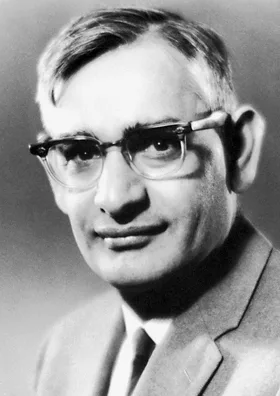
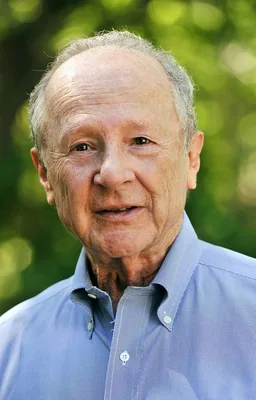
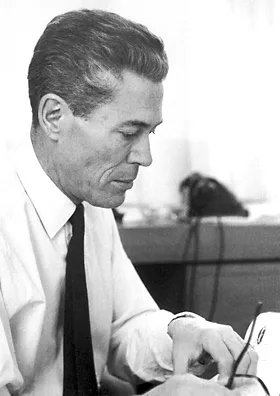
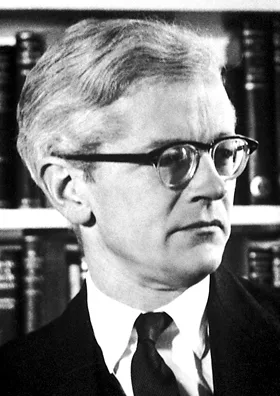
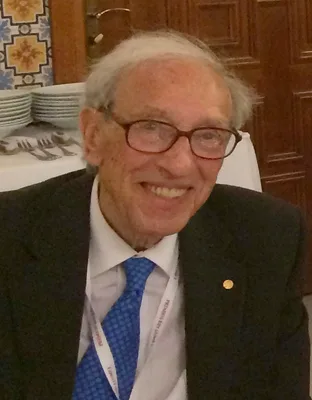
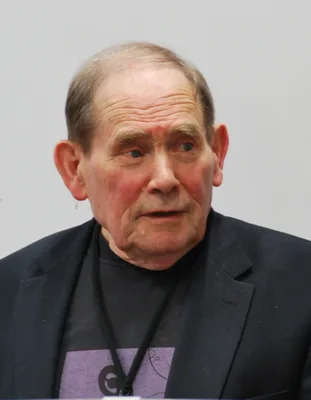
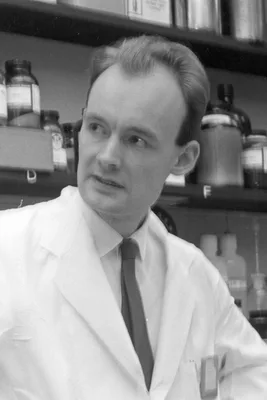
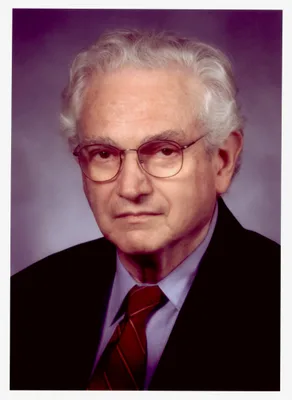
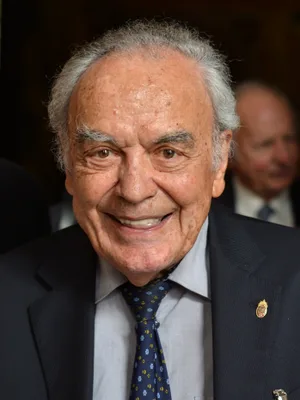
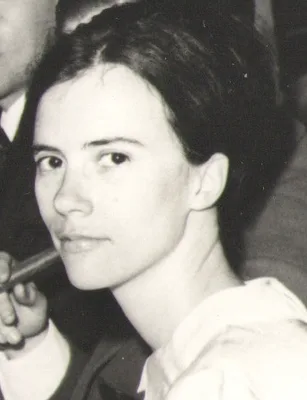
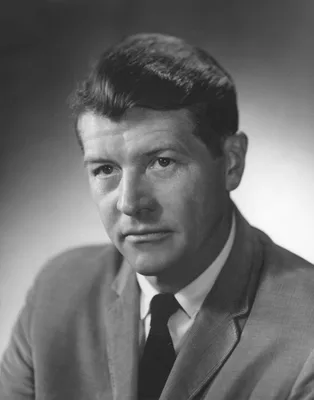
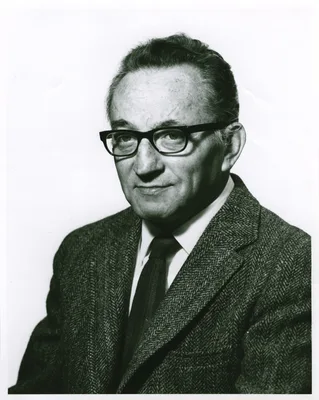
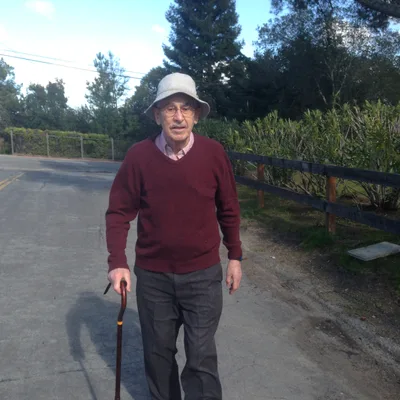
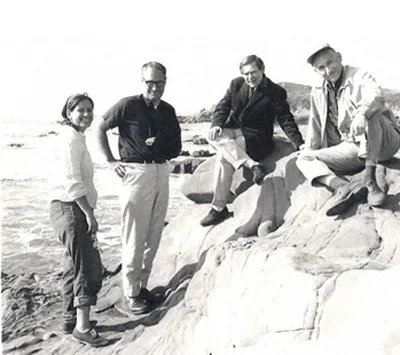
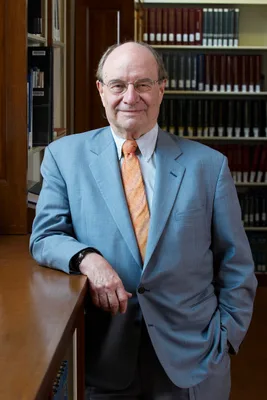
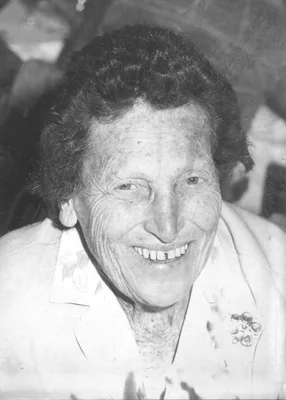
1953 WILKINS, Maurice Hugh Frederick (1916 – 2004); STOKES, Alexander Rawson (1919 – 2003); SEEDS, William Etienne; WILSON, Herbert Rees (1929 – 2008)
Helical structure of crystalline deoxypentose nucleic acid.
In 1962 Wilkins shared the Nobel Prize in Physiology or Medicine with Crick and Watson "for their discoveries concerning the molecular structure of nucleic acids and its significance for information transfer in living…
GMN 256.4 · https://historyofmedicine.com/id/8701
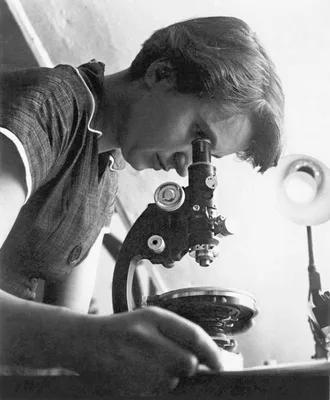
1953 FRANKLIN, Rosalind Elsie (1920 – 1958); GOSLING, Raymond (1926 – 2015)
Molecular configuration in sodium thymonucleate.
This paper reports Franklin's discovery of the existence of DNA in 2 forms, and conditions for readily and rapidly changing from one to the other. Its phosphates were on the outside.” (Maddox 195) The Watson-Crick mod…
GMN 6847 · https://historyofmedicine.com/id/9011
1953 WATSON, James Dewey (1928 – ); CRICK, Francis Harry Compton (1916 – 2004)
Genetical implications of the structure of deoxyribonucleic acid.
In this paper published on May 30, 1953 Watson and Crick proposed the method of replication of DNA. This discovery has been called as significant, or possibly even more significant, than their discovery of the double-…
GMN 7138 · https://historyofmedicine.com/id/9305
1953 FRANKLIN, Rosalind Elsie (1920 – 1958); GOSLING, Raymond (1926 – 2015)
Evidence for 2-chain helix in crystalline structure of sodium deoxyribonucleate.
Franklin and Gosling's completed Patterson synthesis of the A-form of DNA, based on work begun in 1952, represents the first independent confirmation that the Watson-Crick double-helix model was correct. "We suggest t…
GMN 13946 · https://historyofmedicine.com/id/16244
1954 GAMOW, George (Gamov) (1904 – 1968)
Possible relation between deoxyribonucleic acid and protein structures.
Gamow, a physicist, invented the concept of a genetic code. This brief 1-page paper, published in the February 13, 1954 issue of Nature was the first specific positive response to Watson and Crick's structure of DNA. …
GMN 6896 · https://historyofmedicine.com/id/9060
1954 INGRAM, Vernon Martin (1924 – 2006); PERUTZ, Max Ferdinand (1914 – 2002); GREEN, David W. ( – 1976)
The structure of haemoglobin - IV. Sign determination by the isomorphous replacement method.
The first demonstration of isomorphous replacement in protein crystallography. This was a key step in determination of the structure of large biological molecules. Harittai, "On the origins of isomorphous replacement …
GMN 14223 · https://historyofmedicine.com/id/16540
1955 GRUNBERG-MANAGO, Marianne (1921 – 2013); OCHOA DE ALBORNOZ, Severo (1905 – 1993); ORTIZ, Priscilla J.
Enzymatic synthesis of nucleic acidlike polynucleotides.
Ochoa shared the Nobel Prize with Arthur Kornberg in 1959 for their artificial synthesis of nucleic acids by means of enzymes. Order of authorship in the original publication: Ochoa, Grunberg-Manago, Ortiz. See also O…
GMN 752.3 · https://historyofmedicine.com/id/1738
1955 SANGER, Frederick (1918 – 2013)
The disulphide bonds of insulin.
Sanger sequenced the amino acids of insulin, the first of any protein. His work “revealed that a protein has a definite constant, genetically determined sequence—and yet a sequence with no general rule for its assembl…
GMN 1207 · https://historyofmedicine.com/id/1852
1955 FRAENKEL-CONRAT, Heinz Ludwig (1910 – 1999); WILLIAMS, Robley Cook (1908 – 1995)
Reconstitution of active tobacco mosaic virus from its inactive protein and nucleic acid components.
First reconstitution of a virus.
GMN 2527 · https://historyofmedicine.com/id/3465
1955 HODGKIN, Dorothy Crowfoot (1910 – 1994)
The crystal structure of the hexacarboxylic acid derived from B12 and the molecular structure of the vitamin.
The final structure of vitamin B12. With J. Pickworth, J.H. Robertson, K.N. Trueblood, R.J. Prosen, J. G. White. In 1964 Hodgkin was awarded the Nobel Prize in Chemistry "for her determinations by X-ray techniques of …
GMN 6928 · https://historyofmedicine.com/id/9093
1955 CRICK, Francis Harry Compton (1916 – 2004); RICH, Alexander (1924 – 2015)
The structure of collagen.
Rich and Crick solved the structure of collagen, the main structural protein in the extracellular matrix found in the body's various connective tissues. As the main component of connective tissue, it is the most abund…
GMN 13954 · https://historyofmedicine.com/id/16253
1955 FRANKLIN, Rosalind Elsie (1920 – 1958)
Structure of tobacco mosaic virus.
The first discovery of the geometry of a protein structure. Franklin, whose X-ray photographs of DNA were crucial to Watson and Crick's discovery of the molecule's double helix structure in 1953, began researching the…
GMN 14001 · https://historyofmedicine.com/id/16306
1956 KORNBERG, Arthur (1918 – 2007); LEHMAN, Israel Robert (1924 – ); BESSMAN, Maurice Jules (1928 – 2021); SIMMS, E. S.; ET AL
Enzymic synthesis of deoxyribonucleic acid.
In 1959 Kornberg shared the Nobel Prize in Physiology or Medicine with Severo Ochoa "for their discovery of the mechanisms in the biological synthesis of ribonucleic acid and deoxyribonucleic acid." Order of authorshi…
GMN 752.4 · https://historyofmedicine.com/id/1739
1956 GIERER, Alfred (1929 – ); SCHRAMM, Gerhard (1910 – 1989)
Infectivity of ribonucleic acid from tobacco mosaic virus.
Proof that nucleic acid produces infectivity. See also Z. Naturf., 1956, 11b, 138-42.
GMN 2578.17 · https://historyofmedicine.com/id/4154
1957 CRICK, Francis Harry Compton (1916 – 2004)
Nucleic acids.
This paper published in September 1957, based on Crick's famous "Central Dogma" lecture given the same month, presented his first published statement of The Central Dogma: “Information is transmitted from DNA and RNA …
GMN 13097 · https://historyofmedicine.com/id/15349
1958 GILHAM, Peter Thomas (1930 – 2008); KHORANA, Har Gobind (1922 – 2011)
Studies on polynucleotides. I. A new and general method for the chemical synthesis of the C5'-C3' intemucleotide linkage. Synthesis of deoxyribo-dinucleotides.
In 1968 Khorana shared the Nobel Prize in Physiology or Medicine with R. W. Holley and M. W. Nirenberg "for their interpretation of the genetic code and its function in protein synthesis." H. G. Khorana, T. M. Jacob, …
GMN 752.6 · https://historyofmedicine.com/id/1862
1958 MESELSON, Matthew Stanley (1930 – ); STAHL, Franklin William (1929 – )
The replication of DNA in Escherichia coli.
The so-called Meselson-Stahl experiment, the first proof of semi-conservative replication of DNA. Semi-conservative replication describes the mechanism of DNA replication in all known cells. It derives its name from t…
GMN 256.6 · https://historyofmedicine.com/id/8703
1958 JACOB, François (1920 – 2013); MONOD, Jacques (1910 – 1976); PARDEE, Arthur Beck (1921 – )
Sur l’expression et le rôle des allèles “inductible” et “constitutif” dans la synthèse de la β-galactosidase chez des zygotes d’ “Escherichia coli.
The “PaJaMo” experiment of PArdee, JAcob, and MOnod “broke the impasse in Crick and Brenner’s comprehension of how information in the sequence of bases in DNA came to be expressed as a sequence of the amino acids in p…
GMN 6894 · https://historyofmedicine.com/id/9058
1958 CRICK, Francis Harry Compton (1916 – 2004)
On protein synthesis.
This paper proposed two general principles: 1) The Sequence Hypothesis: “The order of bases in a portion of DNA represents a code for the amino acid sequence of a specific protein. Each ‘word’ in the code would name a…
GMN 6895 · https://historyofmedicine.com/id/9059
1958 KENDREW, Sir John Cowdery (1917 – 1997); DINTZIS, Howard M.
A three-dimensional model of the myoglobin molecule obtained by x-ray analysis.
Initial paper on the first solution of the three-dimensional molecular structure of a protein. Computing the molecular structure in 3 dimensions was possible through the use of the Cambridge EDSAC stored-program elect…
GMN 6911 · https://historyofmedicine.com/id/9076
1959 KREBS, Edwin Gerhard (1918 – 2009); GRAVES, Donald J. (1931 – 2007); FISCHER, Edmond Henri (1920 – 2021)
Factors affecting the activity of muscle phosphorylase b kinase.
In 1992 Krebs and Fischer were awarded the Nobel Prize in Physiology or Medicine "for their discoveries concerning reversible protein phosphorylation as a biological regulatory mechanism." Digital facsimile from PubMe…
GMN 14141 · https://historyofmedicine.com/id/16455
1960 KENDREW, Sir John Cowdery (1917 – 1997); ET AL
Structure of myoglobin: A three-dimensional Fourier synthesis at 2 Å resolution.
Kendrew's second paper reporting the first solution of the three-dimensional molecular structure of a protein, for which he shared the 1962 Nobel Prize in chemistry with Max Perutz, who solved the structure of the rel…
GMN 6912 · https://historyofmedicine.com/id/9077
1960 MARMUR, Julius (1926 – 1996); DOTY, Paul Mead (1920 – 2011)
Strand separation and specific recombination in deoxyribonucleic acids: Biological studies: Physical chemical studies.
While working in the laboratory of Paul Doty at Harvard University, Marmur discovered that the denaturation of DNA was reversible (DNA hybridization) and depended on salt- and GC-content. Marmur and Doty accurately de…
GMN 13962 · https://historyofmedicine.com/id/16264
1960 JACOB, François (1920 – 2013); MONOD, Jacques (1910 – 1976); ET AL
L'opéron: Groupe de gènes à expression coordonnée par un opérateur.
Jacob and Monod received their share of the Nobel Prize in 1965 for their discoveries concerning the operon and viral synthesis. The first operon they described was the lac operon in E. coli. Their operon theory sugge…
GMN 13995 · https://historyofmedicine.com/id/16299
1960 PERUTZ, Max Ferdinand (1914 – 2002); ROSSMANN, Michael G. (1930 – 2019); CULLIS, Ann F.; MUIRHEAD, Hilary; WILL, Georg A.; NORTH, A. C. T.
Structure of haemoglobin: A three-dimensional Fourier synthesis at 5.5-A. resolution, obtained by X-ray analysis.
Solution of the structure of hemoglobin, a protein with 10,000 atoms. This was the culmination of 30 years of research by Perutz. Order of authorship in the original paper: Perutz, Rossmann, Culis, Muirhead, Will, Nor…
GMN 14283 · https://historyofmedicine.com/id/16606
1960 MOORE, Stanford (1913 – 1982); STEIN, William Howard (1911 – 1980); HIRS, C. H. W.
The sequence of the amino acid residues in performic acid-oxidized ribonuclease.
In 1959 Moore and Stein announced the first determination of the complete amino acid sequence of an enzyme, ribonuclease. In 1972 Moore and Stein shared half of the Nobel Prize in Chemistry with Christian B. Anfinsen …
GMN 14306 · https://historyofmedicine.com/id/16631
1961 CRICK, Francis Harry Compton (1916 – 2004); BRENNER, Sydney (1927 – 2019); BARNETT, Leslie Margaret Collard (1920 – 2002); WATTS-TOBIN, Richard J.
General nature of the genetic code for proteins.
The codons in DNA specifying amino acids in proteins.
GMN 256.8 · https://historyofmedicine.com/id/8705
1961 JACOB, François (1920 – 2013); MONOD, Jacques (1910 – 1976)
Genetic regulatory mechanisms in the synthesis of proteins.
In 1965 Jacob, Monod, and André Lwoff shared the Nobel Prize in Physiology or Medicine "for their discoveries concerning genetic control of enzyme and virus synthesis."
GMN 256.9 · https://historyofmedicine.com/id/8706
1961 MESELSON, Matthew Stanley (1930 – ); JACOB, François (1920 – 2013); BRENNER, Sydney (1927 – 2019)
An unstable intermediate carrying information from genes to ribosomes for protein synthesis.
Demonstration of the existence of “messenger” RNA. The following paper (pp. 581-85) by F. Gros et al. is also relevant.
GMN 256.10 · https://historyofmedicine.com/id/8707
1961 MATTHAEI, J. Heinrich (1929 – ); NIRENBERG, Marshall Warren (1927 – 2010)
Characteristics and stabilization of DNAase-sensitive protein synthesis in E. coli extracts.
With Matthaei, Nirenberg demonstrated that messenger RNA is required for protein synthesis, and that synthetic messenger RNA preparations can be used to decipher various aspects of the genetic code. Nirenberg first re…
GMN 256.11 · https://historyofmedicine.com/id/8708
1961 MULLER, Hermann Joseph (1890 – 1967)
Genetic nucleic acid: Key material in the origin of life.
Muller was one of the earliest proponents of a genetics-first theory for the origin of life.
GMN 7468 · https://historyofmedicine.com/id/9640
1962 ARBER, Werner (1929 – ); ROULLAND-DUSSOIX, Daisy (1936 – 2014)
Host specificity of DNA produced by escherichia coli. II. Control over acceptance of DNA from infecting phage lambda.
Order of authorship in the original publication: Dussoix, Arber. The authors discovered that restriction of DNA from infecting bacteriophage was due to the attack and breakdown of the modified bacteriophage's DNA by s…
GMN 12033 · https://historyofmedicine.com/id/14241
1963 RICH, Alexander (1924 – 2015); WARNER, Jonathan R.; KNOPF, Paul M.
A multiple ribosomal structure in protein synthesis.
Alexander Rich discovered polysomes, clusters of ribosomes which read one strand of mRNA simultaneously. Order of authorship in the original publication: Warner, Knopf, Rich. Digital facsimile from PubMedCentral at th…
GMN 13955 · https://historyofmedicine.com/id/16255
1963 ANFINSEN, Christian Boehmer Jr. (1916 – 1995); EPSTEIN, Charles Joseph (1933 – 2011); GOLDBERGER, Robert Frank (1934 – 2003)
The genetic control of tertiary protein structure studies with mode systems.
In 1972 Anfinsen shared half of the Nobel Prize in Chemistry with Stanford Moore and William H. Stein for "for his work on ribonuclease, especially concerning the connection between the amino acid sequence and biologi…
GMN 14305 · https://historyofmedicine.com/id/16630
1964 KHORANA, Har Gobind (1922 – 2011); NISHIMURA, S; JACOB, Thazhuthaveetil Mathai (J. T.) (1927 – 2014)
Synthetic deoxyribopolynucleotides as templates for ribonucleic acid polymerase: The formation and characterization of a ribopolynucleotide with a repeating trinucleotide sequence.
Order of authorship in the original publication: Nishimura, Jacob, Khorana. Digital facsimile from PubMedCentral at this link.
GMN 257 · https://historyofmedicine.com/id/8710
1964 YANOFSKY, Charles (1925 – 2018); CARLTON, Bruce C.; HENNING, U.; ET AL
On the colinearity of gene structure and protein structure.
Yanofsky and colleagues established that gene sequences and protein sequences are colinear in bacteria. Order of authorship in the original publication: Yanofsky, Carlton, ... Henning. In genetics, coliniarity is a pr…
GMN 13944 · https://historyofmedicine.com/id/16242
1964 STRETTON, Antony Oliver Ward (1936 – ); BRENNER, Sydney (1927 – 2019); SARABHAI, A. S.; BOLLE, A.
Co-linearity of the gene with the polypeptide chain.
Order of authorship in the original publication: Sarabhai, Stretton, Brenner, Bolle. Brenner (Nobel Prize 2002) and colleagues performed the first study to show co-linearity; i.e., that there is a simple congruence be…
GMN 13968 · https://historyofmedicine.com/id/16270
1964 HOLLIDAY, Robin (1932 – 2014)
A mechanism for gene conversion in fungi.
Holliday described a mechanism of DNA-strand exchange that attempted to explain gene-conversion events that occur during meiosis in fungi. That model became known as the Holliday Junction. "A Holliday junction is a br…
GMN 13984 · https://historyofmedicine.com/id/16287
1965 HOLLEY, Robert William (1922 – 1993); ET AL
Structure of a ribonucleic acid.
The complete sequence of an alanine transfer RNA determined – the first nucleic acid structure to be determined. With seven co-authors. In 1968 Holley shared the Nobel Prize in Physiology or Medicine with Har Gobind K…
GMN 257.2 · https://historyofmedicine.com/id/8712
1965 WATSON, James Dewey (1928 – )
Molecular biology of the gene.
Watson's first book on molecular biology, and the first textbook on what was then a new academic subject. Seventh revised edition, with five co-authors, 2013.
GMN 9729 · https://historyofmedicine.com/id/11916
1965 LEBOWITZ, Jacob; VINOGRAD, Jerome (1913 – 1976)
The twisted circular form of polyoma viral DNA.
Discovery of DNA supercoiling. DNA supercoiling refers to the amount of twist in a particular DNA strand, which determines the amount of strain on it. A given strand may be "positively supercoiled" or "negatively supe…
GMN 13963 · https://historyofmedicine.com/id/16265
1965 SPIEGELMAN, Sol (1914 – 1983); ET AL
The synthesis of a self-propagating and infectious nucleic acid with a purified enzyme.
Spiegelman's Monster, the name given to an RNA chain of only 218 nucleotides that can be reproduced by the RNA replication enzyme RNA-dependent RNA polymerase, also called RNA replicase. Spiegelman achieved the first …
GMN 13992 · https://historyofmedicine.com/id/16296
1965 GIBBONS, Ian Read (1931 – 2018); ROWE, A. J.
Dynein: A protein with adenosine triphosphate activity from cilia.
IN 1963 Gibbons discovered a novel protein on microtubules. In 1965 he purified two regions of the protein, known as its two "arms" and named the protein dynein. This protein converts the chemical energy stored in ATP…
GMN 14174 · https://historyofmedicine.com/id/16489
1966 WATSON, James Dewey (1928 – ); STENT, Gunther S. (1924 – 2008); CAIRNS, Hugh John Foster (1922 – )
Phage and the origins of molecular biology. Edited by John Cairns, G. Stent, and J. D. Watson.
Expanded edition, 1992. 40th anniversary edition, 2007.
GMN 9191 · https://historyofmedicine.com/id/11372
1966 MARCKER, Kjeld Adrian (1932 – 2018)
N-Formyl-methionyl-sRibonucleic acid and chain initiation in protein biosynthesis - polypeptide synthesis directed by a bacteriophage ribonucleic acid in a cell-free system.
Marcker discovered that the biosynthesis of proteins is always initiated by a tRNA molecule that carries the modified amino acid formyl-methionine.
GMN 13939 · https://historyofmedicine.com/id/16236
1966 GILBERT, Walter (1932 – ); MÜLLER-HILL, Benno (1933 – 2018)
Isolation of the LAC repressor.
With his Ph.D. student Benno Müller-Hill, Gilbert was the first to purify the lac repressor, just beating out Mark Ptashne for purifying the first gene regulatory protein.
GMN 13951 · https://historyofmedicine.com/id/16250
1966 CRICK, Francis Harry Compton (1916 – 2004)
Codon-anticodon pairing: The wobble hypothesis.
"In the genetic code, there are 43 = 64 possible codons (3 nucleotide sequences). For translation, each of these codons requires a tRNA molecule with an anticodon with which it can stably complement. If each tRNA mole…
GMN 13967 · https://historyofmedicine.com/id/16269
1967 GRIFFITH, John Stanley (1928 – 1972)
Self replication and scrapie.
Griffith discussed complex physical chemistry mechanisms by which the scrapie agent could arise from information encoded in protein structure which could then be transferred to other protein molecules. He also conside…
GMN 12833 · https://historyofmedicine.com/id/15079
1967 ALPER, Tikvah (1909 – 1995); CRAMP, W. A.; HAIG, D. A.; ET AL
Does the agent of scrapie replicate without nucleic acids?
This paper, which predated Griffith's' paper (No. 12833), demonstrated that the scrapie agent replicates without nucleic acids. Alper and colleagues irradiated scrapie infected mouse brain extracts with lethal ultravi…
GMN 12834 · https://historyofmedicine.com/id/15080
1967 YANOFSKY, Charles (1925 – 2018); CARLTON, Bruce C.; GUEST, John Rodney (1935 – ); DRAPEAU, Gabriel R.
The complete amino acid sequence of the tryptophan synthesase a protein (α Subunit) and its colinear relationship with the genetic map of the gene.
Yanofsky showed that changes in DNA sequence can produce changes in protein sequence at corresponding positions. His work is considered the best evidence in favor of the one gene-one enzyme hypothesis. Order of author…
GMN 13945 · https://historyofmedicine.com/id/16243