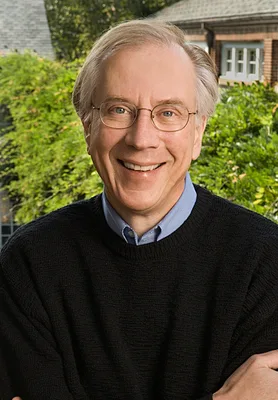
1978 HUTCHISON, III, Clyde A.; SMITH, Michael (1932 – 2000); ET AL
Mutagenesis at a specific position in a DNA sequence.
Smith and Hutchison introduced site-directed mutagenesis, or oligonucleotide-directed mutagenesis, into molecular biology, resolving the problem of how to determine the effect of a single mutant gene with efficiency. …
GMN 13986 · https://historyofmedicine.com/id/16289
1978 GILMAN, Alfred Goodman (1941 – 2015); ROSS, Elliot M.; HOWLETT, Allyn C.; FERGUSON, Kenneth M.
Reconstitution of hormone-sensitive adenylate cyclase activity with resolved components of the enzyme.
Gilman and colleagues showed that G proteins are in the cell membrane and are stimulated once a ligand (adrenaline) binds the adrenergic receptor. This system can then activate adenyl cyclase to form cyclic AMP. Digit…
GMN 14144 · https://historyofmedicine.com/id/16458
1979 JUDSON, Horace Freeland (1931 – 2001)
The eighth day of creation. Makers of the revolution in biology.
GMN 258.11 · https://historyofmedicine.com/id/8728
1979 HERSHKO, Avram (1937 – ); CIECHANOVER, Aaron (1947 – ); ROSE, Irwin Allan (1926 – 2015)
Resolution of the ATP-dependent proteolytic system from reticulocytes: a component that interacts with ATP.
Discovery of ubiquitin-mediated protein degradation. The paper is available at doi:10.1073/pnas.76.7.3107,PMC 383772, PMID 290989. See also Hershko, A.; Ciechanover, A.; Heller, H.; Haas, A.L.; Rose, I.A. (1980), "Pro…
GMN 6901 · https://historyofmedicine.com/id/9065
1979 AXEL, Richard (1946 – ); SILVERSTEIN, Saul J.; WIGLER, Michael Howard (1947 – ); ET AL
Transformation of mammalian cells with genes from procaryotes and eucaryotes.
Axel, along with microbiologist Saul J. Silverstein and geneticist Michael H. Wigler, discovered a technique of cotransformation via transfection. This process, which allows foreign DNA to be inserted into a host cell…
GMN 13929 · https://historyofmedicine.com/id/16223
1979 GOEDDEL, David V. (1951 – ); KLEID, Dennis G.; CREA, Roberto; BOLÍVAR ZAPATA, Francisco Gonzalo (1948 – ); ET AL
Expression in Escherichia coli of chemically synthesized genes for human insulin (plasmid construction / lac operon / fused proteins / radioimmunoassay / peptide purification).
Working at Genentech, Kleid and Goeddel and colleagues were the first scientists to apply genetic engineering techniques, incorporating chemically synthesized DNA encoding human insulin into E. coli, that expressed, a…
GMN 13980 · https://historyofmedicine.com/id/16283
1979 LEVINE, Arnold Jay (1939 – ); LINZER, Daniel I. H. (1954 – )
Characterization of a 54K Dalton cellular SV40 tumor antigen present in SV40 transformed cells and uninfected embryonal carcinoma cells.
Levine discovered the tumor suppressor protein p53, also known as Tumor protein P53. Because it prevents cancer formation TP 53 is classified as a tumor suppressor gene. The discovery was completed in 1989 and recorde…
GMN 14007 · https://historyofmedicine.com/id/16312
1980 SANGER, Frederick (1918 – 2013); ET AL
Cloning in single-stranded bacteriophage as an aid to rapid DNA sequencing.
Sanger and colleagues developed the random shotgun method to prepare templates for DNA sequencing. With A. R. Coulson, B. G. Barrell, A. J. H. Smith & B. A. Roe.
GMN 6893 · https://historyofmedicine.com/id/9057
1980 BERG, Paul (1926 – ); MULLIGAN, Richard C. (1954 – )
Expression of a bacterial gene in mammalian cells.
(Order of authorship in the original publication: Mulligan, Berg.) In an understated paper the authors suggested the potential of treating recessive diseases like Lesch-Nyhan syndrome by gene therapy. (Thanks to Juan …
GMN 12304 · https://historyofmedicine.com/id/14526
1980 SZEKELEY, Maria
From DNA to Protein: The transfer of genetic information.
GMN 13206 · https://historyofmedicine.com/id/15467
1980 STEITZ, Joan Elaine Argetsinger (1941 – ); LERNER, Michael R.; WOLIN, Sandra Lynn; ET AL
Are snRNPs involved in splicing?
Steitz and Lerner used immunoprecipitation with human antibodies from patients with autoimmunity to isolate and identify the novel entities snRNPs (pronounced "snurps") and detect their role in splicing. A snRNP is a …
GMN 13993 · https://historyofmedicine.com/id/16297
1981 BALTIMORE, David (1938 – ); RACANIELLO, Vincent R. (1953 – )
Molecular cloning of poliovirus cDNA and determination of the complete nucleotide sequence of the viral genome.
The poliovirus genome. Digital facsimile from PNAS through PubMedCentral at this link.
GMN 9175 · https://historyofmedicine.com/id/11354
1981 KITAMURA, Naomi; WIMMER, Eckard (1936 – )
Primary structure, gene organization and polypeptide expression of poliovirus RNA.
The poliovirus genome. With around 10 co-authors. "The primary structure of the poliovirus genome has been determined. The RNA molecule is 7,433 nucleotides long, polyadenylated at the 3′ terminus, and covalently link…
GMN 9176 · https://historyofmedicine.com/id/11355
1981 WATSON, James Dewey (1928 – ); TOOZE, John (1938 – )
The DNA story: A documentary history of gene cloning.
GMN 9728 · https://historyofmedicine.com/id/11915
1981 MESSING, Joachim (1946 – 2019); GARDNER, Richard C.; HOWARTH, Alan J.; ET AL
A complete nucleotide sequence of an infectious clone of cauliflower mosaic virus by M13mp7 shotgun sequencing.
Messing and colleagues employed shotgun sequencing to sequence the genome of cauliflower mosaic virus, the first genome sequenced by the shotgun method. They developed the shotgun DNA sequencing method with single and…
GMN 13960 · https://historyofmedicine.com/id/16261
1981 FRANK, Joachim (1940 – ); VERSCHOOR, Adriana; BOUBLIK, Miloslav (1929 – 1994)
Computer averaging of electron micrographs of the 405 ribosomal subunit.
Frank and colleagues developed a method that allows sorting of particle images into classes based on their orientation, as well as their structural features. Specifically Frank developed mathematical tools used for im…
GMN 14183 · https://historyofmedicine.com/id/16498
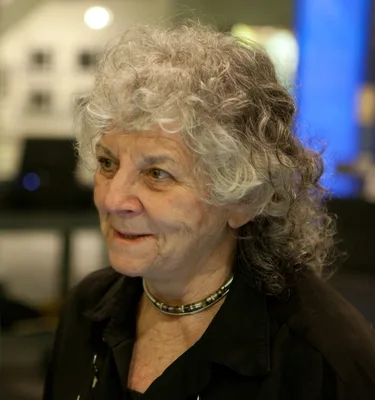
1981 YONATH, Ada E. (1939 – ); APPELT, Krzysztof; DIJK, Jan; ET AL
The crystallization of ribsomal proteins from the 50 S subunit of the Escherichia coli and Bacillus stearothermophilus ribosome.
The authors crystallized fragments of the 50S subunit of a thermophile bacterium’s ribosome to 3 angstroms resolution. Order of authorship in the original publication: Appelt, Dyck, et al., Yonath. Digital facsimile f…
GMN 14224 · https://historyofmedicine.com/id/16541
1982 SANGER, Frederick (1918 – 2013)
Nucleotide sequence of bacteriophage lambda.
Sanger and colleagues sequenced the entire genome of bacteriophage lambda using a random shotgun technique. This was the first whole genome shotgun (WGS) sequence.
GMN 6885 · https://historyofmedicine.com/id/9049
1982 CECH, Thomas Robert (1947 – ); KRUGER, Kelly; GRABOWSKI, Paula; ET AL
Self-splicing RNA: Autoexcision and autocyclization of the ribosomal RNA intervening sequence of tetrahymena.
Discovery of ribozymes (ribonucleic acid enzymes). Cech discovered that RNA itself could cut strands of RNA, suggesting that life might have started as RNA. "In the 1970s, Cech had been studying the splicing of RNA in…
GMN 13932 · https://historyofmedicine.com/id/16227
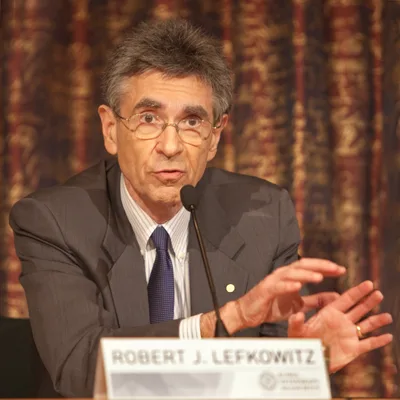
1983 LEFKOWITZ, Robert Joseph (1943 – ); STILES, Gary L.; STRASSER, Ruth H.; CARON, Marc G. (1946 – 2022)
Mammalian beta-adrenergic receptors. Structural differences in beta 1 and beta 2 subtypes revealed by peptide maps.
Lefkowitz and colleagues showed that there are two different types of beta receptors, distinguishing them as Beta-1 and Beta-2. They noticed that each has specific pharmacological characteristics. Order of authorship …
GMN 14140 · https://historyofmedicine.com/id/16454
1984 HIGUCHI, Russell; RYDER, Oliver Allison III
DNA sequences from the quagga, an extinct member of the horse family.
Probably the first study of DNA isolated from ancient specimens, or ancient DNA (aDNA). By Higuchi, Barbara Bowman, and Mary Freiberger from the Department of Biochemistry, University of California, Berkeley and Ryder…
GMN 7428 · https://historyofmedicine.com/id/9600
1984 SOLTER, Davor (1941 – ); MCGRATH, James
Completion of mouse embryogenesis requires both the maternal and paternal genomes.
Solter discovered mammalian genomic imprinting that causes parent-of-origin specific gene expression, with consequences for development and disease. "Genomic imprinting is an epigenetic phenomenon that causes genes to…
GMN 13991 · https://historyofmedicine.com/id/16295
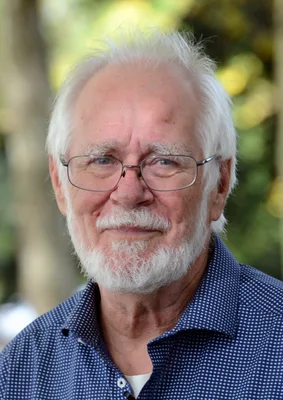
1984 DUBOCHET, Jacques (1942 – ); ADRIAN, Marc; LEPAULT, Jean; ET AL
Cryo-electron microscopy of viruses.
Dubochet and colleagues introduced "Dubochet's vitrification method" to vitrify water by cooling it so rapidly that it solidified to form a glass instead of crystals. Using this method, the authors published the first…
GMN 14184 · https://historyofmedicine.com/id/16499
1985 BLACKBURN, Elizabeth Helen (1948 – ); GRIEDER, Carolyn Widney (1961 – )
Identification of a specific telomere terminal transferase activity in Tetrahymena extracts.
Blackburn and Grieder discovered telomerase in the ciliate Tetrahymena. In 2009 Blackburn and Grieder shared the Nobel Prize in Physiology or Medicine with Jack W. Szostak "for the discovery of how chromosomes are pro…
GMN 8388 · https://historyofmedicine.com/id/10565
1985 MULLIS, Kary Banks (1944 – 2019); ET AL
Enzymatic amplication of B-globin genomic sequences and restriction site analysis for diagnosis of sickle cell anemia.
Polymerase chain reaction first published. With Randall K. Saiki, Stephen Scharf, Fred Faloona et al. Order of authorship in the original paper was Saiki, Scharf, Faloona, Mullis.... In 1993 the Nobel Prize in Chemist…
GMN 10785 · https://historyofmedicine.com/id/12981
1985 DEISENHOFER, Johann (1943 – ); MICHEL, Hartmut (1948 – ); HUBER, Robert (1937 – ); ET AL
Structure of the protein subunit in the photosynthetic reaction centre of Rhodopseudomonas viridis at 3 Å resolution.
Discovery of the three-dimensional structure of a protein complex found in certain photosynthetic bacteria, called the photosynthetic reaction center. This was the first elucidation of the 3D crystal structure of any …
GMN 11060 · https://historyofmedicine.com/id/13256
1985 JEFFRIES, Sir Alec John (1950 – ); WILSON, Victoria; THEIN, Swee Lay
Individual-specific 'fingerprints' of human DNA.
Jeffreys and associates discovered DNA fingerprinting, also called DNA profiling.
GMN 13736 · https://historyofmedicine.com/id/16020
1985 JEFFRIES, Sir Alec John (1950 – ); WILSON, Victoria; THEIN, Swee Lay
Hypervariable 'minisatellite regions in human DNA.
Jeffries and team discovered DNA fingerprinting, also called DNA profiling. This was the first publication of the method.
GMN 13737 · https://historyofmedicine.com/id/16021
1985 KLUG, Sir Aaron (1926 – 2018); MILLER, J.; MCLACHLAN, A. D.
Repetitive zinc-binding domains in the protein transcription factor IIIA from Xenopus oocytes.
Discovery of Zinc fingers, a protein structural motif. "Zinc fingers were first identified in a study of transcription in the African clawed frog, Xenopus laevis in the laboratory of Aaron Klug. A study of the transcr…
GMN 13936 · https://historyofmedicine.com/id/16232
1985 VALE, Ronald David (1959 – ); REESE, Thomas S.; SHEETZ, Michael Patrick
Identification of a novel force-generating protein, kinesin involved in microtubule based motility.
The authors discovered and named a second motor protein, and named it kinesin. Digital text from PubMedCentral at this link. Order of authorship in the original publication: Vale, Reese, Sheetz. (Thanks to Juan Weiss …
GMN 14175 · https://historyofmedicine.com/id/16490
1985 SMITH, George Pearson (1941 – )
Filamentous fusion phage: Novel expression vectors that display cloned antigens on the virion surface.
In this paper Smith invented "phage display technology," a technique where a specific protein sequence is artifically inserted into the coat protein gene of a bacteriophage, causing the protein to be expressed on the …
GMN 14339 · https://historyofmedicine.com/id/16667
1986 MULLIS, Kary Banks (1944 – 2019)
Specific enzymatic amplification of DNA in vitro: The polymerase chain reaction.
Improvements that Mullis made to the polymerase chain reaction in 1983 enabled PCR to become a central technique in biochemistry and molecular biology. The process was first described by Kjell Kleppe and 1968 Nobel la…
GMN 7213 · https://historyofmedicine.com/id/9380
1986 HORVITZ, Howard Robert (1947 – ); ELLIS, Hilary M.
Genetic control of programmed cell death in the nematode C. elegans.
Using C. elegans to investigate whether there was a genetic program controlling cell death, or apoptosis, In 1986, Horvitz identified the first "death genes", ced-3 and ced-4. He showed that functional ced-3 and ced-4…
GMN 9939 · https://historyofmedicine.com/id/12127
1986 HOOD, Leroy Edward (1938 – ); SMITH, Lloyd M. (1954 – )
Fluorescence detection in automated DNA sequence analysis.
Invention of the first semi-automated DNA sequencing machine by Leroy H. Hood, Lloyd M. Smith and colleagues. Abstract of the paper: "We have developed a method for the partial automation of DNA sequence analysis. Flu…
GMN 13990 · https://historyofmedicine.com/id/16294
1987 BITENSKY, Mark W. ( – 2014)
Sequencing the human genome. Summary report of the Santa Fe workshop, March 3-4, 1986.
The initial report on the Human Genome Project. For further information see the entry at HistoryofInformation.com at this link. The report is available at this link.
GMN 6927 · https://historyofmedicine.com/id/9092
1987 CANN, Rebecca Louise (1951 – )
Mitochondrial DNA and human evolution.
Cann's discovery that all living humans are genetically descended from a single African mother, known as Mitochrondrial Eve, who lived
GMN 7256 · https://historyofmedicine.com/id/9425
1987 ISHINO, Yoshizumi (1957 – )
Nucleotide sequence of the iap gene, responsible for alkaline phosphatase isozyme conversion in Escherichia coli, and identification of the gene product.
The DNA sequence of CRISPR (Clustered Regularly Interspaced Short Palindromic Repeats) discovered. The function of the interrupted clustered repeats was not known at the time. With H. Shinagawa, K Makino, M Amemura, a…
GMN 7304 · https://historyofmedicine.com/id/9474
1987 KORNBERG, Roger David (1947 – ); LORCH, Yahli Deborah; LAPOINTE, Janice W.
Nucleosomes inhibit the initiation of transcription but allow chain elongation with the displacement of histones.
Within the nucleosome Kornberg found that roughly 200 bp of DNA are wrapped around an octamer of histone proteins. With Yahli Lorch, Kornberg showed that a nucleosome on a promoter prevents the initiation of transcrip…
GMN 13950 · https://historyofmedicine.com/id/16249
1989 ROMMENS, Johanna M.; IANNUZZI, Michael C.; RIORDAN, John Richard (1943 – ); COLLINS, Francis Sellers (1950 – ); TSUI, Lap-Chee (1950 – ); ET AL
Identification of the cystic fibrosis gene: Chromosome walking and jumping.
Utilizing the chromosome "walking and and jumping" technique developed by Collins, the authors showed how they cloned the cystic fibrosis locus on the basis of its chromosomal location without the benefit of genomic r…
GMN 13568 · https://historyofmedicine.com/id/15846
1989 ROMMENS, Johanna M.; RIORDAN, John Richard (1943 – ); COLLINS, Francis Sellers (1950 – ); TSUI, Lap-Chee (1950 – ); ET AL
Identification of the cystic fibrosis gene: Cloning and characterization of complimentary DNA.
The authors first published a ‘map’ of the cystic fibrosis (CF) gene and on p. 1071, they published an illustration/schematic model of the predicted CFTR (cystic fibrosis transmembrane conductance regulator). They fir…
GMN 13569 · https://historyofmedicine.com/id/15847
1989 ROMMENS, Johanna M.; TSUI, Lap-Chee (1950 – ); KEREM, Batsheva (1955 – ); ET AL
Identification of the cystic fibrosis gene: Genetic analysis.
The authors demonstrated that about 70% of the crucial mutation in cystic fibrosis (CF) patients corresponds to the specific deletion of 3 base pairs, which results in the loss of a phenylalanine residue at A.A. posit…
GMN 13570 · https://historyofmedicine.com/id/15848
1990 KORNBERG, Roger David (1947 – ); KELLEHER, Raymond J.; FLANAGAN, Peter M.
A novel mediator between activator proteins and the RNA polymerase II transcription apparatus.
Kornberg discovered that transmission of gene regulatory signals to the RNA polymerase machinery is accomplished by an additional protein complex dubbed the Mediator. As noted by the Nobel Prize committee, "the great …
GMN 13949 · https://historyofmedicine.com/id/16248
1990 LIMA-DE-FARIA, José (1925 – 2018)
Historical atlas of crystallography.
GMN 14237 · https://historyofmedicine.com/id/16556
1991 VENTER, John Craig (1946 – ); ADAMS, Mark D.; ET AL
Complementary DNA sequencing: "expressed sequence tags" and the human genome project.
Expressed Sequence Tags (ESTs) for DNA sequencing. By Adams, M.D., Kelley, J.M., Gocayne, J.D., Dubnick, M., Polymeropoulos, M.H., Xiao, H., Merril, C.R., Wu, A., Olde, B., Moreno, R., Kerlavage, A.R., McCombie, W.R.,…
GMN 6886 · https://historyofmedicine.com/id/9050
1991 HORVITZ, Howard Robert (1947 – ); ELLIS, Ronald E.; YUAN, Junying (1959 – )
Mechanisms and functions of cell death.
Horvitz and colleagues identified several key components in the molecular pathway of programmed cell death, including: EGL-1, a protein which activates apoptosis by inhibiting CED-9.
GMN 9940 · https://historyofmedicine.com/id/12128
1992 KEVLES, Daniel J. (1939 – ); HOOD, Leroy Edward (1938 – )
The code of codes: Scientific and social issues in the human genome project. Edited by Daniel J. Kevles and Leroy Hood.
Chapter 1. "Out of eugenics: The historical politics of the human genome" by D. J. Kevles. Chapter 2. "A history of the science and technology behind gene mapping and sequencing" by Horace Freeland Judson. Chapter 7. …
GMN 10400 · https://historyofmedicine.com/id/12593
1992 NOLLER, Harry F. (1939 – ); ZIMNIAK, Ludwika; ET AL
Unusual resistance to peptidyl transferase to protein extraction procedures.
Noller demonstrated that the ribosome is a ribozyme, a critical step in understanding how ribosomes translate the genetic information in DNA into the language of proteins.
GMN 14009 · https://historyofmedicine.com/id/16315
1993 BUD, Robert
The uses of life: A history of biotechnology.
GMN 8618 · https://historyofmedicine.com/id/10795
1993 KAY, Lily E. (1947 – 2000)
The molecular vision of life: Caltech, the Rockefeller Foundation, and the rise of the new biology.
GMN 12429 · https://historyofmedicine.com/id/14660
1993 AMBROS, Victor R. (1953 – ); LEE, Rosalind C.; FEINBAUM, Rhonda L.
The C. elegans heterochronic gene lin-4 encodes small RNAs with antisense complementarity to lin-14.
Ambros and colleagues discovered the first known microRNA (miRNA), a small single-stranded non-coding RNA molecule (containing about 22 nucleotides) found in plants, animals and some viruses, that functions in RNA sil…
GMN 14010 · https://historyofmedicine.com/id/16316