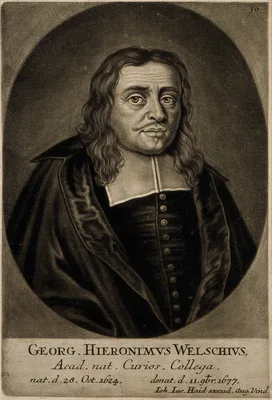
1674 WELSCH, Georg Hieronymous (Velschius) (1624 – 1677)
Exercitatio de vena Medinensi, ad mentem Ebn Sinae [Ibn Sina] sive de dracunaculis veterum. Specimen exhibens novae versionis ex Arabico, cum commentario uberiori. Cui accedit altera, de vermiculis capillaribus infantium.
An exhaustive survey of dracontiasis, or guinea worm disease, based on the Arabic writings of Avicenna. Digital facsimile from Google Books at this link.
GMN 5336.1 · https://historyofmedicine.com/id/6702
1795 CHISHOLM, Colin (1755 – 1825)
An essay on the malignant pestilential fever introduced into the West Indian Islands from Boullam, on the coast of Guinea, as it appeared in 1793 and 1794.
Chisholm, "Surgeon to his Majesty's Ordnance in Grenada," was apparently the first to observe the mode of transmission of the Guinea worm, Dracunculus medinensis. Chishom was also one of the first to recognize that th…
GMN 5336.3 · https://historyofmedicine.com/id/6710
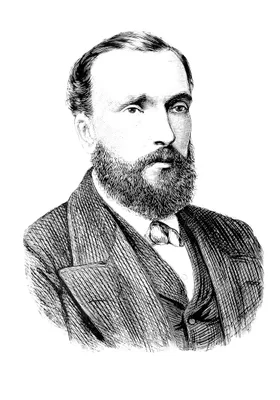
1863 BASTIAN, Henry Charlton (1837 – 1915)
On the structure and nature of the Dracunculus or Guinea worm.
First detailed description.
GMN 5344.2 · https://historyofmedicine.com/id/6768
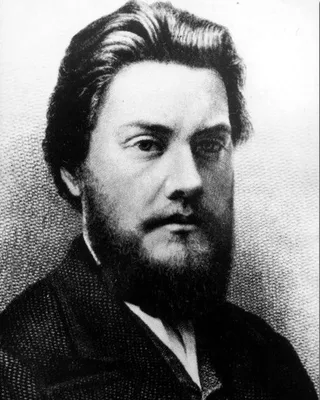
1869 –1870 FEDCHENKO, Alexei Pavlovich (Aleksei FEDTSCHENKO) (1844 – 1873)
On the structure and reproduction of Filaria medinensis L.
Fedchenko, a Russian naturalist and explorer of central Asia, elucidated the life cycle of Dracunculus medinensis, the parasite of dracunculiasis. He discovered its means of transmission via copepod intermediate hosts…
GMN 5344.7 · https://historyofmedicine.com/id/8616
1914 TURKHUD, Dnyaneshwar Atmaran (1863 – 1926)
Report of the Bombay Bacteriological laboratory for the year 1913.
Experimental demonstration, on pp. 14-16, of the complete life cycle of Dracunculus medinensis, the parasite causing Dracunculiasis, popularly known as Guinea-worm disease.
GMN 5350.3 · https://historyofmedicine.com/id/8614
2007 CARTER, Jimmy (1924 – )
Beyond the White House, waging peace, fighting disease, and building hope.
President Carter devoted half of this book to Guinea worm disease, nature of the illness, its epidemiology, its cause and the current importance from a public health and human suffering standpoint. Carter's leadership…
GMN 14128 · https://historyofmedicine.com/id/16439